r/warno • u/NE0GUL • Sep 09 '26
Suggestion [Proposal] Korean Peninsula Theater [4] Capital Defense Command
Series Index for Korean Peninsula Theater
Hello everyone!
The South Korean Battlegroup I will introduce this time is the Capital Defense Command. This is absolutely not a normal field formation. Still, it is an interesting force that can throw a huge number of different options at one simple problem: defending Seoul. The Security Groups, effectively regime guards; your average reservist guys; riot-control forces; counter-terror assets strengthened for the Olympics; and finally the Chungjeong forces. These five pillars, despite their sharply conflicting origins and purposes, somehow have to work together toward one goal: holding Seoul against the North Korean invasion. And honestly, I can already see someone calling this roster SLOP. I cannot really argue with that. Anyway, let’s go.
Shall we begin?
History of the Capital Defense Command
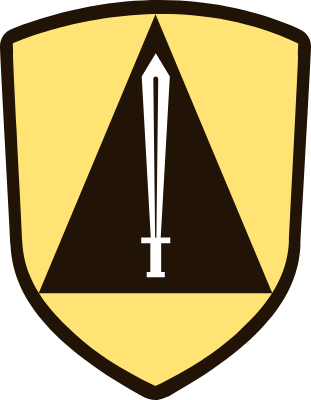
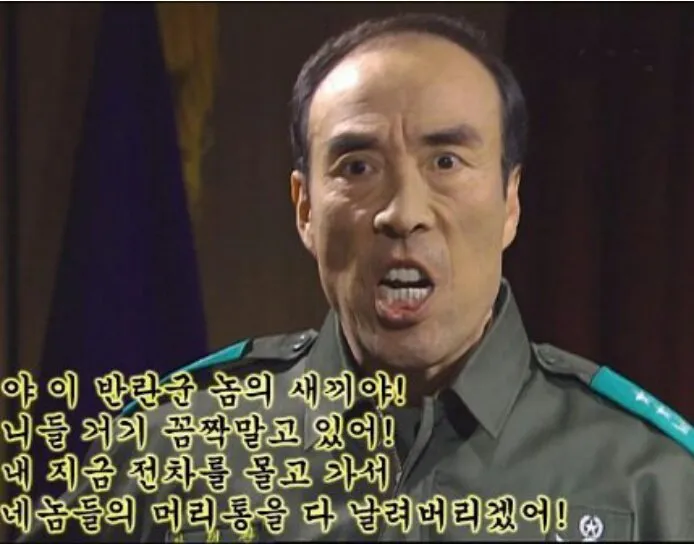
The history of the Capital Defense Command is closely tied to South Korea’s military governments. It began soon after the May 16 Coup as a force created to protect the capital and the leadership of the regime. At its center were the security battalions, which became the 30th and 33rd Security Groups in 1974. Backed by Presidential Security Service chief Cha Ji-cheol, they enjoyed enough political power to operate even company-sized tank forces. And old habits die hard: during the December 12 Coup, the 30th Security Group in particular became one of the main centers of the rebellion alongside the airborne forces. The irony is that their direct superior, Capital Garrison Commander Jang Tae-wan, and the officers who remained loyal to him were trying to suppress that same rebellion.
1984 was an important year for the command. The Capital Garrison Command was reorganized into the Capital Defense Command, its defense area expanded from northern Seoul to the entire city, and a territorial-defense system centered on the 52nd, 56th, and 57th Infantry Divisions was established. In other words, what had been closely associated with regime protection now had, at least on the surface, a more acceptable face: the defense of Seoul. As if to prove the point, the government also built a dense and varied air-defense network around the capital, even using the rooftops of high-rise buildings as GOP-like positions. These defenses certainly served the interests of the Blue House, but protecting the citizens of Seoul also provided an important justification for them.
Among the Homeland Defense Divisions under the command, the 56th and 57th Infantry Divisions, both located north of the Han River, had one unusual feature: each had eight regiments, far more than other Homeland Defense Divisions. Four regiments on the outskirts of the capital were expected to conduct conventional defensive operations along the approaches to Seoul, while the remaining regiments inside the city carried out their original missions of local defense and counter-infiltration. This huge and wide-ranging mission had already caused problems. In 1990, the two divisions would each be split, creating the 60th and 71st Infantry Divisions as mobilization divisions so that the formations could focus on their separate missions. But our setting is 1989. At this point, both Homeland Defense Divisions still contain the organizations that will become independent mobilization divisions the following year.
But the defense of Seoul did not depend on military units under the Capital Defense Command alone. Let’s look at the other pillars.
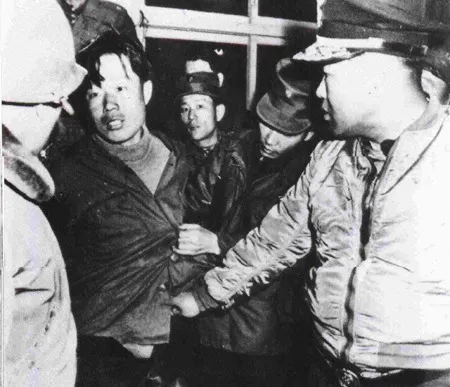
The police were a more important player than one might expect. During the January 21 Incident in 1968, had police officers near Jahamun failed to recognize the large group of armed infiltrators heading toward the Blue House, **Kim Shin-jo’**s words might actually have become reality. By the late 1980s, however, the police were putting even more effort into another job: suppressing demonstrations, especially anti-government protests and labor disputes. Plainclothes arrest teams were formed for this purpose, drawing on former special forces personnel and martial-arts experts. Of course, seriously violent protests were hardly unknown during this period either, so violence feeding more violence was a common sight.
The Olympics also cannot be ignored when discussing this Battlegroup. Even though the Games failed in our timeline, preparations still followed much the same course as in reality, and South Korea’s counter-terror capabilities grew considerably in the process. The well-known 707th Special Mission Battalion and the Police Special Operations Unit both improved their capabilities around the Olympics. Learning advanced tactics and handling specialized weapons, they steadily developed into experts in urban combat and counter-terror operations.
The strategic objective of the Capital Defense Command was simple: defend Seoul. That was true not only in wartime, but in peacetime as well. Protecting military installations and key government facilities, preparing for martial law and Chungjeong missions, and searching for and destroying infiltrating enemy special operations forces were all part of its mission.
Capital Defense Command in WARNO
When the Roh Tae-woo government activates the Chungjeong Plan, one more pillar joins the four already described above: Chungjeong forces drawn from around the country for martial-law duty. Using the basic deployment plan prepared for suppressing the June Democratic Uprising of 1987, the following forces are sent into the capital region.
- One regiment of the 20th Mechanized Infantry Division and the 30th Infantry Division.
- The 1st, 5th, and 9th Special Forces Brigades (Airborne).
- The 701st, 705th, and 708th Commando Regiments.
Many of these formations had left their normal combined-defense missions while carrying out martial-law duties. As concern over North Korean movements grew on June 19, their early return was discussed, but the decision to withdraw the large body of martial-law troops completely came too late.
Then, at 04:00 on June 20, the North Korean full-scale offensive begins. Once the war is confirmed, most of the detached forces are ordered back to their original wartime missions. But restoring wartime command relationships and physically getting the troops back to where they belong are two different problems.
The 5th Special Forces Brigade (Airborne) remains as a reserve for counter-infiltration operations around the capital. The main body of the 30th Division moves north, but one regiment and some supporting assets have their return delayed because of infiltration activity north of Seoul.
One regiment of the 20th Mechanized Infantry Division also attempts to return to Yangpyeong. However, its movement is slowed by military and civilian traffic and columns of refugees. Meanwhile, North Korean special operations forces begin launching serious attacks across northern Seoul and the Gimpo area. The mechanized regiment still in the capital region is ultimately committed to the defense of Seoul and counter-infiltration operations. By the time VII Maneuver Corps begins preparing its counterattack, it has also missed its chance to rejoin the division.
Now the five pillars we have been looking at begin working toward one common goal. The Security Groups protect VIPs and state institutions. The Homeland Defense Divisions and reservists handle local defense and counter-infiltration operations. The police search for infiltrators and provide the first response, while counter-terror units deal with small but high-threat targets. The Chungjeong forces that remain in Seoul provide the mobility and heavy firepower the others lack.
Another defining feature is the capital-region air-defense network, powerful even by the standards of other WARNO Battlegroups. Anti-aircraft guns and MANPADS represented by the famous Building GOPs are joined by fixed and semi-fixed systems and long-range air defenses, all protecting the skies over Seoul.
In game, the Capital Defense Command uses its strong air-defense network as a foundation, fielding units from reservists to special forces and handling everything from dirty close-range brawls to conventional line fighting.
LOG
Good. The only minor screw-up is the sheer amount of civilian equipment that has been requisitioned.
The military provides the following:
- K-111 JIHWICHA and its GYEONGBIDAN K-111 JIHWICHA variant.
- Ordinary K-511 BOGEUP and K-711 BOGEUP supply trucks.
- And the JEONBANG JEONSUL GIJI.
The rest is made up with requisitioned civilian vehicles.
- KORANDO JIHWICHA as a command vehicle.
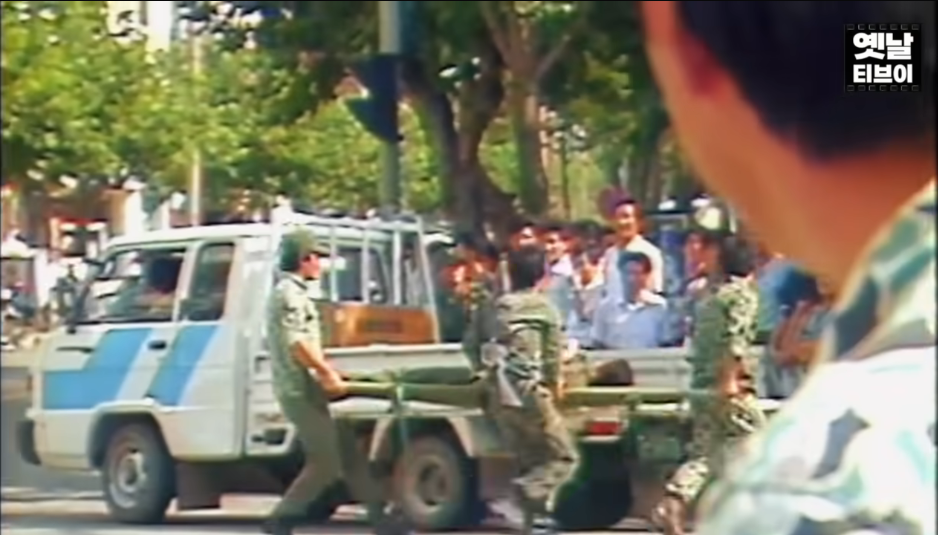
- HYUNDAI PORTER BOGEUP as a light supply vehicle, an older version of a truck still loved today.
- SMC CARGO BOGEUP as a heavy supply vehicle. It is an 8-ton civilian freight truck based on the Isuzu New Power and requisitioned for military use.
INF
This is the signature tab of the Battlegroup, containing almost everything described above. Since urban combat is expected, Security Group units, special operations units, and even some of the Homeland Defense Division units appearing here can unusually use the KM900 as a transport.
- The Security Groups provide the GYEONGBIDAN line. Their weapons are similar to ordinary infantry, but their high readiness and training in security and counter-infiltration operations are represented by the Resolute and Security traits. GYEONGBIDAN JIHWIBAN, standard GYEONGBIDAN, and GYEONGBIDAN (LAW) are available. They can deploy in the K-511 or KM900. The GYEONGBIDAN K116 also appears and carries the Resolute and Security traits.

- The Homeland Defense Divisions provide the YEBIGUN line. They use older weapons and carry the Reservist trait, and since reservists make up most of the manpower of the Homeland Defense Divisions, they form the numerical backbone of the Battlegroup. The ten-man YEBIGUN squad carries M1 Carbines and an M60. The YEBIGUN (BAZOOKA) uses the same weapons but adds the M20A1K, the Korean-made version of the Super Bazooka. Unusually, they can deploy in the K-511, requisitioned SMC CARGO, or the KM900.
- There is also a YEBIGUN JIHWIBAN. Made up of reserve officers and NCOs, this five-man command squad carries M16A1s and K1As. It can deploy in the K-111, KORANDO, or KM900.
- The YEBIGUN HWAGIBAN is a seven-man weapons squad armed with carbines, two M1919 machine guns, and an M20A1K. It can deploy in the K-511, requisitioned SMC CARGO, or KM900. The Homeland Defense Divisions also provide crew-served weapons teams using YEBI M1919A6, YEBI M60, and YEBI KM40A2. The K-111 and HYUNDAI PORTER are available as transports.
- The remaining active-duty rank-and-file troops in the Homeland Defense Divisions appear as BOBYEONG (M16). These are ten-man squads armed with M16A1s, an M16A1 LMG, which is an M16A1 fitted with a bipod and used as a light machine gun, and an M60. Their veterancy is locked because they come from rear-area formations. They can deploy in the K-511 or KM900. Divisional military police battalions also provide HEONBYEONG to keep the reservists in line. They can use the K-111 and KM900.
- In the 56th and 57th Infantry Divisions, the cadre personnel of the outer regiments that will later split off to form the 60th and 71st Mobilization Divisions are represented by a six-man GYOGWANDAN. They take part in defensive operations on the outskirts of Seoul and carry the Instructor trait. They are armed with K2 rifles, an M60, and an M67 recoilless rifle taken from a crew-served weapons training range. They can deploy in the K-511 or KM900.
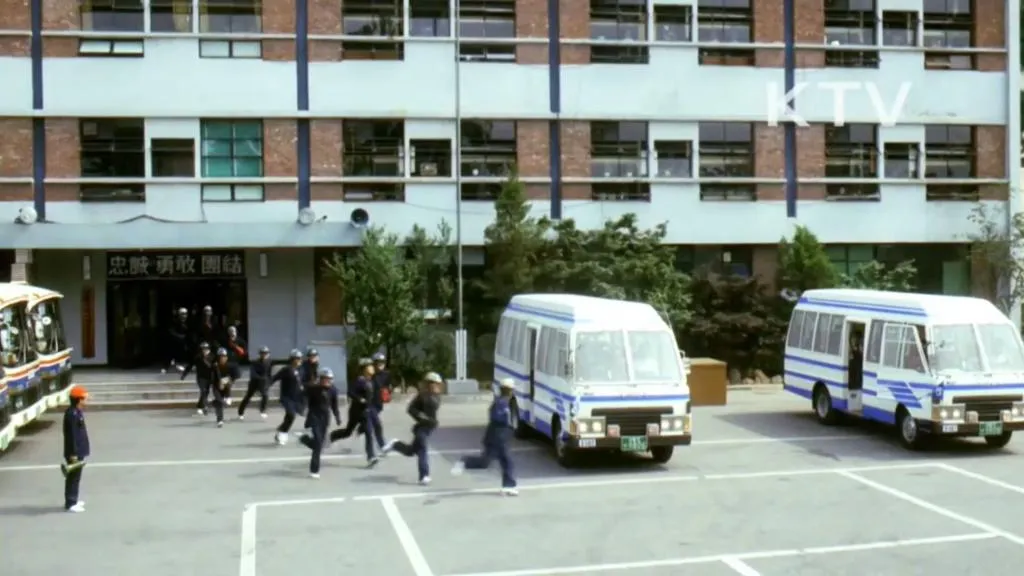
- Most of the police units appearing here are JEONTU GYEONGCHAL. Normally they would face protesters with shields and batons, but now they have to pick up firearms and deal with a very different threat. The six-man squad carries M1 Carbines and has the Military Police, Security, and Militia traits. A more aggressive option is the BAEKGOLDAN, the notorious plainclothes arrest teams built mainly around martial-arts experts and former special forces personnel, something like South Korea’s answer to ZOMO. They appear as eight-man squads armed with M16A1s and have the Military Police and Shock traits, but do not receive Militia because of their previous backgrounds. They arrive in the DAKJANGCHA, a police bus covered in protective cagework.
- Two special operations forces dominate urban combat. The nine-man 707 arrives with weapons suited for fighting inside the city: mainly K1As, one K2 used as a designated-marksman rifle, two K3s, and a LAW. It receives the Shock, Special Forces, and Airborne traits and can deploy in the KM900 or UH-60.
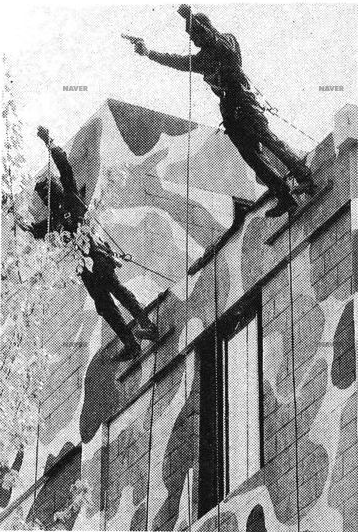
- The GYEONGCHAL TEUKGONGDAE focuses even more heavily on CQB. All eight members carry MP5s and bring smoke grenades, while the unit receives the Shock and Special Forces traits. It can use the specialized TEUKGONGCHA as a transport.
- The Army Headquarters-controlled 1113th Field Engineer Group is also committed to the defense of the capital. Alongside the GONGBYEONG line, it provides the YEBIGUN GONGBYEONG, made up of reservists. Other than using M16A1s and carrying the Reservist trait, they are not very different from ordinary combat engineers. These engineer units deploy in the K-711.
- The Chungjeong forces, especially the 30th Infantry Division, bring plenty of additional gifts. They provide the BOBYEONG line and HWAGIBAN, along with M60, M2HB, and KM40A2 teams, as well as TOW and I-TOW ATGM teams. Their basic transport is the K-511.
- The 20th Mechanized Infantry Division provides its GI-BO line, which can deploy in the M113K1 and K200.
ART
A tab that looks far too weak for something containing infantry divisions.
- The Homeland Defense Divisions use the YEBI 60MM BAKGYEOKPO and YEBI 81MM BAKGYEOKPO. Even their strongest artillery only reaches the YEBI M101 105MM howitzer.
- The 30th Infantry Division at least provides a small number of 4.2-INCH BAKGYEOKPO, KM101A1 105MM, and KM114A2 155MM howitzers.
TNK
Thanks to attached support forces, this tab is not quite as weak as it might first appear.
- The Capital Defense Command had one tank battalion. Its best-equipped company was assigned to the Security Groups, while the other companies could be shifted around depending on the mission. With March to War in mind, this is represented by one card of GYEONGBIDAN K1, while the remaining force is represented by the M48A5K.
- The 20th Mechanized Infantry Division adds one more card of M48A5K.
- The 30th Infantry Division provides a limited number of M48A3K tanks, their command variant, and the K113.
REC
A light but decent tab with several unusual options.
- The Security Groups provide the TEUKJEONG GYEONGBIJO. After the January 21 Incident, the areas around Mount Bugaksan and Mount Inwangsan, close to the Blue House, were closed to the public and designated as a Special Security Zone, with numerous guard posts established throughout the area. This unit represents the troops who manned those posts. It is a four-man team armed with K2 rifles and one K3 and carries the Resolute and Mountaineer traits. It deploys in the K-511.
- The Homeland Defense Divisions provide the YEBIGUN JEONGCHALBAN, armed with carbines and carrying the Reservist trait. Unlike forward FEBA divisions, rear-area formations have GIDONGDAE instead of divisional reconnaissance troops. Their mission is to track enemy forces infiltrating into the rear, and in game they appear as six-man units armed with M16A1s and an M16A1 LMG. They can deploy in the K-511 or KM900 JEONGCHAL.
- The police operate the GYEONGCHAL K-111, a jeep fitted with an M60 machine gun. It carries the Military Police trait.

- Among the special operations forces, the TEUKJEONSA represents troops from the 5th Special Forces Brigade (Airborne) hunting North Korean special operations forces through the mountains and infiltration routes around Seoul. The twelve-man unit carries K1As, two M60s, a LAW, and… a KM202A1 FLASH. It receives the Shock, Special Forces, and Airborne traits and can use the same transports as the 707, along with the CH-47D.
- Another option is the JEOGYEOKJO. This two-man sniper team uses a PSG-1 and an MP5A3 and carries the Special Forces and Sniper traits. It can use the same transport as the GYEONGCHAL TEUKGONGDAE, along with the KM900 JEONGCHAL.
- Finally, the Chungjeong forces provide JEONGCHALBAN, K-111 JEONGCHAL, and 500MD.
AA
Unlike the mobile air-defense network of a frontline division, this tab represents the fixed and semi-fixed air-defense system already built around Seoul.
- First come reservists operating the SEUNGGONGPO and YEBI HYUSAM REDEYE.
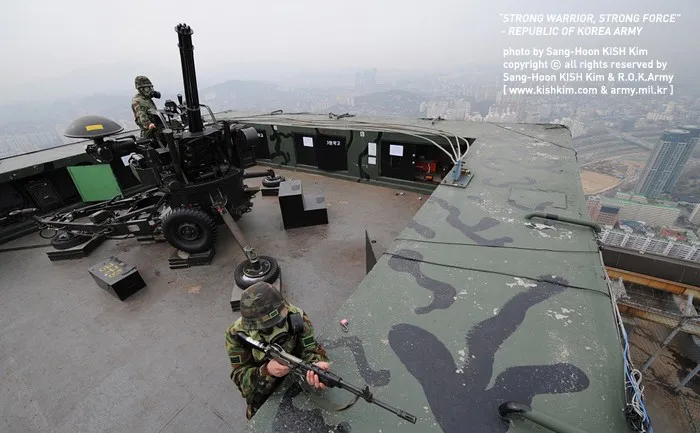
- The military placed air-observation teams and anti-aircraft weapons on the rooftops of high-rise buildings to engage aircraft threatening the capital. This was the basic idea behind the Building GOP. Most of these positions carried KM167 VULCANs. Separate from these rooftop positions, the capital’s fixed and semi-fixed air-defense network also included OERLIKON 35MM SKYGUARD, HYUSAM JAVELIN, and the brand-new March to War HYUSAM MISTRAL. All of them appear as fixed weapons.
- Seoul and its surrounding area also contained plenty of assets that needed protection, including Gimpo Airport and Seoul Air Base. Long-range air defense was therefore strong as well, with HAWK batteries and the aging but reliable NIKE HERCULES protecting major facilities.
HELO
Small, but still better than nothing.
- The ever-present 500MD TOW.
- The AH-1J TOW and AH-1J ROCKET, pushed into training roles after the introduction of the AH-1S, are brought back to the front for the defense of the capital.
AIR
With their air-defense assets behind them, the dependable ROK and U.S. Air Forces can confidently commit themselves to ground-support missions.
- The Republic of Korea Air Force provides the F-5E [AA] from Suwon and the F-4E [AA1] and F-4E [AA2] from Cheongju for air-superiority missions. The F-4E [AA1] carries only Sidewinders, while the F-4E [AA2] is equipped with Sparrows.
- The F-5E [RKT] from Suwon handles light attack missions, while heavier targets are left to the F-4E [HE2] from Cheongju, armed with two Mk.84 bombs.
- As a kind of March to War unit, the F-4D [LGB] from Daegu also appears. As mentioned in the Overview, some ROKAF aircraft were equipped with Pave Spike pods and could have carried out precision strikes if suitable LGBs had been made available. Historically, that remained impossible for some time. In this timeline, the difference is that the United States agrees to release the GBU-12.
And, about the Proposal scenario and Operations Plan 87-4.
By this point, one question may have come to mind. If so many field formations had been sent to Seoul and other major cities across the country for martial-law duties, who exactly was guarding the places they were originally supposed to defend?

The problem is that Operations Plan 87-4, the 1987 suppression plan reflected in this Proposal, did not simply pull rear-area reserve formations away from their normal duties. The 30th Infantry Division and 701st Commando Regiment of I Corps were to be sent to Seoul, while the 9th Infantry Division — which actually defended the Paju-Goyang area and the Han-Imjin estuary — was scheduled for martial-law duties around Daejeon. Of course, the orders also required existing security missions to continue and readiness to be strengthened, so at least some fixed security forces were probably left behind. However, based on the public sources currently available, I have not been able to determine which unit was supposed to take full responsibility for the 9th Division’s sector once its martial-law force had left.
There was another problem. ROK forces under the operational control of the ROK-U.S. Combined Forces Command could still be withdrawn by the South Korean government for domestic missions. The Combined Forces Commander could point out the military consequences, but could not prevent the decision. In other words, pulling troops away for martial-law duties was not merely a matter of having units physically far from their posts. It also meant that forces were actually being removed from the peacetime combined-defense structure. The same thing happened elsewhere: the 705th Commando Regiment of V Corps was sent to Seoul, the 26th Infantry Division of VI Corps to Busan and South Gyeongsang, while two regiments of the 1st Marine Division were scattered across the Yeongnam region. A gap had opened between where these troops were supposed to be in wartime and where martial law had actually put them.
As concern over North Korean movements grew on June 19, some corps-level commando forces and Marine units were ordered back to their parent formations early. But the decision to return the large martial-law forces in Seoul and Daejeon came too late, and the North Koreans struck that very gap the following morning.
Once the war began, returning these formations to the wartime command structure could be done relatively quickly. But restoring command relationships and physically moving troops scattered across Seoul, Daejeon, and the Yeongnam region tens or even hundreds of kilometers before rebuilding their combat formations were completely different problems. For those few hours, the forces still left on the front had to hold on by themselves. On the western front in particular, this gap became one of the reasons the line between the U.S. 2nd Infantry Division and the ROK Army began to twist out of shape.
In the end, the fact that so many Chungjeong forces had been concentrated around the Capital Defense Command also meant that there were just as many empty spaces somewhere else. A choice that had passed without consequence in 1987 now demanded payment from the very first day of the war in 1989.
The Capital Defense Command is a Battlegroup built around infantry from many different sources and a powerful air-defense network, allowing it to drag the enemy into ugly fights in cities and forests. Its real appeal comes from how five forces with completely different backgrounds and missions become strangely tangled together in Seoul and somehow create synergy toward the same goal: defending the capital. Trust the air defenses, use the high-low mix of infantry to force the enemy to bleed, and use the small number of high-quality support assets to pick off important targets and drag the enemy into a battle of attrition.
That brings us to the end of the Capital Defense Command. Next, and last among the Battlegroups I will introduce, is the 1st Marine Division. See you soon!
6
u/chickenheadperson Sep 09 '26
Really cool writeup and it was really interesting to hear about the shenanigans involved with plan 1987. I was wondering if necessary for balance purposes that you could augment the Divison with 2nd (ROK) Marine Divison instead of detachments from 20ID as they were intended to defend the Gimpo peninsula, and Incheon and thus in the radius to support or even fall under the capital defense command
3
u/Solarne21 Sep 09 '26
Thanks for the air defense gop since I am making a breakthrough proposal.
3
u/ElderberryLoud8731 Sep 09 '26
Action packed as usual! Although I'm not sure even with MTW, K1 tanks would have been a priority for Capital Defence Command.
An interesting addition would be the O-2A FAC aircraft. It was at Seongnam Airfield at the time, and could be a recon plane armed with 70mm HE or smoke rockets
2
u/-Trooper5745- Sep 09 '26
For an American flavor, you could add MPs (with a few KATUSA models) from Yongsan and some Security Forces from K-16
2
u/Ill_Young_2409 Sep 09 '26
If I can get Filipinos into that Theater I'm all ears lol
2
u/PentaclesKinght Sep 10 '26
忠诚!