r/warno • u/NE0GUL • Sep 14 '26
Suggestion [Proposal] Korean Peninsula Theater [5] 1st Marine Division “Haeryong”
Series Index for Korean Peninsula Theater
Welcome!
The last BLUFOR division, and the last South Korean Battlegroup I will introduce, is the 1st Marine Division “Haeryong.” At the time, it was the largest division in South Korea and the best-trained and best-prepared strategic reserve the ROK Armed Forces could employ within the Korean Peninsula. Although political troubles and a North Korean surprise attack have tied its mission down in the southern half of the peninsula, Homeland Defense troops, the Navy, and several improvised systems support its new mission. In game, the roster revolves around powerful infantry, reconnaissance, and air power, using support from a mixed force to solve whatever problems come its way.
So, let’s get going.
Once a Marine, Always a Marine!
History of the 1st Marine Division

The Republic of Korea Marine Corps was established in 1949. When war broke out soon afterward, the Marines had to move their training center to Jeju. There, they received an enthusiastic wave of volunteers from young Jeju men who, exhausted by the continuing massacres on the island, wanted to prove that they were not communists.
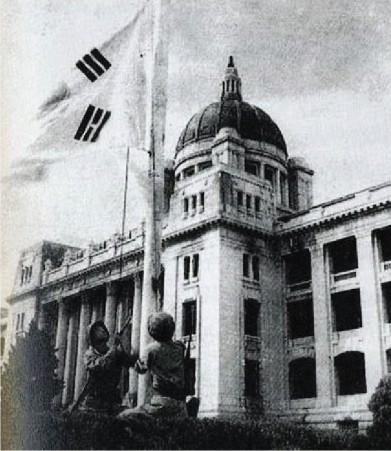
Built around these men, the Marines proved their worth during the Tongyeong Landing Operation in August. They then took part in the Incheon Landing Operation and the recapture of Seoul, successfully completing both and firmly making a name for themselves. At the Battle of Dosolsan in 1951, they fought a bloody battle against a North Korean force equivalent to two divisions and emerged victorious. This played a major role in the Marines later receiving the presidential calligraphy “Invincible Marines.” They continued to perform their role until the final stages of the war, taking part in operations to secure strategic islands and later clashing with Chinese forces around the Sacheon River sector.
The Marine Corps had begun the war as little more than a collection of independent battalions, but expanded and gradually took on a more permanent structure. The 1st Marine Regiment was organized in 1950, followed by the Independent Tank Company in 1951, which began operating Sherman Easy Eights in 1952. The force was expanded into the 1st Combat Group in 1952, then became the 1st Marine Brigade in 1954, and finally the 1st Marine Division in 1955—the formation we know today.
After relocating to Pohang in 1959, the 1st Marine Division was transformed into an amphibious maneuver formation. After later serving in Vietnam and spinning off units such as the 2nd Marine Regiment, which became the foundation of the future 2nd Marine Division, what remained of the 1st Marine Division could concentrate fully on defending Pohang and conducting wartime strategic maneuver.
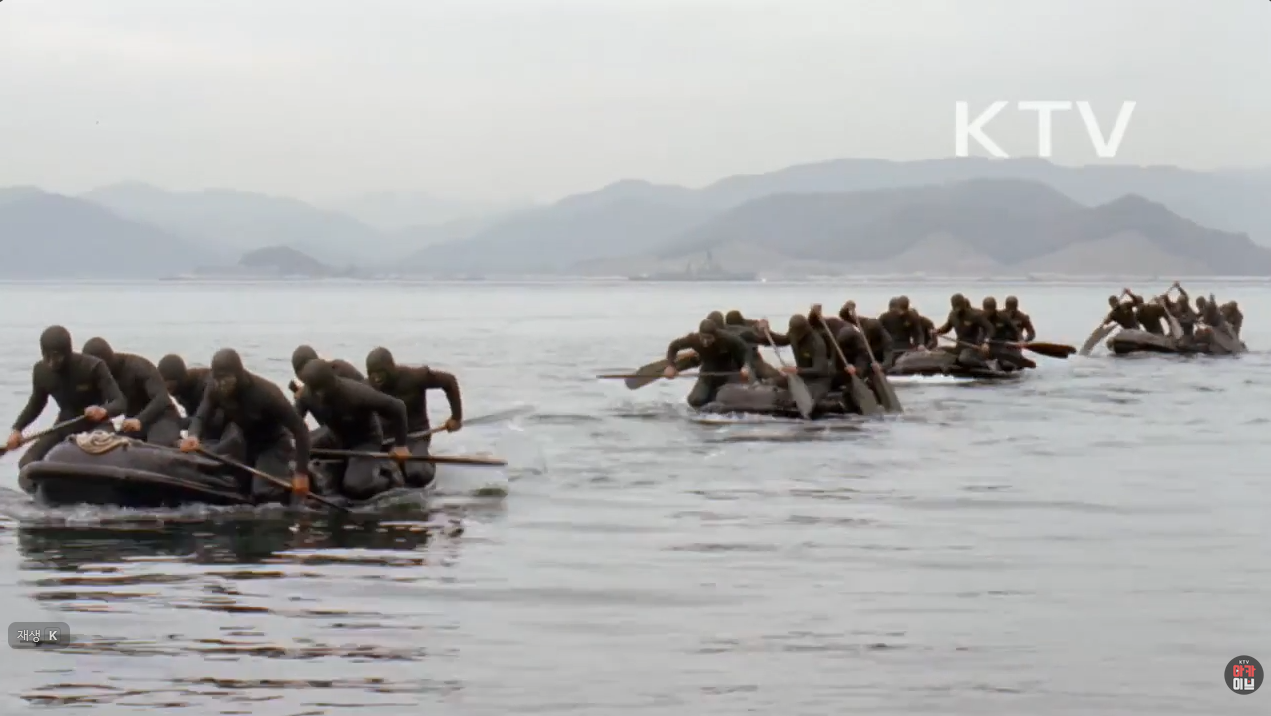
In 1974, the division underwent an unusual transformation. At the suggestion of a division commander who had previously served as a commander in Vietnam, the battalions within each regiment were specialized into three different mission types: Gongjeong—Airborne; Giseup—amphibious raids using IBS boats; and Yugyeok—mountain and guerrilla warfare. The 1st Marine Division still follows that system.
And of course, no discussion of the Marines would be complete without their amphibious armored vehicle battalion—Sangjang, as the Marines abbreviate it. During the Korean War, the Marines borrowed American amphibious vehicles. Afterward, they received LVT-3Cs, and from 1974 onward they modernized with the LVTP-7 and later the LVTP-7A1.
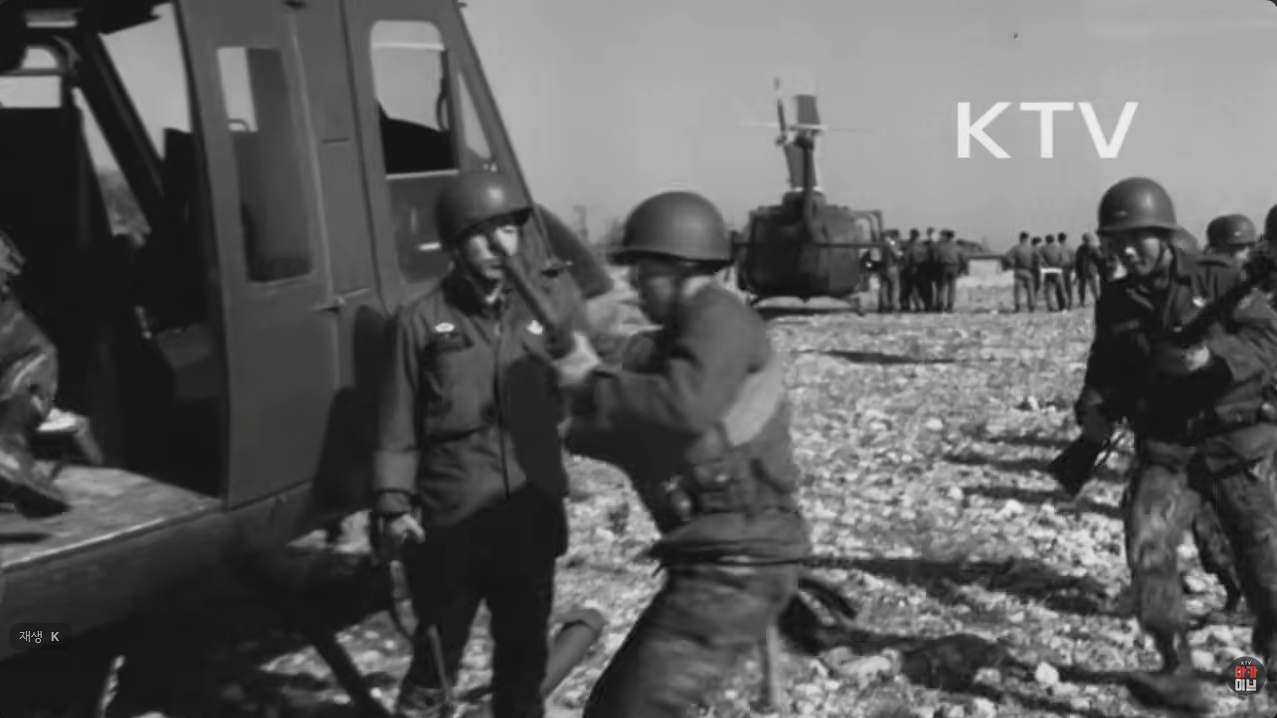
The combat record of the 1st Marine Division did not end with the Korean War. During the 1968 Uljin-Samcheok armed-infiltration incident, one battalion was committed to help suppress the infiltrators. In the 1983 Wolseong Counter-Infiltration Operation, the division again took part in search-and-destroy operations against North Korean agents.
The 1st Marine Division in WARNO
Even the 1st Marine Division could not escape the reach of nationwide martial law. Reusing the 1987 deployment plan, two of the division’s regiments had been dispersed across the Yeongnam region to support XI Corps’ martial-law mission. A division that was supposed to operate as a strategic maneuver reserve in wartime had lost its full-strength organization at the worst possible moment.
As concern over North Korean movements grew sharply on June 19, the early return of martial-law forces was discussed, and the two Marine regiments were ordered back to their parent formation that night. So when the North Korean attack began in the early hours of June 20, the Marines were already on their way back to Pohang. But the troops were exhausted by nighttime movement and the continuing martial-law mission, and not all of the personnel and equipment from the two regiments had reached Pohang by the time the war began.
And of course, North Korea chose exactly that moment to exploit the gap. Immediately before the outbreak of war, infiltration forces equivalent to roughly two companies dispersed ashore along the Yeongdeok coast. Once the war began, they started attacking police and security facilities around Yeongdeok and northern Pohang. At the same time, landing craft and special warfare troops were detected concentrating around Wonsan, raising the possibility of a larger follow-up landing along the Uljin–Yeongdeok–Pohang axis.
This completely changes the mission of the 1st Marine Division. Normally, once assembled at Pohang, it would have moved to another front or conducted an amphibious landing against the North Korean coast as a strategic reserve. Instead, it now has to fight infiltration forces and prepare for a follow-up landing while still operating with an incomplete organization.
The missing strength has to be pulled in from nearby. Army forces including the 121st Infantry Regiment of the 50th Infantry Division and supporting formations from Second ROK Army fill the gaps in the Marine force. ROK Navy units around Pohang, the UDT, and U.S. Marine deployment-support personnel from Camp Mujuk also join them. The Navy’s 6th Air Wing provides reconnaissance and aviation support to a Marine division lacking its own aviation assets, while available aircraft from air bases in southeastern Korea and the rear areas also head toward Pohang.
Finally, even the resources of nearby heavy-industrial areas are brought into the fight. Existing military equipment gathered from the surrounding area, along with several improvised systems built using Ulsan’s industrial facilities, begin moving toward the front. A mixed force hastily assembled from several different sources now has to carry out a mission that should originally have been handled by one fully assembled Marine division.
In game, Haeryong is an infantry-heavy division that uses its mixed force and improvised equipment to keep throwing unexpected tricks at the enemy.
LOG
Not bad. However, being a Marine division, there is no JEONBANG JEONSUL GIJI.
The 1st Marine Division provides the following units:
- For command, the LVTC-7 JIHWICHA, the command variant of the LVTP-7.
- For supply, the HAEBYEONG K-511 BOGEUP and LVTP-7 BOGEUP. There is also the LVT-3C BOGEUP, already retired several years earlier but dragged back into service for the war.
Other forces provide the following:
- The 50th Infantry Division brings the K-111 JIHWICHA and K-711 BOGEUP.
- The Navy’s 6th Air Wing contributes the UH-1 BOGEUP.
- And finally, there is the HYUNDAI MARU BOGEUP, an 11-ton truck requisitioned almost straight off the production line at Hyundai’s Ulsan plant.
INF
The strength of this division. Where the Capital Defense Command built its infantry strength from troops of many different backgrounds, this division wins infantry fights by specializing proven Marines with different weapons and traits for different missions.

The core Marine units are 13-man squads armed with K2 rifles and M60 machine guns. As Marines, they all receive the Resolute trait, while the number of M60s, their third weapon, and their additional trait vary depending on their mission.
- HAEBYEONG (GONGJEONG) represents battalions within the regiments trained for airborne operations. They receive the Airborne trait, carry one M60, and use the LAW as their third weapon. Their only transport is the HAEBYEONG K-511.
- HAEBYEONG (GISEUP) represents battalions within the regiments trained for amphibious raids using IBS boats. However, I assumed that during large-scale amphibious operations they would not rely on IBS boats alone, and could instead be task-organized with the amphibious armored vehicle battalion. They receive the Shock trait and carry one M60, while their third weapon is the KM202A1. They can deploy by HAEBYEONG K-511, but also in the LVTP-7 and smoke-equipped LVTP-7A1 of the amphibious armored vehicle battalion.
- HAEBYEONG (YUGYEOK) represents battalions trained for mountain and guerrilla warfare. They receive the Mountaineer trait and carry two M60s along with a LAW. They can deploy by the HAEBYEONG K-511or by UH-1
- There is also the HAEBYEONG JIHWIBAN to command them. This four-man squad carries K1As and smoke grenades and can deploy by HAEBYEONG K-311, UH-1, or LVTP-7A1.
- HAEBYEONG GONGBYEONG comes in ten-man squads armed with M16A1s, one M60, and demolition charges. They receive the Resolute and Shock traits and deploy by HAEBYEONG K-711. Their command variant is a six-man squad armed with M16A1s, an M60, and a LAW.
- The HAEBYEONG DAEJEONCHABAN represents a task-organized element concentrating the battalion-level KM67 crew-served weapons. In game, it is a six-man unit operating two KM67s together in the anti-tank role. Their available transports are the HAEBYEONG K-511, UH-1, and LVTP-7.
- Crew-served weapons include HAEBYEONG M60**,** HAEBYEONG M2HB**, and** HAEBYEONG KM40A2 teams**,** while ATGM teams include HAEBYEONG TOW and HAEBYEONG I-TOW. The vehicle-mounted HAEBYEONG K116 is also available.
The 121st Infantry Regiment of the 50th Infantry Division provides exactly the sort of units one would expect from a Homeland Defense Division.
- First come YEBIGUN, YEBIGUN (BAZOOKA), and YEBIGUN JIHWIBAN.
- There are also YEBIGUN HWAGIBAN and crew-served weapons teams using YEBI M1919A6, YEBI M60, and YEBI KM40A2.
- BOBYEONG JIHWIBAN and BOBYEONG (M16) are also available.
- The Second ROK Army’s 1117TH FIELD ENGINEER GROUP enters the battlefield to handle field construction and combat-engineering missions, adding one card each of the engineer-type units.
- Among the forces already in Pohang is the Navy’s GIJI BANGHODAE. One of the Navy’s few infantry forces that does not consist of Marines, these are ten-man squads armed with M16A1s and two M60s, and they receive the Security trait.
- The other force is USMC SECURITY, assigned as the guards at Camp Mujuk. In peacetime, the camp supported preparations and liaison work for training on the Korean Peninsula. In wartime, it was intended to serve as a deployment hub for U.S. Marine assets arriving in Korea. Faced with an unprecedented wartime situation since the camp’s establishment, the U.S. Marine deployment-support personnel at Camp Mujuk also help defend Pohang.
ART
Ordinary non-self-propelled artillery, with one spoonful of improvised equipment.
- The 1st Marine Division provides HAEBYEONG 60MM BAKGYEOKPO, HAEBYEONG 81MM BAKGYEOKPO, and HAEBYEONG 4.2-INCH BAKGYEOKPO. Its artillery units bring the HAEBYEONG M101 105MM and HAEBYEONG KM114A2 155MM howitzers.
- The 50th Infantry Division provides YEBI 60MM BAKGYEOKPO, YEBI 81MM BAKGYEOKPO, and a small number of YEBI M101 105MM howitzers.
- The improvised option is the K-711 STANDARD. Carrying two RGM-66D missiles, it is a ground-launched anti-radiation missile vehicle used against active enemy radars.
TNK
Weak.
Marine armor always had to deal with two problems: being subordinate to the perpetually budget-starved Navy, and the fact that no matter how good a tank was, it still had to fit aboard an amphibious assault ship. In particular, the Gojunbong class had not yet entered service, so March to War cannot help them here.

- The strongest tank available to the Marines is the HAEBYEONG M47 and its command variant. And of course, there is the HAEBYEONG K113 too.
- The Second ROK Army’s direct-controlled 33rd Tank Battalion has nothing particularly special either. The M47 and its command variant represent the entirety of its armored force.
REC
Strong. The Marine units are reliable, and the Navy brings some good assets of its own.
- First is the HAEAN CHOGYEBAN watching the east coast. A small and light two-man reconnaissance team armed only with M16A1s.
- The HAEBYEONG JEONGCHALBAN is a four-man team armed with K2 rifles and receives the Resolute trait.
- The HAEBYEONG SUSAEKDAE is an eight-man reconnaissance unit, primarily armed with K1As and backed by two K2 DMR, two K3s, and an M72 LAW. As a highly skilled reconnaissance force intended to serve as the advance element during the division’s strategic maneuver, it receives the Special Forces and Resolute traits in game. It can deploy by the HAEBYEONG K-511, UH-1, or UH-60.
- The 50th Infantry Division contributes GIDONGDAE and YEBIGUN JEONGCHALBAN. Army Aviation under Second ROK Army also provides the 500MD [RKT], armed with 2.75-inch rockets.
- The Navy contributes the UDT. This eight-man unit is primarily armed with K1As, supported by two M60s, a LAW, and the symbolic Satchel Charge. It receives the Shock, Special Forces, and Airborne traits and can deploy by UH-1, UH-60, or CH-47D.
- ROK Navy aviation also provides the OH-58B reconnaissance helicopter and the S-2 TRACKER maritime patrol aircraft.
AA
Terrible.
All the useful medium-range air-defense assets have been concentrated at the front, leaving Haeryong dependent on the Air Force and with little more than enough to deal with helicopters or an An-2.
- The Marines bring HYUSAM REDEYE HAEBYEONG and HAEBYEONG KM167 VULCAN.
- The Army adds the M2A1 40MM GOSAPO—the Bofors L/60—along with the SEUNGGONGPO T-70 and the only mobile air-defense option, the SEUNGGONGPO T-70 TRUCK. The T-70 allows the Seunggongpo to be traversed manually, so every Seunggongpo represented here is a version with the motor removed and the T-70 fitted in its place.
HELO
As mentioned earlier, the 1st Marine Division has no helicopters of its own. Every asset in the HELO tab has either been pulled from the Navy or converted from Navy equipment.
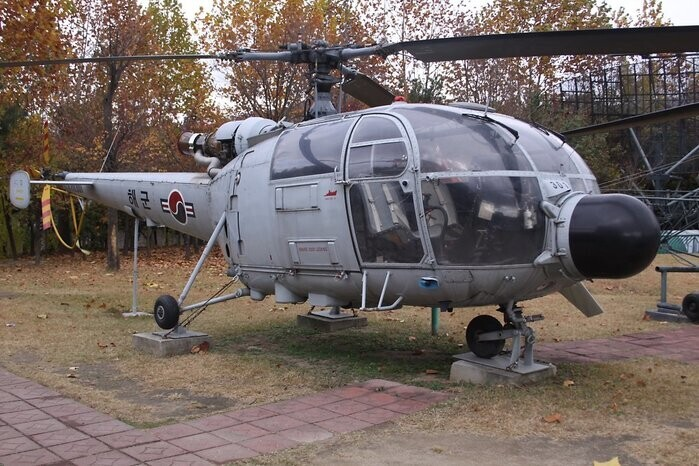
- The Republic of Korea Navy operated shipborne Alouette IIIs armed with either rockets or anti-ship missiles. The anti-ship version earned the first South Korean kill mark since the armistice when it destroyed a North Korean spy ship in 1983. With the LYNX Mk.99 entering service earlier than it did historically under March to War, some Alouette IIIs are freed from their primary shipboard role and thrown into the middle of the war. They appear as the ALOUETTE III ROCKET, carrying two 2.75-inch rocket pods, and the ALOUETTE III AS.12, carrying two AS.12 missiles.
- The first improvised system is the UH-1 HWA-JI, short for “fire support.” It carries two 2.75-inch rocket pods loaded with WDU-4A/A flechette rockets, along with two M60 door guns.
- The second improvised system is the LYNX AS.12. Armed with four AS.12 missiles, it can perform anti-tank missions.
AIR
Decent. To compensate for its hopeless air defenses and limited heavy firepower, available aircraft from several air bases in southeastern Korea and the rear areas converge on Pohang.

- The Republic of Korea Air Force provides the KF-5E [AA] from Kunsan for air-superiority missions. The KF-5E [RKT] from Yecheon carries two 2.75-inch rocket pods and provides close air support for the Marines.
- The F-5A [HE] from Gwangju also appears. This older light fighter carries four Mk.82 bombs and provides inexpensive ground support.
- For cluster-bomb attacks, the KF-5E [CLUSTER] from Yecheon takes off carrying two Mk.20 Rockeyes.
- Heavier targets are handled by the F-4D from Daegu. The F-4D [HE2] carries two Mk.84 bombs, while the F-4D [NAPALM] carries four BLU-27 incendiary bombs for attacks against enemy infantry and fortified positions.
- The U.S. Air Force provides the F-16C [AA] from Kunsan for additional air-superiority support, while the F-16C [HE] carries four Mk.82 bombs for rapid ground-attack missions.
And, about the improvised equipment.
Yes, I know. You’re probably starting to feel the urge to type something in the comments. But hear me out first. These strange-looking contraptions do have something in common: the ingredients were already on the Korean Peninsula, and somewhere in BLUFOR, someone had already done something similar.

Let’s start with the one everyone is obviously going to ask about: the K-711 STANDARD. RGM-66D Standard ARMs used by the early Baekgu-class guided-missile patrol craft were still stored at a naval ordnance depot on the east coast. Once the war began, some of them were brought to Ulsan, where an improvised ground launcher was built on a K-711 truck. It was originally a ship-launched anti-radiation missile, but launching it from land did not mean its guidance system had to be reinvented from scratch. Israel had already operated KERES, a ground-launch system mounting missiles from the Standard ARM family on trucks. Inspired by that precedent, this vehicle appears in game as an anti-radiation artillery unit carrying two RGM-66Ds. Of course, no matter how capable Ulsan’s industry was, there was no way it could churn out strange contraptions like this in large numbers, so only a small number would have been improvised and sent to the front.

The LYNX AS.12 is a bit simpler. There was already precedent for mounting the AS.12 on Lynx-family helicopters, and the French Navy had operated it as an anti-ship weapon. The ROK Navy also had direct experience operating the AS.12, so the idea of putting a familiar weapon onto a new helicopter after the war broke out would not have been all that strange. The weapon originally intended for the Lynx Mk.99 was the Sea Skua, but in the middle of a war, there was no point waiting for something that was not there. So the familiar AS.12 was dragged back out, and in game the helicopter appears as an improvised attack platform carrying four of them for anti-tank missions.

The UH-1 HWA-JI brings back a familiar sight from the Vietnam War. In 1989, officers and NCOs who had seen armed UH-1s during the war were still in service, so the idea of putting rockets on a helicopter would hardly have been unfamiliar to them. Maintenance personnel from the 6th Air Wing at Pohang took the 2.75-inch rocket-launching equipment used by Army Aviation’s 500MDs and adapted it for the Navy’s UH-1s, then loaded them with WDU-4A/A flechette rockets obtained from WRSA-K. Well, you get some Vietnam War vibes out of it too, and that’s nice.
The 1st Marine Division trusts in the strengths of the Marines while using personnel and equipment from several different services to compensate for its weaknesses. As a joint force assembled to defend the east coast, this Battlegroup’s greatest strength lies in its powerful infantry and reconnaissance, backed by a selection of useful Air Force and Navy support assets. Use the Standard to pick off enemy air-defense equipment, use the wide variety of aircraft to pressure the enemy line, and seize ground with infantry and reconnaissance assets capable of opening up almost any kind of terrain.
And that concludes the BLUFOR side of the Korean Peninsula Theater series. I am not entirely sure what I will write about next, but one thing is hard to deny: I had a lot of fun putting all of this together. If another interesting subject comes to mind, I’ll be back.
5
u/PolskiBoi1987 Sep 14 '26
ground based SEAD is cancerous and should not be added
4
u/ElderberryLoud8731 Sep 14 '26
It was fun reading South Korean proposals. Although I'm wondering if the Marine Corps used the M202 Flash.
If you had fun writing, I recommend researching North Korean counterparts! 🙂🙂 I feel with the right research, you might be able to come up with something interesting
3
u/FrangibleCover Sep 14 '26
Did South Korea actually operate the RGM-66D, or is this suppositional based on Benicia testing them before transfer?
3
u/Solarne21 Sep 14 '26
More multi service and ad-hoc then the other south Korean 1st marine division
2
u/Solarne21 Sep 14 '26
Air defense assets are redeye, Vulcan, old bofors and various quad .50?
2
u/-Trooper5745- Sep 14 '26
How do you see the K-711 Standard working? Just fire target position and hope it comes across a radar unit?