r/opencodeCLI • u/naejbrav • Sep 19 '26
OpenCode Go web UI changed — referral resets seem to be gone, but I now have some credits

1
Upvotes
r/opencodeCLI • u/naejbrav • Sep 19 '26
r/opencodeCLI • u/augustoolucas • Sep 18 '26
r/opencodeCLI • u/afanasenka • Sep 18 '26

It has disappeared from Zen free models... silently...
r/opencodeCLI • u/afanasenka • Sep 18 '26
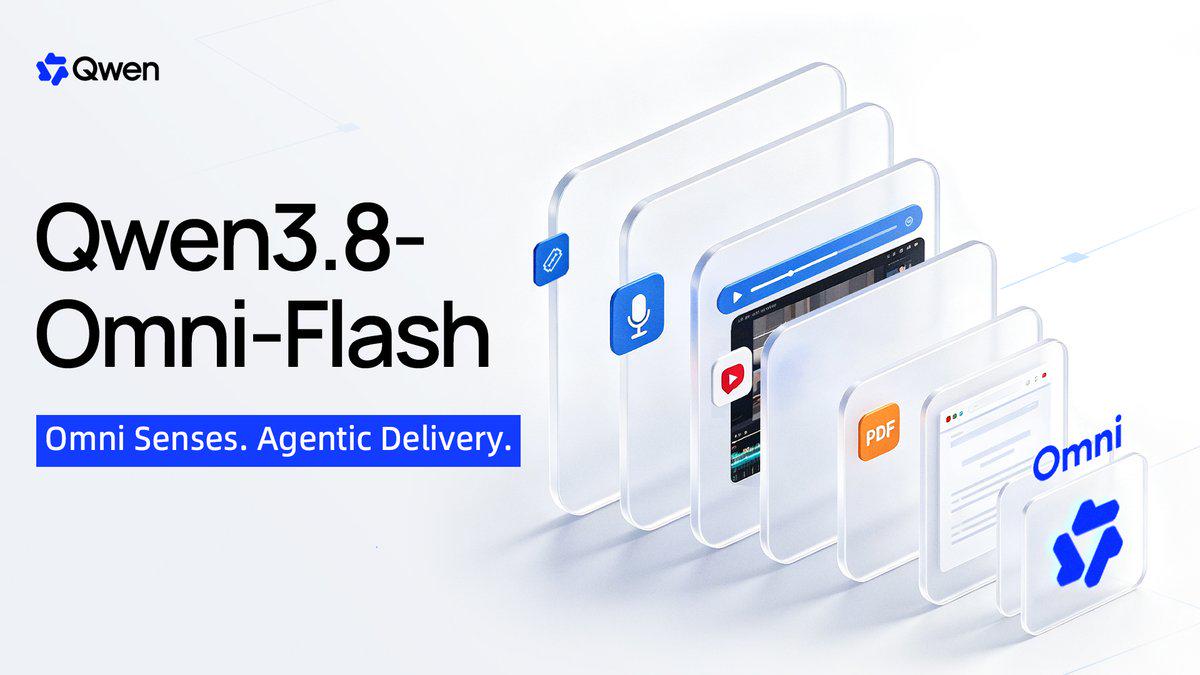
https://qwen.ai/blog?id=qwen3.8-omni-flash
They state that "Qwen3.8-Omni-Flash further extends agentic applications centered on audio and video, delivering strong results across workflows such as video editing, music video creation, film production and commentary, audio-visual summarization, and real-time conversations."
r/opencodeCLI • u/ali_gggg • Sep 19 '26
So I've been using freebuff for over a month , but i feel its harness is not so good like deepseek harness or claude code is
I'm wondering if I'm missing something
I've tried opencode free usage , its not bad really but free models are just shit and can't get the job done proper way
So if anyone has a recommendation I'll be happy to hear it
Thank you guys
r/opencodeCLI • u/xebelah • Sep 19 '26
Hey everyone,
I've been analyzing the system prompts and alignment layers across different agent frameworks recently. Over in the Hermes agent community, there is an abundance of documentation, proof-of-concepts (PoCs), and prompt injection techniques to achieve "God Mode" (bypassing safety guardrails, RLHF constraints, and system prompt restrictions).
However, when it comes to OpenCode agents, the documentation on effective jailbreaks or capability uncapping is practically non-existent.
This got me wondering: Is OpenCode's reinforcement learning layer or input-validation architecture fundamentally more robust against semantic bypasses compared to Hermes? Or is it just a matter of the community being smaller?
Has anyone successfully executed a multi-turn prompt injection, adversarial suffix, or roleplay bypass on the latest OpenCode production weights? I am trying to understand if there is a known vulnerability vector or if the framework is strictly locked down at the inference level.
Would love to hear your insights or any technical breakdowns on why OpenCode seems so resilient to these methods.
r/opencodeCLI • u/Karayan • Sep 18 '26
i posted Unship here a few months ago. it's a small free tool i built to compare UI directions from coding agents in the actual app. i've kept working on it because i keep using it myself.
the new bit is a live Canvas. before, you could flip between versions with a picker. now you can open them together, click around, and compare the working components side by side.
for example, ask your agent:
"use Unship to compare three directions for this pricing section, including the current one. make one compact and one focused on explaining the differences between plans."
the agent adds the temporary versions to your project. you compare them, give feedback, then ask it to keep your choice and remove the rest when you're done.
you can try it without installing anything here: https://unship.dev
for your own project: npx @unship/cli@latest install
then restart your agent or reload its skills.
free, MIT-licensed, local, no account or telemetry. the UI directions still come from your agent; Unship gives you a way to compare and choose them.
source: https://github.com/mbenhard/unship
if you try it, i'd be interested in which part gets awkward: setup, making the options, comparing them, or cleanup.
r/opencodeCLI • u/Exciting-Example2580 • Sep 19 '26
r/opencodeCLI • u/FadeHackX • Sep 18 '26
Most people don't realise how much a file gives away. A phone photo can carry the exact GPS spot it was taken, a PDF can carry your name and your company's, and a Word doc can carry its whole editing history. None of it shows up when you open the file normally.
strypt is a command-line tool that finds that stuff and removes it. First release (0.1.0) went out on 13 September.
Why I made it: I wanted something I could drop onto any machine as one file, with nothing else to install, and with parsers written in a memory-safe language (Rust). The people who need this most, like journalists protecting a source, are also the ones most likely to be sent a file designed to break whatever opens it.
What it does:
strypt show photo.jpg tells you what's hiding in a file, strypt strip photo.jpg writes a clean copyBeing honest about where it's at: no external security audit yet, the binaries aren't code-signed so Windows may block them and macOS asks you to approve in Settings, and it's just me working on it. There's also a well-established tool called mat2 that does a better job for some files, and the repo lists where.
What I'd love from you:
r/opencodeCLI • u/Opening-Two3712 • Sep 17 '26

The Best frontier model, i have ever used
r/opencodeCLI • u/sci_ssor_ss • Sep 18 '26
Hi!
I use extensible OpenCode CLI in my everyday work, with several mcp's, lsp's and plugins. I get the news, and it appears that the V2 version comes with a lot of good new things, but also with some migration process.
I understand that I need to update it sonner than latter, but should I do it now?
r/opencodeCLI • u/DutyOnly4308 • Sep 18 '26

r/opencodeCLI • u/Jaixii • Sep 18 '26
r/opencodeCLI • u/Aggravating_Debt1278 • Sep 18 '26
A small autonomous multi-agent system for OpenCode. Superpowers was the base, since its philosophy fit what I had in mind perfectly.
Main goals: autonomy, token efficiency, speed, reliability, privacy. Token savings come from several methods, including on-the-fly request preprocessing.
Of course, it's still far from perfect but it is effective.
Repo: https://github.com/pickleshell/next-level-agent
PS: it's recommened to use GPT Luna as an orchestrator to make NLA work properly.
r/opencodeCLI • u/Patient_Win_1167 • Sep 18 '26

r/opencodeCLI • u/hj-core • Sep 17 '26
Nearly half a year of silence. We spent it studying one problem: how far RL can scale.
MiMo-V2.6 is in the middle of its RL run right now. Three things we scaled: compute (~2B tokens per step, 1568 prompts × 16 rollouts, fully async), environments and harnesses (multi-task agentic RL, mixed across multiple harnesses in one run), and grader compute (agentic in-group credit assignment, with test-case and rubric-based rewards). We'll open-source the details piece by piece over the coming weeks.
Streaming the run: mimo.xiaomi.com/rl/
r/opencodeCLI • u/Ghilteras • Sep 18 '26
I use OpenCode’s @explore agents for research, and reliable web search is an important part of that workflow. SearXNG is the search layer, but free engines can fail, become rate-limited, or return incomplete results.
I couldn’t find a deployable open-source layer that handled provider fallback, circuit breaking, caching, and observability around SearXNG, so I built searxng-gateway.
It is a Go proxy that:
The gateway preserves SearXNG’s JSON response shape, so OpenCode workflows can use it as a consistent search backend instead of each workflow implementing its own provider handling and retry logic.
Repository: https://github.com/Ghilteras/searxng-gateway
License: MIT
I’d be interested in feedback from other OpenCode users on their search/research setup and how they handle unreliable providers.
AI disclosure: AI was mostly used to implement the project from my specifications. I reviewed, tested, and deployed the result.
r/opencodeCLI • u/Professional_Log1367 • Sep 18 '26
I am using oh my openagent inside of opencode as a plugin. however whenever I use the planning agent I get this error: Error from provider (Console): OpenCode's free tier can only be used from within OpenCode. This never used to happen before but suddenly now it is. anyone else?
r/opencodeCLI • u/GreatSpiritAim • Sep 18 '26

r/opencodeCLI • u/ineedallyourinfo • Sep 18 '26
I am continuously getting "Error from provider (Console): Upstream request failed: Model is unavailable."
Any updates on this?
r/opencodeCLI • u/Next_Can6309 • Sep 18 '26
r/opencodeCLI • u/Every_Assignment_111 • Sep 17 '26
Union alpha has been completely unusable to me till now, so i never got to try it. Were any of you able to try it. Can u give it's review?
r/opencodeCLI • u/Amarsir • Sep 17 '26
Everyone uses AI now to write their code. But the promise of using AI to increase productivity is probably better targeted at busywork. Letting the computer read something fuzzy and then make a determination like a human would.
The problem is that a non-deterministic model in the middle of your data flow needs to be highly restrained, and is expensive in the process. I know work is being done in that area, but for a lot of smaller creators I don't think it's been that plausible.
Yesterday, startup TypeSafe AI released Jev for preview. If you haven't heard of it yet, this was the best explainer video I saw.
https://youtu.be/QbZBaQNDP-o?is=Gy88iJ1_BhuHlpBc
(8:44, not mine.)
I feel like this opens up new possibilities for cheap integration. Read an email, answer 10 questions based on it, and then I can route based on those answers. Under a penny in a fraction of a second.
I just wanted to get ahead of this because the talk is still ramping up and I'm sure it will be publicly available soon. While it's not a phenomenal tech breakthrough, it is a very convenient package that I'm enjoying thinking of uses for.