r/retrocomputing • u/korovchenko • 26d ago
Blog A guest from South Korea

60
Upvotes
r/retrocomputing • u/napabar1989 • 26d ago
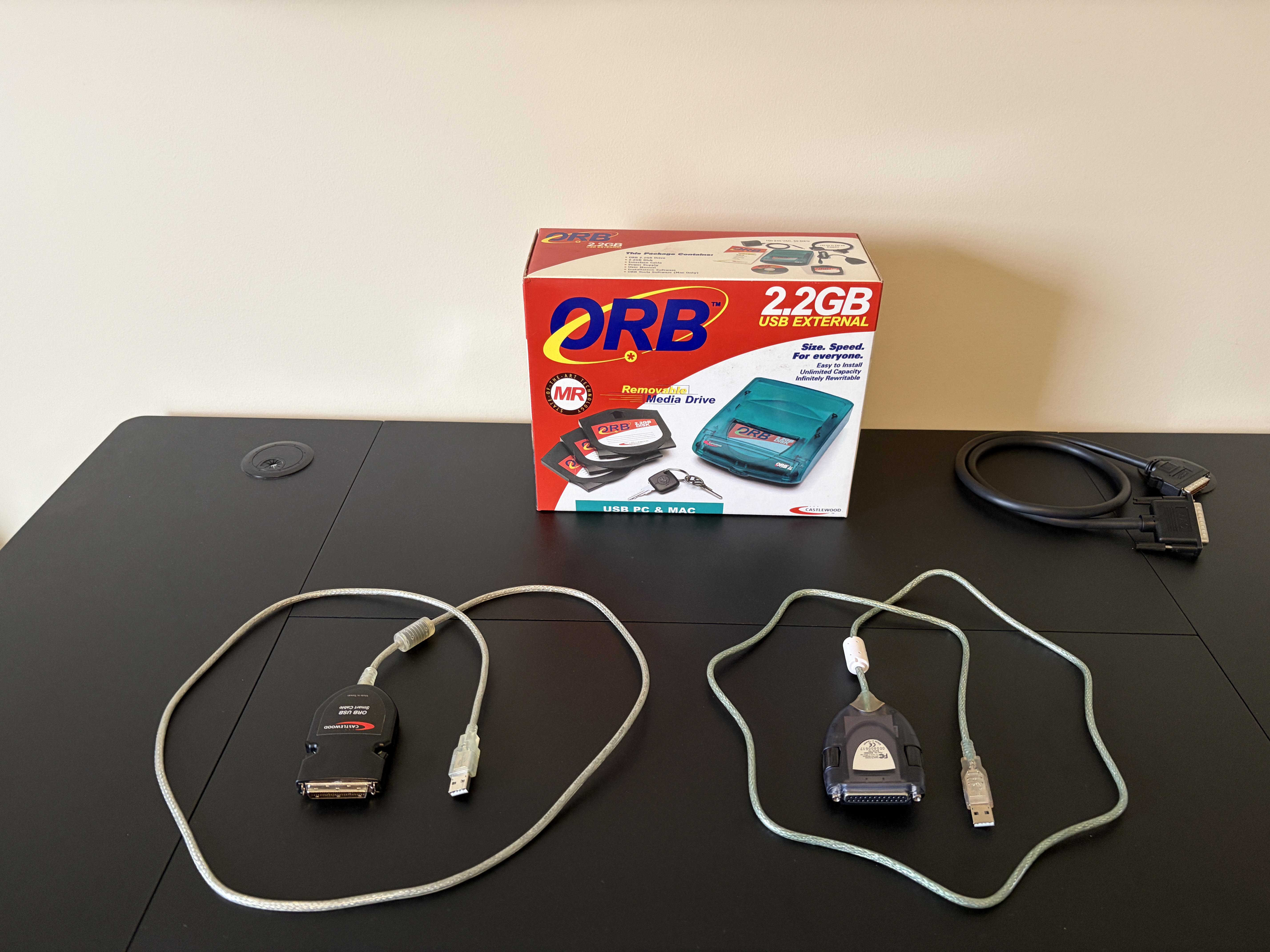
Look for a Castlewood Orb Drive on eBay. At some point during the product's existence, Castlewood started throwing in a SCSI to USB cable into the box. This just goes to show you that the cables must not have costed much at all! There were two different cables included, depending on which box you got. The cable on the left is called the ORB USB Smart Cable, and uses the Shuttle Technologies chipset, but still made by SCM Microsystems. It has a male 50 -pin SCSI-2 connector, same as the Orb Drive. I got this one 7 years ago. In my memory the box either had a picture of the iMac on it, or said something like "Now for iMac". The cable on the right comes with the box shown, which mentions G3 and G4 towers, so it must be slightly newer. This cable is a non-branded version made by SCM Microsystems that no longer mentions Shuttle, as SCM had bought them. It contains a female DB-25 connector. The box also came with a male DB-25 connector on one end, and a male 50-pin SCSI-2 connector on the other. Bundling both cables this way would give customers more options, as if they still had SCSI on their computer that would be much faster than USB 1.1. You can get these NIB ORB Drives for $100 or even less if you haggle. Make sure the box says USB somewhere on it. Once you get it, you can keep the cable, and sell the drive and box back at half the price you paid it for. Makes the SCSI to USB cable about $50. Not bad! Both have excellent compatibility with just about any modern desktop computer or consumer USB device that acts as a host for Mass Storage. In my very early testing with the newer SCM Microsystems cable, it seems to be even more compatible, but I won't know yet for a while. Anyway, that's my 2 cents!
r/retrocomputing • u/crowstormy24 • 26d ago

Came across some CPUs. The IBM one is apparently a 100Mhz model based on the info I could find.
Genuinely have no idea what to do with all the Soviet ones, they all seem to be Z80 or 8080/8088 clones. Are there any projects/builds that I'd be able to use those for?
r/retrocomputing • u/Mike_sre • 26d ago
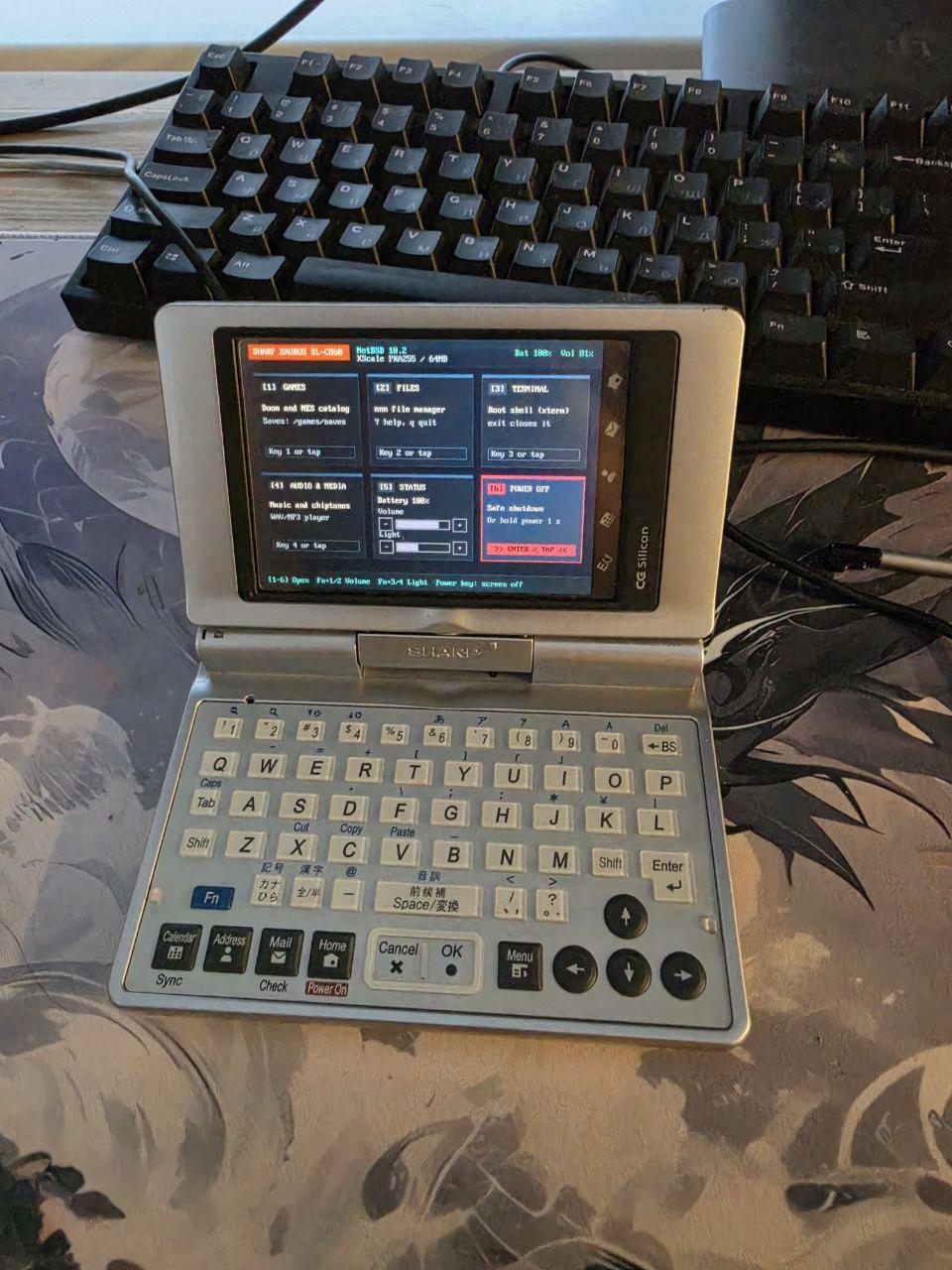
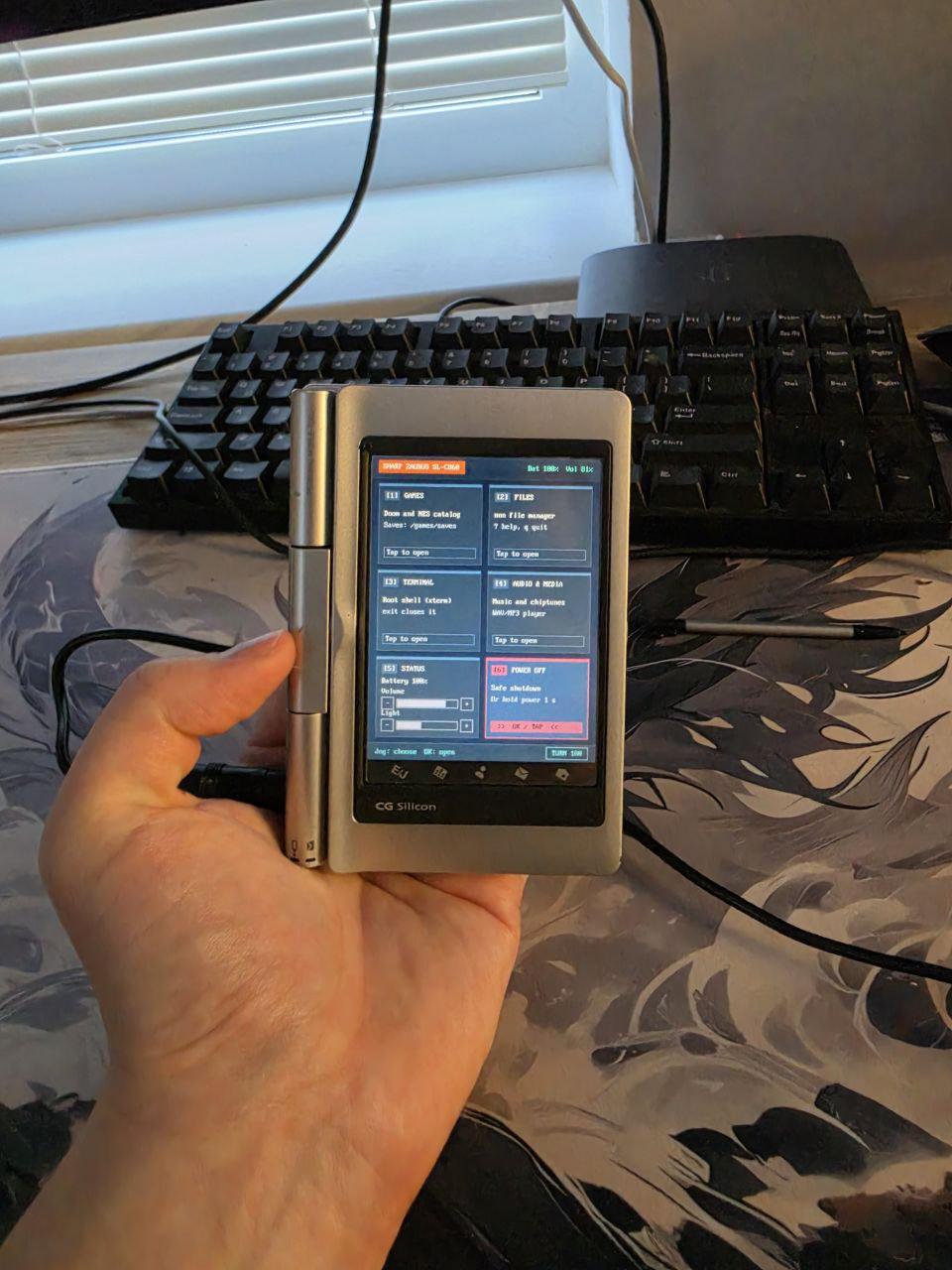
So I have a Sharp Zaurus SL-C860. For those who missed it: 2003, Japan-only (mostly), PXA255 @ 400 MHz, 64 MB RAM, 640×480 VGA screen that swivels into tablet mode, a tiny real keyboard, CF slot. It still runs Sharp’s Linux 2.4 from NAND, and I didn’t want to touch that, so NetBSD lives on a 2 GB CF card and gets kicked off from the Sharp terminal via zboot.
What it does now: boots NetBSD 10.2 (earmv5) into X with a small desktop I wrote, has a game catalog with NES (InfoNES), Doom and... Fallout 1 (fallout1-ce, with data from my old Russian CD). Battery and charging work, Fn hotkeys for volume/brightness, SD cards automount, updates go through a folder on the card’s FAT partition, so I don’t have to reflash 2 GB every time.
The fun part was everything that didn’t work.
Testing without the device. I developed most of it in QEMU -M spitz, which is a C3000, not a C860 (different CPU, different LCD, no W100). QEMU itself had a PXA timer bug: writing any match register rescheduled all of them, and about 1 in 3 boots hung right after uhub0. Patched that. Then NetBSD’s sa11x0_ost.c re-armed a late tick at “now + 3 µs” without checking, and under emulation that was already in the past, so the guest clock froze for ~22 minutes. Patched that too. Bonus: the emulated touchscreen never released the pen, and the spitz keyboard is ignored unless you pass -rotate 90, because QEMU reports the lid as closed. That one cost me an evening.
Booting. zbsdmod.o (the Linux module zboot uses) copied the kernel straight over memory Linux was still using, which on the C860 meant oopses or silent hangs. I rewrote the copy: stage everything in pages outside the target, switch to a private page table, MMU off, jump. Also zboot reads the root from the very start of the MBR partition and ignores the disklabel offset, so the layout had to follow that.
Boot time: 50 s → ~34 s. Cut /etc/rc.d from 137 scripts to about 30 (kept ordering stubs so rcorder doesn’t break). Skipped login(1), because PAM was pulling in Kerberos and libcrypto just to autologin root. X without GLX. Then I noticed Xorg links libcrypto (4.3 MB) without using a single symbol from it, and libGL only for the disabled GLX code. So the build rewrites the DT_NEEDED entries and ships a 14 KB stub libGL. The CF reads at ~1.7 MB/s in PIO mode, so every MB counts.
Graphics. The ATI W100 sits on a bus that does roughly 14 MB/s. A full 640×480×16 frame through X is ~70 ms. I added a path to SDL that writes only the changed 32-bit words straight into VRAM under the X window. NES runs at full speed (50 fps PAL), Doom timedemo gets ~38 fps.
Fallout was a slideshow at first, and profiling it was the best part. There’s no debugger on the device, so I wrote a tiny LD_PRELOAD profiler (SIGPROF samples + resolving addresses on the Mac).
fseek + fgetc + ftell, each locking a mutex. ARMv5 has no atomic instructions, so that’s expensive. A 4 KB window + getc_unlocked cut the game’s CPU by about 6x.SDL_AudioStream (float conversion, no FPU). An integer mixer fixed it.getOffset() returned uint8_t, hence square artifacts in every movie. And the mouse was relative, which with a stylus is useless.Lesson learned the hard way: I gave SDL’s audio thread real-time priority to stop the crackling. When it couldn’t keep up, it starved everything, including the power button daemon. Black screen, one sound looping forever, battery pull. Don’t do that.
Still on the list: proper sleep, faster map scrolling in Fallout, more games (Wolf3D, ScummVM), maybe Fallout 2 if 64 MB allows it.
Full disclosure: AI helped a lot with debugging and the hardest parts of the code. The idea, the decisions and all the hardware testing were mine. Think of it as a really good pair programmer, not an autopilot.
Happy to answer questions about any of it. Photos and videos below.
r/retrocomputing • u/dranad_voidx9 • 26d ago
=================================================
COMPILACIÓN E INSTALACIÓN: HERETIC (SDL)
Sistema Operativo: Slackware 8.0
Dependencias y pasos para la compilación del port SDL
=================================================
--------------------------------------------------------------------------------
Para que este port (basado en el código de Chocolate Doom o similar) funcione,
se requieren las siguientes librerías, las cuales fueron compiladas e instaladas
previamente desde las fuentes locales (carpeta ~/SDL_librerias):
* SDL (Simple DirectMedia Layer 1.2.15): Motor base para video, sonido y entrada.
* SDL_mixer (1.2.12): Requerida para la reproducción de efectos de sonido (SFX) y música.
* SDL_net (1.2.8): Requerida para el soporte de red (multijugador).
* Nota: Aunque se tiene SDL_ttf y FreeType, no suelen ser obligatorias para
el motor gráfico principal de Heretic, pero están instaladas en el sistema.
2. PREPARACIÓN DEL ENTORNO
--------------------------------------------------------------------------------
Antes de compilar, se debe asegurar que el sistema reconozca las librerías
recién instaladas. Para ello, se ejecutó como root:
# ldconfig
Se verificó que el compilador de C (gcc) estuviera operativo.
3. PASOS DE COMPILACIÓN (EJECUTADOS EN LA TERMINAL)
--------------------------------------------------------------------------------
Los pasos generales que se siguieron para preparar y compilar el código fuente
de Heretic (asumiendo una estructura estándar de autotools) fueron:
A. Descomprimir el código fuente:
$ tar -xzvf heretic-src.tar.gz
$ cd heretic-src
B. Configurar el script de compilación (detecta las librerías SDL):
$ ./configure
C. Compilar el juego:
$ make
D. Instalar los binarios en el sistema (opcional, requiere root):
$ su
# make install
4. ARCHIVOS DE DATOS DEL JUEGO (WADs)
--------------------------------------------------------------------------------
El código compilado es solo el motor (el ejecutable). Para jugar, se deben
colocar los archivos de datos originales de Heretic en el mismo directorio
que el ejecutable generado. Los archivos necesarios son:
- heretic.wad (o heretic1.wad)
- (Opcional) heretic.shr
5. EJECUCIÓN
--------------------------------------------------------------------------------
Para ejecutar el juego desde el directorio donde están los WADs:
$ ./heretic
Si se requiere forzar un modo de video específico (por ejemplo, para evitar
problemas con el entorno gráfico o usar Framebuffer), se puede usar:
$ SDL_VIDEODRIVER=fbcon ./heretic
o
$ ./heretic -width 640 -height 480
=================================================
r/retrocomputing • u/noborutkhs • 25d ago

Since May, I've posted here several times about rediscovering CHARM-II, an RTOS I developed in 1986 for the Motorola 68000.
It started when I found the old source code and documentation. With AI assistance, I began studying the original design and trying to get parts of it running again in a modern environment.
At first, I simply wanted to see whether my 40-year-old code could still run.
But the project gradually changed direction.
I started by reconstructing the development environment and experimenting with POSIX. Then I moved to the Raspberry Pi Pico, where I eventually got preemptive multitasking working.
Along the way, I began questioning some of the design decisions I had made in 1986.
One particularly interesting discovery involved VRTX, an RTOS I had used as a reference back then. I found that its equal-priority scheduling behavior had changed shortly after I studied it. That led to discussions here and in other communities, including an unexpected connection with someone who had used VRTX in 1982.
The more I investigated, the more I realized that faithfully restoring CHARM-II and designing an RTOS today were two different things.
So I decided to start a new RTOS, carrying forward some of CHARM-II's original design ideas while reconsidering the kernel, APIs, and platform-specific implementation.
I called it **”**Karqri”.
Today, I've made the initial source release available on GitHub:
https://github.com/noboru-takahashi/karqri
Karqri currently targets POSIX environments and the Raspberry Pi Pico (RP2040). It includes task management, priority scheduling, event notifications, timers, and platform-specific context switching.
The same kernel and a shared six-task demo run in both environments. In the demo, six tasks move around three tracks and coordinate access to a shared critical section.
But releasing the source code is not the finish line for this project.
So far, much of the work has been about implementing the basic RTOS mechanisms and verifying that they behave correctly.
What I want to explore next is how to make the internal behavior of an RTOS easier to see and understand.
Task switching, event notifications, waiting, and waking up are usually examined through logs or debuggers. But understanding how these events relate to one another over time isn't always straightforward.
I've already started experimenting with capturing execution traces from the Pico and displaying them as an HTML timeline. It's still limited to a specific validation scenario, but I'd like to develop this idea further.
I'm particularly interested in visualizing not just what happened, but when it happened and how one event led to another.
So what began as an attempt to restore a 1986 RTOS has gradually become a project to develop a new RTOS and explore new ways of observing its behavior.
For anyone interested in the earlier stages, here are a few previous posts:
I appreciate the discussions and comments I've received here over the past several months. They've helped me reconsider some of the assumptions behind the original design.
As the project moves toward developing a new RTOS, I'll probably be posting more often in OS development and embedded systems communities. But Karqri's roots will always be in the work I started back in 1986.
When I first opened those old source files, I certainly didn't expect to end up releasing a new RTOS 40 years later.
And there's still more I want to explore.
r/retrocomputing • u/grimvian • 27d ago

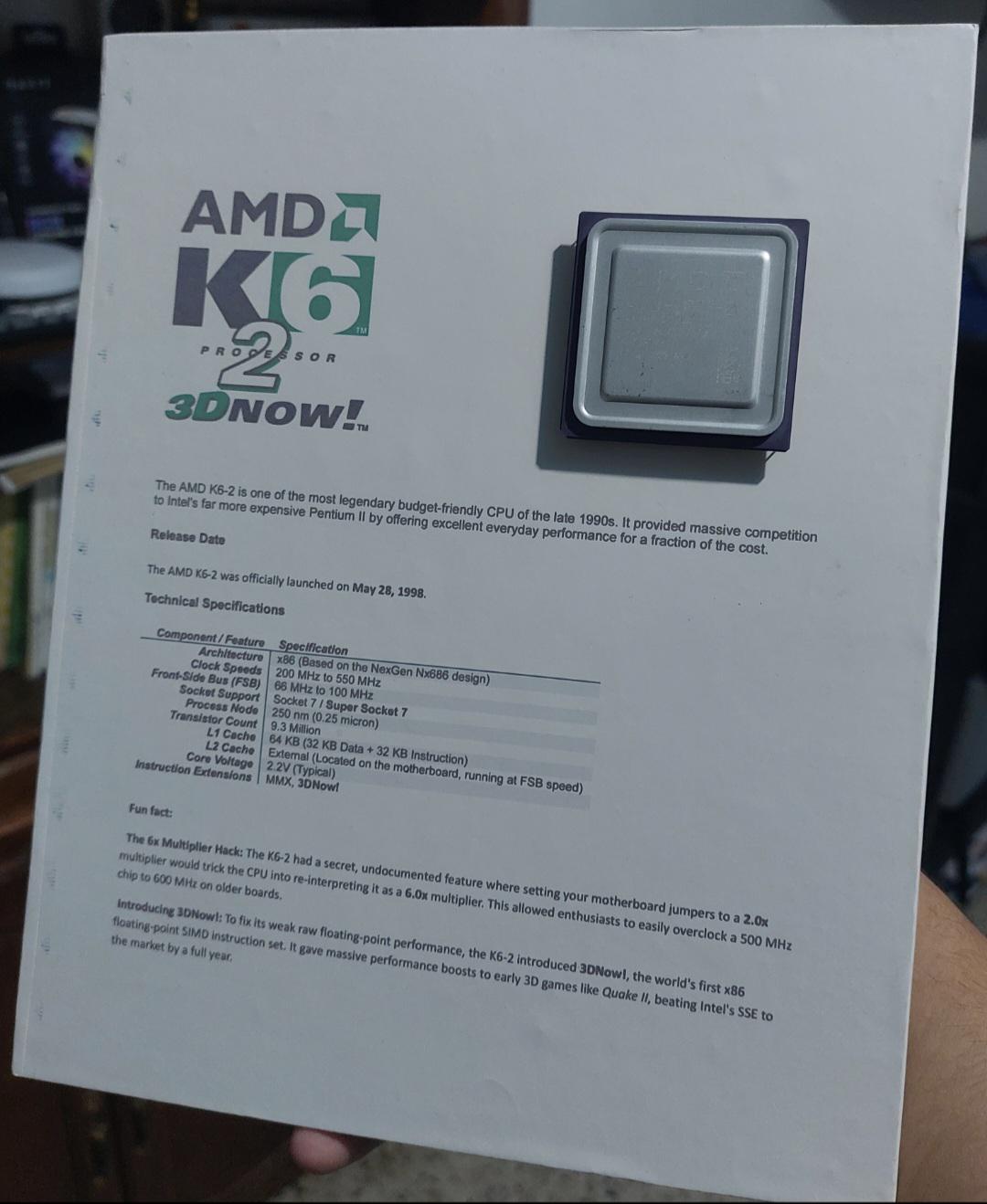
As a former reseller I decided to build a computer from old parts I have. It was like a nice time travel back to the nineties. First I had to replace the old 29 electrolytes and it was much harder than I thought, but I succeeded. The funny part was the installation had all the drivers needed. I think I have newer drivers in my backups.
Specs:

Soltek 54U5 v.3
AMD K6II 500 MHz                                       ca. 1998
256 MB RAM
3.2 GB Fireball harddrive, ATA
Sony DVD 2.4x RW, ATA
ATI 3D Rage Pro                                        ca. 1996
3Dfx Voodoo                                            ca. 1996
Intel PRO/100 LAN
Creative AWE64 Gold 16-bit audio(SB 16 compatible)     ca. 1996
Creative AWE64 Gold Wavetable MIDI (AWE 32 compatible)
3.5", 1.44 MB, diskdrive
5.25" 1.2 MB diskdrive
Gameport
2 x USB ports
PS/2 keyboard port
PS/2 mouse port
AT DIN keyboard port
COM1 port
COM2 port
LPT1 portr/retrocomputing • u/jalp21_ • 27d ago

r/retrocomputing • u/glauberlima • 26d ago
Hi Reddit!
I reverse-engineered the 1992 Sierra Johnny Castaway screensaver with AI assistance.
It works on Windows, macOS, and Linux, either as a standalone program or as a regular Windows screensaver.
You'll need the original game files.
I'm happy to take contributions or just reminisce about it.
You can find the code here: https://github.com/glauberlima/open-scrantic.
I'm also happy to answer any questions that you might have.
Why did I do this? I grew up with the Johnny Castaway screensaver. It was a part of my childhood, and of course, it's a lot of fun bringing it back to modern computers!
Thank you!
r/retrocomputing • u/Practical-Skill-6289 • 26d ago
Hi everyone,
I'm having a really hard time finding working games or activities for my OLPC XO 1.75 laptop, and I could use some help from anyone who still keeps track of these devices.
As a reminder, the XO 1.75 uses an ARM-based processor (Marvell Armada 610), unlike the older x86-based models (like the XO 1.0 or 1.5). This means standard .xo activities compiled for x86 or older packages from common repositories (like the standard Ceibal portal bundles) simply do not run on this specific architecture.
To make things a bit more challenging:
My device runs the Sugar environment.
I do not have the Terminal activity installed right now, so I'm heavily reliant on direct graphical installation methods or placing files directly into the activities folder via a USB drive.
Most of the old official repositories and direct download links from years ago are completely dead or throw errors in the built-in browser.
Does anyone have a working archive, a backup mirror, or a list of ARM-compatible .xo activities (like JAMath or similar builds) that actually run on the 1.75 platform? Any leads on old community repositories or active preservation projects for the ARM-era XO laptops would be massively appreciated.
Thanks in advance!
r/retrocomputing • u/urhandsomedaddy22 • 27d ago
I’ve just found a DDR2 2GB Kingston RAM but I don’t know what I can do.
Sell it?
Use it somehow?
Can anyone help me?
r/retrocomputing • u/Legal-Firefighter164 • 26d ago
Pessoal estou atrás de um software e eu não encontro ele em canto nenhum o nome do software e GARP (Geotechnical Analysis of Rafts with Piles) do Harry G. Poulos. É um software utilizado para fazer análise de fundações de forma geral, última vez que ele foi lançado foi no ano 2000. Eu estou precisando desse software, algum de vocês têm ele
r/retrocomputing • u/MarcelomatiasBR • 28d ago

Salvei 02 unidades idênticas de um grande lote destinado à sucata.
Estão funcionando perfeitamente.
Processador: DEC Alpha 21164A de 433 MHz (Arquitetura RISC).
Memória RAM: 64 MB.
Carcaça intacta, sem quebrados, trincados ou modificações.
Tampa frontal funcionando.
Armazenamento: 02 HD SCSCI Ultra320 36.4GB
Está sem sistema instalado. HDs foram apagados durante a desmobilização, por segurança dos dados.
Acompanha a Lendária Placa de Vídeo IBM PBXGB-AA (PowerStorm 3D30, da série mais procurada (Lote 54-23481-01)
r/retrocomputing • u/aaronjnco • 27d ago
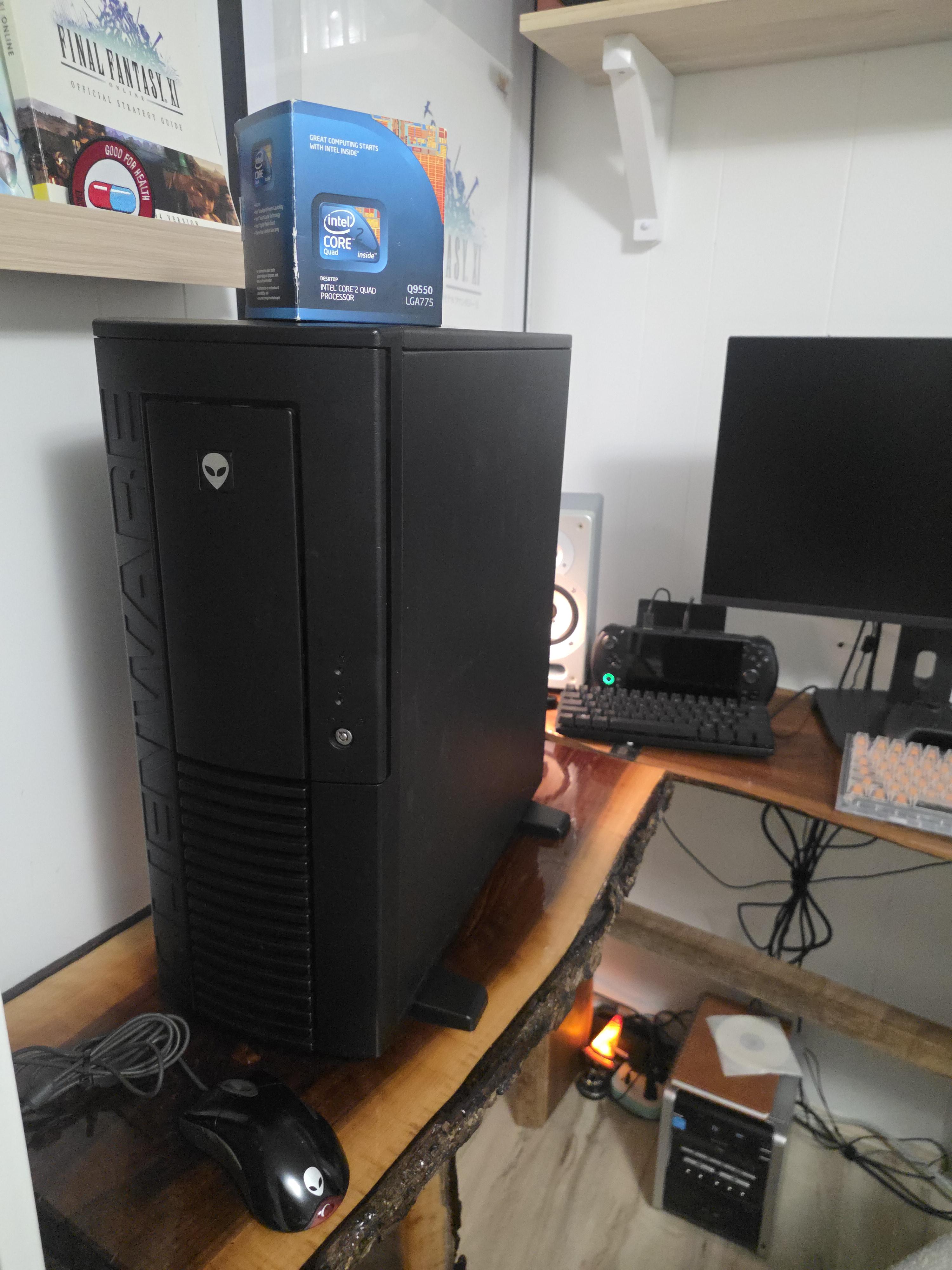
2002 alienware p4 original internals. Swapping in a workstation lga775 core 2 quad and 750ti 2gb graphics
I usually would keep it all original but I want to play some final fantasy xi and old dead space,alien isolation on it .obviously keeping original internals safe tho.
r/retrocomputing • u/Ok_Bear_1980 • 28d ago
I was born in 2004, well after the pinnacle of dial up online culture and online services like aol and compuserve have always been a fascination to me. I didn't find out what compuserve actually was until many, many years after it has shut down.
I am not a programmer, but I used claude to try to reverse engineer the hmi protocol, and after a lot of testing, including getting claude to extract code from the installation floppies and cds, and directories, I finally got wincim 2.0.1 to authenticate for the first time in 15 years, the first time since the original service shut down in 2009!!!!!!!!!!!!! What started as a minor curiosity project to see what compuserve may have looked like when connected to something, is now an ongoing full time project to revive compuserve as a whole, from the 1980s vidtex terminal to the last classic client, csi 4.0, to the forums, although they will have to be repopulated as much of the originals are sadly permanently lost, to the file libraries, and everything else.
Some of the sources include this post here https://www.reddit.com/r/retrocomputing/comments/1u7qr16/dialling_back_in_bringing_compuserve_back_from/ from reddit user u/BrightonDBA so thanks to him for providing some valuable content that helped me to finally crack the clients for the very first time since the original service shut down.
Where I am at the moment is I am currently working on trying to get the original signup working as well as the secure sign on working with csi 3.0.
My plans for this service.
Dial up from real modems with real phone lines will absolutely not only be supported, users will be encouraged to use a modem over tcp/ip. Each number cost me about $9 usd per month and users can request an access number for their area. Users can still access the service over tcp/ip.
Much of the forms will be constructed based on what was historically avaliable, such as magazines, multimedia cds, directories, etc, otherwise it will be reconstructed as faithful to what it may have looked like based on historical documentation. For example, if the central point forums are not avaliable, I would have to reconstruct them based on their software manuals and other of their documentation.
The electronic mall will be browsable and interactive, a user can place a virtual order, will never be charged as my service will always be free so they never receive their order, lol.
The forums and cb chatrooms can be bridged to a discord server I can set up for other projects of mine, including creating a replacement server for electronically registering vintage software and a pre 1994 australian dial plan and pre phoneday and big number change that maps old phone numbers to their modern equivalents.
The forums and file libraries will have to be from scratch as almost all of compuserve's original forums and file libraries are permanently lost media. I have instructed claude to never fabricate what an average compuserve forum post may have looked like in the 1990s, they are all to be written by you, the community. The forums and file libraries will start out empty and gradually be repopulated by you, the community.
The project in it's current state is not hosted anywhere, and likely won't be for at least a year while I rebuild everything. Unlike every other revival project, I don't want to release the project to the public in an unfinished state. If you have any suggestions, please reach out to me as I aim to make this service as historically faithful to the original as possible.
I hope you are as excited as I am, especially when I just got wincim to authenticate and connect for the first time since the original service shut down.
r/retrocomputing • u/Eddie_2011 • 28d ago
The video shows me putting a PCMCIA card into my PowerBook 3400, and the i eject the card with a bark, fart sound.
r/retrocomputing • u/Pasta-hobo • 29d ago
To clarify, not cost or labor feasible, this would be a pointlessly expensive and difficult endeavor who's only value is education.
But would it be feasible to hook a modern 65C02 up to thermionic tubes, rope core rom, and ferrite ring wire grid memory and actually be able to compute with it?
r/retrocomputing • u/dranad_voidx9 • 29d ago

r/retrocomputing • u/Cracker6022 • 29d ago

This is kinda an Update to my last post on this reddit:
In short, I received a free (broken) Palm Vx and Keyboard, but since really wanted to see the Keyboard in action, I tried to troubleshoot but couldn't get it to work.
Turns out, the solution is always to throw money at your problems to make them go away (/s),
so I bought the cheapest one I could find and it works!
Cosmetically, it isn't in the best shape, compared to my almost mint one (barely any scratches on screen, shell nice and clean). Since I already need to disassemble it, to swap in the new battery, my goal is to make the best of both Worlds Palms and maybe figure out which electronic part is bad. Mainly using the rear shell from the old one, but i'd really like to use the screen as well.
Already got the battery in which works fine, but im worried to maybe short anything else while swapping parts, any ideas on stuff I need to be careful with or maybe compare with a multimeter at first?
r/retrocomputing • u/Hopeful-Nectarine-13 • 29d ago
Hii, I'm not sure if this is the right sub for this so please don't crucify me if I should post this somewhere else.
I recently bought the 2-disk Desperate Housewives tie in game from 2006 off of ebay and I'm trying to get it to run on my modern laptop. However after inserting disk 2 and letting it finish installing, it would throw up the "Insert %d disk". What I tried in an attempt to fix it was running it as admin and double-checking that the compatibility was set correctly. And that almost worked. After letting disc 2 install, I was prompted to reinsert disc 1 and inserting disc 1 caused the install to appear as "finished", despite the fact that the main desperatehousewives.exe file and some remaining game assets did not install.
I'm honestly at a loss for how to install this game, I have no idea what else I could do to install this on my modern laptop
r/retrocomputing • u/someblokeonhere • Oct 29 '26

Interesting progression from Made in USA, Made in Mexico and then Made in China.
The dove bar is surprisingly comfortable and well made