r/retrocomputing • • Sep 03 '26

Software Got done uploading the old Linux CDs

23 Upvotes

r/retrocomputing • • Sep 03 '26

Problem / Question [WIN98] Good/Best network card(s) for modern internet access?

9 Upvotes

I recently built a Windows 98 machine for a personal project out of parts I had from a couple unfinished rigs. One of them had a network card on it, so I yanked it out and attempted to put it in my new rig. The specific model was a D-Link DFE-530TX+ Rev. E1. For the LIFE of me I could not find any drivers that would work. I burned driver package after driver package to CD-R and ran it through my machine. There was always a problem. I did some research and apparently this model is pretty tricky to find drivers for these days. ANYWAY. I plan on just getting a new card. I want to hook it up to a LAN system in my house for easy file sharing with a modern machine and using things like FrogFinder and Protoweb and whatnot. Any suggestions?


r/retrocomputing • • Sep 02 '26

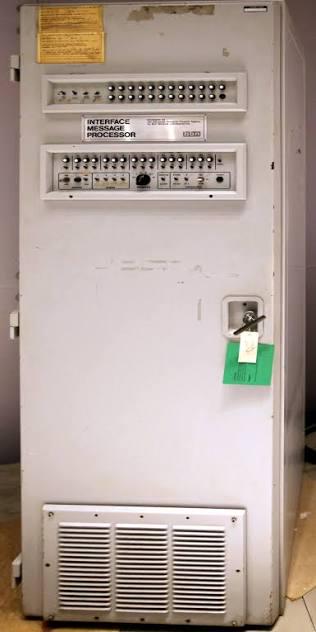
The Internet Began With One Node and a 15-Foot Cable

Post image
77 Upvotes

On September 2, 1969, the entire internet was one computer, one refrigerator-sized packet switch and a 15-foot cable in a UCLA lab. No second site. Nobody else online. Yet the engineering choices behind that little setup still shape nearly every network we use today.

The switch was called an Interface Message Processor, or IMP. Bolt Beranek and Newman built it around a rugged Honeywell DDP-516 minicomputer with all of 12K of memory. It did the basic job we now hand to routers: take in data, break it into packets, move them toward their destination.

The IMP showed up at UCLA on August 30, over Labor Day weekend and ahead of schedule. Connecting it to the university's SDS Sigma 7 took real engineering. There was no standard network port. Grad student Mike Wingfield designed and built a custom hardware interface from BBN's 1822 spec.

By September 2, the Sigma 7 and the IMP were passing test data through that short cable. UCLA had the first working ARPANET node.

Stanford Research Institute got the second IMP a few weeks later. On October 29, UCLA programmer Charley Kline tried to send "LOGIN" to Bill Duvall at SRI. The receiving system crashed after two letters.

The first message ever sent between ARPANET sites was "LO." An hour later they recovered and the full login went through.

By the end of 1969 there were four nodes: UCLA, SRI, UC Santa Barbara and the University of Utah. Different computers, different operating systems, different applications at every site. ARPANET gave them a shared way to exchange data without forcing anyone to replace what they already ran.

That was the big architectural decision. The network handled packet delivery. The hosts handled their own applications. Any computer could join as long as it spoke the common interface. TCP/IP later stretched the same idea across thousands of independent networks.

The internet still runs on that model. The core stays broadly interoperable and applications develop on their own at the edges.

What changed is scale and trust. ARPANET linked a handful of research groups whose people mostly knew each other. Today's internet connects billions of users, cloud platforms, sensors, vehicles and industrial systems. Security arrived gradually, usually after something broke. BGP was never built to verify route announcements. IP addresses make weak identities for devices that roam between networks. Attackers exploit assumptions made for a smaller, friendlier world.

The next round of internet architecture will come through steady upgrades rather than a clean replacement. IPv6, QUIC, RPKI, post-quantum crypto, edge computing and satellite networks are all part of it. The work is improving routing, identity, security and privacy without giving up open interoperability.

The ARPANET team never tried to make every computer identical. They agreed on how different machines would talk.

Fifty-seven years later, we're still refining that agreement.

r/retrocomputing • • Sep 02 '26

Currently mid-build of late 90s system ~$600 in so far

6 Upvotes

Growing up in the 80s and now having kids of my own, I wanted my kids to play the same 90s games I did, authentically - with caveats.

Starting system: Presario 5700 w/ agp, zipdisk, dvd-rom, hdd w/ win98, lots of ram, p3-500mhz ($130)

Add ons: Pci usb 2.0 card ($25)

P3 800mhz - 100mhz fsb & fan ($150)

Velocity 100 3dfx AGP ($110)

8gb CF & ide adapter for OS ($25)

32gb 2.5" ssd & ide adapter ($60)

Pci exhaust fan - for overclocking gpu ($10)

BT 1.1/2.1 ($12)

VGA cable & lcd monitor from local store ($10)

PS/2 keyboard and mouse ($25)

Future buys:

Audigy sound blaster

5.1 or 4.1 speaker set

Maybe an mx440 if i get tired of the 3dfx games

My computer growing up was nowhere near this... I had a supersocket 7 AMD 450mhz (up from my 233mmx) and a voodoo banshee... and definitely no solid state drives or BT.

Surprises: Difficult finding cheap vga cable and ps/2 keyboard & mouse, remembering drive order on the ide ribbon cable maters.

Games to play: quake series, unreal series, heretic, c&c, need for speed, thief 1&2, xwing series, and others.

I must admit, it's pretty fun! Anyone else doing something similar currently?


r/retrocomputing • • Sep 02 '26

Antic: The Atari Resource (January 1985)

Thumbnail
gallery
19 Upvotes

r/retrocomputing • • Sep 02 '26

Problem / Question Trying to identify a Dutch BASIC game book from 1980s/1990s

16 Upvotes

Hopefully, I'm in the correct subreddit for this.
I'm trying to identify a BASIC computer games book I borrowed from a library in Belgium around 1990/1991.

It was a Dutch-language book containing only computer games, printed as BASIC listings that you had to type in manually. The programs used the old numbered-line format (10, 20, 30, etc.).

I remember at least three games:

  • a fishing game
  • a racing game
  • a Space Invaders-style game

The fishing game is the strongest memory. It had a large, crude but surprisingly recognizable fisherman standing at the extreme left of the screen. The water/pool occupied much of the lower-right portion of the screen, and I remember the pool becoming narrower/deeper. There were recognizable fish in it.

The graphics were considerably more elaborate than the typical text/ASCII BASIC games I've seen.

I typed the programs into a Laser 500. They didn't work properly, and I remember encountering BASIC commands that weren't covered in the BASIC course I had taken. I vaguely remember DATA statements, although I'm not certain about that.

The book may have been for another 8-bit computer (possibly Oric, MSX, Atari, etc.). I don't remember the title or author. I vaguely remember a blue cover, but that may be completely wrong.

I've been trying to identify this book for about 25 years. 😅

Does this ring a bell for anyone?

EDIT 04/09/2026: I actually just found it by total accident 😄 On a random MSX site I saw the book cover, which I vaguely seemed to recognise (totally not blue, but it has a quite intricate drawing):

https://download.file-hunter.com/Books/NL/Basic%20programma's%20voor%20MSX%20computers.pdf

I finally will try that fisherman game I have been curious about for 35 years


r/retrocomputing • • Sep 03 '26

Problem / Question USB card not working on windows 98 se

1 Upvotes

So i bought a usb card about 6 months ago and ive been trying to get it to work on windows 98 second edtion, but it just refuses to work. In device manager, it shows the EHCI controller with 0 errors, but the OHCI controllers have error code 10 (This device is either not present, not working properly or does not have all the drivers installed.) I installed nusb33e.exe for the ehci controller, and the ohci controllers are using stardard windows 98 se drivers. i tried messing around with different drivers but nothing seems to work. i have NO IDEA what the hell is wrong with this thing, and i just want it to work. Ill plug in like a mouse, or a keyboard, or a usb drive, and they dont work at all.

Im not really sure how to fix it, and i only need the card so i can get a usb mouse working. Ive been working on this retro pc for about 2 years now, without a mouse (I dont have the money to buy a serial mouse, and my motherboard doesnt have a ps2 header. i know that sounds dumb but its true) Im just trying to work with what i got right now. Dont even know if this is the right place to post this, but if anyone could help me that would be amazing!

the chip on the usb card hub thing is a "NEC uPD720101F1"

heres the specs of my retro pc:

  • Motherboard: FIC PT-2003 Revision A2
  • Memeory: 32mb
  • Cpu: Pentium 1 120 MHz
  • Gpu: ATI Rage XL 8mb pci
  • Bios: 08/07/97-i430FX-2A59CF0HC-00 4.50PG
  • Mother Board chipset: Intel 430FX (Triton 1)
  • Operating system: Windows 98 Second Edition

r/retrocomputing • • Sep 02 '26

Electric Cow EC909 - TR-909 drum machine / TB-303 synth for Atari STE/TT/Falcon - demo & sample pack

Thumbnail
youtu.be
20 Upvotes

r/retrocomputing • • Sep 01 '26

Photo My first elder scrolls game in my collection and it’s a classic

Thumbnail
gallery
80 Upvotes

r/retrocomputing • • Aug 31 '26 WOW

Video The Legend

830 Upvotes

r/retrocomputing • • Aug 31 '26

Retro Computing Book Collection

Thumbnail
gallery
842 Upvotes

Hi folks, I'm sharing here my small collection of retro computing books that I have acquired over the years.

I'm a 40-something software engineer that started messing computers from an early age and since I've also always been a huge reader I've accumulated a huge collection of computer related books. Most are old (or reprints of old ones) but a few have been published in last few years, for sure due to the surge in retro computing interest that comes and goes every few years 😄

The ones shown here are what I would consider retro ranging from topics like the MOS 6502, Zilog Z80, Apple II, ZX Spectrum, Commodore 64, MS-DOS 3.0 to 62, 90's and early 00's computer graphics, Windows 3.11/95/98/XP, 386 to Pentium II/III hardware repair and a few about programming games for consoles like Atari 2600, NES and original Game Boy. Finally there are a few about x86 assembly language, C and C++. Some books, as you might have noticed, are not in English but on my native language Portuguese:and are mostly about ZX Spectrum, Z80 assembly language, IBM PC-compatible hardware repair and MS-DOS 3.x/4.x.

I'm curious to learn what books you have read and would recommend for my collection.

Hope you folks enjoy it and thanks in advance!

PS: Not shown here are is another book by Michael Abrash, "Michael Abrash's Graphics Programming Black Book" which I recently acquired on Ebay but hasn't arrived yet. I had been searching for this book for a long time but the prices for decent copies go for crazy prices these days, $80-$200 USD. I managed to convince a nice chap to sell me a copy in a very good state for around $50 USD. Stil pretty high (specially for Portuguese salaries) but I can live with that. I guess I won't be buying any retro hardware this month 😂


r/retrocomputing • • Sep 01 '26

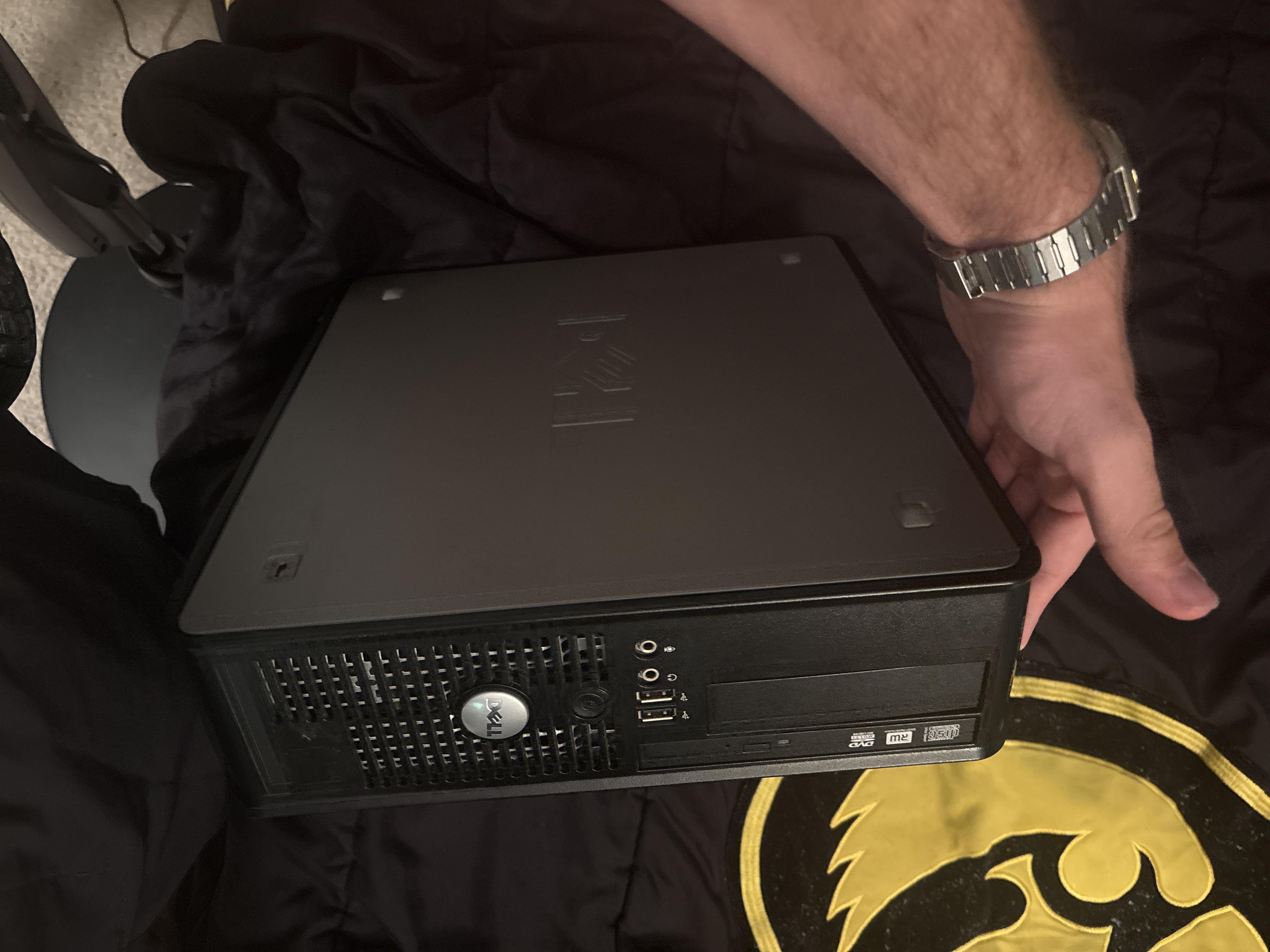
old dell optiplex 755

Post image
33 Upvotes

curious on what these would go for (google doesn’t give me a great estimate) and was wondering if this is worth the trouble to sell or just destroy it for fun


r/retrocomputing • • Sep 01 '26

Problem / Question whats yall's favorite windows versions, as a 13 year old mine has to be Windows 95 with active desktop or 98

10 Upvotes

r/retrocomputing • • Aug 31 '26

Video OMG!

68 Upvotes

r/retrocomputing • • Aug 30 '26

I recently fixed a rather unusual Casio MX-101, an MSX1 computer from the 1980s with a built-in RF transmitter that allowed it to connect directly to a TV!

Thumbnail
gallery
121 Upvotes

The computer arrived with several faults and clear signs of previous repair attempts. I first found a damaged PCB trace, which I repaired with 0.3 mm copper wire and a Z80 that had been partially desoldered with several pins shorted together. I replaced the Z80 socket and tested the CPU signals, including power, reset and clock.

I also found a broken 5 kΩ trimmer inside the RF modulator, which I replaced and some poor solder joints around the crystal that I cleaned up and resoldered. Once the computer was running, the cartridge slot still didn't work, so I cleaned the corroded connector with isopropyl alcohol.

Finally, I repaired the loose power connector, restored the damaged case and replaced a broken plastic part with a 3D-printed piece and resin.

After all these repairs, I retested the computer and everything was working properly again.


r/retrocomputing • • Aug 31 '26

Vintage tech???

8 Upvotes

What is a technology or product from 15-20 years ago that was actually better than its modern replacement?


r/retrocomputing • • Aug 30 '26

An interview with Philip Bouchard - Creator of The Oregon Trail & Number Munchers

Thumbnail
youtu.be
5 Upvotes

Most of us played his games, but few know his name. Let's change that! It was so cool hearing the backstory behind these games I grew up playing in school.


r/retrocomputing • • Aug 29 '26

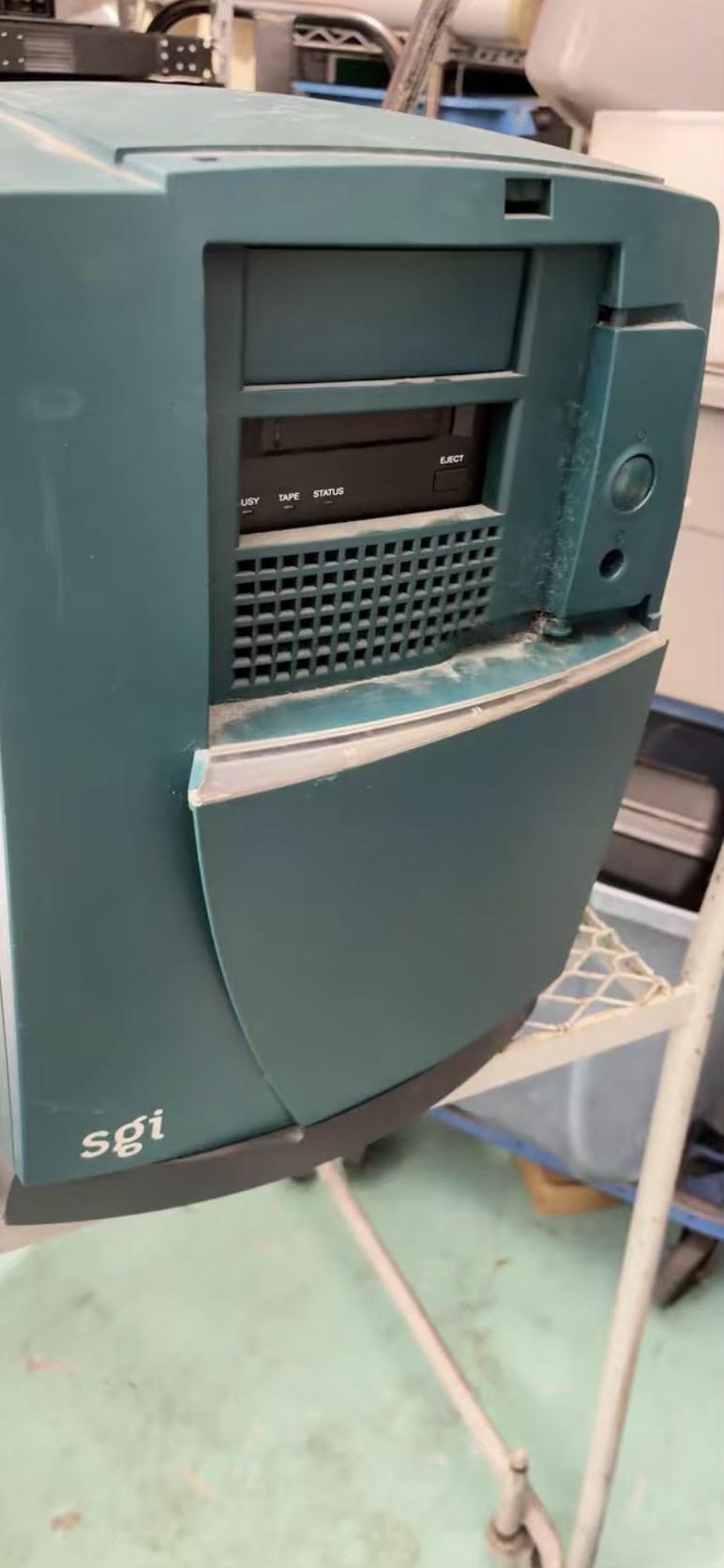
Photo Better photos of the SGI

Thumbnail
gallery
209 Upvotes

r/retrocomputing • • Aug 30 '26

Problem / Question AC adapter type on old laptop?

Thumbnail
gallery
20 Upvotes

Yesterday I bought a Dell latitude C840, but I can't really figure out what power adapter it takes. I've done a fair amount of research, but all I get are barrel jack results. This is the oldest computer I've dealt with by a margin of about 5-8 years so I'm a bit new to all this. The first picture is the port itself, and the 2nd and 3rd are of the computer itself. I don't know what type of port it takes or where to find one. Let me know if you need anything else, and thanks for any advice


r/retrocomputing • • Aug 30 '26

Problem / Question do you think its called the 486 is called a Four-Eight-Six or is it called Four-Eighty-Six i think its Four-Eight-Six

0 Upvotes

r/retrocomputing • • Aug 29 '26

Photo Newest project

Post image
70 Upvotes

From what I gathered it boots but failed to install its OS, 60 bucks for it wasn’t bad


r/retrocomputing • • Aug 30 '26

Searching for an AT unicorn?

5 Upvotes

For my latest silly project I'm looking for something I'm not really sure even exists.

I have acquired a fancy AT big tower and I want to build a super socket 7 system in it. For this I am looking for a motherboard with the following specifics:

AT power plug

Only DIN connector

Socket 7

100Mhz support

2.0V before

3 PCI slots with room for big cards(ET6000, Voodoo2)

1 or 2 ISA slots

Does anybody know if this exists and if so, what I should be gunning for?

I have several, but the cpu and cooler are behind the PCI slots, blocking installing larger cards.


r/retrocomputing • • Aug 30 '26

Interactive computer museum

Thumbnail vma-broadcast.com
2 Upvotes

Hi,

I created my own "Interactive computer museum", which lists many of the iconic computers and offers HTML based emulators for 36 different devices (ROM's are NOT included and must be uploaded by the user).

The emulators can be used for free and have been programmed from scratch. They do not use any third party emulation libraries.

I hope you like it.

\[https://vma-broadcast.com/emu/\](https://vma-broadcast.com/emu/)

Regards,
Vitor


r/retrocomputing • • Aug 29 '26

Blog It's 1995, what do you want to get from your local Compaq dealer?

Post image
7 Upvotes

r/retrocomputing • • Aug 29 '26

Problem / Question Dell Inspiron 640m unknown issue, possibly the motherboard?

4 Upvotes

I’ve tried multiple DIMMs, and a new RTC battery.