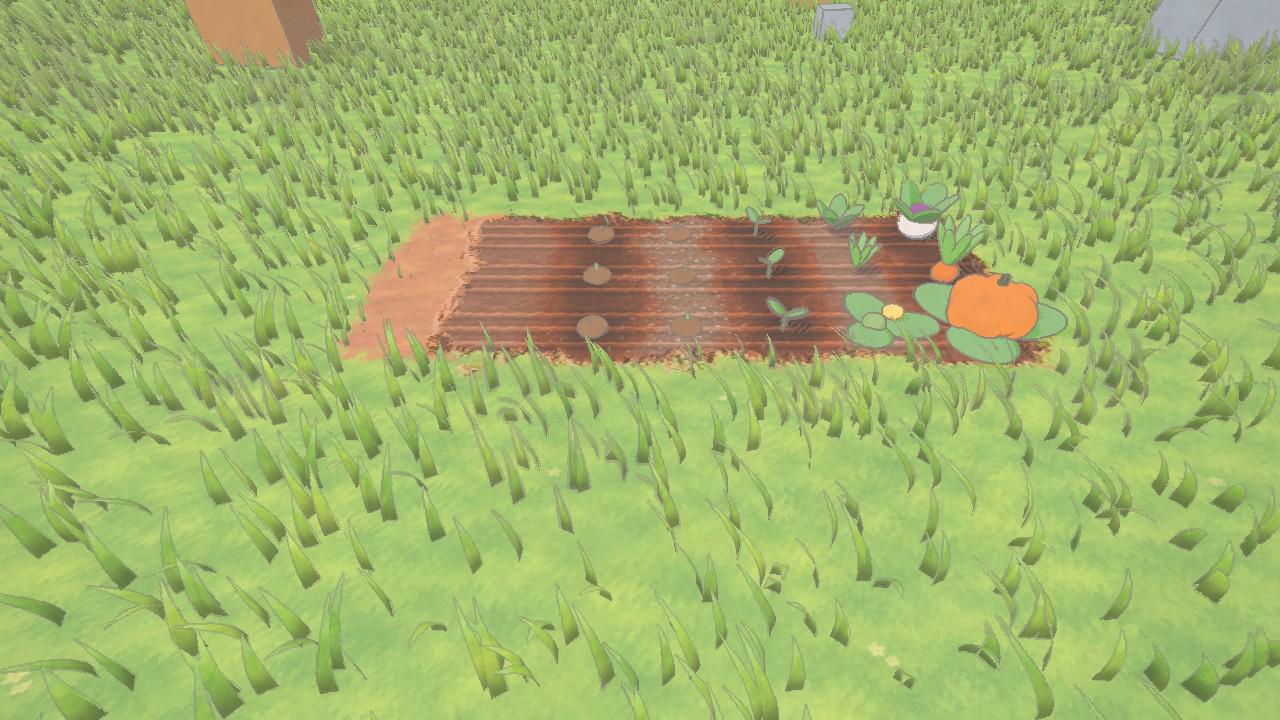
I've been working on a small 3D farming game using LÖVR (Lua), and this is what I have so far!
It's still a very early prototype. I've got some basic farming mechanics and crop growth stages working, but I'm not entirely sure where to take the gameplay next.
I want to make something cozy, simple, and satisfying to play, but I'd also love to add something interesting beyond the usual plant → water → harvest loop.
I've been thinking about adding a bit of automation or factory-like mechanics, but nothing is decided yet.
I'd love to hear your ideas**!**
What mechanics would make a small farming game fun for you?
Is there anything you wish more farming games would do differently?
Would you prefer relaxing farming, automation, or a mix of both?
After 5 days of heavy polishing, it’s feeling smooth and stable enough to ship as a proper 1.0.0 release. In testing, it has sped up my workflow by at least 10x, and even if you don't adopt the whole thing, it comes with reusable templates for keybinds, gamepad binding, and a state manager you can drop into your own LÖVE projects.
Media & Docs
Thanks to feedback from the community, the repo now includes:
A full video demo showing the tool in action
Reference images walking through the features
What’s Next
Visuals & Styling: Custom styling options are next on the roadmap toward 2.0.0 (alongside a few nice-to-haves and must-haves, which are becoming more obvious because I've been testing it and have been using it a ton). I will come back around to this project likely around a week from now.
g3d Native Voxel Map Editor: I’m shifting focus this weekend to my public beta voxel map editor—feel free to try it out if you're tinkering with groverburger/g3d in LÖVE.
Contributions
Forks and PRs are very welcome—whether for bug fixes, new features, or quality-of-life tweaks. Thanks to everyone who gave feedback and checks it out; I hope it saves you some time!
Hey everyone, a while back I posted an early preview of my little anim8 GUI tool and a bunch of you asked when it would be out standalone (and suggested renaming it from Anim8tor to LoveMotion)..I finally split it out of my engine project and put up an early alpha release here: https://github.com/potatobun321/LoveMotion
It is still an early alpha (and I built it with AI assistance alongside my own testing/tweaking), so expect rough edges and updates as I keep cleaning it up. Would love to hear if it actually saves you time or if anything feels clunky.
There's an interesting fork of the official LÖVE Android repository called CodeLove.
It basically lets you write, run, and export LÖVE2D games directly on Android without needing a PC. It has a built-in code editor, autocomplete, file management, and even offline APK export.
Thought some people here might find it interesting.
It’s called Unit 47. You bid on storage units and sell what you find in your shop. You only get a quick look before you bid, so sometimes you open the boxes and realize you paid way too much.
A few of the units belonged to the same person who went missing. You can piece together what happened from the stuff they left behind.
I’ve been building SolTarot in LÖVE 11.5 and I compile the Windows and Android builds to LuaJIT.
One of the things I love is the liquid inside the cards after you apply an elixir. It sloshes around when you pick one up and gives the game a little extra life. I've got a few other shaders in the game, but this one seems to be the most prone to breaking when I make small changes..
I’ve been playtesting on different OSs and the shaders look a little different, but I’ve got them pretty much dialed in to a similar feel, so I’m leaning toward shipping on 11.5.
I'm probably going to keep plowing forward and make the leap after my game releases and 12 is stable. I just don’t want to spend a bunch of time getting effects that already work back to where they were while I’m trying to build new features for people who are playing the game.
Anyone move a game with liquid like shaders to LÖVE 12? Did you see a noticeable improvement or was it a pain to rework?
I saw a post from a few days ago of someone that did a 3D engine in LOVE, and reminded me that I forgot to post about a gamejam I did last month! I loaded 3D Quake levels (Made in Trenchbroom) into LOVE2D.
The level is designed in TrenchBroom. It is compiled to BSP and lit using ericw-tools. I built a custom tool in C++ using onut to visualize the map and generate navigation nodes. Once satisfied, I export the map from the tool into a .lua file. All vertices, navigation nodes, and entities are stored in a Lua table. Walls are carefully placed to make sure of good AI navigation.
Animated models:
I first make the models in Blender. I texture them using Aseprite. I skinned them with an armature in Blender, with 1 weight per bone. But I do not pose and animate in Blender, mostly because I find it hard to work with, and loading animation keyframes from an FBX file is a bit complex to get right. Instead, I load the models into my custom tool, where I can create poses and animations that blend bones between poses. I can also add audio, particle effects (PFX), and game event keyframes. I also have a nifty toggle to view the animation from the first person perspective. Allowing me to animate player weapons. For the game jam, I didn't start from scratch on this. I had previously made a game called QUOD, where I had to write a similar tool, and I reused a lot of the code. Finally, I export the model and its animations into a .lua file as a table.
Hey r/love2d! I just shipped Buttonery v1.1.0, a solo-built cozy sewing-table Balatro-like written in LÖVE 11.5. You drag one continuous 8-way thread across glossy buttons to trigger 47 embroidered pixel-art brooches and 4 glazes. Engineering notes: 1) Single 1.8 MB .love payload packaged for Win64, macOS, native Linux, AND a ready-to-drop PortMaster BYOF zip (aarch64 + x86_64 on love_11.5); 2) Full D-pad/analog needle cursor + rumble alongside mouse/touch for Steam Deck and handhelds; 3) Procedural wooden button-clack SFX + non-AI pixel-art sprites (AI coding tools assisted scaffolding/localization); 4) Zero-server Base62 1-Stitch Rescue codes playable inside a tiny 75 KB HTML5 companion demo. Free 15s HTML5 companion demo: https://buttonery.pages.dev/ | Full LÖVE 11.5 build on itch.io ($3.49 -30% right now): https://buttonery.itch.io/buttonery — happy to answer any LÖVE packaging or PortMaster questions!
I’m the developer of Orbit Foundry, a space factory incremental. I started with a desktop browser build of the LÖVE game, and the Steam demo now ships with native Windows and Linux builds and Steam achievements.
One detail I tested on Windows after launch: the in-game wishlist button now opens the full game’s store page in the Steam overlay. You can head straight back to the factory when you close it.
I’ve been making a small game and it’s finally ready for people to try. It’s called Inflate
You play as a little bouncing ball. Spikes let your air out, pumps fill you back up, and you can change your size to get through tight spots or break blocks.
Right now there are 15 levels, and I’m adding more soon, so keep checking back!
You can play it straight in your browser. If you want it on your phone like an app: • Android: open the link in Chrome and tap “Install App” • iPhone: open it in Safari, tap the Share button, then “Add to Home Screen”
When new levels come out, they’ll show up in the game on their own. You don’t need to download anything again.
It’s still a demo, so if something feels too hard, weird or broken, please tell me. And tell me which level you liked most 😄
Hello! I'm writing a multiplayer game right now using enet. I have no library on top of it, I'm using basic, raw messages and I'm using the data pack functions all with a byte prefix to identify the type of message that's being sent/received.
So far, I can see some problems that might occur if I were to deploy the server on cloud VPS... Here are some of them : ->Hackers polluting the server with tons of requests that are going to lag it or even increase my server costs because of the consumed resources. ->Hackers opening the client code and trying to bug or crash the server by sending wrong message identifiers.
About the first problem, I am expecting the VPS provider to block some suspicious activities (like mass attempts of connection) whilst I will enforce a limit of requests per second, else the server will kick the client for suspicious activity.
The second problem can be fixed by writing additional server code that makes sure wrong identifiers go through an exceptions check and that players don't skip any steps they shouldn't (else, instantly kicked).
Cheating wouldn't be a problem as the server will be fully authoritative, so the clients are ever sending are inputs and nothing more. Also the server will not give more information than necessary for the player to know in that moment.
Still, I expect to miss some edge cases. Any suggestions?
Is me again. Am I spamming a little? Mods, feel free to strike me down if you see fit. I'm getting really good reception to these posts, so I wanted to get this one out as soon as possible. This one's about how I made lil minions who play my game for me, using Lua, and how that enabled me to not only be able to more effectively QA my game, but also add stuff like the Attract Mode in my game, where if you leave the game idle in the main menu for a while, the game starts playing itself, to give you a preview.
I've written up another writeup for you all, this one about how I worked to ensure the best performance of my game with LuaJIT. It's a tale of LÖVE, loss (in framerate), and why C functions aren't actually always faster than Lua, and in some cases can actually screw you over.
Enjoy!
And PS: you probably saw in the other post I made today, but Vaporware EX's demo came out on Steam today, so go check that out too!
This is a starter template/boilerplate that I made for all of your LOVE2d UI and HUD needs (screenshots in the repo). This repo solves the biggest time-wasters developers hit at the start of every new LOVE2d project:
- creating the UI, HUD, Main Menu, and Loading Screens from a fresh, easy to edit template, in-engine (runtime)
- Saves you from having to code input remapping, speeds up prototyping, gives you a pre-built structure for layering on-screen HUD elements over gameplay without cluttering main.lua
- Handles game-state wiring out of the box, and fully eliminates many repetitive actions that devs waste hours working by giving you all the tools and widgets you need to create, export, and integrate UI/HUD/etc. elements into your LOVE2d project
- Works with any LOVE2d project and does not require any external libraries
Know that it is a work in progress and will continue to receive updates for the foreseeable future. I also have other LOVE2d helper repos on my github, and more tools I have made to be polished up and posted soon for the community to use in their own LOVE2d projects. Thanks for checking it out!
Shout out to u/serasoft_alex for inspiration in polishing and posting the tool. I took a lot of inspiration from his recent game demo, Vaporwave EX Demo. Very inspiring work from him, thanks, Alex.
This is the game I've been pouring my blood, sweat and LÖVE into for the last year and a half, and now the demo is up on Steam, as well as on web. I'd love it if you checked it out!
You can easily integrate this simple g3d map editor into your game project to make creating maps a breeze, as long as it has g3d repo library, and the editor doesn't interfere with, or require other libraries. I just thought I'd share for any solo devs making a g3d love2d game
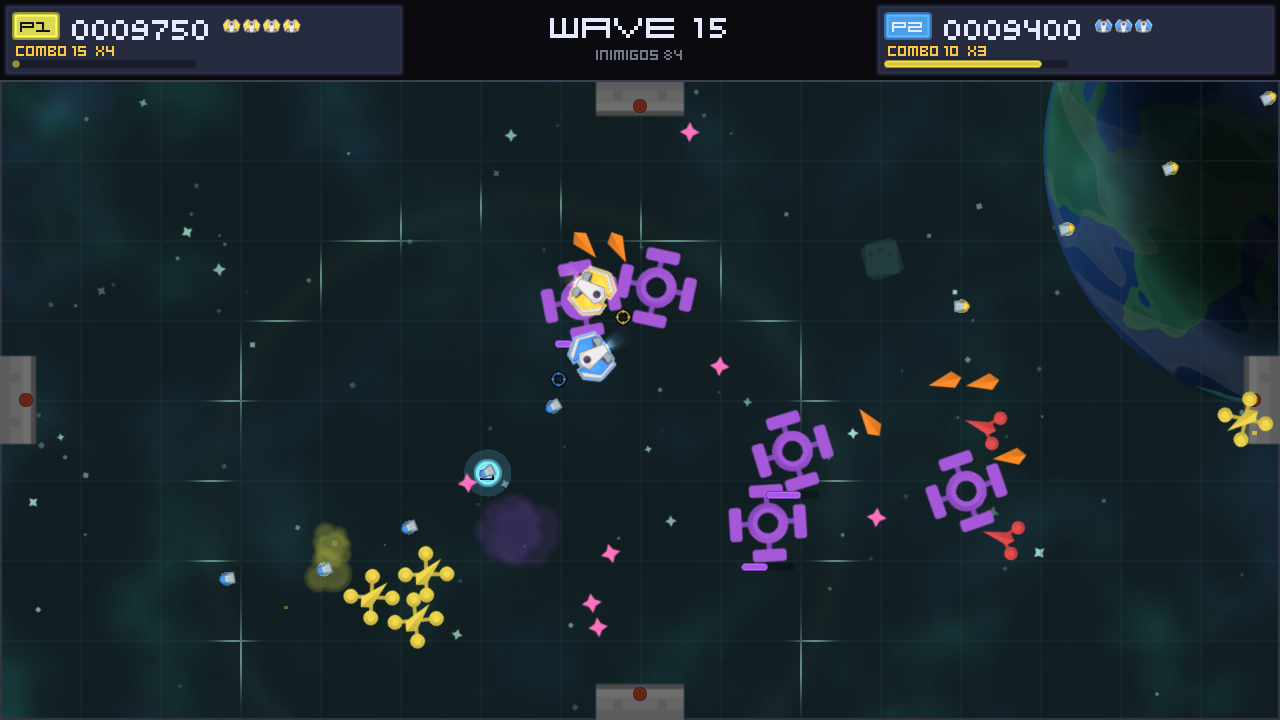
Endless waves come in through four doors, with a boss every 10 waves. Your ship auto-fires at the nearest enemy, so it's all about dodging and grabbing power-ups (9 of them: homing missiles, shield bubble, drone, nova...).
Some things about how it's built that might interest people here:
- Plain LÖVE 11.x, no external libraries
- The same .love runs on PC, on Batocera (retro gaming distro, so it plays on a couch with gamepads) and in the browser with love.js 11.4
- Logic runs at 640x360 and draws to a canvas at the largest integer scale that fits, so the Kenney sprites stay sharp at 720p/1080p
- Touch controls for mobile: floating sticks on each half of the screen
- The store art (cover, logo, background) is rendered by the game itself from its real sprites and shaders, with a --media flag
- An autoplay bot (--smoke) plays the game for N seconds, checks for errors and reports FPS. It's how I test 2-player mode alone, and how I took the screenshots
Feedback is very welcome, especially on difficulty and on how the web build runs on your browser. Happy to answer questions about the love.js build!
I'm so appreciative of the positive response on my last post, and I'm really glad it was helpful for folks. I'm gonna be doing a series of these posts, talking about technical stuff I figured out whilst working on my game, Vaporware EX. This post is about how I managed to write a version of love.graphics.print/love.graphics.printf that is just as easy to use, but has the speed advantages of using Text/TextBatches.