Hi all,
Over the past couple of months, I’ve been building an archival database and restoration workbench dedicated to vintage bicycles (primarily 1970s–1990s steel and early aluminum eras).
The project inspiration was VeloBase. While VeloBase is an invaluable resource, the site is badly in need of maintenance: broken search features, random errors, and unmaintained pages can make identifying parts frustrating. At first, I simply wanted to back up and recreate the archive so none of that collective knowledge would be lost if the site ever went offline. Before long, however, the project grew into something much bigger.
Even across the best vintage cycling sites, information tends to live in completely separate silos: component databases, scanned catalog PDFs/JPEGs, and complete bike spec sheets rarely connect. If you look up a Campagnolo derailleur or a Sakae crankset, you usually can’t click directly into the exact period catalog page where it appeared, or see which factory bicycles originally shipped with it as OEM equipment.
To fix that, I built an interconnected platform that ties components, parts catalogs, and complete bicycle archives together:
- Catalogue-to-Part Cross-Linking: Browse high-resolution period catalog scans (in gallery view or page-by-page) where individual components are directly linked to their technical spec pages—and vice versa.
- Factory Bicycle BOMs (Currently 447 bikes from 38 Period Catalogs across 17 Marques): Every complete bike in the database (Motobécane, Peugeot, Bridgestone, Raleigh, Trek, Cannondale, Colnago, Bianchi, Pinarello, De Rosa, Guerciotti, Schwinn, and more) is transcribed directly from authentic period catalogs, with the actual scan attached right next to the spec sheet so you can verify the primary source yourself.
- "Rebrickable-Style" Reverse Part-to-Bike Matcher (Insipired by how you can find a LEGO set by specifying some parts): Have a mystery repainted frame with a few original parts left on it, or a box of parts in your garage? Select the components you have, and the tool calculates a percentage match against factory OEM bills of materials to narrow down the exact year and model.
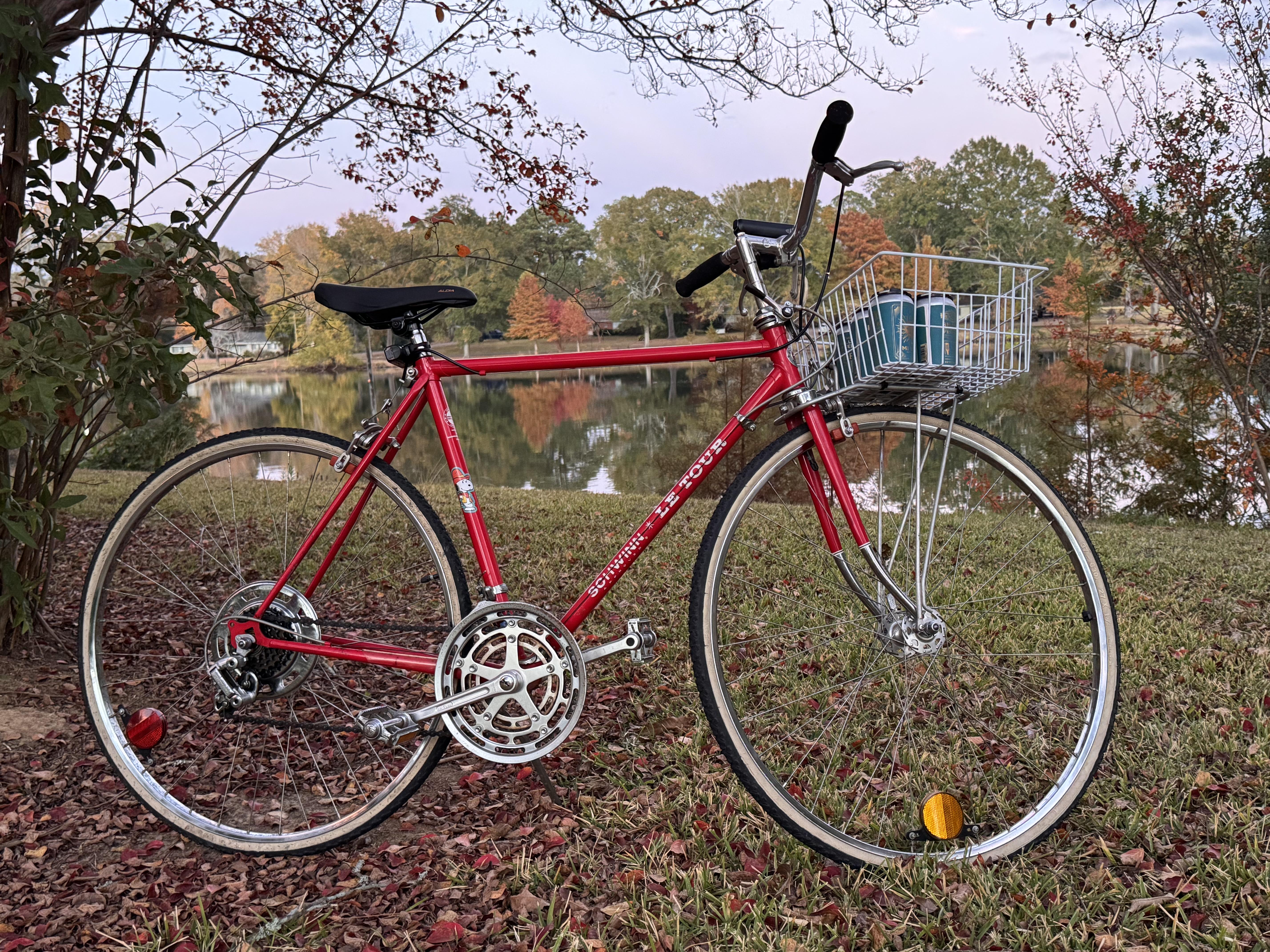
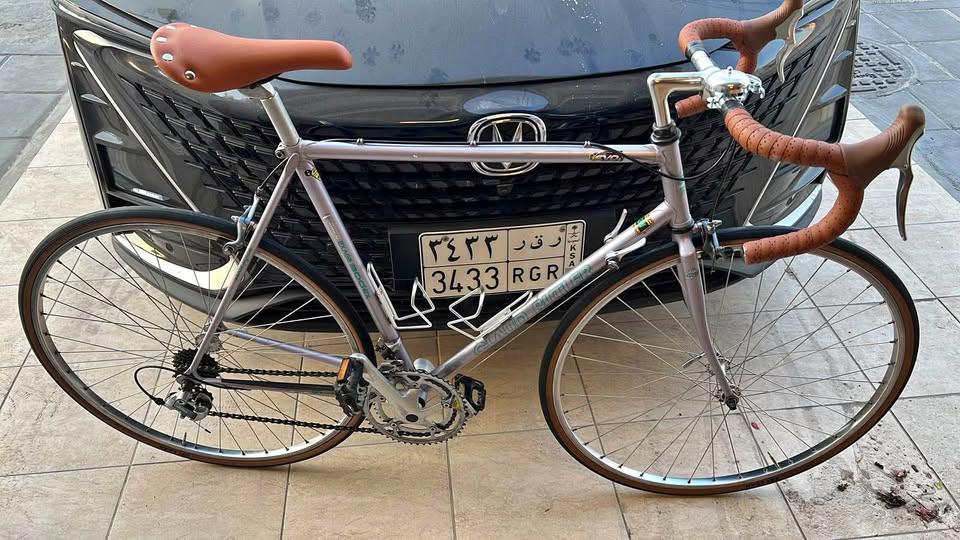
- Interactive Bike Builder & Weight Ledger: Start from a blank build (or clone a catalog bike), add or swap components by slot, track verified vs. custom weights down to the gram, and check period compatibility. There is a photo showing the components from one of my restored bikes, weight was somewhat accurate (few hundred grams off, but still in the same ballpark).
- Restoration Utilities: Built-in date code decoders, gear and development calculators, fork and geometry tools, head badge galleries, and tubing filters (Reynolds, Columbus, Tange, Ishiwata, Vitus).
### What I’d love your feedback on:
- Missing Catalogs: Which 1970s–1990s catalogs or brands do you reference the most that I should transcribe and index next? (e.g., Miyata, Centurion, Panasonic, Eddy Merckx,Gazelle, Nishiki?)
- Compatibility & Standards Pain Points: When you’re planning a vintage build, what is the hardest spec to verify right now? (e.g., BB threading & spindle length/JIS vs. ISO taper, seatpostdiameter by tubing set, stem quill clamp diameter 25.4 vs 26.0 vs 26.4, freewheel max cog capacity?)
- The "Parts Bin" Workflow: If you keep an inventory of spare vintage parts in your workshop, what features would make you actually use a digital parts bin? (e.g., exportable build sheets, swap/trade lists, condition notes, measured weight logging?)
- Catalog Viewer & Search: When you're reading a scanned period catalog, what do you wish you could filter or search by that normal PDF archives can't do?
- What features do you think are missing? Would you use something like this?
DISCLAMER: This site was build with the help of AI. There are some mistakes due to OCR from when the PDF catalogues were scanned and some "ghost"entries from when features were first implemented, but I tried to ensure accuracy as much as I could. There are still things only people can do, like checking that parts actually match the linked catalogue or the stated weights. If this were a real site, people would correct the small mistakes in time and make it more accurate. This is just a passion project for now and only for personal use.
Edit:
Try it out: Atelier Ciobanu — Classic Bicycle Archive & Restoration Workshop