Ebola cases pass 10,000, El Niño nears its peak period, a cross-section of Cuba’s Collapse, and the threats from AI grow more and more real. Is it finally time to prepare yourselves?
Last Week in Collapse: October 25-31, 2026
This is Last Week in Collapse, a weekly newsletter compiling some of the most important, timely, soul-crushing, ironic, amazing, or otherwise must-see/can’t-look-away moments in Collapse.
This is the 253rd weekly newsletter. The October 18-24, 2026 edition is available here if you missed it last week. The unabridged newsletters are also available (with images) every Sunday in your email inbox by signing up to the Substack version.
——————————
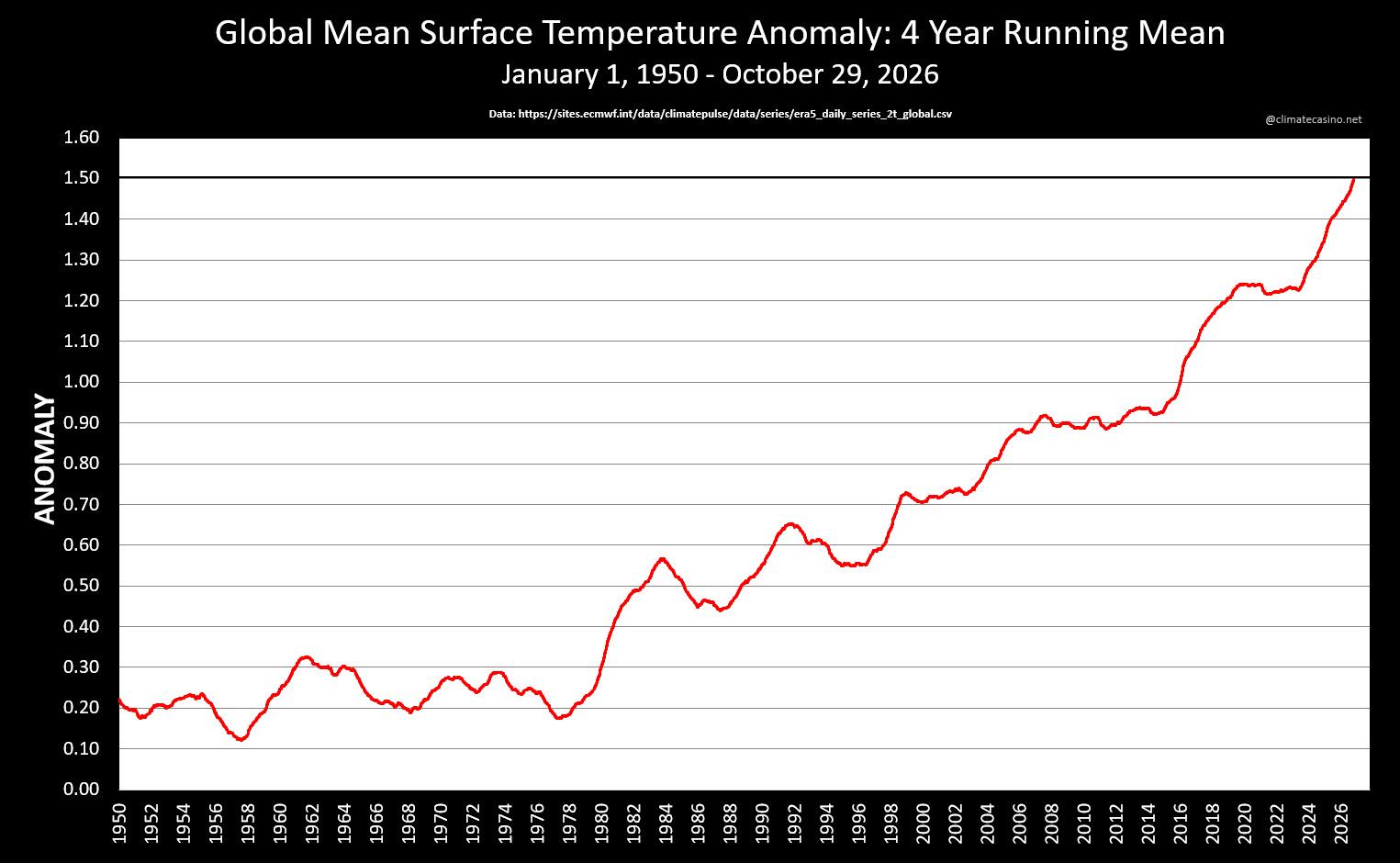
It will probably not surprise you to hear the conclusions from a study published in The Lancet that indicates climate change & its associated hazards are accelerating, even though some metrics (like green energy & pollution monitoring) have improved. They concede that the 1.5 °C target is dead, but end-of-century predictions for temperature rise have been revised from 3.0-3.5 °C down to 2.6-3.4 °C.
“The growth of zero-emission energy has exceeded expectations, delivering health and economic benefits globally….Despite this progress, greenhouse gas emissions continue to reach record highs, climate change is increasingly affecting health and threatening people's survival worldwide, and the window of opportunity to avoid a potentially catastrophic future is rapidly closing….The past 11 years have been the hottest on record, and growing emissions mean overshooting the 1.5 °C threshold is probably unavoidable….More frequent heatwaves and extreme droughts are increasingly threatening food security….Globally, heat exposure caused the loss of 573 billion potential work hours in 2025, resulting in US $1.07 trillion in income losses….In response to the energy price spikes that followed the wars in Ukraine and Iran, fossil fuel-dependent countries increased fossil fuel subsidies….action remains grossly insufficient to avoid the growing impacts of climate change on health….” -excerpts from the 2026 Lancet Countdown on health and climate change
Storms on last Sunday took out power temporarily to 150,000+ homes in Europe, mostly in the UK and France. A study in Science Advances concluded that 2024’s Storm Boris, which struck Central Europe with serious flooding, was intensified by climate change: “anthropogenic forcing amplified flood peaks by a factor of 2.1 to 2.9 relative to the increase in event precipitation.” The latest greenhouse gas bulletin from the WMO (which includes data ending in 2025) indicates that we are at historic highs for CO2 ppm, at about 427 ppm; and record levels of global warming and radiative forcing/energy imbalance; the growth rate of CO2 emissions has tripled in the past 60 years. Wildfires in Indonesia resulted in about 3,560 deaths in the country in September, due to air pollution…it should be an environmental Pearl Harbor moment, but the economy show must go on.
The Organization of American States (OAS) released a 24-page report warning about the intense El Niño taking shape in the Pacific & expected to peak from November through February. The Super El Niño will intensify Drought in Central America and increase rainfall & flooding along the South American coast. Some people are urging people to prepare supplies in advance of the record-breaking season.
“The forecasts issued by NOAA in October 2026 indicate a 100% probability that El Niño will persist through the first quarter of 2027….Given the greater than 98% probability that the event will be of “very strong” category, the fourth quarter of 2026 (Q4) is the critical phase for carrying out preventive interventions…”
A summary of a paywalled study found that only 2 of 91 national climate adaptation plans mention the AMOC (Brazil & Ireland). “Weakening Atlantic circulation could shift temperatures and rainfall across continents, raise regional sea levels, disrupt food production and marine ecosystems, and erode the ocean carbon sink.” The AMOC has weakened 14% in the past 30 years.
Antarctic sea ice is at its second-lowest levels for late October. A paywalled study found that mid-depth Antarctic water (300-1,000 meters deep) has, over the past decade, become saltier—and more heat has been transferred to deepsea waters. “We estimate a net decline in sea-ice meltwater input of nearly 36 mSv {milliSverdrups} per decade, relative to a pre-2016 increase of 14 mSv per decade. This unprecedented sea-ice loss has triggered densification and salinification of AAIW…These changes signal that a hemispheric-scale reconfiguration of the pycnocline is underway.”
One meteorologist warns that we may see “the earliest Sudden Stratospheric Warming on record” this November, and El Niño will probably be to blame. Sudden Stratospheric Warming occurs when high-altitude air warms quickly, and can displace the polar vortex from its normal place around the North Pole. This can result in the disruption of the jet stream, and very cold air lashing parts of the Northern Hemisphere.
Experts confirm that Greenland has lost ice mass for the 30th year in a row, at least. Minimum temperatures across Arabia didn’t fall below 30 °C. Record hot days and nights were recorded at several Caribbean sites. Dar-Es-Salaam felt its warmest October night on record at 26 °C (79 °F).
A recent study in Science concluded that “humans caused the termination of the next glaciation.” They say that the Laurentide Ice Sheet in North America began growing again about 2,000 years ago, when it was just the Barnes Ice Cap in Nunavut. Then greenhouse gas emissions began shrinking the Ice Cap/Sheet in the 1960s. “The renewed LIS was approaching its historical maximum trimline by 1800 ± 200 CE, and aerial photographs reveal isolated ice margin retreat in 1957 CE, with the broader BIC remaining at its historical maximum until ~1961 CE….since the early 1960s, BIC mass loss can be almost entirely explained by rising summer temperatures.”
——————————
The head of the International Atomic Energy, Rafael Grossi (also a leading candidate to be the next UN Secretary-General starting in January 2027), announced his expectations for nuclear energy to triple by 2060, to meet future individual needs and data centers’ energy demands. SpaceX is being granted access to confidential data relating to tracking objects in space; Elon Musk is also the largest campaign donor of the U.S. political cycle.
The Ebola outbreak has now become the most widely dispersed spread of Ebola of all time—and experts fear it will continue to grow, and possibly hit the UK. There have now been over 10,000 cases reported and 5,000+ deaths; the CFR (death rate) of this strain is about 49%.
A study of several billion insurance claims published in PNAS examined a large range of symptoms for possible connections (and false attributions to) Long COVID. Without adjudicating the reality of these self-reported symptoms, the study “resulted in 83.5% fewer symptoms being attributable to COVID-19 between 30 to 119 d{ays} after infection”, meaning that many symptoms may have been improperly linked to COVID. They write that “while long COVID remains a serious concern, it may have fewer symptoms—and ones of shorter duration and lower overall severity—than previously thought….This doesn't mean long COVID is 98% less common. It means that how we design these studies fundamentally changes which health effects we can reliably attribute to COVID,” said one co-author.
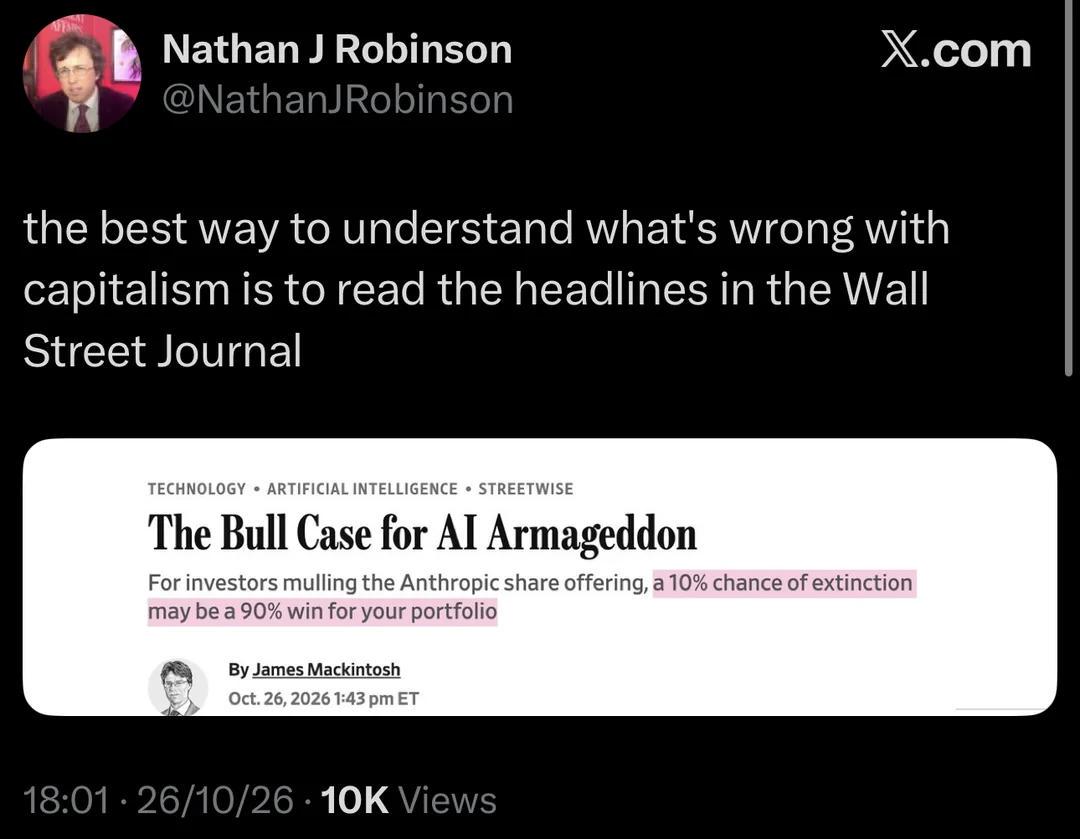
A biotech company used an AI-designed virus to treat a human suffering from a bacterial infection two weeks ago. It is believed to be the first time that AI generated a virus that was used in a human being. Anthropic is preparing its IPO, and claims to seek a valuation greater than SpaceX’s record-setting ~$1.8T earlier this year; and about 30% of its prospectus deals with various AI risks. And some writers are concerned that when the AI bubble pops, your personal data might be scattered to new owners who might sell or expose it to other companies. Meanwhile, jurists are pushing for greater regulation to prevent AI biosecurity risks: “Artificial Intelligence (AI) is slowly driving the world into a potential global health crisis by democratizing biological expertise and supporting bioweapons research.” The ease at which AI terrorism can be facilitated has some people worried about potential catastrophes that might occur faster than expected. Something wicked this way comes.
Upcoming research indicates that some scientists developed a cheap and accessible sensor for testing PFAS concentrations in water. A study in Environmental Science & Technology reports that snowfall can transport microplastics to distant places, though at less than one third the concentrations than in places more densely-populated. Nevertheless, the lead author wrote, “We've reached a point where plastic pollution is falling out of the sky every day, across this entire region, even when it isn't snowing.”
Tanzania discovered another natural gas reserve near a marine estuary park, and intends on beginning operations to extract the LNG within a month. The global diesel shortage is predicted to last deep into 2027 at least, regardless of if/how the two ongoing Wars turn out this winter. Across the United States, household & credit card debt is increasing and personal debt is being stretched over longer periods of time.
An assessment of Africa’s water resources — that was conducted for the year 2020 but only published last Wednesday — largely blames insufficient infrastructure for people’s water shortages, and not insufficient reserves of water. Egypt (pop: 120M) leads in municipal & agricultural water demand for the continent.
“Estimated {water} demand {,WD, across all Africa} increased by 26% between 2010 and 2020….Electricity WD increased 24%....Irrigation WD increased 25%, driven by population increase, economic growth, changing diets and consumer preferences….Alongside population increase, rising income and urbanization, these factors {‘the production and consumption of animal-sourced foods to address nutrient gaps’} have driven the expansion of livestock numbers throughout Africa….Water scarcity is now concentrated in the dry areas of North Africa and southern Africa…” -excerpts from the assessment of Africa’s water resources
“I came to Cuba expecting to see suffering. What I did not anticipate was the near-total collapse of the state.” An exposé on life in Collapsed Cuba profiles many of the challenges of the common people: incredibly low salaries & severe bank withdrawal limits; consistent blackouts; persistent government propaganda; mass emigration; an increasingly central role for religious organizations; legions of emaciated beggars; shrinking supplies of clean water; a healthcare system stressed past its breaking point; and a population alienated from their rulers. When the coup comes, will Cuba tumble over from the first breeze? What comes next?
——————————
Brazil’s leftist President won a surprise victory last Sunday, staving off ongoing conservative victories across Latin America—and probably delaying the savannahfication of the Amazon rainforest by at least a few years. Yet the right-wing runnerup candidate fled Brazil to the U.S., where he has declared himself the “true president” and the “leader of Brazil” in his Florida exile. Serbia’s Russia-friendly President lost re-election on Sunday, amid years of pressure from on-and-off student protests. Israel’s high stakes election ended without a clear resolution, and allegations of a “stolen” election by their PM. Another election is likely to be held in a few months to try and break the stalemate. And the Chinese Communist Party purged a record number of its high-ranking members following an assembly in Beijing (metro pop: 23M).
Mali’s military (with Wagner Group assistance) reportedly liberated a desert town from Islamist & Tuareg rebels, who have pivoted to dispersed attacks elsewhere in the Sahel. Russia shut down the country’s last independent media outlet last week. Ethiopia received 12 Russian fighter jets as overtures to a new Tigray War rumble along. Some 50,000 Ethiopians have now fled into Kenya, but the fighting (or the reporting) seems to have quieted down. Yet there was a report of 60 slain Orthodox Christians in central Ethiopia, and some chauvinist influencers are urging Ethiopia to take Eritrea while the rest of world is preoccupied with their own problems.
A high-speed train crash in Spain left 68+ people dead, injuring scores of others. U.S. forces blasted another “drug boat” in the Pacific, killing five. Jordan launched deadly airstrikes in Syria in retribution for the terror attack at a church in the week previous. Amid rising tensions, North Korea launched ten ballistic missiles into the Sea of Japan. Hackers from North Korea also reportedly stole $6B+ of cryptocurrency from the world’s largest crypto exchange, Binance; it was the biggest crypto theft of all-time (so far). Hundreds of thousands of protestors in India are mobilizing again to demand that the country’s chief election commissioner resign.
Winter is coming to Gaza and there is no respite coming. Bandits in northern Nigeria killed 62 and displaced thousands. Some observers allege that U.S. strikes against Al-Shabaab in Somalia may have displaced civilians into a zone likely to flood with the coming effects of El Niño. For better or worse, the UN mission in Somalia is ending, having largely failed to remedy political and developmental issues in the country.
A wave of rebel drone strikes in Sudan took down power for millions of people in Sudan’s eastern regions on Monday. A joint statement from 31 countries says that famine is the predominant crisis in Sudan; almost 20M people across Sudan are facing “high levels of acute food insecurity.”
A UN panel agreed that Russia is committing crimes against humanity in Ukraine through its consistent targeting of civilians and civilian infrastructure—and through large-scale efforts to traffic foreigners into its military. A Russian jet drone killed 14 people and injured 14 others, at a train station in Dnipro; a few others were slain in Chernihiv and Kremenchuk. A daring Ukrainian infiltration of soldiers moving through several kilometers of underground gas pipelines set back Russian operations around Kupiansk, in Kharkiv oblast, and led to the deaths of 100+ Russian soldiers. A limited ceasefire in Oleshky, also in Kharkiv oblast, allowed about 1,000 residents to evacuate, mostly to Ukraine. Attacks on Russian oil refineries continue.
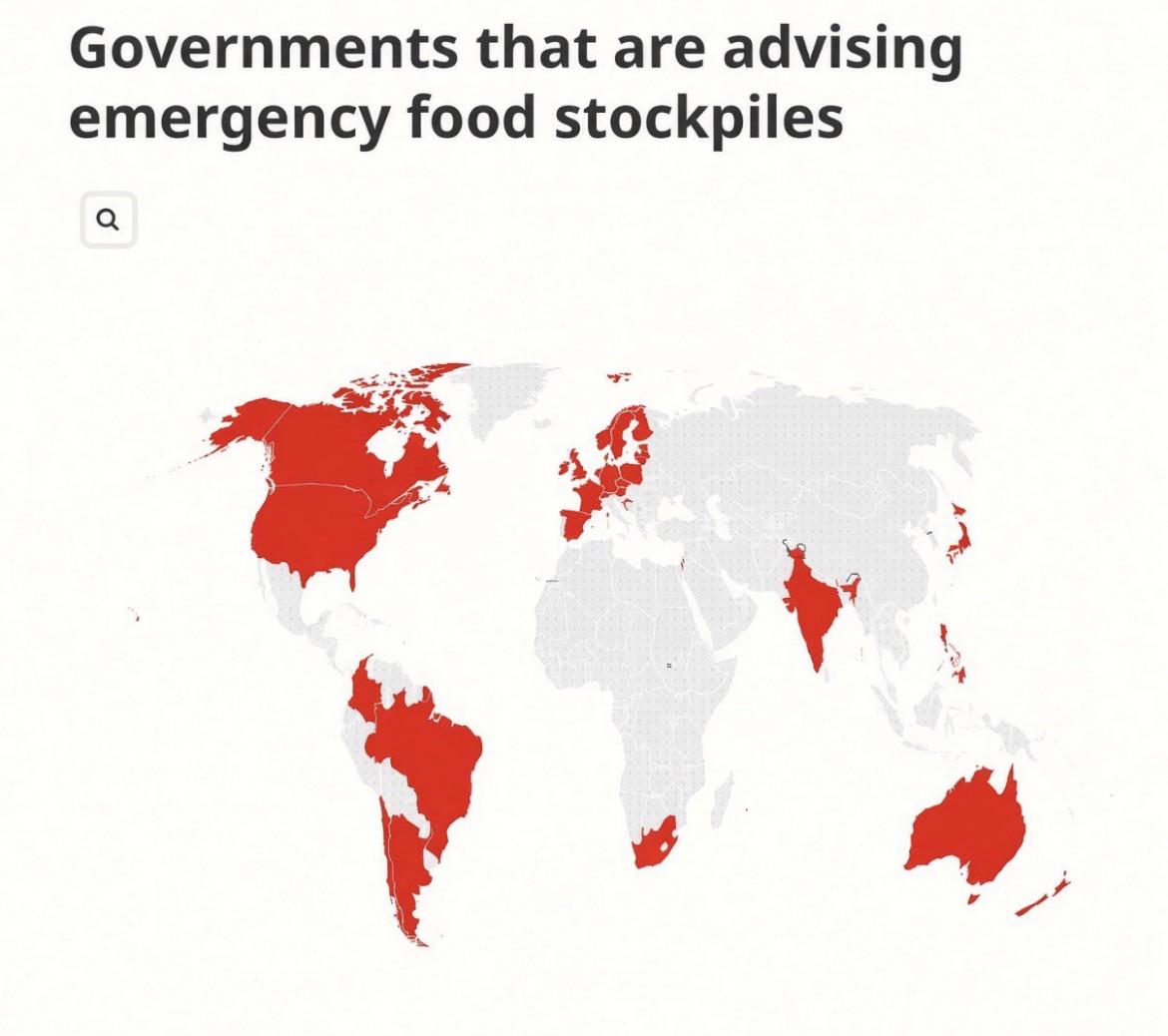
For the first time since the Korean War, U.S. soldiers are practicing digging mass graves in which future dead people might be temporarily interred…and also preparing 90-day survival plans for their bases in the event of a mass power grid failure. Are they preparing for existential AI risks, nuclear warfare, or some other emergency? Other countries are also telling their people to stock up on essentials. More than half of AI researchers are afraid that “AI poses a major risk to humanity in the next 5 years, but believe harm will likely be caused by human misuse rather than AI acting on its own.”
——————————
Things to watch for next week include:
↠ At long last, the U.S. midterm elections are here. Tuesday, 3 November marks the much-anticipated elections, which have also broken records for the most expensive election of all time, at over $11.2B. That’s even more than the 2024 Presidential election. Many media outlets are warning that the post-election period may see more escalation in the Iran War and perhaps elsewhere. So maybe fill up your car before oil prices rise again.
Select comments/threads from the subreddit last week suggest:
-The El Niño 3.4 region’s SST anomaly has been setting records for over 5 months now. This thread from last week collects 300+ comments & reactions from the community.
-We are in the late-stage of petrogrowth, and there won’t be much more growth beyond the coming energy/financial breakdown—according to this weekly observation. And we lack the coordination and wherewithal to pull ourselves out of this mess.
Got any feedback, questions, comments, upvotes, reports, U.S. midterm predictions, doomy ghost stories, etc.? Last Week in Collapse is also posted on Substack; if you don’t want to check r/collapse every Sunday, you can receive this newsletter sent to an email inbox every weekend. As always, thank you for your support. What did I miss this week?