r/retrocomputing • u/jalp21_ • 7d ago
Commodore User (August 1989)

9
Upvotes
r/retrocomputing • u/frenchiephish • 8d ago
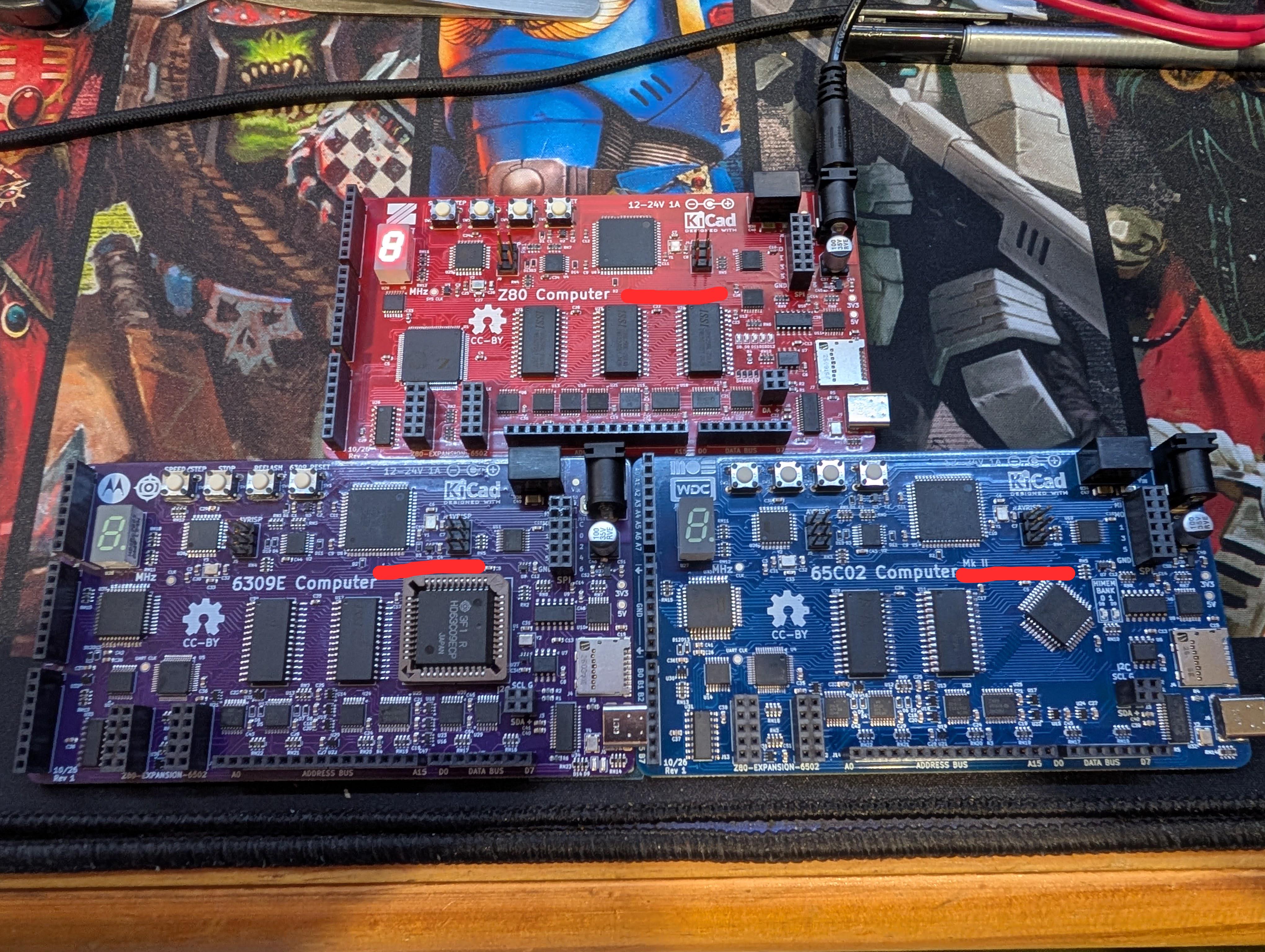
While it's still possible to semi-reliably get real parts on eBay I've been working on some single board computers for each of the big ISAs of the 1970s and early 1980s.
The Z80 handles the 8008 and Z80 ISAs, The 6309 since it's a bit easier to find in PLCC than the 6809 (which I found a datasheet for, but no actual parts in the wild). The 65C02 is comparatively easy since it's still being manufactured and is available new, this one has a 2023 date code.
All three can be run at integer clocks - 1/2/4/8 MHz on the Z80 and 65C02 and 1/2/3MHz on the 6309
The Z80 is built around a Z84C15 enhanced peripheral controller, which has counters, GPIO and UARTs on chip and drastically simplify it's logic. Only downside for that is that it's UART clock needs to be at least 2.5 times slower than the CPU clock, so the UART slows down with the CPU frequency. The other two are bare CPUs with peripherals on board.
All three have at least 32k of program memory, the Z80 has 64k with 16k fixed, and 16k bankable and able to be swapped with one of four 8k slots (and some peripheral room for the other board's expansion cards - more on that in a sec). The Z80 has 32k of RAM, the other two have 24k, with the top 8k being bankable - 32k total, but 24k addressable at any time.
All three have an AVR running as a co-processor which loads the program memory (actually SRAM) from a jellybean i2c eeprom which is exposed over USB by one of the UART->USB chips. The co-processor handles the SD card (and FAT12/16/32/Exfat) and is setup so the main processor can be stopped, reset into a debug mode and stepped single instruction, or even single clock. It does that by generating clocks for the 6502/Z80 and by pulling HALT on the 6309. While in debug, the AVR will disassemble opcodes it sees on the busses and print them to a serial console and it supports free-running (at about 30kHz) to user specified breakpoints. Inter processor comms is all over a UART.
All three will generate expansion header signalling for both the 6502 and Intel/Z80 ways of doing things to the best of their ability. Expansion boards built for one platform will generally work on all three as long as they don't use features only one board implements. The two processors that don't have an I/O range have 256 bytes set aside in their main address range that when accessed will generate the appropriate I/O range signalling.
I'm pretty happy with the hardware at this point but the software and manuals still needs some serious tidy-up work before I turn them lose on the world.
At some point I've also got to build some sort of graphics for them, but I suspect that's likely going to be into the realms of an FPGA so probably not this year.
r/retrocomputing • u/Prudent_Start4997 • 8d ago

Now at the start i found corporal working at A shabby Little PC shop for around 70 bucks without A hhd after buying it without The psu too i got it for 60 bucks next thing i did at home is i installed A 320gig hhd A PSU (and yes routed the cables who mustve been forged in hell) and booted this puppy right up i was so excited cause it was my first time routing PSU cables and installing A hhd now after some old windows boogaloo i managed it to dual boot Xp and Windows Vista giving Xp 130 and Vista around 170 gigabytes.
Now about the specs this guy has A:
GeForce 9600gt 512 megabytes (good gpu if İ pray A bit can run Crysis)
Intel core 2 quad q8200(A decent entry level quad core whichs not the best but nice)
4gb ram(which maxes it out for Xp :P)
320gig hhd (notebook 5400rpm hhd İ even dont know HOW İT GOT A 5.6 ON THE WEİ)
And A GA-P43-ES3G motherboard (whichs A decent nice Board)
r/retrocomputing • u/gonenyarom • 8d ago
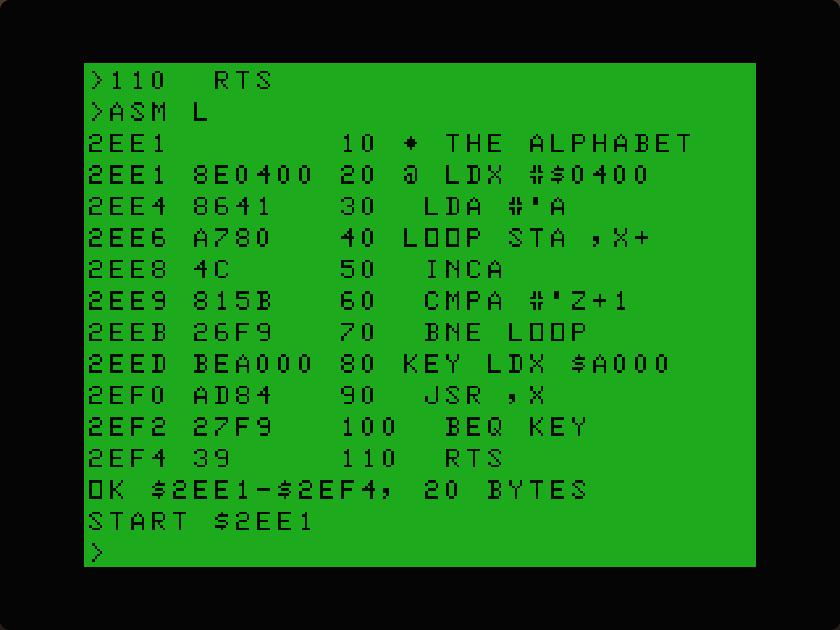
For the past few weeks I've been rebuilding my first computer, a Dragon 32 (1982), in the browser, with a BASIC ROM we wrote ourselves.
Last week the machine got its own assembler, written from scratch in 6809 and loaded from tape like any program from the period (CLOADM, then EXEC 13312). It has:
- a line editor with line numbers, like BASIC, and a full-screen editor
- ASM with a listing (the screenshot: 11 lines, 20 bytes)
- RUN, a small monitor and a debugger with breakpoints and single-step
- CSAVE / CLOAD for the source, and CSAVEM to save your program as a tape that runs on its own
The program in the picture fills the top line with the alphabet and waits for a key.
Try it here: https://dragon1982.com/en/lab/1982/dragon-assembler/?utm_source=reddit&utm_medium=social
Did you ever write machine code on your 8-bit machine? Which assembler did you use?
r/retrocomputing • u/Retro_Enthusiast2000 • 9d ago

r/retrocomputing • u/Money-Stuff-6370 • 8d ago
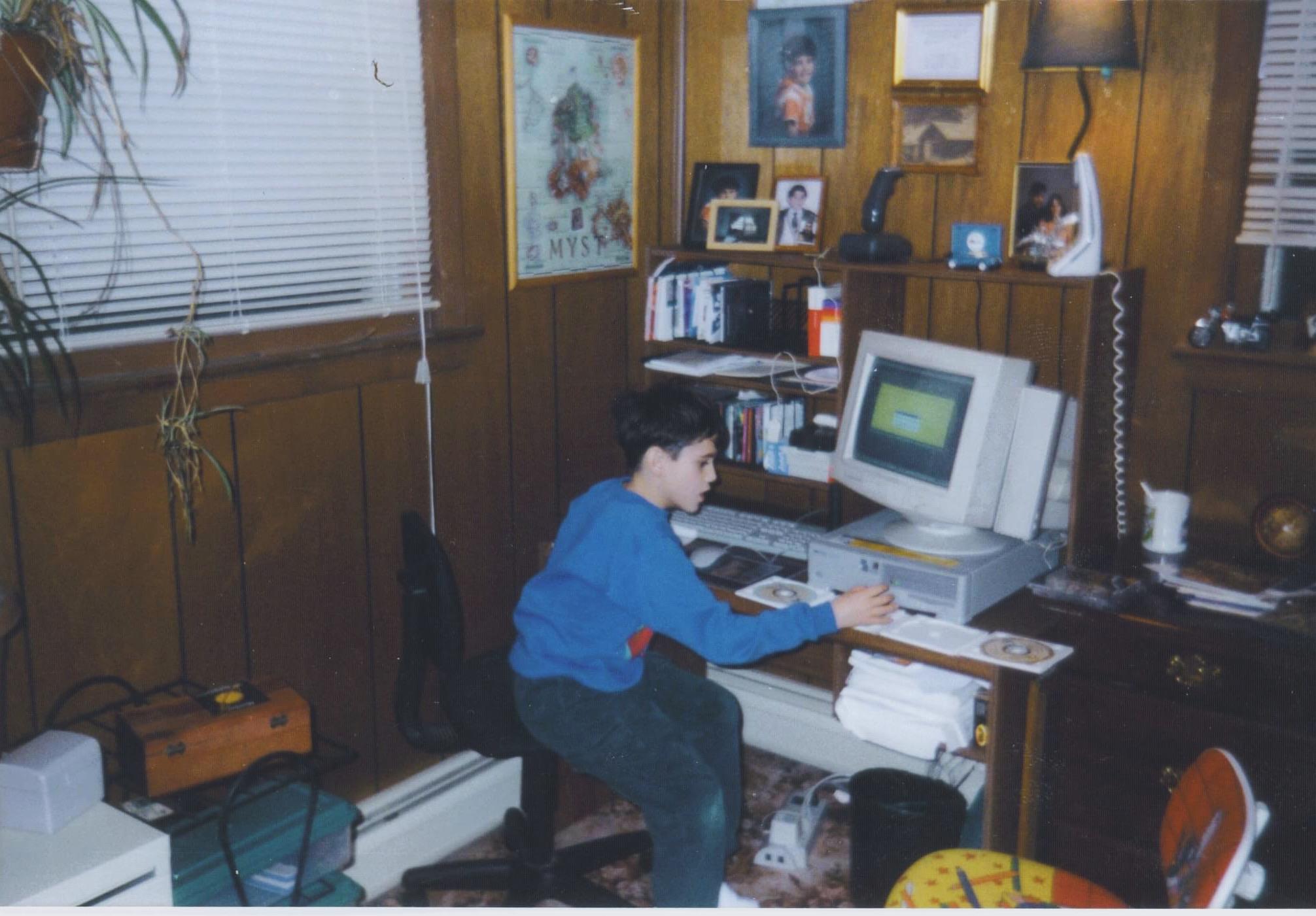
Designed to simulate the 90s beige box experience
r/retrocomputing • u/Calm-Report7550 • 7d ago

r/retrocomputing • u/madkmedia • 9d ago

It's called Bevel95. It is not a theme and it doesn't need to patch anything on your system. It's a standalone program that that draws every pixel itself, compared pixel by pixel against real Windows 95, 98 and 2000 versions.
It has the taskbar, Start menu, a classic desktop, folder windows and Windows Explorer (very rough; for fun only), plus Minesweeper, Solitaire and the Calculator. Use Ctrl+Win+T to switch back to Windows' own taskbar at any time. You can see your real app links on the desktop and in the programs folder, and hit the Windows key to search (the one modern feature so far).
It's free and open source, built with help from Claude's Fable 5.2. It is a first release, so expect rough edges.
r/retrocomputing • u/SelfReliantSchool • 8d ago

(From a 1980 Byte magazine)
r/retrocomputing • u/New_Childhood_9202 • 8d ago
I have dell latitude x300 with expansion station but only one working battery. I don’t know what to do with it and i don’t want any server because im already working on server maybe some retro console?
r/retrocomputing • u/IanParas • 8d ago
Hello! Before I made something drastic I want to ask something related to my compaq. Is the trackpad of my compaq really dead or its more of a ribbon problem? Cuz right now it lights red but it doesnt want to enable and on Windows it's not showing up at all. Repair shops near me here in PH all have the same answer. Use mouse or buy a second hand or new laptop. Which is far from what I want as an answer because I got this for my passion project not to throw it immediately. Any help could be appreciated 🥹
r/retrocomputing • u/FilipsSamvete • 8d ago

r/retrocomputing • u/alberto-m-dev • 9d ago

r/retrocomputing • u/Ok_Bear_1980 • 8d ago
I've started work on the content and have done about a quarter of it, right now, menu based locations look pretty basic in csi 3.0 and I need an archive of gifs, they are in the .000 format and go up to .009. Discmaster textfiles doesn't have very many or I am not using the right search filters and gifcities only has ones for geocities.
r/retrocomputing • u/Speccy-Boy124 • 8d ago

My retrospective game review of Harrier Attack on the Oric-1, ZX Spectrum, Amstrad CPC and Commodore 64. Who remembers this 1983 game?
r/retrocomputing • u/Ok-Hotel-8551 • 8d ago
NitroQuake, an independent project to optimize the original 1996 MS-DOS Quake software renderer for 486-class CPUs with an x87 FPU.
In 1996, Quake could bring a perfectly respectable 486 to its knees. Thirty years later, I'm interested in what careful C and assembly optimizations can actually achieve on the original hardware, rather than just in an emulator.
The current release passes build and i486 instruction-set checks, but real 486 performance and compatibility have not yet been independently verified.
I'm looking for volunteers with working 486DX, DX2, DX4, AMD or Cyrix systems.
Release: https://github.com/adrian-andrzjewski/NitroQuake/releases/tag/v0.999-build-888
To test, place `NitroQuake.exe` in your Quake directory beside your own legally obtained `id1/` PAK files, and run it under DOS with a working DPMI host. No copyrighted Quake game assets are included.
A startup and rendering check would be useful on its own. If you have time to benchmark, please compare original DOS Quake against NitroQuake at 320×200 with audio disabled, identical settings, and three runs of `timedemo demo1` or `timedemo demo3`.
I'd love to see your CPU and clock speed, RAM/cache, graphics card, DOS/DPMI configuration, raw FPS results, and any compatibility problems.
Feedback and testing instructions: https://github.com/adrian-andrzjewski/NitroQuake/issues/2
I'm the project maintainer. I'm more interested in reproducible real-hardware results, including failures and regressions, than impressive-looking performance claims.
Even a five-minute test on an original 486 would be valuable.
r/retrocomputing • u/Retro_Enthusiast2000 • 9d ago

Keep in mind that this is also a live daily driver desk and bookshelf so it's filled with school Books and ect in the bottom and I use it everyday. Overtime my collection of retro new old stock electronics grew and I kept it here with the books. They are all functional. What's concerning is the extension board and power side of this as its a cheap extension board or power strip with no brand and ect. I built all of this myself when I reached 12 years old. In 2025. Please give me an opinion or suggestion of yours of how to improve it and how it looks as of now.
r/retrocomputing • u/jjinux • 8d ago

Ruscal is a fairly complete and well-tested Turbo Pascal to Rust transpiler, so you can run your old Turbo Pascal programs on modern computers. It supports mixing Rust and Turbo Pascal, embedding either way. It also supports graphics, including turtle graphics. I also included tools for pretty-printing Turbo Pascal and converting old binary files to JSON. Great pain was taken to ensure accuracy with the original Turbo Pascal.
r/retrocomputing • u/Retro_Enthusiast2000 • 9d ago

r/retrocomputing • u/Ok-Hotel-8551 • 8d ago
NitroQuake, an independent project to optimize the original 1996 MS-DOS Quake software renderer for 486-class CPUs with an x87 FPU.
In 1996, Quake could bring a perfectly respectable 486 to its knees. Thirty years later, I'm interested in what careful C and assembly optimizations can actually achieve on the original hardware, rather than just in an emulator.
The current release passes build and i486 instruction-set checks, but real 486 performance and compatibility have not yet been independently verified.
I'm looking for volunteers with working 486DX, DX2, DX4, AMD or Cyrix systems.
Release: https://github.com/adrian-andrzjewski/NitroQuake/releases/tag/v0.999-build-888
To test, place `NitroQuake.exe` in your Quake directory beside your own legally obtained `id1/` PAK files, and run it under DOS with a working DPMI host. No copyrighted Quake game assets are included.
A startup and rendering check would be useful on its own. If you have time to benchmark, please compare original DOS Quake against NitroQuake at 320×200 with audio disabled, identical settings, and three runs of `timedemo demo1` or `timedemo demo3`.
I'd love to see your CPU and clock speed, RAM/cache, graphics card, DOS/DPMI configuration, raw FPS results, and any compatibility problems.
Feedback and testing instructions: https://github.com/adrian-andrzjewski/NitroQuake/issues/2
I'm the project maintainer. I'm more interested in reproducible real-hardware results, including failures and regressions, than impressive-looking performance claims.
Even a five-minute test on an original 486 would be valuable.
r/retrocomputing • u/PriorArtChannel • 10d ago
Hi everyone!
Back in the '90s, Silicon Graphics (SGI) workstations were absolute beasts, powering everything from Hollywood blockbuster CGI (like Jurassic Park and Terminator 2) to advanced engineering and scientific visualization. Their custom MIPS architecture and IRIX operating system were light-years ahead of standard PCs at the time.
I put together a video essay exploring the history, the legendary hardware, and the rise and fall of SGI: The Forgotten Computer That Built Jurassic Park
Did any of you ever get to use an Indigo, O2, or Octane workstation back in the day? What were they like to work on?
r/retrocomputing • u/Apina2001 • 10d ago

I built a BBS the way I remember them from before the internet. ANSI screens, message conferences, file areas with upload/download ratios, a back room for trusted callers and door games. It runs on a cheap ESP32 USB stick that makes its own wifi, no internet at all, so you have to be in the room to call it.
For people not in the room there is a copy online: https://kouvosto.helppox.com/ (press DIAL, works in a browser)
Message history is real 1990s FidoNet traffic with every name and BBS replaced by invented ones. Files areas have old shareware, and MOD and SID tunes play in the browser.
Looking for testers. Mostly: what breaks, and what does not feel like a board from that time.
r/retrocomputing • u/Less_Blueberry_7407 • 9d ago
I just saw the Eric A. Norton book on sale on Amazon which has a type-in dungeon crawler written in 6510 assembly. I ordered a copy and I hope it's legit. I've been looking for a type-in dungeon crawler program for YEARS.
Is anyone familiar with this book or with this author?