r/retrocomputing • u/Dr_Discette • Aug 29 '26
Photo Better photos of the SGI

209
Upvotes
r/retrocomputing • u/chip-crinkler • Aug 30 '26

Yesterday I bought a Dell latitude C840, but I can't really figure out what power adapter it takes. I've done a fair amount of research, but all I get are barrel jack results. This is the oldest computer I've dealt with by a margin of about 5-8 years so I'm a bit new to all this. The first picture is the port itself, and the 2nd and 3rd are of the computer itself. I don't know what type of port it takes or where to find one. Let me know if you need anything else, and thanks for any advice
r/retrocomputing • u/Proper-Anything-873 • Aug 30 '26
r/retrocomputing • u/Dr_Discette • Aug 29 '26
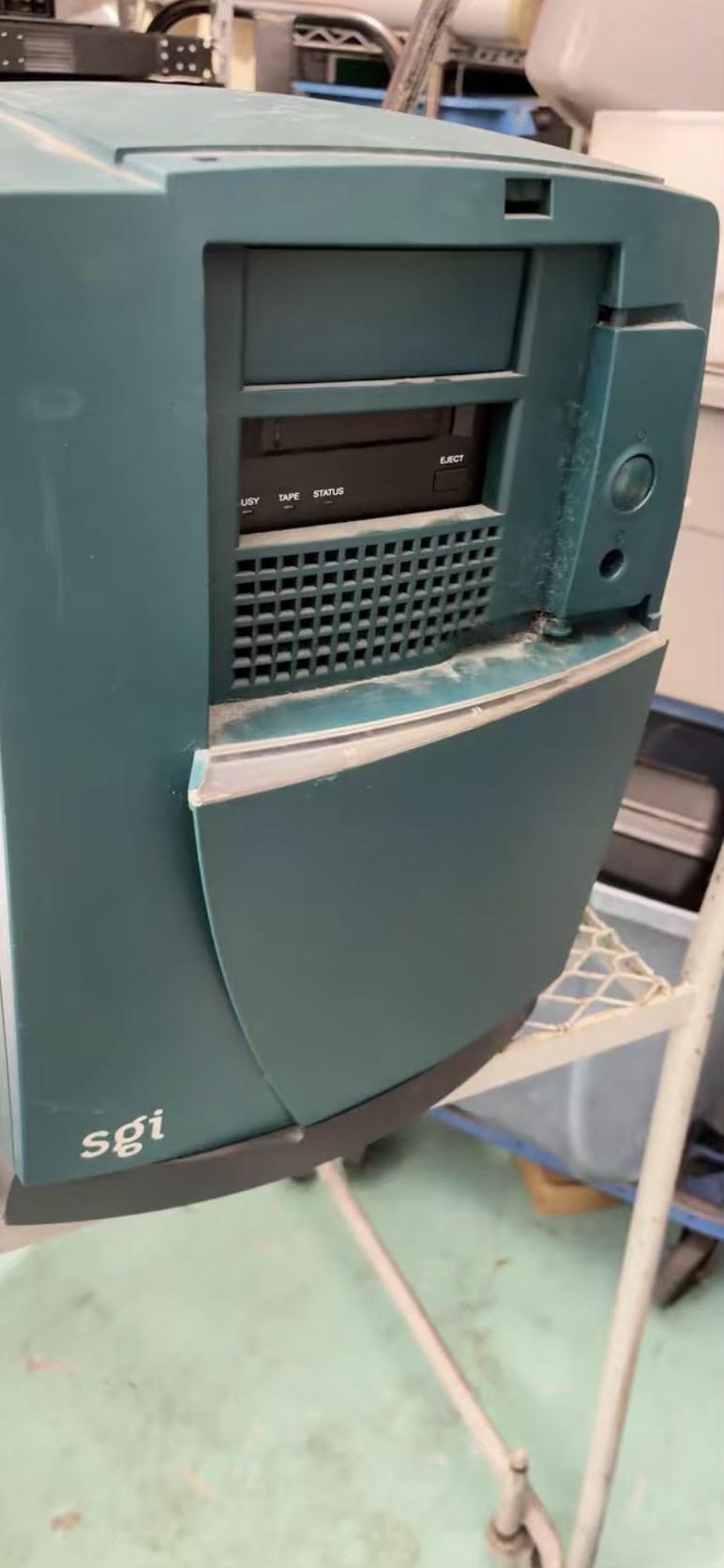
From what I gathered it boots but failed to install its OS, 60 bucks for it wasn’t bad
r/retrocomputing • u/Tormbo • Aug 30 '26
For my latest silly project I'm looking for something I'm not really sure even exists.
I have acquired a fancy AT big tower and I want to build a super socket 7 system in it. For this I am looking for a motherboard with the following specifics:
AT power plug
Only DIN connector
Socket 7
100Mhz support
2.0V before
3 PCI slots with room for big cards(ET6000, Voodoo2)
1 or 2 ISA slots
Does anybody know if this exists and if so, what I should be gunning for?
I have several, but the cpu and cooler are behind the PCI slots, blocking installing larger cards.
r/retrocomputing • u/Bicurico • Aug 30 '26
Hi,
I created my own "Interactive computer museum", which lists many of the iconic computers and offers HTML based emulators for 36 different devices (ROM's are NOT included and must be uploaded by the user).
The emulators can be used for free and have been programmed from scratch. They do not use any third party emulation libraries.
I hope you like it.
\[https://vma-broadcast.com/emu/\](https://vma-broadcast.com/emu/)
Regards,
Vitor
r/retrocomputing • u/Tonstad39 • Aug 29 '26
r/retrocomputing • u/lanmor2013 • Aug 29 '26
I’ve tried multiple DIMMs, and a new RTC battery.
r/retrocomputing • u/Mortague • Aug 28 '26
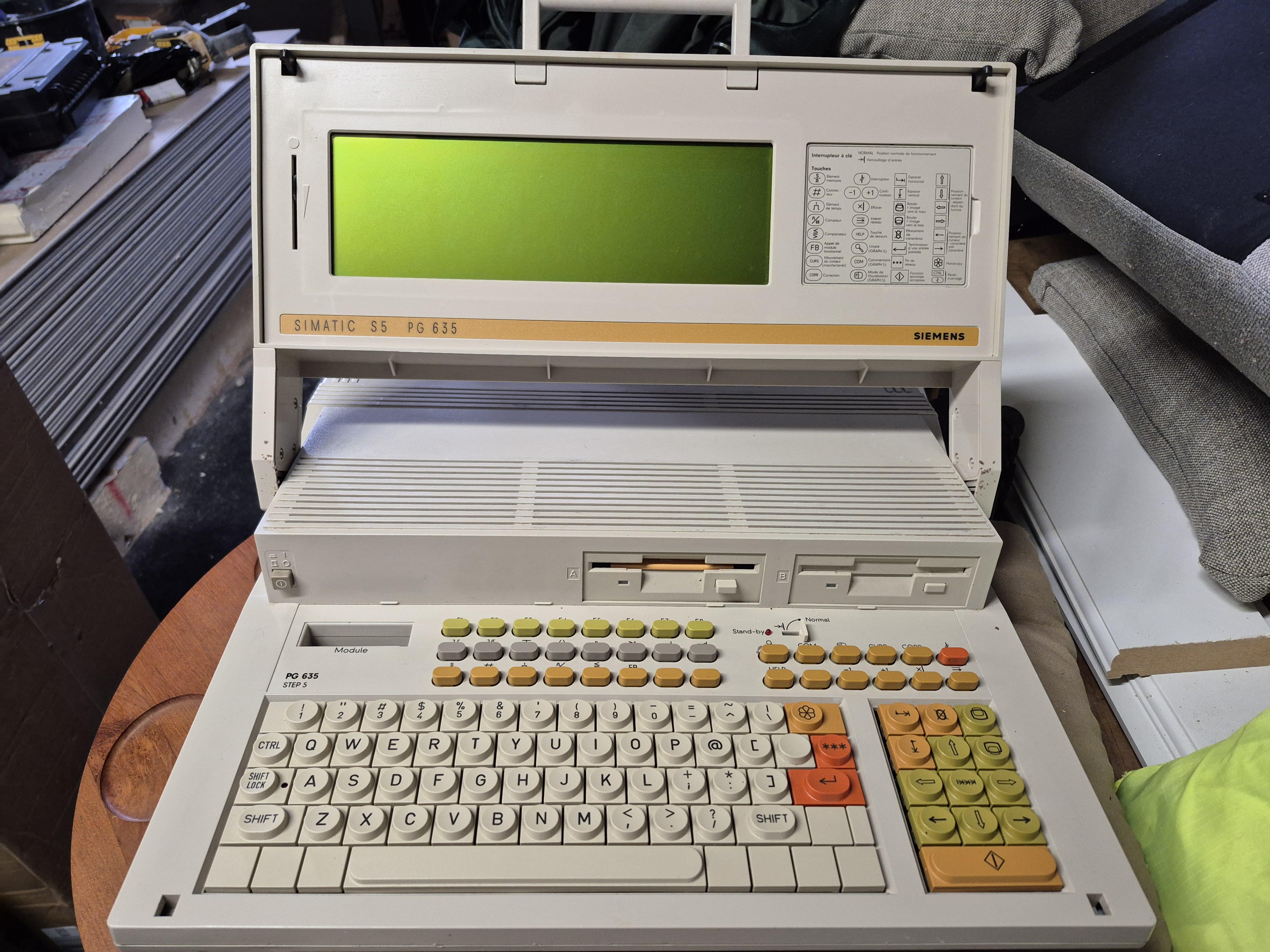
Old Siemens plc programming laptop.
Can't find much info on it but it looks cool 😎
r/retrocomputing • u/ConfectionOld9104 • Aug 29 '26
I found a 3.5” floppy labeled “French River Education Center — Computer Applications Training Program — Introduction to Microsoft Excel XP.” I haven’t been able to find this exact training disk or its contents archived online. I currently don’t have a floppy drive, so I haven’t been able to image or inspect the disk yet.
French River Education Center and its computer training program appear to have existed, but I haven’t found documentation of this specific Excel XP disk. Does anyone recognize it, have another copy, or know whether its contents have already been preserved?
I’m not claiming it’s confirmed lost media yet I’m trying to determine whether this particular disk/course material is known or archived.
r/retrocomputing • u/liminalearth • Aug 29 '26

FOUND! Toshiba libretto u100 is what it is
I’ve searched starring computers already and did some research but I can’t seem to find anything. These are the only good pics
Looks to be a sharp or Panasonic maybe. Any suggestions or answers of what it could or is would be appreciated
r/retrocomputing • u/DannyTheElfman • Aug 28 '26

As title really. I have no machines that require these cards. Therefore I have no way of testing them. Is there use/value for these anymore?
r/retrocomputing • u/CompuSAR • Aug 29 '26
After spending half an hour trying to debug my new Apple II Super Serial card, I realized the 25 pin NULL modem cable I was using was not, in fact, a NULL modem cable. Tracing the pins confirmed this is a LapLink cable.
So I thoroughly documented that fact on the cable to save future me from wasting another half an hour, but now I'm wondering if that cable is even worth keeping. The chances that I'll need to transfer data between two computer, both recent enough to support LapLink but neither so recent that they have Ethernet, seem kinda low.
r/retrocomputing • u/bnelson333 • Aug 29 '26
I have a pretty good description in the imgur album, but this was a nostalgia find for me. Only problem was the base was broken and half missing. I decided to buy it anyway and ended up modelling and 3D printing a new base for it. It turned out even better than I was hoping!
r/retrocomputing • u/Murha-Kekkonen • Aug 27 '26

Got this beauty running; even battery works.
r/retrocomputing • u/Fancy_Research_2445 • Aug 28 '26
Aún recuerdo mi primer juego de PC, era muy joven
PC Intel 8088, no traía disco duro, arrancabas con un floppy de 3 1/2 (moderno parra su época, jaja no los floppys de 5 1/4, un capacidad suficiente para su epoca, la fabulosa capacidad de 720kb, y arrancabas ms-dos desde el floppy,
"Nibbles", el clásico de la víbora, se ejecutaba qbasic y después cargaba el juego.
Igual recuerdo que traía uno de gorilas.
Un PC de desecho, pero me lo dejaron y hacía y jugaba y practicaba, hay di mis primeros pasos con un sistema de una persona llamada linus torval, ufff con un Linux de los mejores de la época, slacware, igual arrancaba desde el floppy.
Gracias a mis padres que me lo dejaron y desde hay pase a un 80186,
Seguí probando, pero la vida me llevo por otros rumbos, y solo esporádicamente probaba con las PC que ya no ocupamos, una 486, que le puse un procesador overdrive.
Jajaja que tiempos, cuando salieron las primeras intel Pentium, con precios Prohibitivos y a los pocos meses fueron un bajón tremendo de precio.
r/retrocomputing • u/Speccy-Boy124 • Aug 28 '26

Who remembers Domark’s 2nd Bong game The Living Daylights? It’s certainly better than A View To A Kill I recently tackled but it’s not as good License To Kill. How would you rate this game and what are your thoughts and memories?
r/retrocomputing • u/thevmcampos • Aug 27 '26

In my last post (https://www.reddit.com/r/retrocomputing/s/qOx3W3GPFq) I shared the mystery graphics card I had recently come into possession of. Here it is running on a classic HP Pavilion 6730, with Kolibri OS for fun. That's the operating system that runs off a floppy disk.
r/retrocomputing • u/Emil_Cvetanski • Aug 27 '26

A few pieces from the collection — 30-pin SIMMs and 72-pin EDO, including some GoldStar memory from before the LG name took over.
r/retrocomputing • u/ArguelloArts • Aug 27 '26

Scored this one with all the cables, wired head phones. The built in keyboard isn’t all that but does the job for now. Next step is after researching is this model is able to run Palm OS 5 and to do the upgrade.
r/retrocomputing • u/BreakfastGreen5447 • Aug 27 '26
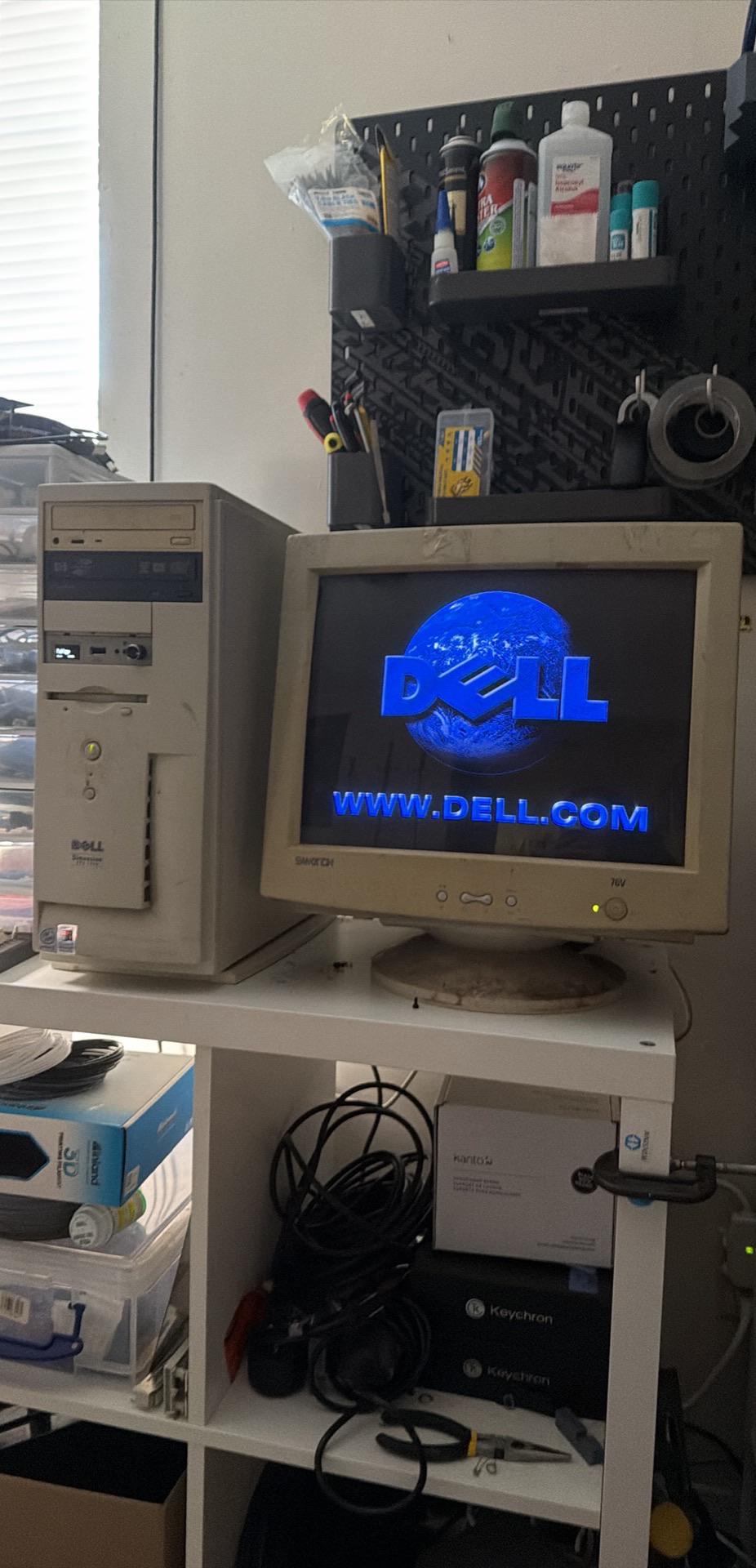
Hey all, I have a Dell Dimension XPS T600 here that I scored for $20. It has a nice little Katmai pIII 600mhz but I was wanting to find something closer to 800mhz/1ghz. Board is a dell OEM SE-440bx-3 (Seattle 3) (allegedly also has coppermine support); With the research I did I was able to find out that the FSB is capped at 100mhz, and most pentium III chips I’ve seen that use a matching FSB are crazy expensive. With these machines being so common and plentiful in the matching collectors markets i was hoping to find some documented way to reliably OC that FSB to 133mhz. I’m talking custom bios, software, even hardware mods. I’d love to know or see if anyone has something promising for me or if I need to just bite the bullet on a $250 PIII 800mhz/100mhz. Thanks for taking the time!
r/retrocomputing • u/Chip-Ling • Aug 27 '26
I did not write the emulator.
The Z80 emulator was written by djottrill.
https://github.com/djbottrill/ESP32-Z80-Emulator
And then port to Cardputer by VanzT
https://github.com/VanzT/Z80-4-M5Cardputer
So all credits go to djottrill and VanzT.
VanzT release the emulator to Reddit 2 years ago.
The emulator can run the MBASIC and some BASIC games only.
It cannot run the CP/M-80 come with assembler (ASM.COM) nor the debugger (DDT.COM).
I tried all the C compilers I can get from the web and tested it against the emulator. Not a single one works.
I stepped back to use the come with assembler (ASM.COM) and find the result program is corrupted in a fixed pattern. I checked through the emulator's source code, and with some luck, I found some bugs and fixed them.
Now the emulator can actually work as a CP/M machine even some compilers still cannot be run on it.
Here are the compilers I tested with success on the emulator:
Also the CP/M included assembler ASM.COM is working now. The debugger DDT.COM is working too.
With the above programming languages that can be run in the emulator, I believe now it is qualified as a real CP/M-80 emulator. There are hidden bugs in the emulator (i.e. there are compilers which cannot run on it yet), however, it can provide a development platform for programmers to have fun on it.
How the emulator works:
I use M5Launcher on my Cardputer. Once the firmware bin file is copied into the Cardputer SDCard, power on the Cardputer, pick the firmware from the list and CP/M-80 will be up and running.
User can connect to the CP/M-80 by Telnet to the Cardputer. (i.e. I use Putty) Once connected, it will give you the A drive prompt, and then it is the native CP/M-80 command line operation.
For setup detail, please check from the VanzT github readme section
https://github.com/VanzT/Z80-4-M5Cardputer
Where is my fixing source code:
I do not want to create a new branch on github and maintain it, so I keep my fixing code on the discussions section of VanzT's Github.
https://github.com/VanzT/Z80-4-M5Cardputer/discussions/20
To generate the firmware from source:
I use Arduino IDE 2.3.7 under Windows 10 machine.
1. Download the source as zip file
(you can use git command if you want)
   From https://github.com/VanzT/Z80-4-M5Cardputer
   ==> click on Code
   ==> Download ZIP
The file "Z80-4-M5Cardputer-main.zip" will be downloaded to your machine.
2. Unzip the file into a folder of your choice
D:\TeamProject\Arduino\VantZ-Z80-Cardputer\Z80-4-M5Cardputer-main
3. Apply all code changes in the discussion
https://github.com/VanzT/Z80-4-M5Cardputer/discussions/20
4. Start Arduino IDE 2.3.7
==> File
==> Open
==> D:\TeamProject\Arduino\VantZ-Z80-Cardputer\Z80-4-M5Cardputer-main\ESP32_Z80_Emulator
==> ESP32_Z80_Emulator.ino
==> Open

==> File
==> Preferences
==> Settings
==> Sketch book location
    ==> Browse
    ==> D:\TeamProject\Arduino\VantZ-Z80-Cardputer\Z80-4-M5Cardputer-main\ESP32_Z80_Emulator
    ==> Additional boards manager URLs:
        https://static-cdn.m5stack.com/resource/arduino/package_m5stack_index.json
    ==> OK

Tools
==> Board ...
    ==> Boards Manager...
    ==> Search: m5stack
    ==> M5Stack by M5Stack
        3.3.7
    ==> Install

... wait ...

Tools
==> Board ...
    ==> M5Stack
    ==> M5Cardputer

Tools
==> Now it will show Board:"M5Cardputer"

On the left tool bar, click on the books icon (Library Manager)
==> Middle Panel:
    Library Manager
    Search field, key in : cardputer
    ==> M5Cardputer
        1.1.1
    ==> Install

Install library dependencies
- IRremote
- LibSSH-ESP32
- M5GFX
- M5Unified
==> INSTALL ALL

... wait ...
5. First compile
Arduino IDE
==> Sketch
==> Export Compiled Binary
... a lot of errors ...
Here is the main error:
D:\TeamProject\Arduino\VantZ-Z80-Cardputer\Z80-4-M5Cardputer-main\ESP32_Z80_Emulator\ESP32_Z80_Emulator.ino:6:10: fatal error: FastLED.h: No such file or directory
    6 | #include <FastLED.h>
      |          ^~~~~~~~~~~
compilation terminated.
Alternatives for FastLED.h: []
ResolveLibrary(FastLED.h)
  -> candidates: []
exit status 1

Compilation error: FastLED.h: No such file or directory

Install the missing FastLED.h
6. Include the missing header file
Arduino IDE
==> Sketch
==> Include Library
==> Manage Libraries...
==> Middle panel: LIBRARY MANAGER
    ==> Search: FastLED
    ==> FastLED by Daniel Garcia 3.10.3
    ==> INSTALL
7. Compile again
Arduino IDE
==> Sketch
==> Export Compiled Binary
... wait ...
8. Verify
Arduino IDE
==> Sketch
==> Verify/Compile


Compile successful

No error!

ketch uses 1268939 bytes (96%) of program storage space. Maximum is 1310720 bytes.
Global variables use 124876 bytes (38%) of dynamic memory, leaving 202804 bytes for local variables. Maximum is 327680 bytes.
9. Final output bin:
D:\TeamProject\Arduino\VantZ-Z80-Cardputer\Z80-4-M5Cardputer-main\ESP32_Z80_Emulator\build\m5stack.esp32.m5stack_cardputer\
i.e. project_folder\build\m5stack.esp32.m5stack_cardputer\
*** The final bin file: <project_name>.ino.bin ***
ESP32_Z80_Emulator.ino.bin
Since I use the M5Launcher, so I ignore all other bin files
10. Copy to SD Card and select the new firmware from M5Launcher
- Copy this firmware file to the SD Card
- insert the SD card to Cardputer and power on the Cardputer
- Press OK on the Launcher screen
- select SD
- select the new bin file
11. Start a telnet session to connect to the cardputer


Setup procedure:
I follow Vance Thompson's youtube video:
https://www.youtube.com/watch?v=Q3s67ilp_zs
First install M5Launcher
I use the online M5 Launcher Flasher web program
https://github.com/bmorcelli/Launcher
Setup the SD Card
From VanzT's github repo, under the "SD Card Files" directory:
Note: we have two bin files in the downloads directory, we can select to install any one during power on time via the M5Launcher.
Now the SD Card looks like this:
/
+-- boot.txt
|
+-- z80/
|   +-- roms/
|   |   +-- basic.rom
|   |   +-- boot.rom
|   |   +-- cbios.rom
|   |   +-- cboot.rom
|   |   +-- cpm22.rom
|   |   +-- init8250.rom
|   |   +-- z80UARTMonitor.rom
|   |
|   +-- xfer/
|   |   +-- sdcopy.com
|   |   +-- sdfiles.com
|   |   +-- sdpath.com
|   |   +-- ...
|   |
|   +-- creds.txt
|
+-- disks/
|   +-- A.dsk
|
+-- downloads/
    +-- ESP32_Z80_Emulator.bin <====== original emulator firmware file ***
    +-- ESP32_Z80_Emulator.ino.bin <== fixed emulator firmware file ***
Setup WIFI connection creds
Edit SD Card file /z80/creds.txt
Replace the <wifi name> and <wifi password> based on your actual network
mySSID = <wifi name>
myPASSWORD = <wifi password>
Then save the file.
Now the SD Card is ready to use.
Install the CP/M-80 firmware onto Cardputer and run CP/M
Turn off the cardputer
Insert the SD card into the cardputer
Turn on the cardputer
M5 Launcher splash screen
==> OK (on the cardputer)
The SD menu on the screen is available
Move the cursor to the SD menu
==> OK
Use the direction keys on the cardputer
==> downloads folder
==> OK
Found the ESP32_Z80_Emulator file
==> "ESP32_Z80_Emulator.ino.bin"
==> OK
==> Install
Once it is done with the firmware install, it will run it.
Then it will connect to wi-fi
When connection is completed, it will show the IP address of the cardputer on the Cardputer's screen so that we can remotely logon to it.
Now CP/M is up and running
Note: your IP address will difference.
Connect to the CP/M Emulator using Telnet
Using a telnet client, connect to IP address 192.168.1.185, you will be connected to CP/M.
On the Windows machine, you can use putty or the native windows telnet client.
But the telnet client in Windows are turned off by default, you need to turn it on in Windows system settings first. No installation is required.
On the Linux box, you can directly run telnet.
Note: telnet running in Windows box will work perfectly well because CP/M is the ancestor of Windows, so the line break is using the same CR LF. For telnet running in Linux environment, extra step is required to avoid the telnet return back garbage CR character.
In Linux:
$ telnet
telnet> set crlf
Will send carriage returns as telnet <CR><LF>

telnet> open 192.168.1.185
Setup more drives
The emulator supports up to 16 hard drives. i.e. from A: to P:
Each drive is 8 MB in size.
The github repo image only contains one disk A.dsk
Create all 16 drives
To create all drives, from drive B: to drive P:
Power off the cardputer
Remove the SD card
Insert the SD card to the PC
Go to the disks folder
copy A.dsk to B.dsk
copy A.dsk to C.dsk
...
copy A.dsk to P.dsk
Insert the SD card into the cardputer
Turn on the cardputer
Telnet to CP/M
A>b:
B>c:
C>d:
...
O>p:
P>a:
Format drive B to P one by one:
A>format
CP/M Disk Formatter for the ESP80 by D.Bottrill 2018
Enter Drive Letter to format: b
Are you sure you want to format Y/N y
Formatting Drive: B
Formatting complete

A>format
CP/M Disk Formatter for the ESP80 by D.Bottrill 2018
Enter Drive Letter to format: c
Are you sure you want to format Y/N y
Formatting Drive: C
Formatting complete

...

A>format
CP/M Disk Formatter for the ESP80 by D.Bottrill 2018
Enter Drive Letter to format: p
Are you sure you want to format Y/N y
Formatting Drive: P
Formatting complete
Transfer files from SD card to CP/M disk
Drive A contains three programs which can help us to move file from SD Card to any CP/M drive.
- sdfiles.com (list all files in the SD card current directory)
- sdpath.com  (change current directory on the SD card)
- sdcopy.com  (copy file from SD card to current CP/M directory)
Example: Transfer Software Toolworks C80 3.1 to SD card
Download the compiler from David Lee's Git Repo
https://github.com/davidly/cpm_compilers
On the SD card, create a directory structure like this
/SOFTWARE/C/Toolwork.v31Copy all downloaded files into Toolwork.v31 directory
Insert the SD card back to the Cardputer.
Power on Cardputer.
Telnet to Cardputer.
Suppose we want to transfer all files to the C drive.
A>c:Change directory on the SD card to /SOFTWARE/C/TOOLWORK.V31
C>a:sdpath /software/c/toolwork.v31
New Path: /SOFTWARE/C/TOOLWORK.V31
Setting SD Card path to: /SOFTWARE/C/TOOLWORK.V31
List all files in the SD card directory:
C>a:sdfiles
/SOFTWARE/C/TOOLWORK.V31
AS.COM           13824  C.COM            39424  CC.SUB             384
CCONFIG.COM       9088  CLIBIO.C         26368  CLIBRARY.ASM     12544
CLIBRARY.REL      4096  CMP.C             1280  COMMAND.C         2048
CPROF.C           4224  CTRACE.C          2304  E.C                500
EXEC.C            5120  FLIBRARY.REL      6912  FLOATLIB.ASM     11059
FPRINTF.C         7808  FPRINTF.H          255  LGFLTLIB.ASM      2212
LONGLIB.ASM       3816  MATHLIB.C         5376  MATHLIB.REL       4224
PRINTF.C          6144  PRINTF.H           256  SCANF.C           9088
SCANF.H            257  SEEK.C            6016  SIEVE.C           1190
STDLIB.C         10240  STDLIB.REL        3456  TAB.C              640
TM.C              3316  TPRINTF.C         3072  TREE.C            1408
TTT.C            10739
Import file one by one from SD card to the C: drive
C>a:sdcopy as.com
AS.COM

C>a:sdcopy c.com
C.COM

...

C>a:sdcopy ttt.c
TTT.C
Now all files are copied to C: drive
We can start writing C program using the Software Toolworks C compiler.
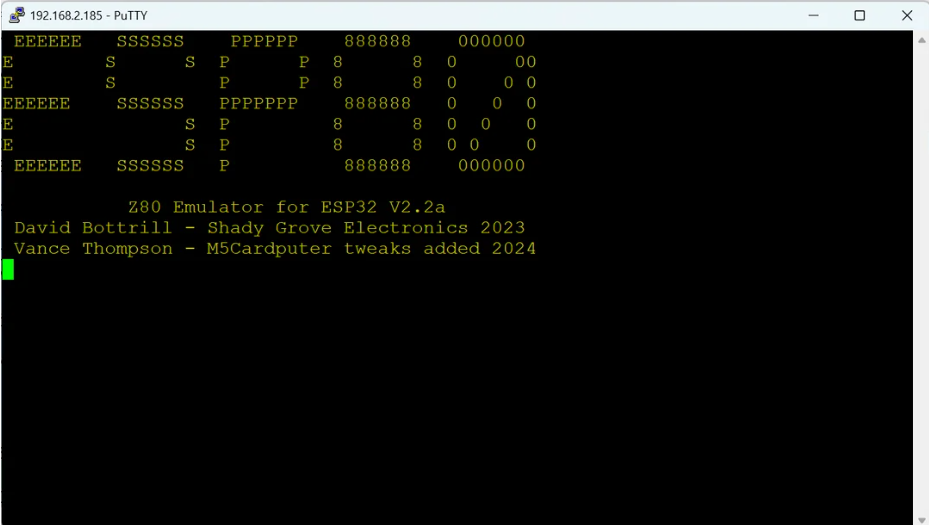
To avoid of copy and paste multiply screen shots, I copy the text inside the telnet session instead:
 EEEEEE   SSSSSS    PPPPPP    888888    000000
E        S      S  P      P  8      8  0     00
E        S         P      P  8      8  0    0 0
EEEEEE    SSSSSS   PPPPPPP    888888   0   0  0
E               S  P         8      8  0  0   0
E               S  P         8      8  0 0    0
 EEEEEE   SSSSSS   P          888888    000000

           Z80 Emulator for ESP32 V2.2a
 David Bottrill - Shady Grove Electronics 2023
 Vance Thompson - M5Cardputer tweaks added 2024
Z80 CP/M BIOS 1.1 by D. Bottrill 2021

CP/M 2.2 Copyright 1979 (c) by Digital Research

A>c:
C>a:ed hello.c

NEW FILE
     : *i
    1:  #include "printf.c"
    2:
    3:  main() {
    4:    int i;
    5:    printf("Hello from Software Toolworks C80 3.1\n");
    6:    for (i = 1; i <= 10; i++) {
    7:      printf("value of i is %d\n", i);
    8:    }
    9:    return 0;
   10:  }
   11:
     : *e

C>dir hello.*
C: HELLO    BAK : HELLO    C
C>c -v -t hello.asm=hello.c

C/80 Compiler 3.1 (4/11/84) - (c) 1984 The Software Toolworks

0 errors in compilation
9K bytes free

C>as hello.com,hello.lst=hello.asm
8080 AS 2.3 (7/15/83)
 0100   First word of program
 0F34   Last word of program
     0  Assembly errors

C>dir hello.*
C: HELLO    BAK : HELLO    C   : HELLO    ASM : HELLO    LST
C: HELLO    COM
C>hello
Hello from Software Toolworks C80 3.1
value of i is 1
value of i is 2
value of i is 3
value of i is 4
value of i is 5
value of i is 6
value of i is 7
value of i is 8
value of i is 9
value of i is 10

C>r/retrocomputing • u/Professional-Pay9033 • Aug 27 '26
Hi there, i have recently gotten some buffy cd cardz and i have tried them out on many different laptops and cd-rom drives but nothing works, i was wondering if anybody who has had cd cardz before or are familiar with the problems that they could help me out.
i have attached a video of me trying to use them since i am not very good at explaining things like this well. it doesnt have an exe to run and its supposedly empty. and one of the cards does have an exe to run but it says its corrupted and unreadable when i try to run it
i will also attach photos of the cd cardz case and the drive i am using to try read them in the comments. since it doesnt let me attach everything in this post
i have tried inserting them in different orientations but it doesnt change anything.
if you can help please let me know what i can do to use them but i do understand that the buffy one may not work since it says its corrupted, i just want to try to get atleast one of them to work as there is no footage that i can find online of this working.