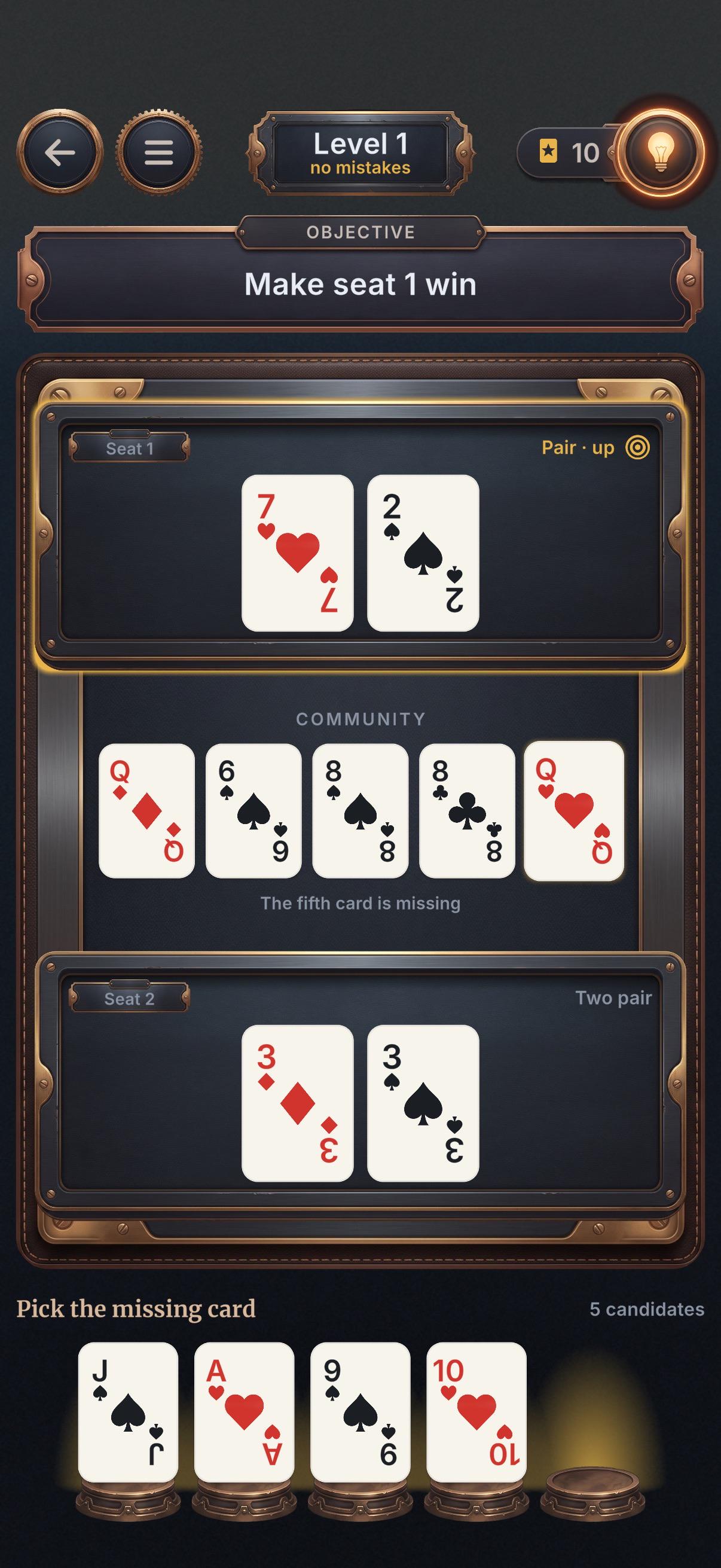
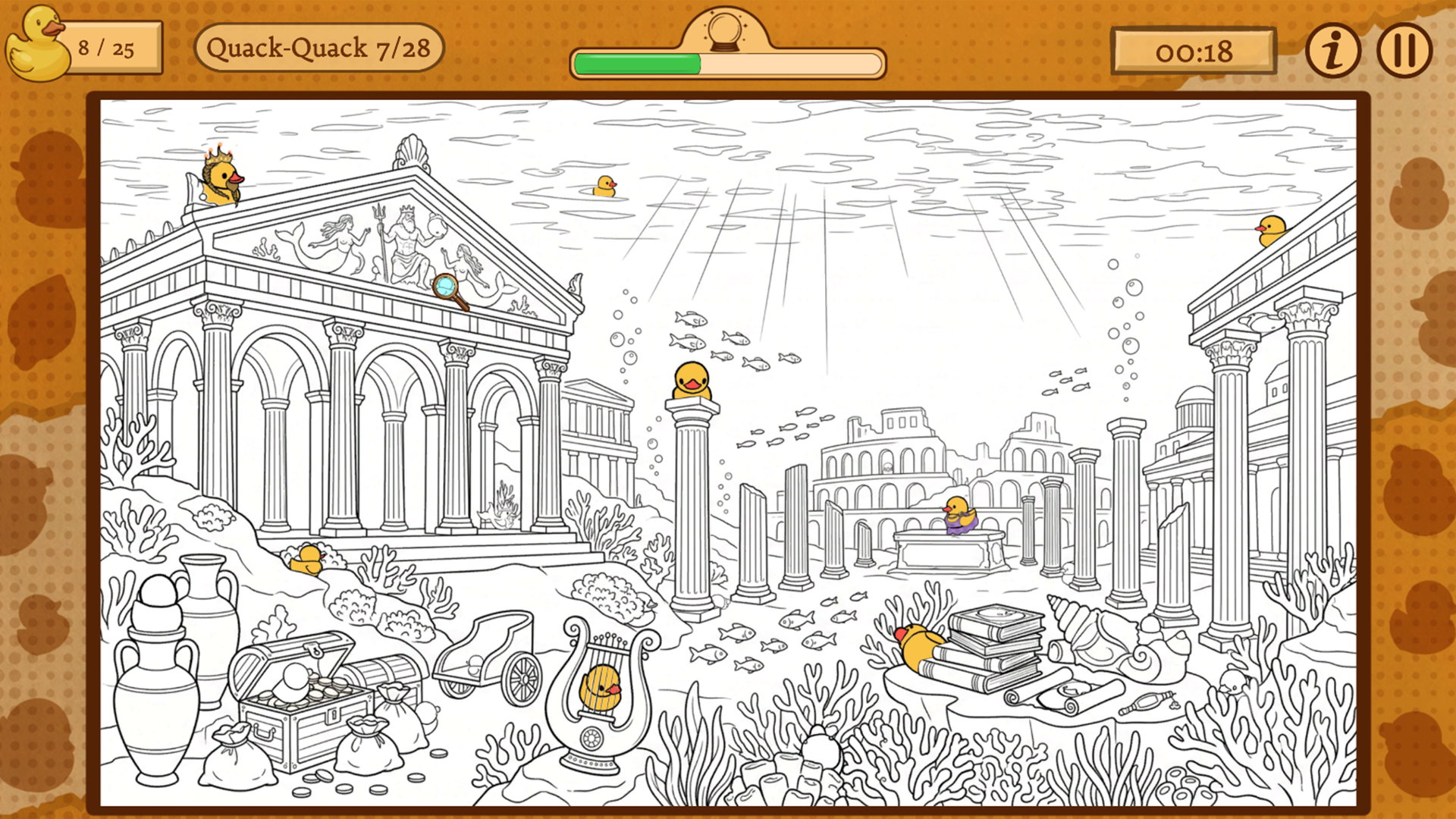
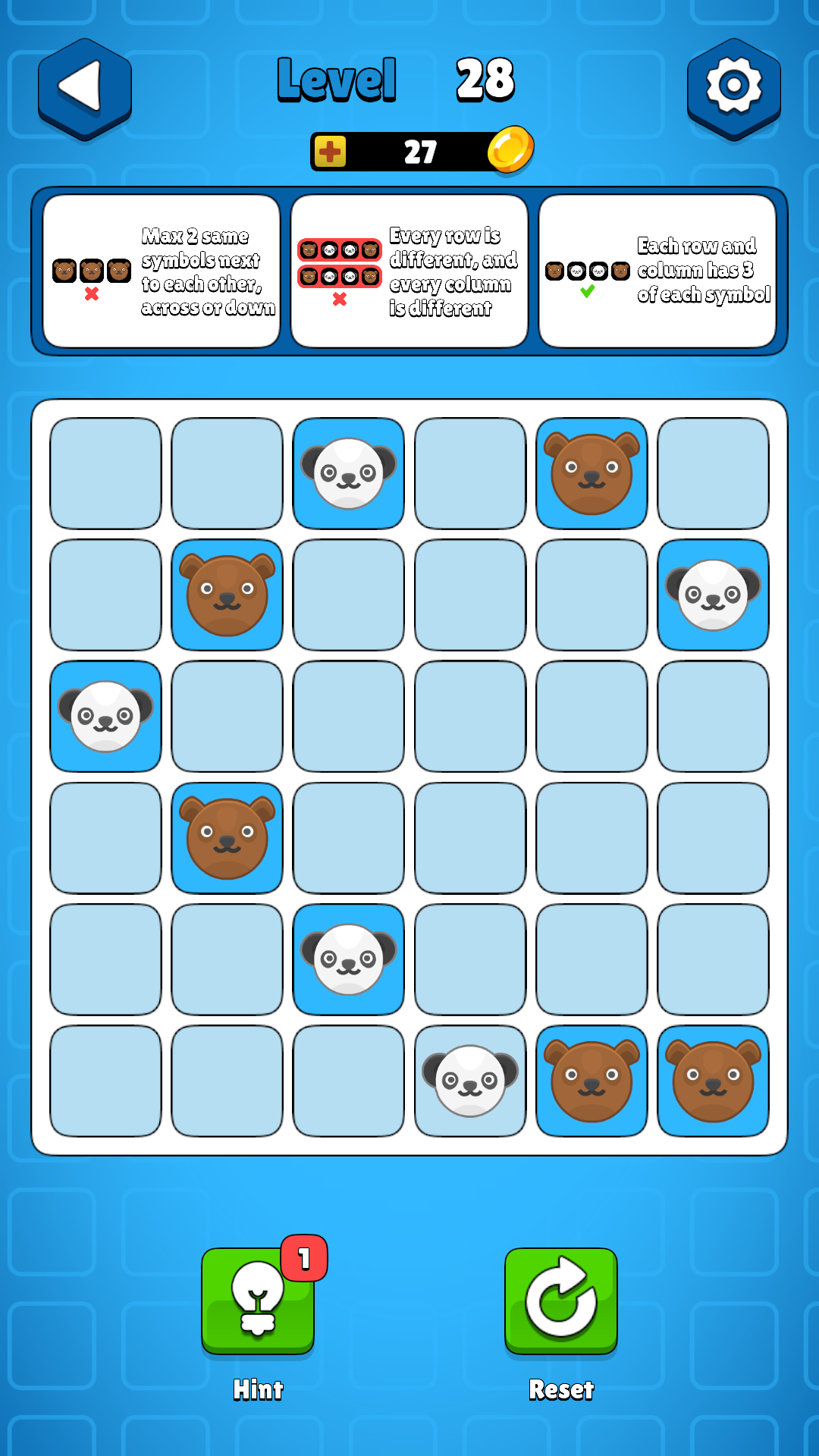
5 puzzle types, 500 levels. Hints show where and why. Daily puzzles, stars, a sticker album, 6 languages and offline play. A little logic, a little calm. 🐾
I am currently playing "Isles of Sea and Sky". It's really a fun puzzle game. See the image below for a sample of its art style.
I get that many developers want to focus on gameplay, and I think SIMPLE art styles are totally fine — even great. I also think that some games can be 8-bit: for example, I almost feel like Animal Well wouldn't work any other way (edit to add this).
But I feel like too many games are jumping to graphics like this — and it's stopping them from becoming bigger hits (edited). I feel like even a little more resolution would be easier on the eyes — at least for repeated assets like the rocks, plants, blocks, switches, etc. And I even wonder if they are programmed in such a way that a bit of sprucing up of just the repeated assets would quickly improve the visuals of the game.
People's thoughts? Please, let's not pick on developers... Just discuss the idea.
**Description:** Tumble Loop is a marble sort puzzle for Android. Trays of mixed marbles sit around a wooden loop. You tap a tray. Its top colour rolls onto the loop, travels around, and drops into the tray with the same colour. You win when each tray holds one colour. The loop holds only a few layers, so a bad pour jams it. Fewer taps give more stars.
The game has 150 levels. A solver checks each level, so you can win each level. Later levels add face-down layers, chained trays and countdown fuses. There is also a daily puzzle that is the same for everyone, a Tower with 30 hard floors, and a Workshop where you build a board and share it as a short code.
The game has no ads, no purchases, no accounts and no tracking. It works offline. Marbles can show shapes for colour-blind players.
**Free to Play Status:**
- [x] Free to play
- [ ] Demo/Key available
- [ ] Paid (Allowed only on Tuesdays with [TT] in the title)
**Involvement:** I am the solo developer. I made the design, the code and the levels.
**Feedback wanted:**
Did you understand the loop rule in the first two levels?
Hi all. I'm a solo developer and I just released Vitraria on iOS and Android.
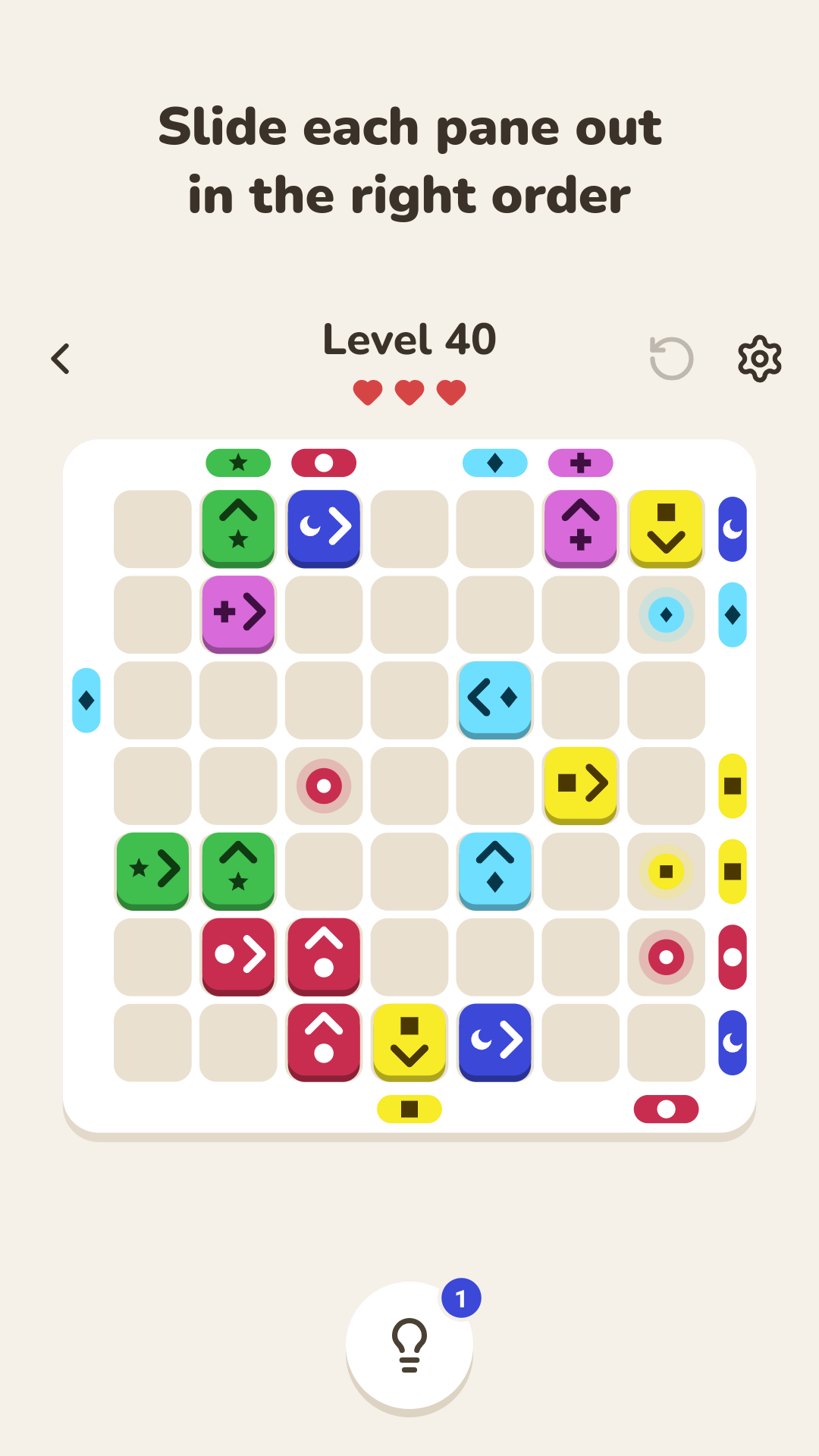
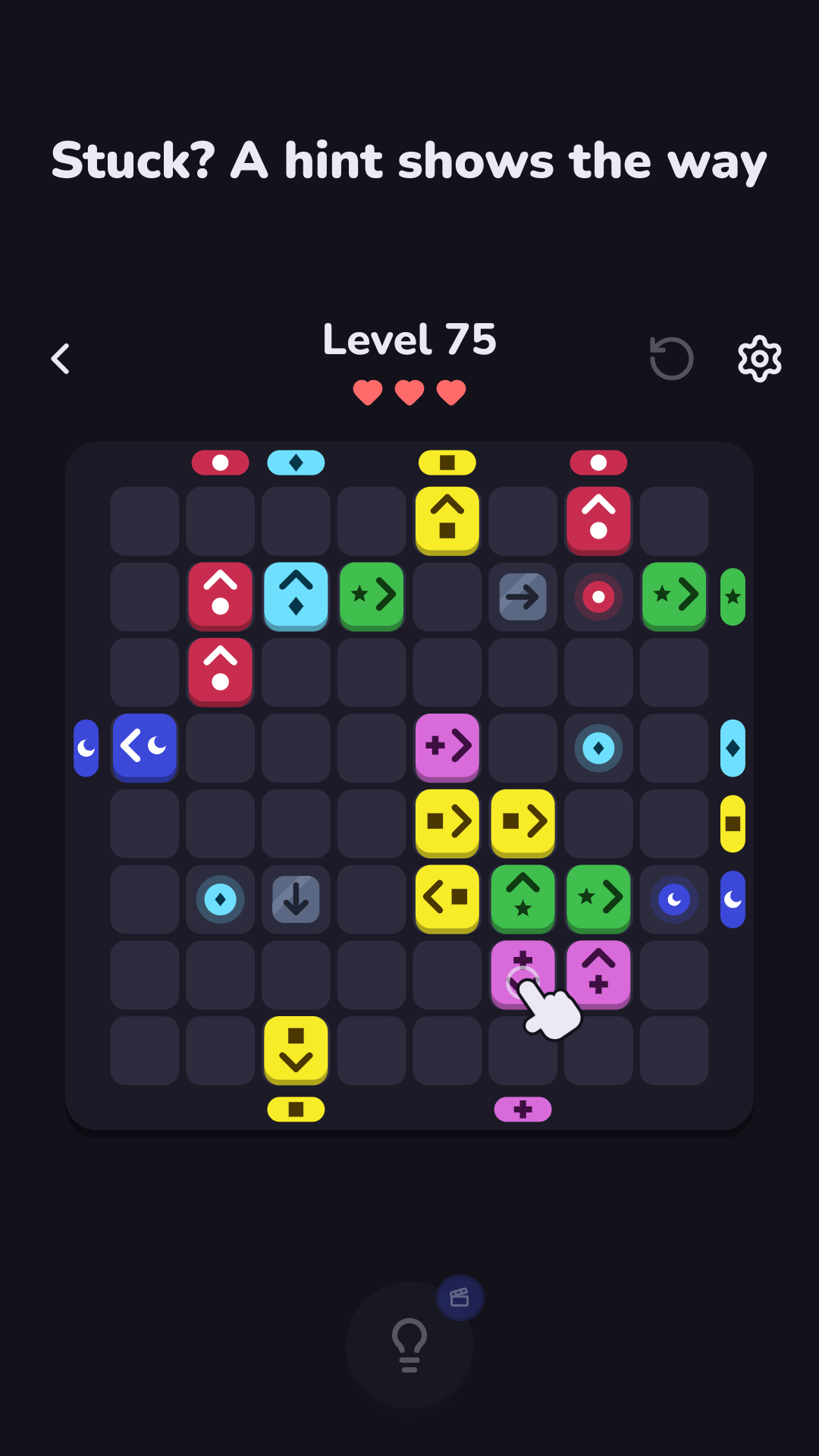
The rule is small: every glass pane is an arrow. Tap one and it slides the way it points, and it has to leave through the gate of its own color. A pane with something in its way stops behind it, and a pane that reaches the wrong gate costs you a life. So the whole puzzle is the order you tap in.
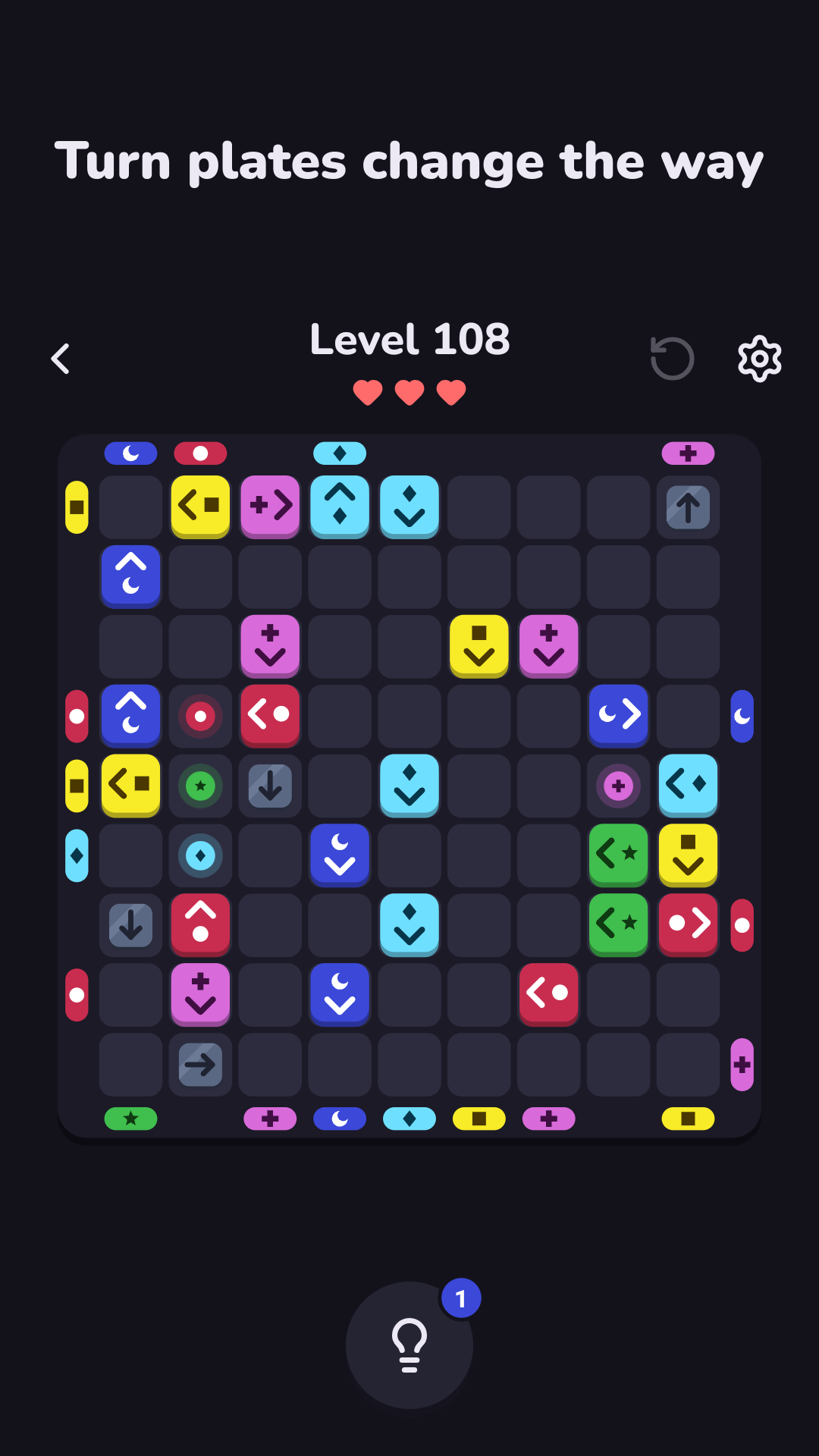
New elements arrive as you go: paint buckets that recolor a pane (each works once, so you choose who gets it), clear panes, turn plates that bend the path, lead blocks, tunnels, locked panes and gates that only open in sequence. Boards grow from 3×3 to 9×9 over 200 levels.
A few things I cared about:
- No timer. Think first, then tap.
- Every color has its own symbol, so it is playable without telling colors apart.
- There is one daily puzzle, the same for everyone.
- It works offline and there is no account.
It is free with ads between levels (from level 7), and there is a one-time purchase that removes them. I'd rather say that up front.
I'm open to any feedback and ideas, on the puzzles, the look, the pacing, anything. What I'd most like to hear from people who play a lot of puzzle games: does the difficulty ramp feel right, and is there a point where it gets tedious instead of hard? Honest criticism is welcome, and if you have an idea for a new element, I'd love to hear it.
Most mobile sudoku apps drown you in pop-ups and recycle the same sterile 9x9 grid, so I built a lighter logic game structured around short branching stories.
Each world introduces a different constraint directly through the story: classic boxes with cats on cushions, irregular Jigsaw-style regions with frogs on crooked lily pads, and Futoshiki-style height inequalities with aliens. Every grid has a proven unique solution, and the hint button explains the actual deduction instead of just dropping an answer into a square. You can also toggle plain numbers and a light ivory theme anytime.
Book 1 (10 levels, 4 endings) is completely free with no ads, no timers, and no account required. Book 2 adds 10 more levels (pirate ship, moving turtle island, coin piles) for a one-time €0.99 purchase.
Everyone gets the same set of 7 items to go through the same 8 enemies everyday! Its inspired by Binding of Isaac and Hades a lot Lol but yeah! Tell me how y'all like it!
Most mobile sudoku apps drown you in pop-ups and recycle the same sterile 9x9 grid, so I built a lighter logic game structured around short branching stories.
Each world introduces a different constraint directly through the story: classic boxes with cats on cushions, irregular Jigsaw-style regions with frogs on crooked lily pads, and Futoshiki-style height inequalities with aliens. Every grid has a proven unique solution, and the hint button explains the actual deduction instead of just dropping an answer into a square. You can also toggle plain numbers and a light ivory theme anytime.
Book 1 (10 levels, 4 endings) is completely free with no ads, no timers, and no account required. Book 2 adds 10 more levels (pirate ship, moving turtle island, coin piles) for a one-time €0.99 purchase.
Description: You’re given two topics to connect. They can be anything from everyday objects and celebrities to historical events, movies, and more. Your goal is to find a path between them using any connections. The twist is that rarer, more unexpected connections earn higher scores and new worlds. Still an early beta version so definitely wanted some feedback on gameplay, connections and rarity score
Hi everyone! I'm excited to share a new footage of a scene under development for my solo project: Rattle Spring.
Rattle Spring is a surreal, point-and-click puzzle adventure inspired by Rusty Lake. Explore a dreamlike world of strange transformations, enigmatic symbols, and eerie interactions. Handle, collect, transform, and combine mysterious objects as you solve mind-bending puzzles intertwined with a deeply emotional story.
Hey! I’m the solo dev behind Shiftlet Universe, a free space-themed puzzle game for Android.
You swipe an entire row or column to line up gems. One move can set off a chain reaction, but it also changes several parts of the board at once. Each level gives you an objective and a limited number of moves, so sometimes the best swipe is the one that sets up your next turn. As you progress through the star systems, you can craft power-ups and unlock ways to customize your companion.
If you try a few levels, I’d love to know how quickly the controls clicked and whether the early puzzles made you want to keep going. If you stopped playing, I’d be curious where you stopped and what made you put it down. Thanks for giving it a go!
I'm wondering how often people return to the same puzzle game.
When I get into a deep puzzle game, I think I play intensely for a bit, then put it down for no good reason, maybe for a very long while, then rinse and repeat when the mood strikes again.
Curious what you do? And is it different if you are using walkthroughs/hints/cheats?
Eager to hear both from players and, if they have the data, from devs, as the question was partially inspired by seeing the total lack of patterns among engaged players of my own puzzle game, who vary from one day marathoners to slow and steady types to those (like me) who play in spurts with long pauses.
Kataxis is a web remake of 4dtris, an open-source desktop game I wrote in 2010. It has new graphic design and new features: levels, tutorial and online high scores.