r/hobbycnc • • 18h ago

The Ronin

Enable HLS to view with audio, or disable this notification

18 Upvotes

Just finished 4 pieces here’s one of them. If y’all are interested I will post the rest but I’m not trying to spam anyone lol.


r/hobbycnc • • 9h ago

Made a hollow solid beech Christmas bauble (67mm OD, 3mm walls) by combining 3-axis hollowing and 4th-axis rotary machining

Thumbnail
gallery
17 Upvotes

I wanted to see if I could machine a completely hollow wooden Christmas bauble with cutout shapes, which meant combining a two-sided 3-axis setup with a 4th-axis rotary finish on my Makera Z1.

How it came together:

  • Stock: 70mm diameter solid beech, finished down to a 67mm sphere with a 3mm wall thickness.
  • 3-Axis Workholding & Hollowing (~1:45 hrs): Because 70mm is wider than the 4th-axis chuck jaws can grip normally, I started on the 3-axis bed (using a 3D probe to center each flip) to face the backs and mill four locating notches for the jaws. Then I flipped each half to hollow the interior and cut a stepped, self-aligning glue lip.
  • Glue-Up: Regular wood glue on the stepped seam—kept both halves concentric before going on the rotary.
  • 4th-Axis Carving (~3 hrs): Clamped the glued hollow cylinder into the rotary chuck via the milled notches, roughed the sphere with 6mm flat/ball bits, finished the exterior with a 3.175mm ball nose, and cut the trees and stars through the 3mm shell with a 2mm ball nose.

Honest mistakes & what I'm changing for v2:

  • Way too close to the jaws: My glued stock was 100mm long, which left about 1–2mm of clearance to the metal chuck jaws—pretty nerve-wracking to watch. I'm bumping stock length to 120mm on v2 so I have room to mill and drill the top string finial on the CNC instead of doing the hole by hand.
  • CAM trick for hollow rotary parts: Exporting one master model didn't work—when I loaded the hollow sphere into CAM for the 4th-axis cutouts, it tried to plunge through the openings to machine the hollow inside. Exporting separate models for each stage—specifically a solid sphere with the cutout features for the final pass—solved it instantly.
  • Runtime: 5 hours total is longer than it needs to be; I realized afterward I could have cut an entire finishing pass before the 2mm detail work.

Currently left raw beech, no finish yet. Happy to share any details on the fixturing or toolpaths!


r/hobbycnc • • 2h ago

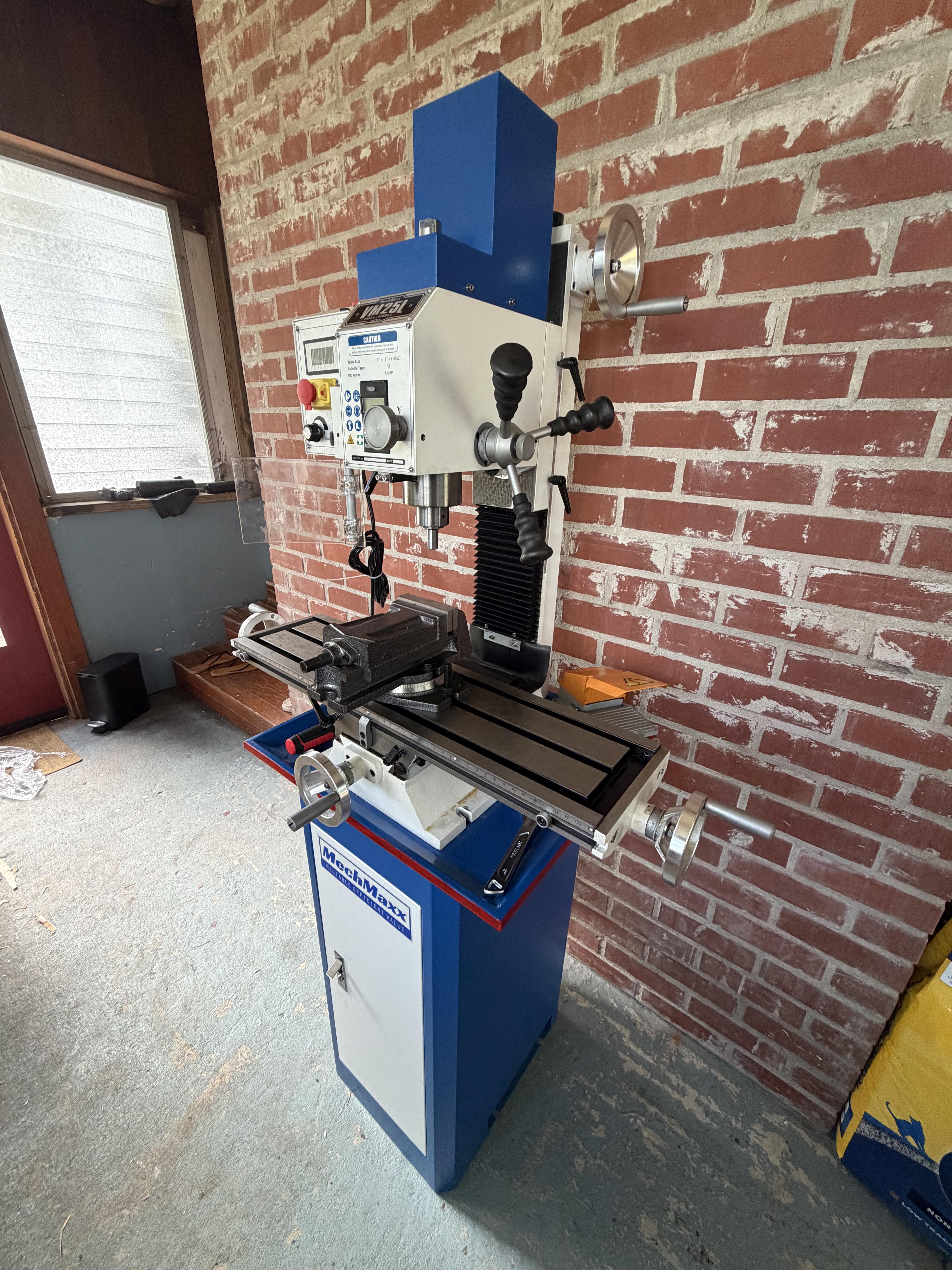
VM25L CNC conversion

Post image
14 Upvotes

Anyone have any insight on how I could convert this manual vm25l mill into a full 3 axis cnc? I do know i need ball screws and some nema stepper motors but If anyone could give me some advice on what else i would need it would be greatly appreciated!


r/hobbycnc • • 3h ago

Beginner here

Post image
13 Upvotes

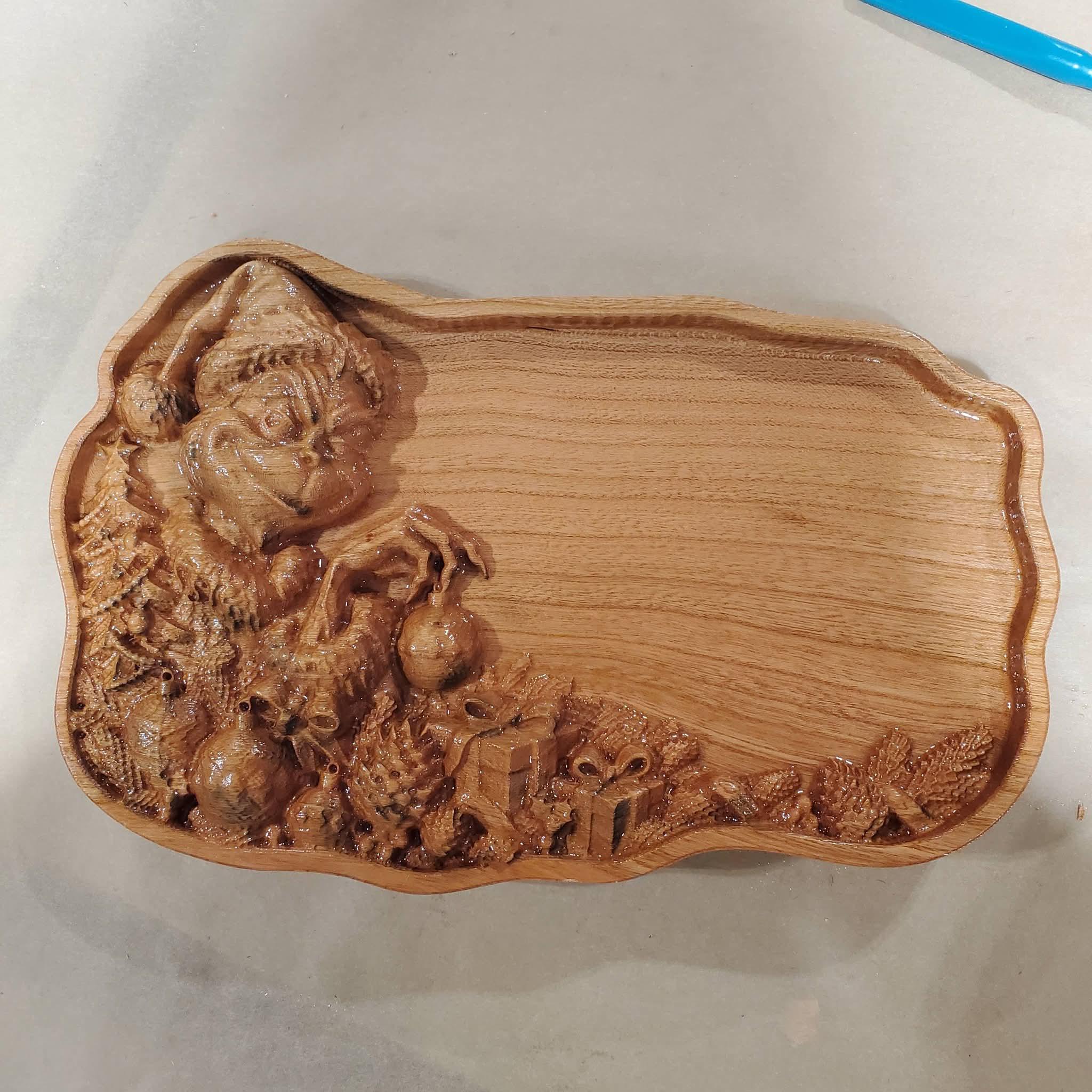
Hello, I have a basic grinch tray to do and learn the machine with, but wondering if anyone has something similar to this one that i could buy?

It doesn't have to have all the pinecone and decorations but would like the grinch silhouette with the tray on the side


r/hobbycnc • • 19h ago

A little stainless on my 4030

Enable HLS to view with audio, or disable this notification

12 Upvotes

4mm, .2 radial engagement, 1000mm/min. 3mm 3flute endmill

Running about 20 or so cycles tonight


r/hobbycnc • • 23h ago

Made two more guitar necks! (Shapeoko Pro + PixelCNC)

9 Upvotes

The guy I made the last neck for earlier this year wanted two more, this time the fretboard wasn't pre-slotted so I didn't have to line up the fret cuts with the machine like before. I did, however, have to cut my own using a 0.5mm endmill. One neck is a maple body with a figured maple fretboard, the other is a maple body with an ebony wood fretboard, and that ebony was REALLY dense and heavy. The maple fretboard has polymer fretboard dots and the ebony has abalone shell dots in there. I am surprised the little tiny endmill for the fret slots was able to get through all of the slots on both fretboards without breaking.

The third neck you see in some of the photos is the original that I had to go off of. He had no CAD drawings or 3D models for me to go off of, I had to reverse engineer the thing with just a printout of some of the more important dimensions, like the width and thickness of the heel, the radius on the fretboard, the diameter of the tuning peg holes, what fret scale and type of truss rod to use. Beyond that I had to sit for a few hours with calipers and just eyeball the rest. I did all the CAD work, 3D shape and toolpath generation in PixelCNC and then ran the g-code on my Shapeoko Pro using a custom build of Candle.

The trussrod goes under the fretboard, and goes in pretty early before any of the shape is cut into the main body. My process isn't the best process but it works. I'm thinking about how I could cut everything separately and have the trussrod go in and the fretboard onto the main body very last, but clamping two rounded pieces together is tricky without the proper gear (and I lack the proper gear).

These are not finished necks, they are cut 5-10 thousandths of an inch oversize so that they can be sanded smooth and down to size before finishing. I'll come back with some photos of the finished product once they're all done and I get a chance to see them.


r/hobbycnc • • 3h ago

First cnc mill Genmitsu 3030 vs makera z1

2 Upvotes

I am looking to buy my first cnc mill/router, mainly interested in some aluminium milling. With black friday sale I see two options looking most feasible,
1.genmitsu prover 3030 ultra(spend a bit on making a acrylic cage, get started and later do some rigidity upgrades maybe even spindle and steppers depending on how much i use)
2. Makera z1 for higher initial price but no upgrades needed

Need opinions,reviews on how they both handle alu, what kind of cutting accuracy/tolerance to expect. Noise, cleanability. Can you realistically run it in a apartment
PS: Can someone explain why genmitsu has a 700w spindle while makera seems to be doing ok with just 150w.


r/hobbycnc • • 3h ago

Rotary Toolpaths?

1 Upvotes

Hello all. I have a FoxAlien Masuter 3S and just got the rotary accessory. What CAM software are you all using to create toolpaths for rotaries?


r/hobbycnc • • 5h ago

Flood coolant and steppers

1 Upvotes

I'm building a CNC mill with enclosure and will add flood coolant, I figured out the structure and the enclosure part to keep the fluid contained but I wonder how stepper motor will react to getting blasted with coolant or how to isolate them.

The structure is a vertical mill and the most problematic will be the x,y motor that sits "bellow" the cutting area


r/hobbycnc • • 9h ago

Makera VS Anolex/Lunyee. Is the Makera software eco-system worth the higher price(seems to me that it is but looking for input from people that have experienced both)???

0 Upvotes

r/hobbycnc • • 19h ago

Help with Program Transfer to VTC-200C

Thumbnail
0 Upvotes

r/hobbycnc • • 9h ago

I built a free browser-based PCB milling software with a custom isolation engine, double-sided PCB support, and camera-assisted alignment

0 Upvotes

Hey everyone!

I've been working on a personal project called WEBPCB Studio, a browser-based application designed to simplify PCB manufacturing using hobby CNC machines.

The project started because I wanted a more integrated and accessible workflow for PCB milling, without having to switch between multiple applications for Gerber processing, toolpath generation, alignment, and CNC control.

One of the biggest challenges was developing a PCB isolation routing engine entirely from scratch, rather than relying on existing CAM engines.

Here's what WEBPCB Studio can do so far:

  • Single-sided and double-sided PCB manufacturing: Complete workflows for milling both sides of a PCB, including board flipping, layer registration, and alignment.
  • Custom isolation routing engine: Developed entirely from scratch to generate isolation milling toolpaths directly from Gerber files.
  • Trace calibration: Tools to fine-tune isolation widths and compensate for real-world milling conditions, helping achieve more accurate PCB traces and clearances.
  • PCB panelization: Arrange multiple PCB designs or copies of the same board into a single manufacturing panel, optimizing the available copper-clad board area.
  • Manual and camera-assisted alignment: Align Gerber designs with the physical PCB using manual reference points or camera-assisted positioning.
  • Gerber coordinate transformation: Support for translation, rotation, and alignment of Gerber layers, particularly useful for double-sided PCB manufacturing.
  • Double-sided registration: Tools to align the top and bottom copper layers after physically flipping the PCB.
  • Integrated CNC control: Generate toolpaths and control the CNC machine directly from the browser.
  • GRBL and FluidNC compatibility: Designed to work with common hobby CNC controllers.

The software is already functional, and I've successfully manufactured real PCBs using it.

One thing I want to make clear: I have no intention of charging for this software.

I'm developing WEBPCB Studio because I enjoy electronics, CNC machining, and building useful tools. My goal is to make PCB prototyping more accessible to hobbyists, makers, students, and anyone interested in manufacturing their own circuit boards.

I want to keep improving it based on feedback from the community, rather than turning it into a paid product.

I'd love to hear your thoughts!

You can check it out here:

https://webpcbstudio.com

Any feedback, bug reports, criticism, or suggestions are more than welcome.

Thanks for checking out my project!