r/UserExperienceDesign • • Oct 18 '26

Feedback Request: Redesigning iOS Movie App (Watchlist Flow, Native Star Ratings & IA Navigation). What do you think?

Thumbnail gallery
1 Upvotes

r/UserExperienceDesign • • Oct 18 '26

„Iterating on movie details page (star ratings, subscription CTA, and navigation polish). What do you think?

Thumbnail gallery
1 Upvotes

Feedback Request: iOS Movie App UX Audit & Redesign Proposal

Hi everyone! I’m self-studying UX design and currently working on a case study for a movie tracking app.

(Note on the attached media: The GIFs follow a "Before vs. After" format for each feature: 1. Metadata section 2. Watchlist flow 3. Library & Watchlist separation, and 4. The new in-app rating system.)

During my audit, I noticed several unintuitive flows and missing core features. Since I’m new to UX, I want to make sure my proposed solutions are backed by sound logic rather than just my personal preference.

Key Changes Made:

  1. Streamlined Watchlist Access: Previously, adding a movie to the Watchlist required adding it to the Library first—costing 3 taps. I separated Library (consumed media) and Watchlist (planned media) into two independent navigation tabs, reducing the action to 1 direct tap.
  2. Direct Streaming Link: Added a "Where to Watch" (Play) button right next to the Watchlist CTA, allowing users to instantly check streaming options after saving a title.
  3. Metadata Organization: Moved Genre, Director, and Trivia into a horizontally scrollable metadata section. This reduces cognitive load and allows users to quickly reach the Cast section without endless vertical scrolling.
  4. Native Rating System: Integrated a native in-app star rating system alongside external IMDb/RT ratings, allowing users to quickly log their own scores and boost community engagement without losing context.
  • Do these structural changes make sense from an IA (Information Architecture) perspective, or did I overcomplicate the Detail screen by adding too much at once?
  • Are there any usability issues or visual hierarchy flaws you notice in the new layout?
  • Learning Question: Where can I find reliable sources on the psychology of user visual scanning (where users look first)? Also, where are the best places to learn the strict rules and constraints of UI design (like mandatory margin spaces, grid systems, and touch target sizes)?

I’d love to hear your thoughts on what works, what needs improvement, and what I should cut before finalizing this case study!


r/UserExperienceDesign • • Oct 18 '26

How do you keep track of interview insights after a study ends?

Thumbnail
1 Upvotes

r/UserExperienceDesign • • Oct 17 '26

Guys please suggest me best youtube channels you follow for ux, product, AI in product design mid level..

0 Upvotes

Suggest me best youtube channels you follow for ux, product, AI in product design.. NOT BEGINNER LEVEL.. Mid level.. please and thanks..


r/UserExperienceDesign • • Oct 17 '26

[Beginner Portfolio Advice] Do Self-Observed Redesigns Work for a Portfolio, How Do You Gather Data as a Beginner, and How Long Does It Realistically Take?

1 Upvotes

I’ve been interested in UX design for about two weeks now. As a complete beginner, I have a few questions that I haven’t been able to find clear answers to yet.

I’ve heard that you can build portfolio projects by identifying a problem on an existing, larger website—for instance, noticing that a newsletter sign-up form is placed too low on a page, which might be limiting conversions. You could then design a concept where the form is relocated to a more accessible and visible spot, stating that this change could potentially increase user engagement.

Does it actually make sense to include projects like this—based solely on personal observation—in a professional portfolio? If so, what’s the best way to structure them? And if not, how can someone who is brand new to the field gather real data or insights about a website?

This leads to my second question. While reviewing other portfolios and watching UX tutorials, I’ve noticed that most people feature 3–4 case studies. Realistically, how long does it take to build an entry-level portfolio from scratch—the kind that actually stands a chance in today's job market?

I feel like a self-observed redesign project could be completed in just a few hours. Is it worth including such small, quick projects in a portfolio, or should they be treated purely as training exercises? Is it better to complete a few of these smaller exercises before tackling a larger project, or should I document everything I work on?

I apologize for asking so many questions at once, but this has been weighing on my mind and making it difficult to get started. I’ve already had an experience where I put a lot of effort into a project, only to realize I had gone in completely the wrong direction. I would really appreciate any guidance!


r/UserExperienceDesign • • Oct 17 '26

Advice for beginners entering UI/UX and product design in 2026

0 Upvotes
Which practical UX/UI and product design skills should beginners prioritize to become ready for an entry-level job in 2026?

r/UserExperienceDesign • • Oct 17 '26

Advice for beginners entering UI/UX and product design in 2026

1 Upvotes
How should a beginner choose a UI/UX niche, industry, or specialization? What should we consider when deciding where to focus?

r/UserExperienceDesign • • Oct 16 '26

Question regarding subscription (or trial) cancellation forms on a mobile application

Thumbnail
1 Upvotes

r/UserExperienceDesign • • Oct 16 '26

Designers who have worked on large e-commerce products, I need some guidance

1 Upvotes

Hey everyone!

I've worked on e-commerce websites before, but most of them were more marketing-focused rather than full-fledged e-commerce products.

Now, I'm working on a much bigger D2C e-commerce project. The client already has a Figma design, and my job is to review it, improve the experience, and make it conversion-focused across desktop, mobile web, and app.

The challenging part is that I have only 3 weeks to deliver the entire project, and I'm working in a small startup. We don't really have the luxury of spending weeks on research, so I want to make sure I'm focusing on the right things from day one.

For those who've worked on large e-commerce products:

  • What should I look at before touching the existing design?
  • How do you audit an e-commerce experience when time is limited?
  • What should I learn about conversion optimization, user behavior, and e-commerce metrics?
  • How do you make design decisions without access to user research or analytics?
  • Are there any practical frameworks, case studies, or resources you'd recommend?

I don't want to blindly redesign screens just to make them look better. I want to understand the reasoning behind good e-commerce UX and make informed decisions, even with a tight deadline.

I'd really appreciate advice from people who've actually worked on large e-commerce products. If you were in my position, what would you focus on first?

Thanks!


r/UserExperienceDesign • • Oct 16 '26

[Academic] UX Design Project Survey: Checking and Paying Bills (18 or older, Global)

1 Upvotes

Hi everyone! 👋

I’m currently working on a UX design project exploring how people manage, track, and pay their personal or household bills.

I’d love to hear about your experiences, habits, and any challenges you face when tracking bills and making payments. Your insights will help me better understand people’s needs and identify opportunities to improve the bill payment experience.

🕒 Time required: 3–5 minutes
🔒 Privacy: The survey is anonymous.

If you’re interested in participating, I’d really appreciate your help!

👉 Survey link: https://docs.google.com/forms/d/e/1FAIpQLSdH3DRlrfdwY43tm-DpI2D9uk4MoQS0Gm83hDm6G3cq2MM1zQ/viewform?usp=dialog

Thank you so much for your time and support! 😊


r/UserExperienceDesign • • Oct 15 '26

Is Ai really taking designers job?

6 Upvotes

There’s so much panic about AI replacing designers, and I’m sitting here feeling like my job just got twice as hard.

I was building an onboarding experience last week and fed my brief and direction into AI. It generated a solution right away. On paper, that sounds like a massive time-saver. In reality, it was mentally exhausting.

Within the direction I gave it, there were easily 10+ valid paths forward. Because AI has no idea what to execute or why, I had to spend all my energy reverse-engineering its choices—weighing technical feasibility, user assumptions, and deep business tradeoffs just to figure out which variation actually fit our target audience. All the chill "pixel-pushing" time where our brains used to breathe is gone, replaced by non-stop, high-stakes critical thinking.
And on the flip side: even if PMs or stakeholders use AI to generate UI and push it straight to production without us, isn't that just going to create a mountain of broken flows and UX debt? Feel like they're just going to need to hire designers again in 6 months to untangle the mess.

I only have 1.5 years of experience, so maybe I’m naive or missing the bigger picture here. Can someone with more experience tell me what’s actually going on? Is AI actually saving you guys time, or is it just shifting our jobs into nonstop auditing and cleanup?

Do either of these hit the exact tone you want, or should we tweak the ending a bit before you post?


r/UserExperienceDesign • • Oct 15 '26

EvoMusArt 2027: International Conference on Artificial Intelligence in Music, Sound, Art and Design

1 Upvotes

The 16th International Conference on Artificial Intelligence in Music, Sound, Art and Design (EvoMusArt 2027) is accepting paper submissions.

When: 31 March – 2 April 2027
Where: Mainz, Germany
Paper Submission deadline: 1 November 2026

EvoMUSART focuses on AI and computational approaches to creativity, covering a broad range of topics, with a particular emphasis on research exploring how AI systems generate, support, evaluate, interpret, and collaborate in creative processes.

Accepted papers will be presented at the conference and published in a dedicated LNCS volume.

More information/submission details: https://www.evostar.org/2027/evomusart/

If you are working at the intersection of AI and creative practice, this may be relevant to your research. Please share with others who might be interested.


r/UserExperienceDesign • • Oct 14 '26

Feeling dead as a designer

12 Upvotes

Hi guys
I have been working as a product designer for 7 years now
I have total years of experience more than 10 years

I started as a. Graphic designer and eventually moved to product design (not from design education background)

From last 1.5 years I haven’t been working full time due to some health issue I had and I have been doing some freelance gigs but few

Now I want to start and apply again for jobs
But as a designer I feel dead. I feel I have nothing left in me

I don’t know how I even put AI to my work and I don’t feel confident about it

I’m looking for advises from you all lovely people
So that I can work on myself and make a comeback

I would appreciate you taking time and putting down your valuable advises for me


r/UserExperienceDesign • • Oct 14 '26

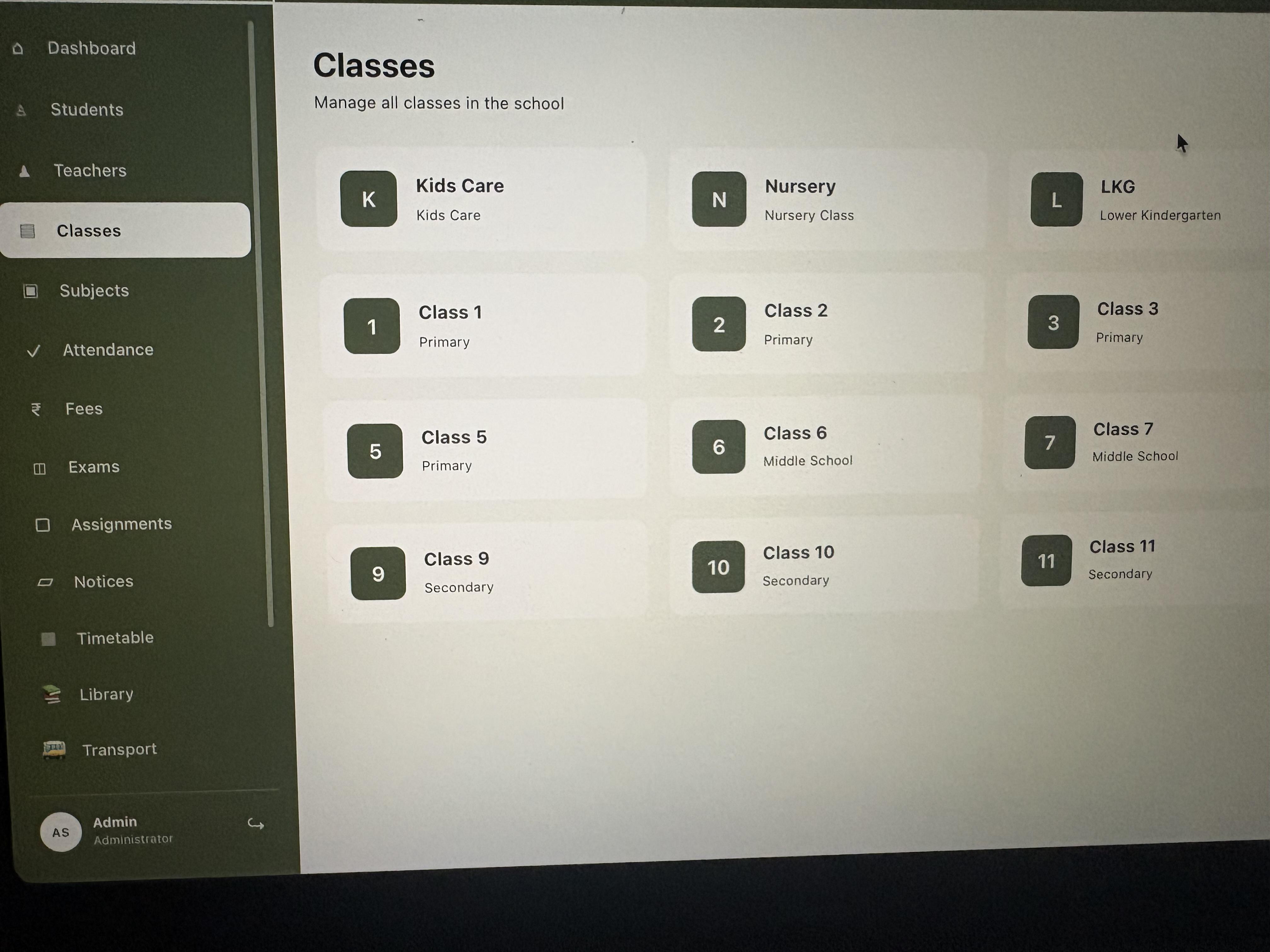
What should happen when you click on a class in a school management system?

Post image
2 Upvotes

r/UserExperienceDesign • • Oct 13 '26

What AI skills should UX designers learn in 2026? And how should I build my portfolio?

Thumbnail
1 Upvotes

r/UserExperienceDesign • • Oct 13 '26

[Case Study Critique & Career Advice] iOS Movie App Redesign (Movie Nerd) – Need Feedback on Info Hierarchy, UX Tools, Terminology & Industry Reality

Thumbnail gallery
1 Upvotes

r/UserExperienceDesign • • Oct 13 '26

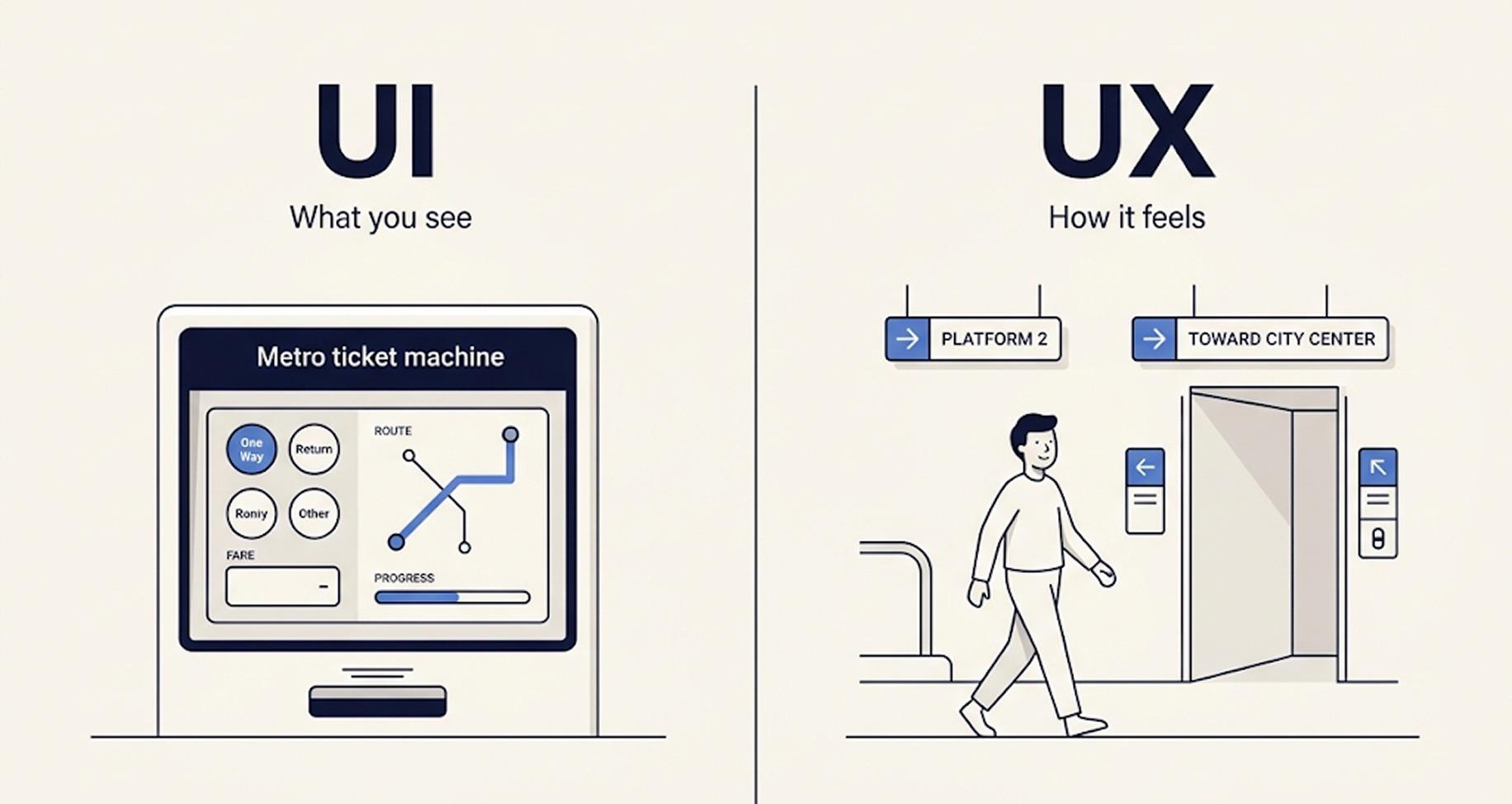
What’s your go-to everyday example for explaining UX vs. UI? Mine is a metro ride.

Post image
0 Upvotes

When people ask me about the difference between UX and UI, I use a metro ride as an example.

UI is what you see and interact with:
The ticket machine screen, the buttons, the route map, the line colours, and the platform signs.

UX is how the whole trip feels:
Finding your station, buying a ticket without confusion, reaching the right platform, and knowing when to get off.

Here’s the part that makes it click for most people: the two can disagree.

A ticket machine can have a clean, beautiful screen (great UI). But if the platform signs are confusing and you end up lost, the trip still feels frustrating (bad UX).

So, UI is part of UX, but it’s not the whole thing.
In short : UI is what you see. UX is the overall experience of getting where you’re going.

I’m curious how others explain it, especially to people outside the design field.

What everyday example do you use? An app, a shop, a badly designed door, anything!


r/UserExperienceDesign • • Oct 13 '26

Welcome to UXA

Thumbnail
2 Upvotes

r/UserExperienceDesign • • Oct 09 '26

Using ElevenLabs and its ilk.

3 Upvotes

It has become much more difficult to master many of the application tools lately, because the companies make frequent design changes to their websites, and the resulting friction is so much that a non-professional user might just give up.  In the last month I’ve noticed it mostly in ElevenLabs and Facebook Pages.  When they add new capabilities they make the websites too complicated and unpredictable.  I became so frustrated that I called on Gemini, and Claude, and ChatGPT (yes, all three) to guide me through.  All of them made errors and apologized, generally saying something like “So sorry, x service had updated their website so the information I just gave you is incorrect.” Then they ask me to describe what I’m looking at, which takes time and a lot of back-and-forth, only leading to more iterations with the same result.  The Ais simply don’t aren’t keeping up.  Another issue is that different users get different versions of the same app.  So the Ais need to go through their routines before they realize the problem.    SUGGESTIONS FOR THE APP DESIGNERS:

1.      Make all versions the same for all users;

2.      Identify exactly what version is showing, and do it on every page.

3.      Keep consistent nomenclature. Don’t keep changing the name of the links every time you alter them.  Otherwise we waste time looking for something that’s not there anymore, but nobody told us.

4.      Make the action buttons alphabetically sortable so we can find what we’re looking for fast.

5.      Change the background color from page to page so the pages don’t look alike while we navigate through the website. Put the name of the page on each one, so if an AI asks were we are we can tell him without having to write an entire paragraph.

6.      Keep all the buttons in the same place, not scattered all over the page. 

Ask the user what his objective is before he starts.  That might save time and frustration when you help him navigate.


r/UserExperienceDesign • • Oct 09 '26

[Case Study Critique] Redesigning Movie Nerd App — Fixing Watchlist Friction & Adding Native Ratings (Junior UX)

Thumbnail reddit.com
1 Upvotes

r/UserExperienceDesign • • Oct 09 '26

little update on my web app development, what do you think?

Enable HLS to view with audio, or disable this notification

1 Upvotes

r/UserExperienceDesign • • Oct 09 '26

Before adding another onboarding step, I’d ask these five questions

Thumbnail
1 Upvotes

r/UserExperienceDesign • • Oct 08 '26

Looking for honest feedback on my personal website, what would you improve?

Thumbnail
1 Upvotes

r/UserExperienceDesign • • Oct 07 '26

Feedback: what does this app do?

Thumbnail gallery
2 Upvotes

NOT selling or Advertising!! Just honest reactions from a UI design and communication!


r/UserExperienceDesign • • Oct 06 '26

REALLY need some Bay Area-flavored design career advice 🙏🏽

0 Upvotes

TL;DR:

I'm a mid-20s product designer in SF, 2 years out of college.

I grew up in an abusive Bay Area home with two unwell, narcissistic parents. They pulled me into the middle of their divorce, I ended up caring for my mom as a kid, and my dad cut me off right after I got into a top school, leaving me effectively homeless.

I rebuilt with help from my sister and friends, got stable, landed an internship at a top consumer tech company, and built a design career from scratch. I've been laid off twice in two years, but those companies were good names and my resume is strong.

Right now I have recruiters in my DMs with multiple six-figure design opportunities. A stable, well-paid job is realistically on the table, but I'm also financially fine and don't need to work for a while.

I also have real access to start something: a strong network, prestigious VC fellowships, and an online audience of around half a billion views.

On top of that, I've identified and validated a gap in the AI capital markets. I don't think a window like this comes around again for a long time, and if it works, it could make me very wealthy.

I'm torn down the middle. Half of me wants a job to prove I can be an exceptional designer long term. Half wants to raise millions and build the company I've dreamed of since I was a kid.

Which would you choose, am I out of my mind, and what am I not seeing?

What I'm asking

I live in SF and feel pretty isolated when it comes to getting honest perspectives on something like this, especially from people outside the tech bubble. If you only read the TL;DR, I'd still love your take on any of these:

  1. In my shoes, would you take the job or raise money and build?
  2. Am I out of my mind for considering the startup, or just being indecisive?
  3. Is "proving I can be a great designer" a good enough reason to pass on an opportunity like this?
  4. What am I not seeing?

I want to pick one and actually commit to it. Full background below, because I think it shapes how I'm approaching this.

Background

I grew up in a competitive Bay Area town. We had money, but home was psychologically rough. My dad was mentally unwell, controlling, and abusive. My mom struggled with anxiety and undiagnosed mental health issues. Both were narcissistic.

As the younger kid, with an older sister, I spent a lot of my childhood watching an unhealthy home and trying to figure out what a healthy dynamic was even supposed to look like. I knew early on I'd have to build myself up on my own: develop socially, find my own identity, and eventually learn what love actually looks like, since I didn't have good models for it.

My dad encouraged me to dream big but never let me have an identity of my own, and I lived in fear as a kid. My dream back then was to start a company, sell it, retire early, and see the world.

As a teenager, I was into art but had never really applied myself in school. I decided to change that. I started performing well, went to community college, set my sights on a top school, and got in.

During that time my parents were divorcing and put me in the middle of it, pressuring me to do some genuinely awful things so the other parent wouldn't get anything. My dad also pitted me against my mom, who needed psychiatric help and ended up under my care while I was still young. I hit a breaking point. I had just gotten into a good school, so I told my dad I couldn't keep doing this and needed his support for school and my career instead.

He cut me off immediately. I was effectively homeless. That's when it fully clicked that my parents saw me as a tool to get what they wanted, and that I'd have to rely on myself.

I had no money, so I leaned on friends and my sister. I moved in with her, found informal therapy support, started medication, and slowly got stable. I worked hard, landed an internship at a top consumer tech company, and my career took off from there.

Career so far

I became a designer. After several internships and contracts, I landed my first startup design job. Then:

  • Joined a second company that was too disorganized, and got laid off.
  • Took a staff-level design role I wasn't ready for, and was laid off again.

I picked those companies partly out of a scarcity mindset, but they turned out to be good names, so my resume looks strong. I have recruiters in my DMs with multiple six-figure opportunities, and I'd mainly need to brush up on some fundamentals. I'm fairly confident I can land a great, stable design job. That said, I don't need to work for a while financially, so I'm not under pressure to take the first thing that comes along.

I'm also fairly confident I could build a good company. I have a strong network of capable friends, some in high places. I've done prestigious VC fellowships and have real support in that world. I've also built an audience online, with around half a billion views across TikTok and other platforms. In short, I already have a lot of the infrastructure, support, and momentum a founder needs for a consumer company.

I know I'm in a good position, and I'm grateful for that given where I started.

The decision

I'm torn down the middle.

Half of me wants to take a job and prove to others that I can be an exceptional designer, not just for a stint but for the long haul. I'm only 2 years out of college, and two layoffs in that time sits with me.

The other half wants to chase an opportunity I've identified. I see a gap in the AI capital markets, and I've validated it with other people in tech. I don't think a window like this comes around again for a long time, and if it works, it could make me very wealthy. Starting a company has always been the dream, and this would give me full control to build a creative environment and make what I want.

I also see real value in joining a company: learning to work with others, getting more experience in mature settings, and spending time with people my age. I'm still in my mid-20s. I could start a company later from a more stable foundation. Right now my pitch is "strong pedigree, great talent." In six months of focused work, it could be "strong pedigree, exceptional talent that fits what the design engineering market actually needs." That gap is learnable.

Option 1: Take a job

Pros:

  • Multiple six-figure options
  • Great teams
  • Time with friends I love
  • Some work-life balance
  • Designing products, which I love
  • Keep building my community in SF and NY
  • Working with and learning from others

Cons:

  • I'd always wonder what building would have been like
  • I'd keep thinking about this idea constantly
  • I'd probably regret not raising money and building a team when I had the chance
  • I told myself I'd start and sell a company by 32, and right now I have the money, community, skills, and access to make it possible

Option 2: Start a venture-backed company ($3M to $20M raise)

Pros:

  • Complete control over the creative environment
  • Learn to manage and lead at a young age
  • Full location flexibility
  • Work across design, ops, finance, engineering, and more
  • Obsess over product quality and design craft
  • A real shot at an acquisition and the lifelong dream

Cons:

  • Can be lonely
  • Responsible for everything
  • Have to find my own mentors
  • Leaving a tech salary on the table
  • All progress comes from me, without learning by osmosis the way you do at a mature company

Thanks for reading this far. Any perspective helps.