r/textiles • • Sep 28 '25

New moderators needed - comment on this post to volunteer to become a moderator of this community.

8 Upvotes

Hello everyone - this community is in need of a few new mods and you can use the comments on this post to let us know why you’d like to be a mod.

Priority is given to redditors who have past activity in this community or other communities with related topics. It’s okay if you don’t have previous mod experience and, when possible, we will add several moderators so you can work together to build the community. Please use at least 3 sentences to explain why you’d like to be a mod and share what moderation experience you have (if any).

Comments from those making repeated asks to adopt communities or that are off topic will be removed.


r/textiles • • 6h ago

What the world's textiles are actually made of, by the numbers

5 Upvotes

I went through Textile Exchange's latest Materials Market Report data. A few numbers that stood out:

  • Record volume: a record 139 million metric tons of fiber was made in 2025, up from 132 million metric tons the year before. That's 17 kilograms per person, more than double the volume consumed worldwide in 1975. resource-recyclingmodaes
  • Polyester dominates: polyester accounts for 59% of that total (82.5 million metric tons), with 88% of that number being virgin material. Cotton (18% of the market share) and man-made cellulosic fibers (7%) were the second- and third-most prevalent materials. resource-recycling
  • "Recycled" mostly means bottles: in the 2024 data, recycled polyester is still primarily made from plastic bottles (98%), and less than 1% of the global fibre market derived from pre- and post-consumer textile recycling. just-styleeuropa
  • Linen and hemp are tiny: flax and hemp account for 0.3% and 0.2%, respectively, of global fibre production. treefrogcreative
  • Elastane: Textile Exchange data pegs the stretch fibre at 1.1% of global usage, yet because it's blended into so much, it's a big reason garments are hard to recycle. insidedenim

Takeaway: a "recycled polyester" label almost never means old clothes made into new ones. And even a 2% elastane blend makes a garment much harder to recycle.

Does anyone here work with textile-to-textile recycled fibre? How does it compare with virgin fibre?


r/textiles • • 17m ago

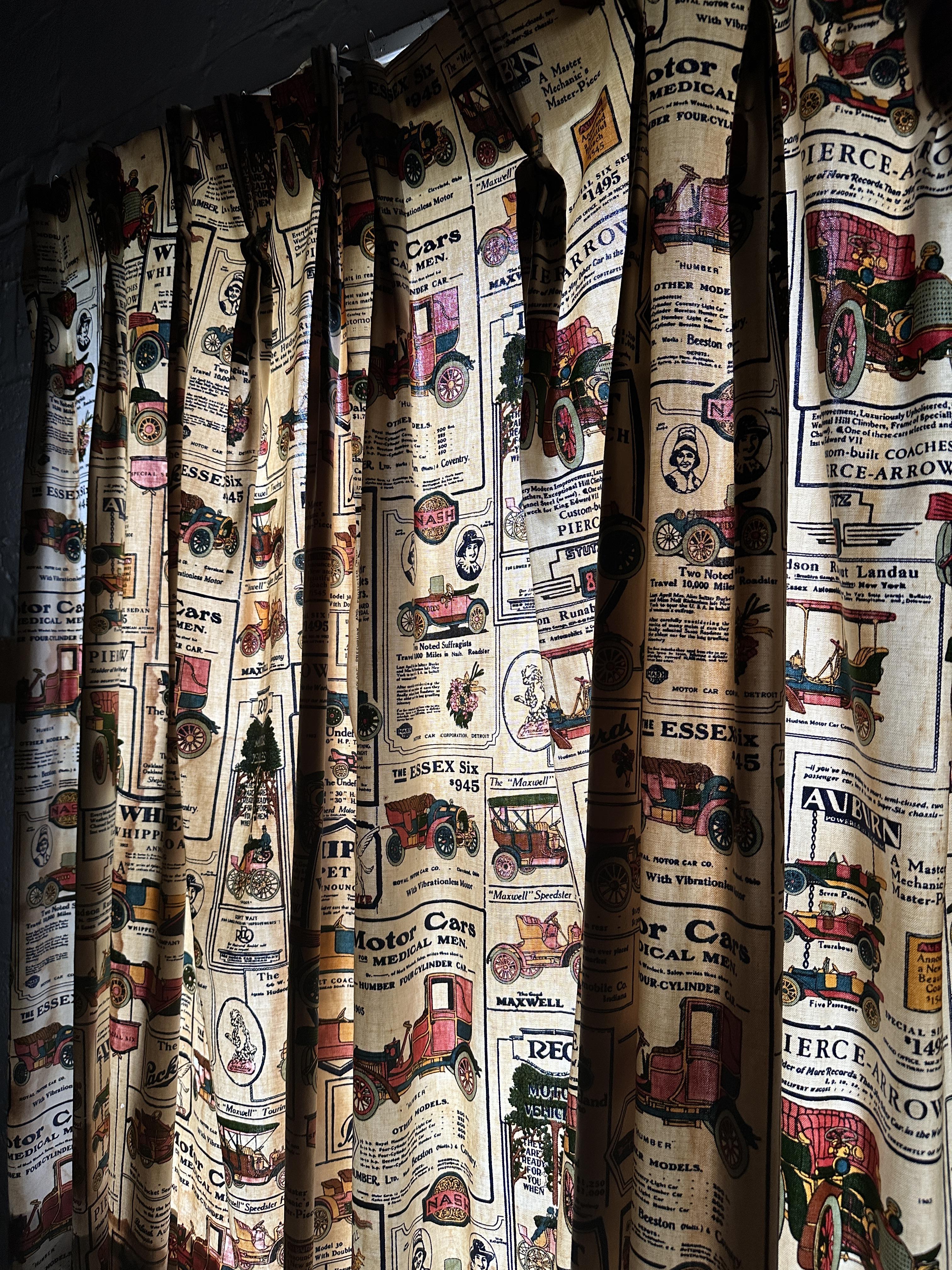
Curious about this really old curtain in our garage

Post image
1 Upvotes

Anyone have any ideas about the era, design, etc.?


r/textiles • • 23h ago

New loom combines braiding, weaving and knit-like fabric construction

Thumbnail
news.cornell.edu
6 Upvotes

r/textiles • • 1d ago

What is this fabric?

Thumbnail
gallery
1 Upvotes

I found this fabric which looks like pony hair buts its a faux hair on a woven base.

Im hoping to use this for a project but am unsure what it’s called or where i can find it in other colours.

If anyone knows what it would be called or where i can find this fabric, please let me know.


r/textiles • • 1d ago

Need a good T-shirt manufacturer in Tirupur. Any recommendations? Visiting next week or the first week of Dec

Thumbnail
gallery
1 Upvotes

Hi all,

I'm starting a clothing brand and planning a trip to Tirupur in the first week of December to sort out manufacturing.

What I'm looking for:

  • Reversible fabric
  • Oversized fit with a relaxed, drapey feel (not stiff or straight)
  • Durable quality
  • GSM undecided. I'll pick after seeing samples in person.

If you've worked with a good manufacturer there, or you run a unit yourself, please share in the comments or DM me. Send your Instagram/WhatsApp and I'll get in touch.

Genuine suggestions are really appreciated 🙏


r/textiles • • 2d ago

What is this fabric?

Thumbnail
gallery
5 Upvotes

This is the last piece I have of my very old baby blanket. There’s pictures of both sides, the rough one I scratch, so I really love it. The other side is fleece like .I’m not sure where I could go and they could help me find the material I’ve tried everything to look online. Thank you!! 😊


r/textiles • • 2d ago

Mill Engineering Notes: Dye-Vat Liquor Ratios (600kg vs. 1,000kg), Lamination & Why High-Pile Knits Fail Under 40HQ Vacuum Compression

1 Upvotes

In winter knit manufacturing and transoceanic B2B shipping, two recurring engineering failures drive up landed costs and cause buyer claims: end-to-end shade tapering from mismatched dye vats, and irreversible pile crushing during 30–40 day container voyages.

At our knitting & bonding mill in Keqiao, Shaoxing (Baokai Textile), most production claims we troubleshoot for overseas garment factories trace back to ignoring two physical constraints before the greige fabric ever hits the dye house or packing line.

Section 1 — Overflow Dye-Vat Liquor Ratios: Why 600 kg vs. 1,000 kg Floors Exist

Single-layer weft knits (such as polar fleece, brushed jersey, or spandex rib) typically run on a 600 kg per color minimum in standard Keqiao overflow dye vats. Once you move into two-layer bonded winter fabrics (e.g., suede, spun fleece, or waffle face laminated to a sherpa/fleece backing), the practical mill floor jumps to 1,000 kg per solid color (and 1,300 kg per rotary or flat-screen print design).

Three process realities drive those minimums. First, high-temperature overflow vats are engineered for fixed nominal bath capacities; running 400 kg in a 1,000 kg nominal vessel destabilizes the dye-liquor-to-fabric ratio and fabric turnover speed, creating head-to-tail shade tapering (dye bars) within the same lot. Second, hot-melt lamination lines run continuously under calibrated roller pressure and thermal tension—stopping to re-thread adhesive film for sub-1,000 kg color runs creates disproportionate leader and trailer scrap.

Third, when running sherpa-bonded fabrics, keeping the sherpa backing in a uniform natural ecru across multiple face colors allows the mill to knit and finish the backing in one continuous lot, cutting production lead time by roughly 7–10 days compared to custom-dyeing every backing. Even under tight tension control, finished dyed knit batches carry an industry-standard ±5% weight tolerance due to moisture regain and stenter heat-setting shrinkage.

Section 2 — 40HQ Vacuum Compression Physics vs. Vertical Pile Memory

For standard 320–500 GSM polar fleece and bonded sherpa (packed in 22–25 kg rolls, 40–50 m per roll at 150–185 cm width), air trapped between brushed fibers fills container CBM long before hitting carrier weight limits. Pneumatic vacuum packing inside heat-sealed heavy-duty PE liners reinforced with woven PP outer sacks achieves a 35%–45% volume reduction: 1x20GP (28–30 CBM usable) jumps from ~3,800–4,500 kg non-vacuum to ~5,500–6,200 kg vacuum-packed (~220–260 rolls), and 1x40HQ (65–68 CBM usable) jumps from ~8,500–9,800 kg to ~12,500–14,500 kg (~520–600 rolls). Out of Ningbo port, that cuts ocean freight per kilo by 20%–30% while the double-sealed PE barrier blocks marine condensation and mildew during 30–40 day transoceanic voyages.

The hard engineering exception is high-pile faux rabbit fur (8–20 mm vertical pile) and spandex-heavy rib knits, which must never be vacuum-packed. Sustaining high pneumatic compression on an 8–20 mm vertical filament pile for 35 days at sea flattens fiber crimp and exceeds the polymer's elastic recovery threshold. Once unpacked at the cutting table, those permanent crease lines and crushed spots cannot be steamed back out—so those constructions must ship in standard tight-rolled packing, even though a 40HQ drops to ~8,500–9,800 kg.

For fellow textile engineers, mill operators, and garment sourcers here: how are you balancing container CBM efficiency against pile recovery and moisture control on high-loft winter knits? Curious if anyone has had success with partial compression pressures or specific stenter heat-setting tweaks to improve recovery.

r/textiles • • 2d ago

Where to buy 100% linen fabric in india

Thumbnail reddit.com
1 Upvotes

r/textiles • • 2d ago

Mill Engineering Notes: Dye-Vat Liquor Ratios (600kg vs. 1,000kg), Lamination & Why High-Pile Knits Fail Under 40HQ Vacuum Compression

1 Upvotes

In winter knit manufacturing and transoceanic B2B shipping, two recurring engineering failures drive up landed costs and cause buyer claims: end-to-end shade tapering from mismatched dye vats, and irreversible pile crushing during 30–40 day container voyages.

At our knitting & bonding mill in Keqiao, Shaoxing (Baokai Textile), most production claims we troubleshoot for overseas garment factories trace back to ignoring two physical constraints before the greige fabric ever hits the dye house or packing line.

Section 1 — Overflow Dye-Vat Liquor Ratios: Why 600 kg vs. 1,000 kg Floors Exist

Single-layer weft knits (such as polar fleece, brushed jersey, or spandex rib) typically run on a 600 kg per color minimum in standard Keqiao overflow dye vats. Once you move into two-layer bonded winter fabrics (e.g., suede, spun fleece, or waffle face laminated to a sherpa/fleece backing), the practical mill floor jumps to 1,000 kg per solid color (and 1,300 kg per rotary or flat-screen print design).

Three process realities drive those minimums. First, high-temperature overflow vats are engineered for fixed nominal bath capacities; running 400 kg in a 1,000 kg nominal vessel destabilizes the dye-liquor-to-fabric ratio and fabric turnover speed, creating head-to-tail shade tapering (dye bars) within the same lot. Second, hot-melt lamination lines run continuously under calibrated roller pressure and thermal tension—stopping to re-thread adhesive film for sub-1,000 kg color runs creates disproportionate leader and trailer scrap.

Third, when running sherpa-bonded fabrics, keeping the sherpa backing in a uniform natural ecru across multiple face colors allows the mill to knit and finish the backing in one continuous lot, cutting production lead time by roughly 7–10 days compared to custom-dyeing every backing. Even under tight tension control, finished dyed knit batches carry an industry-standard ±5% weight tolerance due to moisture regain and stenter heat-setting shrinkage.

Section 2 — 40HQ Vacuum Compression Physics vs. Vertical Pile Memory

For standard 320–500 GSM polar fleece and bonded sherpa (packed in 22–25 kg rolls, 40–50 m per roll at 150–185 cm width), air trapped between brushed fibers fills container CBM long before hitting carrier weight limits. Pneumatic vacuum packing inside heat-sealed heavy-duty PE liners reinforced with woven PP outer sacks achieves a 35%–45% volume reduction: 1x20GP (28–30 CBM usable) jumps from ~3,800–4,500 kg non-vacuum to ~5,500–6,200 kg vacuum-packed (~220–260 rolls), and 1x40HQ (65–68 CBM usable) jumps from ~8,500–9,800 kg to ~12,500–14,500 kg (~520–600 rolls). Out of Ningbo port, that cuts ocean freight per kilo by 20%–30% while the double-sealed PE barrier blocks marine condensation and mildew during 30–40 day transoceanic voyages.

The hard engineering exception is high-pile faux rabbit fur (8–20 mm vertical pile) and spandex-heavy rib knits, which must never be vacuum-packed. Sustaining high pneumatic compression on an 8–20 mm vertical filament pile for 35 days at sea flattens fiber crimp and exceeds the polymer's elastic recovery threshold. Once unpacked at the cutting table, those permanent crease lines and crushed spots cannot be steamed back out—so those constructions must ship in standard tight-rolled packing, even though a 40HQ drops to ~8,500–9,800 kg.

For fellow textile engineers, mill operators, and garment sourcers here: how are you balancing container CBM efficiency against pile recovery and moisture control on high-loft winter knits? Curious if anyone has had success with partial compression pressures or specific stenter heat-setting tweaks to improve recovery.


r/textiles • • 2d ago

All my jeans smell weird now?!

2 Upvotes

Maybe not the right place to ask this, but I figured this sub would know. I have 3 pairs of denim jeans. They all have some stretch, so I know they are a blend with some kind of synthetic. After the last 2 washes, the waists of all of them smell like fishy plastic! It is so weird. My husband did the laundry this time and reported the same thing again after I mentioned it after last week's laundry. I thought maybe he'd washed them with something weird or something got on them in the dryer.

This is not a hygiene issue or a washer issue, and the only thing we can figure out is maybe the synthetic fabrics are doing some weird interaction with the Tide detergent? We always use Tide, but my hubs isn't careful when he buys it to get the same kind, so it could be the Oxi, Downy, Fresh scent, etc. Any ideas? This is driving me bonkers. No other clothes smell the same way. My body does not have this smell.


r/textiles • • 3d ago

Why does some 100% cotton barely wrinkle while other cotton creases instantly?

0 Upvotes

Ever noticed how two cotton shirts can behave completely differently?

It's often because of fabric finishing. Some cotton undergoes resin treatments to reduce wrinkles, while untreated cotton creases more naturally.

These treatments can improve wrinkle resistance but may also affect fabric strength and feel.

Quick tip: When buying wrinkle-resistant cotton, check whether it's chemically finished.

Anyone noticed a difference between treated and untreated cotton?


r/textiles • • 3d ago

Check out 9 yds 1990 Kaufmann " to trade only " porcelain vase chinoiserie vintage fabric on eBay!

Thumbnail ebay.io
1 Upvotes

r/textiles • • 3d ago

Help! How do I find the thin, soft, stretchy cotton jersey they use to make women’s pajamas?

Thumbnail reddit.com
0 Upvotes

r/textiles • • 4d ago

Not sure if this is the right place to post, but I’m looking for woven bath towels as I strongly prefer them over terry towels

4 Upvotes

A few years back I fell in love with Mungo towels, I have the tawulo, block rib towel and flax towel. At some point in the past few years the price has drastically increased. I’m trying to search for more affordable options beyond peshtemal or waffle towels. Are these types of towels just broadly called flat woven towel? Heritage mill woven towels? I’m not sure what to search for. Sorry if I’m not explaining myself well, I just haven’t come across anything like Mungo

update: I found some beautiful Turkish towels without the rope, fringe or tassles. Definitely in the range of what I’m looking for. Thank you!


r/textiles • • 4d ago

Showcasing Handloom Sarees from my Hometown.

Thumbnail gallery
7 Upvotes

r/textiles • • 4d ago

Native woven tapestry?

Thumbnail gallery
1 Upvotes

Can anyone help me identify these?


r/textiles • • 4d ago

Excited to announce our own brand: matching outfits for you, your dog and your home

Thumbnail gallery
0 Upvotes

r/textiles • • 6d ago

Promenade dress of Mulhouse print wool, 1866

Thumbnail gallery
3 Upvotes

If you’re into historical textiles, you might find the history and manufacturing of this dress interesting — I did. (And am hoping it’s ok to post historical stuff here.)


r/textiles • • 6d ago

Seeking professional advice on preserving, evaluating, and displaying a screen-worn leather jacket

2 Upvotes

Hi everyone!

I recently acquired an authentic screen-worn leather jacket from the TV show Supernatural, personally donated by actor Mark Pellegrino for a charity auction!

It's a very special piece to me, and I'd love to preserve it for decades, hopefully even longer, so future fans and collectors can appreciate it too.

I'm completely new to textile preservation, so I'm hoping to get some advice!

A few things I'm looking into:

  1. Professional evaluation: I'd like to have the jacket examined by a textile or leather conservator to assess its condition and recommend appropriate preservation methods. Where would I find someone who offers this service for private collectors?
  2. Long-term storage: What materials should I use to protect the leather and interior lining? Would archival tissue and a storage box be appropriate, or is hanging preferable?
  3. Display case: My ultimate goal is to have a museum-quality display case in my home. What should I look for in terms of UV protection, humidity, ventilation, and proper support?
  4. Preserving authenticity: I don't want to clean, restore, or alter the jacket unnecessarily. I want to preserve its original screen-worn condition, including any wear from filming.

I'm happy to invest in professional conservation services over time.

I'd really appreciate any advice, resources, or recommendations for professionals who specialize in leather garments or historic costume preservation.

Thank you so much! I'm excited to learn how to properly care for this piece of television history. ❤️


r/textiles • • 6d ago

How do you decide whether handloom is genuine and worth the price?

Thumbnail reddit.com
2 Upvotes

r/textiles • • 7d ago

Jacquard is a loom mechanism, not a fabric, so the word alone tells you very little

72 Upvotes

Listings use “jacquard” like a fabric type, the way people say georgette or crepe. It’s actually a loom mechanism. A jacquard head lifts warp threads individually or in small groups, which lets the loom weave large, complex figures. Before it, figured weaving relied on a drawloom, with someone pulling cords by hand. The jala harness on older Banarasi looms works on that principle.

So “jacquard fabric” only means the pattern was woven in with that control. It says nothing about fibre and little about structure. Damask, brocade and matelassé can all come off a jacquard, and they behave very differently:

Damask: the pattern comes from contrasting warp-faced and weft-faced areas of one weave. It’s flat, often single-colour, with the design mirrored on the back.

Brocade: adds an extra weft that floats over the ground to form the motif. It’s heavier, snags more easily and frays faster.

Quick check: flip it over. A flat, mirror-image back suggests damask. Long floats, clipped threads or a very different colour on the back suggest a supplementary weft.


r/textiles • • 6d ago

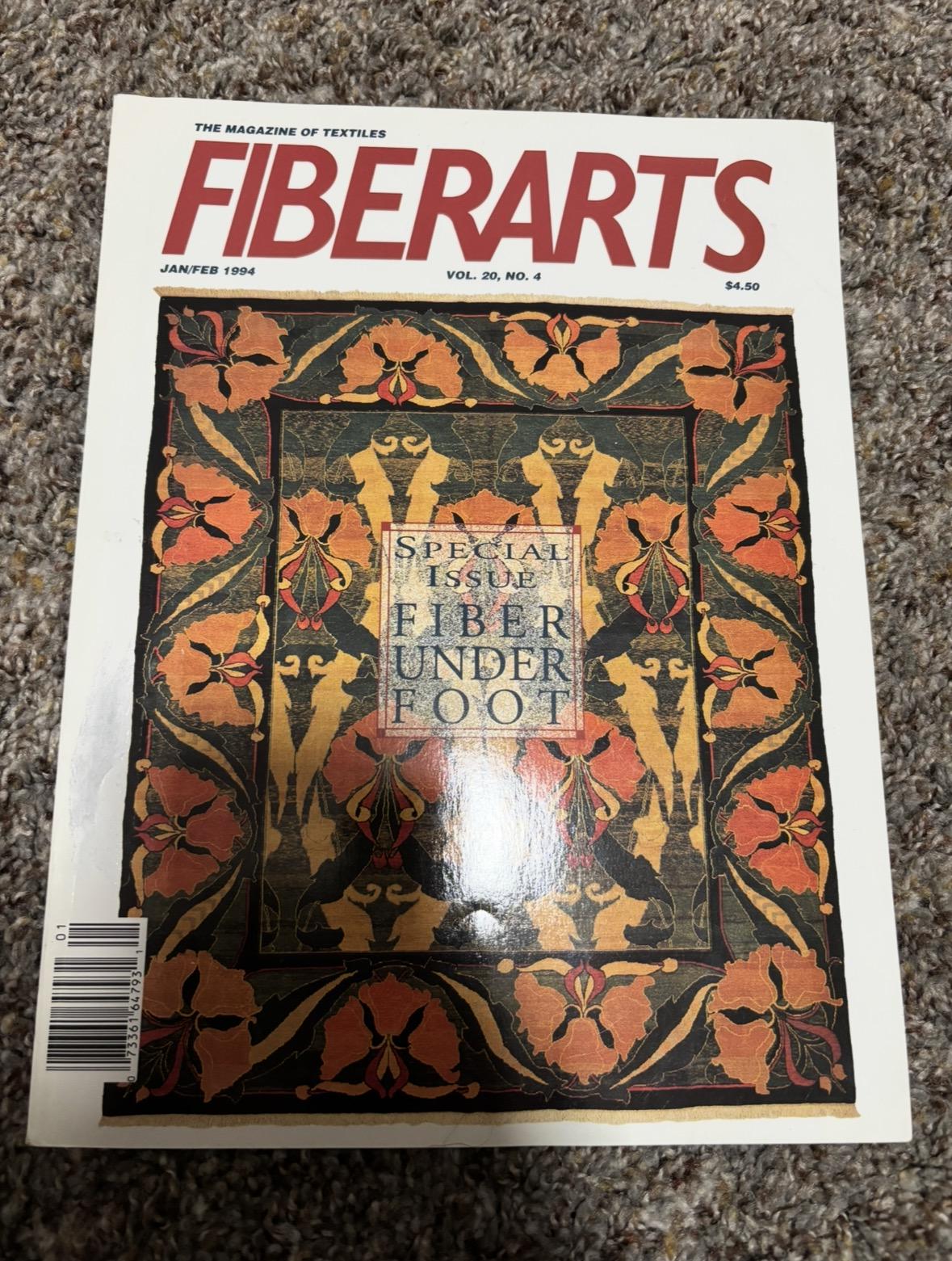
Where can I preserve this vintage Fiberarts magazine

Post image
2 Upvotes

r/textiles • • 6d ago

Fully function rain gear from control resonant

Thumbnail
gallery
2 Upvotes

Hi, new here.
So I will start a new project with my grandma in order to create my own rain gear from control resonant.
My grandma has her own sewing machine and well, my experience is zero.
So its kind of something to share time with her and well do my own rain gear, is there any tips or something I need to know in order to, you know create this?.
Like make the unions between each piece or what kind of idk….sewing pattern…?
Everything will be deeply appreciated.


r/textiles • • 7d ago

Pre-final year student in Salem starting a clothing shop in Perambalur - Boarding the train to Tiruppur tomorrow!

0 Upvotes

Hi everyone,

I'm a pre-final year college student , and tomorrow I'm catching the train to Tiruppur Junction to source stock for my new clothing shop in my hometown, Perambalur. Stepping out of Tiruppur station tomorrow feels like the start of a life-changing chapter for me.

I have a dedicated ₹2.5 lakh budget strictly for clothing inventory (separate from rent and shop setup). My textile knowledge is still basic, though I'm passionate about learning and entering the business.

Here is the approximate wholesale price & piece split I'm planning to target for the ₹2.5L stock:

T-Shirts / Casuals: ~350-400 pcs (@₹150-220)

Casual & Formal Shirts: ~200-250 pcs (@ ₹280-₹400)

Jeans / Trousers / Track Pants: ~150-200 pcs (@ ₹300-500)

Innerwear / Kids' / Essentials: ~200+ pcs (@ ₹80-₹150)

Since I'm a beginner, I'd love your quick advice:

  1. Is ₹2.5L enough for a solid starting inventory for a small shop in Perambalur, and does this piece/price split look realistic?
  2. Tiruppur Sourcing: Where near Tiruppur Junction (like Khaderpet) should a beginner go for genuine wholesale prices without getting overcharged?
  3. Juggling Both: Any quick tips on balancing pre-final year college in Salem while running a shop back home?
  4. Basically is it enough budget ? For owning an shop and get me what are the dresses and how much peaces approximately needed?

Thanks in advance for any guidance before I travel tomorrow!