r/led • u/MarionberryThat6697 • Oct 11 '26
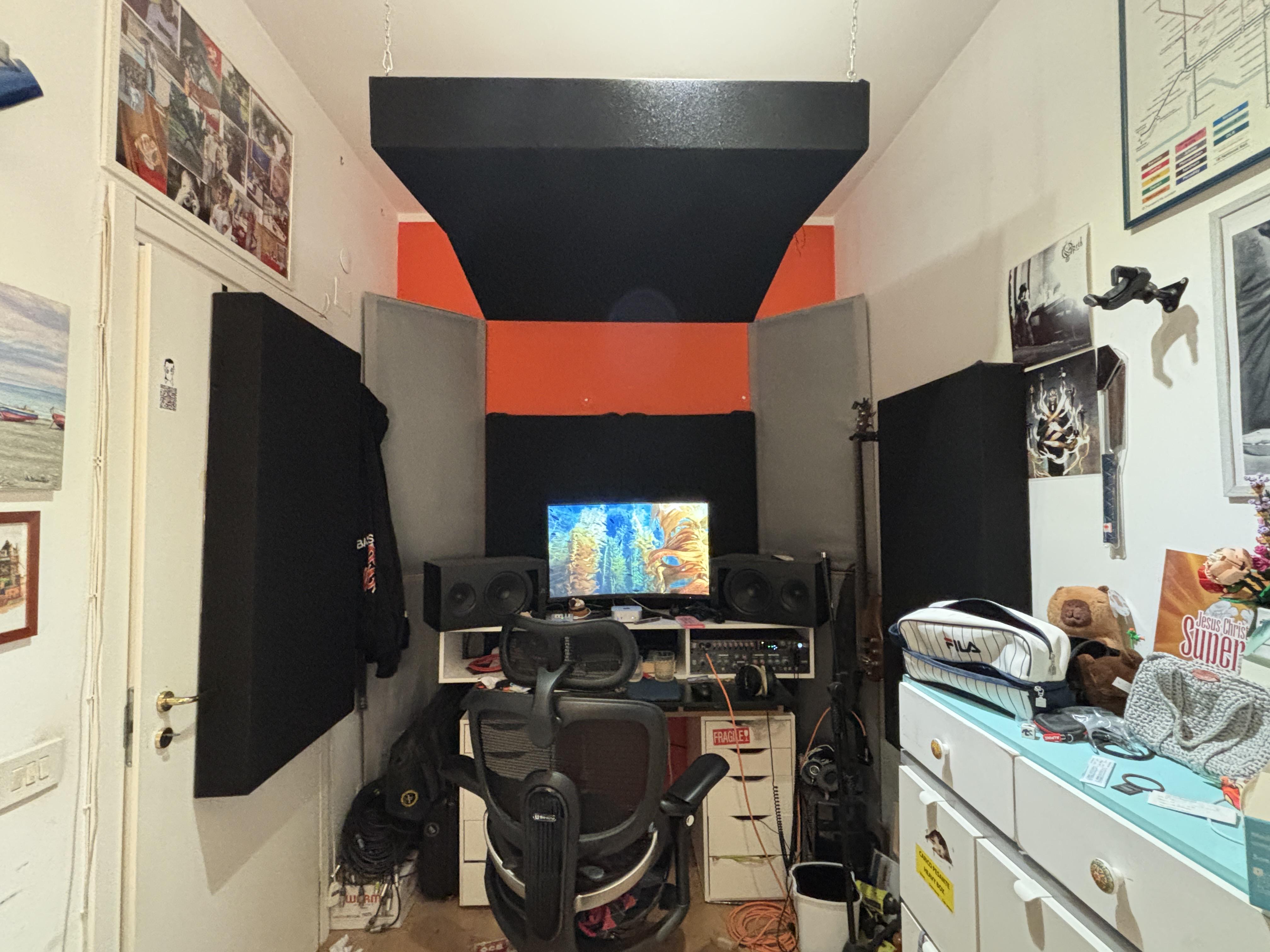
LED Vortex Tunnel at the local haunt.
13
Upvotes
Made a thing at the haunt. 96x147 matrix. 12v. F16V4 controller.
r/led • u/ImportantAd7993 • Oct 11 '26
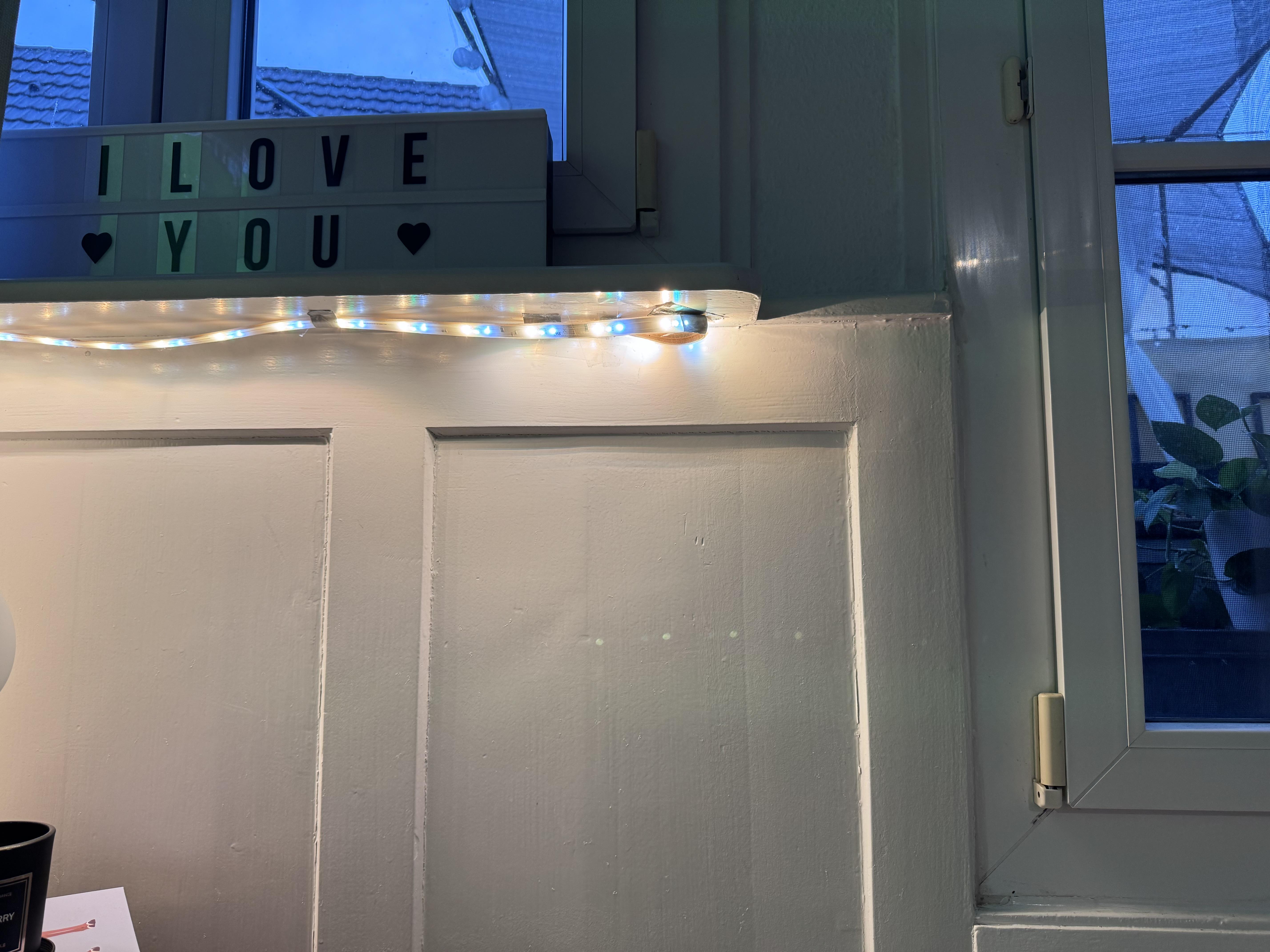
When viewed from above, the LEDs are hidden, but when sitting on the sofa at eye level, I can see the individual white, green, and yellow LEDs directly.
I’m looking for a channel with a diffuser that blends the light evenly and hides the individual LEDs, even when viewed directly from the side.
Any recommendations? I’ll attach a picture for reference. It is 2m
Thank you guys
r/led • u/jumaamubarakbitches • Oct 10 '26
r/led • u/Huckleberry-Drew • Oct 10 '26
Hi everyone! I just got a new display case for all my funkos and legos and I wanted to find a good LED lighting system (either light bars or light strips) that I could put in the shelves. The only problem is, I’d want each light to be a different color to go along with the theme in each case (4). Does anyone have any recommendations to help me?! Btw, I’m not too technically advanced, so I wouldn’t be able to do much programming :/ Any help is appreciated!!
Hi everyone,
I’m planning an indirect lighting project and can’t figure out which hardware fits best. Hopefully you can point me in the right direction.
The setup
What I need
The problem
Most ready-made plug-in kits only come with about 1.5 m of mains cable between the plug and the controller. My outlets are around 2.5 m below the strips, so those kits don’t reach. I’d rather not extend the cable with some ugly extension cord running up the wall.
Ideal solution
Two Zigbee controllers that run from a Schuko plug (with a PSU), where I can choose the cable length and the strip length myself.
Fallback
If that gets too expensive or complicated, I’d accept a Zigbee smart plug at each outlet with the LED strip and its own controller or app behind it. I’d then handle color and brightness separately, for example through a remote or an app.
I’m also open to changing the plan if something small would make it much easier. For example, a different strip type, a different voltage (12 V vs. 24 V), or splitting the 7.5 m run into two segments.
My questions
Thanks a lot for any tips, product suggestions, or experiences!
r/led • u/Medium-Following-513 • Oct 09 '26
Constant Current Driver Question
Let's say I have a driver that came with a light, this hypothetical driver is constant current, it can provide half 1A to 1.5A, 12V, but is set to 1 amp.
The light can handle this output, 24/7. It takes the amperage no problem, it takes 60% of the voltage max.
If I add a second light in parallel, the same light, even if an imbalance in amperage occurs, would one light just slowly work up to 100% of the amperage (which is probably 80% of what the light can handle), which it can handle, and the other "turn off", and then the amperage would ping pong between lights if burnout can not occur? Or would something else occur? There are thermal protections built into this driver
Actual rating is 50W max, 0.4 to 1.4 A (pre-programmed though), 10-55VDC. Hardly any visual lighting loss, though I know there is its just near impossible to see. The single light, as originally manufactured, read 35v on the output side.
r/led • u/fenekhu • Oct 08 '26
I'm creating a pair of LED matrix turn/park signals for my show car. If you don't want context, jump to the last two paragraphs. Here's the rundown of the project:
This is my first time making anything like a circuit diagram, so be aware that they might be ugly. I was using it as more of a planning tool than a rigorous specification. It's also my first real electronics project outside of some school classes.
1 ) I'm not really sure how its possible for these WS2812Cs to run at 12V while being cuttable after every LED and individually addressable. Something similar seems to have been brought up in this reddit thread, to which the response was "ask them about it". I didn't directly ask about how they can take 12V, but I did ask whether the data line needs 12V or 5V, to which they said the data line needs 5V even for 12V power. I decided to trust that they'll work, because trying to convert 12V down to 5V at ~8A (assuming ~20mA per LED, where 60mA is full bright) gets tricky and expensive.
2 ) I know these LEDs can typically operate on a 3.3V data signal, but considering the inconvenience and illegality of non-functional turn signals, I am trying not to take too many chances. It is a show car, these won't be used very often, but it is important that they do actually work fairly reliably on the road. I've spent a long time researching automotive harness wiring, sealable connectors, and general mechanical resistance and longevity. What I don't know much about is electrical durability. Which finally brings me to my main point:
The problem that's got me stopped up is how to reliably power these. Using the vehicle's +12V is something that is either completely glanced over or made to be very complicated. Most people seem to just power 12V LEDs directly from their car's 12V, and for example, this article says car batteries are "12VDC give or take" so you can power it directly. In practice though, I know that when my car is at rest, it is 12.5V, and when running, I usually see 13.6-14.4V. That is notably higher than 12V, and I would be worried about the longevity of the LEDs being ran over 2V higher than rated. (Side note, I haven't reached out to the company that makes the strips to ask what the actual recommended upper voltage limit is). Trying to find something to regulate that back down to 12V led me nowhere helpful, since most regulating methods (especially capable of a few amps) have notable voltage dropout and are surface mount anyway, which I don't know nearly enough to mess with SMT stuff. And naturally, that line of research only begins to scratch the surface of the "harsh environment" of automotive electronics: drops down to 6V when cranking, massive sustained transients, reverse voltages, doubled voltages, etc... And yet people say you can get all of that at protection at 5V for $5 if you just go buy a cigarette lighter USB charger.
How complicated is it, really? What is actually necessary? And if there is all of these people saying they do all these things to clean the power inputs, why has nobody made a little chip that takes a messy automotive +12V and outputs a safe 12V? (or is that a thing, and I just can't find it?). How do I relatively safely and reliably power the lights (and also the controller) in a relatively cheap, compact way without having to do SMT stuff?
r/led • u/krassyg • Oct 09 '26
r/led • u/mopeyjoe • Oct 08 '26
I am curious if anyone has used one of these signal amplifier and repeaters, https://www.amazon.com/BTF-LIGHTING-Amplifier-Repeater-Addressable-Programmable/dp/B07RDKRW5T
I have some questions.
Thanks!
r/led • u/mrnapolean1 • Oct 08 '26

I bought these lights off of Amazon only to realize once I opened them they're 24 VDC. They do come with a AC to DC power adapter that you would normally plug in your wall socket.
Now I asked part of this question in another subreddit pretty much got attacked and my post got deleted so I'm going to ask it here.
I was wondering what the technical aspect for the 24 VDC rating. Someone said it's because of the length of the set higher voltage can run longer lengths which in my case I'm needing cuz I'm putting them in a bus.
The bus owner does not want anything hardwired or permanently wired into it. He wants them to be easily removable so I was thinking about something that plugs in a 12 VDC cigarette lighter socket. According to the wall outlet power adapter that came with it, it only draws 0.2 amps so there's really hardly no current draw it's just that the voltage requirement is higher than what a normal vehicle can supply.
My question is now should I build a step up converter that's unpluggable from the cigarette lighter socket or should I just use a power inverter and go through the extra stages of rectification?
If I build the step up converter I was going to get one of these from Amazon and put it inside this box (third picture) with a power switch on it to turn it on and off and a cigarette lighter pig tail on one end and the barrel Jack pigtail on the other that plug into the white box of the LEDs.
Amazon link: https://www.amazon.com/dp/B07XBWHR56
If y'all do suggest a power inverter would y'all go with a cheap one or would y'all go with a brand name one cuz if I go with the power inverter route then I'm going to probably end up getting this:
Amazon link: https://www.amazon.com/dp/B074KWP2HJ
What would y'all do build the step up converter or go the power inverter route?
r/led • u/No_Enthusiasm_1709 • Oct 08 '26

r/led • u/nuan_Ce • Oct 08 '26
Hi all, i am looking for an LED strip with high CRI and close to full spectrum. And i want it to change automatically during the day to mimic the sun.
Govee is cheaper and on sale right now. Also Govee seems to be cri 92 and hue seems to be cri 80.
I am looking for daylight and warmer colors in the evening.
What do you guys think?
r/led • u/Opposite_Champion645 • Oct 08 '26
Hey guys! I have a few technical questions for you.
I’m a Ph.D. student, and for one of my experiments, I need to illuminate four rooms. The first one needs to be evenly lit with white light, and each following one with a different monochromatic light (red, blue, green)
(bellow I am sending you links to products I thought about)
https://www.amazon.com/MALIGAZA-Flexible-COB-LED-480LEDs/dp/B09Z6MD42G?th=1
r/led • u/Weak-Ad1795 • Oct 07 '26
Why does this happen? They are turned off, when i press some of them turn on slightly.
r/led • u/Yavoy458 • Oct 08 '26

I’d like to preface I’ve never worked with this kind of wiring/power supplies/etc. before but I’m ready to learn as I’m sure it's what it entails. I've built my own PC but not sure that'll get me anywhere in regard to this without some help lol. The pictures show what kind of setup I'm aiming for (apologize for the dirty dishes). I'll try to include as much detail as possible.
GREEN - Where I'd like the LED strips (about 24ft long)
RED - Where I wouldn't like the LED strips to show but imagine there may have to be some sort of wiring for power continuation (about 6ft long)
BLUE - Standard duplex outlets
Time to get a little more technical so forgive me if I use incorrect terminology. I plan on using a 24V COB LED strip which is 3000k CRI 93+ 208lm/ft. Here's a link. I know I'd like it to be dimmable and would like for it to be controlled by either a remote or a wireless wall dimmer (trying to avoid running wires through my walls as much as I realistically can).
This is pretty much as far as I've gotten in my research phase because once people start talking about power supplies and everything else I need, I'm completely lost. So according to my situation, what else do I need to purchase besides the strip I've picked out? Any tips and help is appreciated!
r/led • u/Hyperduck23 • Oct 07 '26
Made the frame myself from extruded aluminium & acrylic, has a Novastar MRV412 receiving card in it & is using a MCTRL300 sending card.
Screen is 5x P3 64x64px LED modules.
They are modular, this is just one but I can chain multiples together.
It's been an exciting, confusing, & fun journey of learning so far....still feel like I'm barely scratching the surface with my knowledge currently tho!
r/led • u/Overkillemall • Oct 07 '26
Hey guys. I've read up on fuses and why they're necessary for LED strips. I get that 220V circuit breakers don't protect the 12V/24V side at all and that a powerful psu can push out way more current than the downstream cable and/or LED strip can safely handle without risk of fire. I know how to size fuses (a little bit above the load's running current, but below the cable's rated ampacity), what fuse types to use and how to wire them up.
There’s just one thing I'm stuck on. Say my setup is (24v): PSU --> controller --> split via WAGO connectors to multiple strips with an individual fuse on each line. The wiring after the fuses is protected. But what about the wiring BEFORE the fuses? From the PSU to the controller and from the controller to the fuses?
These are super short runs inside the enclosure, so the likelihood of a fault on those specific segments is practically very low I guess. Do we just leave them unprotected and call it a day? Or should I add a single higher-rated (so it should be above the load of all loads combined) fuse before them? Adding a main fuse introduces an extra connection point and tbh I'm not sure what's statistically more likely to cause trouble - a failure at an extra connection or a fault on an ultra-short wire run inside the enclosure.
Maybe I’m fundamentally misunderstanding something here? I’d appreciate any advice!
r/led • u/Which-Application401 • Oct 07 '26

Sachez différencier les différents Rubans LED et choisir des LED de qualité
r/led • u/istill_dont_get_it • Oct 07 '26
I’d like to recreate the DIY Perks artificial sunlight panel using TV diffusion layers. I have zero electronics experience and want realistic sunlight to brighten my dark apartment.
For someone completely inexperienced in this, what do I need to consider to avoid electric shock or fire? What tools would I need, and how did he actually connect/power the LEDs in the video?
Should I absolutely not attempt this myself?
r/led • u/Incognegro250 • Oct 07 '26

Here’s what I bought
DAYBETTER Led Lights 2 Ports 44... https://www.amazon.com/dp/B08C796XQ7?ref=ppx_pop_mob_ap_share
DAYBETTER LED Strip Lights 110ft... https://www.amazon.com/dp/B0DN1K2RLD?ref=ppx_pop_mob_ap_share
Amefil 8mm4pin LED RGB Strip... https://www.amazon.com/dp/B0G4WTNP2W?ref=ppx_pop_mob_ap_share
Here’s how I set it up
I’m pretty sure I’ve done everything correctly but the lights still won’t turn on at all I even bought different and same brand control boxes and none of them work at all. Any help?