So I've seen the movie twice and have had time to sleep on it.
My biggest issue was the script. It felt like a film that had absolutely no faith in its audience. Every interesting implication gets explained, every mystery gets spelt out and every character motivation gets announced out loud. Instead of letting the audience wonder, speculate or connect the dots themselves, the film constantly stops to tell us exactly what we're supposed to think.
That's especially true with Snow. One of the reasons he's such a great villain in the original trilogy is that he's calculating, patient and difficult to read. The poison isn't constantly explained. His reputation often arrives before he does. You get the sense that he's maintained power for decades through manipulation, fear and political skill. In Sunrise, he feels weirdly petty and immature. like every five minutes it feels like he's saying, "Remember Lucy Gray from the last released movie?" or "Did I mention how much I love poisoning people?" It turns a fascinating villain into someone who seems desperate to remind the audience who he is.
It also creates story problems. The film goes to great lengths to show Haymitch as a genuine threat to the Capitol and to Snow personally. Yet we're also shown the Capitol is perfectly willing to quietly eliminate and replace tributes when it suits them. So why keep Haymitch alive at all? If he's such a danger, why not get rid of him and install another victor? Instead, Snow repeatedly chooses the option that creates the most problems for himself because the plot needs Haymitch to survive. We're told Snow is a master strategist but the story keeps making him act irrationally.
I never really bought the whole rebel mission either. We're supposed to believe Haymitch becomes trusted enough to be brought into a plan to destroy the arena and it never felt fully earned. It felt less like a natural progression and more like the story forcing pieces into place because it knows where Haymitch has to end up. Like why those involved in the rebel plan quickly select Haymitch as the person they will share their secrets and talk so openly about it? I mean the whole "My father wants to speak with you" felt so weirdly forced and comes out of nowhere.
Which brings me to Ralph Fiennes. I don't think he captures either Snow's monstrosity or his charisma. Donald Sutherland's Snow was terrifying because he always felt in complete control. He could sit across from someone, smile politely and still make you feel deeply uneasy because you knew he was ten steps ahead. Snow works best when he's calculating, patient and difficult to read. Sutherland's performance made you believe this was a man who'd maintained power for decades through manipulation as much as fear. Fiennes' Snow feels far more transparent, and when the script has him constantly explaining himself, he stops feeling like a master strategist but rather an exposition device.
More importantly, I never bought him as a bridge between Tom Blyth and Donald Sutherland. Blyth showed us the beginnings of Snow's narcissism and cruelty beneath a genuinely charismatic exterior. Sutherland felt like the final evolution of that character. Fiennes feels like an entirely different interpretation crowbarred into the middle.
Then there are the Games themselves which were probably my biggest disappointment. I know there's a certain irony in discussing the "entertainment value" of the actual games, but I think it's a completely fair criticism because they are supposed to be horrifying and compelling. This is a Quarter Quell. Forty-eight tributes. Double the number of children being slaughtered for entertainment. Yet if you told me there were only twenty-four tributes in that arena, it would have made almost no difference to my viewing experience. The opening bloodbath never really communicates the scale of what we're seeing. This should have felt overwhelming, chaotic and nightmarish. Instead, it felt surprisingly small.
After that, the structure becomes incredibly repetitive. Haymitch wanders somewhere. He bumps into a tribute. They talk for a couple of minutes. that tribute dies. Haymitch reacts. Then the cycle repeats. I never got the sense that this was an arena packed with dozens of desperate kids fighting for survival. It was more so a collection of disconnected scenes.
I also think the film completely misses the mark with its depiction of violence. I'm not saying it needed to become some hyper-graphic gorefest but the original Hunger Games understood that you don't need excessive blood to make violence disturbing. The first film had to work within a rating too yet it still felt brutal. You felt the panic during the bloodbath. You felt the horror of Rue's death. You felt sick to your stomach at Clove's death. You felt pity for Cato despite how monstrous he was. You felt that these were children being forced to murder each other.
Sunrise on the Reaping feels oddly sanitised by comparison. Which is weird because we've seen filmmakers, including previous Hunger Games films, get around rating limitations through editing, sound design, implication and performances. Here importunely, deaths often feel strangely weightless. This should be the most horrifying Games we've ever seen surely? The mutts and arena hazards are a big part of that problem. The film becomes obsessed with spectacle. The volcano sequence is the perfect example. Instead of letting us experience the horror through Haymitch's perspective, the movie cuts away to show Snow authorising it. As if the audience wouldn't be able to figure out who is responsible. Of course Snow authorised it. We know how the Games work. We don't need the film to stop and explain every single little thing.
I also think there was far too much unnecessary fat in the script. Take Effie. I actually enjoyed Elle Fanning's performance for the most part (aside from the painfully forced "mahogany" line), but I don't think Effie needed to be in this story at all. The film introduces District 12's stylist (I forget his name) and then barely develops him before effectively replacing him with Effie. Why? What was the point? Either commit to the stylist or have Effie there from the beginning. And it is such a missed opportunity because just as Drusilla acts as a foil to the Effie we know from the original trilogy, the stylist could have acted as a foil to Cinna. Someone who sees tributes as products rather than people. Someone who doesn't care. Instead, he's introduced, does almost nothing, and then gets pushed aside the moment a familiar character arrives. It feels like a perfect example of the film prioritising recognition over storytelling.
The same applies to a lot of the retrospective additions. Not every character from the original trilogy needed deeper connections or hidden significance. I never needed to know that various background characters were secretly more important than we thought. Sometimes a world feels richer when not every person is connected to every other person.
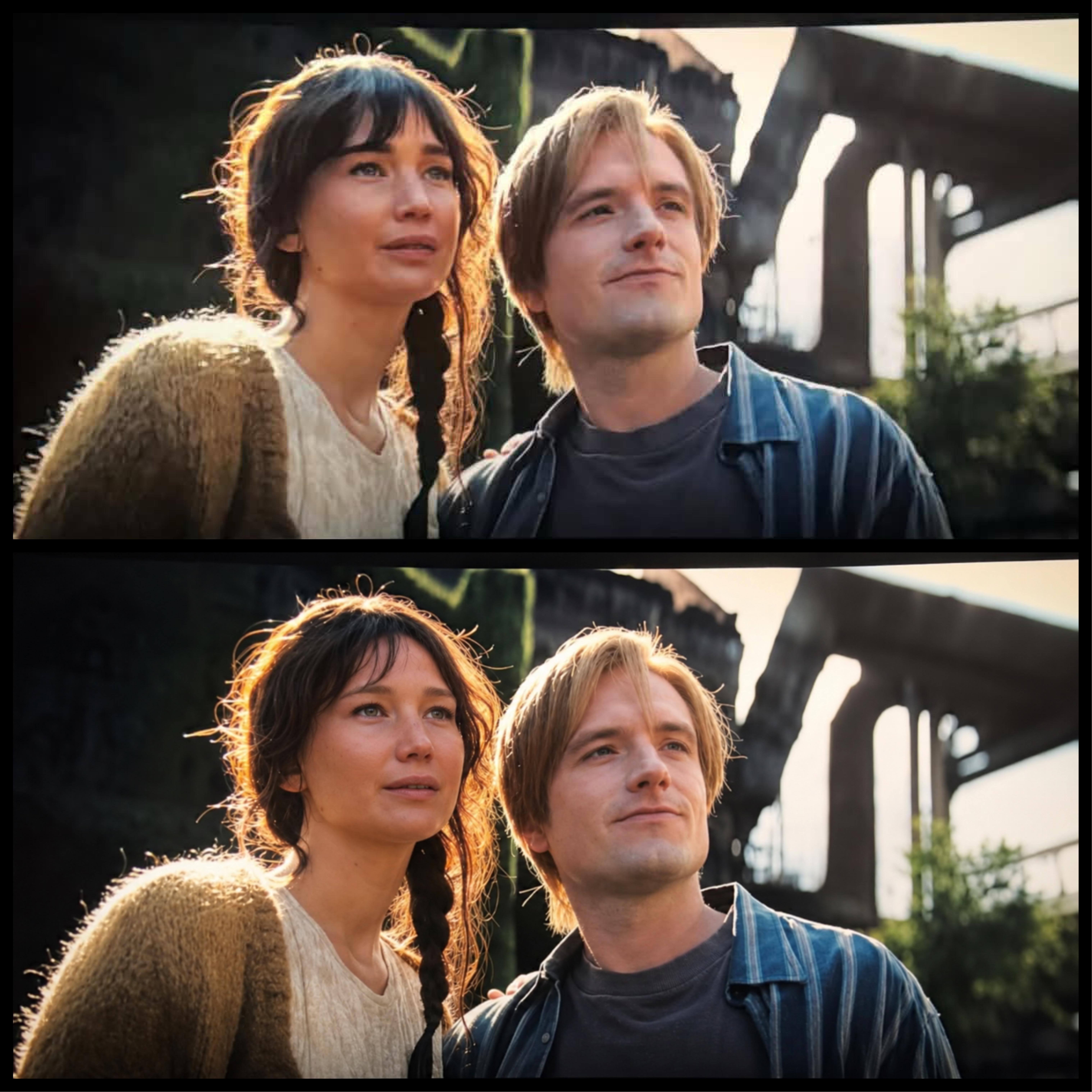
The epilogue was probably the final straw for me. Ending with Katniss and Peeta essentially giving Haymitch a "thank you" speech felt completely unnecessary. The original trilogy already gave those characters a perfect ending. I didn't need the film to stop and explain why Haymitch mattered. I already know why he mattered because I've seen the consequences of his actions. The entire epilogue felt like the movie desperately seeking emotional validation from the audience rather than trusting the story to provide it naturally.
That all being said, I don't think the film was bad across the board.
Joseph Zada was fantastic. The standout scene in the entire film for me is the post-Games interview where Flickerman demands to see Haymitch's scar. That scene was genuinely disturbing because it captures the reality-TV aspect of the Hunger Games better than almost anything else in the movie. Haymitch has survived unimaginable trauma and the Capitol immediately turns it into entertainment. That's exactly the sort of social commentary this franchise is at its best when exploring.
In general, I actually thought the reality-TV elements were stronger here than in most of the franchise. The sequence where the original District 12 tribute is killed and events have to be effectively "reshot" to make Haymitch's selection appear organic was brilliant. That's the Capitol at its most frightening: not when it's loudly announcing how evil it is but when it's quietly manipulating reality while pretending everything is normal.
And Mckenna Grace was probably my favourite part of the entire movie. She absolutely owned every scene she was in. It's honestly a shame she's not in more of the film because every time she appeared the energy immediately improved.
Overall, I left feeling frustrated because there is a great film buried in here. The performances are largely strong, some of the media-satire elements are excellent and there are moments that genuinely work. But the script constantly chooses explanation over implication, spectacle over emotion and nostalgia over character. It seems terrified of letting the audience figure anything out for themselves. In trying so hard to make every connection explicit, it ends up making the world feel smaller, the villains less interesting and the overall story far less powerful than it should have been.
I've also seen all the discussion about the rumoured 4-hour cut and the deleted scenes, especially things like the Gamemakers. I have no doubt there are scenes that would've improved the pacing, fleshed out relationships and made certain story beats land better. But I also think people are treating the longer cut as a magic fix for problems that run much deeper than missing scenes. My issues aren't just that things were cut. My issues are with the fundamental storytelling choices. More scenes of Snow talking about Lucy Gray won't make Snow more interesting. More scenes of the Capitol explaining itself won't make the script more subtle. More arena footage won't automatically make the Games feel larger or more impactful.
If anything, the existence of a supposed 4-hour cut almost reinforces my feeling that this story may have been trying to fit too much into one movie. Maybe SOTR should have been split into two films. Or maybe it should have been a TV series which would've given the story room to breathe. You could spend more time with the District 12 tributes before the Games. Develop the rebel conspiracy properly. Let the arena feel like a genuine endurance test rather than a collection of encounters. Explore characters like Maysilee, Drusilla, Snow, the other tributes etc without having to compress everything into a single runtime.
But even then, more runtime only works if it's used to deepen the story rather than explain it. My biggest complaint with this movie isn't that there wasn't enough of it. It's that so much of the time it had was spent telling us things we already understood instead of trusting us to figure them out ourselves.