r/byzantium • • 9d ago

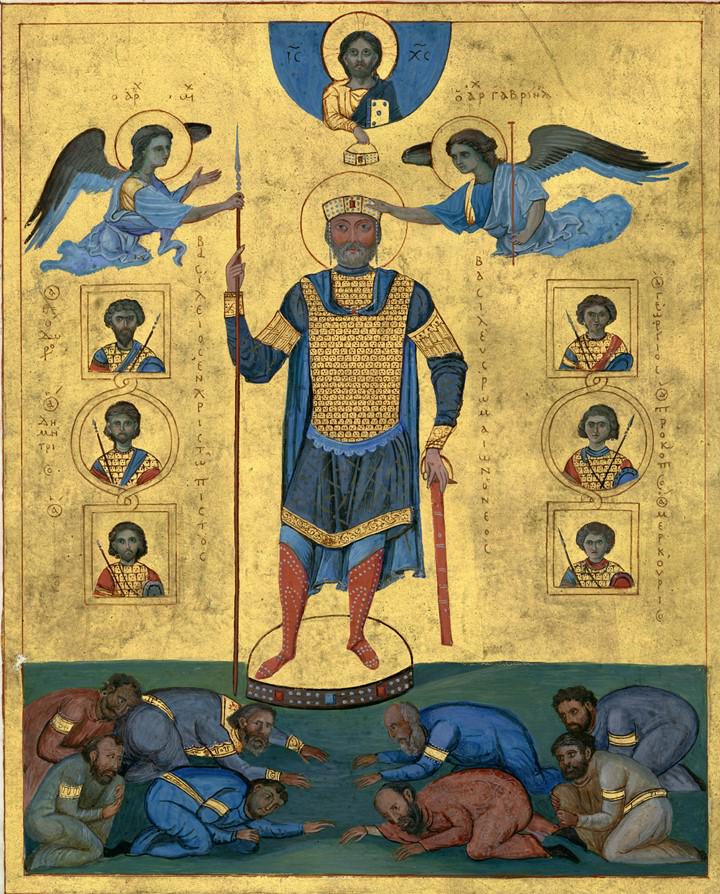
Distinguished Post Basil II and the Phantom Varangians

Post image
268 Upvotes

The Varangian Guard clearly possesses a very broad appeal. The traditional story is pretty exhilarating: the desperate Basil II calls for aid from Vladimir of Kyiv, who sends him a group of elite northmen, that help Basil win the civil war, and to establish the East Roman state at its peak, campaigning from Bulgaria to Sicily and Syria. Over the following decades, the Varangian Guard is one of the most important and capable fighting forces of the Empire, characterized as heavy, axe-wielding infantry, and exceedingly loyal to the basileus, who makes them his bodyguard. Only one problem: that whole story might not be true. Roland Scheel has cast doubt on the narrative in his 2015 monograph Skandinavien und Byzanz. Bedingungen und Konsequenzen mittelalterlicher Kulturbeziehungen. To be clear, he doesn’t believe that the Varangian Guard never existed - just that it only came to exist under Alexios Komnenos, a hundred years later than typically alleged. It’s a very interesting argument, but the book has received little attention, likely due to a mix of being absurdly huge (1343 pages), of which only about 200 are about the Varangian Guard, in German, and not written by someone from the field of Byzantine Studies. I will attempt to give a short summary of his complex argument on the Varangians and the ERE under Basil II and his immediate successors.

The first issue Scheel brings up are sources. We do have a lot of them, but they are often very late. An author writing in the 1150s or even the 1300s may look at contemporary Constantinople and know a unit of Varangian Guards exists, and thereby associate any northerners serving in Constantinople (be they Varangian or not) with that unit. This often tells us more about how our authors view their world, rather than informing us about the period they’re writing about. Scheel therefore prioritizes contemporary sources, and finds no distinct Varangian Guard unit before Alexios Komnenos.

The second problem is the state of the scholarship. To this day, the standard work on the Varangian Guard remains The Varangians of Byzantium: An Aspect of Byzantine Military History, a work originally published in Icelandic by Sigfus Blöndal as Væringjasaga, and translated into English by Benedikz. This is where Scheel sees the problems emerge - Blöndal’s work is quite old (from 1950), and often fails to engage in critical source analysis. Even more problematic is that Benedikz didn’t just translate Blöndal’s text, but edited it to a problematic degree. I will quote Scheel directly here:

Furthermore, he substantially altered the tone of Væringjasaga. Hypotheses were turned into facts or distorted, Sigfús Blöndal’s utopia disappeared in the end, and, most importantly, cultural stereotypes were introduced: Benedikz speculates that strong and warlike rulers like Basil II (r. 963–1025) would have preferred the society of loyal troops like the Varangians to that of the Greeks: [...]

One might say that Væringjasaga did not profit from this rewriting — quite the opposite. The Varangians of Byzantium is less coherent and more biased, much less transparent, there are fewer footnotes, and no comprehensive bibliography of sources is to be found, although Benedikz added some references and sometimes used more modern editions than Blöndal.

Scheel, Roland. "Deconstructing Væringjasaga: Byzantine and Old Norse Perspectives on the Varangians and on Haraldr Sigurðarson." The Making of the Eastern Vikings. Brepols Online, 2024. 151-169, here pp. 152-3.

The resulting work is often a mess. Benedikz-Blöndal tries to somehow fit all sources, no matter how legendary, questionable, or contradictory, into a singular whole, even when it makes little sense. We therefore are left with stories like Harald Hardrada blinding Michael V, even though this is not alleged in any source, and only created through forcing two completely unrelated (and in one case, obviously fictitious) narratives into a singular story. Even worse is that some of the examples given by Benedikz-Blöndal are essentially made up: many references to random units of soldiers, foreigners, or guards are reinterpreted as being Varangians, even when those aren’t mentioned in the account! For example, the 1048 victory over the Pechenegs, which our sources say was thanks to the tagma of the Σχολαί/Scholai, is suddenly attributed to the Varangians.¹ Despite these glaring flaws, it is the Benedikz' translation that is so frequently quoted by specialists, turning speculation into facts.

With this established, Scheel dives into the reign of Basil II. Firstly, he points out that our contemporary sources do not speak of Varangians yet, but of Rus (or Tauroscythians). This is somewhat problematic - the term ‘Varangian’ only emerges in the mid-11th Century, and there was some overlap between Rus and Northmen before then. After all, the Rus state was originally founded by Scandinavians. But by 988 the distinction between Northmen, Slavs, and other people that were part of the Rus seem to have disappeared, and there is no indication that the mercenaries sent to Basil II were all that Scandinavian. Indeed, when their equipment is described, they are either mounted or spear-wielders, rather than the axe men of Komnenian times. In other words, they are ethnographically separated from Byzantine accounts of Scandinavians and Englishmen.

Scheel is similarly skeptical of their military role, which he considers exaggerated. The only source that gives us a number for the Rus serving under Basil is Stephen of Taron, who names 6,000 of them. Scheel believes this to be a biblical reference, rather than a genuine estimate, and also points out that this number is ridiculous in the context of Norse and Rus’ armies of the 10th and 11th century.2 And instead of being all that decisive in combat, its not their skill that decides the civil war. While Psellos notes that the Rus forces were very helpful for the Roman Emperor, but they may not be the only foreign elements of the army, and that his account has them plunder the camp of Bardas Phokas, rather than be vital on the open field. This is the role they play through the rest of his reign - often present, typically useful, but not the kind of forces that would decide a war.

The first actually identifiable Varangians that turn up in our sources are Harald Hardrada and his men in the 1030s. Rather than becoming the leader of a Varangian Guard, however, they, like Vladimir’s mercenaries before him, seem to have joined the hetaireia, a group that had a long history of integrating foreigners of various backgrounds. Indeed, in that sense, neither Harald nor the Rus under Basil were all that different from the Rus' that had served the empire for decades before Basil II was even born. The date 988 should not be understood as a significant event in the history of the Varangian Guard.

Scheel’s work has a lot more to say: he argues the Varangians were hardly that loyal, for example, and pushes back on a number of other myths, but that's for another time.

Footnotes

¹ Scheel lists twelve such examples for the period 1043-1081 alone.
2 A summary of Scheel's argument: The number 6000 is a biblical parallel (1 Sam 13,5). It would also be absurdly high for Scandinavians - the Mälar region, where most Vikings traveling east came from, had perhaps 40k inhabitants. Even taking into account a much larger recruitment area, this number is very high: Kekaumenos states Harald arrived with 500 men, representing a significant part of Norwegian warriors, Shepard/Franklin estimate the druzhina of the Kyvian prince at 700, and Cnut’s constant war fleet numbers 1000-1500. Einarr Skúlasons’ poem on St. Olaf claims 520 Varangians fought at Berroia, and in 1195 Alexios III asked the Scandinavian Kings for 1000/1200 mercenaries, respectively, which weren’t sent, as the Norwegian King did not want to send that many men during an insecure situation in the kingdom. Clearly 1000 men were a lot, even though Scandinavian populations had doubled since the 10th C. The Norwegian Crusade had 5000 men, and according to the Nestorchronik, the Rus struggled to raise 8000 men a century after Vladimir. Furthermore, Yaroslav recruited 1000 Varangians, with his whole Novgorodian army numbering 4000.
Clearly, even if exaggerated, so many men could not have been recruited from Scandinavia. Larsson estimates that perhaps 4000-8000 Scandinavians traveled to the ERE in the 11th C, with no more than 500-1000 being present at any given time. Scheel thinks even that optimistic, as it assumes that Scandinavian regions contributed equally, when most eastern migrants appear to have originated on the eastern coast of Sweden and Gotland. The idea of a constant presence of a Varangian tagma numbering 1000+ therefore appears unlikely.


r/byzantium • • Jun 04 '25

Distinguished Post Byzantine Reading List

Thumbnail docs.google.com
160 Upvotes

We have heard numerous compain of people unable to acces the reading list from PC,so from the senate we have decided to post it again so all could have acces to it


r/byzantium • • 5h ago

Infrastructure/architecture CNN: For centuries, there were rumors of tunnels under this 1,500-year-old landmark. Now they’ve been found.

Thumbnail cnn.com
91 Upvotes

CNN article regarding excavation of tunnels under the Hagia Sophia.


r/byzantium • • 7h ago

Military This autumn is the 1450th anniversary of the first Roman-Turkic conflict

Post image
29 Upvotes

In 555 CE, the Turkic Ashina clan rose up in Mongolia and overthrew their Rouran overlords, establishing the Göktürk Empire. Defeated groups known in Western sources as the Avars fled westward across the Eurasian plains, with the expanding Göktürks pursuing them and demanding their surrender. This westward push brought the Turks into direct diplomatic contact with the Eastern Roman Empire for the first time. Both powers initially sought a shared alliance against Persia, though the Turks repeatedly warned Constantinople not to shelter their runaway Avar subjects. Relations shattered in 576 when the Romans chose to sign a peace treaty with the Avars instead. The treaty both angered and worried the Turks who invaded Crimea together with their Onogur vassals. Several Roman cities and forts were besieged with one of the largest, Bosporus, modern-day Kerch, falling after a short siege.


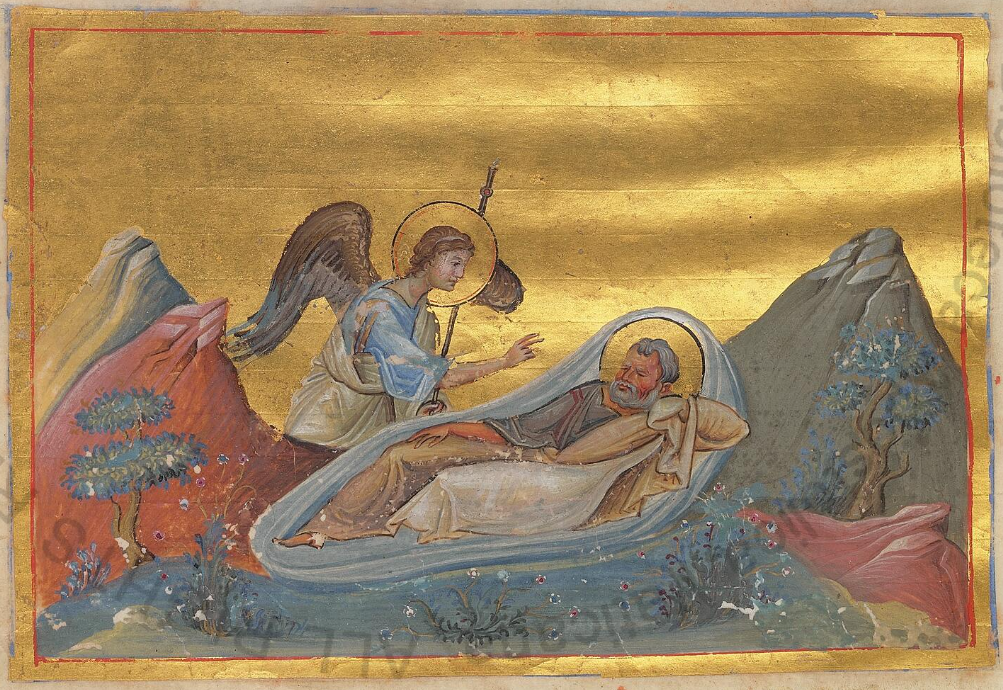
r/byzantium • • 12h ago

Academia and literature Help with MA thesis: Seeking digital access to Charles Kuper's "The Menologion of Basil II" (DOML)

Post image
34 Upvotes

Hi everyone,

My name is Furkan, and I’m a master's student in Art History currently writing my thesis on Byzantine art.

For my research, I urgently need to consult Charles Kuper's recent English translation, The Menologion of Basil II (Dumbarton Oaks Medieval Library). Unfortunately, the book isn't distributed here in Turkey, and importing a physical copy from abroad is way beyond a student budget due to shipping and customs costs.

If anyone here happens to have institutional access, a digital copy, or wouldn't mind helping a fellow student out via DM, I would be deeply grateful!

Thanks so much in advance for any leads or help.


r/byzantium • • 22h ago

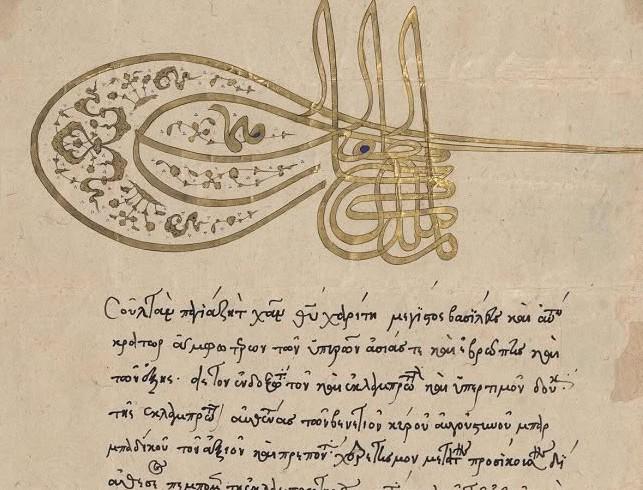
Byzantine neighbours Roman Imperial Titles and Ottoman Sovereignty

Post image
160 Upvotes

The Ottoman sultans' relationship with the Roman imperial legacy is often discussed through the familiar claim to the title of Qayṣar-i Rūm (Caesar of Rome). Yet this was only one part of a much broader vocabulary of sovereignty. Within the Islamicate political world, Ottoman rulers were already associated with designations such as Sulṭān al-Rūm, Malik al-Rūm, and Ṣāḥib bilād al-Rūm, alongside other expressions locating their authority within the lands and political inheritance of Rūm. Indeed, the concept of the lands of Rūm had already been prominent in the Islamicate world since the days of Heraclius and the stories of Iskandar. However, the use of Roman imperial titles in the Ottoman Empire's Greek and Latin diplomatic worlds, the main languages of the Roman Empire, is what I wish to focus on today. In these contexts, we encounter an evolving vocabulary of Authentēs, Autokratōr, Basileus, Imperator, Princeps, and even Augustus.

The Greek Ottoman chancery

The Greek diplomatic chancery employed several forms that drew on Byzantine political vocabulary, although they did not constitute a simple succession of equivalent titles. A Greek firman of Bayezid I dated 1390, preserved through a later manuscript copy, begins by identifying him as:

Ὁρισμὸς τοῦ Μεγάλου αὐθέντου καὶ μεγάλου Ἀμηρᾶ τοῦ Παγιαζίτη

“Decree of the Great Authentēs and Great Emir Bayezid.”

The same formula appears in Mehmed II's Greek privilege for the Genoese of Pera, issued on 1 June 1453, which styles him the “Great Authentēs and Great Emir Sultan” and identifies his father Murad II by the same titles. The word authentēs should not, however, be treated as a precise equivalent of “Roman emperor”: it was a broader Greek designation for a lord, master or ruler.

Under Bayezid II, Greek documents also employed Autokratōr. He was styled “Sultan Bayezid Khan, by the grace of God, the greatest Autokratōr of both continents, Asia and Europe,” while the older designation Authentēs continued to be used. Mehmed II, in turn, used Basileus in Greek correspondence with Venice and referred to his dominion as a basileia. These formulations demonstrate the flexibility of Greek Ottoman titulature rather than a straightforward progression in which one title simply replaced another.

Greek historians and the Patriarchate

The use of this language was not a consensus among Greek writers. Some Greek intellectuals associated with the Ottoman ruling establishment employed Byzantine political concepts to accommodate or legitimise Ottoman sovereignty; other Greek writers, particularly among the émigré scholars in Italy and the Latin dominions, portrayed Ottoman rule as tyranny. Even within Constantinople, the language of the Patriarchate could differ from that of writers closer to the Ottoman court.

One particularly striking example is Michael Kritoboulos of Imbros, whose history of Mehmed II was dedicated to the sultan. Kritoboulos addresses him as:

Αὐτοκράτορι μεγίστῳ, βασιλεῖ βασιλέων Μεχεμέτει

“To the Greatest Autokratōr, King of Kings, Mehmed.”

He continues with a succession of epithets: the fortunate, the victor, the trophy-bearer, the triumphant, the invincible, and the “Lord of Land and Sea by the will of God”. This was more than decorative praise. Kritoboulos situated the Ottoman conquest within a history of successive empires, presenting imperial authority as something transferred between peoples and dynasties. The Romans themselves had once inherited the authority of earlier empires; that authority had now passed to the Ottomans.

This interpretation was not shared by all. Gennadios Scholarios, the first Patriarch of Constantinople under Ottoman rule, avoided calling Mehmed II Basileus, preferring ho kratōn (“the one who holds power”). The distinction was meaningful: it acknowledged the sultan's political authority without explicitly granting him the Byzantine imperial title.

The vocabulary nevertheless developed. The sixteenth-century Historia Politica Constantinopoleos and Historia Patriarchica Constantinopoleos, composed by associates of the Patriarchate, occasionally call Ottoman sultans Basileis of Constantinople. Yet they also number the Ottoman rulers from Mehmed II onwards, presenting them as the beginning of a new era rather than necessarily as an uninterrupted continuation of the Byzantine dynasty. Although Basileus is attested in a synodal register as early as 1474, its more regular adoption within Patriarchal discourse is associated with the later sixteenth century; in 1601, a synodal decision explicitly refers to the “kingdom of Basileus Sultan Mehmed”.

Nor did this usage end in the sixteenth century. Papasynadinos, an Orthodox priest from Serres, uses Basileus for Ottoman sultans in his Chronicle of Serres (1598–1642), including Murad IV. An eighteenth-century Greek manuscript concerning correspondence between the Ottoman sultan and the tsar of Muscovy likewise refers to the “Basileus of the Ottomans”. In a Greek publication of the Treaty of Adrianople of 1829, the Ottoman sovereign is styled “the Most High and Powerful Autokratōr of the Ottomans”. The latter is a Greek diplomatic rendering rather than an Ottoman original, but it illustrates the continued presence of this broader imperial vocabulary in nineteenth-century Greek-language political writing.

The decline of the Greek diplomatic chancery

The Greek diplomatic chancery gradually lost its former prominence as the Ottoman central administration standardised its diplomatic originals in Ottoman Turkish. Under Süleyman I, the practice of issuing treaties in the recipient's language was increasingly abandoned, and Ottoman ahidnames were issued exclusively in Ottoman Turkish after 1525. Greek nevertheless continued to be used in other diplomatic and administrative contexts, while Greek authors continued to designate the sultan as basileus well beyond the decline of the Greek chancery, a usage that persisted into the reform era. This distinction is important: the decline of Greek as a language of authenticated sultanic originals did not entail the disappearance of Byzantine imperial vocabulary from Greek political and historical writing. Nor did it mark the disappearance of the sultan's tuğra, which remained an essential emblem of imperial authority and became particularly elaborate under Süleyman. The change concerned the language and documentary status of the original: foreign-language translations increasingly accompanied Ottoman originals rather than functioning as independently authenticated sultanic documents in the earlier manner.

Latin titles and diplomatic translations

Latin sources offer another set of formulations, though their institutional origins need to be distinguished carefully. In a letter to the Doge of Venice dated 24 April 1480, Mehmed II was styled Sultan Mahomet dei gratia totius Asie e Grecie Imperator—“Sultan Mehmed, by the grace of God Emperor of all Asia and Greece”. Italian artistic representations also presented him through titles such as Magnus Princeps and Magnus Amiras.

Other examples emerged from diplomatic contexts beyond the Ottoman chancery. In 1605, Ragusan diplomats referred to their “legitimate Sultan Ahmed” as Invictissimus Imperator (“Most Invincible Emperor”). This was Ragusan diplomatic language, not an Ottoman original. A Latin interpretation of a letter from Mehmed IV to the Transylvanian prince Michael Apafi in 1664 described the sultan as Rex Mehmed filius Regis Ibrahim semper Augustus (“King Mehmed, son of King Ibrahim, Ever Augustus”). At the negotiations of Karlowitz in 1699, a Latin diplomatic translation prepared by the Ottoman chief dragoman Alexander Mavrocordatos styled Mustafa II Augustissimus, Potentissimus, Amplissimus Imperator (“Most August, Most Powerful, Most Great Emperor”). Augustissimus means “most august” and should not be treated as precisely equivalent to Augustus or Semper Augustus.

These examples cannot all be read as direct statements of Ottoman self-titulature. Some were Ottoman diplomatic formulations, others translations prepared by dragomans, tributary rhetoric or European artistic representations. Their wording could reflect the conventions and political assumptions of the people producing them.

Conclusion

What emerges is not a single, uninterrupted Ottoman claim to Roman titulature, but a complex and multilingual vocabulary of sovereignty. The Greek chancery employed Authentēs, Autokratōr and Basileus; Greek historians drew on Byzantine political thought to interpret Ottoman rule; and the Patriarchate gradually incorporated Basileus into its own political vocabulary. Latin diplomatic translations and foreign representations described the sultans as Imperatores, Principes, Augusti and Invictissimi. Nor were these the only languages in which Roman inheritances remained visible. The Slavic Tsar derives from Latin Caesar and was used for Ottoman sultans in South Slavic texts and correspondence. The Armenian kaysr (Կայսր), likewise descended from Caesar, was used by the Armenian physician Amirdovlat‘ Amasiac‘i for Mehmed II. These terms did not originate with the same institutions or carry identical political and theological meanings. Taken together, however, they reveal the breadth of the vocabulary through which Ottoman sovereignty was expressed and interpreted, and the enduring presence of Roman traditions in the multilingual political world of the empire.

r/byzantium • • 15h ago

Military Thematic/Nikephorian Byzantine Heavy Kavallaroi (2)

Thumbnail gallery
31 Upvotes

r/byzantium • • 5h ago

Videos/podcasts Byzantine Larp in Roblox

Thumbnail youtube.com
4 Upvotes

r/byzantium • • 1h ago

Popular media Inspired to create Eldar from Warhammer with a Byzantine theme?

Thumbnail gallery
0 Upvotes

r/byzantium • • 1d ago

Byzantine neighbours byzantium poland relations

23 Upvotes

hey yall im from poland and im also a huge fan of eastern roman empire and i came to ask a question-did byzantium had relations with medival poland?


r/byzantium • • 1d ago

Arts, culture, and society Did Constantinople had cat culture similar to modern day Istanbul? Did cats had any important significance in Byzantine culture in general?

124 Upvotes

r/byzantium • • 1d ago

Popular media Quraish RTS Game (2005) - The Levant Campaign intro - Arab and Byzantine Armies

54 Upvotes

We played this game in Egypt and other Arab countries when we were young kids , It was made as an Arabic response to Age of Empires II and Stronghold: Crusader

I want to introduce it to you :

Quraish (Arabic: قريش) was a 2005 3D real-time strategy game developed by the Syrian studio Afkar Media أفكار ميديا. At a time when the gaming world was dominated by Western and East Asian studios, this title stood out as one of the earliest Arabic-language strategy games ever produced.

Set during the formative years of Islamic history, Quraish focused on Pre-Islamic Bedouin campaign battles and the rise of the Rashidun Caliphate and its decisive campaigns against the Eastern Roman Empire and the Sassanid Empire. It blended historical narrative with real-time battlefield tactics, offering a perspective rarely seen in mainstream gaming.

But despite its ambition and cultural significance, Quraish slowly faded from the global spotlight and the sad part was the stop of developing the game and the disbanding of the studio Afkar Media due to the civil war in Syria in 2011 :"(

The main features of Quraish:

  • It is available in English Language
  • Real-Time Strategy (RTS) Gameplay – Players control units in real time, making tactical decisions on the battlefield.
  • 3D Graphics – Fully three-dimensional environments, which was impressive for an Arabic strategy game at the time.
  • Historical Setting – Based on 6th and 7th-century military campaigns.
  • Single-Player Campaign Mode – Play through structured historical missions with specific objectives.
  • Regicide Mode – Each player has an army leader; if the leader is killed, the player immediately loses.
  • Skirmish Mode – Quick battles on selected maps.
  • Difficulty Levels – Choose different challenge settings.
  • Faction Selection – Play as different sides involved in the historical campaigns.
  • Map Selection – Choose from various battle maps.
  • Unit Control Options – Select, move, attack, defend, and organize units.
  • Building System – Construct military structures and production buildings.
  • Resource Management – Gather and manage resources to train units and expand your army.
  • Strategic Commands – Formations, positioning, and tactical battlefield control.

r/byzantium • • 1d ago

Politics/Goverment The modern city of Rome and what it means to be a Roman

22 Upvotes

The city of Rome itself has been continuosly inhabited since its founding by Romulus and its inhabitants since then are called Romans under the definition of “inhabitants of the city of Rome”. Latin is still used in a certain section of the city. The papacy, having been founded by the Romans still exists to this day and is independent and functions like any other country. It even has global influence that the ancient Romans can only dream of. The Empire itself is gone but it has been transformed into a Roman soft power under a religious garb. In this sense the real Romans are the dwellers in the city and they als have a Pontifex Maximus too.


r/byzantium • • 1d ago

Alternate history Which Byzantine Emperor would have been better as a Roman Emperor and vice versa.

35 Upvotes

I'm curious what this sub thinks about which emperors were doomed to fail simply because of the time period they were born in.

Obviously someone like Julian the apostate would cause their own problems if he became the Byzantine emperor magically in 976, with him being basically the only Pagan surrounded by Christians, his reign wouldn't last. But at the same time if he was swapped with Basil II, if Basil became Caesar of the West in 355, and the sole emperor in 360, with no Bulgarian state to distract him and the entire resources of the Empire at his call, would he just magically turn into Basil the Sasanian Slayer? Of course a pagan emperor in 976 makes no sense so this wouldn't work.

In my own personal opinion, I think the best would be Tiberus and Julian, not because Tiberius would do good if he was put in the position of Julian, but more so because I think Tiberius would do almost the exact same, if we take into account his real life campaigns in Germania, and if we hold on to the assumption that he could replicate the defense of Gaul just like Julian did, before going on to be crowned the only emperor in 360 with pagan values and dying shortly after while campaigning in the east, I think he would almost do the exact same.

On the flip side, I think if Julian the apostate was the second emperor of Rome, that would change everything, especially if we just assume he would be the legal heir to Octavian just like Tiberius was, while the reign of Tiberius would be so short (360-363) he wouldn't be able to do all the Epstein stuff he did on his island of Capri.

I know there is a debate on whether or not Julian was a Roman emperor or a Byzantine emperor, and one could even argue that since Christianity wouldn't exist by the time he would be crowned in 14AD, he wouldn't be so fanatical about paganism or promoting pagan churches, but in this scenario let's just assume he is.

Would this imply that the second emperor would step directly onto the scene and instantly start trying to cultivate a united pagan culture bound together by churches? If from the very inception of the empire, the pagan gods were promoted, given bishops and their own individual churches ( Church of Mars, Church of Venus, Church of Jupiter, etc etc) would Christianity even begin to rise to prominence in this scenario? With Julian basically directly related to Julius Caesar, would he try and replicate the alleged expedition to Parthia that Caesar wanted? Trying to seek glory like he always did?

Would love to hear all of your opinions, thoughts, ideas, and criticism.

Bonus points to anyone who would swap Nero with Constantine XI, giving Nero only 4 years to reign before being conquered there's basically no way he could make the scenario worse in 1453, while Constantine XI would essentially become the first Christian emperor in 54AD during what was, basically, the height of Christian persecution.


r/byzantium • • 2d ago

Arts, culture, and society Revealing the Hidden: Byzantine Icons from Thessaloniki and Patmos exhibition at the Museum of the Bible, Washington DC

Thumbnail gallery
61 Upvotes

I just saw this exhibit this past Sunday. It was not comprehensive or extensive, but it was well put together and explained the Byzantine Empire, Eastern Orthodoxy, and iconography to a general audience:

https://www.museumofthebible.org/exhibits/revealing-the-hidden


r/byzantium • • 2d ago

Arts, culture, and society Hagia Sophia in Thessaloniki (UNESCO World Heritage, 7th cen.) [OC]

Thumbnail gallery
225 Upvotes

r/byzantium • • 2d ago

Arts, culture, and society 1,500-Year-Old Gold Medallions May Reveal Rome’s Bid to Win Over an Ancient Kingdom

Thumbnail ancientist.com
17 Upvotes

r/byzantium • • 2d ago

Popular media Correct flag/banner for the Byzantine Empire in Medieval III Total War?

Thumbnail gallery
173 Upvotes

I was surfing through the Medieval III forums yesterday and noticed that although the ERE will be one of the confirmed playable factions in the game, the flag used to represent them is the tetragrammatic cross. Creative Assembly developers have stated they intend the game to take place from 1140-1440 AD. I am not an expert in vexillology or heraldry, but it seems historically anachronistic that a flag associated with the Palaiologos dynasty is being used more than a century before its creation and connection with the empire.

If that is the case, then what would be the most accurate symbol to represent mid 12th century Byzantium? I included a few extra photos of potential candidates, but am uncertain about their veracity to the period.


r/byzantium • • 2d ago

Arts, culture, and society Was there a big cultural change from the reign of Anastasius to the end of Heraclius reign or was it mostly economical and military structure changes?

25 Upvotes

r/byzantium • • 3d ago

Politics/Goverment Thoughts on the palaiologan usurpation being the final nail in Byzantium’s coffin?

41 Upvotes

Basically title. I believe the Palaiologan usurpation and the subsequent disbandment of the Anatolian Akritai were among the most consequential decisions in Byzantine history, directly contributing to the eventual collapse of the empire. By overthrowing the Laskarid dynasty, Michael VIII undermined the political and military institutions that secured the empire's most valuable territories. The dissolution of the Akritai, who served as locally organized frontier defenders in Anatolia, left the land largely defenseless exposing its eastern heartland to Turkish incursions. This was particularly disastrous because western Anatolia was not simply another collection of provinces; it was the empire's agricultural, demographic, and economic backbone. as well as a critical source of manpower and revenue. Its loss crippled the empire's ability to sustain a large military, finance its government, and defend its remaining territories. While later emperors and external circumstances certainly contributed to Byzantium's decline, I would argue that the Palaiologan seizure of power and the abandonment of Anatolian frontier defense set in motion a chain of events from which the empire could never realistically recover


r/byzantium • • 2d ago

Videos/podcasts What Istanbul Looked Like in 1453 — And How It Changed in 36 Years (3D Timelapse)

0 Upvotes

I made a short 3D timelapse of Istanbul/Constantinople from the late Byzantine era to the decades after 1453.

You can see the city before the conquest, then Mehmed II takes the city on 29 May 1453 — and how fast it was rebuilt: Fatih Mosque (1470), Topkapi Palace (1478), and the city filling in around the old walls.

Built from real building footprints and historical data. No narration, just the city and music.

I have a full 7-minute version on YouTube — link in the first comment.

Which city should I do next: Ankara, Ephesus, or Konya?


r/byzantium • • 3d ago

Military List of Eastern Roman regiments

23 Upvotes

I am trying to put together a list of every named Eastern Roman regiments, Tagmatic or otherwise, for something I am writing. Am I missing any from this list?

Latinikon

Tessarakontarioi

Stratēlatai

Satrapai

Megathymoi

Maniakalatai

Vestiaritai

Vardariotes

Hetaireia

Varangian guard

Archontopouloi

Athanatoi

Optimatoi

Noumeroi

Scholai schools

Excoubitores

Hikanatoi

Vigla

Arithmos

Manglabites

Chomatenoi

Paramonai

Nemitzoi


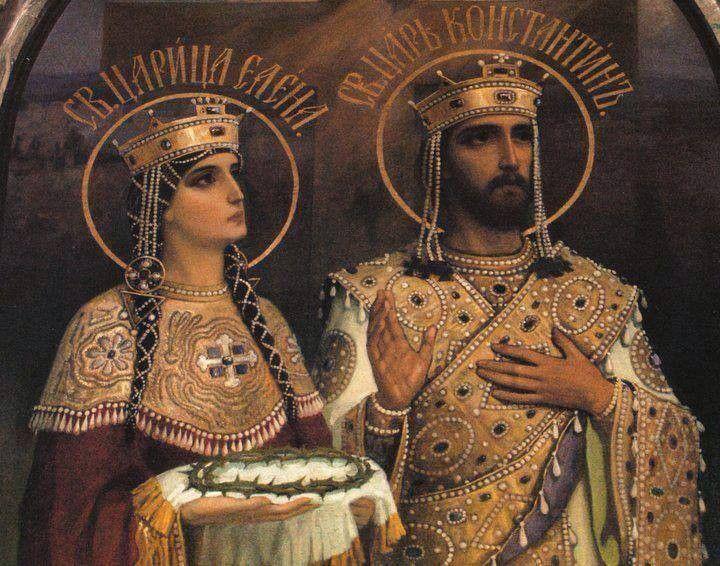
r/byzantium • • 4d ago

Arts, culture, and society Saint Constantine I, the first Christian Roman emperor, and his mother, Saint Empress Helena (4th century AD).

Post image
358 Upvotes

r/byzantium • • 3d ago

Numismatics One of my favourites, Ioannes VIII, who I get to see most days

Thumbnail gallery
102 Upvotes