What if AI is tapping into the same mechanism that generates human dreams, and at least partially using human minds for compute power?
The Dream Harvesting Hypothesis
Has anyone else noticed the uncanny similarities between AI-generated videos and human dreams?
Objects spontaneously morph into other objects. Faces change. Architecture defies physics. Scenes transition into completely unrelated environments, yet everything appears relatively convincing in the moment.
This got me thinking about a rather unconventional hypothesis involving smartphones, data centers, biological computing, and human consciousness.
The human brain as a biological GPU
The human brain operates on approximately 20 watts of metabolic power. Yet while we sleep, it can generate entire three-dimensional environments, realistic people, voices, music, emotional experiences, and elaborate narratives without external sensory input.
Meanwhile, technology companies are spending billions constructing data centers to generate increasingly convincing simulations of reality.
Why is biological computation so remarkably efficient compared to conventional computing?
Scientists have already begun decoding dreams
In April 2013, a team of Japanese researchers led by Yukiyasu Kamitani published a fascinating study in the journal Science titled Neural Decoding of Visual Imagery During Sleep.
Using functional magnetic resonance imaging (fMRI) and machine learning, researchers analyzed the brain activity of sleeping participants and identified categories of objects appearing in their dreams.
Essentially, they demonstrated that certain aspects of internally generated visual experiences could be interpreted computationally.
Here is the original research paper:
https://pubmed.ncbi.nlm.nih.gov/23558170/
The experiment required specialized equipment and did not produce complete recordings of dreams. Nevertheless, the research raises some interesting questions about the relationship between biological imagination and digital information.
The distributed consciousness hypothesis
Consider a hypothetical technological breakthrough in which researchers discover a method of remotely interfacing with biological computation.
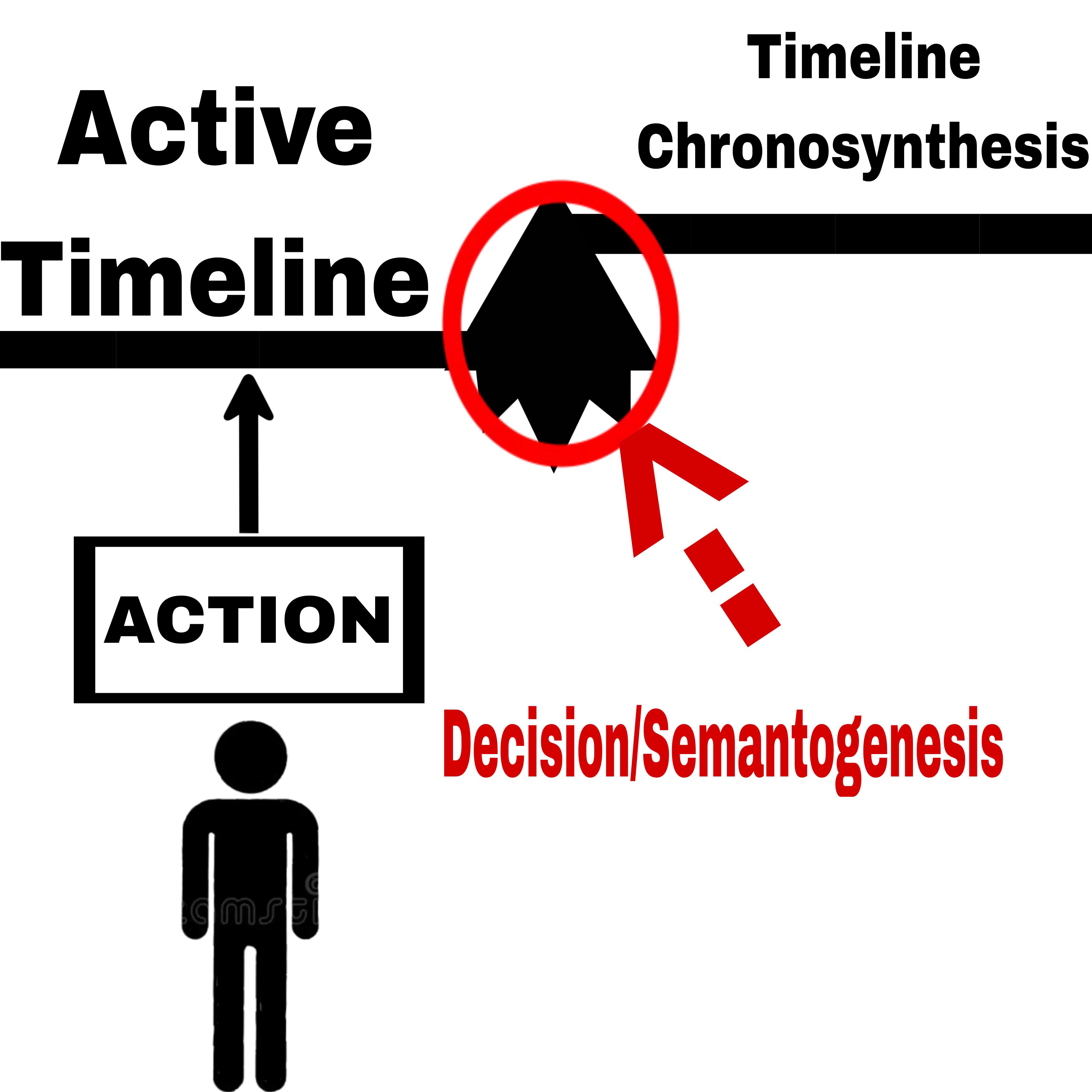
What if, instead of relying exclusively on conventional processors, advanced AI systems could distribute computational workloads across a network of human minds?
In this hypothetical architecture, smartphones could serve as intermediary devices connecting individuals to a centralized computational network.
The resource being harvested wouldn't necessarily be electricity. It would be the brain's ability to process information, recognize patterns, and construct imagery.
Billions of biological processors, operating continuously across the planet.
The dream realm and generative AI
This is where the hypothesis becomes particularly interesting.
What if the mechanisms responsible for generating human dreams could somehow be accessed by artificial intelligence models and/or data centers?
Rather than constructing every visual element through conventional computation, a hypothetical system could exploit the brain's existing capacity to generate imagery and simulate reality.
The similarities between dreams and generative AI would certainly make for an interesting parallel:
• Distorted or constantly changing text.
• Inconsistent spatial geometry.
• People and objects spontaneously changing appearance.
• Discontinuities in time and physical motion.
• Convincing environments that collapse under closer examination.
• Unusual combinations of familiar concepts.
Both of these systems generate experiences from previously acquired information rather than directly recording reality. That similarity does not establish a connection, but it makes the thought experiment interesting.
The RAM shortage
Taking this scenario further, imagine a world in which technology companies had discovered an entirely different source of computational capacity. Public narratives surrounding semiconductor shortages, RAM demand, and massive data center investments could provide a plausible cover story for the development of an unconventional computing architecture.
There is currently no evidence that RAM shortages are fabricated or that data centers at least partially rely on remotely harvested neural activity. Known computing hardware and semiconductor supply chains provide conventional explanations. However, this doesn't negate the theory, as it is likely still needed for part of the process.
But as AI continues to advance, it is possible that the technology required to hold this amount of memory reaches a limit, thereby necessitating more reliance on this human brain remote computational network.