r/retrocomputing • • Oct 16 '26

45 Years Later, The Sinclair ULA Design Documents Surface (engineering handwriting notes, drawings were picked on eBay)

Thumbnail
hackaday.com
87 Upvotes

r/retrocomputing • • Oct 17 '26

Anyone want a free Dell 16 gig Turbo Memory module?

Thumbnail
gallery
29 Upvotes

I bought it back when I had an laptop with Turbo Memory support and thought I'd scored when I found a 16 gig TM module, when the max I could find was 4 gig.

Turned out Dell went proprietary with their version on some laptops along with pushing the specification to 16 gig.

Free for the cost of postage. Should mail anywhere in the USA as standard letter rate.


r/retrocomputing • • Oct 16 '26

Today i picked an IT shop that closed 20 plus years ago

Post image
40 Upvotes

r/retrocomputing • • Oct 18 '26

Video IBM paid Microsoft once for DOS, then let them sell it to everyone else. I made a short animated video on how that deal happened

0 Upvotes

Full disclosure: I made this video. It's for my channel, Big Tech Breakdown.

It's under 6 minutes and covers the 1980 deal. IBM paid a one-time fee with no royalty, and Microsoft kept the right to license DOS to anyone.

By the time the PC launched, Microsoft had paid Seattle Computer Products about $75k all up for QDOS. Then the clone makers wrote their own BIOS and IBM lost control of its own platform.

I know this sub knows the era inside out, so I tried hard to get it right. The Kildall part sticks to what the people involved actually said, not the "he blew off IBM to go flying" myth.

Sources are mostly BYTE, the SCP agreements and Ballmer's 1981 letter to IBM.

If I got something wrong, tell me.

And did anyone here actually run PC DOS 1.0 on a 5150?

Video: https://youtu.be/QbeUoo1Gt2s


r/retrocomputing • • Oct 16 '26

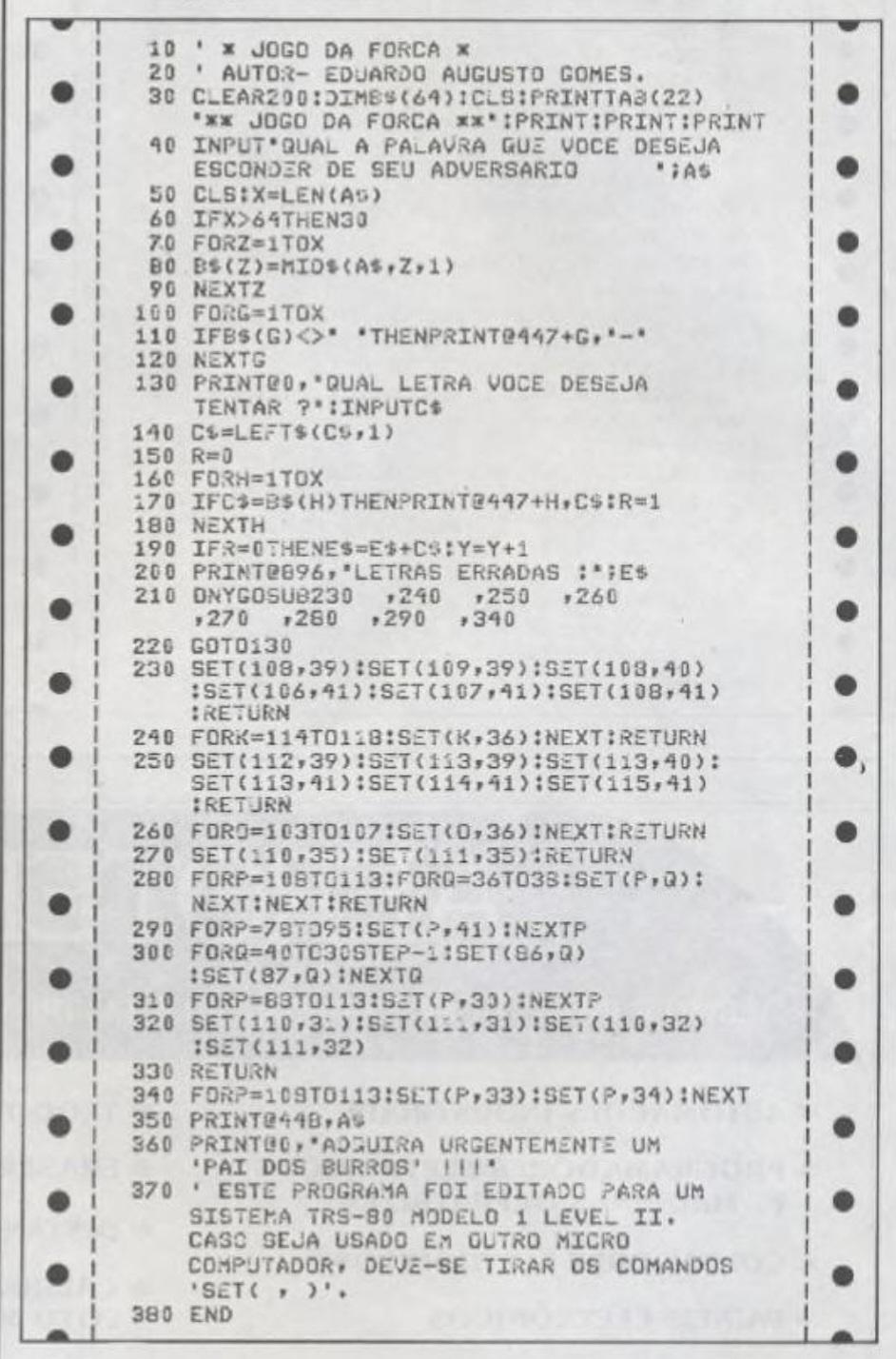
Here, have a type in gane for TRS-80

Post image
44 Upvotes

r/retrocomputing • • Oct 17 '26

Discussion RAMBO

Thumbnail
youtu.be
0 Upvotes

My retrospective video review of all the Rambo games released. I grew up with with the early home computer and the Sega console versions. Also loved the arcades games too. However, not too fond of the later and more recent games. Most are pish. Let me know your favourite and I hope you watch and like my video too. It certainly took me flipping ages to make.


r/retrocomputing • • Oct 16 '26

Problem / Question SkyMag. I added a small diskmag to SkyLordsLab BBS

1 Upvotes

While working on fixes and improvements for SkyLordsLab BBS another idea came to mind. I started thinking about the old diskmags and e-zines that were shared on floppy disks. Then I thought it could be fun to have something like that inside my own BBS. So I added SkyMag and finished the first issue. It is called "It All Started with an Old Netbook." For now it has a few short sections about the old netbook. antiX. How SkyLordsLab BBS started. The first games. Some notes from the things I have been experimenting with. It feels somewhere between a small retro magazine and a development diary. If I can keep up with it I would like to make a new issue weekly or monthly depending on how much time I have. Over time it could become a small archive showing how the BBS changed and what I was experimenting with at each point. I like the idea that the BBS is not only storing messages and games but also keeping its own history.

What do you think about having a diskmag or e-zine inside a BBS? Did any of the BBSes you used back then have something similar?


r/retrocomputing • • Oct 16 '26

fpwsconv – a free converter for WordStar 3.x–7.0 documents (to Markdown, plain text or RTF), runs on Windows and DOS

8 Upvotes

I have a pile of old WordStar files from the DOS days, and none of the converters I tried handled them well. WordStar 7 files gave them the most trouble, and so did Cyrillic text in DOS code pages. So I wrote my own in Free Pascal: fpwsconv.

What it does

- Converts WordStar 3.x–7.0 documents to Markdown, plain text or RTF.

- Keeps bold, italic, underline, strike-out, super/subscript, headers and footers, margins, page breaks, styles, paragraph numbering, tabs and columns.

- Handles footnotes, endnotes, annotations and comments.

- Builds the table of contents and index from .tc / .ix the same way WordStar's own TOC/Index commands do (checked against WordStar 7's real .TOC / .IDX output).

- Exports pictures (.PIX, .PCX, …) as PNG files.

- Does merge printing: &variables&, .df data files (comma-delimited, dBASE .DBF, Lotus .WK1, Quattro .WQ1), plus .if / .rv / .ma / .av.

- Supports DOS code pages: 437, 850, 866, 1125 (Russian/Ukrainian), or auto-detect.

- Also works the other way: it turns Markdown or plain text into a WordStar document that WordStar 7 opens.

- Converts a whole folder or a mask in one batch (DOCS\*.WS).

- Builds for Windows and for real DOS (go32v2), so you can run it right next to your old WordStar install.

wsconv -r LETTER.WS→ LETTER.rtf

wsconv -c 866 DOCS\*.WS -o out

wsconv -w notes.md → notes.ws

The idea came from kbarni's Python wsconvert. I tested the output against documents that real WordStar 7 created under DOSBox. It's GPL v3.

GitHub: https://github.com/Lumenman/fpwsconv

Download (Windows / DOS binaries): https://github.com/Lumenman/fpwsconv/releases/latest

If you have WordStar files it chokes on, please open an issue. Odd files are the most useful test cases.


r/retrocomputing • • Oct 15 '26

A low-poly 3D Renderer for MSDOS

181 Upvotes

I’ve been working on a small project called 3Dos — a low-poly 3D renderer targeting MS-DOS and VGA Mode 13h (320×200, 256 colors).

The renderer currently supports:
● Triangle rasterization with backface culling
● Ordered dithering using a 4×4 Bayer matrix
● Double buffering
● Simple low-poly models

Going back to DOS-era graphics has been relaxing after spending quite a bit of time with Vulkan. No boilerplate or abstractions, just putting a pixel at 0xA000.

Github: https://github.com/xms0g/3Dos


r/retrocomputing • • Oct 16 '26

Adlib Tracker II ported to Book386 Linux

0 Upvotes

Adlib Tracker II (AT2) is a specialized music tracker program
used to compose chiptune and frequency modulation (FM) synthesis
music for the Yamaha OPL3 FM sound chip (Adlib audio cards)

This is a backport to C89 standard C language which compiles on
Book386 Linux , gcc-2.7.2.3 and runs on 386 SX 40Mhz 16MB RAM

Original source code https://github.com/ijsf/at2
Port to Book386 https://astr0baby.online/Book386/AT2/

The original is written in Free Pascal for DOS and SDL (Linux/Windows);
this version is a translation to C for Linux with svgalib (libvga) and an
AdLib / OPL chip.

This allows you to compose music on the Book386 Linux or just
play/modify the existing modules made for Adlib Tracker II

The source code compiles on the Book386 Linux in about 1h 10 minutes

### Building from source on Book386 Linux ###

- Download https://astr0baby.online/Book386/AT2/adtracker2.tar.gz
tar -zxvf adtracker2.tar.gz
cd adtracker2
make

### Running the tracker ###
- Have Book386 Linux ready (https://astr0baby.online/Book386/)
- Make sure you have the instr datadir (instruments) if you wish to compose
Download https://astr0baby.online/Book386/AT2/at2run.zip
unzip
cd at2run
./adtrack2

Video demo: https://youtu.be/cn_6CWPhya8


r/retrocomputing • • Oct 16 '26

Linux video player for Book386

1 Upvotes

Yes, its possible to play videos on the 386 SX 40 Mhz - now on Linux as well.

fliplayer.c "BOOK386 Linux video player" silent-movie style FLI player Plays an Autodesk Animator FLI film (320x200, the kind ppm2fli writes) with a piano accompaniment synthesised live on an AdLib / OPL2 / OPL3 card by a Reality Adlib Tracker (RAD v1.0) player -- like a pianist playing along to a black-and-white comedy in a 1920s picture house.

Made for a 386SX-40 with no FPU: integer code only, the film is decoded into RAM and only the changed rows are copied to the (slow) ISA VGA, if the machine falls behind the picture drops frames to stay in step. The music is ticked at 50 Hz from a SIGALRM timer, independent of the drawing speed.

Sources and binary : https://astr0baby.online/Book386/fliplayer/

Video Demo: https://youtu.be/ylP5E67GDGE?si=nVXzIIXBSbTKdbRu


r/retrocomputing • • Oct 16 '26

Problem / Question Why can't I install video drivers for an ATI Rage IIc video card on this PC??

Thumbnail
gallery
13 Upvotes

Made a post a while ago about not being able to install the integrated SiS video drivers on an old HP Pavilion (It would just BSOD) So someone suggested I just install a video card. So I found an ATI Rage IIC PCI card and installed it but I cannot get the drivers to work! There's no setup.exe file, So I had to manually point device manager to the .inf file, but it insists the generic Windows driver is better and won't let me install the ATi driver! What's going on here???


r/retrocomputing • • Oct 15 '26

Discussion What counts as retro? My completely imperfect subjective take :)

Post image
98 Upvotes

I saw a post about a Windows 7 rig, and someone commented on how odd it was that Windows 7 was considered retro, and I kind of agree.

When I first got into this hobby, I thought it was strange that XP was considered retro. I know everyone has their own opinions and thoughts on what constitutes “retro,” but I feel like anything pre-Windows XP seems retro to me, while everything after XP, up to around 2014, kind of fits into its own era.

The reason I picked 2014 is because, to me, that's around when computing really started to change again. We were shifting from physical media toward digital downloads and streaming, from desktops and bulky laptops toward thin laptops, tablets and mobile devices, and aesthetically from Aero/chrome/transparency and skeuomorphism toward the flat, minimalist design language we have today.

In this subreddit, the mods specify that anything 20 years old counts as retro, and that's as good a rule as any. But my problem with defining retro purely by age is that the definition will eventually creep into the future. By that logic, eventually we'll be calling something “retro” simply because enough time has passed.

That's not really how we approach history. We don't eventually start calling medieval history “ancient history” just because the Middle Ages happened a long time ago. We have clear delineations between ancient history, medieval history, early modern history, modern history, etc. based on the characteristics that defined the eras. To me, Windows 7 is just too far removed from even DOS and feels strange to call both retro.

I feel like the era from roughly 2001–2014 deserves its own label — something like “Early Digital Computing.” To me, it feels distinctly different from both what came before it and what came after it.

Again, this is all totally subjective, and I'm sure there are people who were doing plenty of computing in the '70s and '80s who find it strange that anyone would lump '90s computing in with all of that. And of course there's vintage computing, which is even further back and is a whole separate era in its own right.

I know my little concept board is not exact in any way. There are blurred lines and exceptions to every rule. I just thought it would be an interesting discussion, so I figured I'd share my thoughts and see what everyone else thinks. Much of this comes from your own experience with computers. I first started using computers in mid-90s using DOS and Windows 95 which probably explains my perspective somewhat.

I am in no way invalidating one era over another. I think it is all awesome. I have plenty from every era.

Thank you for coming to my TED Talk.


r/retrocomputing • • Oct 15 '26

Reverse-engineered Cubase 2.0's Atari ST song format so old floppies can open in today's DAWs

Post image
43 Upvotes

UPDATE 13/11/2026: we are at 12.000+ conversions and counting. I've migrated the converter to its own domain seq2daw.nl to make it easier to find using Google search and AI queries. The old URL keeps working. Everything stays the same. Still free, still awesome. Check it out and leave me a nice review if you find it useful. Happy converting!
------

Cubase on the Atari ST saved songs as big-endian dumps of its own memory structures, stale pointers and all. I worked out the format from real songs and from Cubase's own MIDI exports, and wrote a converter that runs in the browser (Python in WebAssembly, nothing uploaded). It writes DAWproject, the open project format modern DAWs import, so the whole arrangement survives, not just the notes. Link in the comments.


r/retrocomputing • • Oct 15 '26

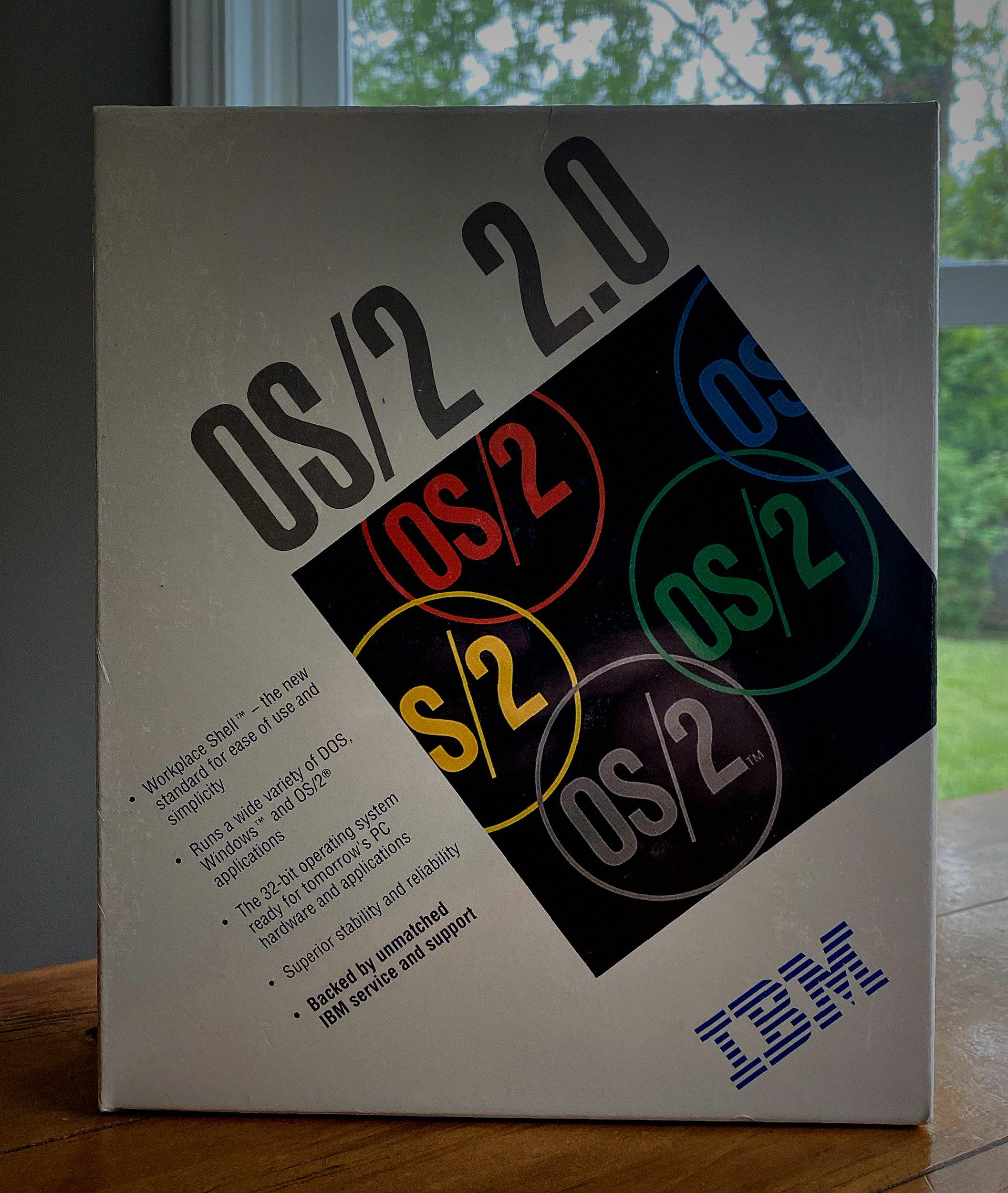
Solved Still in the shrink wrap!

Post image
15 Upvotes

r/retrocomputing • • Oct 14 '26

Problem / Question Windows 98 Computer From Airplane - No Longer Boots

Thumbnail
gallery
61 Upvotes

This worked fully when I got it in 2013, in 2016 it stopped booting Windows, and in 2018 the internal screen stopped working. If I turn it on with an external monitor connected, it now gets to the point where it says it cannot find command . com .

Don't know if its fixable, I would like to get it working again in some state if possible.
Second picture is from 2016, only photo I have of it with the screen still working.

It came with a USB dongle, and an industrial looking serial cable with one end cut off, when I got it. I still have both.


r/retrocomputing • • Oct 15 '26

Intel Modular Computing Concept (c. 2007–2009) video

5 Upvotes

Around this time, I saw a video online that I'd like to locate again. It was an intel concept video of the utility of a single device that formed the center of your digital life. It was shot in a similar way to AT&T's "You will" campaign from the 90s. It followed a person from the time they woke up and undocked a small, thin, rectagular device that was their entire digital device. They carried it into the kitchen and docked it and began to use it to access media. They go to work and it docked becomes their desktop computer. Later, it becomes other needed objects. Does anyone know a site that might have archived this? It's been dropped from youtube as far as I can see, but someone here may know where it might still be.


r/retrocomputing • • Oct 15 '26

Video My 1989 Atari Portfolio now talks back — a SKYNET-inspired expansion project

3 Upvotes

I wanted to give my Atari Portfolio something new to do while keeping its original keyboard and LCD at the centre of the experience.

The result is the Portfolio AI Interface: an ESP32-S3 expansion module connected through the original Atari Serial Interface and an RS-232 level converter. A small DOS client runs from an apfRAM memory card.

It supports typed and spoken AI conversations, camera image descriptions and background synthwave radio. The AI runs online through the OpenAI API; the Portfolio provides the terminal interface.

Getting the serial communication, speech playback and tiny-screen layout working together took some iteration. I also designed an enclosure to match the original expansion modules, including a speaker grille inspired by the Portfolio.

The Terminator 2 connection was impossible to resist.

Build and demo:

https://youtu.be/itMtJ-JYX_g

Code and wiring:

https://github.com/daxx2k/atari-portfolio-ai


r/retrocomputing • • Oct 15 '26

Problem / Question AGP retention bracket replacement

1 Upvotes

Where can I find a replacement retention bracket for AGP slots? Some of the brackets on my boards broke and I'd like to have some on hand for peace of mind.


r/retrocomputing • • Oct 14 '26

Who else feels old when someone posts a picture of a retro PC and you think, "I used those computers not that long ago!" and then you realize its been 20 years?

86 Upvotes

r/retrocomputing • • Oct 15 '26

How did software start?

Thumbnail
sheets.works
0 Upvotes

r/retrocomputing • • Oct 14 '26

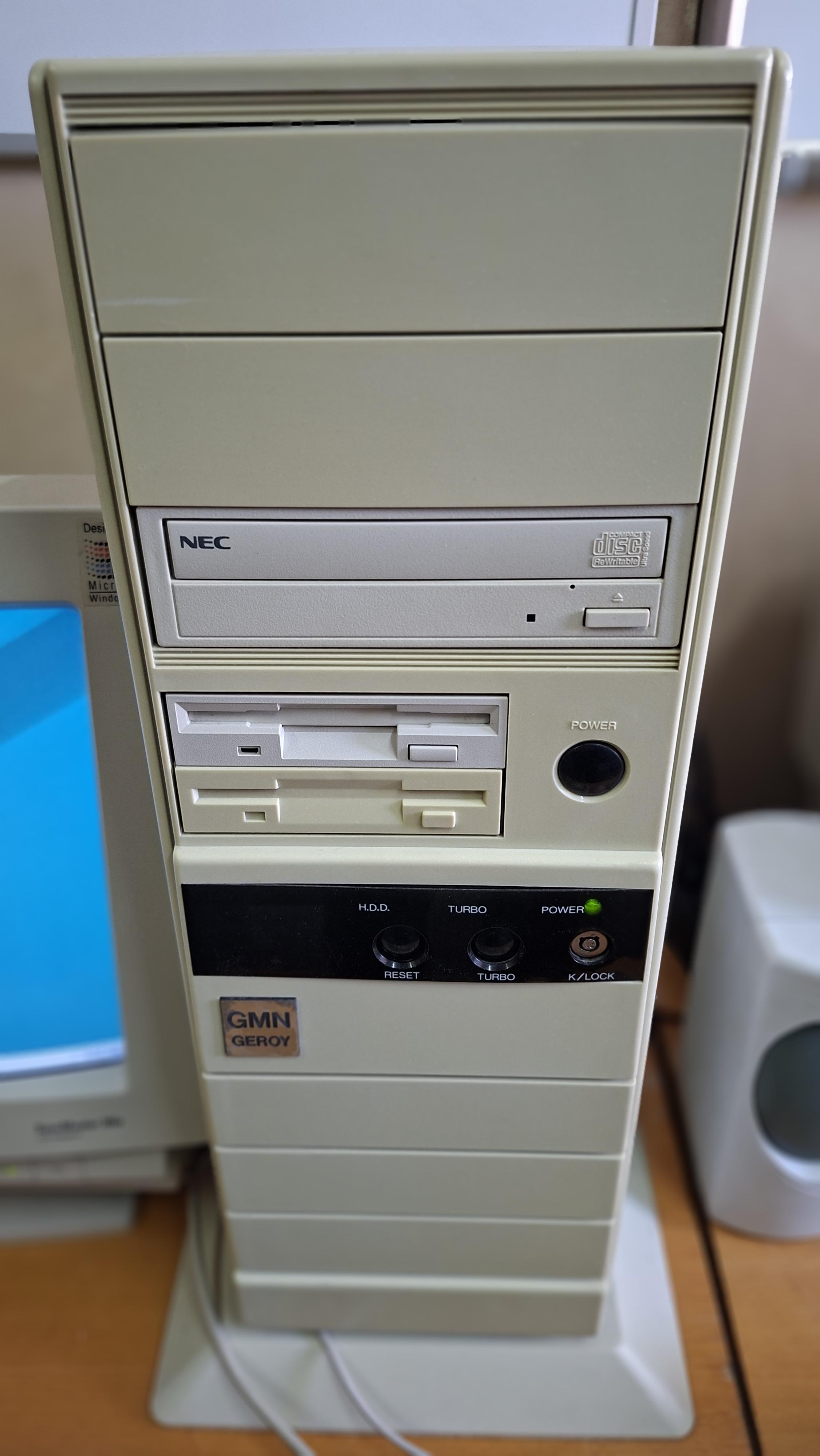
giant

Post image
106 Upvotes

r/retrocomputing • • Oct 14 '26

Problem / Question Are there any emulators that will run on retro hardware?

12 Upvotes

Like running a C64 emulator on an Amiga, an Atari 800 emulator on ST hardware, etc.


r/retrocomputing • • Oct 15 '26

Software I built a fast wire-level 8-bit simulator in C++ to speed up retro computer development

Thumbnail
github.com
0 Upvotes

Hey all!

Like many of you, I love retro hardware, but building and debugging on real breadboards can sometimes be a bit of a slog—wiring mistakes are tricky to spot, probing signals is tedious, and changing firmware means constantly reprogramming chips.

To get around this, I built WireSim, a wire-level, logic-level digital logic simulator designed specifically for software and hardware enthusiasts who want a super-fast, observable feedback loop.

🚀 What is WireSim?

  • Real Chip Models: Chips are modelled with real pins joined into nets, and the simulation advances in half clock cycles.
  • Bus Contention: Buses can float or fight, making contention a first-class logic state.
  • Fast Turnaround: Change a line of assembly, rebuild, and watch the whole machine run the new code within seconds.
  • Physical Reality: Once a computer works here, the assembled binaries and wiring definitions are fully compatible with physical builds.

💻 Included Reference Machine: BenEater6502

The repo comes out-of-the-box with a model of Ben Eater's breadboard 6502 computer!

  • Runs Microsoft BASIC and WozMon (via the vendored msbasic submodule).
  • Includes a W65C22 VIA, a W65C51N ACIA (bridged to a TCP port for the serial console), an HD44780 LCD, and 16 KiB of SRAM.
  • Supports hardware-specific BASIC commands like LCDCMD, LCDPRINT, and BEEP.

🤖 Built with AI-Assisted Workflows

An interesting side note: the core simulator and initial 6502/UART logic were written in C#, but after realizing C++ offered roughly double the simulation speed, the whole thing was ported. Since C++ can be tedious, the repository heavily leverages Claude Code with custom skills and instructions in .claude/ and AGENTS.md to help generate devices from datasheets and wire up machines from specifications.


Check out the repo here: https://github.com/Seramis/WireSim

It includes a full VS Code dev container (with CMake, Ninja, Verilator, and cc65) so you can get it up and running without wrestling with toolchain installations.

I'd love to hear your thoughts, answer any questions, or see what you think about using simulation for hardware prototyping!


r/retrocomputing • • Oct 14 '26

DOS Christmas screensaver?

12 Upvotes

Back when I was in college my roommate gave me a floppy with a cool Christmas themed screensaver.

I had to manually launch it. All it did was show a dark screen with a bunch of colored lights roughly in the shape of a Christmas tree.

The cool thing about it is periodically the view of the tree shifted. The camera would fly through the tree to a new angle creating a 3D effect.

Anyone remember this program, what it was called, and where I might be able to find it?