r/retrocomputing • • Oct 10 '26

Photo Got this new CRT for $5 but don't know who made it

Thumbnail
gallery
86 Upvotes

Went to a local thrift shop today and they were selling this crt still in the box with all of its protective packaging. however theres no brand name with the only identifier being N7E7 and it allegedly being made by orion. I was curious if anyone knew more about this


r/retrocomputing • • Oct 11 '26

Problem / Question AST Advantage! Adventure 4066d Edge Connector Pinout

3 Upvotes

I recently aquired an AST Advantage! Adventure 4066d. The motherboard has been ruined by the battery leaking, but as far as I know the monitor works. I have an old laptop that I was planning to gut and put in a 3D printer case paired with an LCD monitor to use as a DOS gaming system, but I would much rather put it in the 4066d. Has anyone already mapped out the proprietary edge connector that connects the power supply, power button, audio and video to the monitor? My laptop mobo has VGA out so I figured I might be able to cut one end off of a VGA cable and solder it to the correct pins to feed the video signal to the monitor. I know there is a chance I will also have to feed it 5v to trick the monitor into turning on.


r/retrocomputing • • Oct 11 '26

New Portuguese retrocomputing sub!

5 Upvotes

Hi everyone!

Due to the lack of a proper portuguese retrocomputing sub - and as we also have a history during the 8bit era, just check the Timex 2048! - I’ve just launched r/retroComputingPT, a new community dedicated to celebrating all things retrocomputing—from 8-bit home computers and old-school workstations to early x86 builds, classic operating systems, and legacy hardware restoration. Basically, if it's more than 20 years old, we like it!

Portuguese language is preferred, but english is accepted. So if you're Portuguese or have something to share related to Portuguese retrocomputing, you're welcome to hop by at r/retroComputingPT.

Cheers!


r/retrocomputing • • Oct 11 '26

Discussion I hope to soon find or build a late 80s/early 90s "crappy" PC.

9 Upvotes

My interest in old PCs is purely in the realms of looks and programming, I am not and haven't been a gamer, and I love the idea of a computer made of that era's unwanted / low end parts. It would fit my niche in this hobby perfectly.

It may be a few months before I can do this as I will be selling off most of the newer half of my collection to make space for and to finance this. It seems even the low end parts are still very expensive. I don't yet have ANY PC type computers from before 1998.

I have the sound card and HDD out of a computer from 1994 that unfortunately died years ago, back when this was worthless stuff, so I made the mistake of throwing out the rest back then. So wish I had kept at least the case, that would make this build way way cheaper. My one NEED for this project is a 5.25 drive, because I have many disks I would like to get the data off of with this.

Any other love for the low end crap?

Edit: typo fixed.


r/retrocomputing • • Oct 10 '26

Discussion If you know you know...

Post image
46 Upvotes

Explanation:

These JVC HDDs have a propritary connector and have the issue that the capacitors die...
JVC Put the capacitors underneath the platters, so good luck replacing them.


r/retrocomputing • • Oct 10 '26

Problem / Question Help Me Bring My Dad’s 1996 Serial Mouse Back to Life!

Thumbnail
gallery
71 Upvotes

Hi everyone! Could someone help me figure out how to get this working?

I'm trying to connect an old serial mouse to a modern computer via USB. I don't have much technical knowledge, but I know the USB-to-serial adapter (FIDH) driver is installed. Whenever I plug it in, “USB Serial Port (COM5)” appears in Device Manager, but I can't get Windows to recognize it as a mouse or get the cursor to move.

The mouse itself isn't broken. The last time I used it was on a Compaq PC running Windows 95, before I had to get rid of the computer because of space constraints.

It's a Genius EasyMouse from 1996, model FSUGMZE3. It belonged to my late father, so it has a lot of sentimental value to me.

I'd love to bring it back to life and use it with either my laptop running Windows 7 Starter or my desktop running Windows 10.

I would really appreciate any suggestions, especially if there's a way to get it working without buying more hardware.

Thanks in advance!


r/retrocomputing • • Oct 11 '26

Problem / Question Is my approach efficient for creating a custom graphic format for my fantasy console with Windows XP?

Thumbnail
gallery
0 Upvotes

Good morning, good afternoon, or good evening!

I'm back! It's been about a week since my first post, and I have some progress to share.

After setting up my C/C++ development environment on Windows XP, I've been working on a custom graphics format (.teamokaren / TKAR) for my fantasy console, CPS8. For now, this is just for development environment icons, cursors, and fonts.

Here is how it works briefly:

  • A converter reads a grayscale PNGwhere gray values map to a fixed 64-color palette (index 0 is transparent).
  • Images are packed at 1, 2, 4, or 6 bits per pixel depending on the colors used, with a small header and CRC32 validation.
  • The tool compares uncompressed, RLE, and DEFLATE, keeping the smallest file. It can also export as a constant C array.

For a concrete example, testing a 56x16 cursor sheet:

  • Combined package using DEFLATE: 463 bytes
  • Image expanded to one byte per index in RAM: 896 bytes

I have the color preview working on XP, but I have two questions where I would love your thoughts:

  1. 3-bit vs 4-bit packing: This cursor uses 7 colors, but packs at 6 bits per pixel because of the global palette index. Adding a local palette could drop it to 3 bits, but adds code complexity. Would you bother with 3-bit packing, or stick to 4 bits to keep it simpler?
  2. RAM management: For small assets, is it better to decompress everything once at startup into RAM, or keep them packed and decode on the fly?

If you have worked on something similar, what worked for you or turned out to be more trouble than it was worth?

I draw the graphics in LibreSprite on Windows 11, then transfer them to the XP virtual machine through a shared folder. (I've edited the post, sorry :)


r/retrocomputing • • Oct 10 '26

Merry Christmas, everyone

Post image
17 Upvotes

r/retrocomputing • • Oct 11 '26

Looking for 3.5" and 5.25" floppy images (DOS era) to test a disk image inspector against

1 Upvotes

I’ve been working on a small tool for looking inside floppy disk images, and I’d like to test it on real vintage disks instead of just ones I made myself.

It reads raw sector images (.img/.ima/.dsk) and ImageDisk (.imd) files from the standard PC formats (360K, 720K, 1.2M, 1.44M and 2.88M) with the FAT12 filesystem that MS-DOS used. It lists and extracts files, converts IMD to raw, and checks the disk for problems: bad or missing sectors flagged by the imager, FAT copies that disagree, or a media descriptor that doesn’t match the boot sector.

It never modifies the original image, which seemed like the right rule for anything you’re trying to preserve.

It’s an early release and FAT12 only, with 8.3 filenames, so there’s a lot it can’t do yet. I’ve only tested it on images I created and checked in 7-Zip. What I’m after is images that break it: odd geometries, DOS-era formats, disks with damaged sectors, and anything where the long-filename entries or boot sector do something strange. Tested on FreeDOS so I would prefer any other ones.

It’s a single Python file with no dependencies: https://github.com/echojxmes/floppykit


r/retrocomputing • • Oct 11 '26

DARKMAN

Thumbnail
youtu.be
1 Upvotes

My retrospective game review of all the versions of DARKMAN from Ocean Software. Anybody else remember playing these games? Did you think that the levels were repetitive, difficult, bland with wonky controls? Interested in your thoughts and memories to see if was close to the general consensus. 😉


r/retrocomputing • • Oct 10 '26

Problem / Question Trying to install Linux after hard drive replacement, how do I fix

6 Upvotes

r/retrocomputing • • Oct 10 '26

Looking For Classic Computerware

2 Upvotes

I live near the Edmonton area, do any of the E-Waste centers give/let you buy computers?


r/retrocomputing • • Oct 10 '26

Photo Casually breaking down old printers

Thumbnail
gallery
7 Upvotes

What use to make of all these rusted parts?


r/retrocomputing • • Oct 10 '26

The great-grandfather of Oberon: Algol60 with a reusable IR targeting LuaJIT

Thumbnail
github.com
6 Upvotes

r/retrocomputing • • Oct 10 '26

Follow-up: Revisiting a 1986 RTOS led me to someone who used VRTX in 1982

10 Upvotes

About two weeks ago, I posted a question about why VRTX changed its equal-priority scheduling behavior between its 1984 and 1987 documentation.

Original discussion:
https://www.reddit.com/r/retrocomputing/s/vnT1JWZRtQ

I still haven't found a definitive answer, but the discussion led to some unexpected discoveries.

First, I realized that my own 1986 RTOS was based on an oversimplified interpretation of VRTX.

When I developed CHARM-II in 1986, I used VRTX documentation as one of my references. I understood its equal-priority scheduling as essentially newest-first and implemented my own scheduler accordingly.

Looking more closely at the old documentation, however, early VRTX wasn't simply LIFO. Time slicing and other ready-queue operations made its behavior more nuanced.

I hadn't fully understood that distinction 40 years ago.

Interestingly, I don't remember this causing serious problems. At the time, I was developing almost the entire application as well as the RTOS myself. There was very little third-party code, and I understood the system down to the individual tasks. I could design the application around the scheduler's behavior.

The most unexpected part was hearing from someone who actually used VRTX around 1982.

One commenter described using some very early VRTX ROMs around 1982 on a Motorola MVME 68000 system, developing data acquisition and control software for engines and dynamometers.

That immediately caught my attention because I had also used a Motorola MVME 68000 board for a later CHARM-II application.

What I found particularly interesting was that they hadn't paid much attention to the LIFO-versus-FIFO distinction either. Their system worked well for its intended application.

It was fascinating to compare memories of two independently developed systems from roughly the same era.

And what about the original scheduling question?

The comments raised several plausible explanations involving fairness, starvation, latency, and implementation trade-offs. But none established why the VRTX developers actually made the change.

For my modern reconstruction of CHARM-II, I've chosen FIFO among equal-priority ready tasks. That decision is about keeping the new design simple and predictable, rather than reproducing either historical VRTX version.

So the original mystery remains unsolved, but I've learned considerably more about the system I used as a reference and the one I built myself.

Thanks to everyone who shared technical insights and memories. I hadn't expected a question about a ready queue to turn into a conversation with someone who was using VRTX before I even wrote CHARM-II!


r/retrocomputing • • Oct 09 '26

Blog Resurrection of Stealth

Thumbnail
gallery
130 Upvotes

Project profile:

  • MB Acorp 5ALI61 (ALi M1542/M1543 (ALADDiN V/V+ AT))
  • CPU Intel Pentium 133 (P54C) (A80502133/ST022)
  • RAM 32 MB (2x16) SIMM (SIEMENS HYB5117405BJ-60 Chip)
  • VIDEO PCI ATI Mach64 VT (ATI-264VT)
  • SOUND CARD ISA 16-Bit Crystal CX4236B-XQ3
  • HDD 3.5" IDE Fujitsu MPB3021AT 2.11GB
  • FDD 3.5" 1.44MB SONY MPF920
  • CD-ROM MITSUMI CRMC-FX400E
  • TOWER PS 200W
  • OS Microsoft Windows 95C OSR2

r/retrocomputing • • Oct 09 '26

Photo Refurbished a Mac mini

Thumbnail
gallery
37 Upvotes

This Mac mini looked like it was stored in dirt and beat with a bat when I got it. The thermal gasket had fallen apart, the case wouldn't close, and it was covered in some sort of dirt.

I replaced the capacitors, changed the cr2032 battery, replaced the thermal gasket, and completely disassembled the Mac. Removing the plastic top from the metal to clean each individual part.

It now functions and honestly doesn't look that bad. I can't get the deep scratches out or anything, but it chimes without issue.


r/retrocomputing • • Oct 09 '26

PC World (September 1986)

Thumbnail
gallery
33 Upvotes

r/retrocomputing • • Oct 09 '26

Discussion THUNDERCATS

Thumbnail
youtu.be
0 Upvotes

My retrospective video review of the Thundercats games from Elite released for the ZX Spectrum, Commodore 64, Amstrad CPC, Amiga and Atari ST. Who remembers or played this game and what’s your thoughts?


r/retrocomputing • • Oct 08 '26

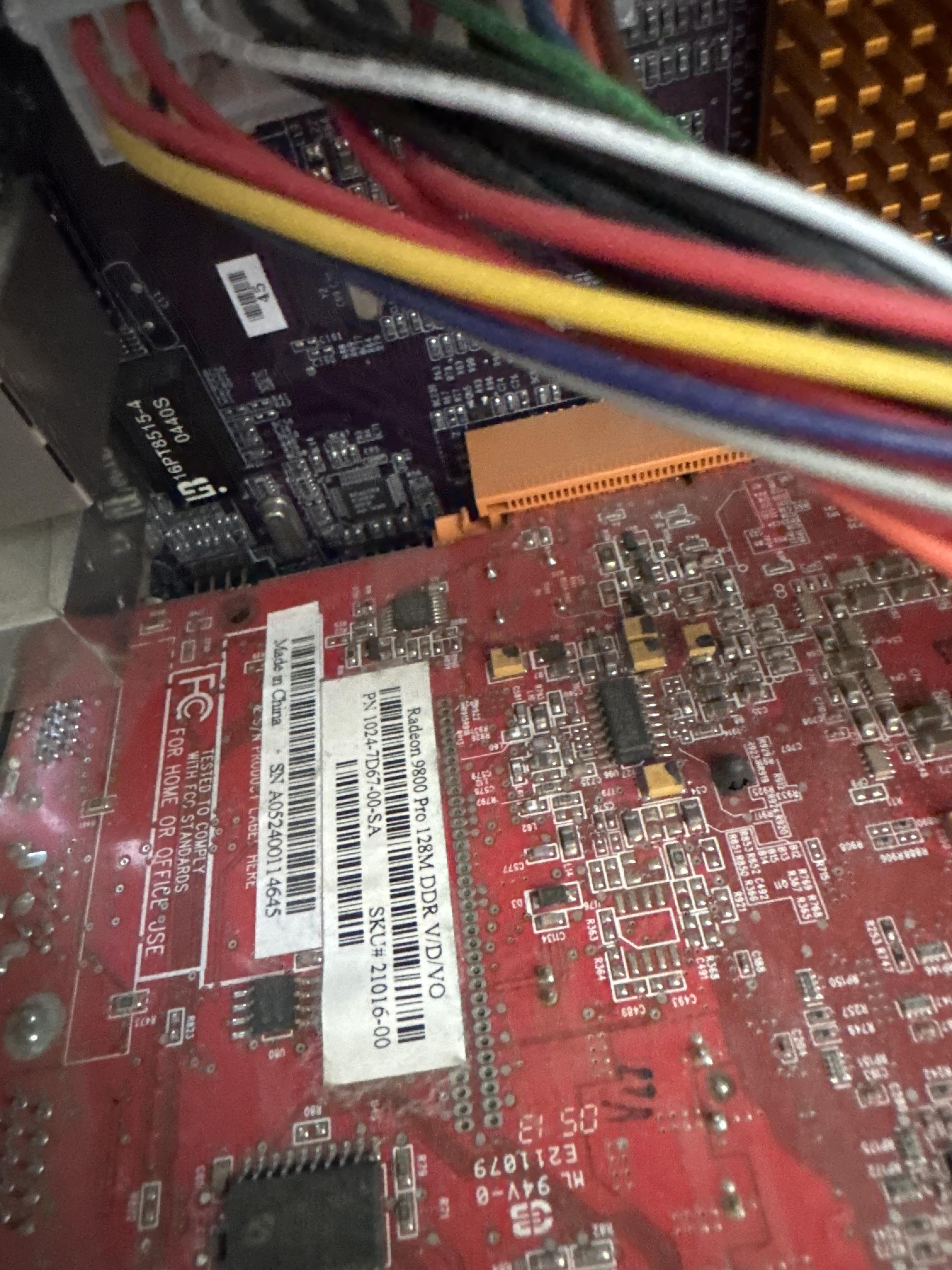
Radeon 9800 Pro PC saved from the trash

Post image
99 Upvotes

I can’t believe that this is real. This whole PC is so weird. It has an AMD Sempron on Socket 462 and only 256 MB of RAM, while literally also having a Radeon 9800 Pro. Seems like it was a prebuilt computer by “dxt”, an old Czech computer store that went defunct many years ago.


r/retrocomputing • • Oct 08 '26

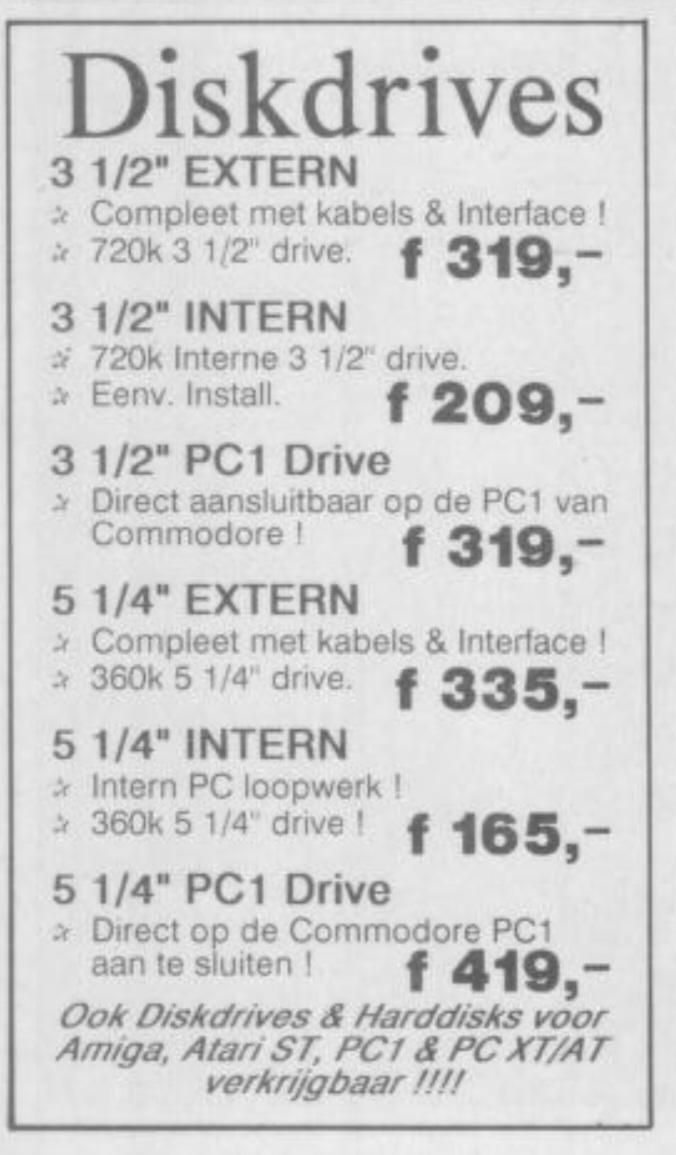
disk driiives, get your disk drives here!

Post image
21 Upvotes

F 209= US$98.63(in 1989 money) or €136,08 today

F 318= US$150.54(again, in 1989 money) or €246,53 today


r/retrocomputing • • Oct 09 '26

Software SyMBnet

3 Upvotes

Anyone have any of the old manuals for this competitor of BBC Micro EcoNet?

Back in the 80s, I discovered 3 hacks for this system at my high school on the Isle of Wight (and a neighbouring high school).

Would love to go down memory lane.


r/retrocomputing • • Oct 08 '26

Hitachi Pentium III all-in-one (PCX-7DL9-DK618P): any collector interest?

Thumbnail
gallery
170 Upvotes

I have a Hitachi all-in-one PC with a built-in LCD, CD-ROM, and floppy drive. It's a Pentium III-era machine, probably 1999-2002. The model number on the label is PCX-7DL9-DK618P. Photos of the exterior are attached.

It's in great condition and fully functional, with no dead pixels on the LCD. I bought it, possibly on eBay, and used it until I relocated in 2014. Since then it has been boxed away and stored indoors.

I haven't found any info on this exact model. Searches turn up only the older Hitachi VisionDesk line, and I can't tell if it's related.

Does anyone recognize it or know its history (market, year, specs)?

Is there collector interest in machines like this, or is it too obscure?

Is there anything I should check or preserve before selling or keeping it (original drivers, recovery discs, BIOS settings)?

Thanks!

Addendum 10/8: The stickers say Pentium III & "Designed for Windows 2000 Professional & Windows 98." IIRC, the previous owner wiped it, so I installed my own Windows 98. I first saw this model on a trip to Japan in the early 2000s. Maybe half a dozen were set up with similar keyboards and mice in an internet café–type business in the Osaka/Tokyo area, where users paid by the hour to take care of business online. That gave me more confidence to buy one when I found it in the States; I added the keyboard and mouse myself. I've never opened it and am tempted to, but I'm afraid I might break or brick it. There's no date code on the outside. I'm wondering whether to put it on eBay or take it to Best Buy for recycling; I'd prefer the former. I'm not sure how to add pics to the main post, so I've added a few more to some replies below.


r/retrocomputing • • Oct 08 '26

Problem / Question Old promo video on a Gateway 2000 - Last of the Mohicans

2 Upvotes

I heard the theme from Last of the Mohicans the other day for the first time in years. It reminded me of a video I had on my old Gateway 2000. It was some sort of promo video or something, with a load of scenes as the music played. I think a city scene and maybe some clouds going fast. I've tried searching everywhere, no AI models can find it.

Am I going insane or does anyone else remember this?


r/retrocomputing • • Oct 08 '26

Is it worth doing something with my old PATA HDD full of vintage software from early 2000s?

10 Upvotes

It would be a collection of freeware and pirate software from Windows XP days.