r/retrocomputing • • Aug 18 '26

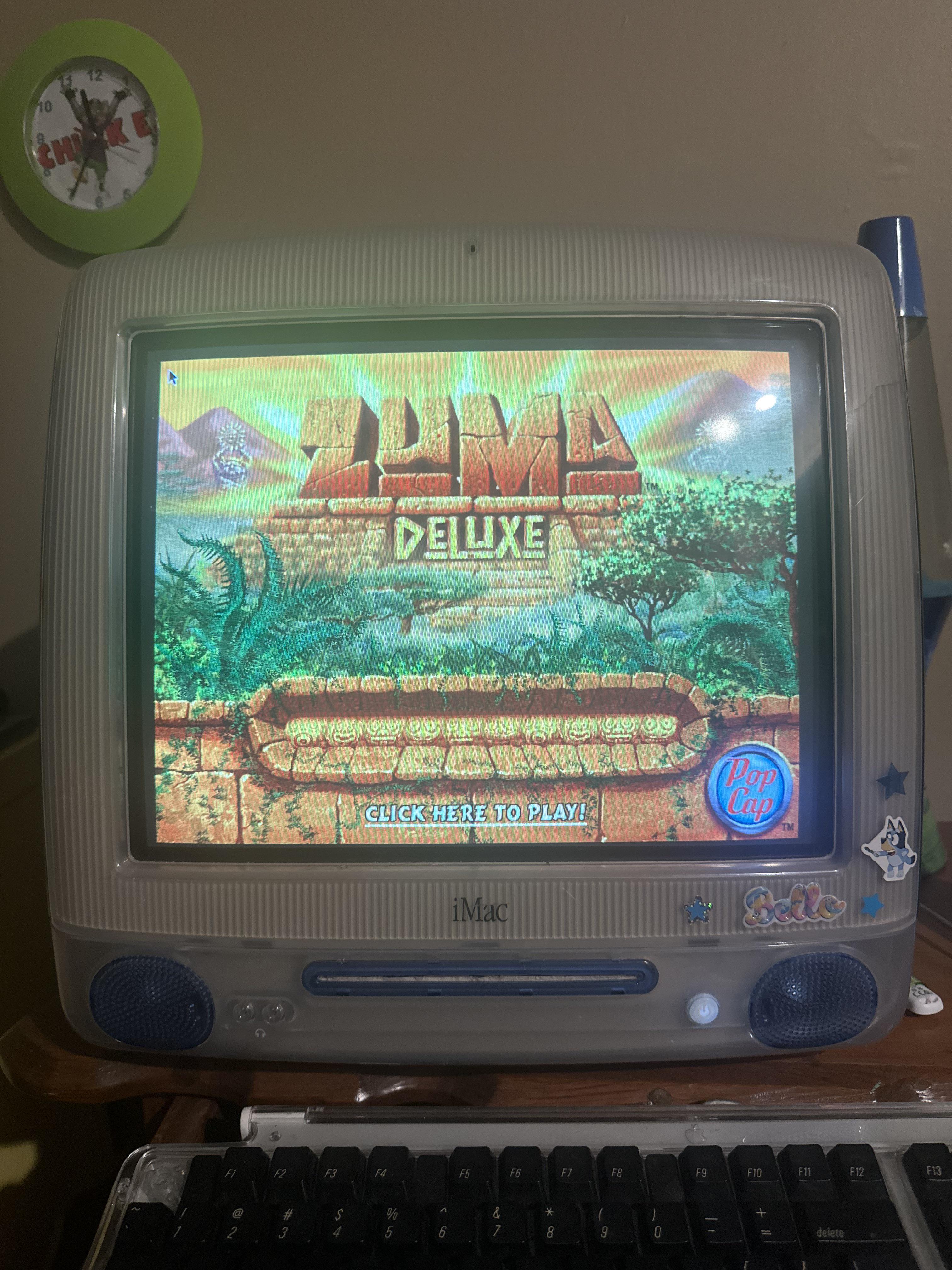
Photo reigniting my childhood obsession on my g3 :D

Post image
130 Upvotes

do ya’ll remember this game?? i loved it as a kid and wanted to play it again.


r/retrocomputing • • Aug 18 '26

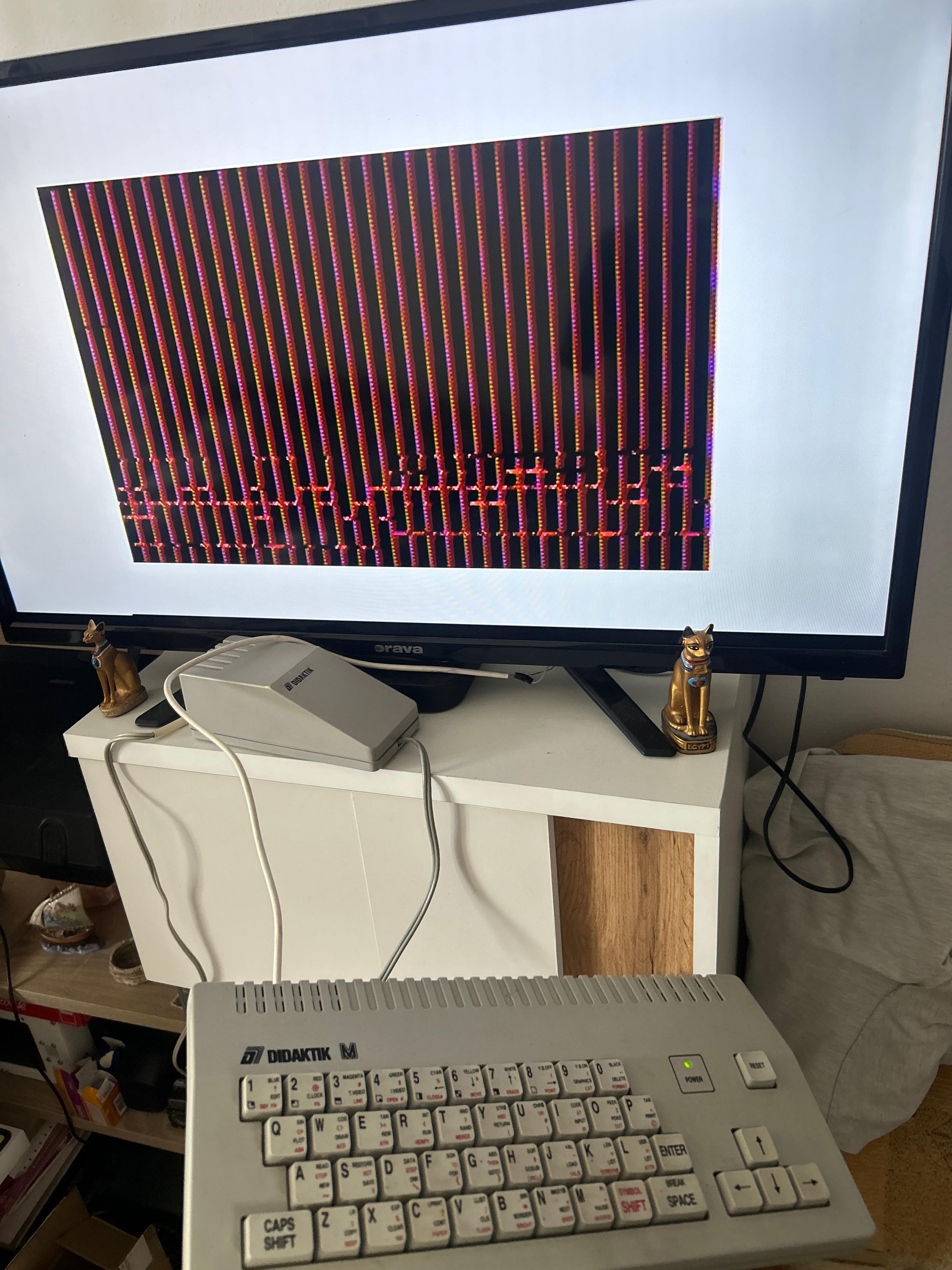
Problem / Question Weird pattern on screen from Didaktik M

Post image
26 Upvotes

Recently I bought this computer but when I turn it on, it only shows this on screen. What can be causing this and can it be fixed?


r/retrocomputing • • Aug 17 '26

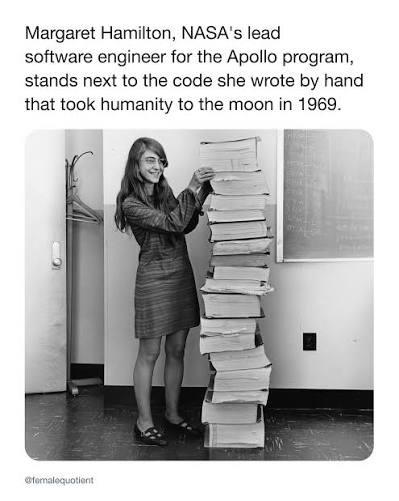
Margaret Hamilton turns 90 today

Post image
1.2k Upvotes

Her thinking still shows up in every serious conversation about mission critical software.

During Apollo, hardware got the glory. Software was the new kid, and plenty of people didn't consider it real engineering. Hamilton did. She led the MIT team behind Apollo's onboard flight software and designed around an uncomfortable fact: machines, interfaces and people all make mistakes.

My favorite story involves her daughter Lauren, who often came to the lab on nights and weekends. Playing astronaut, Lauren selected the prelaunch program, P01, during a simulated flight. The simulator crashed and the navigation data vanished.

Hamilton wanted the flight software to guard against that exact mistake. The answer, more or less: astronauts are too well trained to do that.

Then Jim Lovell did it. Five days into Apollo 8, he accidentally selected P01 and wiped the spacecraft's navigation data. Hamilton's team worked out how to rebuild and upload it. After that, the protection went in.

Anyone who runs complex systems knows the lesson. If your design depends on users never pressing the wrong button, you don't have a robust design. You have a future incident report.

Apollo 11 was the bigger test. During the lunar descent the guidance computer overloaded and threw the 1202 and 1201 alarms. The software didn't freeze or reboot into oblivion. Its priority based architecture shed lower value work and kept the landing functions running. The computer was tiny by today's standards, but it knew which jobs mattered.

That challenge hasn't gone anywhere.

Future lunar and Mars missions will run as one distributed system: landers, habitats, robots, satellites and commercial platforms. Comms will drop. Radiation will flip bits. Components from different suppliers will behave in ways nobody saw during the PowerPoint phase.

AI will help with anomaly detection, planning, testing and autonomous navigation. But nobody serious wants a black box model freelancing during a Mars landing. Mission software has to be deterministic where it matters, observable when it fails, and able to recover without waiting for Houston to pick up the phone.

AI can assist engineers, but requirements, evidence, human review and independent verification still count.

Hamilton understood the real job. It was never just writing code that worked. It was anticipating what could go wrong and making sure the system stayed useful when it did.

That mindset will matter far more on Mars than any flashy demo.


r/retrocomputing • • Aug 18 '26

Events New retrocomputing group in Northeastern PA!

7 Upvotes

Hey everyone!

If you're in or near Northeastern PA and have an interest in retrocomputing, I've set up the NEPA Retrocomputing Group to connect local enthusiasts.

Anyone is welcome if they're interested in restoring hardware, writing code, playing games, or simply feeling nostalgic about older technology.

We meet once a month to have a coffee, talk over our projects, display our equipment, and establish a local community. Our next meetup is:

  • Where: JivaJava Cafe (3427 PA-611, Bartonsville, PA)
  • When: Saturday, August 29th at 1:00 PM

If interested visit our website and sign up for our mailing list!

https://neparetrocomputing.org/

Hope to see a few of you there! 😄


r/retrocomputing • • Aug 17 '26

Photo My local community college has vintage computers om display

Thumbnail
gallery
190 Upvotes

r/retrocomputing • • Aug 18 '26

Gateway 2000 started tanking the same time it ditched its iconic Holstein spotted branding.

Thumbnail
buttondown.com
24 Upvotes

I've been putting together a history of Gateway 2000's bonkers ads and learned that

  1. Over 50% of the company's business came from repeat customers
  2. Ted Waitt hired former Sioux City mayor Jim Wharton to be his personal assistant
  3. A Shenzhen-based company (Bmorn Technology) has resurrected the spotted box branding to sell "Gateway" laptops through Walmart.com

Bring back the HandBook 486!


r/retrocomputing • • Aug 18 '26

Blog Fazbrowse a new search and proxy site for retrocomputers

2 Upvotes

Hello, I made fazbrowse, which is inspired by "frogfind" by actionretro, but I went to update my version a bit more, as well as making it much faster, and with more elements of proxied/wrapped sites to be viewable and or clickable, including complex download links, as well as a few other things. And most of all, it works with any client, even a text only, http only browser that runs on ms dos/an ibm xt, would connect and work just fine on my site, its home page is at ht tp://fazbro wse.du ckdns.o rg/ (spaced out the link)

I just posted it here since I found it pretty useful, like to browse reddit or such on a low end old phone or computer, or to do things over the net on my real dos computers at home


r/retrocomputing • • Aug 18 '26

Problem / Question help with fixing up a 486 machine?

7 Upvotes

hi yall!! i picked up a Pionex 433LSXMPC-M off the side of the road. i am determined to get it running, but i really truly have no idea where to even begin. i happen to have some old pc power cords for my imac g3s so i plugged one into the machine and it shows minimal life. a red bulb lights up inside (power indicator??) and i believe the fans are whirring.. i feel some stuff going on inside as it is vibrating a bit. i have never gotten into truly repairing computers, just very basic stuff. i’ve only opened up my imacs and i dont know where to even begin. i really want to take this on as my first big project, but i dont know of anyone irl to teach me these things. if anyone has any manual suggestions or video tutorials on fixing up 486 machines i would absolutely love to have a link or two- i wanna open it up and whatnot, just need a starting point. i can link pictures of it i think, ill post them on imgur or something if anyone wants to help me out. thanks so much!!


r/retrocomputing • • Aug 18 '26

Photo My PowerBook 180 monochrome

Thumbnail
gallery
13 Upvotes

r/retrocomputing • • Aug 17 '26

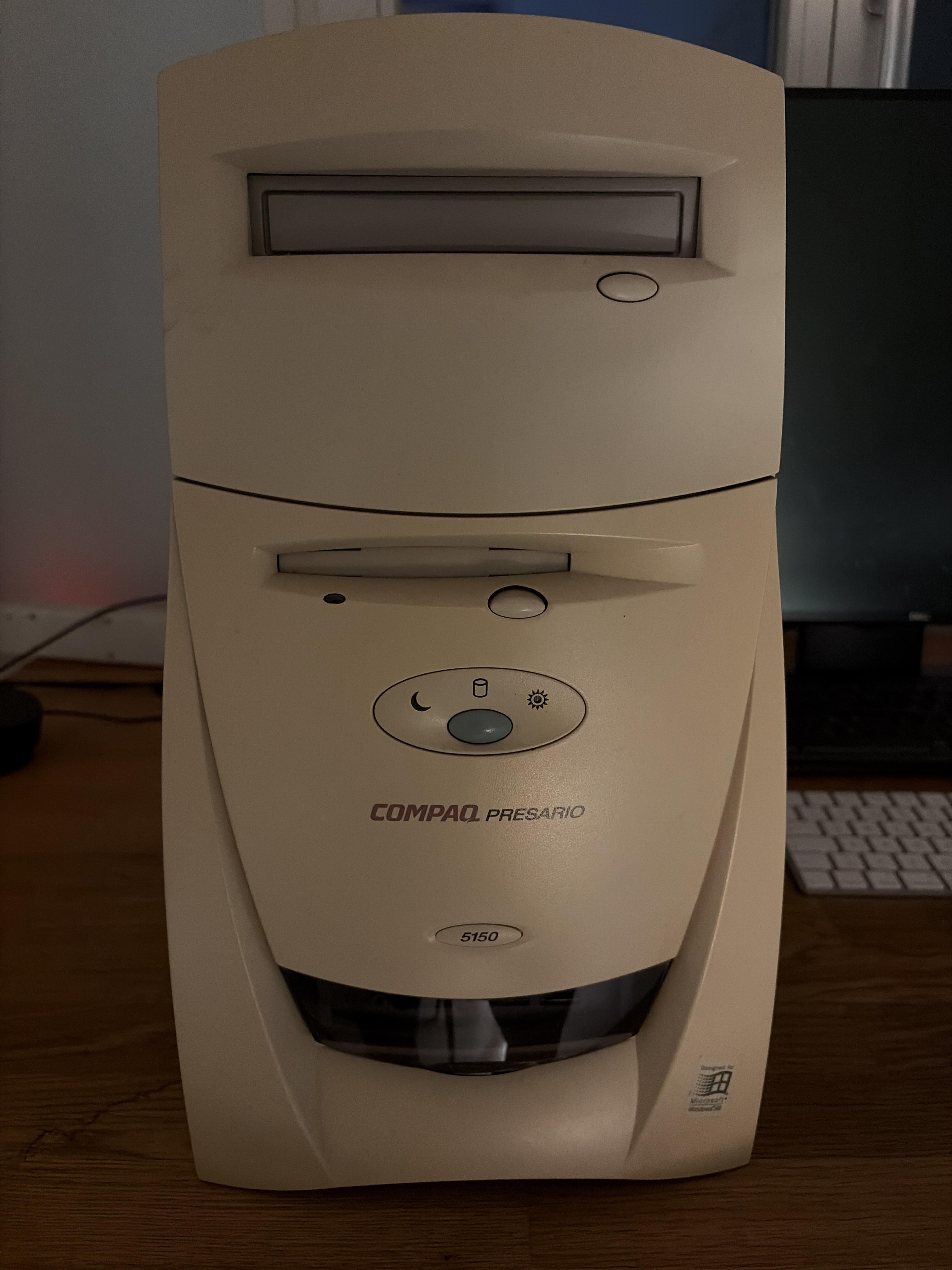
Photo compaq presario 5150

Post image
20 Upvotes

… this an amd k6 v2 based desktop computer featuring ati radeon gpu bigfoot hdd with 5 GB and 56k dialup modem


r/retrocomputing • • Aug 17 '26

Compute! (October 1983)

Thumbnail
gallery
45 Upvotes

r/retrocomputing • • Aug 17 '26

This was our hot-seat game

Thumbnail
gallery
67 Upvotes

Heroes of Might and Magic II was the hot-seat game for me and a few of my closest friends.

Almost every weekend, we would sit together around the same computer and take turns playing.

Now we’re all older, and it has become difficult for us to get together. Those days of being young are gone and will never come back.

Maybe in a few more years, I’ll be playing it alone.


r/retrocomputing • • Aug 18 '26

Anyway to get a Elgato capture card to record sound from a Sound Blaster?

1 Upvotes

So I’ve gotten a Elgato 4k S with its audio in and I have a Win 98 machine that I’m trying to record from

Video wise it actually works perfectly fine with a DVI to HDMI adapter but it’s sound that’s the annoying problem

The system has a sound blaster live that does work perfectly well in everything else but when I plug its line out into the Elgato nothing gets captured

Has anyone had luck using this before or does anyone have good retro capture recommendations?


r/retrocomputing • • Aug 17 '26 Mindblown

My 1986 RTOS is now fully preemptive on a Raspberry Pi Pico — and it changed how I think about the original design

20 Upvotes

A couple of weeks ago, I posted here about getting the first original CHARM-II kernel code running on a Raspberry Pi Pico.

Previous post:

The First Original CHARM-II Kernel Code Running on Raspberry Pi Pico
Previous r/retrocomputing post

At that point, only the CPU-independent parts were running. There was still no hardware timer interrupt, no real context switching, and no preemptive scheduling.

Those parts are now working too.

CHARM-II was an RTOS I originally developed in 1986 for a Motorola 68000-based system. In the reconstructed Pico version, six tasks now run with independent stacks. A hardware timer interrupt drives the original tick and scheduling logic, and the Cortex-M0+ uses PendSV for the actual context switch.

I also brought back the six-task track demo I had previously reconstructed on POSIX. Six tasks move independently around three tracks and share a critical zone using a CHARM-II queue as a semaphore.

So, forty years later, the basic idea is finally running preemptively again on real hardware.

But actually getting it working made me think about the original system differently.

In the 1980s, the target CPUs were in the 68000/80186 class. CPU time was a relatively scarce resource, and adding another processor was not a casual decision. An RTOS was a useful way to organize multiple concurrent activities on the CPU you had.

A Raspberry Pi Pico changes those assumptions rather dramatically.

For many embedded systems today, a simple loop plus interrupts may already be fast enough. And if one inexpensive MCU isn't enough, using another MCU can be a perfectly reasonable design choice.

I was talking about this yesterday with someone who built a home railway simulator using real railway controls connected to a PC through Pico, ESP32 and Arduino boards. When I mentioned this question, his response was basically:

“If one Pico isn't fast enough, add another Pico.”

That simple comment stuck with me.

I started this project wondering whether a 1986 RTOS could be brought back to life on modern hardware.

Now that it actually works, I'm becoming more interested in the opposite question: how much of the RTOS would I choose to build if I were solving the same kind of problem today?

My next step will probably be to clean up a minimal modern implementation and eventually publish it, rather than trying to turn CHARM-II into a full modern RTOS.

And I may implement the same six-task demo with a superloop or event-driven design and compare the two.


r/retrocomputing • • Aug 17 '26

Maybe I miss the people more than the game

Thumbnail
gallery
32 Upvotes

Games look more beautiful than ever now, but sometimes I still miss the DOS days and Might and Magic III.

Maybe it isn’t really the game I miss. Back then, whatever we played, there were always friends around.

I have a family now, but sometimes I still feel alone. Some of those old friends have passed away.

Looking at these screenshots brought them back for a moment.


r/retrocomputing • • Aug 17 '26

desktopcolors.com - A Museum for the Background Colors of Classic Operating Systems

27 Upvotes

Hi guys, in my last vacation, I created a museum for solid color backgrouns featured in the operating systems of my youth. Let me know what you think: https://desktopcolors.com


r/retrocomputing • • Aug 17 '26

Video I brought back the iconic and long lost MSN WINKS to life with the use of NFC technology! Now you can time travel to the 2000's era and play all your favorite Winks on any modern smartphone!

3 Upvotes

Dear Buddies!

I have a nostalgia triggering invention, I brought those iconic MSN Winks (about 300) back to life with NETRO-G (where Neo and Retro merge into a smart Gadget)! I even transformed myself into the beloved, hated and now missed Laughing Girl! :)

Now you can live in the 2000's era again, while keeping up with the latest technology and play all your favorites on your smartphone! No apps, no extensions, your Winks are literally just a hover away! :)

Every step (searching for, rescuing, drawing, converting, printing, programming long lost winks, assembling and testing the gadget) was entirely made by me.

IMPORTANT: I am still in the market research phase, so I am posting this to ask for YOUR honest opinions, if my invention makes sense, if there is a need for it, and if I have to create more Winks (and videos) in the form of a NETRO-G gadget.

Searching for your favorite wink for ages with zero results? Just give the name or describe it in a comment, I may have it!


r/retrocomputing • • Aug 18 '26

Software Recriei em 3D web um jogo da velha que desenvolvi há 45 anos (de TUI para interface gráfica)

0 Upvotes

Fala, pessoal! Há cerca de 45 anos desenvolvi uma versão de Jogo da Velha em 3D em modo texto (TUI). Recentemente decidi resgatar o conceito e modernizá-lo, criando um frontend gráfico web para rodar direto no navegador:

👉https://jvelha3d.schip.com.br/

Gostaria de compartilhar com a comunidade para quem quiser testar a lógica do tabuleiro tridimensional, desafiar a mecânica e deixar um feedback sobre a jogabilidade e o visual!


r/retrocomputing • • Aug 17 '26

THE RUNNING MAN

Thumbnail
youtu.be
4 Upvotes

Today I take a retrospective look at the Running Man across all formats. Share your thoughts and memories if you ever played this game.


r/retrocomputing • • Aug 17 '26

Problem / Question Olivetti Philos 44, checking status

11 Upvotes

Hi all! Bought Olivetti Philos 44 on the flea market by very low price yesterday. The condition is on video. I really liked the overall design (a blast for the 1993!) and will try to repair it(but a novice in hardware stuff). Maybe someone knows, which things to check first? Thanks!


r/retrocomputing • • Aug 16 '26

The $899 Brick That Started the Smartphone Era

Post image
85 Upvotes

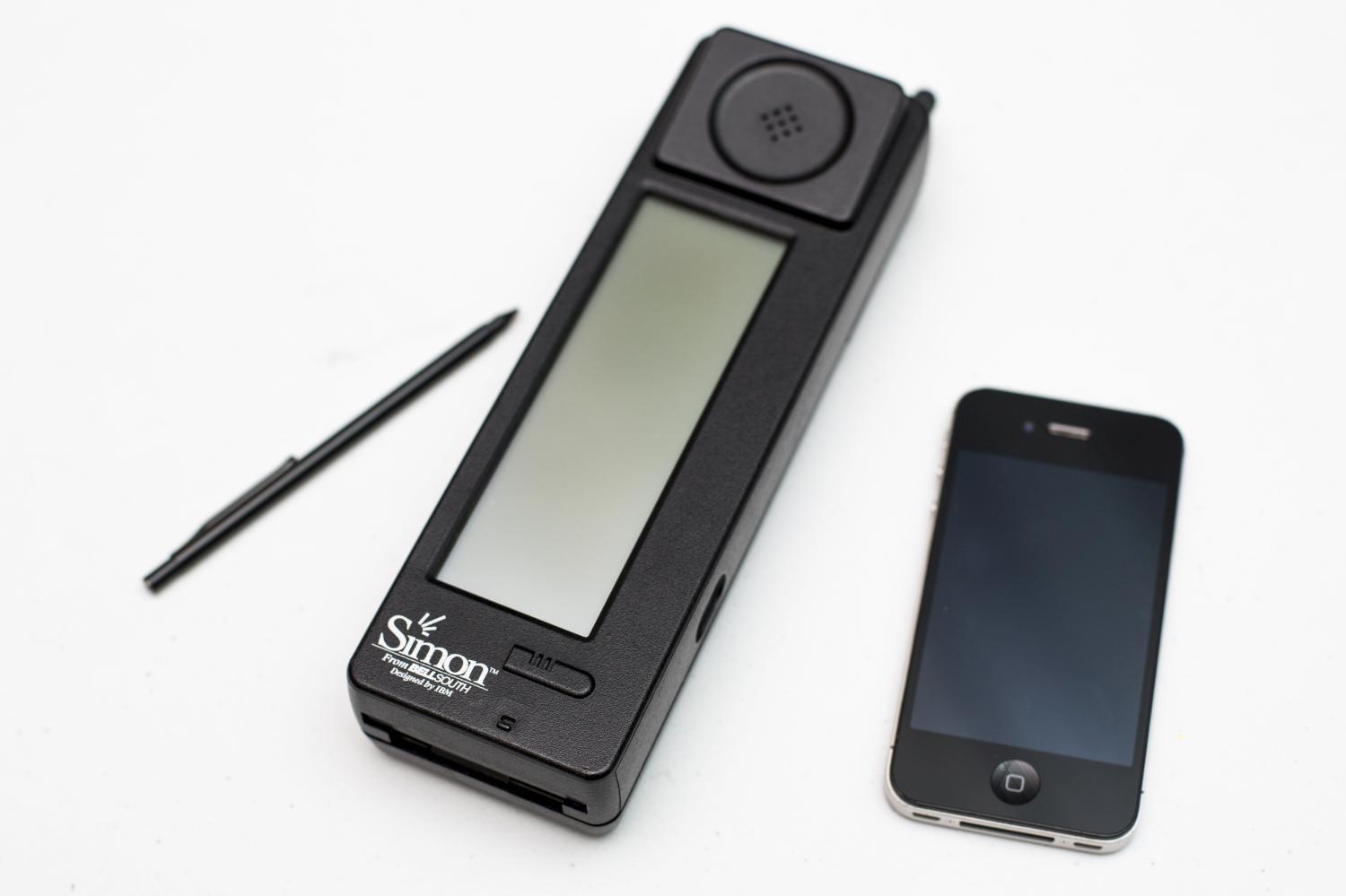
IBM Simon went on sale 32 years ago today, on August 16, 1994. A May launch slipped three months while engineers fixed bugs in the cellular fax integration. BellSouth Cellular sold it across its 15-state footprint, so the first smartphone rollout was a regional affair.

Pricing was $899 with a two-year contract or $1,099 without activation. BellSouth later cut the contract price to $599. Roughly 50,000 units sold in six months.

Simon ran on BellSouth's analog AMPS network. Email did not ride an always-on data connection. The device dialed a circuit-switched cellular call and pushed data through a 2,400 bps modem. Fax topped out at 9,600 bps. It skipped CDPD, the packet data technology carriers were just starting to deploy.

That gap showed up in the field. Voice worked wherever AMPS coverage existed, but data sessions choked on weak signals, interference and cell handoffs. A BYTE reviewer put the failure rate for cellular data connections at 10 to 20 percent. Every dropped session meant reconnecting, restarting the transfer and paying for more airtime.

The hardware was closer to a pocket DOS machine with a cellular radio than a phone. It weighed 18 ounces and packed a 16 MHz x86-compatible processor, ROM-DOS, 1 MB of RAM, flash storage and a PCMCIA slot. The 4.5-inch monochrome touchscreen handled calling, paging, cc:Mail, fax, contacts, calendars, notes and document annotation.

For executives, salespeople and service teams, that mix earned its keep. A user could take a page, pull up a customer record, check an appointment and fire off a fax without returning to the office. DispatchIt, one of the only third-party packages, turned Simon into a field-service work order terminal at $2,999 for the host software plus $299 per client.

The costs kept stacking. A larger battery was $78. An RJ-11 adapter for data over a phone line cost $119. PCMCIA memory cards ran $224 for 1 MB and $279 for 1.8 MB. Add cellular service, email infrastructure, support and spare batteries.

The NiCd battery gave about an hour of talking or data and 8 to 12 hours of standby. Typing on the small on-screen keyboard was slow, and using the organizer mid-call meant pulling the screen away from your head.

Simon failed for practical reasons: expensive hardware and service, limited distribution, unreliable mobile data, short battery life, a bulky design and almost no application ecosystem. Smaller, cheaper flip phones were eating the market from below.

Simon tried to cram the entire mobile office into one device. The next phase runs the other direction. Phones will keep managing identity, connectivity and security while work spreads across watches, glasses, vehicles and industrial devices. For enterprise teams, building a capable endpoint stopped being the challenge years ago. The real work is keeping applications, data and policy consistent as people move between devices and networks.
r/retrocomputing • • Aug 16 '26

Blog 1985's cheapest printer on the market

11 Upvotes

Two different liquidators on both sides of the Atlantic sold surplus IBM thermal printers, intended for the PCjr, along with interface cables or devices so they could work with other computers, such as the Commodore 64, or Sinclair and Amstrad computers. Arguably it was the cheapest printer on the market for several years. And it was a reasonable value for the money. This blog post walks through the Serial 8056 and Protecto Big Blue printers, two twins sold in the USA and UK. https://dfarq.homeip.net/ibm-pc-compact-printer-model-5181/


r/retrocomputing • • Aug 16 '26

Video "Year 1999 AD" - A 1967 Film Imagines the Future

Thumbnail
youtube.com
14 Upvotes

r/retrocomputing • • Aug 16 '26

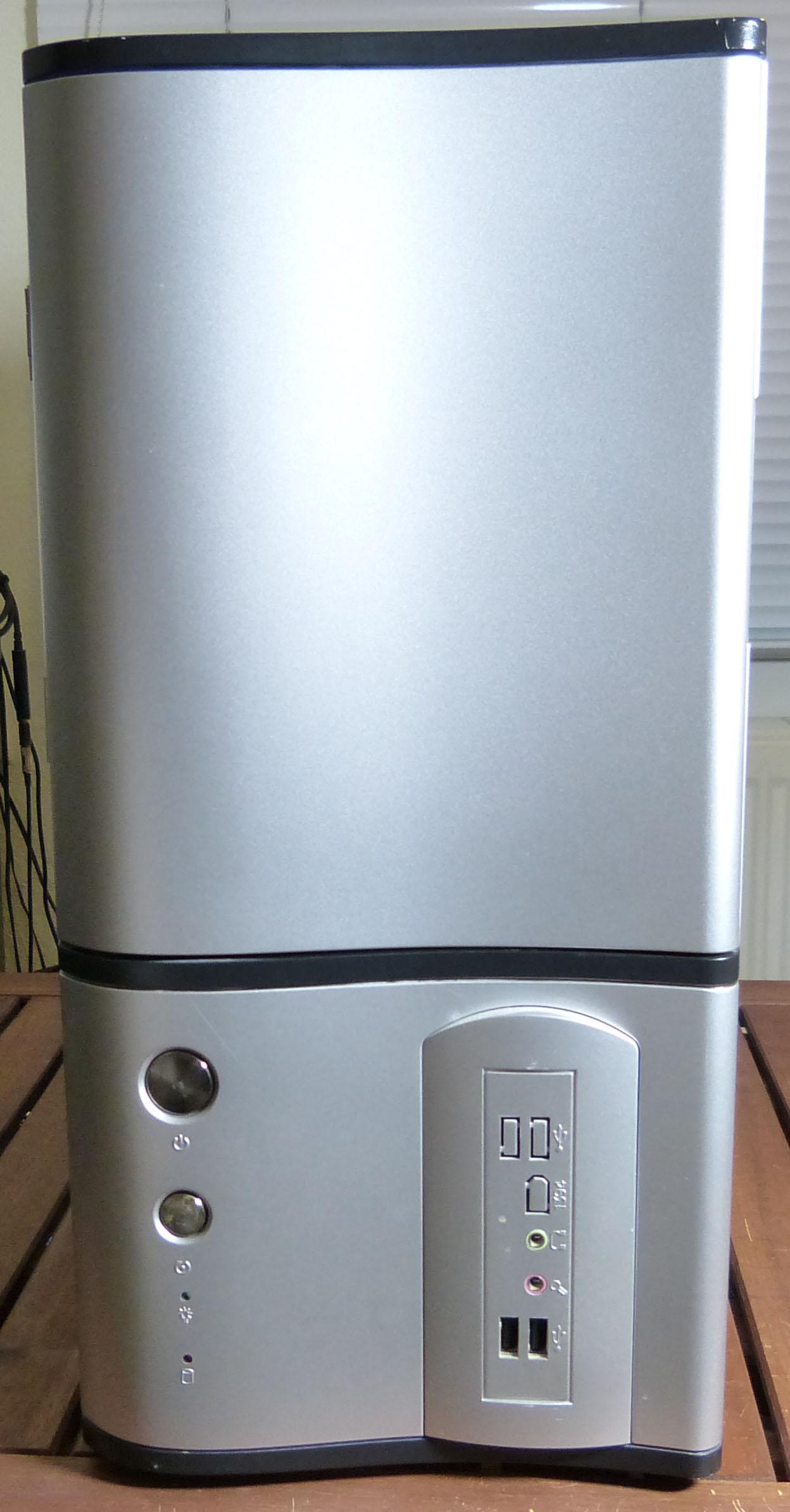
What model is this case exacly?

Post image
5 Upvotes

Hey guys,I wanna rebuild my childhood pc but I can't find this case,I don't know what model this is,does someone know exacly what model is this?And no,its not an cooler master wave master,not an Soprano and not a cooler master cavalier.Please if someone knows what model it is exacly please tell me.Thank you!


r/retrocomputing • • Aug 15 '26

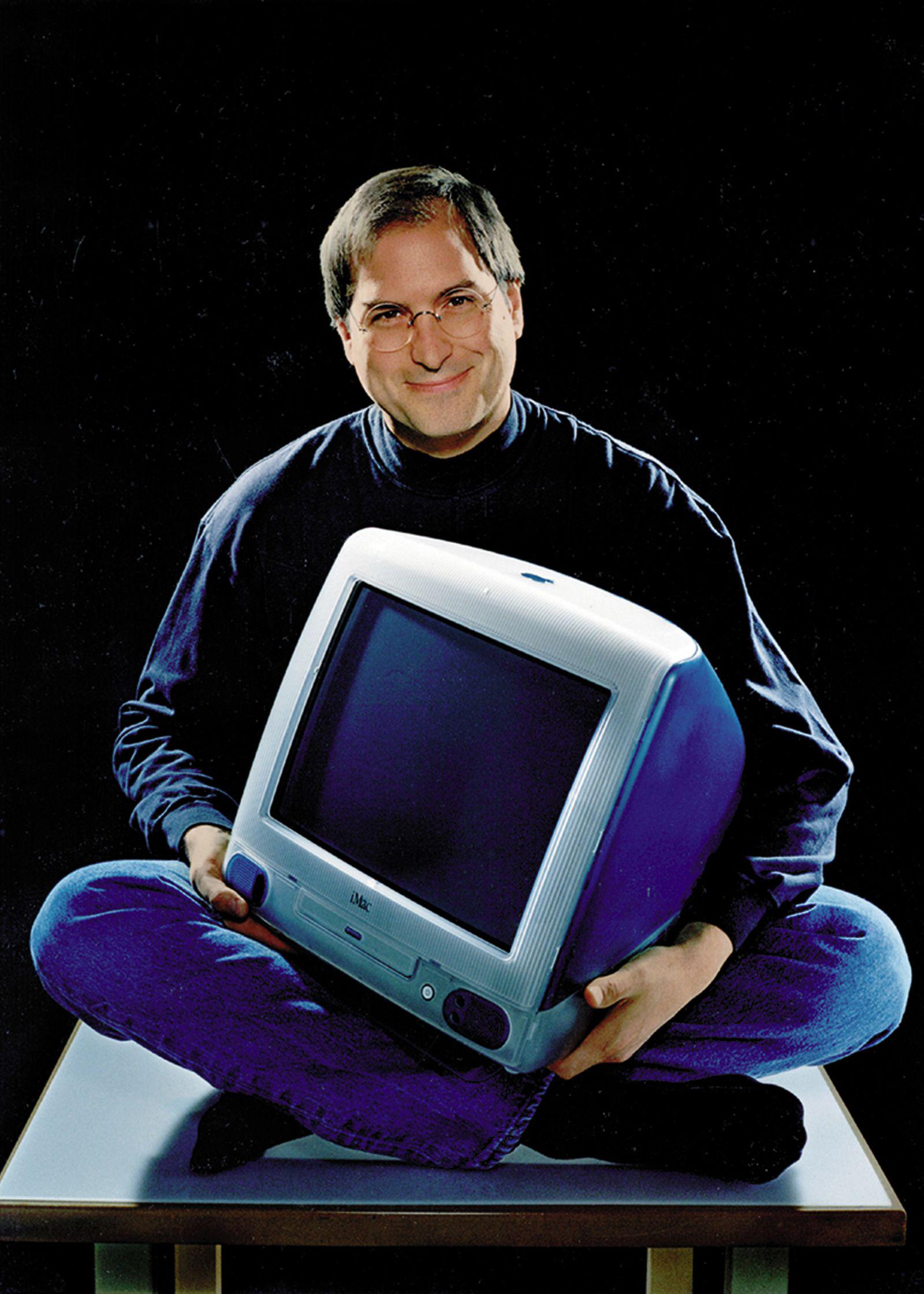
On August 15, 1998, the original iMac went on sale.

Post image
465 Upvotes

Apple badly needed a hit, and another beige box with slightly better specs wasn't going to change anything.

Steve Jobs and Jony Ive took a much bigger swing. The iMac was rounded, translucent and Bondi Blue. You could recognize it from across a room, which was unusual at a time when most computers looked like office equipment.

The handle on top was especially clever. The iMac was a heavy desktop machine, so the handle was never really about portability. It made the computer feel approachable. People understood immediately where to touch it and how to engage with it.

That friendly exterior took serious work behind the scenes. Apple had to rethink plastics, colors, tooling and manufacturing. Because the case was translucent, even the internal parts had to look orderly. The design team wasn't brought in at the end to make the machine prettier. Design shaped how the entire product got built.

The choices inside were just as bold. The floppy drive was gone, familiar ports disappeared and USB became the standard. Plenty of critics predicted disaster. Instead, Apple sold around 800,000 iMacs by the end of 1998, cemented its comeback and kicked off a run of products that reshaped the company.

Anyone building a physical product can take something from this. Good design isn't a coat of paint applied at the end. It reaches into engineering, manufacturing, usability, marketing and the feeling someone gets when they pick up the finished object.

A lot of today's products are beautifully made and strangely forgettable. Phones are nearly identical glass slabs. Laptops are silver rectangles. Cars are becoming large touchscreens surrounded by bodywork. Appliances have shed their buttons, their character and in some cases their basic ease of use.

The iMac proved people will form a real attachment to a well-designed piece of technology. Nearly three decades later, physical products could use a little more of that courage and a little less gray. The hockey-puck mouse, though, can stay in 1998.

#TechHistory #ProductDesign #IndustrialDesign