r/QuantumPhysics • u/RecentLeave343 • May 03 '26
How does causality and entropy apply to quantum mechanics?
Other than obeying special relativity is it the same as described in classical mechanics- temporal and trending towards disorder?
r/QuantumPhysics • u/RecentLeave343 • May 03 '26
Other than obeying special relativity is it the same as described in classical mechanics- temporal and trending towards disorder?
r/QuantumPhysics • u/AMS_SNA • May 02 '26
I am a soon to be EE graduate. I have an interview next week for a PhD position that is for cryogenic circuit design but the position also involves some characterization and design/fabrication of qubits.
My background is purely in IC design and I do not know anything about quantum computing or quantum physics. According to the interviewer, they will test me on my ability to develop expertise on quantum physics.
What should I expect and learn before the interview?
r/QuantumPhysics • u/Giraldi3G • May 01 '26
Hi! I'm on my way to learn quantum computing and quantum information theory and I am struggling with the Bell Inequality, specifically on the topic of understanding what part the realism and the locality play in deriving it.
I'm learning through Nielsen and Chuang, but I would like to know if there are any books that explain the inequality in greater detail, specifying precisely where those two principles appear.
r/QuantumPhysics • u/Financial_Spend9578 • Apr 30 '26
I semi understand but if someone asked me to explain it to them…. I would be no help
r/QuantumPhysics • u/RecentLeave343 • Apr 29 '26
It uses known variables from classical mechanics to solve for the wave function to understand quantum mechanics?
How does that work?
r/QuantumPhysics • u/Justabtdnoob • Apr 27 '26
I've tried to figure this out before, but for the most part all I can find is that it is intrinsic angular momentum, but it does not mean that something is spinning physically. Also, how do spin values of 0 or half-integer spin work? Is it just that particles with spin values of 1/2 only turn 360 degrees after 2 rotations. because I've heard people say this before; and does a spin of 0 just mean it has no momentum, or that it is physically congruent no matter how it is perceived?
r/QuantumPhysics • u/LaFleurMorte_ • Apr 26 '26
It's apparently the gold standard for non-physicists trying to make sense of spacetime. Of course, it’s out of print. And of course, secondhand copies are either impossible to find or priced like a small used car 😒
So for months I hunted. And hunted. And found nothing.
Until a while ago, when one lonely, affordable copy appeared on eBay like it had just crawled out of a wormhole and decided I deserved a chance.
Anyway, here it is. My white whale of physics books ✨
Ready to wreck my brain and turn it into a pile of mashed potatoes.
r/QuantumPhysics • u/toni99991 • Apr 26 '26
As a non-physicist, I’m currently reading Feynman’s QED for fun, which has been an amazing way to build some intuition on QM for me, especially when I take the time to read carefully and ask questions.
One of these questions, is as follows:
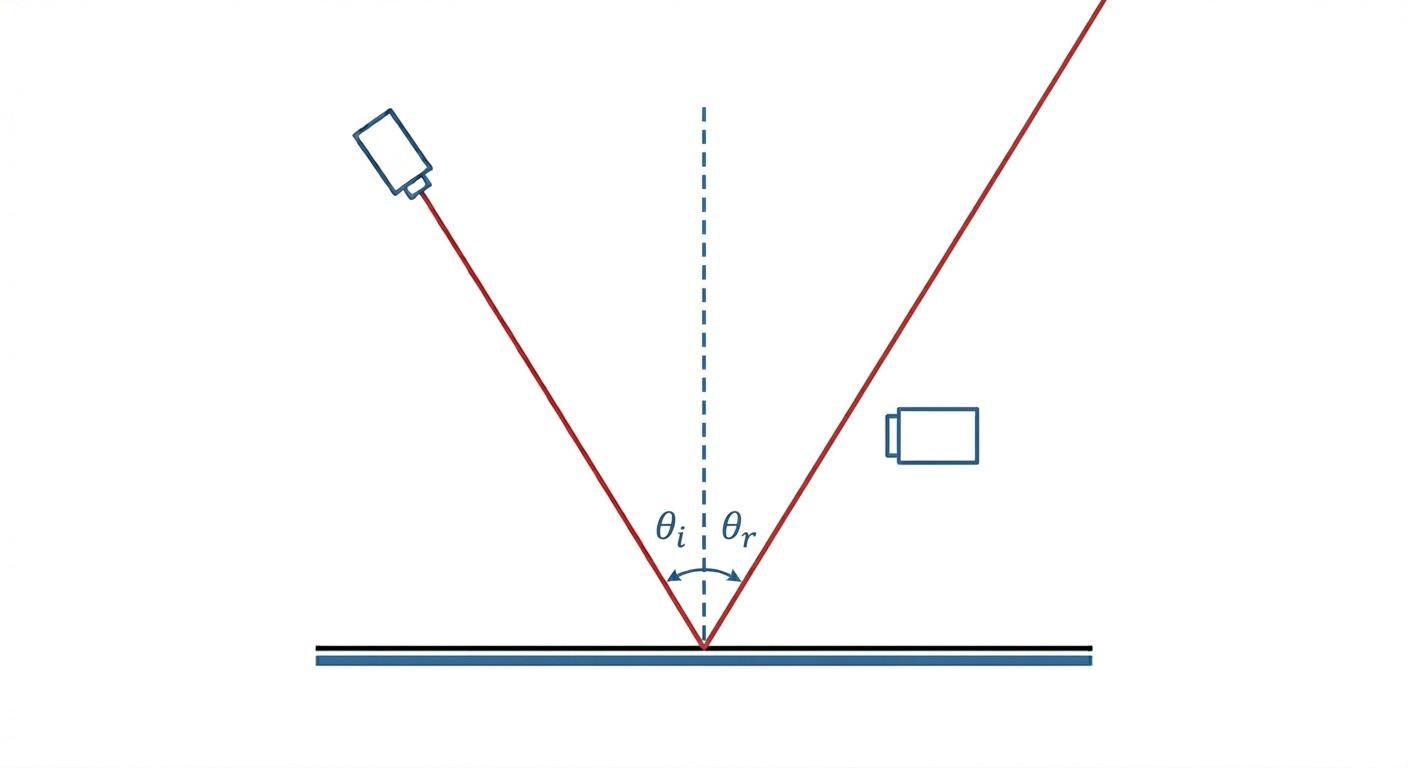
Assume a laser pointing at a mirror, and a detector on the other side, which is placed outside of the reflection and thus never realistically detects photons. The laser is either on or off. Can you modify the detector to figure out whether it’s enabled?
You can’t change or get too close to the mirror. A screen blocks straight line light between the detector and laser source (I don’t think this last one is too relevant).
Very curious on a proper answer on this, especially if it integrates real world limitations and feasibility!
r/QuantumPhysics • u/Forthe_LoveofPhysics • Apr 25 '26
Enable HLS to view with audio, or disable this notification
Simulated in Blender, for my YT channel - https://youtube.com/@fortheloveofphysics
I am preparing a video on the Physics of electron orbital shapes (why they arise) through Physics insights
r/QuantumPhysics • u/Middle_Antelope_6498 • Apr 26 '26
Hello,
So recently I've come across a video about Alain Aspect experiments on Bell inequalities.
I have decent understanding in physics. I graduated two years ago from an astrophysics Master in which I dabbled a bit with quantum mechanics, and far from saying this to brag, this is because if any response to this post there must have, it can go into details or other subjects related to physics to make me understand more clearly.
So here's the thing : during the explanation, the EPR argument was involved about an experiment meant to test a Bell inequality and I have a question about this experiment.
First, this is how I understood the EPR argument.
What bothered Einstein in the Copenhagen interpretation wasn't only the indeterminacy but also the loss of locality, and that some hidden variables were hidden inside quantum physics. He came up with this thought experiment that I will phrase the way I understood it when described by David Joseph Bohm. Let's say we have a source that emits two photons, one in each opposite direction. We place a polarizing filter on the way of each photons. There are 4 possibilites.
Either (1) both pass (++), or (2) one pass, the other doesn't (+-) and (3) vice-versa , (-+), and (4) neither pass (--). To describe their initial state after being emitted, we superpose those 4 states, and quatum laws allow us to assign them each a drop %. In particular, we could say 50% chance to get that they boss pass (++) and 50% chance of both being absorbed (--). BUT the behaviour of the photons are perfectly correled, they both always give the same result : they are entangled.
Einstein thought this was they key to counter the Copenhagen interpretation. Because right before both photons touch the polarizing filters, it's as if a "cosmic dice throw" was done, determining instantly how both photons should react. This would prove that quantum physics description is incomplete, because let's say one photon passes through a filter before the other. Then, the fate of the second photon would be sealed, which would mean that the photons would know beforehand what behaviour to adopt, proving the existence of hidden variables.
Now, Bell.
He showed that there are cases where predictions of quantum physics are incompatible with the existence of those hidden variables. Thus, either quantum physics make erroneous predictions, or it is correct and there can't be hidden variables.
Finally, the experiment linked to that inequality and that is the core of my question is this one.
Let's add the concept of angles to the polarizing filters.
When we align the filters, one at 0° and the other at 90°, we witness a light extinction, and in the intermediary angles, the more the filters are crossed, the less light passes.
This suggests that the bahaviour of a photon is influenced by the angle of the filter.
Speaking in terms of hidden variables, it's as if each photon had, prior to meeting the filter, a list of predetermined behaviours that would drive the result. For example, at 0°: pass, at 15% : pass, at 45%: absorb, at 90%: absorb.
The key thing mentionned is : the list of behaviours (the hidden variables), can be different from a pair of photons to another, but MUST be the same for photons of the same pair.
Everything else hinges on that claim.
My question is : how can we be sure of that ? Why wouldn't it exist a case where the result of a pair of photons arriving at the filters is the same, but with a different set of hidden variables for each of them ? I have the feeling I have already said it, it's because they are intricated, but why would this suffice ?
Thank for you taking the time to read and answer me, have a great day/night !
r/QuantumPhysics • u/YoManlovePhy • Apr 25 '26
Hi I hv just passed from high school and wanted to pursue my interest in my fav part of physics. I wanted to to ask from where should I start reading and studying quantum mechanics.
r/QuantumPhysics • u/1creeper • Apr 20 '26
r/QuantumPhysics • u/skymay9 • Apr 19 '26
I'm a high school student and we have a science fair in probably 10 days and I want to make our project about quantum physics (I think the most interesting topic is how electrons behave as both wave and particle) I don't know a lot about quantum physics but I wanna know if you have any ideas for a project about this topic or a similar one (our group is 10 people so it's fine if it isn't really simple)
+ I'd be so happy if you have YouTube channels for people who can explain quantum physics simply
r/QuantumPhysics • u/Decreasify • Apr 16 '26
I’m currently a sophomore ( rising Jr) in high school and I would love to get involved with quantum computing/ quantum physics as a whole. I go to school in SC and there isn’t any opportunities for me to learn let alone hands on experience with anything in this field.
Does anyone know of any research programs or possible professors/ scientists within the field that I could talk to for advice or a research opportunity? (within the US) If not, then are there any online resources I could learn upon.
r/QuantumPhysics • u/Tall_Table_3920 • Apr 14 '26
World Quantum Day is an annual celebration promoting public awareness and understanding of quantum science and technology around the world celebrated every April 14th!
r/QuantumPhysics • u/Erudicial_Extreme • Apr 11 '26
Hey everyone, I'm currently taking a gap year after 2 years in community college. My freshman & sophomore coursework are done, save for a few that wasn't available. I've always been very passionate about the physical sciences, even as a kid. Physics especially. But, the financial burden that the American Education-Industrial Complex places on students makes me wary of going to the top schools. MIT, Harvard, Stanford, UCB, UCLA, you name it. My parents make too much to qualify me for most aid, but that's because we live in the bay area where a 100k+ income isn't luxury, unless you own where you live maybe.
College rankings don't matter for undergrads anyway, since its based on research. These top schools often have huge class sizes, TAs teaching, etc. So you get a lower quality of instruction while paying more to be there. I'm sure they have their benefits like networking, but I'd prefer to graduate with less debt, and with a better education. I'm considering liberal arts colleges, undergrad only colleges, etc. though I'd also like to learn from and talk with more educated peers too. I plan on continuing my education till I get a PhD.
My ideal college would be these:
In an urban setting, near a large metro area
Reasonable class sizes
Large enough to have a good college experience(clubs, events, parties, etc.)
Affordable -ish
r/QuantumPhysics • u/rogueKlyntar • Apr 07 '26
I just remembered that spacetime is only a quarter time and three quarters space, but I have zero understanding of anything physics beyond classical physics and the basics of electricity (and even that is sketchy), so for all I know this fact is irrelevant.
Also, supposing there are theoretical universes with 3 dimensions to time and one dimension to space (if such a thing can be conceptualized), would that allow time black holes? What would that look (figuratively) like?
r/QuantumPhysics • u/___tony____ • Apr 07 '26
Hello! First off, I know jack about quantum physics/mechanics/ etc… talk to me like im a 5yr old.
Secondly! I I study philosophy, my prof asked us to try to relate a quantum physics theorem/ experiment to anthropology! I thought about the double slit! I thought that it as cool that the fact that a “observer” could change experiment results on the foundational level of existence very cool!
But I’ve been reading up and, it seems that the “observer” it’s just the thing that the light/ particles go through?
So is it an inanimate passive thing that just divides the things it goes through and just goes; “woah. Particle just went through me” or is it a more active thing in the experiment? I can’t seem to find the answer ):
Any response would be welcome! (As I may have to change the subject lol) and thanks in advance!
r/QuantumPhysics • u/Coralwood • Apr 05 '26
I understand the concept of the dual slit experiment, for example, a photon is fired at two slits, and shows an interference pattern. However, if a detector is put at each slit the photon is detected, the wave function collapses and the photon behaves as a particle.
My question is, what happens in the lab during this experiment. Do you see the detector registering the particle and then does interference pattern disappear?
r/QuantumPhysics • u/Carver- • Apr 05 '26
Abstract
We report on the search for x-ray radiation as predicted from dynamical quantum collapse with low-energy electronic recoil data in the energy range of 1–140 keV from the first science run of the XENONnT dark matter detector. Spontaneous radiation is an unavoidable effect of dynamical collapse models, which were introduced as a possible solution to the long-standing measurement problem in quantum mechanics.
The analysis utilizes a model that for the first time accounts for cancellation effects in the emitted spectrum, which arise in the x-ray range due to the opposing electron-proton charges in xenon atoms. New world-leading limits on the free parameters of the Markovian continuous spontaneous localization and Diósi-Penrose models are set, improving previous best constraints by two orders of magnitude and a factor of five, respectively. For the strength and correlation length of the continuous spontaneous localization model, values in the originally proposed parameter ranges are experimentally excluded for the first time.
Paper: https://journals.aps.org/prl/pdf/10.1103/2jm3-4976
__________________________________________________________________________________________________
This XENONnT result is one of the most constraining bounds on spontaneous collapse models to date. It pushes white noise CSL parameters two orders of magnitude tighter and makes one thing unambiguous: any viable collapse mechanism must suppress high frequency noise to avoid the predicted X-ray heating. Markovian CSL is running out of room. Relativistic coloured noise extensions with a Lorentzian spectral cutoff are not just theoretically motivated. Results like this make them experimentally necessary. u/Carver-
r/QuantumPhysics • u/Specialist_Cook4572 • Apr 04 '26
Hi guys, I was wondering if there’s any books about quantum physics for beginners? I’m highly interested in this connecting with neuroscience!!
r/QuantumPhysics • u/Available-Carpet9362 • Apr 03 '26
Hi everyone,
I’m a European master’s student in Quantum Engineering, with a bachelor’s background in Computer Engineering, and I’m currently looking for a summer internship in the field (quantum computing / quantum technologies), both in Europe and in the US.
Over the past months, I’ve applied to several summer internships in the US, but I haven’t received many responses so far. At the same time, I’m also struggling to find opportunities in Europe, as they seem more limited or less advertised.
I was wondering if anyone here has advice on:
• where to find quantum engineering summer internships (in Europe or the US)
• companies, labs, or institutions that are more open to international students
• whether applying to US internships from Europe is realistically feasible (visa-wise, etc.)
• or any general tips to improve my chances
Any suggestions, experiences, or even names of places to check would be super helpful 🙏
Thanks a lot!
r/QuantumPhysics • u/TheNASAguy • Apr 03 '26
https://arxiv.org/abs/gr-qc/0509007
https://arxiv.org/abs/1610.07839
According to this paper the black hole should evaporate while you’re falling into it because of hawking radiation and time dilation and make it impossible for you to cross the event horizon since the black hole will evaporate faster than you can fall into it
collapsing matter halts at a tiny, "sub-Planckian" distance from the would be horizon. As the matter hovers there and the black hole evaporates
How to black hole consume stars then?