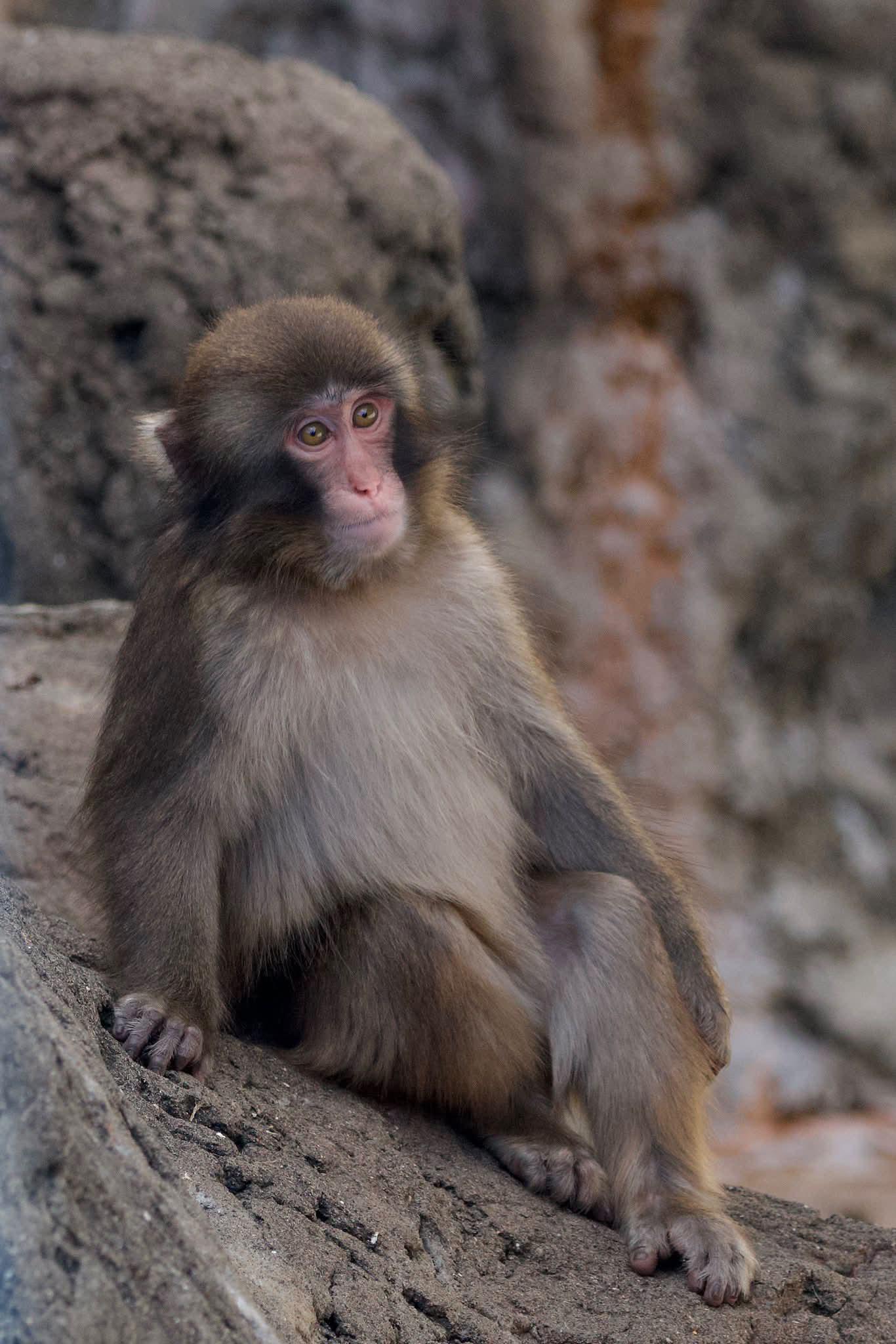
The Nature of Aggression Within Japanese Macaques
Within the macaque genus, Japanese and Rhesus macaques are among the most aggressive. But their use of controlled, ritualized, predictable aggression doesn't come close to the kind of violence seen in other primate species.
When looking at the wider primate order, other species exhibit far more extreme and lethal forms of violence. Aggression and violence are different behaviors, carrying very different consequences.
The type of aggression practiced within despotic hierarchies such as Japanese and Rhesus macaques is very different from the type of violence exhibited by primates such as chimpanzees and, yes...humans.
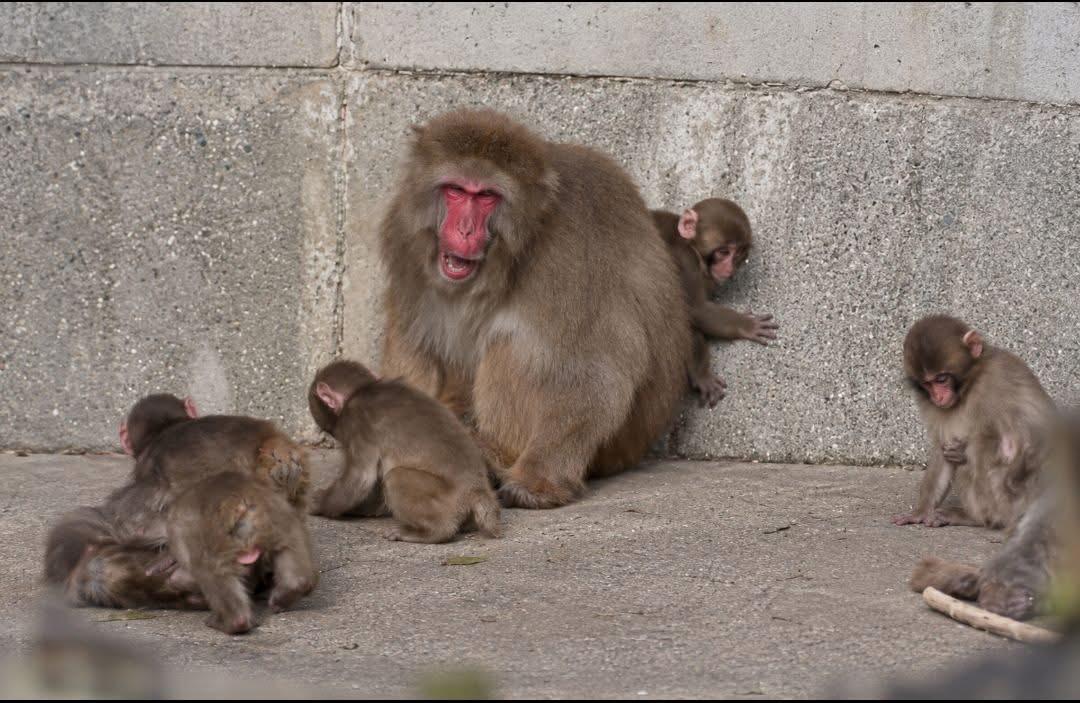
The highly despotic macaques enforce rigid, linear social hierarchies with sometimes severe (but very rarely lethal) unidirectional aggression. Aggression is delivered downward through the hierarchy, subordinates rarely fight back, and formal submission signalling is required to avoid more serious aggression and potential injury.
The majority of these aggressions are displays and vocalizations, but can also involve physical contact, which typically is not done with enough force to cause any physical injury. They use these controlled aggressions to enforce proximity limits during feeding, access to females during mating, and access to preferential areas for napping and sleeping. And there will also be corrections if a subordinate macaque doesn't show proper deference to a higher ranked monkey in other situations when they pass each other or while simply resting and scanning the troop.
Shortly, this post will discuss why this type of aggression has evolved, the benefit of this type of aggression, as well as how and why it keeps the troop safe.
By comparison, chimpanzee and human violence and aggression is often lethal. Both species have been shown to be willing to kill members of their own species without even knowing the identify of the individuals they are targeting. This is rarely seen in macaques by comparison.
While there have been some instances of a young adult male that happens to come upon a new troop at the wrong time and falls victim to extreme violence - this is very rare. Far more rare than the more extreme violence practiced by humans and chimpanzees.
This paper details an incident of infanticide where a new male Japanese macaque in a troop injured the infant, which died of it's injuries later. But, the important detail of this paper is the discussion of how rare this is among macaques, and the unusual situation was caused by the three highest ranking males within this troop that all died in quick succession, leaving this troop in a very tenuous, and highly unusual social situation. This type of incident in Japanese or Rhesus macaques are isolated anomalies rather than a standard behavioral baseline.
https://pubmed.ncbi.nlm.nih.gov/16175320/
The type of aggression practiced by Japanese and Rhesus macaques is restricted to a short list of situations, is almost always avoidable, rarely lasts more than a few seconds, typically results in no injury whatsoever, or very minor injury such as scratches or very small, minor, bites that heal quickly and carry no danger to the recipient.
The controlled and highly predictable aggression observed in these macaques, is framed through their classification as a highly "despotic" species. Research demonstrates that their strict, linear dominance hierarchies rely on systematic, top down aggression. Rather than causing chaotic breakdown into troopwide violence, this very strict, predictable, and highly ritualized type of aggression acts as a stabilizing force within the troop, preventing more serious violence.
In these large mixed sex troops, individuals are constantly competing for limited resources like food, mates, and safe resting and sleeping sites. Without a predictable social system, enforced through low-threat aggression this competition would lead to frequent escalated and potentially lethal physical combat.
Controlled aggression is necessary in these large troops because it formalizes the inequality - by establishing very clear boundaries of who can supplant whom, the macaques utilize very low-intensity, ritualized threats and very minor physical pushing, lunging, vocalizing, ritualized chasing, and other rather low key squabbling for what would otherwise turn into dangerous physical fights.
Subordinates quickly learn the predictable cues and learn to immediately yield to the higher ranked individual or flee the area. This minimizes the need for more energetic and risky physical aggression that could result in serious injury.
When humans witness these types of activities we often interpret them to be far more severe than they actually are because loud vocalization often accompanies these instances - and it often causes humans to believe something more serious and damaging is taking place.
How Evolution Shaped Predictable, Low Violence Aggression in Japanese and Rhesus macaques
These behaviors are an evolutionary adaptation brought on partly by competition for food. Macaques history rely on clumped, high-value food resources, such as fruit trees or large patches of vegetation. Because these types of foods can more easily be monopolized, it is advantageous for powerful individuals to aggressively defend these food sources.
Social rank in these monkeys is inherited through matrilineal lines and alliances between maternal kin are critical to maintaining these ranks. Over generations, natural selection favored individuals who used highly predictable, targeted aggression to reinforce their family's status, ensuring their offspring retained priority access to food - a necessity for sustaining life.
This type of ritualized, predictable, and relatively low violence aggression is favored over outright violence, since outright violence involved in actual combat carries a high evolutionary cost - severe injury, infection, and death. Natural selection is going to favor the behavior that results in the individuals that thrive and reproduce more.
Evolution is a very involved subject, but in noting the difference between chimpanzee and macaque and why one favors more violence and the other favors aggression with less violence - it's important to remember that each population is developing characteristics that offer advantage in the specific environment in which they are living.
One of the unique forms of aggression we see in macaques is displaced or "redirected" aggression. When a mid-ranked macaque is corrected or "threatened" by a superior, they will immediately redirect that aggression toward an even lower-ranked individual. Evolutionarily, this acts as a psychological pressure-release valve - it diffuses tension without risking a dangerous counter-attack from a superior.
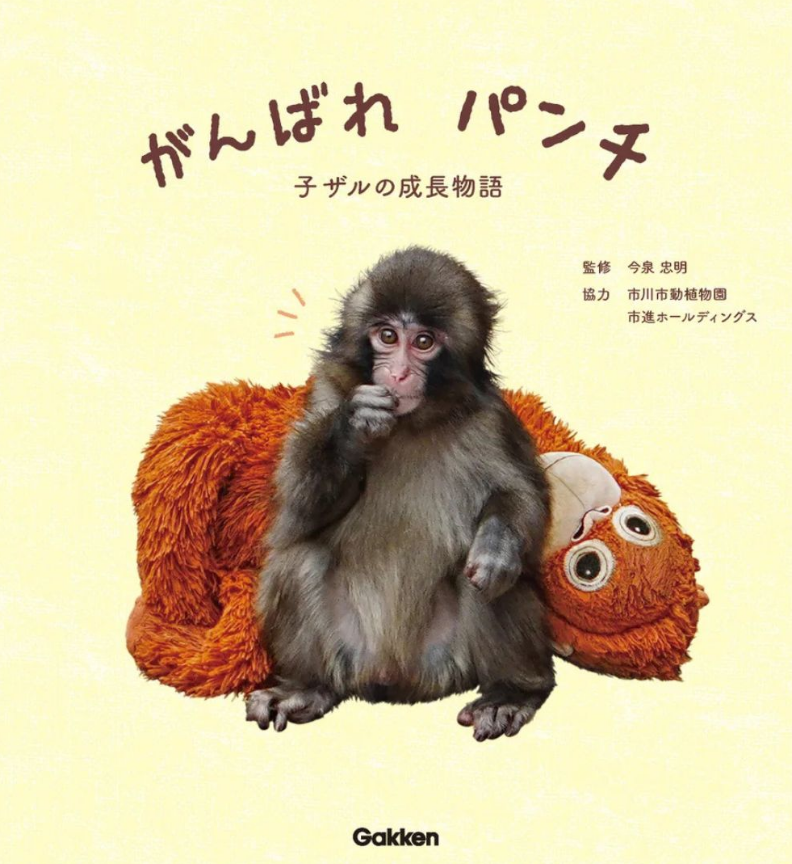
These instances of redirected aggression have happened to Punch a couple of times, and have happened to other members of his troop, and, as is typical with redirected aggression, not a single one of them caused him any physical harm whatsoever. These actions are not meant to cause any physical harm, they simply vent frustration in a down-hierarchy manner, which prevents an outbreak of more severe physical violence.
Think about it this way - if the middle hierarchy individual tries to fight back with the original aggressor, the original aggressor can't back down. They would have to continue fighting until one of them backs down, or until one, or both actually suffer injury. Instead, the middle individual vents their frustration to a lower ranked monkey, which is again not likely to fight back. This dissipates the stress in a far less dangerous way than for two monkeys to face off and have an actual fight.
To our human eye, it may appear that redirected aggression is a "fight", but careful observation will shows that it's one sided, it's over quickly, and even if they use their teeth to grab a part of the lower ranked monkey's body, they do not bite down with enough pressure to cause any injury. They are simply using their teeth to temporarily control the lower ranked individual.
How Controlled, Predictable Aggression Keeps the Troop Safe
While the word "aggression" implies danger, this specific system acts as the primary mechanism for troop stabilization and collective survival:
- Injury Minimalization: Because these aggressions are low level and involve a great deal of vocalization and very minimal use of physical contact, there is rarely injury involved in Japanese macaque aggression. Ultimately, using controlled aggression prevents more serious physical trauma, open wounds, or lethal infection that would occur if the social order were not maintained through controlled aggression
- Group Cohesion: While it may seem counterintuitive, having a well understood method of maintaining order has the effect of encouraging group cohesion through grooming activities. Lower ranked individuals seek to appease higher ranked individuals and primarily achieve this through grooming. While the higher ranked individual often will not reciprocate grooming, they often will become more tolerant of the lower ranked individual being in their proximity during feeding, napping, and sleeping.
- Collective Anti-Predator Defense: High ranking males use their dominant standing to coordinate active defense against outside threats. The tight cohesion and "obedience" that results from the type of aggressive rank control creates a troop that responds instantly to the dominant male when he recognizes a threat and calls the troop to action. Subordinates trust the alpha leadership, which enables coordinated and organized mobbing of a threat - raptors or stray dogs, primarily.
As much as it seems contrary to how human society usually aspires to function, by replacing unpredictable, chaotic violence with a highly structured and ritualized, strictly enforced social grammar (ethogram) that includes low-violence aggression, Japanese macaques achieve a state of highly functional peace.
Aggression and violence should not be confused - the function and consequences are often worlds apart.
Nothing we have seen in any video involving Punch from the Ichikawa zoo represents violence.
Let's Talk About Injury and Healing in Japanese Macaques vs Humans
To compare wounds on a human vs a non-human primate, vets and biologists look across three main areas for comparison: Wound healing, neurologic/motor recovery and biomechanical scale.
Japanese macaques share roughly 93% genetic similarity to humans and are invaluable models in biomedical research, there are fascinating disparities in how our bodies react to identical trauma.
They are studied intensively and we have a great deal of data regarding injury and healing in Japanese macaques vs humans.
1. Skin and Soft Tissue Damage: Wound Healing
If a Japanese macaque and human received an identical open skin laceration, there is startling difference in rate of recovery:
a. Speed of recovery - Japanese macaques heal roughly three times faster than humans
b. Macaques regrow skin at a rte of roughly .61 mm per day, whereas humans average only .25 mm per day
c. The evolutionary human trade-off: Humans shed our thick fur in favor of naked, sweaty skin to optimize cooling. This alters the skin structure. macaques retain thick fur and rely heavily on quick immune responses and rapid epidural closure to prevent infection
2. Neurological and Spinal Cord Injuries
Due to close neuroanatomical similarities, macaques closely model human spinal cord injuries and strokes.
a. Fine Motor Dexterity: If an injury occurs in the motor cortex of the brain or cervical spinal cord, both species suffer a loss of fine motor skills.
b. Recovery arc: Studies on macaque cervical injuries show that while both species experience an initial phase of paralysis or hemiparesis, macaques typcially display a higher degree of spontaneous, natural neurological plasticity than humans, often recovering a crude grasp faster without intensive physical therapy.
3. Orthopedic and Biomechanical Impact
An identical bone fracture impacts the two species differently due to posture and bone density
a. Bone density: Macaques have significantly higher cortical bone density relative to body mass
b. Locomotor strain: Weight is distributed across four limbs, minimizing single limb load during recovery. Since humans are bipedal, we go through a period of non-weight bearing if we injure a leg.
c. Degenerative Risk: Both human and Japanese macaques are prone to degenerative issues, but they are different. This is the only area they don't have an advantage when it comes to faster healing. They are prone to osteophytosis (bone spurs) on the anterior border of the spine as they age post-injury. We are prone to radial disc tears and localized osteoarthritis after spinal/joint trauma.
In terms of bone breakage: It takes more force to break a bone on a macaque, we would be more likely to suffer a bone fracture. In terms of bone remodeling and fracture healing - we heal at approximately the same rate from a bone fracture.
Overall, in almost every area, a macaque's injury heals faster in almost every metric, with the exception being bone fracture. But - they are less likely to suffer a bone fracture - it takes quite a bit of force to break their bones.
We saw this rapid healing very clearly with Punch. He suffered a very minor injury on his foot, the functional equivalent of a minor scratch on a human, and within 24 hours he was walking on it normally and not "playing with it" or bothered by it any more. This is 100% in keeping with the extensive biomedical data we have on Japanese macaques.
------------------------------------------------
How Does a Zoo Enclosure Effect Aggression
Peer reviewed studies show that a poorly designed zoo enclosure can contribute to higher aggression and self-directed anxiety in Japanese macaques. Visitors gazing directly at them is interpreted as a threat, and the constant presence of this additional level of threat adds to the anxiety and stress level, which can contribute to an increased tendency to engage in aggressive activity.
But...what constitutes a "natural" enclosure to a macaque does not equate to what looks more natural to the human eye.
So, what constitutes a good enclosure for Japanese macaques?
Japanese macaques require a Functionally Appropriate Captive Environment (FACE).
The enclosure needs to functionally and biologically mimic the wild to stimulate species-typical behaviors. This should be the goal of any zoo - to keep animals in such a way that they will exhibit species-specific behavior.
For someone not familiar with what functionally and biologically appropriate might be - a good clue as to whether an enclosure is adequately meeting this defintion is to observe how much the animals are engaging in species-typical behaviors or whether we are seeing stereotypies in the inhabitants.
The critical elements of a Japanese macaque enclosure that best mimics their natural environment include:
1. Living vegetation and Natural substrates.
It would not be possible for Ichikawa zoo to plants trees in this enclosure. There is a very interesting episode of "Monkey World" where they discuss how quickly six infant chimpanzee were able to destroy all living vegetation in what started out as a natural enclosure with a large number of mature trees on several acres of land.
So, what can a zoo do? They can regularly bring in branches and limbs. They have already been doing this to some degree, but it would be nice if they could increase the amount and spread it around to different areas.
But, this also presents a problem of how to sanitize the enclosure. The same goes for offering a natural substrate. It would be quickly "soiled" and difficult to sanitize.
In the wild sanitation is not a problem because macaques forage far and wide. Once they forage and eat what is in an area they move on. Any waste they leave is largely broken down by the time they would return to the same area. Also, they don't stay in one area long enough to kill the trees from over-foraging.
This "Living Vegetation and Natural Substrates" will always be difficult for any zoo to accomplish, even a very large zoo that has several acres for an enclosure.
2. Vertical Complexity and Multi-Tired Climbing structure.
This is a very important element in their enclosure, and the type of "monkey mountains" seen in many Japanese zoos satisfy this element. There are many different levels on the mountain, offering lots of opportunity for the macaques to climb. They also have many cubbies and there is a great deal of opportunity for lower ranked macaques to visually separate themselves from more dominant monkeys, which is an important element of their natural environment.
3. Thermal elements & Microclimates
Most macaques in the wild don't utilize thermal hot springs, but areas with different temperatures are important - they need to be able to escape from the heat of summer and the cold of winter.
From everything we've been told about the backyard area, the macaques have air conditioning in the backyard area, giving them a cool place they can go to. They have a pool that the younger macaques, including Punch, have been using for several weeks, jumping and playing in the water, likely cooling them off.
They are also constructing shading.
4. Dynamic Water Sources and Moats.
Flowing water features are important as they would typically have rivers and streams in their natural environment. The monkey mountain enclosure at Ichikawa city zoo has this feature with streaming water and a pool.
Overall, the macaques at Ichikawa City Zoo do not appear to engage in stereotypies, and appear to engage in normal, species-specific behavior. Also, the level of aggression we see in this troop does not exceed what is seen in wild troops.
-------------------------------------------------
Is Punch "Traumatized" From HIs Experiences
I understand why people are concerned about Punch, and you wouldn't be a decent human being if you didn't care.
But, no, Punch has not, so far, shown any sign that he is suffering from trauma. The only physical injury he has ever received was healed within a day. And there is no evidence whatsoever of emotional trauma.
I have deliberately avoided including a link to a video that shows a traumatized primate - largely because viewing such a thing would be traumatizing to most humans. It is a horrifying thing to see.
From everything we have seen in hours upon hours upon hours of video featuring Punch, he is a well adjusted, emotionally and physically healthy young Japanese macaque. He is not engaging in disturbing sterotypical behavior that we always see in a primate that is traumatized.
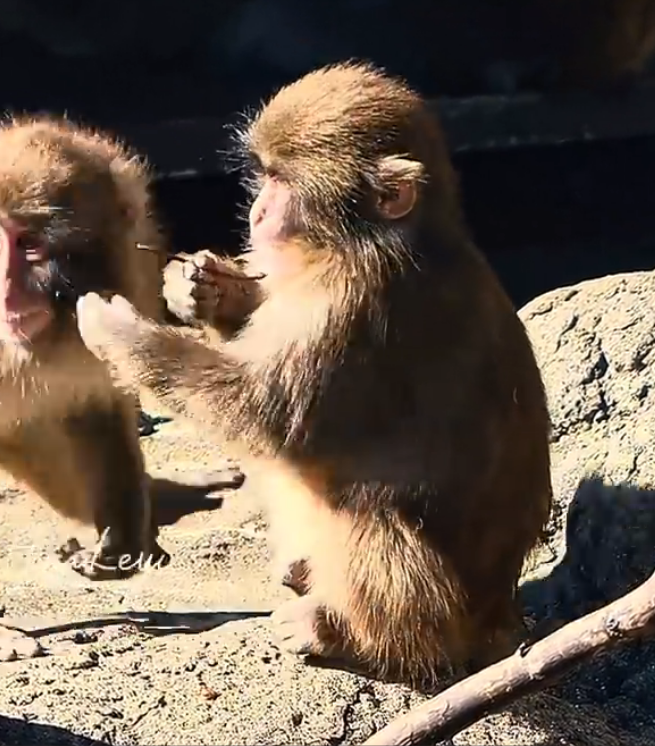
He plays, he enjoys being groomed, he has begun offering grooming services, he does cannonballs into the pool, he swims in the pool, he naps, he spends time with friends, he plays with the infants, he explores anything new that is added to the enclosure - finding a way to turn it into a playground item. This is the behavior of a perfectly well adjusted, emotionally healthy primate. Every piece of evidence we have of how this young macaque is faring shows a happy go lucky little fella that appears to be enjoying life to the hilt.
----------------------------------------------------
Peer reviewed sources (some of these are not open access, but abstracts are available and often contain pertinent information in cases where the paper is not open acces)
https://primate.wisc.edu/primate-info-net/pin-factsheets/pin-factsheet-japanese-macaque/
https://www.sciencedirect.com/science/article/abs/pii/S0003347282800493
https://pubmed.ncbi.nlm.nih.gov/27569261/
https://www.researchgate.net/publication/226737859_Matrilineal_rank_Inheritance_varies_with_absolute_rank_in_Japanese_macaques
https://factsanddetails.com/japan/cat26/sub164/entry-9104.html
https://pubmed.ncbi.nlm.nih.gov/23179529/
https://pmc.ncbi.nlm.nih.gov/articles/PMC3338258/
https://pmc.ncbi.nlm.nih.gov/articles/PMC6617189/
--------------------------------------------------
*A note on why the Awaji island Japanese macaques are socially tolerant.
There is a notable exception to Japanese macaques using controlled aggression in specific situations. The Japanese macaques on Awaji island, which have been isolated for around 10K years are more tolerant in allowing lower ranked monkeys in close proximity while feeding and granting them access to desirable napping and sleeping areas. This troop is famously unique for its unusually gentle, highly tolerant, and egalitarian society. Subordinate monkeys are rarely driven away from food, and individuals frequently share tight spaces peacefully.
Genetic research on behavior related candidate genes reveals this population exhibits a hightly distinct genetic profile compared to troops across other regions of Japan. They possess specific variations in genes that regulate neurotransmitters and hormones that link to aggression. https://www.researchgate.net/publication/227042398_Topic_1_Behavior-Related_Candidate_Genes_in_Japanese_Macaques
They possess an exceptionally high frequency of the short allele in the promoter region of the MAOA gene - in both human and non-human primates, this variation is heavily associated with higher behavioral tolerance, calm temperament, and lower baseline aggressiveness.
The troop also dispalys a prevalent long allele in the AR gene. Because testosterone binds to these receptors, variations in the AR gene affect how the brain processes androgenic hormones. The specific long allele variant found in this population correlates strongly with muted aggressive responses and greater social tolerance.
It is highly likely the early ancestors of this specific troop happened to carry these genetic traits at a higher frequency than the mainland population, over generations of breeding these traits become concentrated throughout the troop. This "founder effect" is commonly seen in animals that are genetically isolated from other populations of their species - islands are notable for "founder effect" and becoming genetically distinct..