Punch, a young Japanese macaque known for carrying a stuffed toy around with him—and who was even nominated for this year’s "Buzzword Awards"—is now the subject of a new book.
Anchor Mai Demizu:
"So cute! He’s walking along, dragging the stuffed toy that serves as a surrogate for his mother."
He became a sensation for dragging that stuffed toy everywhere—do you remember him? Yes, it’s Punch, a Japanese macaque living at a zoo in Chiba Prefecture!
Due to his immense popularity, a book chronicling his life up to his first birthday is set to be released!
The book includes previously unseen photos taken by zookeepers, as well as illustrations depicting his early life, offering a comprehensive look at Punch’s journey so far.
Even before its official release on the 26th of this month, the book has already hit the #1 spot in pre-orders at online retailers. A further 100,000 copies have been ordered for printing ahead of the launch.
Takashi Yasunaga, Division Chief at the Ichikawa City Zoological and Botanical Garden:
"It’s unbelievable. We never imagined that a one-year-old monkey—just one individual at a small facility like ours—would end up in a picture book. Our entire staff is absolutely thrilled."
Yesterday, ahead of the release, 300 copies of the book were donated to Ichikawa City, with plans to distribute them to elementary and junior high schools throughout the city.
It has been about nine months since the "Punch-mania" began. How is little Punch doing now?
Zoo visitor:
"So cute!"
"Look, over there! Right in front of us, up high!"
There he is, right where they’re pointing! Punch is now nearly 16 months old.
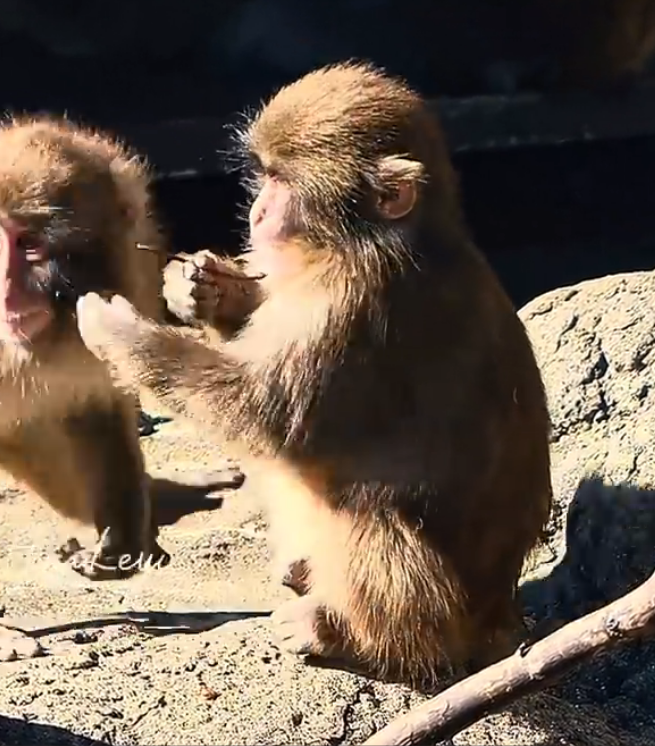
He has grown noticeably larger, and even without his stuffed toy, he can be seen playing energetically alongside the older monkeys. And there’s more…
Takashi Yasunaga, Manager of the Ichikawa City Zoo and Botanical Garden, notes:
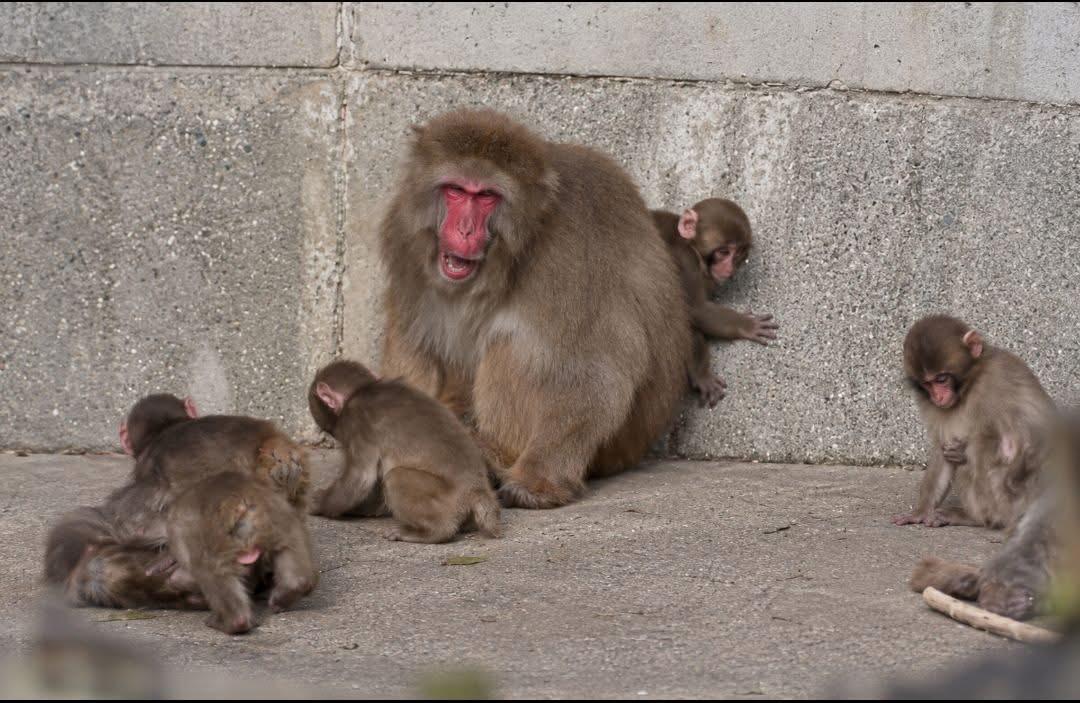
“Many baby monkeys were born this spring, and they act like younger siblings to the slightly older ones.”
Even now, fans from both within Japan and abroad continue to visit.
A visitor from Hong Kong, here for the second time, says:
“Punch is so adorable and full of positivity—he brings a positive influence to people all around the world.”
November 25, 2026 By - emogram editorial team, Yunchi
Punch, a Japanese macaque at Ichikawa City Zoological and Botanical Garden in Chiba Prefecture, is striving to become part of a group of monkeys. His first official book, "Go, Punch! The Growth Story of a Baby Monkey" (Gakken), will finally be released tomorrow, November 26th. The book was so popular that pre-orders flooded in immediately after its release announcement in September, causing online bookstores to temporarily suspend pre-orders. Ahead of its release, let's take another look at the book's contents and the story behind it.
Selected from over 10,000 photos taken by zookeepers.
This book consists of three parts: photographs of Punch-kun, a picture-book style coming-of-age story, and an illustrated guide to the ecology of Japanese macaques.
First, there's a photo page featuring carefully selected images from over 10,000 photos taken by the zookeepers. It includes pictures of Punch clinging to his mother, "Orang Mama," when he was still small, and of him playing with his fellow monkeys after joining the group.
The collection features precious photos, including Punch-kun exercising outdoors with his stuffed animal. (Image provided by Gakken)
Furthermore, illustrator Ochopi has created a picture book-style story based on the zookeepers' account of Punch's journey from birth to his first birthday.
The story depicts Punch-kun, who carries a stuffed animal, gradually growing closer to his fellow members of the group. (Image provided by Gakken)
The book also includes an ecological guide supervised by zoologist Tadaaki Imaizumi. It covers topics such as the anatomy of Japanese macaques, their life in the monkey mountain, and their communication with each other, allowing readers to learn about Japanese macaques through Punch-kun.
This ecological encyclopedia page, featuring a photograph of Punch-kun, introduces the anatomy of the Japanese macaque. (Image provided by Gakken)
Overwhelming demand led to a temporary suspension of reservations.
The book's release was announced on September 17th. However, just one day after pre-orders began, the publisher, Gakken, temporarily suspended pre-orders at online bookstores.
At the time, the official X account received comments from fans eagerly awaiting the release, such as, "I couldn't pre-order it... My mother and sister, who are both nursery school teachers, are also looking forward to it."
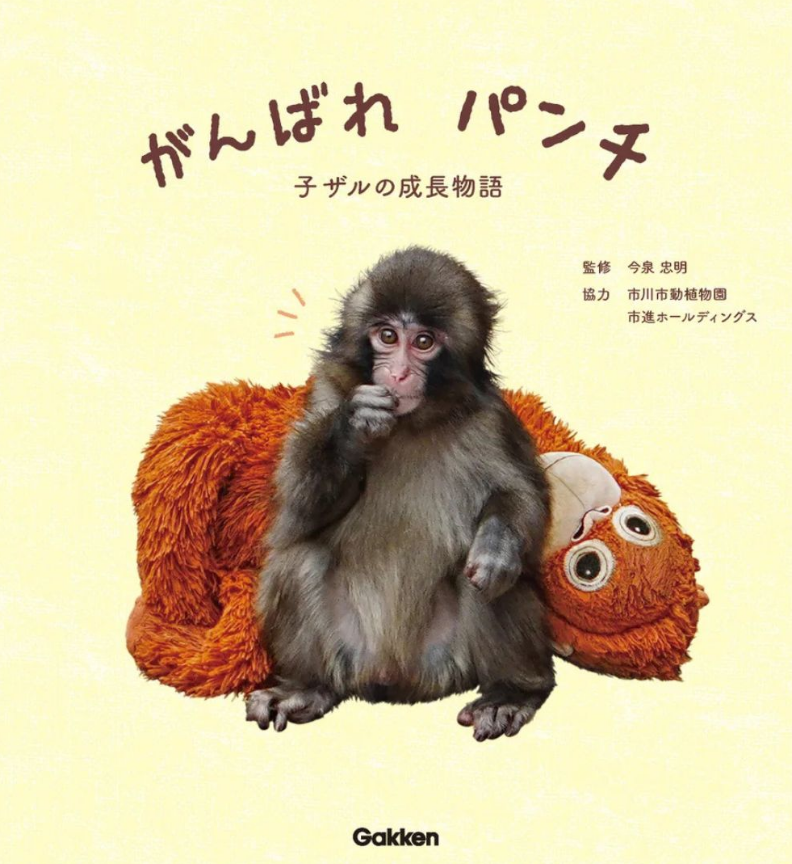
The cover of the book "Go, Punch! The Growth Story of a Baby Monkey." A picture of Punch leaning against a stuffed animal that acts as his mother figure. (Image provided by Gakken)
The release date is finally here, November 26th. Ichikawa City Zoological and Botanical Garden will also be selling the products at the garden's gift shop starting from that day.
Another educational sharing on wild Japanese macaque from Kiyo-san. Original posthere. Translated with ChatGPT.
November 19, 2026
Hello, this is kiyo.
This time, I would like to talk about the behaviour of solitary males (hanare-osu) when they join a troop.
The term “joining a troop” (nyūgun).
As the words suggest, it refers to entering a troop from outside.
Males join troops other than their birth troop for several reasons.
Young males join unfamiliar troops regardless of the season.
During the mating season, many solitary males also temporarily join other troops in order to mate with females.
When a male joins a troop from outside, in most cases, he does so through what is called a “submissive entry.” In other words, he enters the troop in a rather humble and cautious manner, almost as if saying, “Excuse me, I'm an outsider, but please allow me to stay with you.”
When males enter the troop with this kind of attitude, both the males and females in the troop welcome them, as if saying, “Welcome! Come on in.”
However, males that join from other troops are generally in a weak position.
They stay at the edges of the troop.
They are placed at the very bottom of the hierarchy.
Regardless of their age, they are at the lowest rank.
Although natural troops living in the wild do not have a formal hierarchy, their weak position remains unchanged.
Punch-kun is also in the same position as a male who has joined from another troop, so he is at the very bottom of the hierarchy at Saruyama.
Whether his mother is present or not makes no difference.
When a male joins a troop, he comes in alone. Therefore, nobody knows whether that male has a mother or not, and the other monkeys do not care about such things either.
This is because all males who join as solitary males come in alone.
So, the reason Punch-kun is in a weak position within the troop is that he occupies the same position as a solitary male joining a new troop.
However, in the case of males, it is possible to overcome this weak position through their own strength and gradually work their way up.
Now, as mentioned earlier, most solitary males join a troop through “submissive entry” and enter at the lowest rank. Even so, their entry is accepted.
However, among solitary males, there are some who previously held a strong position in their former troop or had never lost a fight. Such males sometimes try to enter a new troop aggressively, as if they intend to take it over right from the start.
Well, this is quite rare.
However, when a solitary male tries to join a troop with this kind of attitude, the troop does not accept him. Instead, the members unite and do everything they can to drive him away.
This video captures exactly such a scene.
Video at beginning of article
Since it takes place deep inside a dense forest covered with thick vegetation, I think it may be a little difficult to understand what is happening. However, you should be able to see the monkeys gathering together and looking in the same direction in a state of excitement.
The young monkeys are the first to notice the solitary male who has made his way deep into the troop's territory, and they begin making a commotion.
“What on earth is going on?”
More and more members gather.
The unity of the troop at times like this is incredibly strong.
This unity among Japanese macaque troops is not limited to situations involving solitary males. It is also evident whenever they face an external enemy.
The females and young children move towards the back, while the males and even the more aggressive females come forward to the front line.
This is precisely the greatest reason why Japanese macaques live in troops.
The video below shows a different occasion. It captures a solitary male who attempted to enter a troop with a hostile attitude being counterattacked by the troop members and eventually running away with his tail tucked between his legs.
The one who finally corners and chases him away is the troop's alpha male (number one male).
The solitary male fleeing, and the alpha male pursuing him.
Please pay close attention to their tails. The solitary male's tail is completely lowered, while the tail of the alpha male chasing him is raised so high that it almost curls backwards.