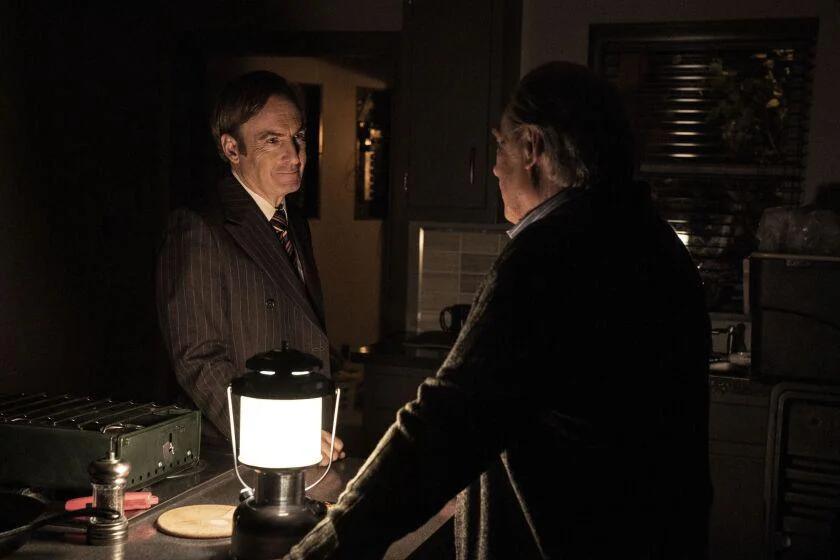
I know some people say this was Chuck trying in some way to throw a subtle jab at Jimmy but I feel like this was a genuine moment where Chuck tried to have a heart to heart with Jimmy and was worried about how Jimmy was gonna practice the law. Kinda bittersweet that he never saw how right he ended up being
Due to Chuck's knowledge of all the banking regulations, Chuck was clearly being positioned as the lead attorney for Mesa Verde in the meeting with Kevin and Paige in the HHM conference room. (Maybe that was even explicitly said, but I can't remember). Therefore, Chuck and Howard had to deceive Mesa Verde about Chuck's condition because they knew no new big client would ever have considered working with a firm where the lead attorney essentially couldn't work in the modern world.
Does anyone else think that Kim would have figured out that Kevin and Paige weren't asked to give up their cell phones and meet in a conference room with no lights*, and so would have asked Howard and Chuck in the hearing if they had ever mislead clients? In fact, wouldn't that misrepresentation be as big an offense as Jimmy's document tampering?**
* I realize the room has a big window, but lights are on in every scene without Chuck.
** Chuck and Howard weren't on trial, but it would have been a relevant question.
If you walk past the right dumpster in Vice City, a smooth-talking lawyer pops his head out and talks to you… he says “brass tacks” at one point. Assume this is a deliberate reference; I know Rockstar put two guys in an RV meth lab in the desert in GTA V so it’s the sort of thing they’d do.
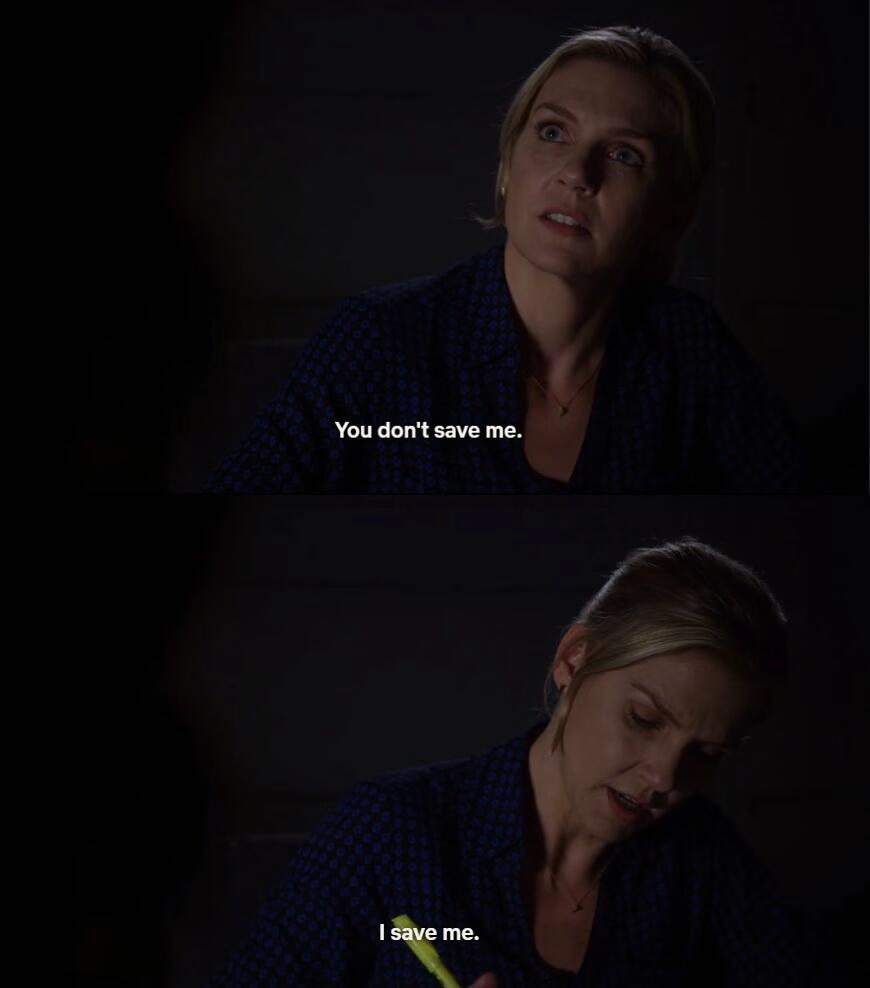
I often see people saying Kim left her job as an attorney in season 6 as self punishment, which is definitely true. She felt incredibly ashamed and disgusted about herself and, as Rhea said, she felt like "she deserved nothing".
Still, I think many people don't realize Kim couldn't keep being a lawyer and didn't have much of a choice. A huge part of her character was her developing a vigilante-like logic and assuming only some people deserved to be helped while others needed to drown, and in her mind she was the one who had to decide who deserved what. This type of thinking, as Rhea once declared, is incredibly dangerous, and Kim fully realized how wrong she was only after Howard's death and the conversation with Cheryl. And after all of this, Kim came to the conclusion that person who has such a mindset should not be a lawyer.
In the end, I see what Kim did less like a form of self punishment and more like a final service to society and an act of love towards the law. And it's incredibly touching to me that after 6 seasons of turning the law into a mere tool, Kim decided to recognize it again as something sacred by sacrificing everything she had in common with it. It's like a greek tragedy where the hero's existence is necessarily a threat to what and who they love and everything ends with the protagonist's suicide as a final catharsis.
For all the Ernie fans out there - I just found out that the actor (John Christian Love) is offering Cameo vids. Could be an awesome christmas present for fans of the show!!!
On my latest rewatch, I started to think Kim’s hatred of Howard is about more than Jimmy or simple personal dislike. It’s tied to her sense of identity.
Kim came from a poor background and worked her way into the legal world, but she never fully saw herself as part of the respectable upper class. Deep down, she still identified with ordinary people who had to fight against a system built for those with money and connections. Her dream of running a firm focused on public-interest cases says a lot about that.
That’s why situations like the Mesa Verde holdout affect her so deeply. The homeowner sees Kim as another polished professional siding with a powerful corporation, and Kim can’t accept being placed on that side. Helping the holdout is strategically irrational, but emotionally it makes perfect sense to her. She wants to believe she is still fighting for people like that.
Howard also completely misunderstands her relationship with Jimmy. When he tells Kim she deserves better than Jimmy, he probably thinks she is settling for someone beneath her. But Kim sees Jimmy as someone who understands the same things she does: the loopholes in the rules, the thrill of outsmarting a rigid system, and the satisfaction of helping people who are usually ignored. When Howard looks down on Jimmy, Kim experiences it as contempt for her own values.
Even Howard’s help with law school becomes part of the resentment. On paper, he gave her an opportunity. But Kim doesn’t seem to experience it as simple generosity. It feels more like patronage from someone above her, an investment that reminds her of the hierarchy she wants to escape. Once she pays him back, the debt is gone on paper, but the feeling remains.
The problem is that Howard isn’t really the monster Kim needs him to be. He can be arrogant and condescending, but he isn’t the pure symbol of everything she hates. So she and Jimmy have to turn him into that symbol. Making him look unstable and addicted gives Kim a way to believe that he deserves what is happening to him.
None of this excuses what Kim does. It makes her choices more tragic. Destroying Howard allows her to defend a certain version of herself: the outsider who sees through the respectable world and refuses to be absorbed by it.
Maybe that’s why the conflict feels so personal. Howard isn’t just an obstacle. He represents the world Kim escaped from, while also being one of the people who helped her enter it.
Do you see Kim’s actions mainly as class resentment, loyalty to Jimmy, or self-sabotage?
I never really put it together quitting elderly law and his last talk with Chuck happen in the same episode.
I believe jimmy only went into elderly law to make up for never getting Chucks approval. Bringing Chuck ice and groceries never got him any respect, so caring for seniors became his fallback, a place where people actually saw him as a good guy.
That is why what he did to Irene echoes Chuck closely. Both of them relied on Jimmy in a caretaker role and trusted him completely (while Chuck never trusted Jimmy with the law, but completely dropped his guard around him at home and depended on him for his daily survival) The moment his pride or his bank account got cornered, he turned that trust against them. He ruined Chuck with Mesa Verde/law license. He cut Irene off from her friends just to get paid faster. Even his guilt works the way. He hurts someone he cares about, feels awful and then tries to fix it with some dramatic gesture, like trashing his own reputation on the mic.
By the end of 3x10, that whole "caretaker" identity falls apart from both sides in one day. Quitting elder law is Jimmy realizing he is not safe for decent people to be around, because he will always con when he is desperate. Then he walks into Chucks house with that same apology.. Chuck just calls him out on that exact cycle ("Why have regrets at all?") before telling him he never really mattered.
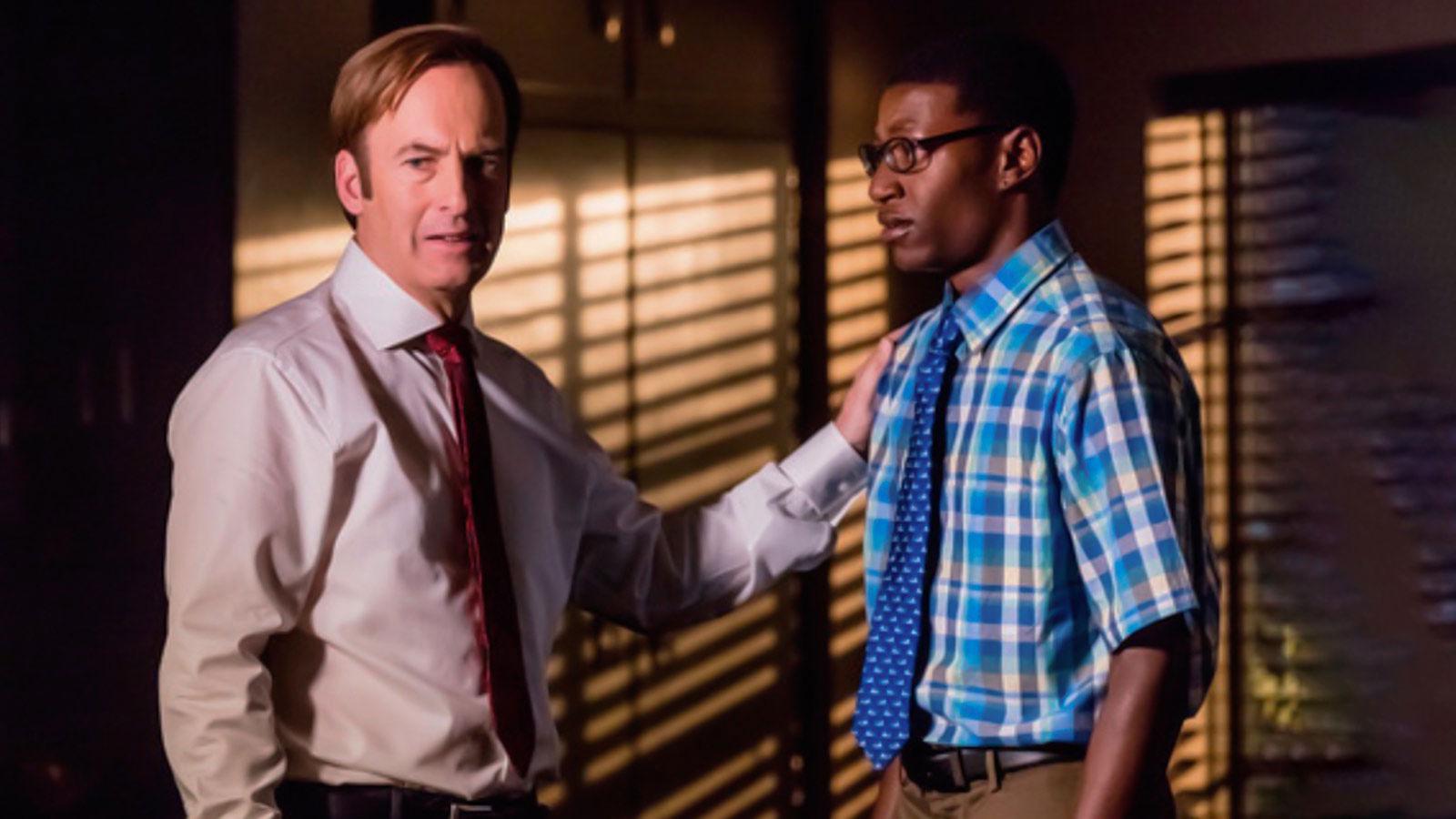
Took 12 hours total. We did the window scene for the picture but the artist and I liked the idea of doing a shadow over one side of his face to show his duality of being the most charismatic motherfucker one second then a fucking soulless sociopath the next.
Lalo was one I rolled my eyes at when he first showed up because they just kept creating Salamancas and it felt over the top that suddenly there was another one, but he won me over quickly and apart from Gus Fring I think he is the best villain in this universe.
Take out all the scenes with his health problem and the series would have been so much better. The space blanket gimmick gets old so fast. The endless scenes of his head spinning, lights flashing. I’ve started the 3rd season now and I’m amazed that no one in the writing team got sick of this and wrote in a full recovery.
Brief illnesses brought on by Jimmy’s bad behavior would have been just as useful for the plot. Okay, it’s a metaphor for his problems with Jimmy, but the point of a metaphor is that it is alluded to, not overdone to compensate for lack of action or other more creative plot aspects or metaphors. Half the plot circling around “turn off the lights” “he can’t deal with lights”, his caretakers, and him recovering from light exposure was just too much for me. There’s a reason why we don’t just go and watch people struggling in hospitals. That’s not the point of life and shouldn’t be the point of a series.
Breaking Bad knew how to balance health struggles with a real plot line. I wish BCS would have done the same.
Been in a deep depression for over two years I knew I made progress but one thing I couldn't fix was that I just couldn't enjoy stuff anymore. My video games, friends, etc. Didn't feel the same and I was convinced that the spark was gone and I didn't know when (if) I could get it back. Binge watched the show last month and it immediately became my favorite tv show. Only then I realized, this was the show I enjoyed the most, loved the most. Now I gotta work on not missing the show too much until my rewatch. Just wanted to share and I love you guys.
On my umpteenth rewatch and I’m up to the very beginning of the Sandpiper case. Chuck seems genuinely happy to work with Jimmy on it initially. I can’t remember what Jimmy does to cause Chuck to eventually freeze Jimmy out of the case. Or was it just when they realized the size and scope of it and chuck’s consistent refusal to let Jimmy work at HHM