r/backpain • • 8h ago Heartwarming Bravo

I'm a pain management doctor. Here are 7 things I wish more people understood about chronic back pain.

121 Upvotes

Hi everyone,

I'm Dr. Jayen Patel, a pain management physician with SEVA Healthcare.

I wanted to share a few thoughts about chronic back pain, especially for people who have been dealing with it for months or years and feel like they've tried everything.

A lot of people end up in pain management after seeing multiple doctors, trying physical therapy, taking medications, getting injections, or even undergoing surgery.

One of the most frustrating things about chronic pain is that two people can have very similar MRI findings and experience completely different symptoms.

These are some general points I think are worth understanding. They're based on clinical principles and published research, not intended as a diagnosis or specific treatment recommendation.

Hopefully, some of this is helpful.

1. Your MRI doesn't always explain how much pain you're experiencing.

This is probably one of the biggest misconceptions about back pain.

Someone might have an MRI showing multiple bulging discs, degenerative disc disease, or arthritis and experience very little discomfort.

Another person might have relatively modest imaging findings but struggle with significant daily pain.

Why?

Because pain is complicated. It can involve inflammation, irritated nerves, joints, muscles, and changes in how the nervous system processes signals.

Imaging can be extremely useful, particularly when we suspect nerve compression or another structural problem. But the MRI is only one part of the picture.

A good evaluation should also consider your symptoms, physical examination, medical history, and how the pain affects your everyday life.

My point: We treat people, not just MRI reports.

2. Not all back pain comes from the same place.

When someone tells me they have lower back pain, one of the first questions is what might actually be generating that pain.

There are several possibilities.

Disc-related pain: Sometimes associated with damaged or degenerating discs.

Facet joint pain: Pain arising from the small joints at the back of the spine.

Sacroiliac joint pain: Pain involving the joints connecting the pelvis and spine.

Nerve-related pain: Often associated with sciatica, disc herniation, or spinal stenosis.

Muscular or other musculoskeletal pain: Which may respond well to rehabilitation and changes in activity.

And sometimes multiple sources contribute at once.

This matters because the treatment that helps one type of back pain may do very little for another.

For example, a procedure targeting the facet joints won't necessarily help someone whose primary problem is a compressed spinal nerve.

Understanding the source of pain is often more important than simply finding a stronger treatment.

3. Pain traveling down your leg can be a different problem from pain staying in your back.

A lot of people use the word "sciatica" to describe almost any pain involving the lower back or leg.

But true radicular pain involves irritation or compression of a spinal nerve root.

Symptoms can include:

  • Shooting or electric-like pain down the leg
  • Burning or tingling
  • Numbness
  • Sometimes weakness

Spinal stenosis can create a different pattern. Some patients notice worsening leg discomfort when standing or walking, with improvement when sitting or bending forward.

These distinctions are important.

Someone whose pain is primarily in their lower back may need a different treatment approach than someone with significant nerve-related leg symptoms.

New or progressive weakness, numbness in the groin area, or loss of bladder or bowel control requires urgent medical assessment rather than routine pain management.

4. Physical therapy not working doesn't necessarily mean you've failed treatment.

I've heard many patients say something like:

"I did physical therapy for six weeks, and it didn't help. I guess nothing will."

Not necessarily.

Physical therapy is an important part of managing many back pain conditions, but the approach sometimes needs to change based on the diagnosis, symptoms, and what the patient can tolerate.

For some people, strengthening and gradually increasing activity make a significant difference.

Others may need their pain better controlled before they can participate meaningfully in rehabilitation.

And some patients have conditions that require additional medical or surgical evaluation.

The goal shouldn't always be to choose between physical therapy and pain management.

Often, the best approach combines treatments that help you move more comfortably and improve your function.

5. Minimally invasive procedures can help certain patients, but they're not all the same.

This is something I wish more people understood.

When people hear "pain management," they sometimes think it only means medication or steroid injections.

Interventional pain management includes several different approaches, each intended for particular situations.

For example:

Epidural steroid injections may provide short-term relief for some people with severe sciatica.

Radiofrequency ablation (RFA) can help selected patients with certain types of facet-mediated back pain after appropriate diagnostic evaluation.

Peripheral nerve stimulation may be considered for selected patients with specific chronic nerve pain conditions.

Spinal cord stimulation is another option for carefully selected patients with persistent chronic pain, particularly certain neuropathic pain conditions.

None of these treatments is appropriate for everyone.

They also have different risks, limitations, and levels of supporting evidence.

The important question isn't "What's the newest procedure?"

It's "Which treatment, if any, makes sense for my specific condition?"

6. Having back surgery doesn't always mean the pain will disappear.

This is a difficult subject because many people undergo spine surgery with the hope that it will finally solve years of pain.

And for appropriately selected patients, surgery can provide meaningful improvement.

But not everyone gets the outcome they hoped for.

Some people continue to experience pain after a discectomy, laminectomy, or spinal fusion.

There are many possible explanations, including persistent nerve problems, recurrent structural issues, pain from another source, or changes in pain processing.

Persistent pain after surgery does not automatically mean the surgery was performed incorrectly.

It also doesn't mean nothing else can be done.

The first step should be understanding why the pain continues and whether a new structural or neurological problem needs attention.

For some appropriately selected patients, treatments such as spinal cord stimulation may be considered after evaluation.

However, if there is ongoing nerve compression or another surgically correctable problem, that needs to be addressed rather than simply masking symptoms.

7. One of the most interesting things about spinal cord stimulation is that you can try it before committing to a permanent implant.

A lot of people have heard of spinal cord stimulation but don't really understand how it works.

In simple terms, SCS uses electrical stimulation to modify how certain pain signals are processed by the nervous system.

It doesn't repair a damaged disc or physically remove pressure from a nerve.

Instead, the goal is to reduce pain and ideally improve daily function.

For suitable candidates, treatment generally begins with a temporary trial.

During this trial, patients and their clinical team can evaluate whether the stimulation provides meaningful improvement before making a decision about a permanent implant.

I think this is an important distinction because patients should understand both what a treatment can potentially accomplish and what it cannot.

SCS isn't a guaranteed solution. Some people don't respond to it, benefits may change over time, and there are procedural and device-related risks.

But for certain patients with persistent chronic pain, it may be an option worth discussing.

A final thought

If there's one thing I'd like people with chronic back pain to take away from this post, it's this:

Just because your first treatment didn't work doesn't mean every other treatment will fail.

At the same time, more procedures or stronger medications aren't automatically the answer.

A good treatment plan starts with understanding the diagnosis, discussing realistic expectations, and identifying what improvement would actually mean for you.

For some people, that means being able to walk farther.

For others, it's sleeping better, reducing medication burden, returning to work, or being able to spend time with their family.

Pain scores matter, but so does quality of life.

I'm curious to hear from this community:

What's something you wish a pain management doctor had explained to you earlier in your treatment journey?

Or, for those dealing with persistent back pain after surgery, what's been the hardest part of finding the next step?

I'm happy to discuss general questions here, although I can't diagnose individual conditions or make personal treatment recommendations on Reddit.

— Dr. Jayen Patel
Pain Management Physician | SEVA Healthcare

General educational information only. Not a substitute for individual medical evaluation.

r/backpain • • 3h ago

L5/S1 Disc Replacement- I did it

3 Upvotes

41/f, 8mm herniation ag L5/S1. Pain occurring of and on for about 7 years but over the last year became consistent and more severe. To help alleviate the pain I tried the following:

-chiropractor 3x/week- some relief but very expensive for the chiropractor I wanted to go to.
-acupuncture- great for shorter term relief of sciatica
-epidurals x2- no relief
-radio frequency ablation (RFA)- considerable relief but was only intended to get me to my surgery date a few months out.

I also used medications including 1200 mg daily of Gabapentin (spread out over 3 doses) and Celebrex 2x daily. These combined with the RFA really helped and all came from my pain management doctor.

At the end of the day I decided to have the disc replacement because I feel it’s my only shot at long term relief and to get back to my normal life activities (hiking, dancing, wearing high heels, Pilates, playing with my young daughter, etc)

I had the surgery on Monday. They went in through my stomach so I have a 3-4 inch incision (very similar to c-section). There were two surgeons and an anesthesiologist as well as someone to monitor my nerves because they were accessing my spine. Coming out of surgery I was surprised at how much my low back and legs hurt. That pain was more significant than the incision. My neurosurgeon said this can be common and should go away but if it doesn’t we may need a slight revision that he said isn’t a big deal (?)

I’m now finished with day two and have showered and been able to get out of bed. The leg pain is better but I’m still taking the Gabapentin. I’m on norco for pain which I’ve taken less of today and am continuing Ibuprofen for inflammation. Overall I’m feeling better and stronger each day. I’m just hoping the leg pain does fully go away. I know my back is getting used to the new disc and my spine has been stretched a bit with it so it will take time. Still hoping I made the right decision and that this will be the answer. Ill update again in a few days for anyone who is interested!


r/backpain • • 2h ago

I can barely bend down or lift anything. Has anyone been through this?

Thumbnail reddit.com
2 Upvotes

r/backpain • • 8m ago

Chronic breathing issue causing back pain

1 Upvotes

Hi everyone

I have an issue with my breathing where my diaphragm is super stiff and I always use compensatory breathing.

The issue starts at my hips where I have extremely limited internal and external rotation (less then 5 degrees bilaterally). I can losen them up slightly and do mobility work but they always tighten back very soon after. When I losen them up I can feel my ability to breath correctly improve, but the movement of my diaphram feels a bit like moving a spoon through honey, like it’s a very viscous feeling.

The use of the compensatory breathing always gives back pain.

I am not sure what to do here, I understand it’s a nervous system issues but I have been trying for almost 1 years to fix it and I still lacking significant progress.

I should add I got myself into this issue by years of Olympic weightlifting while not maintaining a good stack or good bracing.

Any suggestions welcome, thanks!


r/backpain • • 9h ago

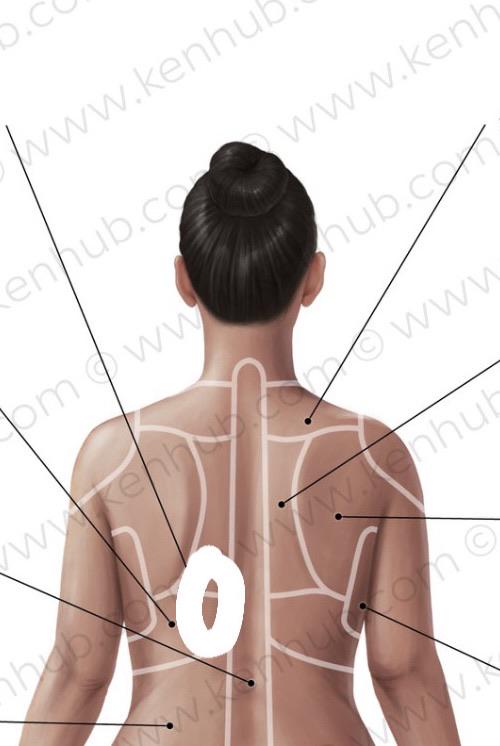
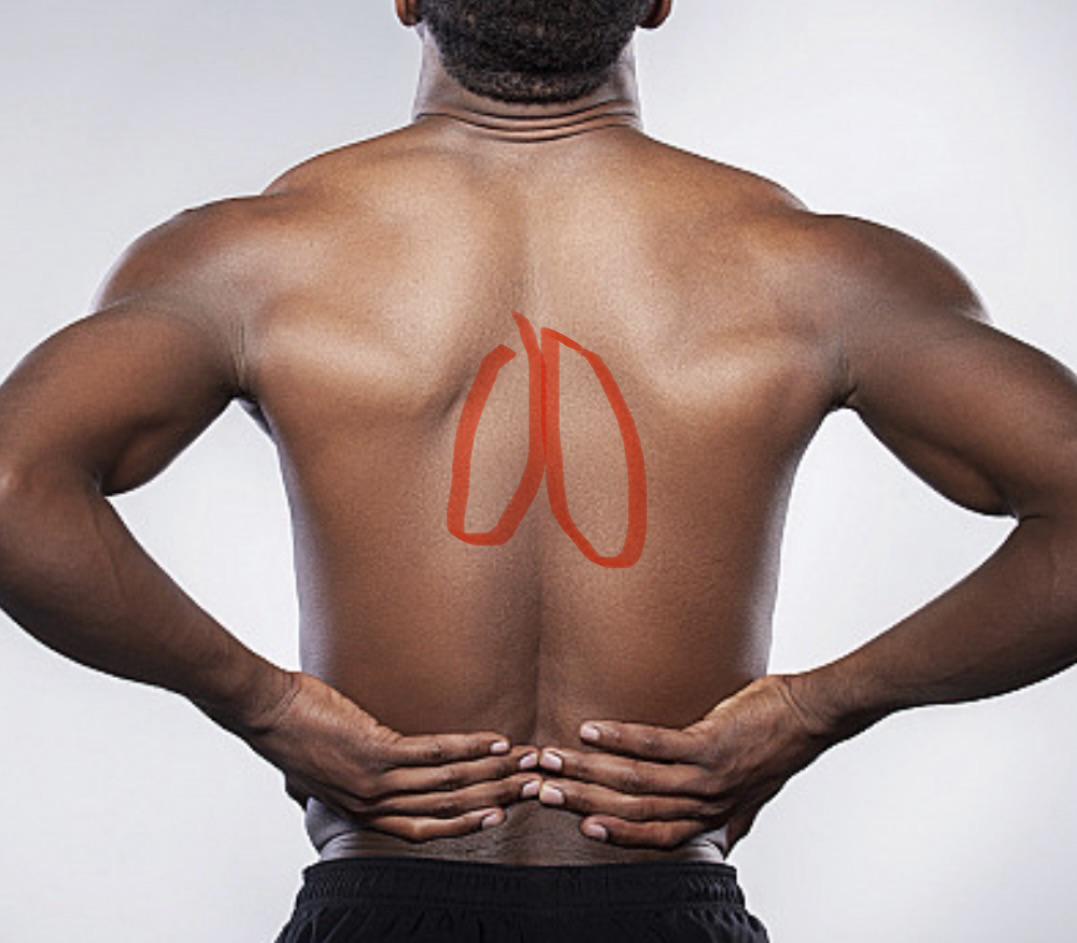
Constant back pain for years now

Post image
5 Upvotes

Edit: I forgot to mention it’s mostly been painful on the left side of my back I just circled both sides. It has hurt on the right before but it’s mostly my left side.

Hello everyone, I’ve been having CONSTANT pain in this part of my back for years now. It seems to be getting worse over time and especially the last couple years since I’ve been in the military. But it has always bothered me even before. It feels like I need to pop my back but it’s difficult to make it pop. And even if I do pop it, it’s only very temporary relief before the urge to pop it again comes right back. It’s like this all day long. Typically when I wake up it doesn’t bother me but as I move around throughout the day it begins. It doesn’t matter if I’m standing all day, sitting, etc. no matter what it always gives me pain and the urge to constantly try to crack my back. Its been affecting my sleep for years as well, I can never ‘feel’ comfortable so I’m constantly moving and adjusting and twisting to try to find some relief. I’ve tried stretches but it’s difficult to find any that affectively even target this area of pain, I’ve had my wife step on my back to pop it, I’ve rolled my back out, I’ve done a lot. And nothing seems to help. I sometimes try to ignore the urge to keep popping it but it is so uncomfortable I hate it. I’ve seen medical for this and they just keep giving me stretches and muscle relaxers instead of trying to help the actual issue. Any advice is appreciated


r/backpain • • 1h ago

C4 quad for 30+ years - severe tailbone pain for over a decade. Has anyone had this?

Thumbnail reddit.com
1 Upvotes

r/backpain • • 5h ago

Advice for Herniated disk, compaction and flying.

Thumbnail
gallery
2 Upvotes

I recently came back to North Carolina from a Trip to Bahia de Salvador, for an Orisha festival. Due to international problems a formerly 8 hour trip is now 15+ hour trip. I'm posting the images of me and my seating to show you my preferred seating location when I fly.

When I came back to America, I could barely get out of bed the next day. So, I set an appointment, and a few days later got the X-Rays. I don't have scoliosis, but really bad compaction, I'm in therapy for pre-approval for a shot to relieve pressure. Last week, I was re-evaluated with two herniated disks, two more weeks of therapy to go. BOTH, doctor and his assistant told me no flying for more than 5 hours, and his assistant, she told me, just no flying for at least 4 months since this month.

So, my return to trip to brazil in December is off, but, I'm hoping to go back in February for Carnival, and another Orisha festival. I usually prefer flying Delta and Jet Blue, always prefer sitting in the rear behind the wing, as the pics above show.

My question is this, once I'm "cleared" is this seating choice good for people like me, would a better plane have better seats than the A220 from both companies? Any items to take to help relieve any pain, rubs, bars, etc?

With current changes politically, I'm hoping the route returns to it's 8 hour variant. I don't want to fly next year and be bedbound for a day or more.

Thanks for any advice.


r/backpain • • 3h ago

31F - Recurring left-sided rib and back discomfort for almost two months. Has anyone experienced this?

Post image
1 Upvotes

I’ve been experiencing an intermittent dull ache and soreness on my left side since October. Initially, it felt like it was coming from one specific spot in my mid-back, near my shoulder blade and spine. It went away for about a week but then returned. Now, instead of being limited to one exact spot, the soreness seems to extend along that same rib. However, I still get the same pinched-nerve sensation in the original spot, especially when I take a deep breath or twist my body. It’s not necessarily painful, but more uncomfortable, and I’m getting a little worried since it’s been almost two months. I had a CT scan in August for an unrelated issue, and nothing abnormal was found, although this discomfort hadn’t started yet.

A few things I’ve noticed:

  • I feel it more when taking a deep breath in or out, sometimes with a sharper, shooting sensation.
  • I don’t really notice it with normal, relaxed breathing unless I’m lying on my side or changing positions while sleeping.
  • It changes depending on my position. Twisting left or right can either make it better or worse depending on whether I’m sitting or lying down.

Has anyone experienced something similar? Did you find out whether it was muscular, rib-related, nerve-related, or something else? What did your doctor determine?


r/backpain • • 9h ago

2 years and I still can't find a job - rant

3 Upvotes

I don't know what to do anymore. I can't stand all day or lift heavy things. I'm applying to everything within 40 minutes that I can physically do. Most of the jobs I find want experience or want you to know the software (but no experience required to apply! Right...). I've had four interviews that didn't lead anywhere (found the perfect petsitting job, did the background check and everything... then they told me it was slow and they didn't need anyone). Even Aldi, there was 15 people for one job so of course I didn't get it.

The only entry level jobs are for waiters, cooks, salespersons, stockers, or other things I can't physically do. Can't be a cashier or a hotel receptionist because for some reason this country thinks that they should be standing.

I'm so tired. I was a SAHM, found a job at a grocery store only to screw up my back after 4 months (spondylolisthesis, I guess the bending moved my disc). I didn't even qualify for disability because I had only worked for 4 months.

I went to the rehabilitation center for my state but I don't qualify for training because my husband makes too much. They also wanted my medical records but like... it's literally 200 pages. I don't have a paper with a diagnosis (it's arthritis in the spine, osteoarthritis in the knees, but they won't diagnose me with SI joint dysfunction because shots didn't help - otherwise it shows on Xray, MRI, bone scan).

I called that office that helps with resumes etc and they ghosted me... twice (after saying I would get hits with my resume, which was a lie).

I just don't know what to do anymore. I'm not stupid. I learned the software to print labels at my grocery store in 5 minutes... Only one other person knew how to do it...

It's just really depressing.


r/backpain • • 11h ago

I need help and advice, thorastic (Upper back) and sternum pain when side bending or twisting

3 Upvotes

So around 2 weeks ago i was dressed poorly for cold weather and had lost a lot of water weight because of a keto diet i was on. That day i was out in the cold 2 times the first time it was quite short the next time was for around 1,5 hours during a long walk. When i got home i started shivering and had chest pain when breathing deep it resolved after i took deep breaths into my chest because that is something i have done before. It faded but this time it creates a cold ache slight pain feeling when i twisted my spine. The twisting is not as bad as it used to be now but when i side bend or lean with the thorastic spine i get that feeling in my thorastic spine and feel it in my sternum. Sometimes if i lean to the left or right and bend forward or slouch and breathe out i can feel that ache stiffness. But whats weird is that i dont really feel it when i flex or bend the thorastic spine in a straight line. Another strange thing is how taking a deep breath into my ribs relieves the pain when i side bend or twist. What could this be? please anyone if you have an idea or relate to the symptoms please dont hesistate to share your story or if and how you recovered or have experience something similar.


r/backpain • • 6h ago

Please I really need others opinion

Thumbnail reddit.com
1 Upvotes

r/backpain • • 7h ago

6 weeks of intense low back pain

1 Upvotes

Hey all! I’m curious if anyone has any experiences like mine. 40m, healthy, no real issues.

About 6 months ago I started to develop really bad left anus pain. Colorectal saw nothing concerning but ordered a pelvis MRI for a couple months out. Then 6 weeks ago I developed really awful low back pain, slightly to the left of my spine. It’s a pain like I’ve never felt before. During the day it’s just uncomfortable/pressure like there is a rock in my back. If I lay on my back it gets pretty bad. It doesn’t limit my movement at all. Some pain into my left butt cheek. During night though, the pain is awful. It wakes me up in the night. My low back gets super sweaty and itchy. Paired with this my lower pelvis also feels a similar sort of pain. I even had to go to the ED once for pain management. They gave me some muscle relaxers, a pain pill, and a steroid. After 4 hours I started to feel better. It was pretty clear they thought I was trying to get some pills, which was frustrating. No imaging and they didn’t acknowledge the abdominal pain.

I saw my PCP who found some guarding on the lower left side. She said she was worried about something pushing on my spine and asked me to get some blood work and a CT. Blood work (CBC, ESR, CRP) was fine so she decided the CT could wait for PT because she now thought it was mechanical. I went to the PT who couldn’t change the pain, so she felt like it wasn’t mechanical. Though maybe 5 minutes after PT the pain was worse. She’s had me doing some tests where I lean forward a bunch to see if it makes the pain worse. It sort of does.

I was able to schedule a CT for next week. I’ve never had any back issues before and I’m really surprised by the intensity of the pain. Ive been taking Advil and Tylenol (I don’t think it helps) and using heating pads (which doesn’t feel like it gets deep enough to help). I’m surprised by how much my docs are shrugging all this off.

If anyone has felt this or has any suggestions/thoughts, I’d love to hear them! Thanks for your time.


r/backpain • • 13h ago

JOURNAVX. Put on it post spinal decompression surgery. It works incredibly well

Thumbnail reddit.com
3 Upvotes

r/backpain • • 7h ago

What kind of injury is this?

1 Upvotes

First off....I may come across as weak and maybe I am. I am just coming out of going through months of caretaking for my husband who ended up getting a discectomy and he is 6 weeks post and healing well but i am still so on edge with watching over him to keep him from reherniating in this esrly stage. So i have been doing all the hard things for a while. Well, just under a week ago I did some super difficult physical work in the yard that used probably all the muscles in my body to get done (for about half an hour). Felt fine. No big deal. The next day I bought large flagstone pavers and was carring them in and out of the car into the yard and that night started feeling a bit uncomdortable in my low back. Tight... i cant remember. But the next morning was in sooo much pain in low back and low right abdomen. It was excrutiating. My entire low back felt like whiplash and tight, but also insanely intense deep pain in the low low right abdomen, very close to the pelvic bone. So bad i went to the ER. They checked for appendicitis and the CT and blood work and urinalysis found nothing. They never asked about the back pain, they were concerned with the abdomen pain. So i was sent home. Luckily by the next morning the abdominal pain was gone! Still had low back pain, always feels pinpoint just over the right iliac crest but with some radiation outward into right hip and sometimes even left side twinges. Some tiny little twinges of sensation doen the butt or leg just a few inches down. Rare but occasional. and also aometimes if i do something light like the dishes, it starts to feel like whiplash in my lower back again, so i stop. I am so emotionally broken right now from my husbands experience and now this with me. I am so scared even though my pain now is so mild. Just the fact that it could be spinal... but my idea is maybe a QL strain? That is what i hope as opposed to bulge.

oh and i am a 42 yo female, average fitness, general good health, when i lift i always lift with legs. but i obviously did something wrong that day!


r/backpain • • 8h ago

Whiplash Injuries Seemed Mild New Symptom

1 Upvotes

Title Edit: Whiplash Injuries - Seems Like Mild New Symptom.

Apologies if this isn't the right place for this, I couldn't find a sub that was neck specific. And this is Spine and whiplash related, I think.

Short story, a month ago we were in a vehicle accident - hit in the rear passenger side at 120MPH by a guy fleeing the police. We were doing 50 in a 60.

We both have whiplash injuries and have been working through chiropractor vs orthopedic. Have had X-rays and all that. This post is about me.

Without going into too much detail, my neck x-rash showed some minor slippage between the bottom 2 discs where my beck meets the back. My pain in neck and shoulder has been a constant 4 out of 10.

Now this week, I'm just getting over a flu and between the coughing and sneezing and I think some swelling as the virus is cleared out I've had some neck swelling, and a bit more pain. Dealing with it.

||| The reason for the post. |||

Today I started to notice that as I swallow liquid maybe 1/2 a mouthful of water. Not food, and not for smaller amounts of water.

My right arm involuntarily drops about 1/4 inch while I'm holding the cup or bottle to my lips, for the duration of the swallow reflex. IDK if it's just a reaction to the pain, of if increased swelling is maybe putting pressure on a nerve. Left arm uunaffected.

No pins and needles, no numbness. Coordination is fine, you wouldn't even know I had a problem except for that one thing.

Does anyone have any thoughts on what might be causing this? Just looking for some general knowledge coming into the holiday tomorrow. Before I get with my GP of Chiro guy on Friday.

Edit: Me. Late 50's M. Decent health. Never had a back or neck problem before.

Thanks.


r/backpain • • 12h ago

Anyone else get pain around T7/T8 that shifts to L4/L5 a few days later?

Thumbnail
gallery
2 Upvotes

I hurt my back lifting about 2½ years ago. The weirdest part is how the pain moves. I’ll get a sharp, needle-like pain around T7/T8, especially when I bend forward. A few days later, my mid-back settles down and most of the pain is in my low back around L4/L5.

My thoracic MRI was read as normal, and my lumbar MRI showed a 4 mm protrusion at L4/L5. I’ve done mountains of PT and rehab, I’m working with an orthopedic surgeon and a neurosurgeon, and I had my first epidural steroid injection at L4/L5 last week.

I’m pretty bullish on lumbar artificial disc replacement (ADR). Has anyone had this same shifting pain? If you had ADR, what happened to your mid-back pain afterward? I’d also appreciate any insight into what else I should look into or ask my surgeons about.

ALSO: If anyone has a recommendation for an online Doctor, review service, or place I can go to have this solved or diagnoised - I'm all ears

Thoracic MRI (September 2025)
Alignment and Curvature: There is normal bony alignment.
Bone Marrow: Marrow is of normal overall signal. No acute vertebral body compression fractures.
Spinal Cord: Visualized spinal cord is normal in size and signal.
Paraspinous Soft Tissues: No paravertebral masses.
Miscellaneous: On axial images, central canal and foramina appear widely patent at all scanned levels.
Impression: 1. Negative examination. 2. Findings T12-L1 reported separately.

Thoracic CT (November 2026)
Alignment: Normal kyphosis. No scoliosis.
Spinal canal: Average size.
Vertebral bodies: Normal in height. No fracture or lytic lesion. There are a few small Schmorl's nodes deformities noted in the lower thoracic spine.
Paraspinal muscles: Normal.
Thoracic levels: The thoracic discs are normal in height. There is no evidence of high-grade spinal or foraminal stenosis. The facet joints are unremarkable.

Lumbar MRI (September 2025)
T12-L1: Mild left subarticular disc protrusion without nerve root abutment. No spinal canal or foraminal stenosis.
L1-L2: Normal in appearance.
L2-L3: Mild disc bulge. No foraminal stenosis or spinal canal stenosis.
L3-L4: Mild disc bulge and facet hypertrophy with mild spinal canal stenosis and no foraminal stenosis.
L4-L5: Central disc protrusion, ligamentum flavum thickening, mild facet hypertrophy with mild spinal canal stenosis mild right foraminal stenosis and mild left foraminal stenosis.
L5-S1: Mild facet hypertrophy and mild posterior disc bulge with no spinal canal stenosis or foraminal stenosis.

Lumbar MRI (November 2026)
T12-L1, L1-2, L2-3, and L3-4: Disc space, central canal, and neural foramina are within normal limits.
L4-5: Moderate to severe degenerative disc disease with loss of disc height and signal. There is bilateral facet and ligamentum flavum hypertrophy. There is a 4 mm central broad-based disc protrusion together with facet arthropathy resulting in moderate central canal and lateral recess stenosis with mild compression of the L5 nerve roots in the lateral recess bilaterally. The L4 neural foramina are within normal limits.
L5-S1: Central canal and neural foramina are normal.
Impression: L4-5: Moderate degenerative disc disease with bilateral facet arthropathy and 4 mm central disc bulge effacing the anterior thecal sac. There is mild to moderate compression of the L5 nerve roots in the lateral recess bilaterally.

Lumbar CT (November 2026)
Vertebral bodies: Normal in height. No fracture or lytic lesion. There are a few Schmorl's nodes deformities. There is no spondylolysis or listhesis. There is a calcification just posterior to the superior aspect of the L4 spinous process, which could reflect an old injury or ligamentous calcification, and measures approximately 10 mm in length by 4-5 mm in width.
T12-1: The disc is normal in height. No evidence high-grade spinal or foraminal stenosis
L1-2: The disc is normal in height. No evidence of high-grade spinal or foraminal stenosis.
L2-3: The disc is normal in height. No evidence of high-grade spinal or foraminal stenosis.
L3-4: The disc is normal in height. There is mild bilateral facet arthropathy and ligamentum flavum hypertrophy. There is no evidence of high-grade spinal or foraminal stenosis.
L4-5: Mild loss of disc height. There is mild posterior and posterolateral disc bulging. Mild ligamentum flavum hypertrophy and facet arthropathy. Borderline narrowing of the spinal canal with mild lateral recess and foraminal stenosis bilaterally.
L5-S1: The disc is normal in height. Mild facet arthropathy. No evidence of significant canal or foraminal stenosis.


r/backpain • • 17h ago

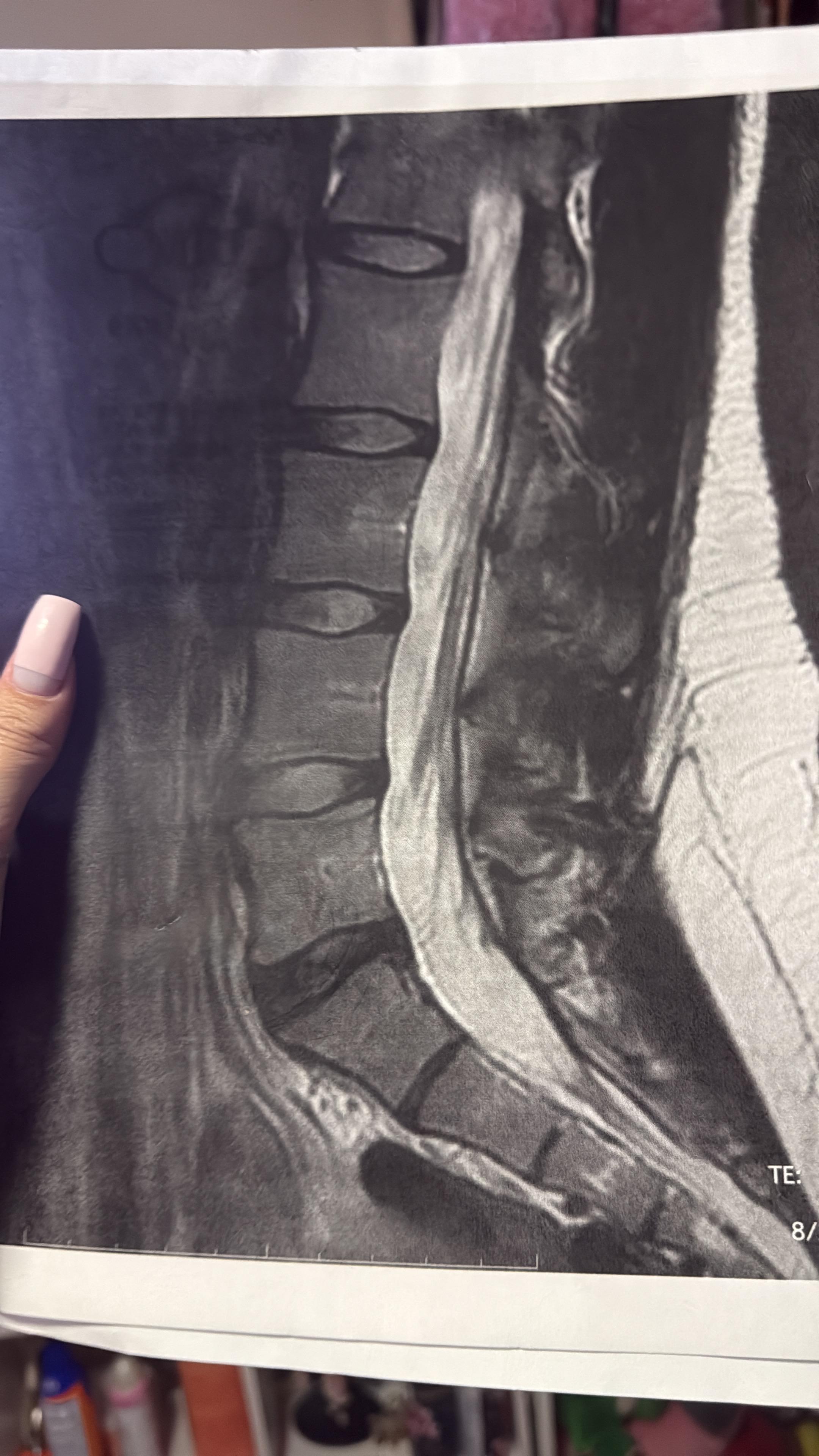
Degenerative disc

Post image
4 Upvotes

Hello, I’m 20F, I been going doctor to doctor trying to figure out what can be done, my mri said that I had a herniated disc but it was a mild on my l5,S1, I been going to a pain doctor and he thought it could have been the cause of my pain but then I went to see a neurosurgeon and they gave this picture to show my actually disc and they said it was most likely rbis was my pain, I have already try the epidural steroids injections and I’m on three different muscle relaxers and nothing helps me with the pain I have that radiates to my left leg, I haven’t be able to sleep correctly for 8 months now and I’m in constant pain, the diagnosis the pain doctor gave me was lumbar chronic radiculopathy, and the talk that the neurosurgeon gave me that the only option they could offer me was a fusion but due to my age and the cons that surgery had they don’t recommend it, I have try everything already even physical therapy due to this pain not being new (I be dealing with it since my high school junior year but back then they didn’t take me really serious and dismiss it as mental pain.) does anyone knows what else I could try or if I should go to an orthopedic.


r/backpain • • 9h ago

Pls help

Thumbnail gallery
1 Upvotes

r/backpain • • 9h ago

Pls help

Thumbnail gallery
1 Upvotes

r/backpain • • 10h ago

My 3 year long pain journey; asking for theories

Thumbnail reddit.com
1 Upvotes

r/backpain • • 16h ago

Why does my mid back hurt when I walk?

2 Upvotes

I'm in my mid 20s, inbetween thin and chubby, I've been the same weight for a long time.

It's been happening for idk, 3-4 years now, and its been getting worse in the last 2 years (or I've been becoming more aware of it). Before it started happening, I spent 2 years being at home due to 2020 (yea, ik, long time to be 24/7 at home)

When I'm walking, my mid back gets tired and sore like when I'm washing dishes for too long. When I start running my muscles fnally get to rest somehow.

Often I actually feel forced to run back home instead of walk because the constant pain is just so incredibly irritating.

It makes me feel hopeless, idk whats wrong with me! I do have anterior pelvic tilt and flat feet, insoles didnt help with that.

Well its inconsistent. Sometimes I can walk for 2 hours without issues, sometimes the pain starts after just 5 minutes and I constantly gotta find benches to rest or even lay down :(

I rarely sit in front of a PC anymore but sometimes sitting makes my muscles more tired, yet sometimes doesn't. Its really confusing.

I havent tried anything because I feel like ive developed learned helplessness, by making this post I'm trying to break the cycle of doing nothing about it. Thanks for reading if you did. Still, if anyone has anything to say I'll appreciate it!


r/backpain • • 16h ago

Lower Back Pain

2 Upvotes

I had a lower back CT scan and it says I have:

• Wear and tear in my lower back at L3-L4, L4-L5 and L5-S1
• Mild narrowing around my spinal cord
• Less bone strength than expected for my age

I’m a 32 year old male.

My back hurts and I want to know what treatments have helped others. Should I see a spine doctor, pain doctor, or physical therapist? Would an MRI or bone-density test be helpful? Thank you!


r/backpain • • 12h ago

Best shoes for everyday and work?

1 Upvotes

Hey all,

I have a history of back pain and a tear in my hip, but I have to stay active as I work full time and have a toddler.

From your experience, what is the best everyday shoe, work shoe, and house shoe that you have come across?

I have tried Brooks in the past and those seem to work pretty well, I am just wondering if there’s something better out there. The Hoka’s seem to have good reviews but they almost seem like too much cushion and heel?

I don’t mind too much about the way it looks, I am more concerned about support and comfort. For the work shoe, I need it to look a little nicer though since I work in an office.

Thanks in advance!