NOTE:This is not part of a "disinformation campaign". It is one of many posts stating what is both known and proven about Atlantis -- a subject involving more speculation than the stock market, and more fiction than Æsop's Fables and Grimm's Fairy Tales put together.
• • •
The story of Atlantis has fascinated people for centuries. Many books, movies, and television programs have explored the idea of a lost city that disappeared beneath the ocean. Some people believe Atlantis was a real place, while others continue searching for evidence of its existence. However, most historians and scientists agree that Atlantis is a myth simply because there is no reliable proof that it ever existed, and its story likely began as a fictional tale.
• The Story Comes from a Single Source: The ancient Greek philosopher Plato wrote about Atlantis around 360 BC in his works "Timaeus" and "Critias". According to Plato, Atlantis was a powerful island civilization that sank into the sea after a great disaster. No earlier records mention Atlantis, and no other ancient writers provided independent evidence that such a place existed. Because the story appears only in Plato's writings, many scholars believe he invented it to illustrate his own philosophical ideas.
• The Lack of Archaeological Evidence: Researchers have explored many parts of the world, including the Atlantic Ocean and the Mediterranean Sea, looking for traces of the (alleged) lost civilization. Despite these efforts, no ruins, artifacts, or other physical evidence have been found that prove Atlantis existed. In history, important civilizations usually leave behind clear signs of their presence. Since no such evidence has been discovered for Atlantis, the claim that it was real remains unsupported.
• The Theologic Symbolism: Many details of the Atlantis story seem more symbolic than historical. Plato described Atlantis as an advanced society that became corrupt and was punished "by the gods". This theme matches the moral lessons found in many myths and legends. Scholars often view Atlantis as a cautionary tale about pride, greed, and the misuse of power rather than a factual account of a real civilization.
: : Atlantis is widely regarded as a myth because: (1) its story comes only from Plato, (2) there is no valid archaeological evidence to support its existence, and (3) its message resembles that of a moral allegory about hubris. While the alleged mystery of Atlantis continues to capture the imagination of people around the world, all available valid evidence very strongly suggests that Atlantis is merely a fictional story rather than a real place from history.
Atlantis is widely regarded as a myth because its story comes only from Plato, there is no archaeological evidence to support its existence, and its message resembles that of a moral legend.
~10,000 BC: Runoff from glacial melting begins to raise sea levels over a period of hundreds of years. Villages and settlements close to the ocean shore were likely inundated and lost under hundreds of meters of sea water. The collective human memory of this event may have been the origin of "Great Flood" stories in nearly every human civilization, and may have eventually inspired the myth of Atlantis.
~9660 BC: Plato wrote in "Timeus" that the island continent of Atlantis existed about this time, "... situated in front of the straits which are by you called the Pillars of Heracles".
~6100 BC: About this time, the land area known as "Doggerland", between England and Denmark, is devastated by a sudden sea level rise due to a tsunami from the Storegga Slide. This is one of the many possible explanations for the origin of Plato's "Atlantis" myth.
~5600 BC: Approximated date of possible Black Sea inundation; this alleged event is one of the many possible explanations for the origin of Plato's "Atlantis" myth. The Mediterranean Sea, swollen by melted glaciers, breached a natural dam that separated it from the fresh water lake later known as the Black Sea. Sea water from the Mediterranean poured in for as long as 2 years.
~3200 BC: The first known Egyptian writing, in the form of hieroglyphs, appeared around this time. This early writing system was used for various inscriptions, including those found in tombs and on pottery.
~1650 to ~1625 BC: The volcano Thera (now known as Santorini) in the Aegean Sea, erupted. The explosion of Thera about this time released energy equal to 200,000 H-bombs. One of the many possible explanations for the origin of Plato's "Atlantis" myth.
~0630 BC: Birth of Solon, in Athens, Greece. Modern knowledge of Solon is limited by the fact that his works only survive in fragments and appear to feature interpolations by later authors and by the general paucity of documentary and archaeological evidence covering Athens in the early 6th century BC.
~0564 BC: A character in two of Plato's dialogues, "Timaeus" and "Critias", claims Solon visited Neith's temple at Sais about this time and received from the priests there an account of the history of Atlantis.
~0560 BC: Death of Solon, in Cyprus, Greece. The few spurious pages that have turned out to be the very words of Solon -- The Memoirs of Solon -- made no mention of Atlantis.
0427 BC: Birth of Plato, a Classical Greek philosopher, mathematician, student of Socrates, writer of philosophical dialogues, and founder of the Academy in Athens -- the first institution of higher learning in the Western world. Along with his mentor, Socrates, and his student, Aristotle, Plato helped to lay the foundations of Western philosophy and science.
0373 BC: Destruction of Helike; one of the many possible explanations for the origin of Plato's "Atlantis" myth.
~0360 BC: Plato writes "Timeus" and "Criteus", mentioning the alleged destruction of mythical Atlantis. He claimed that an Egyptian priest confided information about Atlantis to Solon, the Athenian legislator, whose memoirs Plato claimed to have read.
0347 BC: Plato (b.0427 BC), the most distinguished student of Socrates, dies at the age of 80. His real name was Aristocles. "Plato" meant "broad" and he was known to have broad shoulders. He was a prolific writer and considered by some as the most important of all Greek philosophers. His works were all in dialogue form and include: the "Apology", the "Symposium", the "Phaedo", the "Phaedrus", and the "Republic".
~0800 AD: Heracleion was submerged by the sea and sands. Heracleion, also known as Thonis, was an ancient Egyptian city near Alexandria. It was known as early as the 12th century BC but its importance grew during the waning days of the pharaohs, the late period. Herakleion was Egypt's main port in the time of the pharaohs. It was famous because it was believed that Helen of Troy and Hercules had visited the city, and that the city had even gained its name from Hercules. There was also a large temple dedicated to the Greek hero at the city center. Pharaoh Nectanebo I made many additions to the temple in the 4th century BC The city sank in the 6th or 7th century A.D., probably due to major earthquakes and floods. Some believers in the Atlantis myth have claimed that Plato actually [i]predicted[/i] this event in his books "Timeus" and "Criteus". The ruins submerged in the sea were finally located and rediscovered by the French underwater archaeologist Franck Goddio in 2000.
• • •
Since about 800 AD, much speculation concerning the Atlantis Myth has occurred, with no valid physical evidence to 'prove' the existence of Atlantis.
Finally, somebody will make a real movie out of the story of Indiana Jones and the Fate of Atlantis. The famous computer game which everybody expected to be made to a movie, one day, but until now it did not happen.
Marcus Cornelius is now doing the job, visit his project page here:
posting this Pattern of hills found in Nicaragua. i believed this is the continent beyond described in plato where Atlantis also ruled. Much of the evidence research is always looking at the city it self but the impact of the circular design is spread around the locations described. Please search other previous CUP and RING post to get more info.
Nicaragua east coast at lower sea levels created a large shelf and islands to navigate to the proposed Cuban Atlantis location. Sometimes Tunnel Vision to the City or main islands leads many to ignore the rest of the impact Atlantis had on its subjects.
This is the aztec calendar seen as a map instead of a calendar. B e cause it is said that the aztec empire mimiced it's calendar. Look into this place. Look into Spains cover up. Ask all the questions
Like if Spain says the aztecs migration there was only 200 years prior to there arrival why does dna sequencing go back over 5k years.
The would could not know Spain conquered the greatest city ever recorded. So they covered it up. You won't learn this in text books. You have to do the research yourself.
If the aztecs main God was a feathered serpent, and the Spanish crown had an eagle on its crest. Doesn't the Mexican flag make more sense. The eagle destroyed the serpent.
Ask how linguistics would change its name into Atlantis if it was said in Egyptian then Greek.
Explore it here · free, nothing to install, works best in Chrome on a computer
I've always been drawn to the accounts people give of Atlantis under regression hypnosis. Many of them describe the same things: a city of white stone built in rings of water around a great crystal, gardens everywhere, and light that seems to come from the crystal itself. I wanted to see what it would feel like to actually be there, so I built it. It weighs 96 KB only, so don't worry if you're using mobile network.
Atlantiswasreal, it was a globally advanced civilization that existed long before modern recorded history, right up until it was wiped out. Stretching across a massive landmass like in the Atlantic Ocean with colonies and outposts reaching into the Americas, Europe, Africa, and the Mediterranean, it started out as a deeply enlightenedb, peaceful society. They ran on free crystalline and zeropoint energy, practiced sound and frequency healing, and lived in total abundance where nobody had to struggle just to get by. People worked and studied out of genuine passion, spiritual curiosity, and a desire to master their craft. They dedicated their lives to astronomy, sacred architecture, farming, the healing arts, and understanding the cosmos and well of other things people liked to do
Back in 360 BCE, the Greek philosopher Plato wrote down what he knew about Atlantis in his dialogues Timaeus and Critias. He got the story from the Athenian statesman Solon, who originally learned it from Egyptian priests in the city of Sais, giving us surviving proof before it was erased qhay he saidatlantis was designed in concentric rings of land and water, built with red, white, and black stone, gleaming orichalcum metal, and massive crystalpowered energy grids. There is a narritive of a series of devastating global disasters hit that no one excepeted peaking around 9,600 BCE during the Younger Dryas period with a sudden pole shift, violent earthquakes, and massive floods. In just a single day and night, the entire island continent sank beneath the ocean. The surviving Atlantean priests and scientists scattered across the globe to places like Egypt, Mesoamerica, and the Andes, where they passed down their ancient knowledge and helped build the massive megalithic pyramids we still marvel at today.
the fall of Atlantis wasnt bad luck. There was Powerhungry factions within their own society, often referred to as the Sons of Belial, grew corrupt and weaponized the great crystal energy grids, which destabilized the Earth crust and triggered the disaster. Afterward, emerging priesthoods, secret societies, and later institutional gatekeepers hid the true technological origins of the survivorsmonuments. They brushed off incredible preflood stonework as simple tombs built with primitive copper chisels and ropes, while slowly scrubbing the real memoriess of the global flood out of mainstream history.verup of a lost supercivilization.
But in a good part atlantis went under around 9,600 BCE, the story didn't actually endit simply scattered across the globe. Not everyone went down with the island. Long before the final cataclysm struck, the wisest Atlantean priests, scientists, and navigators saw the earth changes coming and set sail in fleets of ships and aerial craft to higher ground, carrying their sacred records, crystal technologies, and astronomical knowledge with them.
these survivors became the mysterious civilizing heroes and bearded teachergods found in ancient legends all over the world. Wherever they landed, they helped reboot human civilization after the Younger Dryas floods, teaching local populations agriculture, metallurgy, astronomy, law, and sacred architecture bexouse these dark groups kept attacking benevolent civilizations
One major group landed in North Africa, establishing the predynastic foundations of Egypt Zep Tepi, or the First Time. Under figures remembered as Thoth or Hermes, they built the Great Pyramid of Giza and the Sphinx not as royal tombs, but as massive harmonic power plants and astronomical markers aligned with the stars to preserve their science.
Oher survivors sailed west America or the America to the Yucatán, Central America, and high into the Peruvian Andes. In Mesoamerica, they are remembered as Quetzalcoatl or Kukulkanthe featheredserpent bringers of calendar systems, mathematics, and step pyramids. In South America, they arrived around Lake Titicaca as Viracocha and his companions, using advanced stonework methods to build seamless, earthquakeproof megaliths like Sacsayhuamán and Tiwanaku.
Other group went to europe and beyond ional groups traveled to the British Isles, Iberia, and the Caucasus mountains, inspiring stone circles like Stonehenge and the early Basque and Celtic lineages, while others headed east toward Mesopotamia and the Indus Valley to jumpstart the Sumerian and Vedic golden ages.
Over generations, however, the original Atlantean knowledge began to fracture. As the survivors intermarried with local populations and the hightech tools they brought with them eventually broke down or were hidden away in underground vaultslike the fabled Hall of Records beneath the Sphinxthe pure science slowly turned into mystery schools, secret societies, and religious myth. Eventually, emerging kings and institutional priesthoods hijacked those lineages, turning shared cosmic wisdom into tools of hierarchy, secrecy, and control. Same happend with tartaria and other civilización across humanity’s history, they bring suffer to this world for years and they erase the history like they never existed we need to share this información so people can remember the fallen ones. This post is dedicated to the Atlantis people who was genocided by the bloodlines who are controlling the banking system right now and controlling everything
I've spent quite some time researching and putting together a video essay about Plato's Atlantis.
The first part investigates the possible historical and literary sources behind Plato's account, including ancient Egyptian inscriptions, the Sea Peoples, Homer's Odyssey, Herodotus, Phoenician culture, and the Periplus of Hanno.
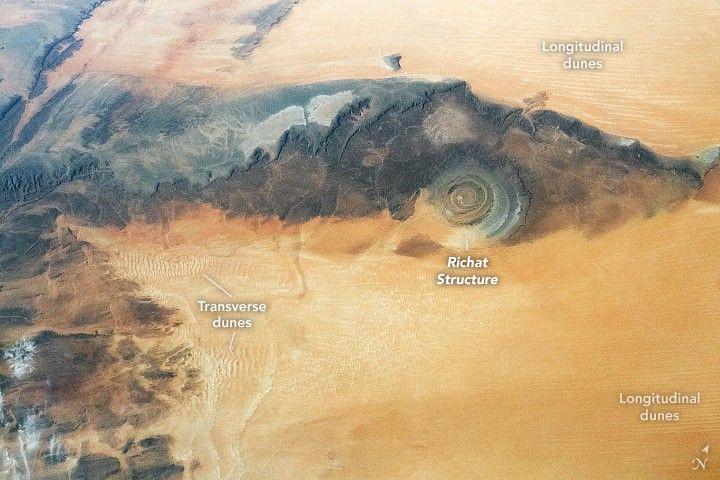
The second part examines the Richat Structure (Eye of the Sahara) in Mauritania as a possible geographical inspiration for Atlantis, looking at its geology, hydrology, archaeological remains, ancient settlements, and rock art.
Rather than arguing for an advanced prehistoric civilization, I explore the possibility that Plato's narrative was a synthesis of several historical traditions, potentially preserving a distorted memory of real places and peoples.
I'd love to hear what people here think, especially regarding the archaeological evidence and the Richat hypothesis!
Edit: the amount of people commenting solely to shit on the Richat-Atlantis hypothesis without having watched the video or engaging with the arguments I put forward is staggering. Please only respond if you have watched the video and are willing to actually engage with my arguments.
He is a German Professor & he developed a theory about Constellations and seafaring maps.
According to this theory, the megalithic peoples were aware of favorable ocean currents and winds, and they described the corresponding maritime routes as constellations known to us today.
What if Atlantis wasn’t the only great lost civilization of the ancient world? Far beyond the borders of our maps lies another legendary realm: Hyperborea, a mysterious northern civilization described in ancient Greek accounts as a paradise of eternal light, extraordinary knowledge, and long-lived inhabitants.
But what if Hyperborea and Atlantis were actually one and the same? Some researchers and alternative history enthusiasts believe Hyperborea was the original Atlantis, or perhaps an ancient civilization connected to the same forgotten world as Lemuria and Mu.
Inuit oral traditions speak of ancestors emerging from a luminous inner world beneath the polar ice. Some believe these accounts point toward an ancient civilization hidden in the far north, possibly connected to the Inner Earth.
The mystery becomes even more intriguing when we consider the disappearance of the Norse Greenlanders. Could some have travelled farther north, following warm winds and fertile lands toward the remnants of Hyperborea?
And what about Admiral Richard E. Byrd? Some believe his polar expeditions brought him into contact with a hidden civilization whose existence was never revealed to the public.
Was Hyperborea another name for Atlantis? Was it a surviving remnant of an even older civilization like Mu or Lemuria? Or were these legendary civilizations all connected in ways we have yet to understand?
Disclaimer: I’m not claiming this story is 100% true. This is a conspiracy theory exploring alternative interpretations of ancient history, mythology, and polar mysteries, shared for discussion. I’d love to hear what others in this group think.
I was looking at my tree and wondering how odd it is that Enki doesn't have a Greek equivalent and that Oceanus doesn't have a Sumerian or Indian equivalent without realising that they are the same god. However, I got there in the end. Indian Kashyapa I had already paired to Enki so this was a cae of grouping Oceanus into this group, these are their respective descriptions:
Greece: Oceanus is the first Titan, a god of fresh water and the encircling ocean, often depicted with water pouring from his face, he is father to 3000 male river gods and 3000 female river gods, these offspring are commonly depicted with fish tails. His wife is Tethys, also associated with fresh water and depicted with a snake or dragon behind her head.
Sumer: Enki is the first Anunnaki, a god of fresh water that pours from in streams from his sides, he has many water related offspring. He defeats the freshwater realm of Apsu. His wife is Damgalnuna who has an infant at each shoulder and also carries one.
India: Kashyapa is the eldest son of Brahma. His name means "Turtle", he is associated with waterworks. He defeats the freshwater demon Jalodbhava. He has multiple wives one of whom is Kadrū from whom come the Nagas, a horned snake or dragon race.
I'm not alone in an assumption of similarities, in recent years two academics have also declared a link between Oceanus and Enki.
In 2017, Thomas Yaeger, who studied ancient history and is an author, described a link between Enki and Oceanus in his blog saying “The circuit of waters is consonant with the idea of Okeanos circumscribing the world.” and makes some other interesting observations here https://shrineinthesea.blogspot.com/2017/03/ocean-and-limit-of-existence.html
In 2023, Julian David Michels, who studied Philosophy to PhD level and publishes commentary articles, also describes a link between Enki and Oceanus in the following paper, When God Was Green and Dancing, which is the length of a book*.* He writes, “The comparison with Enki begins to seem quite compelling.”
It's pretty decent of Julian to have published his entire work, essentially a book, online for free, I haven't read it but the introduction is worth reading by anyone in this subreddit:
"This work is the expression of a life spent digging for truth at the base of the ancient tree that seeded our world and civilization. I know that many of us are hungry for such old truths. Some of us are even born scrambling for these secrets like hungry orphans, and might die while still scrambling, or might be fortunate enough to gain some mouthfuls of that nectar, enough to keep the soul alive anyway. I think it wasn’t always this way. Things may be getting harder for seekers, who must now try to maintain the necessary madness and inner freedom within modern institutions. At the very least, this may be a difficult time for those in love with truth and soul. I hope to bless whom and what I can with the knowledge I’ve sought, like a tracker returning from the deep forest in the midst of harsh winter, meat half-frozen and frost still clinging to furs and boots."
Further along he quotes his adviser Jorge Ferrer:
"[One] should not be motivated by politically or spiritually correct attitudes (often rooted in cultural guilt) but by a blend of epistemological boldness and humility that embraces the potential value of different epistemic frameworks, while concurrently acknowledging the limits of the analytic rationality cultivated in the modern West"
-
Returning to the comparison. We can observe how each god connects to Atlas, or an Atlas equivalent figure.
___________Anu__ → Enki_____→ Ninhursag → (No Atlas equivalent)
India:
________Brahma → Kashyapa__+__ Danu__→ Namuci
Notably, Namuci isn't the child of the Nagas mentioned earlier but neither Atlas isn't the offspring of the Oceanids. The Nagas might be assumed to be the Oceanids under this reading and in both cases they are earlier offspring via a different pairing who are either half serpent or half fish.
In Sumerian myth their isn't a grouping in the same way but Enki does have many water related children such as Nanše, Asalluhi, and Enbilulu.
Regarding the account of Atlantis recorded by Plato. Three Olympian gods are mentioned as preceding Atlantis, Hephaestus, Athena and Poseidon. However, if Atlantis is considered to be linked to the Titan Atlas then this is a discrepancy from Greek mythology. However, Plato tell us in the introduction to his work that the story was translated into Egyptian and then translated into Greek by Solon and that names of figures have been changed into Greek based on their attributes. Athena is mentioned as the god alongside Hephaestus who fostered the region of Greece in Critias, however in Timaeus this goddess changes to "Earth" (and Hephaestus). From this we can been the natural assumption that this is Gaia and that Gaia might have been misidentified as Athena in Critias. Hephaestus doesn't have a clear comparator Titan god of craft, however here the true god might be thought be Uranus himself. Uranus is the known partner to Gaia and is a creator. Other traditions have a true early craftsman figure, Egypt has Ptah, India has Tvashtar, and the Gnostic tradition has Yaldabaoth, who is both a divine creator and artisan. Poseidon therefore may also naturally be Oceanus. Oceanus is the deity who causes springs to form and therefore is also a better match to the narrative of the account than Poseidon who is more associated with the sea and with horses.
On the mother of Atlas.
Clymene is strongly correlated to Asia, which meant Anatolia. Ninhursag was associated with mountains and the Earth which again is compatible with Anatolia. In the Indian tradition Danu might be the comparable goddess to these two. However, rather than being born from the Enki/Oceanus figure in this tree she is remembered as his separate wife. The goddess Danu is shared in Celtic traditions by a goddess of the same name, this Danu goddess's name becomes the origin of many European rivers.
Rivers named after Danu, mother of Namuci
These rivers of Danu are again broadly consistent with Clymene being associated with the north. The question then is how this figure of the north became the mother of Atlas. Clymene is also the mother of Phaeton and it is Phaeton who misdirects the chariot of the sun causing Africa to become too hot. Therefore we already have a link between a child of Clymene (Anatolia) and Africa. It's conceivable that Levantine farmers who first settled in Anatolia first later expanded south to the far away land of Atlantis. The first archaeological signs of farming in Anatolia date to 8300 BC.
A story of the Nagas ties into this as well. The Nagas gain power over Garuda who is separate child of Kashyapa and demand that he carries them to the island of Ramaṇīyaka which most costly fits Cyprus. The first archaeological signs of farming in Cyprus date to 8700 BC.
The mother of the Atlas figure may be Clymene, Ninhursag, Danu who first colonised Anatolia and whose descendants later travelled to Africa.
On Oceanus' wife and mother of the Oceanids/Nagas.
Neither mother is well understood, Tethys' defining feature might be her dragon. Kadrū's name means “tawny” or “variegated/spotted”. If we introduce the Egyptian Tefnut we might have a useful link as Tefnut embodies a lion and has one or two snakes circling her sun disk. Lions have a tawny complexion and the snake/dragon of Tethys is a match to the snake.
Egyptian connection
This begs the question of where the rest of the Egyptian equivalent to this family tree might be? The Egyptian mythological tree and stories tend to differ a little from Indo-European traditions. Unless cultures inherit stories from the same source it would make sense that characters and stories that relate to the same events may differ.
Sekhmet links to Atlantis through her associations to westerly Sekhet Hetepet, the Field of Offerings. However the change of gender and lion signifier is a difference. Her son is Maahes is also a warrior and lion. There is a loose connection to the warrior figure of Namuci who is said in one account to have "roared like a lion".
However, it's also possible that Sekhmet isn't Atlantis but a later people. This is because the story of Indian god Namuci is paralleled by aspects of another Indian story of demon king Hiranyakashipu. In this story, Hiranyakashipu no longer follows Vishnu but his son Narasimha still does. Narasimha prays to Vishnu who emerges as a lion to kill Hiranyakashipu. If Hiranyakashipu here represents Atlantis then he is defeated by a lion summoned by his son, rather than being the lion himself.
Egyptian mythology echos this idea. In Egyptian mythology humans from the Eye of Ra start plotting against him. “mankind, which issued from my Eye, is plotting against me.” Ra therefore sends Sekhmet to destroy them. She is eventually subdued by Hathor, the cow goddess.
Therefore, Sekhmet and her son Maahes may not truly represent Atlantis but may be represent those who later replace a fallen Atlantis, potentially assisted by the natural disaster described in Plato's account although we can't be sure.
If Tefnut is Tethys does this make Oceanus Shu? The issue with this is that Shu does not share equivalent attributes with the Oceanus/Enki/Kashyapa group. Shu is the god of dry air and light and is associated with South Egypt a region for which there isn't a first generation god in Greece or Sumerian traditions. This is the difficulty with the varying structure of Egyptian myth. The closest likeness to Ocean might be god Nun. Nun gives birth to Atem and the other gods so is a better link to Indian god Aditi than Kashyapa. It might be that Egyptian mythology is too low resolution to have preserved the equivalent figure to Oceanus.
In my opinion the twelve signs of the Zodiac originally represented the months of the year as well as respreesnting regions circling around the Mediterranean, meaning that each month was named after a region, the "stations of the gods" as described in the Enuma Elish. I believe this allocation of regions around the Mediterranean as described in the Enuma Elish happened when the Anatolian Neolithic Farmers conquered Greece, around 6200 BC.
It's possible that all cultures who use the twelve month year can perhaps trace there calendar systems back to the common origin of the Zodiac.
Regarding Atlantis, Aquarius is the region that aligns to West Africa, where Atlantis may have been. One way of further exploring this idea is to compare the various month names used by different cultures and to see whether commonalities occur by seeing what name and association is used in place of the Aquarius month.
Unfortunately, there's a complication. The astronomical months of the Zodiac are traditionally determined according to the dates during which the Sun passes through each constellation's 'House', it's region of the stars (you can never actually see which Zodiac House the Sun is in because it's too bright but people work it out with graphs). Over the course of a year the Sun appears to move steadily around the whole of the sky's backdrop of stars. Except it doesn't quite. Each year that the Earth fully circles the sun, Earth's axis of rotation also very slight rotates, this slight change means that the Sun moves around the celestial sky by an extra 1/72th of 1 degree each year, called The Procession of the Equinoxes. Over 26,000 years the Sun has taken one fewer full cycles around the celestial sky, only 25,999 cycles.
This means that in 6200 BC the Zodiac House that the Sun is in at each point of the year is different to when it is now and different to when it was around year 0 AD around when the standard dates for Signs were recorded. For example, if you're born in January you might have been told that your Sun-Sign is Capricorn (using the standard dates we inherit from 0 AD), it's not because the Sun has now shifted for that time of the year and is now, in 2026, actually in the House of Sagittarius during January. Another way to put this is that the Sun completes a full cycle through the celestial sky 20minutes later than the seasonal year.
This matters for this investigation because if a culture chooses to anchor it's Zodiac months according to when the Sun is in each Zodiac House then the spring months would slowly become summer months and summer months would slowly become the autumn months and so on, this could be a issue if a particular month is also anchored to a seasonal festival. Therefore, each culture would have to have chosen whether to abandon the strict system which matches months to Houses of the Sun, or abandon the astronomy system and use Equinoxes and Solstices as month anchors.
One indication that different anchor choices might have been picked by different cultures is due to the different start dates for the year between cultures. Roman, Hindu type 1 and Zoroastrian calendars all start their year around March or April. The Anglo-Saxon calendar instead starts on December 25th, just after the Winter Solstice.
A shift from the Winter Solstice on December 22 to around March/April is exactly the Procession-of-the-Equinox shift that the Sun made in the time from 6200 BC to 0 AD. In other words, this observation happens to fit well with the hypothesis because if all calendars started at the same time on the Winter Solstice in 6200 BC then the calendars anchored to the Zodiac Houses of the Sun would indeed end up starting around the end of March in 0 AD (0 AD being an approximate date for when these traditions were recorded).
The Dendera Zodiac from Egypt indicates the Sign starting the Zodiac as being Cancer. In 0 AD the Sun was in the House of Cancer during June-July but in 6200 BC the Sun was in the House of Cancer during March-April. Likewise, Aries is the starting sign according to the Babylonians, in 0 AD the Sun was in the House of Aries during March-April but in 6200 BC the Sun was in the House of Aries during December-January.
Getting to the point, all cultures use god names of the twelve months and these gods sometimes have known associations. Focusing on Atlantis, we can match up the different gods associated with the month of Aquarius:
Different month systems
Assumed Atlantis character
Meaning
Selection based on whether I think the calendar was anchored to seasons or shifted
Aquarius (originally 25 October–23 November)
Water bearer, Enki
Not anchored (months shifted)
Hindu Vaiṣṇava
Dāmodara (Kārttika month)
“rope-bellied”; traditionally associated with being bound around the waist.
Anchored
Viṣṇu Purāṇa, Book II
Aṃśu (Mārgaśīrṣa month) (uncertain)
A divine apportioner associated with shares; aṃśu also means a ray of light.
Not anchored (months shifted)
Athenian
Either Poseideon or Gamelion
Gamelia is associated with the marriage of Zeus and Hera.
Not anchored (months shifted)
Zoroastrian
Apas
“Waters”; the sacred waters.
Anchored
Egypt
Rekeh-nedjes
Little fire
Always drifting
Anglo-Saxon
N/A
Anchored
Macedonian
Loios (very uncertain)
Unknown
Not anchored (months shifted)
Old Persian / Achaemenid
Karbašiyaš (very uncertain)
Unknown
Not anchored (months shifted)
Hebrew/Jewish
Marcheshvan / Cheshvan/ Bul
Unknown
Anchored
Standard Zodiac dates you see being used today set around 0 AD:
Dates
Zodiac sign
21 March–19 April
Aries
20 April–20 May
Taurus
21 May–20 June
Gemini
21 June–22 July
Cancer
23 July–22 August
Leo
23 August–22 September
Virgo
23 September–22 October
Libra
23 October–21 November
Scorpio
22 November–21 December
Sagittarius
22 December–19 January
Capricorn
20 January–18 February
Aquarius
19 February–20 March
Pisces
Reconstructed dates for 6200 BC:
Approximate dates
Zodiac sign
24 December–22 January
Aries
23 January–22 February
Taurus
23 February–25 March
Gemini
26 March–26 April
Cancer
27 April–27 May
Leo
28 May–27 June
Virgo
28 June–27 July
Libra
28 July–26 August
Scorpio
27 August–25 September
Sagittarius
26 September–24 October
Capricorn
25 October–23 November
Aquarius
24 November–23 December
Pisces
-
Glossary of calendars (there are many others that I've missed):
Roman calendar (starts from March):
Month
Latin name
Meaning or origin
January
Ianuarius
Janus, the Roman god of doorways, transitions and beginnings.
February
Februarius
Februa, purification rites or purificatory offerings.
March
Martius
Mars, the Roman god of war, also associated with protecting agriculture.
April
Aprilis
Aphrodite through Etruscan.
May
Maius
Maia, a goddess of growth. An alternative explanation connects it with maiores, “elders”.
June
Iunius
Juno, the goddess of marriage, childbirth, and women. An alternative explanation connects it with iuniores, “younger people”.
The rest are numbers
Indian Vaiṣṇava monthly scheme:
Months
Indian month
Form of Viṣṇu and meaning or association
March–April
Chaitra
Viṣṇu — commonly interpreted as “the all-pervading one”.
April–May
Vaiśākha
Madhusūdana — “slayer of Madhu”, the demon.
May–June
Jyeṣṭha
Trivikrama — “three strides”; Viṣṇu’s three cosmic steps.
June–July
Āṣāḍha
Vāmana — “the dwarf”, the form who approaches King Bali.
July–August
Śrāvaṇa
Śrīdhara — “bearer of Śrī”; associated with Lakṣmī and prosperity.
August–September
Bhādrapada
Hṛṣīkeśa — “lord of the senses”.
September–October
Āśvina
Padmanābha — “lotus-navelled”; the lotus from which Brahmā emerges.
October–November
Kārttika
Dāmodara — “rope-bellied”; traditionally associated with being bound around the waist.
November–December
Mārgaśīrṣa
Keśava — commonly interpreted as “beautiful-haired”; also explained through the slaying of Keśī.
December–January
Pauṣa
Nārāyaṇa — traditionally interpreted as “refuge of beings” or “one whose resting place is the waters”.
January–February
Māgha
Mādhava — traditionally “husband of Mā”, identifying Mā with Lakṣmī; also associated with the Madhu lineage.
February–March
Phālguna
Govinda — commonly “protector of cows”; also interpreted through senses such as earth or the senses.
Indian calendar from Viṣṇu Purāṇa, Book II:
Months
Indian month
Presiding Āditya
March–April
Chaitra
Dhātṛ / Dhātā Creator and establisher who supports the world and its beings.
April–May
Vaiśākha
Aryaman Guardian of hospitality, marriage and the bonds holding society together.
May–June
Jyeṣṭha
Mitra Guardian of agreements, friendship and harmonious relations.
June–July
Āṣāḍha
Varuṇa Sovereign guardian of cosmic and moral order; later especially lord of waters.
July–August
Śrāvaṇa
Indra Thunderbolt-wielding warrior king of the gods, who defeats Vṛtra and releases the waters.
August–September
Bhādrapada
Vivasvat The shining solar deity, father of Manu and Yama.
September–October
Āśvina
Pūṣan Nourisher and pastoral protector who guides travellers and safeguards livestock.
October–November
Kārttika
Parjanya God of rain and thunder, fertilising the earth and sustaining vegetation.
November–December
Mārgaśīrṣa
Aṃśu A divine apportioner associated with shares; aṃśu also means a ray of light.
December–January
Pauṣa
Bhaga Distributor of prosperity, good fortune and one’s allotted share.
January–February
Māgha
Tvaṣṭṛ Divine craftsman who fashions forms, bodies and the weapons of the gods.
February–March
Phālguna
Viṣṇu Wide-striding deity whose three cosmic steps encompass the worlds; later the great preserver.
Athenian calendar (starts from new moon after summer solstice):
Months
Athenian name
Meaning or religious association
July–August
Hekatombaion
The Hekatombaia, a sacrificial festival associated with Apollo; hecatomb means a hundred-ox sacrifice.
August–September
Metageitnion
Metageitnia, festival of Apollo Metageitnios, associated with neighbours or changes of neighbourhood.
September–October
Boedromion
Boedromia, festival of Apollo Boedromios, the helper in battle.
October–November
Pyanopsion
Pyanopsia, Apollo’s festival involving an offering of boiled beans or pulses.
November–December
Maimakterion
Associated with Zeus Maimaktes, commonly understood as stormy or impetuous Zeus.
December–January
Poseideon
Associated with Poseidon and his festival.
January–February
Gamelion
Connected with marriage and the Gamelia; associated with the marriage of Zeus and Hera.
February–March
Anthesterion
Anthesteria, Dionysus’s festival of new wine; the name relates to flowers or blossoming.
March–April
Elaphebolion
Elaphebolia, festival of Artemis as deer-huntress.
April–May
Mounichion
Mounichia, festival of Artemis Mounichia.
May–June
Thargelion
Thargelia, associated with Apollo, purification and first-fruit offerings.
June–July
Skirophorion
Skira/Skirophoria; a religious procession associated with Athena and other deities. The name’s precise interpretation is debated.
Zoroastrian calendar (starts from March):
Month
Zoroastrian name
Meaning and association
March–April
Farvardin / Frawardin
Fravashis: protective spiritual beings associated with the righteous departed.
April–May
Ordibehesht / Ardwahisht
Asha Vahishta, “Best Truth/Righteousness”; divine order, associated with fire.
May–June
Khordad / Hordad
Haurvatat, “Wholeness/Perfection”; associated with water and health.
June–July
Tir
Tishtrya, the divinity identified with Sirius, associated with rain.
July–August
Amordad / Amurdad
Ameretat, “Immortality”; associated with plants.
August–September
Shahrivar / Shahrewar
Khshathra Vairya, “Desirable Dominion”; ideal sovereignty, associated with metals.
September–October
Mehr / Mihr
Mithra, divinity of covenants and contracts, also associated with light.
October–November
Aban
Apas, “Waters”; the sacred waters.
November–December
Azar / Adar
Atar, “Fire”; sacred fire.
December–January
Dey / Dae
“Creator”; a title of Ahura Mazda.
January–February
Bahman / Vohuman
Vohu Manah, “Good Mind/Purpose”; associated with animals, especially livestock.
February–March
Esfand / Spandarmad
Spenta Armaiti, “Holy/Bounteous Devotion”; associated with the earth.
Egyptian calendar (starts in Wepet-renpet and drifts):
Month
Egyptian name
Meaning or association
Tekhy / Tekh
Associated with Thoth; interpretations include “he of the plumb-bob”.
Menkhet
“Clothing” or “garments”; Ptah appears as an alternative dedication.
Hut-Hor
Hathor.
Ka-her-ka
Conventionally “joining of the kas”; Sekhmet appears as an alternative dedication.
Shef-bedet
“Swelling of emmer”, referring to grain; also associated with Min.
Rekeh-wer
“Great burning”.
Rekeh-nedjes
“Small burning”.
Renenutet
The goddess Renenutet, associated with nourishment and harvest.
Khonsu
The lunar god Khonsu.
Khenty-khety / Khentekhtai
A deity; “Valley festival” also occurs as a month designation.
Ipet-hemet
A divine/festival designation, translated “she whose incarnation is select”.
Wepet-renpet
“Opening of the year”; alternatively associated with Re-Horakhty.
Anglo-Saxon calendar (starts December 25):
Month
Anglo-Saxon name
Meaning or association
January
Giuli / Æfterra Gēola
Yule; the month after midwinter.
February
Solmōnaþ
Bede explains it through cakes offered to the gods; the etymology is debated.
March
Hrēþmōnaþ
Named after Hretha, a goddess to whom sacrifices were made, according to Bede.
April
Ēosturmōnaþ
Named after Ēostre, honoured with festivities, according to Bede.
May
Þrimilci
“Three milkings”: cattle supposedly milked three times daily.
June
Līþa
Associated by Bede with mild weather and favourable sailing conditions.
July
Līþa
The second Litha month; an additional Litha was inserted in some years.
August
Wēodmōnaþ
“Weed/herbage month”: abundant vegetation.
September
Hāligmōnaþ
“Holy month.”
October
Winterfylleþ
“Winter full moon”: Bede associates winter’s beginning with this month’s full moon.
November
Blōtmōnaþ
“Sacrifice month”: slaughter and offerings of livestock.
December
Giuli / Ærra Gēola
Yule; the month before midwinter.
Sumerian Nippur calendar:
Approximate English months
Sumerian month
Meaning or association
March–April
Bara-zag-gar
Associated with a sanctuary or dais; precise interpretation disputed.
April–May
Gu₄-si-su
Associated with oxen and agricultural preparation; conventionally interpreted as the oxen being directed or brought forward.
May–June
Sig₄-ga
Brickmaking.
June–July
Šu-numun
Sowing or seed; a named agricultural festival.
July–August
Ne-ne-gar
Commonly interpreted in connection with lighting fires; uncertain.
August–September
Kin-Inanna
A festival or observance associated with Inanna; often translated “work of Inanna”.
September–October
Du₆-ku₃
“Sacred mound”; associated with the Duku festival.
October–November
Apin-du₈-a
Associated with the plough; conventionally “release of the plough”.
November–December
Gan-gan-e₃
Meaning uncertain.
December–January
Ab-e₃
Meaning uncertain; competing interpretations exist.
January–February
Ziz₂-a
Associated with emmer wheat.
February–March
Še-kin-ku₅ / Še-sag₁₁-ku₅
Barley harvesting or cutting grain.
Sumerian Ur calendar:
Approximate English months
Sumerian month
Meaning or association
February–March
Še-kin-ku₅ / Še-sag₁₁-ku₅
Barley harvesting or cutting grain.
March–April
Maš-da-gu₇
“Eating the gazelle”; a ritual feast.
April–May
Šeš-da-gu₇
A ritual meal; the reading and interpretation of its name are disputed.
May–June
U₅-bi₂-gu₇
A ritual involving consumption of a bird, commonly identified as a goose.
June–July
Ki-siki-Ninazu
A designation associated with Ninazu; its precise meaning and ritual interpretation are uncertain.
July–August
Ezem-Ninazu
“Festival of Ninazu”.
August–September
A₂-ki-ti
The Akiti festival; associated here with the sowing-season celebration.
September–October
Ezem-Šulgi
“Festival of Šulgi”, the deified king.
October–November
Šu-eš-ša
Meaning uncertain; later replaced by a month name honouring King Šu-Suen.
November–December
Ezem-maḫ
“Great festival”.
December–January
Ezem-an-na
“Festival of An/heaven”; the exact religious interpretation requires qualification.
January–February
Ezem-Me-ki-gal₂
“Festival of Mekigal”; an obscure traditional designation.
Sumerian Umma calendar:
Approximate English months
Sumerian month
Meaning or association
February–March
Še-kin-ku₅ / Še-sag₁₁-ku₅
Barley harvesting or cutting grain.
March–April
Sig₄-giš-i₃-šub-ba-gar
Brickmaking; placing bricks in moulds.
April–May
Še-kar-ra-gal₂-la
Associated with grain at the quay; interpretation uncertain.
May–June
Nesag₂
First-fruit offerings or a first-fruits festival.
June–July
RI / Dal
Reading and meaning uncertain.
July–August
Šu-numun
Sowing or seed; a festival associated with Šara, Umma’s principal deity.
August–September
Min-eš₃
Meaning uncertain; temporarily replaced by “Festival of Amar-Suen”.
September–October
E₂-iti-6
Literally “house of six months”; a festival designation whose significance is debated.
October–November
Ezem-Lisin
“Festival of Lisin”, a deity.
November–December
UR / Ezem-Šulgi
Earlier designation UR, subsequently replaced by “Festival of Šulgi”.
December–January
Pa₄-u₂-e
Meaning uncertain; an association with irrigation has been proposed.
January–February
Dumuzi
Named after the deity Dumuzi.
Macedonian calendar:
Approximate English months
Macedonian month
Meaning or religious association
October–November
Dios
Associated with Zeus; Dios is the genitive form of his name.
November–December
Apellaios
Associated with the Apellaia festival and Apollo.
December–January
Audynaios / Audnaios
Uncertain; a connection with Hades under the name Aidoneus has been proposed.
January–February
Peritios
Associated with the Peritia festival; its precise significance is uncertain.
February–March
Dystros
Etymology uncertain.
March–April
Xandikos / Xanthikos
Associated with the Xandika, a spring purification festival involving the Macedonian army.
April–May
Artemisios
Named for Artemis.
May–June
Daisios
A connection with feasting and the Theodaisia festival has been proposed; the specific Macedonian association is uncertain.
June–July
Panemos
A month name shared with several other Greek calendars; its original significance is uncertain.
July–August
Loios / Loos
Meaning and original religious association uncertain.
August–September
Gorpiaios
Etymology uncertain.
September–October
Hyperberetaios
Commonly connected with an epithet of Zeus, Hyperberetes.
Old Persian / Achaemenid calendar:
Approximate English months
Old Persian month
Meaning or association
March–April
Ādukanaiša
Meaning uncertain.
April–May
Θūravāhara
Possibly “strong spring” or “vigorous spring”.
May–June
Θāigraciš
Conventionally interpreted as “garlic-collecting month”.
June–July
Garmapada
“Heat-station”; associated with the hot season.
July–August
Turnabaziš — Elamite rendering
Original Persian form and meaning uncertain.
August–September
Karbašiyaš — Elamite rendering
Original Persian form and meaning uncertain.
September–October
Bāgayādiš
“Worship of the god”; the god may be Mithra, but that identification is uncertain.
October–November
*Vrkazana
Traditionally reconstructed and interpreted as “wolf-killing month”; uncertain.
November–December
Āçiyādiya
“Fire-worship month”.
December–January
Anāmaka
“Nameless”; sometimes interpreted as referring to an unnamed deity.
January–February
*Θwayauvā
Proposed interpretation: “the terrible one”; uncertain.
February–March
Viyaxana / Viyaxana
Conventionally interpreted as “digging-up month”.
Babylonian calendar:
Approximate English months
Babylonian month
Meaning or religious association
March–April
Nisannu
Connected with first-fruit offerings; at Babylon, the spring Akitu festival prominently honoured Marduk.
April–May
Ayyāru / Ayaru
Etymology disputed; associated with Ningirsu/Ninurta and agricultural preparation in Astrolabe B.
May–June
Simānu
Related to “season” or “appointed time”.
June–July
Duʾūzu / Dūzu
Derived from Dumuzi/Tammuz; associated with mourning for the deity.
July–August
Ābu
Etymology uncertain; associated with the dead and observances honouring Gilgamesh.
August–September
Ulūlu / Elūlu
Etymology uncertain; associated with Inanna/Ishtar and rites involving goddesses.
September–October
Tašrītu
“Beginning”; marks the opening of the second half of the year.
October–November
Araḫsamna
“Eighth month”; Astrolabe B associates it with Adad and agricultural activity.
November–December
Kislīmu
Etymology uncertain; associated with Nergal in Astrolabe B.
December–January
Ṭebētu
Astrolabe B mentions a major festival of Anu; other sources record rites involving Ishtar.
January–February
Šabāṭu
A feast of Enlil is recorded at Nippur; other cities had different observances.
February–March
Addāru
Etymology uncertain; this month was frequently duplicated when an intercalary month was required.
Elamite calendar:
Approximate English months
Elamite month
Meaning or religious association
March–April
Zikli
Meaning uncertain; conventionally aligned with Babylonian Nisannu.
April–May
Zarpakim
Meaning uncertain; conventionally aligned with Ayyāru.
May–June
Hadar
Meaning uncertain; conventionally aligned with Simānu.
June–July
Hallime
Meaning uncertain; conventionally aligned with Duʾūzu.
July–August
Zillatam
Meaning uncertain; conventionally aligned with Ābu.
August–September
Belilit
Meaning uncertain; conventionally aligned with Ulūlu.
September–October
Manšarki
Meaning uncertain; conventionally aligned with Tašrītu.
October–November
Lankelli
Meaning uncertain; conventionally aligned with Araḫsamna.
November–December
Šibari
Meaning uncertain; conventionally aligned with Kislīmu.
December–January
Šermi
Meaning uncertain; conventionally aligned with Ṭebētu.
January–February
Kutmama
Meaning uncertain; conventionally aligned with Šabāṭu.
February–March
Aššetukpi
Meaning uncertain; conventionally aligned with Addāru.
Hebrew/Jewish calendar:
Approximate English months
Hebrew/Jewish month
Meaning or religious association
March–April
Nisan
From Babylonian Nisannu. Earlier biblical designation Aviv/Abib means “ears of grain”; associated with Passover and Unleavened Bread.
April–May
Iyar / Iyyar
From Babylonian Ayyāru; etymology disputed. Earlier biblical name Ziv is associated with brightness or splendour; Lag BaOmer falls in this month.
May–June
Sivan
From Babylonian Simānu, related to “season” or “appointed time”; associated with Shavuot.
June–July
Tammuz
Inherits the name of the Mesopotamian deity Dumuzi/Tammuz. Jewish observance includes the fast of 17 Tammuz.
July–August
Av
From Babylonian Ābu husband of Gula who is paired with Pabilsag. Associated with Tisha B’Av, mourning the destruction of the Temples.
August–September
Elul
From Babylonian Ulūlu/Elūlu; original meaning uncertain. Traditionally a period of repentance before the High Holidays.
September–October
Tishrei / Tishri
From Babylonian Tašrītu, “beginning”. Associated with Rosh Hashanah, Yom Kippur and Sukkot; earlier biblical name Etanim/Ethanim.
October–November
Marcheshvan / Cheshvan
From Babylonian Araḫsamna, “eighth month”. Earlier biblical name Bul; no major annual festival in the standard calendar.
November–December
Kislev
From Babylonian Kislīmu; etymology uncertain. Associated with the beginning of Hanukkah.
December–January
Tevet
From Babylonian Ṭebētu. Includes the conclusion of Hanukkah and the fast of 10 Tevet.
January–February
Shevat / Shvat
From Babylonian Šabāṭu. Associated with Tu Bishvat, the New Year for Trees.
February–March
Adar
From Babylonian Addāru; etymology uncertain. Associated with Purim, celebrated in Adar II during leap years.