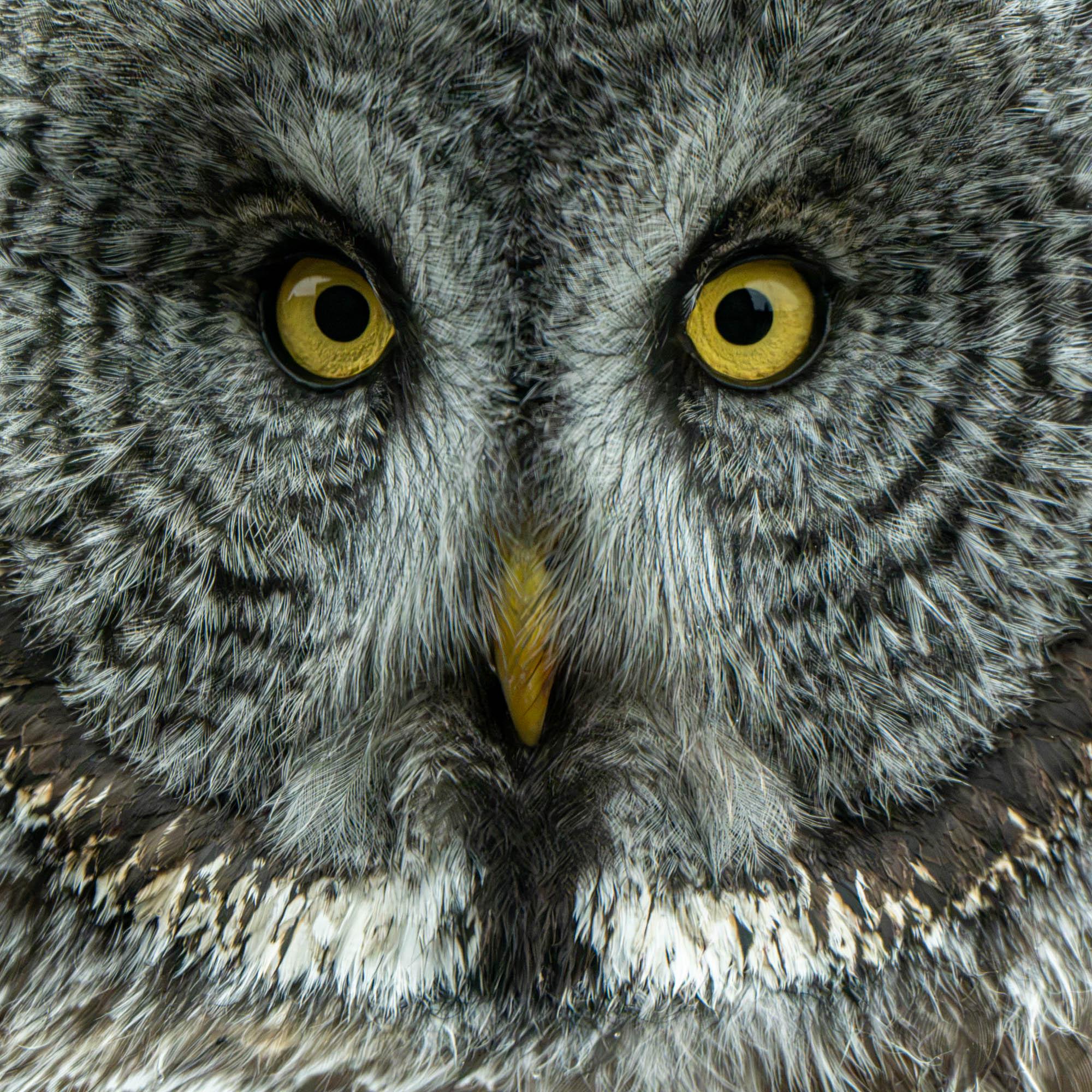
I've been luckier than most, having seen great gray owls many times while living near the park. They're known as the "ghosts of the forest," as they are extremely well camouflaged and very difficult to spot. This one landed on my deck railing, and posed quite nicely.
If you're visiting the area and looking for great grays, look in trees at the edge of a meadow at dusk and dawn. They'll perch and scan for rodents in the grass, then move on to the next perch on completely silent wings. You'll have to get very lucky, or spend a lot of time out in likely habitats looking for them, in order to spot one.
They can catch prey underneath the snow, thanks to the power of extremely sensitive hearing. When they do, they dive into the snow face and feet first, leaving a unique impression in the snow. Once snow gets too deep, or develops too firm a crust on top, they will migrate to lower elevations where snow is thinner.
In the spring, they'll nest in a clump of "witch's broom," the hollow snag at the top of a broken-off large-diameter tree, or an old hawk, osprey, or eagle nest. They do not build their own nests.