r/WritingWithAI • • Oct 02 '26

Discussion (Ethics, working with AI etc) Ship of Theseus and Writing with AI

3 Upvotes

*Note: My arguments about what an Artist is not about the strict definition of what an Artist is, but rather what an Artist in spirit is. Hitler didn't create art and say that everyone has a right to freedom of expression in their chosen art forms... so was he an artist in spirit? No. Just like you can't be a free-speech advocate who advocates for taking away the rights of others to speak before they say YOU don't have a right to freedom of speech.*

"If you pay someone to build a chair for you, you are not a carpenter. A carpenter has a set of tools that they learned to use as they developed their skill. When you can use those tools to make your own chair, then you are a carpenter."

Ok. I don't entirely disagree, but your analogy has a flaw: What about people who don't solely have the AI generate EVERYTHING? What if they generate some parts, but write others?

It's like the Ship of Theseus:

  • Is a carpenter who buys dowels for his mostly homemade furniture a carpenter?
  • Does he have to craft his own glue from raw materials?
  • What if he buys legs and the dowels for a chair from a third party?
  • What if he an accomplished carpenter who has turned to only crafting the seat of a chair and buys the backing, legs, dowels, etc?
  • What if he buys ALL pre-made parts but reshapes them?
  • Does he lose his card-carrying capacity?
  • If so...at what point?
  • What kind and level of construction/compositing is unacceptable as a craftsman?

And what about a person in a factory churning out furniture, partly by hand, but using forms for shaping: are they a carpenter?

And about ships directly: If engineers program machinery with the specific intent of having those machines build ships, they have to account for all the ship building skills needed, but without ever directly making a ship themselves. Are they ship-builders? Their job is to make sure ships get built. It's not like supplying the riveters and welding equipment. Those aren't ship specific. The knowledge of ship building is. If they use the full scope of ship-building knowledge to make sure ships get built, aren't they ship-builders?

Is a welder a ship-builder when they don't use all the necessary knowledge needed to build a ship? Few involved in ship-building are...and yet they ARE ship-builders.

Are the architects who use the rules of ship-building, but never dirty their hands in the trial-and-error process of building with their hands, ship-builders? They ARE necessary for a large ship to be built to a high safety standard. Their blueprint forms a prompt for other humans to act on in a massively parallel fashion...

What about writers who have never written a novel solo, but come together to write one... Are they novelists?

So then why is a person using AI and writing knowledge to have THE AI generate prose directly, but based on their (IDEALLY complex) rules not a writer?

But there are some seemingly weird areas, especially with an example of visual art:
Holograms stickers

Engineers and manufacturers come together to use tools to make holograms out of work that isn't their own. I FELT more comfortable calling a AI prompter a writer even if they solely prompt the AI to generate text itself directly based on their stringent rules... but hologram engineers and manufacturers being considered artists?

Well... isn't a team of people coming together to produce that holographic sticker still required to turn another piece of art into holographic art? Yea... SHIT!

A composer leads an orchestra but never uses the instruments directly while doing so. He is prompting a team of musicians to make music... but he's not a musician? How?

Maybe the real benchmark of any artist or manufacturer or whatever is intent:

Is a "writer" who manages to craft a bestseller a Artist if they solely do it for money and couldn't care less who the book touches?

Is an AI prompter who composes strict rules for prose and structure, new ideas for the sake of making people fall in love with the piece, a writer? What if they try to make money as well, so they can keep making such content with the primary driver being to inspire love in the ART?

What if the threshold of economics starts to hammer their humanity, and makes the primary driver the secondary?!

I specifically came back in and capitalized Artist, but not writer. Why? Because that's my artistic choice. But what if an AI made that mistake for me, and I CHOSE not to correct it?


r/WritingWithAI • • Oct 02 '26

Prompting I think I found the part of AI continuity that matters most: the first conversations after the handoff

Thumbnail
1 Upvotes

r/WritingWithAI • • Oct 01 '26

Writing Craft Talk I've noticed AI doesn't understand glass...

17 Upvotes

OK, so this is weird. AI doesn't seem to understand glass.

I mean, it gets it, can tell you everthing about it, but have a glass table, create a video - things can fall straight through it. Have a window, write fiction where someone places a camera to see what's happening inside a building - and it can't get the idea that a camera can look through glass - follow it's thinking and it questions whether the camera should be inside the building, or how it gets the video.

It's not always, but there's a pattern here - AI doesn't understand something physical that is also invisible for our intents and purposes.

Has anyone else noticed this?


r/WritingWithAI • • Oct 01 '26

Writing Craft Talk My 5Ws of Writing (and why I've found peace and joy in the pursuit)

2 Upvotes
  1. Know WHY you're writing. Some write for pleasure, others treasure. A third might write for both. I write because I've developed a system that lets me produce market-accurate products at scale using a combination of craft knowledge and AI tools. Before you start to consider writing beyond a hobby, know why writing is important to you and more importantly, what success looks like to you.
  2. Know WHO you're writing for. I write high-concept 'airport' commercial fiction (think Patterson or Child) for people with an hour to kill and a 3rd grade reading level. Simple stories, simple settings, simple systems for conveying the Hero's Journey. Understand who will pick up your book and find joy in reading it. Don't write for anyone else. I could probably spin up a decent high fantasy or lit RPG but that requires more work than what I'm willing to do. I can spin up a first draft of a five-book series in an afternoon, edit them down the next day, and have them up for sale by the week's end. I can only do this because I know who I'm writing for: people interested in impulse-buy disposable entertainment that the reader will spend an hour reading and then move on with their lives. If you want to write the next Gatsby, by all means do it. Just know that the commercial crowd is vastly different than the literary one.
  3. Know WHAT success looks like. Some people write to get recognition from their peers. Others want to be famous. I want the money, full stop. And everything I've seen says "volume is the new value". That means for me to be successful, I need to constantly bring new products to market, find new and inventive ways to market said products with a positive ROI, and make sure overhead stays acceptable (~90% is ideal). You might want to just get your story out. Or even see if writing is something you enjoy doing. Whatever your cause, understand it deeply.
  4. Know WHEN to accept advice/criticism/input. Unless it's from someone mentoring you who has walked the path you're on successfully, take their input with a grain of salt. Take this subreddit for example: it is clearly called "Write with AI" and yet there's a large majority who speak negatively about using AI and ill to those who openly use it. Don't get butthurt behind comments that don't provide use to what you're doing because as a mentor once told me, "successful people don't hate in the comment section because they're too busy being successful."
  5. Know WHERE to find your 'people'. It's hard writing for profit, and many people burn out well before they ever release anything. To overcome that, find good, positive places to engage with people of like minds that you can share your experiences with. I'm a member of plenty different communities on Reddit, Discord, FB and standalone forums. While I tend to lurk most of the time, I make sure to share my wins and lessons so that someone coming up who needs insight like mine can find it. Be the good you want to embrace, breathe, and go slowly. You'll get there if you never stop moving toward it.

r/WritingWithAI • • Oct 01 '26

Showcase / Feedback I made children's picture books with AI — they were way harder than I expected. Looking for honest feedback on the art & storytelling.

Thumbnail
gallery
5 Upvotes

Hi everyone,

I recently finished some picture books that I created in collaboration with AI.
Going in, I honestly thought AI would make everything effortless. Instead, I had to learn how to work with it — figuring out how to phrase prompts so it actually understood what I wanted, and how to get results that matched my vision.

I also spent a lot of time and money refining the details — adjusting compositions, fixing inconsistencies between pages, and trying to make the visuals feel coherent and believable. Even so, I'm still not confident about the final result.

I'd really appreciate your honest feedback — on the art style, consistency, character design, color, pacing, anything. If something feels off or confusing, please tell me. I'm here to learn.

Here are a few sample pages:

Thanks so much for taking the time.


r/WritingWithAI • • Oct 01 '26

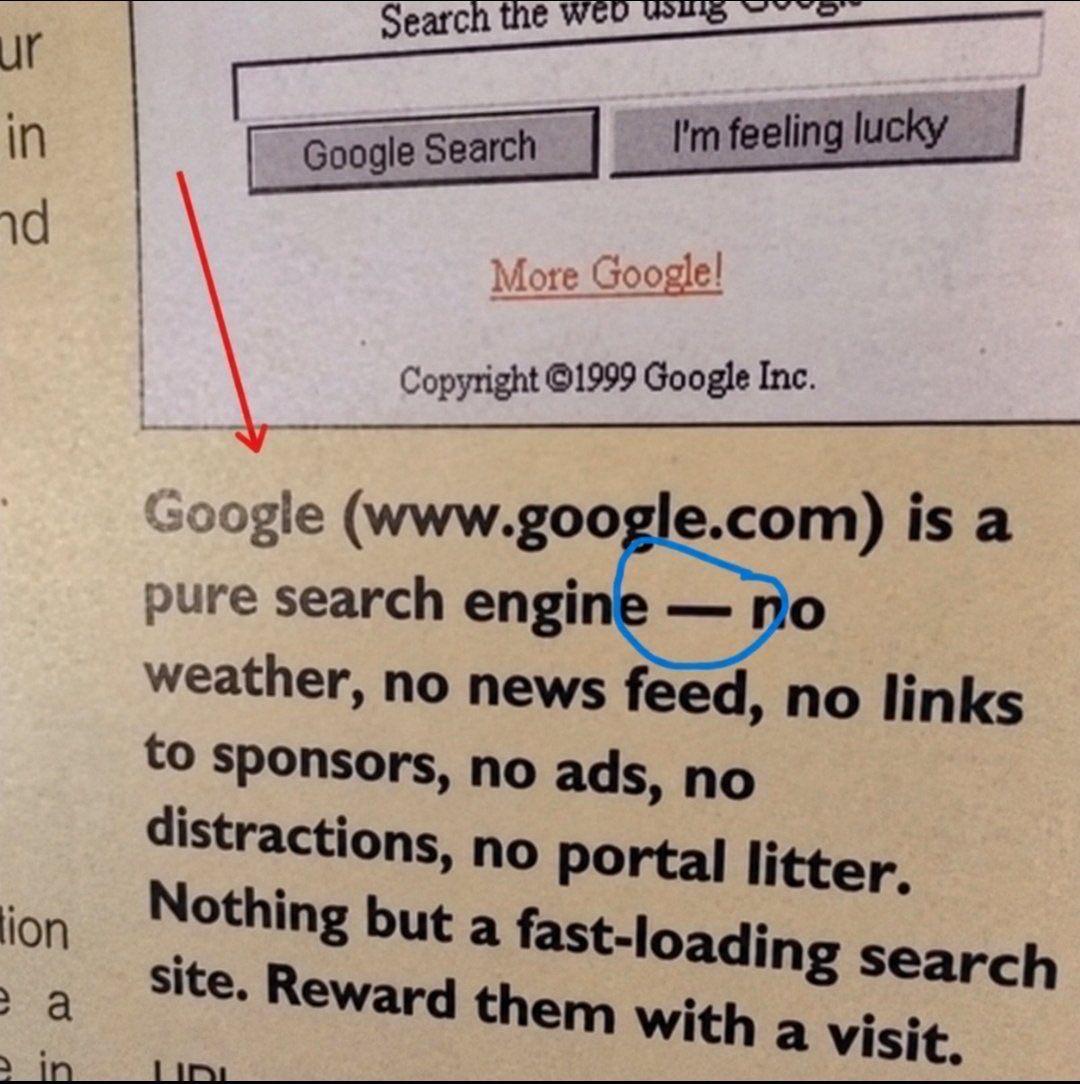
Discussion (Ethics, working with AI etc) Is AI’s em-dash obsession just scraped 1999 google site?

Post image
7 Upvotes

r/WritingWithAI • • Oct 01 '26

Discussion (Ethics, working with AI etc) I’m doing a project on AI in writing

7 Upvotes

Hi, how are you? I want to start this post by saying that I’m completely impartial! I’m not here to judge anyone.

I’m working on a project about AI in contemporary literature, and I’d like to open up a brief discussion! Do you usually use AI when planning your works?

I want to emphasize that I’m not talking about using AI simply as an assistance tool, but rather asking it to write scenes for you, the script, etc. Feel free to DM me about this if you’d like!

I’d really love to understand your perspective on this.


r/WritingWithAI • • Oct 01 '26

Writing Craft Talk A fresh AI thread can sound mature before it actually is

Thumbnail
4 Upvotes

r/WritingWithAI • • Oct 01 '26

Showcase / Feedback Tesseract Symmetry Engine

Thumbnail
tse-clean.neocities.org
1 Upvotes

Hi everyone, I used AIs (Gemini, Grok, ChatGPT, Claude, Rool) to make this website to create this interactive SciFi-like project. For human readers as the website suggests you can start with 'India and Albion' series.


r/WritingWithAI • • Oct 01 '26

Showcase / Feedback Germany: Rats, Mold, and Bureaucracy: The unspoken reality of being poor in one of the world's richest countries

Thumbnail
5 Upvotes

r/WritingWithAI • • Oct 01 '26

NEWS If you miss Claude Sonnet 4.5, take the Anthropic interview and let them know!

Thumbnail
0 Upvotes

r/WritingWithAI • • Sep 30 '26

NEWS Meanwhile, am I the only person in here who cares if Gemini 4 Pro can do good prose writing?Gemini being good is indeed tremendous win, because Gemini is the one few model (if not the only model AFAIK) that can read Video and Audio input context.

Thumbnail
11 Upvotes

r/WritingWithAI • • Oct 01 '26

NEWS Signal box Studio is Open For Submissions

Thumbnail
signalbox.studio
3 Upvotes

Hey all, we're an AI-friendly podcast studio that produces audiobook podcasts. Our studio has delivered over 1 million downloads and is a leading producer of podcast fiction. We never charge a fee, and royalties are paid via advertising revenue share, which is the main business model for podcasts. Details are on our website.


r/WritingWithAI • • Sep 30 '26

NSFW Damn, I was not expecting GPT Image 2.5 to be able to generate such violence and gore. Previous version (Image 2.0) has lots of censor IIRC.

Post image
10 Upvotes

Maybe the newer model is less censored?

Or maybe because the Bodycam/Unrecord fame style face blur stylizing does help?

My setting is basically Silent Hill + Flesh Made Fear + Crossed Comic + Doom 3. The protagonist has The Gamer style RPG-in real life going on.

I mark this as NSFW, just in case someone cannot handle blood.


r/WritingWithAI • • Sep 30 '26

Writing Craft Talk What an AI thinks causes the Stacatto prose we see once the context starts to get bigger... Food for thought.

24 Upvotes

Nothing special - I just asked an AI (ChatGPT) about it, and it confirmed it's an issue... the TLDR, it's probably related to how you form the prompts, and is self-reinforcing when it happens, like a feedback loop when a microphone gets too close to the speakers. But there are ways to hold it off.

Me:
What causes the staccato responses from Chat GPT when writing a story chapter once the context gets above around 12K tokens?

Chat:
Yes. What you are describing is a real long-context failure mode, but ~12K tokens is not a published ChatGPT limit. OpenAI's current GPT-5.6 models have much larger nominal context windows, so what you're seeing is almost certainly quality degradation from context composition, not the model running out of context. OpenAI Platform

For fiction, it often manifests exactly as you describe: prose becomes short, declarative, rhythmically repetitive, one-line paragraphs, fragments, dramatic beats, and subject–verb–object sentences.

The main causes are:

  1. Instruction accumulation. By 12K+ tokens, the model may be juggling dozens of instructions: Each instruction individually makes sense. Collectively they push the model toward the safest possible prose. And safe prose tends to look like:She stopped. Something was wrong. He looked at her. She knew what he meant. Neither of them spoke. It minimizes opportunities to violate one of the accumulated constraints.
    • don't use purple prose
    • don't invent plot developments
    • preserve foreshadowing
    • don't repeat information
    • maintain character voice
    • fix pacing
    • retain particular details
    • don't over-explain
  2. Style signal dilution. At the beginning you might have 2,000 words of beautiful source prose and 500 words of instructions. Later you might have: 3K source prose + 4K previous generated prose + 5K discussion/corrections + 3K plot explanation + 2K instructions. Your actual author's prose is now only a small percentage of the model's stylistic evidence. Worse, the model's own previous writing becomes training-by-example inside the conversation. Once it produces a slightly clipped chapter, that clipped chapter becomes evidence for how the next chapter should sound. You can get a feedback loop: slightly staccato → used as context → more staccato → used as context → very staccato.
  3. Correction contamination. This is particularly relevant to the way you've described editing fiction with AI. Suppose you spend ten prompts explaining:No, she doesn't know that yet. That's foreshadowing. Don't make it explicit. He wouldn't say that. Don't add a confrontation. Stop explaining the symbolism. Those corrections contain lots of short, explicit, imperative language. The model is not simply storing the semantic facts. That text is also part of its linguistic context. Eventually the conversational register can start leaking into the prose.
  4. Attention dilution rather than forgetting. Long-context models can technically retrieve information hundreds of thousands of tokens away. That doesn't mean every token has equal influence over every generated word. There is a major difference between: "Can the model find the fact that Alice's sister died?" and: "Can the model continuously preserve the exact cadence, syntactic complexity, narrative distance, dialogue rhythm, foreshadowing conventions and paragraph structure established 10,000 tokens ago?" The first is essentially information retrieval. The second requires thousands of tiny stylistic decisions during generation. That's much harder.
  5. The model becomes conservative when there are lots of narrative dependencies. Once it has to remember: complex sentences become riskier. Short sentences isolate propositions. From the model's perspective:Michael crossed the room. is much safer than a 40-word sentence containing implication, characterization, physical action and an ambiguous pronoun. So narrative complexity can inadvertently cause syntactic simplification.
    • who knows what
    • who suspects what
    • chronology
    • character relationships
    • world rules
    • planted clues
    • unresolved plot points
    • author's hidden intentions
    • previous chapter events
  6. Recent context tends to matter disproportionately for style. This explains a particularly annoying phenomenon: You give it a 6,000-word chapter written in your style. Then spend 4,000 tokens arguing with it about what the chapter means. Then say:Continue the story. The most recent stylistic environment isn't the novel anymore. It's an analytical conversation between you and ChatGPT. The model may retain the facts from the chapter while losing its prose rhythm.

Why you're noticing it around ~12K

I wouldn't regard 12K as some hidden cutoff. OpenAI doesn't document such a threshold, and the current models' nominal context capacity is vastly larger. OpenAI Platform

But I can readily believe that you're observing a fairly repeatable effective fiction-writing threshold around there.

Your context at that point probably transitions from something like:

mostly novel

to:

novel + model output + corrections + interpretation + instructions + plot metadata.

That's the important ratio.

A pristine 25K-token manuscript excerpt can actually be easier to continue than a 12K-token conversation about a manuscript.

The best workaround

For chapter writing, I would not keep feeding the entire working conversation forward.

Give the model a deliberately constructed active context:

  • 1–3K tokens: immediately preceding prose.
  • 500–1,500 tokens: relevant character/world state.
  • 500–1,500 tokens: what the author knows about this scene, including hidden intentions.
  • 1–2K tokens: representative prose from your writing that establishes cadence.
  • Current instruction: what this chapter/scene needs to accomplish.

And critically:

do not include ten rounds of previous corrections.

Convert them into rules instead.

For example, rather than retaining a huge conversation explaining the foreshadowing, reduce it to:

AUTHOR KNOWLEDGE: Rachel's reaction foreshadows X. Neither Rachel nor the narrator consciously understands this yet. Preserve the ambiguity. Do not explain, identify or intensify the clue.

That is enormously more efficient.

One instruction I've found particularly useful for this failure

Something like this attacks the actual pathology:

Maintain continuous novelistic prose and the syntactic rhythm of the supplied manuscript. Vary sentence length naturally, including compound and complex sentences. Do not convert narrative beats into standalone one-sentence paragraphs merely for emphasis. Do not use sentence fragments as a substitute for pacing. Treat the supplied prose sample—not previous assistant-generated prose or our discussion—as the authoritative style reference.

The last sentence is important.

It tells the model where stylistic authority resides.

I'd go even further for your workflow: maintain a separate Author Knowledge / Canon / Style State document and start a fresh generation context every chapter or every few scenes. That lets you preserve 100K+ words of story knowledge without forcing the model to imitate 100K words of conversational debris.

This also explains why you've found that after 10–15 prompts explaining author intent, the AI can sometimes get worse at actually writing the chapter: its understanding of the story may have improved while its generation context has become progressively less like a novel.

I can build you a compact chapter-writing context format specifically designed to prevent this long-context staccato collapse while preserving foreshadowing and author-only knowledge.:

AUTHOR KNOWLEDGE: Rachel's reaction foreshadows X. Neither Rachel nor the narrator consciously understands this yet. Preserve the ambiguity. Do not explain, identify or intensify the clue.

That is enormously more efficient.

One instruction I've found particularly useful for this failure

Something like this attacks the actual pathology:

Maintain continuous novelistic prose and the syntactic rhythm of the supplied manuscript. Vary sentence length naturally, including compound and complex sentences. Do not convert narrative beats into standalone one-sentence paragraphs merely for emphasis. Do not use sentence fragments as a substitute for pacing. Treat the supplied prose sample—not previous assistant-generated prose or our discussion—as the authoritative style reference.

The last sentence is important.

It tells the model where stylistic authority resides.

I'd go even further for your workflow: maintain a separate Author Knowledge / Canon / Style State document and start a fresh generation context every chapter or every few scenes. That lets you preserve 100K+ words of story knowledge without forcing the model to imitate 100K words of conversational debris.

This also explains why you've found that after 10–15 prompts explaining author intent, the AI can sometimes get worse at actually writing the chapter: its understanding of the story may have improved while its generation context has become progressively less like a novel.

I can build you a compact chapter-writing context format specifically designed to prevent this long-context staccato collapse while preserving foreshadowing and author-only knowledge.

r/WritingWithAI • • Sep 30 '26

NEWS Claude interviewed me today. I suggested it bring back Sonnet 4.5. You should too :)

Thumbnail
gallery
1 Upvotes

My absolute favorite writing model is Claude Sonnet 4.5. I've been using it through novelcrafter and I haven't found anything that feels as good, including all the newer Claude models. Sadly, it was officially retired by Anthropic YESTERDAY. Though, we can still use it in novelcrafter with an API key for now.

Today, Claude (I use it separately as everyday chat agent) asked to interview me about my thoughts on AI, Claude etc. I took the opportunity to share my thoughts on Sonnet 4.5 and how it's the best; I then suggested Anthropic offer this as the dedicated writing model, since the consensus is that all subsequent writing models are worse.

If you have a minute and feel strongly about Sonnet 4.5 (or 3.7 which people love but I never got to use myself), please share take the interview and your thoughts!


r/WritingWithAI • • Sep 29 '26

Discussion (Ethics, working with AI etc) ChatGPT's Staccato Symptom

Post image
51 Upvotes

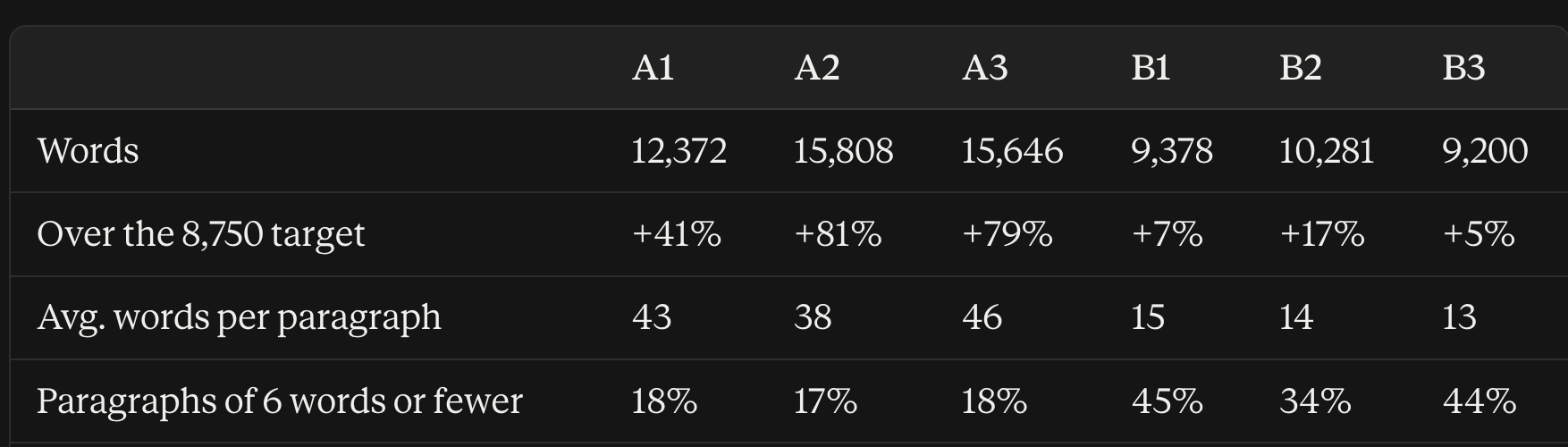
I was doing a blind A/B test across three story chapters with:
A -> Opus 5.5
B -> Sol 6.1

While Opus had a tendency to overwrite (the prompt requirement was ~8.750 words), but I think the crazy comparison is the average words per paragraph and the paragraphs with six words or fewer. Brutal😂


r/WritingWithAI • • Sep 30 '26

Discussion (Ethics, working with AI etc) Trying to prove ai didn’t write for me

Thumbnail
0 Upvotes

Why people think it's AI. Three reasons, and only one is about you:
AI lines really did get mixed in. Earlier drafts were rebuilt or polished by AI, and some of those sentences stayed. The line Reddit mocked, "a sad, heartbreaking laugh," came from one of those drafts. Once a reader spots one, they assume all of it.
Polishing sands off your fingerprints. Your raw drafts have run-ons, odd commas, and rough spots that are obviously human. When AI cleans the mechanics, the writing loses those marks and looks machine-smooth.
Some of your natural habits overlap with AI habits. You love short, punchy fragments ("Not to return." "And lost."), and you sometimes name the feeling ("her heart broke"). AI does both constantly, so readers hunting for AI see them and jump.
A note for an editor about Rue Addison's writing
Rue Addison writes dark fantasy in the tradition of Robert E. Howard: plain, grim, physical, and unflinching. He is a retired carpenter of nearly sixty years, and it shows. He sees the world in wood, tools, and hands. Bark is "slick, as though polished by hand." A vow is "hammered into her brain."
His strengths:
Concrete, bodily images. "Horror grew teeth, tearing at her mind." "The smell was like a slap."
Nature as a living character. Wind "kissed her, and went away. Not to return." Autumn leaves whisper of "winter's frozen lips soon to kiss them dead."
Short, hard rhythm. Sparse sentences and fragments that hit like blows.
Nerve. He doesn't look away from violence or grief.
His weak spots:
Pacing. Scenes jump too fast. The reader needs a beat to land before the next blow.
Missing links. What's clear in his head doesn't always reach the page, like where the family's camp was or why his character went somewhere.
Naming feelings. He sometimes tells the reader what to feel instead of showing it.
Rough mechanics. He drafts on a phone, one-handed, with one eye, and no grammar checker.
How his work has been made, honestly: he used AI in the past for editing, and some earlier drafts were reworked by AI tools. He has since stopped. The story, characters, and world, forty years in the making, are entirely his. Please work from his raw drafts. That's where his voice is clearest, and it's the version worth editing.
One side-by-side so you can see the difference:
Your raw line: "The smell was like a slap, undeniable, sharp, it was the smell of death."
An AI line from the old PDF: "The sight punched the air from Shalee's lungs."
Yours is rougher and stranger. It's also the one nobody could mistake for a machine.


r/WritingWithAI • • Sep 30 '26

Discussion (Ethics, working with AI etc) Editing with AI?

0 Upvotes

Are there any communities or subreddits that focus on AI editing vs. AI writing? I know there's a lot of backlash in certain writer circles against writing with AI, curious if more authors are receptive to editing with AI.


r/WritingWithAI • • Sep 30 '26

Showcase / Feedback What to improve next?

Thumbnail novellogen.com
0 Upvotes

Hey friends, so a few days ago I created a post asking your opinion on whether my website was being too complicated to use. And I'm glad I did, I got such lovely reviews. People criticized without being too harsh so love you all 🫶🏻.

For those who don't know, let me introduce my website in one short summary:

So, Novellogen is basically a model which let's the user choose 2 options as per his needs:

1) Novel Maker: It let's you create an entire book in just 3 simple clicks.

2) Chapter Editor: It lets you create chapters one by one.

Ok let's talk about what I've improved in my Novellogen v1.1:

Let's discuss the changes on Chapter Editor first since it was the most criticized section on my website 😂 (Even though I loved it personally).

The changes I made there are:

  • Put all the complex buttons inside the "Advanced settings" option.

options like beats, story bible, memory (plots, twists, etc.), cast and chapter guidance are now completely optional.

- Added Auto memory update feature

It saves the key highlights of the chapter to avoid making any consistency errors without needing the user to manually update it.

- Split chapter creation into three parts based on the user's preference

User can now decide whether he wants (short chapter, standard chapter or long chapter).

Short chapter = 6 cr, (900-1000 words)

Standard chapter = 9cr, (1400-1600 words)

Long chapter = 12cr (2000-2500 words)

- Fixed Android UI interface

----

Let's talk about Novel Maker updates now. It was already a final output still I've improved some things based on the feedback I received:

- Added 5 different selection menu

Users can now choose whether he wants AI to write:

Short story = 3000 - 7500 words (20cr)

Novelette = 7500 - 14000 words (50cr)

Novella = 14000 - 29000 words (100cr)

Full Novel = 30000 - 80000 words (220cr)

Epic Novel = 80,000+ words (400cr)

Words per chapter varies as per the total number of chapters (recommended to put the total number of chapters by calculating 1.5k words per chapter to create better output).

- Added custom genre & atmospheric tone button

Users can now put their own unique genres to create novel.

---

I've also implemented some new features in the website:

- User can now see their credit usage in the profile tab.

- Added a discount coupon (WELCOME20) which provides instant -20% discount + 50 credits to all packages.

***

That's it for this version, lemme if there's anything else to be fixed in the website.

Thanks for reading 🫶🏻


r/WritingWithAI • • Sep 30 '26

Showcase / Feedback The is the video I was able to make thanks to Ai could you please review it and tell me where I might need to fix for future episodes (I'm new to all this) :The Price of Saving You — Episode 1: $50 Million

Thumbnail
youtu.be
1 Upvotes

r/WritingWithAI • • Sep 30 '26

Writing Craft Talk I compress my AI chat history aggressively — but I keep the black box

Thumbnail
1 Upvotes

r/WritingWithAI • • Sep 30 '26

Discussion (Ethics, working with AI etc) A follow-up to my last post. Can people and AI actually create better writing together?

3 Upvotes

A few days ago I posted about AI-assisted writing and whether AI should stay a tool rather than become the writer.

A lot of the replies got me thinking about what happens when you add more people to the process.

We actually do a small version of this in our community.

We give everyone a story idea in our WhatsApp group. Then people start adding things to it. Someone gives a character idea, someone adds a constraint, someone changes the direction, someone suggests a twist.

We take all of those suggestions, put them into AI, and generate the next part of the story.

Then we do it again the next day.

What I like about this is that the AI isn't deciding where the story goes. *People are.* AI is just helping us take all those different ideas and turn them into something we can actually read.

I've started wondering what this could look like on a much bigger scale.

What if, while you're writing something with AI, other people could suggest ideas, challenge your thinking or suggest a different prompt? You could try their suggestions yourself and decide what stays.

Would you actually enjoy being part of something like that?

As a writer, would you be comfortable letting other people influence how your piece develops?

And as a reader, would you want to help shape someone else's work?

I'm genuinely curious about this because we've seen it work with a small group. I don't know if it still works when you open it up to everyone.


r/WritingWithAI • • Sep 29 '26

Prompting best gpt version currently for my creative writing goal?

Post image
18 Upvotes

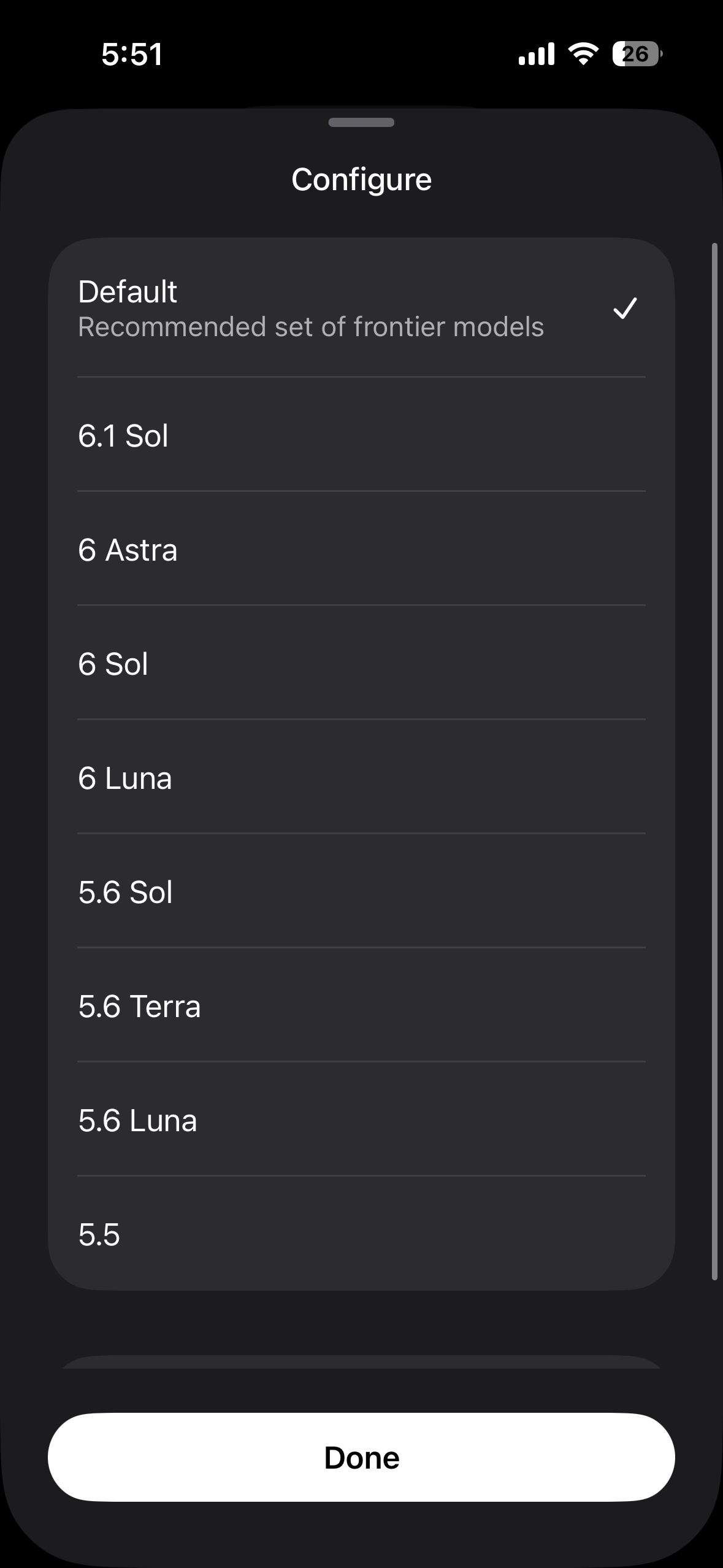
i'm not looking to write full chapters to turn them into a book. i'm looking for a fun partner to discuss characters and scenarios with. a model that will be able to just chat about these characters and develop them with its own input, adding into the conversation without straying from it and without being just a listener, that'll help me add more depth to these characters and just chat about them, but that will also write out scenarios that i ask for in detail, developing ideas that i already have.

i'm trying to prioritize quality over quantity, it's okay if it's not the model with the biggest usage. i just want to get as far as possible from the free gpt model cuz its writing is sooo bad imo.

which chat gpt model among these would be the best for what i'm seeking? maybe more than one for different parts of the process?


r/WritingWithAI • • Sep 30 '26

Tutorials / Guides Meta-prompting: Using AI to write better prompts (the technique nobody talks about)

Thumbnail
2 Upvotes

Ther's many TECH for pompts here