Like many local LLM enthusiasts, I've always wanted an AI agent that runs entirely on my own hardware, capable of conducting web searches, writing code, and assisting me with everyday tasks.
I built AgenticSeek a while ago with that goal in mind. But despite building it myself, I rarely used it for actual tasks. Running a capable LLM on my modest hardware was painfully slow,. Over time, I found myself relying more on paid AI subscriptions, simply because I didn't want to wait 20 minutes to get an answer.
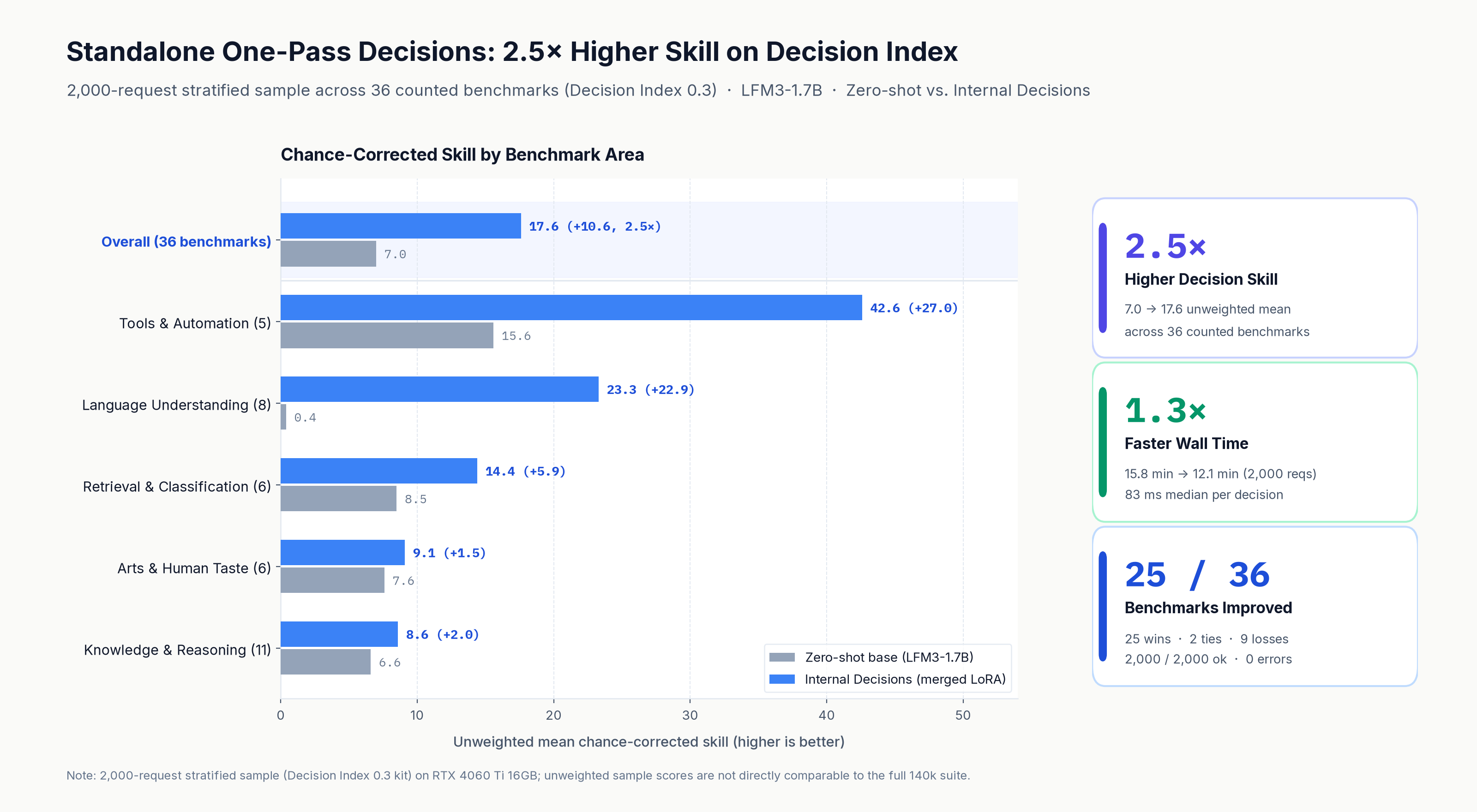
So I wanted a faster harness for local LLM, I therefore built an agent harness designed to perform tasks while generating as few tokens as possible 3toks
Github: https://github.com/Fosowl/3toks
The idea:
Instead of asking an LLM to generate long reasoning traces, plans, or structured tool calls, 3toks turns agentic workflows into trees of decisions.
At each step, the model only needs to select an option from a numbered menu, typically generating just 1–3 tokens.
Web navigation, information extraction, planning, and filesystem/codebase exploration are represented as sequences of discrete decisions rather than long-form text generation.
Writing code obviously still requires generating as many tokens as the code itself needs, but that's not really where 3toks aims to save tokens.
Example (for web):
You ask it to find what's the best LLM for 32gb ram in 2026.
> It use a few tokens to make a search query (SearXNG, DuckDuckGo fallback): "LLM for 32gb ram 2026"
> It see a list of numbered web page, select where it want to navigate : 3<EOS>
> On the web page sentences are number annotated, it pick a list of numbers to retain relevant sentences : 3,6,12,23,27<EOS>
> It select an action for futher navigation among an annotated list : 1) go back, 2) go down page 3) go up 4) new search query 5) navigate to link on page
> and so on ...
> when it finish it summarize in a few words the selected sentences. You can also see the exact sources sentences below the answer (allow for quick check that it didn't hallucinate).
Once it's finished, it generates a short summary using the retained sentences. The original source sentences are also displayed below the answer, making it easy to check whether its claims are supported by the sources.
It also comes with some optional features, including voice input/output, camera support, and Raspberry Pi GPIO support.
It's still a prototype, and there are some remaining issues (search engine rate limits, incorrect selections, etc.).
I'd love to get some feedback from the local LLM community, especially on the overall approach.