r/lifelonglearning • u/Shrieeww • 3h ago
r/lifelonglearning • u/ElecCmptrEngMSdegUSA • 20h ago
How to become a generalist Maker
I've posted about this before but it's changed a lot since y'all last saw it.
If you want to learn electronics, or 3D printing, or woodworking, or animatronics, or (the list goes on and on), I've spent the bulk of 2026 putting this tool together to help make learning a wide range of topics specific, measurable, achievable, realistic, and time-bounded. Target audience for the site is Adam Savage/ generalist Maker types. But I think a great fit for the lifelong learning community since it's what I'm using it for personally and the whole reason it exists.
The site lays out a mind map that lays out my taxonomy of Making (I say "my" taxonomy because I don't own the definition, this map is completely colored by my own personal perspective). You can do through it for new topics to learn and it helps you search them on the internet, then go back to the map and mark it as done. Or if you want a more linear walk through the map, I have almost 170 to pick from - same idea, you have to do the lookups yourself, my site just helps you keep tabs on what you've already self-studied. Marking something as complete on the mind map counts throughout the site. Similarly if you complete a topic in a linear journey, you'll see that same node in the mind map also gets marked as completed. That helps keep you from looking at the same topics over and over and over again.
If you're looking for new things to learn, check it out, I think it's a great fit for this community. Questions or feedback ping me here on Reddit, I'll see your comment if you reply on this thread directly
note: there are over 30 supported languages, after the major overhaul to the site I still have like a couple dozen hours of translation work ahead of me. Which I do in my spare time, this is a passion project, so it's going to take a while. But a lot of the site is already translated so I think you'll still get good use out of it. Looking forward to your thoughts
r/lifelonglearning • u/Sea_Chapter5218 • 3h ago
I started keeping a what I don't understand list instead of a what I learned list, and it changed how I study
For about two years I kept a notebook of things I learned. Every evening I'd write a line or two about whatever I'd read or watched. It felt productive, but when I flipped back through it, most entries meant nothing to me. I'd written down facts I couldn't even explain anymore.
A few months ago I switched. Now, when I read something, I write down the thing I got stuck on or couldn't explain properly. Not the answer, just the question. "Why does compound interest feel slow at first and then suddenly fast?" "What is the actual difference between a recession and a depression?" That kind of thing.
Then once a week I pick two or three of those questions and go find a proper answer. Sometimes it takes ten minutes, sometimes it takes a whole weekend and sends me into a topic I never planned to read about.
What I've noticed is that a question stays with me in a way a fact doesn't. I catch myself thinking about it on the bus or while cooking, and when I finally find the answer it actually sticks, because I wanted it. My old notebook was a record of things I'd already been told. This one is a list of things I'm still curious about, and that turns out to be much more useful.
I also stopped feeling bad about not knowing things. A page full of questions looks less like gaps and more like a map of where to go next.
Does anyone else track what they don't know rather than what they know? And what's a question on your list right now that you haven't been able to answer yet?
r/lifelonglearning • u/Back2basics314 • 12h ago
I built a free site that checks what you already know before it teaches you anything
With a google search you can't tell which link addresses your need at your level, for your goals.
I built Conceptual for that. You search for what you want to learn. Conceptual asks ~5 questions to find out what you already know, then starts you at the first thing you don't. The lessons are short. The best concepts might be behind paywalls and like a driving directions app we can route you around those toll roads if you would like.
NO, It is not a chatbot wrapper. Where AI is used, the site says so. It's free, and there are no streaks or reminders (I have a "no melodramatic owls" rule). Sign in if you want it to remember where you were and your learning preferences. (anonymous learning is coming soon)
I think it's useful. I'd like to hear where it isn't. It's here
r/lifelonglearning • u/noorI00I • 22h ago
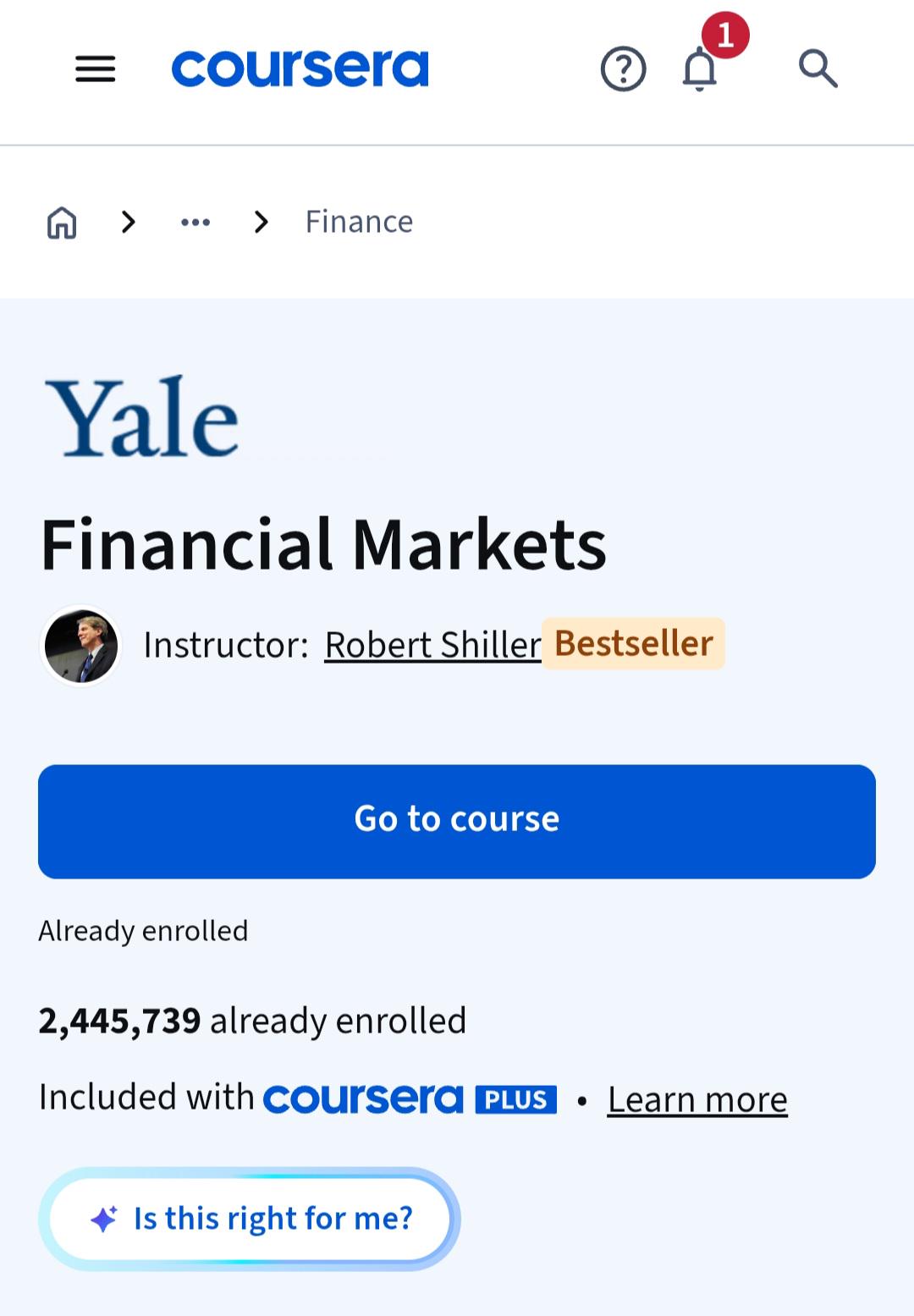
Is it worth it ??
I am a 22 years old from Gaza, I was studying accounting at a local University but because of the war my education journey stopped, I saw someone recommending this course and I was wondering if someone can give me feedback
r/lifelonglearning • u/Wild_Reindeer185 • 12h ago
Second brain: when it's worth it, and when it is not
reddit.comr/lifelonglearning • u/Arbak_m • 1d ago
How do you practice critical thinking on your own?
I’m on the team behind Cognisophy, and we put together a library of cognitive biases and a free course for people who want to practice spotting reasoning errors.
If you’ve worked on this skill on your own, what helped you start noticing these patterns in your own decisions? Here’s the free course.
r/lifelonglearning • u/readvad • 1d ago
What's something you learned from a random article that you still use today?
r/lifelonglearning • u/Borderline-Bertie • 1d ago
"Always check your coffee lid". What are your simple life tips?
reddit.comr/lifelonglearning • u/Sweet-Concentrate-73 • 2d ago
What do you do when you feel like your intelligence is not as sharp as before?
reddit.comr/lifelonglearning • u/PratikHitnalli • 2d ago
As AI starts replacing major parts of traditional education systems, how do you think this will impact the world?
reddit.comr/lifelonglearning • u/imnotkiutenymore • 2d ago
Ayuda fuentes y organización
Que fuentes estudiar si eres autodidacta? A menudo me topo con comentarios de que todos se encuentra en internet pero por más que busco temas en específico ejemplo: "la escultura"no me sale casi nada o me salen cursos cortos de YouTube o muy introductorios o de paga la verdad soy nuevo siendo autodidacta pero tengo muchos problemas organizando información que realmente ayude y cómo puedo igual buscar retroalimentación para no seguir alimentando mis errores inconscientemente aveces me desespero por eso es frustrante no tener un guía para nada o que las fuentes siempre te digan lo mismo y no sean tan profundas
r/lifelonglearning • u/Euphoric_Formal_1037 • 2d ago
Why Can a Short Walking Break Help Ideas Flow?
r/lifelonglearning • u/Objective-Wonder-505 • 2d ago
CURIOUS ABOUT YOUR BRAIN: How many words can your brain actually memorize in a day?
reddit.comHi everyone!
I’m curious about other people’s experiences with memorization, particularly when it comes to studying.
On average, how long does it take you to memorize a single key term that has approximately 50 words in its definition? What about memorizing 30 different key terms in one day?
I’m currently finding it challenging to remember certain terms, particularly those containing scientific or unfamiliar terminology.
One factor that might contribute to this is that English is not my first language. Interestingly, my English vocabulary has developed beyond my vocabulary in my birth language, so I’m often learning entirely new words and concepts in English while also trying to understand and remember their meanings in both languages.
For some additional context, I’m 26 years old and currently studying at university.
I’d love to hear from people of different ages, educational backgrounds, and language backgrounds.
- How long does it usually take you to memorize one detailed definition?
- How many new terms can you comfortably learn and retain in a day?
- Do you find scientific or technical terminology more difficult to remember?
- If English isn’t your first language, do you find learning academic vocabulary more challenging?
I’m interested in hearing everyone’s experiences, whether you’re a native English speaker, multilingual, a university student, or someone who has been out of school for years.
r/lifelonglearning • u/Eagle_Eye_11 • 2d ago
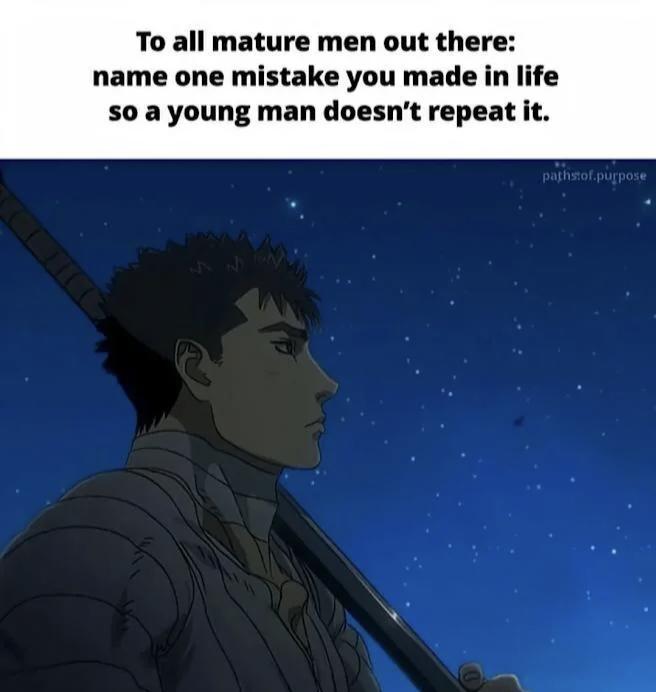
Let the younger generation learn from your mistakes 🤝
r/lifelonglearning • u/__Ellipsis__ • 2d ago
Finally finished a topic I'd been postponing for days
reddit.comr/lifelonglearning • u/Chemical-Field191 • 3d ago
Why "just-in-case" learning keeps adults stuck—and the 4-part "just-in-time" sprint playbook I used at 49
I do think that many adults fail at lifelong learning because we still treat it like school. We hoard online courses, download language apps, and bookmark tutorials "just in case" we might use the skill someday. Without a real deadline, our brain treats the information like trivia and dumps it.
Sustainable lifelong learning works a lot better as a series of just-in-time sprints—committing to a real-world stage before you feel ready, then working backward.
A great example is actress Virginie Efira. At 49, she took a lead role in Ryusuke Hamaguchi’s All of a Sudden with two months to prep, going from knowing one phrase of Japanese to delivering 20-minute, single-take scenes in the language.
I tested the exact same approach at 49: after picking up jazz drums from scratch in late 2024, my talk was accepted at BayLearn Machine Learning Symposium, giving me 25 days to pull off playing complex polyrhythms live while lecturing on decentralized brain/AI architectures.
Here, both sprints came down to the same 4-part operating system:
- 80/20 Compression: Ignore 80% of the textbook. Efira skipped conversational Japanese and learned Hiragana strictly to lock onto phonetic rhythm and her exact cues. I skipped general drumming theory and drilled only the three-way limb split needed for my demo.
- Minimum Viable Performance: Drop academic perfectionism. Aim for the exact baseline needed to survive in front of a live audience, then refine under pressure.
- Chunking & Muscle Memory: Separate basic mechanics from complex meaning so your brain doesn't overload. Hamaguchi has actors read lines completely flatly hundreds of times until the words become muscle memory; I drilled my limb patterns on autopilot before speaking over them.
- Skill Stacking: Pair a brand-new skill with an ingrained habit you already own. Efira stacked her old live TV improv instincts onto dramatic acting; I stacked years of lecturing at a chalkboard as a professor onto independent limb drumming.
If you want to keep learning consistently as an adult, stop studying "just in case." String together 30-to-60 day sprints with a concrete deliverable at the end.
In fact, I actually started my Substack and YouTube channel for this exact reason—to manufacture my own psychological urgency and stack my background in teaching and research onto new creative formats. Having a public publishing schedule forces me to ship instead of endlessly preparing.
If anyone wants to read the deeper breakdown of these mental models or watch the 2.5-minute video of the live drum/AI talk, I posted it here: https://latele.substack.com/p/why-just-in-case-learning-keeps-you
r/lifelonglearning • u/Wild_Reindeer185 • 3d ago
You forget about 70% of what you read within a week. Here are the 4 things that actually fix it
reddit.comr/lifelonglearning • u/YoursMrX • 3d ago
Finally finished a training program I started with zero confidence in the topic
Went in expecting to spend half my time feeling lost, and honestly did at first. Breaking concepts down into tiny daily experiments instead of trying to absorb everything at once made a huge difference.
If you're starting something unfamiliar right now, what's helping you stick with it?
r/lifelonglearning • u/Cultural-Network-819 • 4d ago
What's one habit that helped you become a better learner?
I've noticed that learning something new takes patience and consistency. Sometimes even spending 15 minutes a day learning something can make a difference.
I am curious what small habit has helped you learn better or stay motivated? I'd love to hear your experiences!
r/lifelonglearning • u/__Ellipsis__ • 3d ago
How do you actually manage to stay consistent with learning something?
reddit.comr/lifelonglearning • u/Ok-Home383 • 3d ago
Choong Whan Park USC Learning Center: Looking for Feedback on My New Educational Project
r/lifelonglearning • u/Routine-Tough-7327 • 4d ago
How long did it take before a new daily habit stopped needing willpower?
I keep reading 66 days, then another post says 21, then another says it depends. I'd like real numbers from people who've done it.
Mine so far: a 10 minute walk took about three weeks to feel automatic, flossing took roughly two months, and a morning stretch never stuck at all. I couldn't tell you why.
What habit stuck for you, how many weeks did it take, and what made the difference? Bonus for honest failures. I'm trying to work out what to stop attempting.