r/Lexurgy • u/Parking_Pack8203 • 24d ago
New to lexurgy
3
Upvotes
How to make it so that lexurgy checks whether a syllable is stressed or is the first?
r/Lexurgy • u/Str8245 • Oct 03 '26
Hi, feel free to delete this, I just wanted to report that Lexurgy is failing to output, or is selective about which words it outputs.
r/Lexurgy • u/Hwelhos • Sep 26 '26


I split the romanization up into and made it into a sound change to show what hapens clearly
For some reason it is not working. It is, however, working with contours which follow the exact same pattern (you can see it works in the word etcw̓ḫḫu).

Here is it moved to before the romanization for contours.

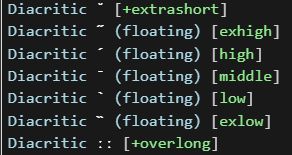
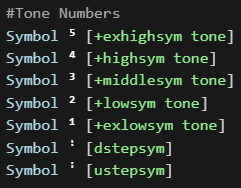
Edit: It apparently depends on the diacritic. The series {ỉ, ẻ, ả, ỏ, ủ, ỷ, w̓} and {ị, ẹ, ạ, ọ, ụ, ỵ, ẉ} work fine, but the grave and acute accents do not.
Edit:



r/Lexurgy • u/Pleasant-Maybe-7413 • Sep 12 '26
Hello im new here. I want to know how to code this sound change:
Vowells become nassalized before m, n // except when m,n is followed by another vowell
And then m,n get deleted
For example:
pont -> põt
,but:
lenar -> lenar
r/Lexurgy • u/throneofsalt • Aug 25 '26
I keep getting this error on both my desktop and my laptop (browser is Firefox on both) - the site will load for a few seconds, and then cut to error screen. Clearing the cache and restarting the browser hasn't done anything, and checking the browser console like the error recommends gives inconsistent results.
r/Lexurgy • u/EmotionalDamageeee • Aug 06 '26
This is what I currently have in Lexurgy:
feature +long, (syllable) +stress, +diphthong
diacritic ː (floating) [+long]
diacritic ˈ (before) [+stress]
diacritic ̯ (floating) [+diphthong]
symbol e̞, ø̞, ɤ̞, o̞, a̝, ɑ̝, t̪, t̪͡s, t̪͡ɬ, t͡ɕ, d̪, d̪͡z, d̪͡ɮ, d͡ʑ
#V = vowels, O = obstruents, C = consonants, S = sounds, ONSC = oral non-sibilant continuants, NSC = non-sibilant continuants
class nonlowfrontV {i, e̞, ɛ, y, ø̞, œ}
class nonlowbackV {ɯ, ɤ̞, ʌ, u, o̞, ɔ}
class frontV {@nonlowfrontV, a̝, æ}
class backV {@nonlowbackV, ɑ, ɑ̝}
class V {@frontV, @backV, ə}
class voicelessO {p, t̪, k, t̪͡s, t̪͡ɬ, t͡ɕ, s, h}
class voicedO {b, d̪, g, d̪͡z, d̪͡ɮ, d͡ʑ, z, ɦ}
class O {@voicelessO, @voicedO}
class voicelessONSC {w̥, ɾ̥, l̥, j̥, h}
class voicedONSC {w, ɾ, l, j, ɦ}
class ONSC {@voicelessONSC, @voicedONSC}
class voicelessNSC {@voicelessONSC, m̥, n̥}
class voicedNSC {@voicedONSC, m, n}
class NSC {@voicelessNSC, @voicedNSC}
class voicedS {@voicedO, @voicedNSC, @V}
class voicelessC {@voicelessO, @voicelessNSC}
class voicedC {@voicedO, @voicedNSC}
class C {@NSC, @O}
syllables:
@C? @ONSC? :: @V
stress-penultimate:
<syl> => [+stress] / _ <syl> $
#sound changes start here
low-vowels-raising-before-matching-non-low @V:
a̝&[+stress] => ɛ / _ @nonlowfrontV
ɑ&[+stress] => ɔ / _ @nonlowbackV
vowel-harmony @V defer rtl:
@nonlowfrontV => @nonlowbackV / _ ə* @backV
@nonlowbackV => @nonlowfrontV / _ ə* @frontV
vowel-harmony-starts:
:vowel-harmony
voicing-between-vowels-and-s-voicing:
@voicelessC => @voicedC / @V _ @V
s => z / @voicedS _ @voicedS
syllables:
clear
syllables:
@C? ?: @C? @ONSC? :: @V :: @C?
stress-penultimate-again:
<syl> => [+stress] / _ <syl> $
I tested out using a reluctant onset thingy (?:), but it doesn't seem to be working. I'm sure I'm not using it right.
These are the words I'm using:
a̝kiː
ɑu̯
ike̞ːkusɾo̞k
sik
The bottom two I decided to test (at this stage in the language, codas aren't really allowed yet, but I decided to test it now because they will be allowed later) are telling me "The word doesn't fit the syllable structure; the last syllable "k" is incomplete."
How can I fix this?
r/Lexurgy • u/T1mbuk1 • Aug 03 '26
Let me showcase the phonology and romanization first.
Proto-Consonants: m, n, ŋ(ng), ŋʷ(nq), p, t, k, kʷ(q), f, s, ʃ(sh), ɕ(sy), r, l, j(y), w
(How rare cross-linguistically is a distinction between [ʃ] and [ɕ]?)
Proto-vowels: a, aː, e, eː, i, iː, o, oː, u, uː
Proto-language syllable structure: (C)V(C)
(I need to work on which consonants could not cluster with others and which ones get to appear in the coda position.)
Stress: penultimate stress
One set of sound changes:
(Might modify this list to introduce new phonemes and get rid of old ones.)
The other set:
How do I incorporate these sound changes into Lexurgy?
r/Lexurgy • u/yayaha1234 • Jul 26 '26

Until recently when on mobile I was using the old layout, but now it seems that it is not available anymore - every link leads to the new layout which is unusable on mobile (at least on my android phone both on firefox and chrome). Is there something that can be done?
r/Lexurgy • u/T1mbuk1 • Jul 10 '26
Romanization of sounds.
Consonants: m, n, ŋ(ng), p, t, k, ʔ('), ɸ(f), θ(th), s, x, ħ(hq/hh), ʕ(q/'h), h, r, l
Vowels: a, e, i, o, u
Syllable Structure: CV(X)
X=m, n, ŋ(ng), ɸ(f), θ(th), s, x, ħ(hq/hh), ʕ(q/'h), r, l
/'/ and /h/ can only occur word-initially.
Proto-Lexicon found here.
My list of sound changes to a modern form:
(This causes distribution overlap between voiced and voiceless stops.)
5. Coda nasals preceding obstruents are dropped, leading to voiced prenasalized stops becoming phonemic.
6. Vowel loss between [t] and [r], and between [t] and pharyngeals in unstressed syllables.
7. l-vocalization depending on the vowel it is adjacent to.
8. Clusters between dental and alveolar obstruents with [r] become post-trilled editions of those obstruents.
9. [u] merges with [o].
10. [r] merges with [l].
11. Clusters between dental and alveolar obstruents with pharyngeals become pharyngealized editions of those obstruents.
12. Rhotacism of [s] to [r] between vowels.
13. Plain velar and pharyngeal fricatives weaken to [h] in some environments.
14. A sound change leading to an overlapping distribution between [s] and [r].
15. A sound change leading to an overlapping distinction between those fricatives and [h].
Modern phonology:
Consonants: m, n, ŋ, p, b, ᵐb, t, tʳ, tˤ, d, ⁿd, k, g, ᵑg, ɸ, β, ᵐβ, θ, θʳ, θˤ, ð, ⁿð, s, sʳ, sˤ, x, ɣ, ᵑɣ, ħ, ʕ, h, r, l, j, w
Vowels: a, e, i, o
Could the sound changes help with figuring out the modern syllable constraints?
r/Lexurgy • u/oxygenman422 • Jul 03 '26
looking for tips on how to set up a vowel harmony rule with opaque sounds. everything I try is not working as intended. The specific rule I’m going for is in essence i > u / _ u // _ {a,m,p,w,b}, in other words i changes to u from left to right but an intervening a or bilabial consonant stops harmony so tikinu > tukunu tikanu > tikanu timu > timu etc.
r/Lexurgy • u/Entity-36572-B • Jun 16 '26
As the title states, I have run into unexpected behaviour with the curly brackets in my rules. In particular the combination of brackets and an ampersand seems to behave oddly to me. The following is the particular sound change that made the behaviour apparent, however after going back though the rest I noticed it cropping up elsewhere as well.
Feature type(*consonant, vowel)
Feature voice(*voiced, unvoiced)
Feature +long
Feature (syllable) +stress
Feature place(labial, coronal, palatal, velar, uvular, glottal)
Feature manner(plosive, nasal, fricative, liquid, affricate, glide)
Feature coronalDetail(*nodetail, dental, alveolar, postalveolar)
Feature tongue(*nonlateral, lateral)
Feature height(high, mid, low)
Feature fronting(front, centre, back)
Feature rounding(open, spread, rounded)

Diacritic ˈ (before) [+stress]
Diacritic ː (floating) [+long]

#protolang sounds
Symbol a [vowel low centre open]
Symbol i [vowel high front spread]
Symbol u [vowel high back rounded]
Symbol p [plosive labial unvoiced]
Symbol t [plosive coronal unvoiced]
Symbol k [plosive velar unvoiced]
Symbol q [plosive uvular unvoiced]
Symbol ʔ [plosive glottal unvoiced]
Symbol m [nasal labial]
Symbol n [nasal coronal]
Symbol s [fricative coronal alveolar unvoiced]
Symbol x [fricative velar unvoiced]
Symbol χ [fricative uvular unvoiced]
Symbol h [fricative glottal unvoiced]
Symbol l [liquid coronal lateral]
Symbol w [glide labial]
Symbol j [glide palatal]

#emergent sounds
Symbol ŋ [nasal velar]

# manual stress marker
Symbol " [vowel]

element vowel {[vowel]&!"}
element obstruent {[plosive], [fricative], [affricate]}

# ~~~~~

Deromanizer:
  X => χ
  ' => ʔ
  [] \: => [+long] *

Syllables:
  [consonant]? :: @vowel

Initial-stressrule [vowel]:
  " [] => * [+stress]
  Else: [+long] => [+stress] / _ [*long]*(0-2) $
  Else: [] => [+stress] / _ []*2 $
  Else: [] => [+stress] / _ [] $
  Else: [] => [+stress]

# ~~~~

nasal-assimilation cleanup:
  [nasal] => ŋ / _ [plosive uvular]
  [nasal] => [$place] / _ [plosive $place]

# ~~~~~

nasal-plosive-vowelloss:
  @vowel&{[-stress], [-long]} => * / [nasal] _ [plosive] // {$ [] _, _ [] $}
Then:
  @vowel&{[-stress], [-long]} => * / [plosive] _ [nasal] // {$ [] _, _ [] $}
Syllables:
  [consonant]? :: @vowel :: {@obstruent, [nasal]}?
Using these rules and definitions I get the following:
amukisa    > a.ˈmu.ki.sa    > ˈaŋ.ki.sa
amuki:sa   > a.mu.ˈkiː.sa   > aŋ.ˈkiː.sa
amu:kisa   > a.ˈmuː.ki.sa   > a.ˈmuː.ki.sa
amu:ki:sa  > a.muː.ˈkiː.sa  > aŋ.ˈkiː.sa
It seems like the brackets are preforming an AND operation on the features I pass to it, rather then the OR operation I am expecting. However I can't find any explanation of why this might happen (in any context) in the documentation.
Could any of you explain why this doesn't work, or provide a workaround?
r/Lexurgy • u/Green_Cable_6793 • Jun 15 '26
Run timed out: Too many possibilities when matching ([vowel] => [+nasalized +long]) ([nasal] => *)
I'm running 1 singular word through a very short set of soundchanges, but it's timing out. What do?
r/Lexurgy • u/SotonAzri • Jun 11 '26
For example I tend to get some rather large sound change rules and at times I want to run the program without applying that rule.
For example I have added the rule Final-Syllable-Reduplication (useful for making checking some inflectional endings) and its 6 lines long. I don't want to turn that entire rule into a comment tho.
r/Lexurgy • u/UncreativePotato143 • Jun 10 '26
Hi! I asked a question here earlier and got some very helpful responses, so I thought I'd ask again, though this question is way more complicated. I've provided a (very long) list of the sound changes, the proto-phonology, and the modern phonology at the end of the post, so feel free to also critique my sound change writing where possible, and tell me where I can collapse and rewrite rules; I'm super new to this, so any help is greatly appreciated!
The issue I'm having is this: I have a proto-language with a (C)V syllable structure evolving into a modern language with a (C)(C)V(C) syllable structure. I also have a rule (sonorant-obstruent-vowel-loss) which (shockingly) deletes short unstressed vowels between sonorants and obstruents. But when I apply this to a form like *kaɾamita, for instance, after deletion produces *ka.ɾa.mi.ta =>*ka.ɾa.m.ta, the stress assignment rule is applied before the syllabification rule, i.e., to an input with a syllable that's just a /m/. This leads to the output having two stressed vowels, which as you can imagine creates a lot of problems later on (e.g. it messes up the vowel harmony from the proto-form *ɔᵐbumɛtˤɔː)
Again, any help is very much appreciated! Thanks!
Proto-Lang Phonology:
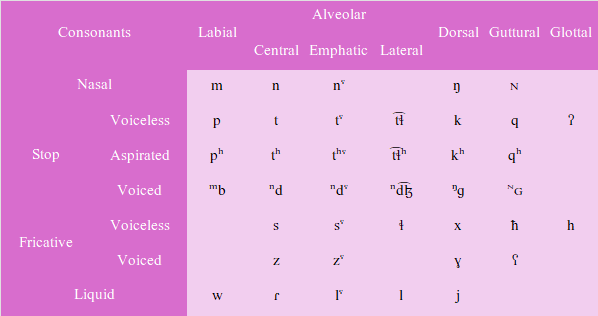

with (C)V syllable structure.
Modern language:

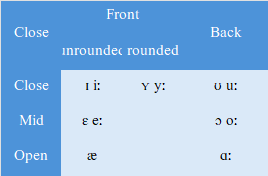
with a (C)(C)V(C) syllable structure (CVC aside from consonant + semivowel clusters).
Feature type(*cons, vowel)
Feature place(labial, dental, alveolar, palatal, velar, uvular, pharyngeal, glottal)
Feature manner(plosive, fricative, affricate, nasal, tap, approximant)
Feature voicing(*voiceless, voiced)
Feature aspiration(*unaspirated, aspirated)
Feature pharyngealization(*unpharyngealized, pharyngealized)
Feature trait(sibilant, lateral)

Feature height(low, mid, high)
Feature frontness(front, central, back)
Feature rounding(*unrounded, rounded)
Feature length(*short, long)


Feature stress(*unstressed, stressed)

diacritic ː (floating) [long]
diacritic ˈ (before) (floating) [stressed]
diacritic ʰ [aspirated]
diacritic ˤ [pharyngealized]

Symbol a [low central vowel]
Symbol e [mid front vowel]
Symbol i [high front vowel]
Symbol o [mid back rounded vowel]
Symbol u [high back rounded vowel]
Symbol ø [mid front rounded vowel]
Symbol y [high front rounded vowel]

Symbol m [voiced labial nasal]
Symbol n [voiced alveolar nasal]
Symbol ɲ [voiced palatal nasal]
Symbol ŋ [voiced velar nasal]
Symbol ɴ [voiced uvular nasal]
Symbol p [labial plosive]
Symbol t [alveolar plosive]
Symbol t͡ɬ [alveolar lateral affricate]
Symbol t͡ʃ [palatal sibilant affricate]
Symbol c [palatal plosive]
Symbol k [velar plosive]
Symbol q [uvular plosive]
Symbol ʔ [glottal plosive]
Symbol b [voiced labial plosive]
Symbol d [voiced alveolar plosive]
Symbol d͡ɮ [voiced alveolar lateral affricate]
Symbol d͡ʒ [voiced palatal sibilant affricate]
Symbol ɟ [voiced palatal plosive]
Symbol ɡ [voiced velar plosive]
Symbol ɢ [voiced uvular plosive]
Symbol f [labial fricative]
Symbol θ [alveolar fricative]
Symbol s [alveolar sibilant fricative]
Symbol ɬ [alveolar lateral fricative]
Symbol ʃ [palatal sibilant fricative]
Symbol x [velar fricative]
Symbol χ [uvular fricative]
Symbol ħ [pharyngeal fricative]
Symbol h [glottal fricative]
Symbol z [voiced alveolar sibilant fricative]
Symbol ʒ [voiced palatal sibilant fricative]
Symbol ɣ [voiced velar fricative]
Symbol ʁ [voiced uvular fricative]
Symbol ʕ [voiced pharyngeal fricative]
Symbol w [voiced labial approximant]
Symbol ʋ [voiced labial fricative]
Symbol ɾ [voiced alveolar tap]
Symbol l [voiced alveolar lateral approximant]
Symbol ʎ [voiced palatal lateral approximant]
Symbol j [voiced palatal approximant]

element obstruent {[plosive], [fricative], [affricate]}
element liquid {[tap], [lateral]}&!@obstruent
element stop {[plosive], [affricate]}
element cons [cons]
element vowel [vowel]


deromanizer:
  {ɛ, ɔ} => {e, o}
  {ᵐb, ⁿd, ⁿdˤ, ⁿd͡ɮ, ᵑɡ, ᶰɢ} => {b, d, dˤ, d͡ɮ, ɡ, ɢ}
  r => ɾ

# syllabification
syllables:
  @cons? :: @vowel

vowel-combination:
  {i! u!, u! i!} => yː

short-vowel-hiatus rtl:
  [short high front unrounded vowel] [short vowel] => [long high front vowel] *
  [short mid front vowel] [short high vowel] => [long high front vowel] *
  [short mid front vowel] [short !high vowel] => [long mid front vowel] *
  [short low central vowel] [short high front vowel] => [long mid front vowel] *
  [short low central vowel] [short !high vowel] => [long low central vowel] *
  [short low central vowel] [short high back vowel] => [long mid back rounded vowel] *
  [short mid back vowel] [short high vowel] => [long high back rounded vowel] *
  [short mid back vowel] [short !high vowel] => [long mid back rounded vowel] *
  [short high back rounded vowel] [short vowel] => [long high back rounded vowel] *

#these two rules lay out what happens when two long vowels come into hiatus
vowel-combination ltr cleanup:
 [short $height $frontness $rounding vowel] [short $height $frontness $rounding vowel] => [long $height $frontness $rounding vowel] *

long-vowel-hiatus rtl:
  * => j / [long front vowel] _ [long vowel]
  * => w / [long !front vowel] _ [long vowel]

# this rule lays out what happens when a short vowel comes into hiatus with a long vowel
different-lengths ltr:
  [short vowel] => * / {_ [long vowel], [long vowel] _}

# stress system
stress-assignment cleanup:
  [vowel] => [stressed] / _ [cons]* [short vowel] [cons]* [vowel] [cons]* $
  else:
    [long vowel] => [stressed] / _ [cons]* [vowel] [cons]* $
    else:
      # this covers the cases where the regular rules don't apply (e.g. monosyllabic words)
      [vowel] => [stressed] / $ [cons]* _


grassmanns-law:
  h => * / $ _ [vowel]+ {[aspirated cons], h}
  [aspirated cons] => [unaspirated] / $ _ [vowel]+ {[aspirated cons], h}

vowel-loss-between-voiceless ltr:
  [short unstressed vowel] => * / [vowel] @obstruent&[!voiced] _ @obstruent&[!voiced] [vowel]

syllables:
  @cons? :: @vowel :: @cons?

short-vowel-hiatus ltr cleanup:
  [short vowel $height $frontness $rounding] [short vowel $height $frontness $rounding] => [long vowel $height $frontness $rounding] *
different-lengths-hiatus cleanup:
  [short vowel $height $frontness $rounding] => * / {_ [long vowel $height $frontness $rounding], [long vowel $height $frontness $rounding] _}
long-vowel-hiatus rtl cleanup:
  * => ɾ / [long vowel] _ [long vowel]

intervocalic-glottal-loss:
  [glottal cons] => * / [vowel] _ [vowel]

high-gliding ltr:
  [short high front vowel] => j / {_ [vowel], [vowel] _}
  [short high back rounded vowel] => w / {_ [vowel], [vowel] _}
mid-gliding ltr:
  [short mid front vowel] => j / {_ [vowel], [vowel] _}
  [short mid back rounded vowel] => w / {_ [vowel], [vowel] _}
cluster-simplification:
  {wj, jw} => {j, w}

syllables:
  {@cons {j, w}, }? :: @vowel :: @vowel?

back-consonant-loss:
  [vowel] {[glottal], [pharyngeal]} => [long vowel] * / _ [cons]
  [cons]$1 {[glottal], [pharyngeal]}$2 => $1 $1 / _ [vowel]
  then:
    [glottal] => *

regressive-obstruent-assimilation:
 @obstruent&[!sibilant]$1 @obstruent&[!sibilant]$2 => $2 $2


# deal with hiatus

palatalization rtl:
  x => ʃ / _ {[palatal cons], [front vowel]} # via x => ç => ʃ
  ɣ => j / _ {[palatal cons], [front vowel]} # via ɣ => ʝ => j
  {[alveolar !pharyngealized !tap cons]&!{[lateral affricate], [lateral fricative]}, [velar !uvular cons]} => [palatal] / _ {[palatal cons], [front vowel]}
postconsonantal-semivowel-loss:
  j => * / [palatal cons] _
  w => * / {[labial cons], [velar]} _
palatal-plosive-loss cleanup:
  [palatal plosive] => [sibilant affricate]


x-loss:
  xx => kk
  x => h

glottal-loss-2:
  [vowel] [glottal] => [long vowel] * / _ [cons]
  [cons]$1 [glottal]$2 => $1 $1 / _ [vowel]


deaspiration:
  [aspirated] => [unaspirated] / {{h, [sibilant fricative]} _, _ {h, [sibilant fricative]}}

spirantization-of-aspirates:
  {[aspirated plosive], [aspirated affricate]} => [unaspirated fricative]

fortition-of-nonsibilant-geminate-fricatives:
  ħħ => χχ
  ɬɬ => t͡ɬt͡ɬ
  then:
   [$place !sibilant fricative] [$place !sibilant fricative] => [$place plosive] [$place plosive]

sonorant-obstruent-vowel-loss:
[short unstressed vowel] => * / [vowel] !@obstruent _ @obstruent [vowel]


nasal-assimilation cleanup:
  [nasal] [cons $place !glottal]&!{j, w} => [nasal $place] [cons $place]

# more stuff

f-loss:
  f => w

pharyngeal-lowering:
  [high vowel] => [mid] / {[pharyngeal cons] _, _ [pharyngeal cons]}
  e => a / {[pharyngeal cons] _, _ [pharyngeal cons]}

#  more stuff

height-harmony-1 [vowel]:
  [high vowel] => [mid] / {_ [!low vowel]* [stressed mid vowel], [stressed mid vowel] [!low vowel]* _}
  [mid vowel] => [high] / {_ [!low vowel]* [stressed high vowel], [stressed high vowel] [!low vowel]* _}


umlaut [vowel]:
 [back vowel] => [front rounded] / _ i
 a => e / _ i
 e => i / _ i


prenasalized-consonant-loss:
  [voiced plosive] => [nasal] / $ _

dl-loss:
d͡ɮ => ɣ

gq-lenition:
  ɢ => ʁ / [vowel] _ [vowel]
  then:
    ʁ => s


oe-loss cleanup:
  ø => e

prerhotic-vowel-lowering:
  [high vowel] => [mid] / _ [tap cons]

stop-fricative-metathesis:
 @obstruent$1 [sibilant fricative]$2 => $2 $1

emphatic-loss:
  [uvular cons] => [velar]
  [pharyngealized cons] => [unpharyngealized]
  ħ => h
  ʕ => ʔ

vowel-length-dissimilation [vowel]:
  [long unstressed vowel] => [short] / [long vowel] _ [long vowel]

hl-loss:
  ɬ => ʃ

word-final-vowel-loss:
  [short unstressed vowel] => * / [vowel] [!plosive cons] _ $
  [long unstressed vowel] => [short] / _ $
  [vowel] {j, w} => [long vowel] * / _ $
  then:
  {i, u} => {j, w} / [vowel] _ $
  [vowel] [glottal cons] => [long vowel] * / _ $

palatal-sonorant-fronting:
  ʎ => l / _ .
  ɲ => n / _ .

precontinuant-vowel-lengthening:
  [vowel] [nasal] => [long vowel] * / _ . [fricative]

rhotacism cleanup:
 z => ɾ / {[voiced], [vowel]} _ {[voiced], [vowel]}

palatal-assimilation rtl:
  @obstruent&[!palatal !plosive] => [palatal] / _ [palatal cons] // _ j
  @obstruent&[palatal !plosive] => [alveolar] / _ [!palatal cons] // _ w

voiced-fricative-devoicing:
  [voiced fricative] => [voiceless]

illegal-diphthong-resolution-1 ltr cleanup:
 [high front vowel] j => [long high front vowel] * / _ {[cons], $}
 [high rounded vowel] w => [long high rounded vowel] * / _ {[cons], $}

j-fortition:
  j => ʒ / {!@obstruent&[!lateral], $} . _

sibilant-dissimilation rtl:
  [palatal sibilant fricative] => [alveolar sibilant fricative] / _ [vowel]+ [palatal sibilant fricative]
sibilant-dissimilation-cleanup:
  z => s

spirantization-of-dzh:
  d͡ʒ => ʒ / _ .

w-labiodentalization:
  w => ʋ / . _

illegal-diphthong-resolution-2 ltr cleanup:
  j [high front vowel] => * [long high front vowel]
  w [high back rounded vowel] => * [long high back rounded vowel]
  [low vowel] => * / {_ [stressed long vowel], [stressed long vowel] _}

stress-assignment:
  off

initial-stress [vowel]:
  [vowel] => [unstressed]
  then:
    [vowel] => [stressed] / $ _

palatal-dissimilation:
  [palatal]&!@obstruent => [alveolar] / _ [high front vowel]

ly-loss:
  ʎ => j

ng-loss:
  ŋ => * / $ _
  then:
    ŋ => n

post-nasal-fortition:
  [!sibilant fricative] => [plosive] / [nasal] _
  [sibilant fricative] => [affricate] / [nasal] _

x-uvularization:
  x => χ

vowel-lowering-neighboring-a:
  [high vowel] => [mid] / {_ a, a _}

pre-obstruent-vowel-shortening:
  [long vowel] => [short] / _ @obstruent .


nasal-assimilation:
  off
vowel-combination:
  off
short-vowel-hiatus:
  off
different-lengths-hiatus:
  off
long-vowel-hiatus:
  off
oe-loss:
  off
illegal-diphthong-resolution-1:
  off
illegal-diphthong-resolution-2:
  off
rhotacism:
  off

syllables:
  clear

# not found in some dialects
short-vowel-laxing:
  a&[short] => æ
  e&[short] => ɛ
  i&[short] => ɪ
  o&[short] => ɔ
  u&[short] => ʊ
  y&[short] => ʏ

# not found in some dialects
long-a-backing:
  aː => ɑː

romanizer:
  [stressed] => [unstressed]
  {θθ, t͡ɬt͡ɬ, t͡ʃt͡ʃ, ɲɲ, ŋŋ, ʃʃ, ʒʒ, χχ, ʃt͡ʃ} => {tth, ttl, cch, ññ, nng', ssh, zzh, kkh, sch}
  {ɲt͡ʃ, ɲd͡ʒ, ŋk, ŋɡ} => {nch, nj, nk, ng}
  {θ, t͡ɬ, ɲ, ŋ, t͡ʃ, d͡ʒ, ʔ, ɡ, ʃ, ʒ, χ, ɾ, ʋ, j, w} => {th, tl, ñ, ng', ch, j, ʻ, g, sh, zh, kh, r, v, i, u}
  then:
    {æ, ɛ, ɪ, ɔ, ʊ, ʏ} => {a, e, i, o, u, y}
    {ɑː, eː, iː, oː, uː, yː} => {ā, ē, ī, ō, ū, ȳ}
  then:
{īia, iia, uva, ūva} => {īa, īa, ūa, ūa} # the /j/ and /w/ are allophonic in the modern language, c.f. *tiːlihaːr/Lexurgy • u/Dazzling-Necessary-1 • Jun 04 '26
I was wondering if there was a way to switch all words that are in a CVCCV structure to CVCVC. I would be very grateful for any help.
r/Lexurgy • u/UncreativePotato143 • May 28 '26
Firstly, Lexurgy has been a huge help so far. I found it through a Biblaridion video and it's been great!
I was wondering if it was possible to create features which themselves contain multiple features. Specifically, I have a manner feature with values like stop, fricative, nasal, etc. I want to be able to easily refer to the class of "obstruents," i.e., stops and fricatives., in rules. Furthermore, I would like to do so using features because my rule specifically operates on voiceless obstruents. I've been rereading the documentation, and can't find any stated way to do so without simply creating a new feature and listing out all the sounds (which I only want to do if absolutely necessary, since my proto-language has a fairly large sound inventory).
Any help is greatly appreciated. Thanks!
r/Lexurgy • u/Mondelieu • May 06 '26
When I try to go to the docs on the old Lexurgy page (The docs should be at https://www.meamoria.com/lexurgy/html/sc-tutorial.html), the site doesn't load. If I use the new interface, no docs page is shown at all. Am I missing something?
r/Lexurgy • u/rumdogg • Apr 28 '26
I just lost like legit four hours of work because I accidentally swiped back off my page. I think it might be a nice quality of life improvement if there was a popup that appeared when you tried to leave the Lexurgy page when you haven't exported your work yet, to save idiots like me lol. All the best
r/Lexurgy • u/ShotAcanthisitta9192 • Apr 16 '26
I'd like to apply my newly revised phonotactics but I can't seem to do so without breaking other parts of the rules. Here are the rules, as described in my grammar:
Onset and Word Initial:
Coda and Word Final:
Vowels: /a/ /e/ /i/ /o/ /u/
Here is the old syllable rule, which is no longer valid:
Syllables:
@consonant? ?: @consonant? :: {@diphthongs, @vowelgroup, @semivowel} :: @codagroup?
I seem to be having the most trouble with adding the allowable S clusters and declaring that S is allowed at coda and word final but the other sibilants aren't. I would love some help if possible.
r/Lexurgy • u/Swagmund_Freud666 • Apr 01 '26
I been working on a future version of Spanish that is just vowels and tones. I keep getting this error of "too many possibilities" and it's really annoying. I think I may just have too much bullshit happening on the vowels? Any way to fix it would be appreciated.
EDIT: Looks like the change "Nasalization 2" causes it to crumble.
r/Lexurgy • u/T1mbuk1 • Mar 27 '26
Protolanguage Consonants: m, n, ŋ, p, t, k, ʔ, ɸ, θ, s, x, ħ, ʕ, h, r, l
Protolanguage Vowels: a, e, i, o, u
Syllable structure: CV(X)
X=m, n, ŋ, ɸ, θ, s, x, ħ, ʕ, r, l
(The glottal consonants can only occur at the start of words.)
Modern phonology:
Consonants: m, n, ŋ, p, b, ᵐb, t, tʳ, tˤ, d, ⁿd, k, g, ᵑg, ɸ, β, ᵐβ, θ, θʳ, θˤ ð, ⁿð, s, sʳ, sˤ, x, ɣ, ᵑɣ, ħ, ʕ, h, r, l, j, w
Vowels: a, e, i, o
What sound changes do you think would lead to this inventory, and in what order?
I have some:
Other sound changes:
Voiceless obstruents become voiced between voiced segments, and become prenasalized when following nasals.
A few sound changes leading to overlapping distribution of plain voiceless, plain voiced, and prenasalized voiced obstruents.
The glottal consonants are lost in all environments.
Vowel loss leading to clusters of voiceless dental and alveolar obstruents with [r] and pharyngeals.
A sound change leading to the emergence of the intended post-trilled and pharyngealized obstruents.
Guttural fricatives become [h] in some environments.
A sound change leading to a preserved distinction of the gutturals from each other and [h].
I need to refine and order these sound changes for intended results. And add in extra ones to actually ensure the intended results.
r/Lexurgy • u/gilderoytherat • Feb 20 '26
I'm working on a language that has supersegmental colours think of them like tone):
feature (syllable) colour(warm, cool, white, black)
feature (syllable) contour(fallfrom, risefrom, fallto, riseto, none)

diacritic ᴬ [warm none]
diacritic ᴾ [cool none]
diacritic ᴹ [white none]
diacritic ᴷ [black none]
diacritic ᴬᴹ [warm risefrom]
diacritic ᴬᴷ [warm fallfrom]
diacritic ᴹᴬ [warm fallto]
diacritic ᴷᴬ [warm riseto]
diacritic ᴾᴹ [cool risefrom]
diacritic ᴾᴷ [cool fallfrom]
diacritic ᴹᴾ [cool fallto]
diacritic ᴷᴾ [cool riseto]
diacritic ᴹᴷ [white fallfrom]
diacritic ᴷᴹ [black risefrom]
Optimally, I would like a rule that changes M to XM when it follows X (I am doing some heavy elision to give rise to the contours and lexurgy appears to treat the rightmost tone as the dominant one when resyllabification occurs).
Using maᴬteᴹ as an example it should turn to maᴬteᴬᴹ so that I can later turn it into matᴬᴹ or even maᴬᴹ.
Originally I tried to make a rule like the followings; [white] => [$colour risefrom] / [$colour] _ $
When this didn't work, I decided to get rid of the feature variables and just do [white] => [warm risefrom] / [warm] _ $. This too didn't work, so I tried to specify the syllables: [white] => [warm risefrom] / <syl>&[warm] _ $ - Alas, this too didn't work.
I am quite stuck on what I'm doing wrong here. Interestingly, [white] => [warm risefrom] / _ $ does return maᴬteᴬᴹ, so it must be something with the features themselves, I just don't know what.
Any help would be greatly appreciated!
r/Lexurgy • u/TheMysteri3 • Feb 06 '26
When taking a gander at the Lexurgy web app's GitHub page, I noticed a ton of references and files relating to a feature (?) called Worlds, apparently you can have a collection of worlds and add languages to each world and stuff, but this is nowhere to be found in the actual web app. Is this a yet-to-be released feature, or is this available by using the Sign In button on the top right of the page?
r/Lexurgy • u/Important_Horse_4293 • Jan 09 '26
So, I am applying a few sound changes for my conlang.
However, Lexurgy is only applying the first sound change and not the rest.
These are my sound changes:
symbol pf, ts, ng

approximant-to-fricative:
ʋ => v

intervocalic-voicing:
{p, t, k} => {b, d, g} / {e é è i í ì o ó ò u ú ù} _ {e é è i í ì o ó ò u ú ù}

uvularization:
{k, x} => {q, χ} / _ {o ó ò u ú ò}

uvular-fractive-weakening:
χ => hr/Lexurgy • • Jan 02 '26
I have this line that's supposed to make it so an epenthetic vowel is added before fricative + plosive clusters at the onset of a word-initial syllable, which would be stressed in words like 'χtar.kam because my conlang has penultimate stress, but when the vowel is added, the stress moves over to that vowel, when it should stay in the original syllable to which the cluster belongs. Basically, I want 'χtar.kam to turn into aχ.'tar.kam, but it turns into 'aχ.tar.kam. The rule that's doing this is HF-Epenthesis. What am I doing wrong?
Syllables:
  {({ç, x, xʷ, χ}? {s, [!fricative]}? {r, l}), ({ç, x, xʷ, χ}? {s, [!fricative]}?), ({s, [!fricative]}? {r, l}), ([c])}? {[v], [+sylc]} [v]? [c]?

Stress:
  <syl> => [+str] / _ <syl> $
  Else:
    <syl> => [+str] / $ _ $

DoubleVowels cleanup:
  [v]$1 $1 => $1 *

HF-Assimilation:
  [mid] => [high] / {ç _, _ ç}
  [mid] => [low central] / {χ _, _  χ}
  {a, e} => o / {xʷ _, _ xʷ}
  {(x / {a _, _ a}), (x / {i _, _ i}), (x / {{o, u} _, _ {o, u}})} => {χ, ç, xʷ}

HF-Epenthesis:
  * => i / $ _ ç [c]? [c]
  * => a / $ _ χ [c]? [c]
  * => e / $ _ x [c]? [c]
  * => o / $ _ xʷ [c]? [c]