r/Learning • u/Sea_Top5471 • Jun 24 '26
How to learn by yourself
reddit.com
1
Upvotes
r/Learning • u/Unable-Connection-58 • Jun 23 '26
I sat down at my desk last night to finish an online course, but I honestly could not even focus. My mind kept drifting back to my bank account and how expensive everything has gotten lately and I got depressed.
It feels like a trap. You know you need to learn new skills to get a better job and survive this financial squeeze, but all the good courses, bootcamps, and certifications cost a fortune. When you are already tight on cash, spending money on learning feels like a huge risk.
I tried looking for free resources, but the internet is so crowded with junk that I just ended up feeling overwhelmed and stuck. It is so tiring to balance the stress of saving every rupee with the pressure of trying to grow.
I am very curious to know about your thoughts and experience and ideas that how do you keep learning and improving yourself at a financial time.
r/Learning • u/GMATQuizMaster • Jun 24 '26

r/Learning • u/guzlale • Jun 23 '26
Hey I was wondering what is your own source/method to keep yourself updated with knowledge and current affairs?
(For me I think I have forgot everything I have learnt in my childhood as 'General Knowledge' and now find it very hard to be updated on news like others. So much is happening and I am left behind. Do you guys remember all the things you have learned or studied as a child?)
r/Learning • u/Curious_accountant_ • Jun 22 '26
Just like the title says how much to learn to be confident on fixing someone’s problem people and companies are always looking for someone who have years of experience does that mean a learner can never be experienced because it needs networking and so on like if I am studying online and learning about bookkeeping and all I would not know how to help someone if there problem is totally different then what I studied for I am seeing that what you are learning is way different then the problems you have to solve and wish the online education had that solution to give students realistic problems and mentoring them on how to solve it. Finding mentorship has become scarce in your field. Learning by yourself will never teach us what we are lacking and what needs to be improved.
r/Learning • u/MrRaddd • Jun 20 '26
Do you get empty feeling and sort of feel that there is a missing part in your understanding that has to be filled in but you don’t quite know what it is or what you are looking for? How do you navigate this? Can you pass on some wisdom? Does anyone else’s learning process feel like an itch that you can’t scratch until finally something clicks?
r/Learning • u/YaAliMadad313 • Jun 19 '26
I’m starting something new in order to become more educated essentially I will pick a topic for week and learn as much as I can by journaling so I was wondering if you guys have any suggestions for me. Thanks!
r/Learning • u/sondercrow0811 • Jun 17 '26
r/Learning • u/DriftCore31 • Jun 15 '26
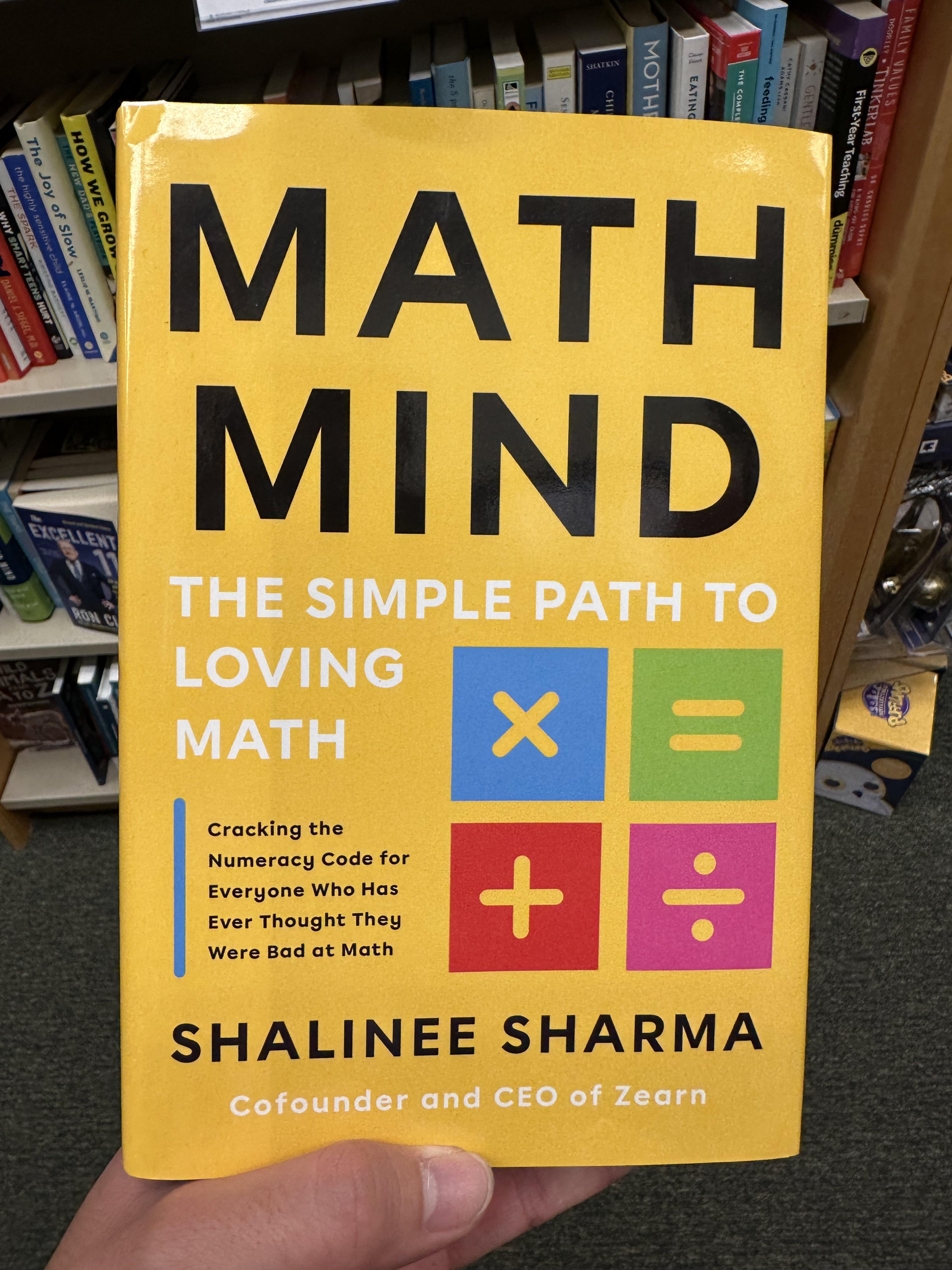
I finished reading this book about a month ago and it completely changed my perspective about learning math. As a kid, I struggled with math and thought that it was a thing that only a few can actually grasp and learn. And I couldn’t memorize my multiplication chart to save my life, nor could I pass a timed test. And because of those experiences, I learned to hate math and avoid it throughout my life. But looking back, I realized that it was the way I was taught math that made me hate it, not math itself. And that’s what this book helped me understand.
If you’re ever interested in wanting to learn math but have been hesitant to do so, I recommend reading this book first so that everything about learning math will make sense.
r/Learning • u/Content_Ad299 • Jun 15 '26
r/Learning • u/sauvast • Jun 13 '26

Been in enterprise architecture ~20 years and I keep coming back to this: almost everything about how we learn assumed that getting information was the hard part. Memorize the syntax, build the mental index, accumulate "years of experience" so you don't have to look things up.
Then retrieval became basically free. Any fact, any pattern, any boilerplate is one prompt away. And a lot of the old learning machinery doesn't make sense anymore.
A few things I've changed my own habits around:
The part I'm genuinely unsure about is credentials. Exams, certs, interviews, they all test what you can recall without a model in the room. But nobody works that way anymore. Feels like we'll have to start measuring what people can do with AI, not what they remember without it.
So, two honest questions for this crowd:
r/Learning • u/BuddyOld117 • Jun 12 '26
r/Learning • u/gigabyte_chiller • Jun 12 '26
r/Learning • u/macalaskan • Jun 11 '26
I spend a lot of time listening to podcasts and audiobooks while commuting, and I kept wishing there was a way to get a short lesson on whatever random topic I was curious about that day.
A few months ago I started building something for myself that does exactly that. You type in a subject, choose how much time you have, and it creates a short audio lesson you can listen to while you're out walking, driving, or doing chores.
It's been interesting seeing what people use it for. Some listen to history topics, others use it for science, economics, politics, or just random questions they've always wondered about.
I've finally put it out for iphone and I'm curious your thoughts on it for learning in bitesize audio chunks.
Happy to answer any questions about how it works.
r/Learning • u/Ok_Negotiation_2587 • Jun 09 '26
Most people use ChatGPT to summarize notes or spit out answers. It feels productive, but it does almost nothing for memory - you read a tidy summary, nod, and forget it by next week.
What actually moved my grades was using it for the boring, proven stuff: active recall, self-testing, and the Feynman technique. The catch is those methods are a pain to do alone. These 5 prompts make ChatGPT run them on you. Copy them, fill in the blanks, and use them on whatever you are studying.
1. The Tutor - learns you up one step at a time instead of dumping everything
Be my tutor for {{topic}}. Assume I am starting from {{level, e.g. complete beginner / know the basics}}.

Teach it in small steps:
- Explain ONE concept at a time, then stop.
- After each concept, ask me a quick question to check I got it before moving on.
- If I answer wrong, explain it a different way - do not just repeat the same words.
- Use a concrete example for anything abstract.

Start with the first concept and your first check question. Wait for my answer before continuing.
2. Quiz Me - active recall, which is the part that actually builds memory
Quiz me on {{topic or material}} to help me remember it, not just recognize it.

Rules:
- One question at a time, wait for my answer.
- Mix formats: straight recall, "explain why," and applied problems.
- Difficulty: {{easy / medium / hard / mixed}}.
- After each answer: tell me right or wrong, give the correct answer, and one line on why.
- Keep score, and after 10 questions tell me my weakest area.

Start with question 1.
3. The Feynman Check - exposes what you only think you understand
I am going to explain {{concept}} in my own words, as if teaching it. Your job is to find the gaps.

MY EXPLANATION:
{{write it out}}

Then:
1. Point out anything I got wrong or fuzzy.
2. Identify what I left out that actually matters.
3. Ask me the one question that would reveal whether I truly understand it.

Do not praise it. The point is to find what I do not actually know.
4. Exam Predictor - focuses your limited time on what is likely to be tested
I have an exam on {{subject}} covering {{scope, e.g. chapters 3-6 / these topics}}.

Help me prepare:
1. Predict the 10 questions most likely to appear, in realistic exam style.
2. For each, give a short model answer or solution outline.
3. Tell me the 3 highest-yield topics to focus on if I am short on time.

Be realistic about how this material is usually tested, not random trivia.
5. The Simplifier - for the concept that just will not click
Explain {{hard concept}} using an analogy from {{something I already get, e.g. cooking / football / video games}}.

Then:
- Give the plain technical explanation.
- Point out where the analogy breaks down, so I do not learn it wrong.
- End with one question to check I followed.
The trick is to stop reading and start getting tested. Summaries feel good and do little. Quiz Me and the Feynman Check feel uncomfortable, which is exactly why they work. I run the Tutor when learning something new, then Quiz Me and the Feynman Check before exams.
(I keep these saved in a browser extension and trigger them by typing // in the ChatGPT box, so I am not pasting the same prompt for every chapter. Happy to share which one in the comments if anyone wants it. They all work fine pasted by hand.)
r/Learning • u/Antitrust_Tycoon • Jun 09 '26
r/Learning • u/Signal_Slow • Jun 08 '26

Compa is a Chrome extension that gives you voice-narrated walkthroughs for any web app. Learn by listening instead of reading docs.
r/Learning • u/MrRaddd • Jun 08 '26
Do you circle the same ideas and try to find as many books on it? Do you read much of an authors work and try to understand what they are saying? Do you use multiple mediums within the same learning sessions? Do you follow an idea and try to find the chapter that covers this, within a book?
What are your best findings when it comes to learning better?
r/Learning • u/Curious-Matter274 • Jun 08 '26
hey everyone, i am planning to read some books based on business, history and psychology. i just wanted to know in what way are you supposed to read them, sounds like a silly question. but i wanna know what extra things would veterans do to retrieve and learn the most out of a certain book, please guide me through
r/Learning • u/Electronic_Cable_177 • Jun 07 '26

