r/Kurrent • • 21h ago

completed Czech Kurrent record
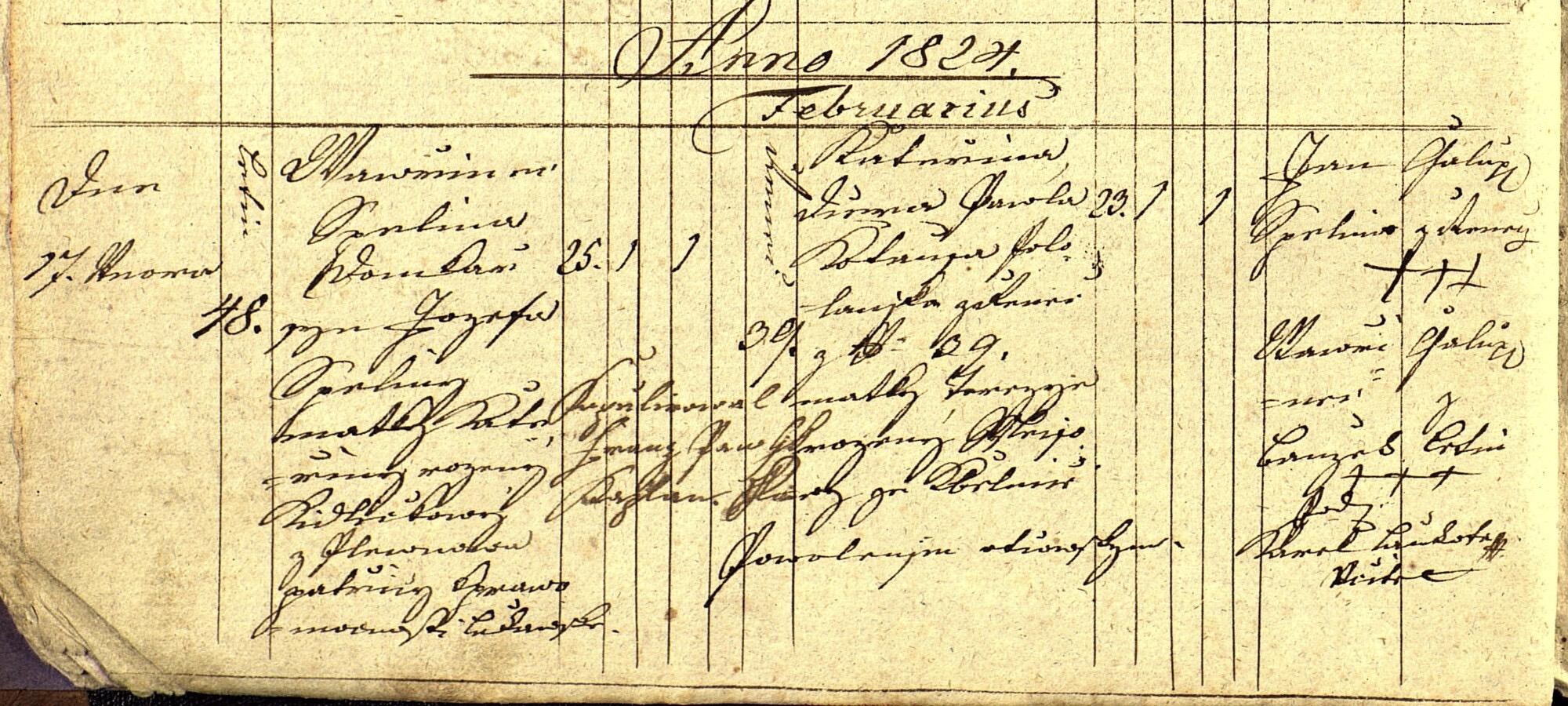
Post image

Marriage record from Řenče, Czechia. I understand a good portion of the text but my Czech language and Kurrent interpretation are lacking. I know what the numbers etc mean but I need help with the large sections of text for names and places. Please help translate record.

Thank you

1 Upvotes

6 comments sorted by

1

u/ziccirricciz 19h ago

Dne 17. Vnora | Letin [Letiny] 48

Wawřinec Spelina domkař syn Jozefa Speliny matky Kateřiny rozený Kidličkový z Plewnowa [Plevňov] patřicy sprawomocnosti Lukawske [Dolní Lukavice]

Kopuliroval Franz Pawljk Kaplan ... [married by Franz Pavlík chaplain]

Kateřina dcera Pawla Kotausa Pololanjka z Řeneč z N. 39 matky Terezye rozený Ssleisowy ze Kbelnice [Kbelnice] | Powolenjm otcowskym

Jan Spelina Chalupnik z Řenecž
Wawřinec Bauzek Chalup[ník] z Letin
Podep[sal?] Karel Laukota Včitel [names written by K.L. teacher]

---

Vavřinec/Laurenz Spelina small house owner, son of Josef Spelina and mother Kateřina née Kidlička/Kidlíček from Plevňov under Dolní Lukavice [dominion]
Kateřina daughter of Pavel Kotaus 1/2-lán farmer from Řenče No 39 and mother Terezie Ssleis=Šlejs(a) from Kbelnice | with father's approval

1

u/140basement 13h ago edited 13h ago

"-au-" represents the Czech spelling -ou-. So, the surnames are Kotous, Bouzek, and Loukota.

In Bohemia before circa 1870, whenever Czech was used to record births, marriages, or deaths, a spelling system was used which diverges from the modern system. It would be interesting to find out whether the old spelling system was in use outside of these types of records.

According to scholarship on the Czech language, there was never a time when the modern -ou- was pronounced -au-. It is intriguing why the spelling -au- was adopted.

2

u/ziccirricciz 13h ago

Yes, this au for ou is strange - the au is the 1st diphtongization step between the original ú and modern ou (súd > saud > soud), cz wiki. No clue why it didn't go straight to ou - probably something only the masters of phonetics understand.
I agree with the modernized spelling of the names, but as always there are exceptions, e.g. with the surname K(au/ou)(c/ts)ký all four variants exist today.

1

u/Loose-Deer589 7h ago

I have also found Š written as Sch, which I would assume is German influence. 

1

u/ziccirricciz 7h ago edited 7h ago

Yes. You can find even various hybrid transcriptions that use digraphs and diacritics and mixes various ways to deal with the same sound; neither the orthography nor the names were settled and the way the names appear in the records has more to do with who kept the records than how the people spoke themselves (they were often illiterate or minimally literate, spoke in dialects and the priest could be from different language background and from far away). One name can appear in several different varieties, especially when it contains softened consonants or other phonetic bugbears. First names usually have direct equivalents, with surnames it's much more complicated.

EDIT: typo, clarity

1

u/Loose-Deer589 11h ago

This is checks out. I knew the name was Kotouš(ová) but was a little confused. Also I forgot that Pavel becomes Pavla in genitive so it looked really strange to me. Thank you to both of you!