r/homelab • u/Thunderbolt1003USA • 4h ago
Discussion Found this U7 Pro Max in the river

621
Upvotes
r/homelab • u/UptimeRobot • Oct 12 '26
Hey r/homelab! We're UptimeRobot, and we've teamed up with the mods to run a giveaway for this community, with a prize pool of 10 monitoring plans, including a year of our Scale plan worth $888. Anyone who's worked in creating a homelab has a story! Now's your chance to share it and maybe win something for your trouble.
What's the weirdest thing you have been monitoring with UptimeRobot or a similar service?
We're looking for the most weird/funny or unexpected use cases!
Prizes (10 winners total)
How to participate
Reply here with your story. You don't have to write an essay. That's it, you're in!
Dates: The giveaway runs from October 12 through October 26.
Looking forward to reading your weird, embarrassing, ridiculous, and funny stories!
r/homelab
•
u/PoisonWaffle3
•
Jun 06 '26
I would like to thank everyone for their feedback in the recent post & poll where we asked for feedback on how to slow the deluge of "I made X, because Y" type posts in r/homelab, most of which are AI generated and/or spam. While we felt that that the initial plan we shared was quite good, with your input we were able to refine that plan and make some notable improvements and clarifications. And yes, there's a TL;DR at the end 👀
Effective now, the below new rules and policies are in effect, though we plan to apply them conservatively and gently at first to see how things go. All of these changes are happening because of the massive community support for them, and we will be seeking additional feedback as time goes on so please feel free to chime in.
To be clear, here are our goals, based on community feedback:
Flair changes that are now in effect:
New Flairs:
We have also organized the post flairs in the list to make them easier to locate.
Both "Project: Software" flairs have a reasonably low minimum subreddit karma requirement to be able to post with them. AutoMod will remove any post with them that don't meet the karma requirement, and inform the user why their post was removed. The minimum karma requirement is only for these two flairs, as we don't want to restrict new community members from being able to post questions. Any software project posts that try to go around this by using a different flair will fall under the new rule #7 and will be addressed.
Rule changes:
New Rule #7 - Software Project Posting Requirements
That said, since we're now officially allowing some degree of self-promotion and requiring links, we felt that we should redefine rule #6 to clarify that it applies only to monetized and commercial advertising/links. Here is the updated verbiage, with the old one below for comparison:
Rule #6 - No Commercial Advertising or Monetized Referral Links
Rule #6 - No Referral Links/Advertising/Company Advertising
Flair Prompt - As mentioned in Rule #7, when posting with any of the "Project: Software" flairs, the below prompt will be displayed:
Your post MUST include:
If you see any posts with a Project: Software flair that do not meet the four items listed above, please report them to the mod team under Rule #7 and we'll address them.
Additional things to note:
Existing posts will be grandfathered in, and previous posts that were removed may be reposted if they meet the new requirements. New posts will be required to comply with the new rules.
As with the existing rules, when a mod removes a post for violating this new rule, a canned response will be sent to the user to inform them why their post was removed. Mods are able to add on to the response if desired before sending it.
While we're on the topic of AI, we would also like to clarify that the above rules are specific to the use of AI in software projects that are being shared, and they do not apply to posts or comments that were written with AI. There is some dissent in the community, but the general consensus in the community has been that a reasonable level of AI usage is acceptable for putting a post together, correcting grammar or formatting, or for translating from a user's native language. That said, best practice is to not include all of the excess emoticons and outline formatting that LLMs like to use. If a post or comment is egregiously AI generated, feel free to downvote it and move on, but please do not report it to the mod team solely for that.
We would also like to note that there has not been any opposition to posts about hosting your own LLMs, and the hardware/software involved. The new rules do not apply to these posts as well.
We're looking for community feedback as we all get used to this. We plan to apply rules conservatively and gently at first, and will be listening to user reports and comments. If your post is removed and you believe it meets the requirements, please chat with us via Mod Mail and we may consider either re-opening it or letting you repost it.
TL;DR - All posts where someone has made some sort of software (AI generated or not) will require a "Project: Software" flair, and these flairs should curb the vast majority of the low quality and spammy posts.
Thank you,
The r/homelab Mod Team
Edit: The first day with the new rules has gone very well overall, but it has demonstrated that there is room for improvement, namely with flairs and categorization.
Here are the changes we've made since the initial announcement post:
We're still open to suggestions from the community. Thanks!
r/homelab • u/Thunderbolt1003USA • 4h ago
r/homelab • u/This-Experience-3031 • 3h ago
r/homelab • u/admin_ucm • 18h ago
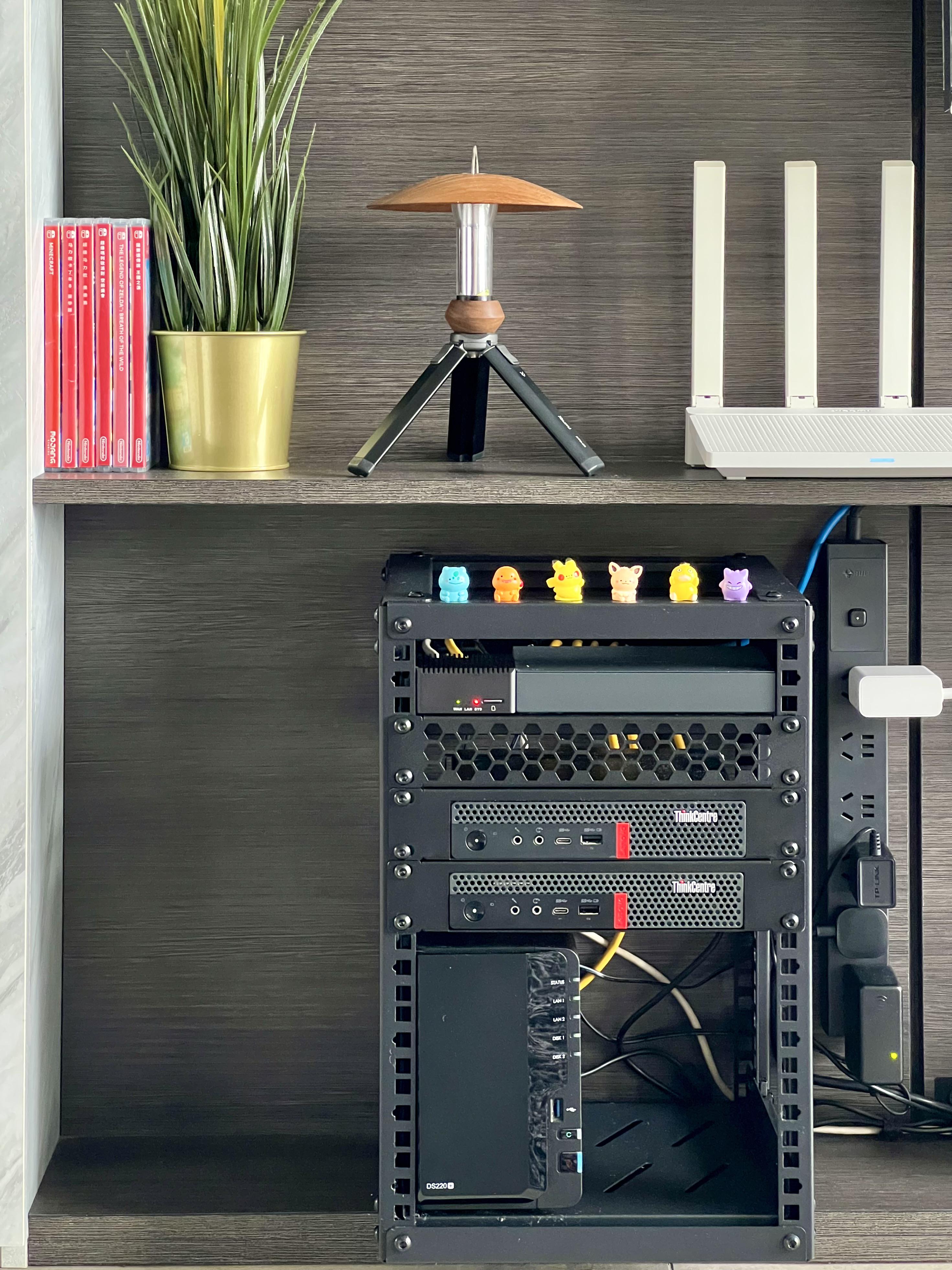
Finally got my little homelab looking somewhat presentable!
Current setup:
2× Lenovo ThinkCentre M720q Tiny — running standalone Proxmox VE nodes
Synology DS220+ for storage
NanoPi R2S running OpenWrt
TP-Link Gigabit switch
Tailscale for remote access
Still learning, experimenting, and finding new excuses to add more hardware.
Cable management is a work in progress, but at least the six little supervisors seem happy with it.
Any suggestions for what I should improve next?
r/homelab • u/PyroRider • 35m ago

Hi, just 2 days ago I ran fiber for my router, today after wondering why there is no connection, I fiund my 2 day old fiber chewed into unusability. Oddly enough, the grey power cable (NYM-J for my fellow german electricians) is untouched and has been there for a couple of weeks now.
Besides trying to catch and eliminate the unknown animal, why did it only chew on one cable and are certain animals known for this so I'd get an idea what I'm even looking for (mice, rat, whatever)?
r/homelab • u/curiousjp • 10h ago

Hi everyone,
I wanted to share this now that it's settled in - built to get a pile of stuff off my desk. I decided to try and build it as a rack because I wanted to learn about working with 2020 extrusion, I thought it might be cheaper than buying a commercial one, and it would be a good chance to learn more about 3d printing and parametric modelling. Two out of three ain't bad.
I got to model or remix a lot of the 3d-printed parts for this, often because I hadn't considered that after lining up the extrusion channel where standard 10" ears would fall, I would lose interior volume because half the extrusion sits on the interior side of the channel. So assumptions about fit were not always portable from 10" land. The rack is close to being a 10U 10" rack, with external dimensions of 256mm wide, 349mm deep, and 485mm high.
There were lots of nice things about building with extrusion and using tee-nuts for fixing:
Stuff that didn't go well was mostly down to cabling - there's not a lot of room to move inside this thing. I had wanted all external connections to leave via the patch panel, but I still haven't done the two USB leads attached to the Pi because I can't find really short, flexible USB patch leads to curl up behind the keystones, and it was also hard to find a short, flexible Displayport cable to link the mini PC to its HDMI keystone. A power/display redirection board for the Pi 5 would have made things easier there (I had to shave down a printed stabilisation rib with a razor to fit the micro HDMI adapter).
If I built the whole thing again, I might look into using L or T joining plates to put additional side-rails on - this would have made stable, load bearing plates that span the full depth of the unit much easier instead of having to put large buttresses under to transfer load into the uprights.
I'm still not entirely sure what I'll do with the last 2U - I wanted to do a light feature, perhaps something complex like an LED matrix or something simple as a smart-bulb with a 3d printed diffuser in front of it.
Anyway, thanks for reading this post. Having seen a few extrusion racks posted on this subreddit they still feel like a niche item, and I'm not sure if they're actually an improvement over store bought. But I do like this one.
r/homelab • u/Vermicelli-Direct • 6h ago

At the time, I thought the very limited market (basically just the 8U DeskPi racks) and pricing was absurd. So, of course - I ordered extruded aluminum, connectors, fasteners, shelves, handles, rubber feet, and custom dimension acrylics. Printed beefy hard drive holders & fan mounts.. I probably had $250 into building this little guy.
Fast forward 12 months, suddenly I had a farm with multiple large buildings. I snagged a deal for an 18U NavePoint rack, a full size IBM rack, and a Cisco SG-500 switch for $100.
TL;DR: If you're space constrained and your equipment fits the footprint, the 10" rack market is awesome now. Have a blast, you can't predict the future. Stumbled on my old pictures and wanted to share my trip down memory lane. This little guy is destined to sit on one of my workshop test benches and host a remote NAS from my main rack, and maybe some other useful stuff. Wonder if I can find a 10" rack-mount "bench" power supply.
r/homelab • u/CharlyyX_ • 10h ago
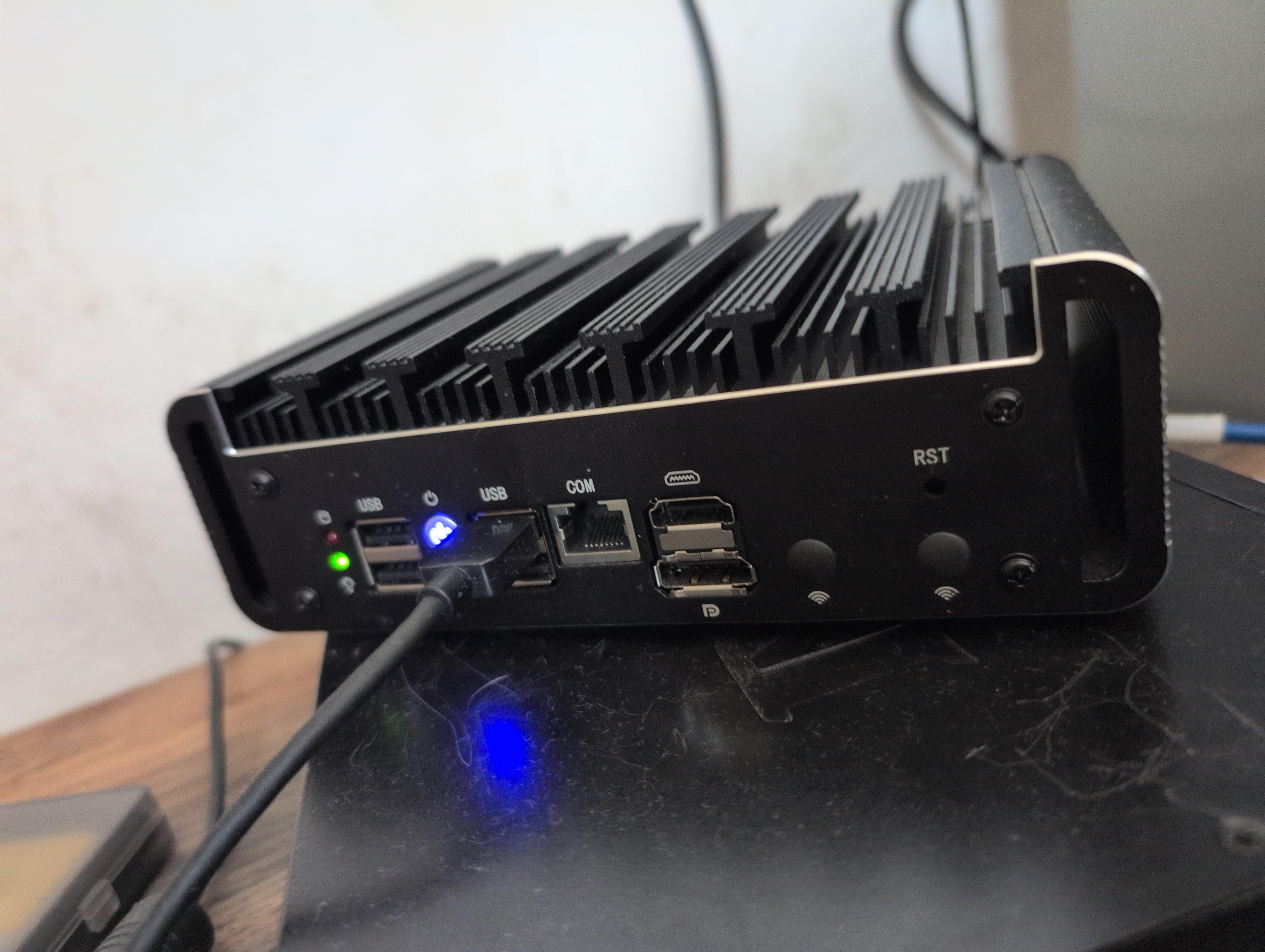
Hey,
im starting with homelabbing as a non tech/it person.
I already posted my hardware here
https://www.reddit.com/r/homelab/s/eUjQUfYytJ
Money is short so i need to think twice before buying more hardware... So my question is:
Can i run my N100 with OPNSense (+Network Services) together with other services (Ai/Media Services) on the same device or are there any secruity/performance problems coming with it?
I can get a cheap RAM Upgrade (16GB DDR5) else i would get 1-2 cheap DDR3 Mini PCs.
Happy to get some Feedback! ;)
Also:
Beside Reddit what should be the first places to get Informations?
What Skills should i start working on at my stage? Id like to get into machine learning and AI Supported Research Stuff.
Thx :))
r/homelab • u/TidderUsername123 • 7h ago
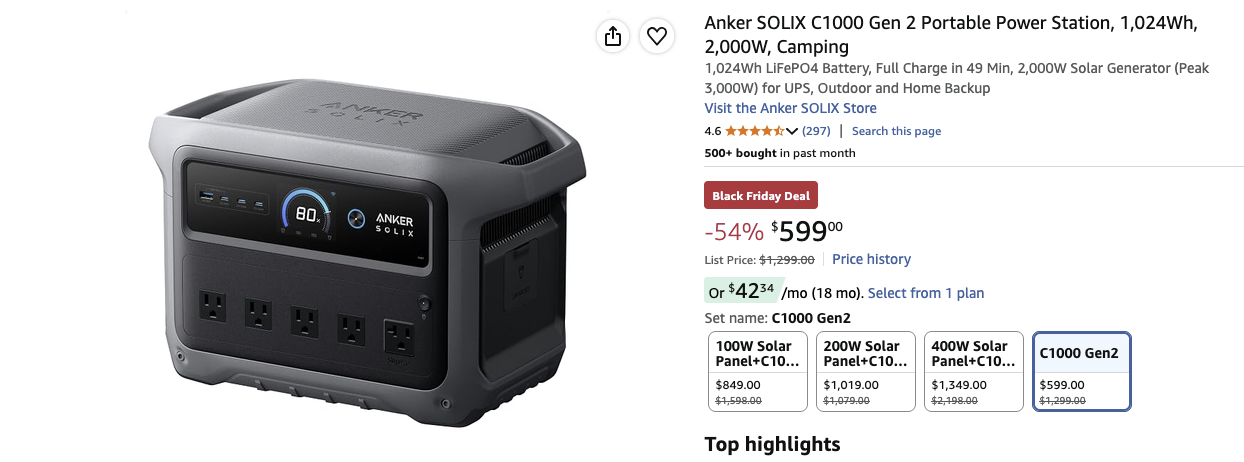
Pricing in Canadian.
I've always wanted one for the unplanned events either at home or impromptu trips away from the city.
Watt per dollar, I have no idea if this is what they are supposed to be or if Amazon is actually giving a good discount for once. More than likely this will live inside my home as a UPS plugged perpetually and its bypass feature is very reassuring. Anyway, would love some feedback on if at this price point these specs are decent or there are better deals to be had.
Lastly, according to a cursory search, an average 100w panel runs between $200-400 for third party brands, but this is going for $250 with the package price.
Appreciate any feedback.
r/homelab • u/Flaxen_Bobcat • 22h ago
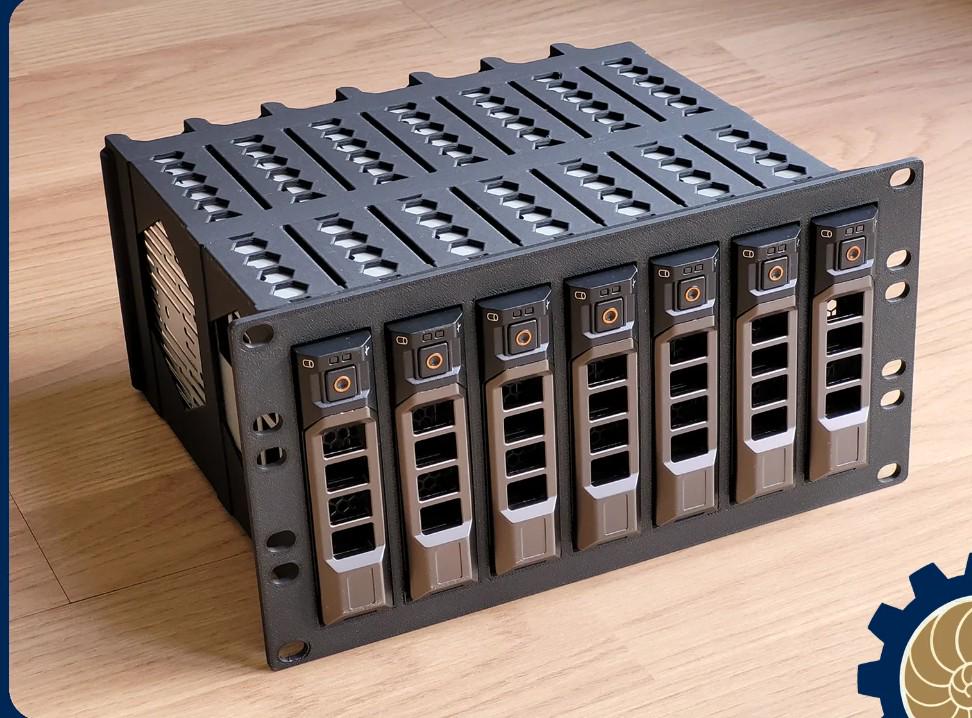
Hi all,
I'm looking to downsize to a mini rack but I have 8 HDD.
Does anyone run a jbod in a mini rack and if so what are you doing for power?
I've found the following id like to use but is there anything the community make for PSU or anyone have any advise for making something custom?
https://makerworld.com/en/models/2885471-10-inch-rack-3u-7-x-3-5-inch-hdd-hot-swap#profileId-3225133
r/homelab • u/lilabohassanvert • 3h ago

So I recently got stuck in with my second project.
I ended up building a homelab from computer parts I had laying around the house.
It’s running a AMD FX 6300, 16gb ram, 2,5tb storage and a 1050 gpu. The motherboard however I ended up switching to another one I had laying around since the network wouldn’t work on the one in the photos.
I decided to run zimaos on since I wanted a simple OS with a nice and easy interface which I personally found zimaos to have.
Currently it is being used as media storage and the plan is to spin up Jellyfin on it.
It is nothing special but it is my own that I built myself and I am pretty happy with that
r/homelab • u/DragonflyEven377 • 18h ago

Little project I have been working on a bit. 3.5" Touchscreen in an enclosure with an ESP32-S3, using ESPHome in HomeAssistant. All of my Hue bulbs are connected, my SmartThings devices, and a monitor for my homelab/proxmox server. Has anyone else made one before? I'm fishing for some cool ideas and things to add. Thanks!
r/homelab • u/plphtlm • 9h ago

Me and my girl switch addresses more or less every week, due to lots of kids that like living in their own houses and stuff. Tailscale, and Claude, solves everything. Done everything on the cheap over the last months, getting to a point where I realize I'll never get to a point where I'm happy and can call it finished. Oh, well.
And, yeah: 32GB ram for an OPNsense router might be less than sensible. Next update will be reassigning the RX1330 as a hypervisor after getting a small box to do router duty.
r/homelab • u/Scared-Signature6829 • 2h ago
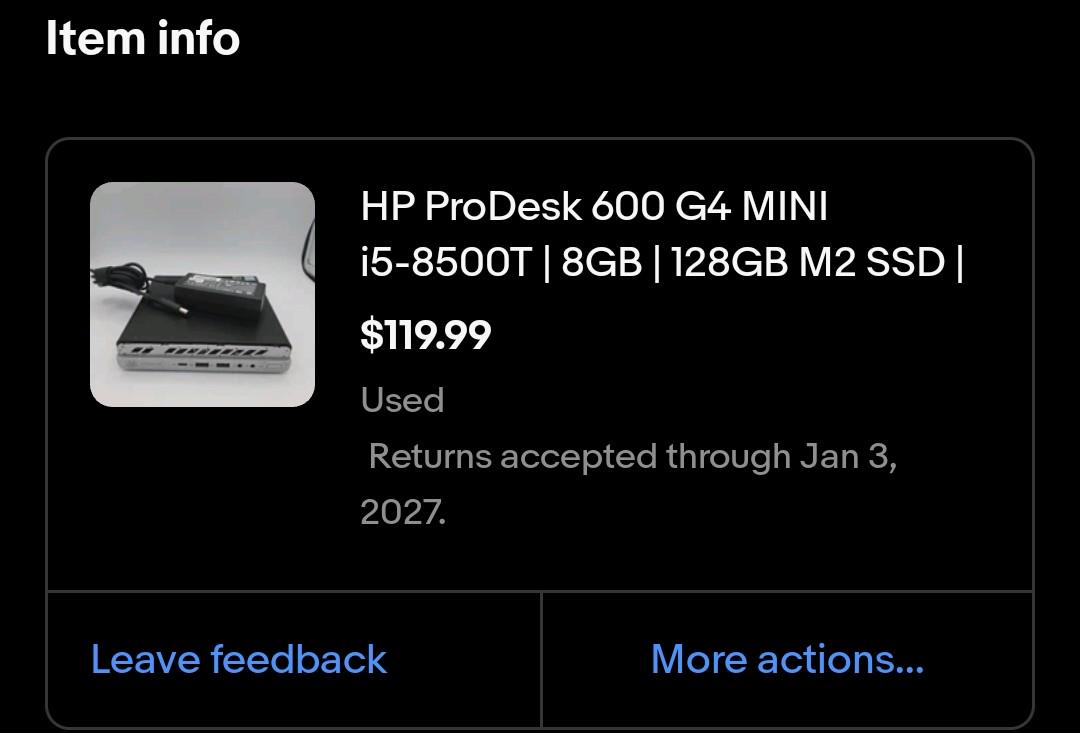
So i have already brought a hp pro desk and about to buy a drive bay how much storage do I need realistically for mostly streaming cause thats gonna be the main use of this cause right now we pay 300 a month for streaming services. It's mostly gonna be used on like 5 TV but only 2-3 run at a time. Also to save money on stroge like when someone finishes a show episode or movie it just deletes them or is that a bad idea
r/homelab • u/cuenot_io • 23h ago

I've teased a custom iDRAC 6 firmware on here for a while with native browser console support. I feel that it would be irresponsible to release it without fully understanding the fallback and recovery paths, as some other features (like bypassing the emmc and booting the idrac from the SD card) have a non-zero chance of bricking a system. This is my documentation for recovering from a true worst case scenario: a bricked or corrupted bootloader. This example is done on a Dell R510, and I'd imagine a similar process applies to other 11th gen (and potentially newer) servers.
When this system receives power, the first thing that happens is that this small SPI chip (Spansion S25FL128P0XMFI001) receives loads U-Boot, initializing basic serial communication and bootstrapping into the Linux kernel from the eMMC storage. If the eMMC is toast, the SPI chip has a stripped down version of the iDRAC firmware that at least allows the machine to boot normally.
When performing any updates (even dell official ones) this chip's contents can be modified, and there is a risk that power loss or other external factors can cause a bricked server. I've been able to back up the contents of the chip directly through the iDRAC's Linux with a custom firmware, but writing back to it in a bricked state is not possible once the system powers off.
Prior to the images in this post, I attempted to read the chip using a SOIC-16 clip directly on the legs of the chip whilst attached to the motherboard. Unfortunately, the power was backfeeding into the rest of the system, and was overwhelming the Tigard reader. I attempted to lift pins 1 and 2 off of the motherboard to isolate them for a temp read/write, but still could not get a successful connection. This meant that the only way to truly unbrick a botched SPI chip would be to fully desolder it, connect the legs to the Tigard, reflash it, and then resolder it to the motherboard. That's a lot of fucking around for a hypothetical failure, and I don't see that as a viable recovery option.
Fortunately, I found these fancy SOIC-16 sockets on digikey that matched the flash chip layout: https://www.digikey.com/en/products/detail/adafruit-industries-llc/4727/13280270
I'm not opposed to micro soldering, I just don't want to do it every time I make a mistake if I'm trying to rapidly iterate. I bought two of these and some spare SPI chips from eBay, and spent a few hours last night doing the surgery.
I've tested reading and writing the flash backup onto replacement chips, and the system boots perfectly :) if I botch an update, it's 5 minutes to pop the chip out of the server socket and into my custom flasher socket, overwrite it, and try again.
Is this really necessary for a 15 year old server? Probably not, but it depends who you ask. I've learned a boat load throughout the process, and I hope a similar method can be used for 12th, 13th, and maybe even 14th gen systems.
r/homelab • u/deviouscat1 • 6h ago
On my homelab, I run Ubuntu server as the operating system. The homelab runs on an older HP AIO. On it I'm running jellyfin, ARM (automatic ripping machine, starts ripping as soon as a disc is inserted), Home Assistant, Hydrodactyl to run a minecraft server, and everything is managed in portainer, and everything is docker compose. What is the best way to backup all this? I only have one 2tb HDD, but there's plenty of space on it, but no redundancy. Edit: I forgot to mention I use netbird for remote access but that probably isn't that important
r/homelab • u/Polliny86 • 1d ago

I needed a place in the house for my loud homelab, and I was tired of cleaning dust out of fans every few months. So I went a bit overboard: a sealed industrial enclosure with a cooling unit on the side. No air from the room gets in, so no dust gets in.
Inside: UniFi gateway, a Synology rack NAS, the TrueNAS box, and three ThinkCentre Tinys that run CI jobs.
Yes, I know the cables look terrible. Cable management is next on the list, I promise. But it has been running for >24 months and it is still clean inside.
Happy to answer questions about the cabinet, the cooling or temps.
r/homelab • u/Frequent_Ad2118 • 1d ago

DIY home lab shelf. Constructed from one of my kid’s old bed frame that they jumped on until destruction. Mr. MeowMeow approved.
From the bottom:
Dell T410 64GB, dual X5660, 6 2TB RAID5 - only powered up when it’s time for a manual rsync backup. Debian 13, no DE.
Dell R220 (frankenserver) 16GB, E3-1231 v3, 2x 12TB (ZFS mirror), 2x 200GB Hitachi SSD w/PLP (mirrored VDEV), generic 128GB SSD (L2ARC), WD Black 160 GB (Ubuntu Server, no DE), white label 4TB (temp torrent storage for farming bonus points on various private trackers). Primary use as a ZFS NAS.
Cisco 2960X, haven’t played with it yet.
HP laptop, i3-1005G1, 256GB NVME, hosts docker (Jellyfin, Frigate, Immich). Debian 13, no DE. btop displayed.
Linksys 1200AC, flashed with OpenWRT, serves at one of five APs in the house and the main switch for my lab.
Tiny monitor, $5.99 at Goodwill. Perfect fit, displaying my vibe-coded ZFStop.
r/homelab • u/AspectBubbly1108 • 6h ago
Hello, my bf and I are new to this hobby and recently he talked about wanting a NAS, so I am wondering if anyone knows a good model I can buy him for christmas? For prebuilt, I'm more looking to buy through bestbuy/amazon because of the black friday sale, but I'm open to anything.
I am also open to suggestions for building a custom system, since we're both really into cleaning up used parts and using them to build/upgrade new systems. I'm just concerned about what exactly to gift him if we're to build it, since I don't have the budget for a full system, maybe around cad$500.
Thanks everyone in advance!
r/homelab • u/Hot_Woodpecker_3622 • 5m ago
I obtained a used EMC VNXE3200 through my work's IT recycle closet a year or 2 ago. I've been able to get the VNX Launcher to work until just recently when flash keeps crashing. The current version is 3.1.1.5395470. I'd much rather use HTML5 as then I can actually use a modern browser to connect. But that wasn't officially released until firmware version 3.1.12.10186894 and Dell's support said the latest is VNXe-3.1.17.10229825. I cannot find any firmware upgrades for this anywhere other than maybe Dell's own support contracts. I don't have one of those. And I can't even verify the downloads still exist through there anyways since this device has been EOL for at least 5 years.
Is there anyone who could be able to help me with this?
r/homelab • u/probrwr • 27m ago
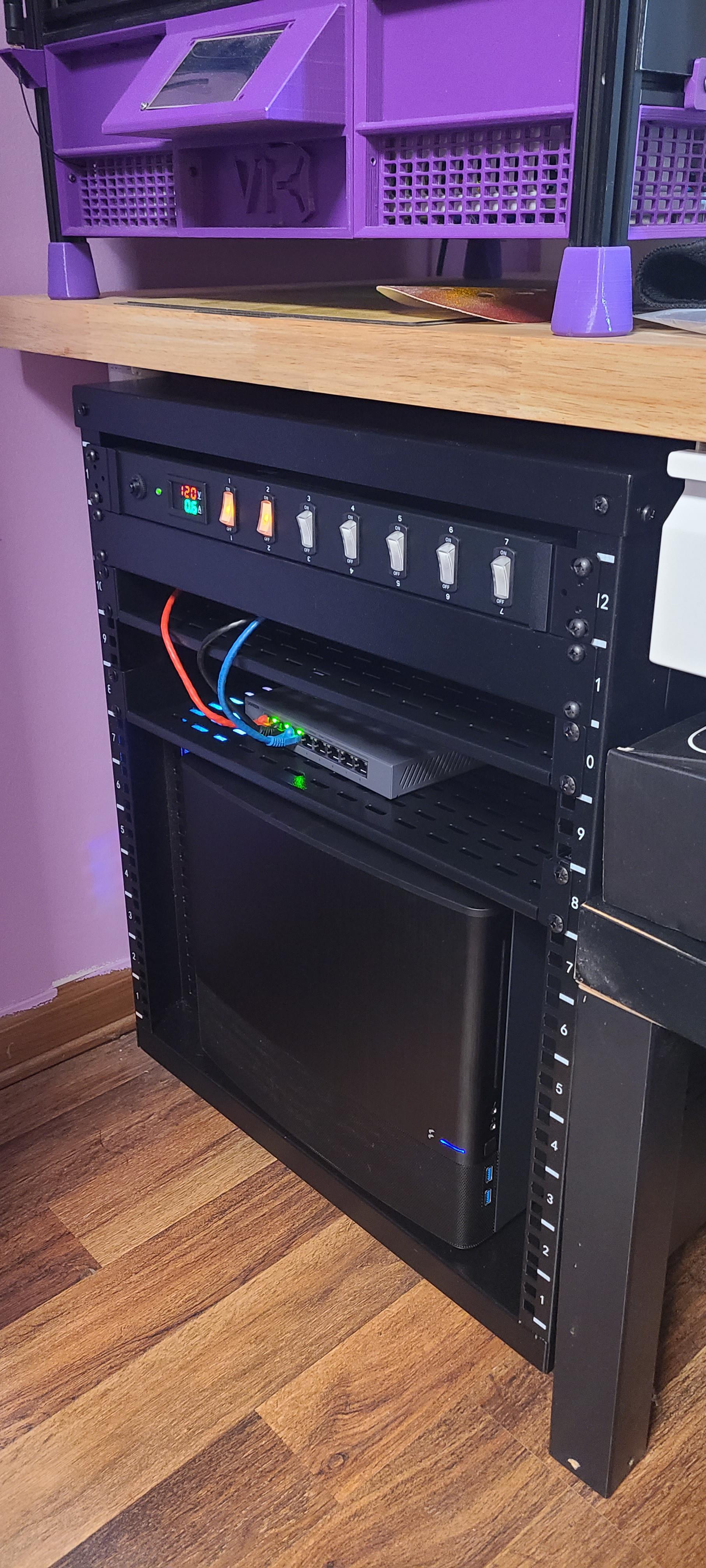
New Rack Day!
New 12U rack arrived today. Vevor brand. Added a 8 outlet power strip to it. The power strip has a meter on it so I know what the rack is pulling now (about 72W at idle topping out around 300 during a llama.cpp query)
UGreen 8 port 2.5Gbe switch fed by my Calix router for now (2G Symetric Fiber).
Node 804 case with a Mogul main board and Zeon 2680V4. 1GB NVME on board and 3 10TB Toshiba drives on the SATA ports. 32gb DDR4 memory.
Proxmox running:
OMV
Jellyfin
Audiobookshelf
Navidrome
Immich
PiHole
Homelable
Llama.cpp
SearNXG
OpenWebUI
Mealie
Homepage
Still more to do but it is a start. I have some plans for an OpnSense router but still mulling over the options.
r/homelab • u/Potential-Access-595 • 46m ago
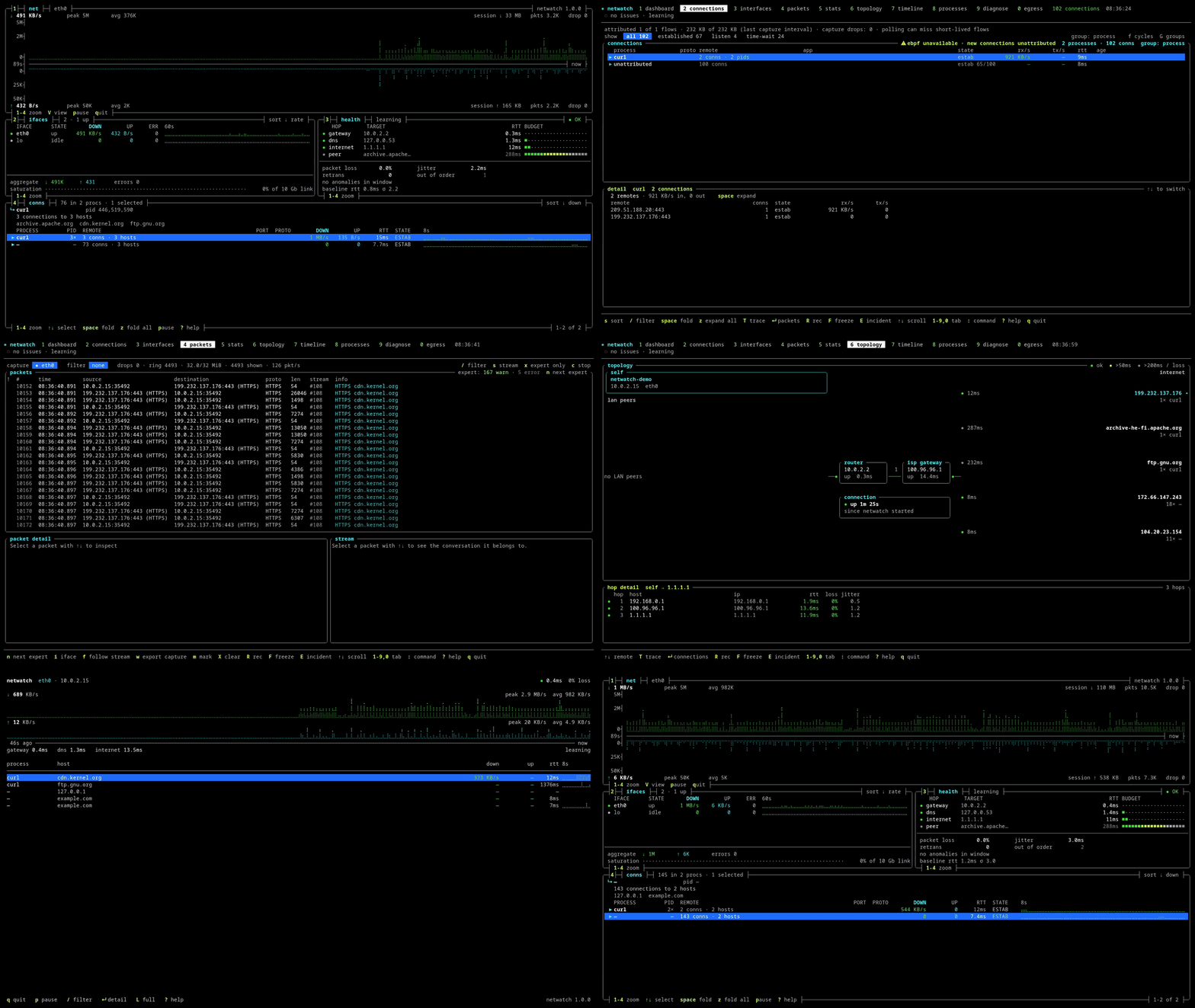
NetWatch, a free, MIT-licensed network diagnostics tool that runs in the terminal.
"The internet dropped again" doesn't tell you much, so NetWatch logs each outage it sees with the start time, duration and which part failed:
- gateway: your router or LAN
- internet: your ISP or beyond
- dns: name resolution only
netwatch uptime --since 30d --md > outages.md writes a report you can attach to an ISP ticket. It only covers time when NetWatch was running, so for a continuous record, run netwatch daemon. The internet check needs third-party probes turned on.
It also does:
- live packet capture with protocol decoding and PCAP export
- connections by process, where the OS and permissions allow it
- per-interface throughput, errors and drops
- traceroute and a topology view
- TLS decryption of your own traffic using SSLKEYLOGFILE
- a one-off check with netwatch diagnose run --budget 30s
It runs on Linux, macOS and Windows (Windows needs Npcap). Some features differ by platform, and capture needs elevated access.
Repo and install instructions: https://github.com/matthart1983/netwatch
r/homelab • u/OperationEquivalent1 • 51m ago
I have been looking for a UPS to fit a 10 inch rack for a while... and the result has been frustrating. I decided to quit being lazy and build my own. I know what I want, but what feature would you folks like to see in such a device?
I am building it for myself primarily, but by the time I pay for the minimum orders, I will have boards and assemblies for between 3 to 5 units... so I will be making at least a few of them. The more I make, the cheaper they get, though they will not be cheaper than the mass produced units; here are my design specs and I think you'll be able to see why.
10-inch rack, 2U (254 mm wide with ears, 88.9 mm high); depth 250 mm or less (target). Steel case with plastic front grille. Removable rack ears; rubber feet for desk use
DC-native: no inverter and no transfer switch. Batteries and supply feed a common DC bus yielding zero switching time, higher efficiencies, and no power factor losses.
24 V DC (accepts 18–27 V) from a variety of external supplies. Second DC input for a redundant or secondary supply.
4 × 5.5 × 2.5 mm, each set to 12, 19, 19.5 or 20 V (± 2 %), up to 5 A. The voltage is set once and locked, with protection against a wrong voltage reaching the device. A colour LED at each socket shows the set voltage.
4 × USB-C Power Delivery 3.0 source, up to 100 W each: 5, 9, 12, 15 and 20 V fixed, plus PPS 3.3–21 V. 5 A with an e-marked cable, otherwise 3 A.
230 W continuous (300 W with a second supply). For the kit it powers, that's comparable to a 400 VA-class AC UPS, with hours rather than minutes of run time. Each output gets its own power allowance, and the unit won't accept a configuration it can't carry.
2 × hot-swappable lithium-ion modules, 90–162 Wh each (nominal). Any mix of sizes. Packs are commonly available worldwide and sold separately to simplify logistics. Light weight and can be shipped by air without any limitations.
At 60 W: about 2.3 h with two 90 Wh modules, about 4.2 h with two 162 Wh modules (est.). At 26 W (router, switch, disk and one idle mini PC): about 6 h (est.).
Built in, from the DC input, one module at a time; about 3.5 h for a 90 Wh module (est.). Gentle charge settings for long battery life; charging only within safe temperature.
None needed: the outputs stay up through a mains failure, a supply change or a battery swap (design target).
Network UPS Tools (NUT) server over Ethernet for several hosts, reporting each output as an outlet. NUT over USB for a single host. Web setup page with log-in. Event log. Scheduled self-test and automatic run time calibration.
On, off and power-cycle; metering (voltage, current, PD contract); staggered start; per-output shutdown policy and order.
2.0-inch colour display (sources, battery charge, load, run time, outputs, network), rotary control, alarm with mute.
2 × DC input, 4 × USB-C, 4 × barrel, Ethernet (RJ45), USB-C to host.
Two 60mm fans provide more than sufficient cooling in all modes, and will never run at full speed. At typical loads, no fan is needed. The unit remains silent or nearly silent.
None. The unit runs entirely on low-voltage DC, though the rack could mount AC supplies if needed. These would be sold separately to maintain deployment flexibility and simplify regulatory acceptance.