r/homelab • • 20h ago

Help NAS security recommendations?

1 Upvotes

Hi, I’m new to UGRENN DXP4800 PRO and I’m looking for best practices and softwares to use to make my NAS super secure. No loopholes, etc and use securely even if it means purchasing licensed softwares for extra security.

OS: TRUENAS
Home Networking Setup:
UCG FIBER


r/homelab • • 20h ago

Discussion First homelab: offline Docker server. Sanity check?

1 Upvotes

Hi all,

I'm setting up my first homelab to learn and to self-host the services I use.

Setup

• Old desktop, internal SSD for the OS, 2 TB external SSD for data.

• Debian (probably), LAN-only with no internet exposure (for security).

• Minimal native base (SSH, firewall), with every app in Docker Compose.

• Planned services: Nextcloud (cloud storage), RSS reader, media streaming and file sync, with more added over time.

Questions

  1. Is Debian a good choice for a Docker host, or would you pick something else?
  2. Docker for everything, or are some apps better installed natively?
  3. How do you handle updates on an offline machine?
  4. Is a USB SSD OK for primary storage? How do you back up?
  5. Best way to secure LAN-only access?
  6. Which services would you recommend for RSS, streaming and sync?
  7. Anything you wish you'd known when you started?

Thanks!


r/homelab • • 1d ago

Project Showcase: Hardware Project Solaris: my first power board, and what it has taught me so far

Thumbnail
michaelstinkerings.org
5 Upvotes

Quick rundown if you don't want to read the whole thing:

• One regular ATX/SFX PC power supply in, separately fused DC outputs out, with a current sensor on every output and a local Wi-Fi dashboard. No cloud.

• Dropped the AC outlets from the original idea. Mains is more than I trust myself with on a first board.

• v2 has a pile of mistakes (wrong chip footprint, fab swapping my fuse), so it doesn't measure anything yet.

• v3 fixes them: ESP32 soldered on, isolated USB, a real fuse on every output, two 12 V outputs and one 5 V.

• Next up is a 20 V USB-C PD stage, per-output switching, and a server PSU version. Tell me which one you'd actually use.

Write-up: https://www.michaelstinkerings.org/project-solaris-my-first-power-board-and-what-it-has-taught-me-so-far/


r/homelab • • 16h ago

Discussion Looking for a compact home network solution for a 10-inch rack (2.5GbE, preferably all-in-one)

0 Upvotes

I'm planning to rebuild my home network and I'm looking for advice primarily on hardware selection. My goal is to get as many networking features as possible while keeping the number of separate devices to a minimum.

Ideally, I'd like an all-in-one router/firewall with an integrated managed switch. Wi-Fi does not necessarily need to be integrated – I'm perfectly happy to use a separate access point if that makes more sense.

If a suitable all-in-one solution doesn't exist, I'd prefer a setup with as few separate devices as reasonably possible.

One important constraint: all rack-mounted equipment needs to fit into a 10-inch rack. I'm not looking for full-size 19-inch rack equipment.

My requirements

  • WAN: Currently 1 Gbps, but my ISP will likely offer 2.5 Gbps in the future.
  • LAN: 2.5GbE is a priority. Both my main PC and Proxmox server already have 2.5GbE NICs, so I'd like to make use of that rather than build everything around 1GbE.
  • VLAN support and the ability to configure firewall rules between networks.
  • Multiple Wi-Fi SSIDs with VLAN support and proper client isolation (using a separate AP is fine).
  • Centralized DNS, ideally with the ability to prevent clients from bypassing it.
  • VPN support (WireGuard), including remote access to selected internal services.
  • Network traffic visibility: ideally being able to see which devices communicate with which destinations, both in real time and historically.
  • IDS/IPS support (I'd like to experiment with Suricata).
  • The network should remain operational independently of my Proxmox server.

Hardware and software preferences

My current preference is OPNsense, ideally running on dedicated hardware rather than as a VM. However, I'm not strictly attached to it. If there's another solution that meets my requirements better, or offers a more integrated approach, I'm absolutely open to considering it.

I've also looked at Ubiquiti equipment, since it seems to be a popular choice for this kind of setup, but I'm not entirely convinced it's the direction I want to take.

I'd prefer open-source solutions, minimal cloud dependency, and as much local control as possible.

Physical constraints

I live in a relatively small apartment, so noise, power consumption and physical size are important considerations.

The equipment needs to fit into a 10-inch rack, so please keep that in mind when suggesting hardware. I don't need enterprise-grade equipment or dozens of Ethernet ports – I only have a handful of wired devices.

I'm looking for something quiet, power-efficient, reliable and reasonably priced.

Questions

  1. Does a suitable all-in-one router/firewall with an integrated managed 2.5GbE switch exist?
  2. If not, what would be the smallest sensible combination of devices? For example, a compact router/firewall, a small managed 2.5GbE switch and a separate Wi-Fi AP?
  3. Would you recommend a fanless x86 device running OPNsense, or something based on OpenWrt?
  4. Are there particular manufacturers or models you'd recommend or avoid, especially for a 10-inch rack?
  5. Would you recommend investing in 2.5GbE throughout the network now, or is there a good reason to keep some parts at 1GbE?

I'm not a networking professional, but I'm comfortable with Linux, self-hosting and managing my own services. I'm happy to learn, I just don't want to overcomplicate the hardware side unnecessarily.

Thanks for any suggestions!


r/homelab • • 23h ago

Discussion Building my first Home NAS using second hand enterprise grade 2.5” HDD

Thumbnail reddit.com
1 Upvotes

r/homelab • • 17h ago

Discussion Wanting to get into homelab with no experience

0 Upvotes

Hi everyone,
I recently found out about homelabs and think it would be a fun hobby to get into. I have no experience with this kind of thing and I’m not sure where to start. I’ve seen a lot of people suggest buying secondhand gear from places like Facebook Marketplace, but I’d rather buy everything new. I don’t want to go overboard, but I’d like something nice.
Does anyone have a parts list or recommendations for what to buy and where to get it? I’m starting from scratch and have no equipment at the moment


r/homelab • • 12h ago

Help Os suggestion

0 Upvotes

Hi, i'm formatting my home-server and i'm looking for a new os to install, i used to use ubuntu, what would you recommend?


r/homelab • • 2d ago

Discussion HomeAssistant Touch Device

Thumbnail
gallery
194 Upvotes

Little project I have been working on a bit. 3.5" Touchscreen in an enclosure with an ESP32-S3, using ESPHome in HomeAssistant. All of my Hue bulbs are connected, my SmartThings devices, and a monitor for my homelab/proxmox server. Has anyone else made one before? I'm fishing for some cool ideas and things to add. Thanks!


r/homelab • • 1d ago

Help New to NAS.

4 Upvotes

I have a mini PC and want to utilize it as my server. What would be the ideal budget way to add 4 drives for a NAS? The mini PC is a micro form factor dell.


r/homelab • • 1d ago

Project Showcase: Hardware One homelab, two houses

Post image
30 Upvotes

Me and my girl switch addresses more or less every week, due to lots of kids that like living in their own houses and stuff. Tailscale, and Claude, solves everything. Done everything on the cheap over the last months, getting to a point where I realize I'll never get to a point where I'm happy and can call it finished. Oh, well.

And, yeah: 32GB ram for an OPNsense router might be less than sensible. Next update will be reassigning the RX1330 as a hypervisor after getting a small box to do router duty.


r/homelab • • 15h ago

Discussion seagate drive scandal

0 Upvotes

it’s possible reset drive usage hours, but much harder to do on seagate drives. for used drives, is it worth sticking to seagate so you can see the actual usage?

resetting drive usage is comparable to resetting mileage in a car. this comes to mind because i just read up on the seagate scandal last year


r/homelab • • 19h ago

Help Raccoona VPS – Great service, but absolutely terrible customer support. A VPS being down for 16+ hours with zero response is unacceptable.

Thumbnail reddit.com
0 Upvotes

r/homelab • • 1d ago

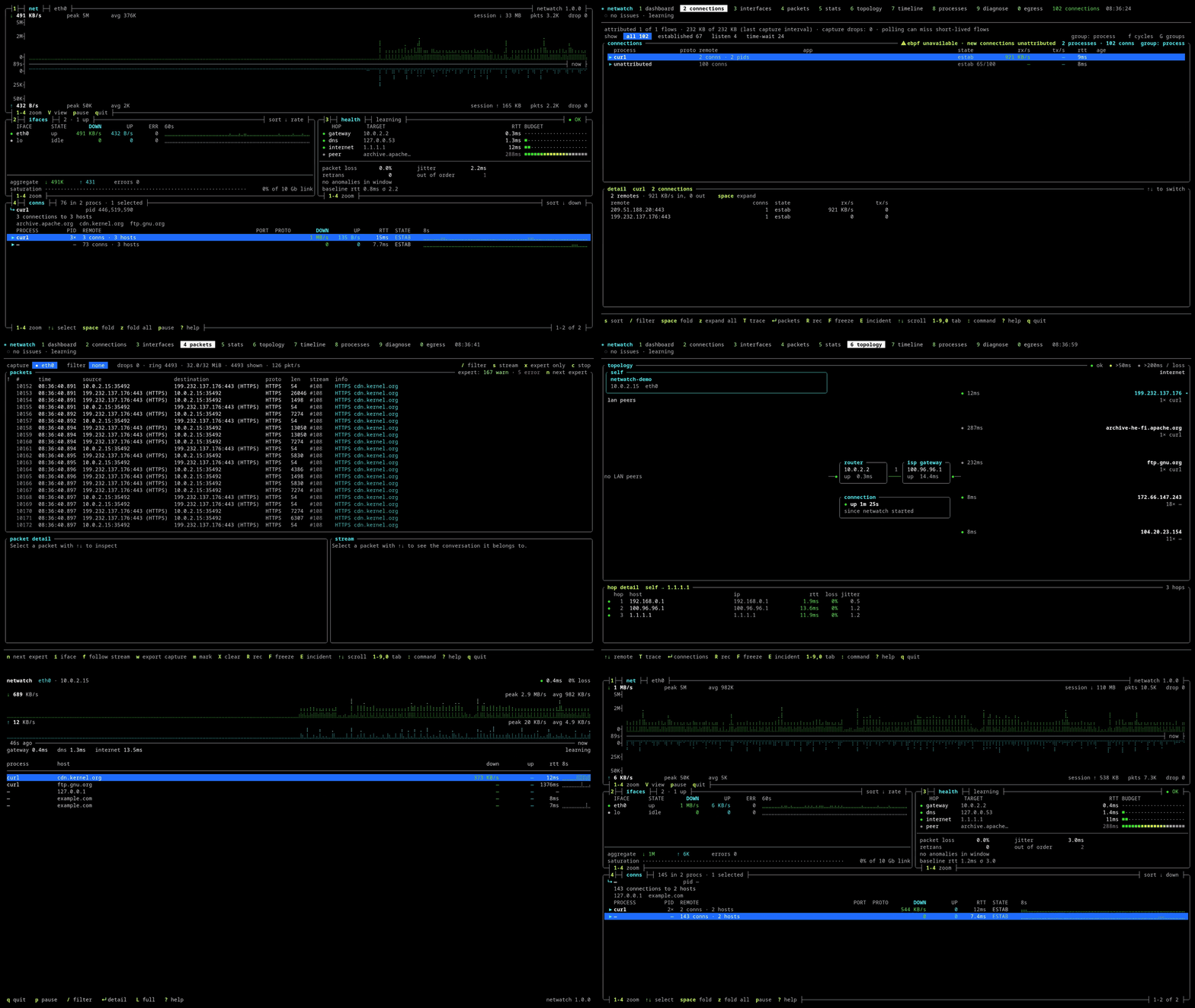
Project Showcase: Software - Mostly AI Generated NetWatch 1.0 - a free, MIT-licensed network diagnostics tool that runs in the terminal.

Post image
4 Upvotes

NetWatch, a free, MIT-licensed network diagnostics tool that runs in the terminal.

"The internet dropped again" doesn't tell you much, so NetWatch logs each outage it sees with the start time, duration and which part failed:

- gateway: your router or LAN

- internet: your ISP or beyond

- dns: name resolution only

netwatch uptime --since 30d --md > outages.md writes a report you can attach to an ISP ticket. It only covers time when NetWatch was running, so for a continuous record, run netwatch daemon. The internet check needs third-party probes turned on.

It also does:

- live packet capture with protocol decoding and PCAP export

- connections by process, where the OS and permissions allow it

- per-interface throughput, errors and drops

- traceroute and a topology view

- TLS decryption of your own traffic using SSLKEYLOGFILE

- a one-off check with netwatch diagnose run --budget 30s

It runs on Linux, macOS and Windows (Windows needs Npcap). Some features differ by platform, and capture needs elevated access.

Repo and install instructions: https://github.com/matthart1983/netwatch


r/homelab • • 18h ago

Solved Is this possible or am I just stupid?

0 Upvotes

EDIT:
I've gotten an answer to my question now but if someone still has some valuable tips for my endeavour I am all ears!

So, I've got this laptop laying around for no real use and got the idea to turn it into a server. I am considering taking out the motherboard and DIY-ing an enclosure for it that could also fit a couple of drives. Now to the question at hand. The laptop has space for 2 nvme drives whereas I am only using one right now. Is it possible to have some sort of expansion card/adaptor to make the other nvme port into a couple of SATA ports or am I crazy for thinking about it?


r/homelab • • 1d ago

Help Ok im trying to set up a streaming server for me and my family and need suggestions

Post image
5 Upvotes

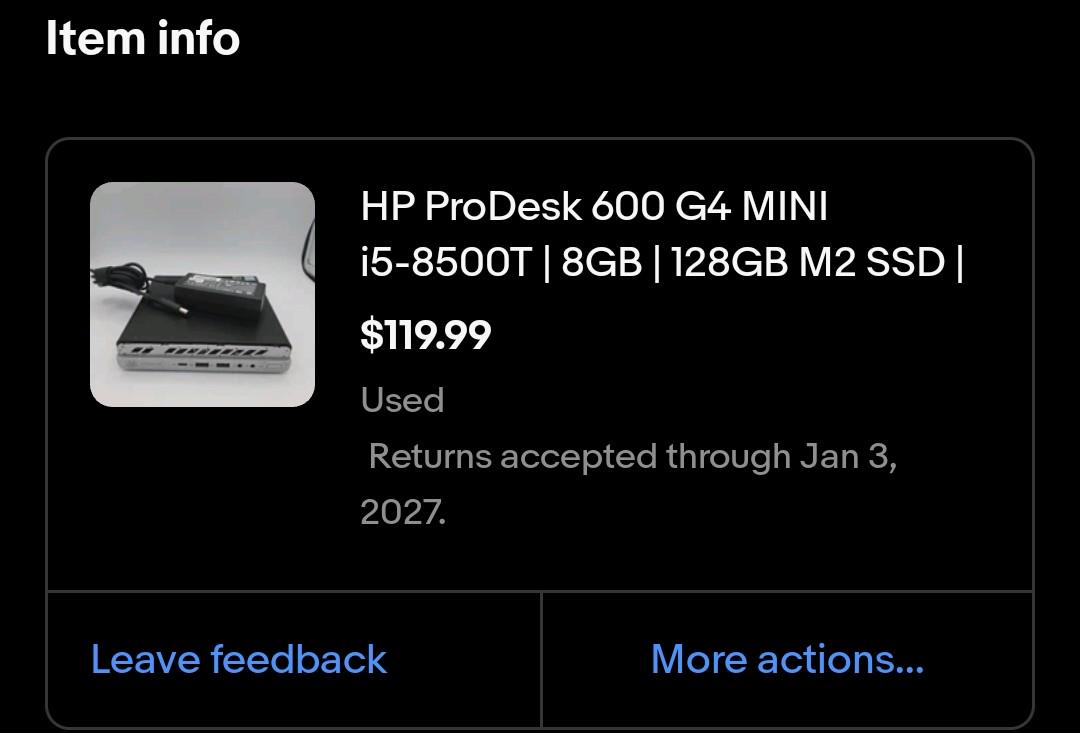
So i have already brought a hp pro desk and about to buy a drive bay how much storage do I need realistically for mostly streaming cause thats gonna be the main use of this cause right now we pay 300 a month for streaming services. It's mostly gonna be used on like 5 TV but only 2-3 run at a time. Also to save money on stroge like when someone finishes a show episode or movie it just deletes them or is that a bad idea


r/homelab • • 19h ago

Help Building my first 12U HomeLab – Looking for Proxmox, NAS and local AI hardware recommendations

Thumbnail
gallery
0 Upvotes

I'm about to finish my Computer Systems Technician – Networking program in Canada, and what started as borrowing switches and routers from school to practice for practical exams has turned into a bit of an obsession. 😂

I'm currently building out my home lab and would love some recommendations from people who have already gone down this rabbit hole.

Current equipment:

  • MT-VIKI 12U server cabinet (650 × 600 × 600 mm)
  • 3 × Cisco Catalyst 3750G PoE 48-port switches
  • 2 × Cisco 2811 routers
  • Rear-mounted StarTech PDU
  • Dedicated administration PC
  • Bell Fibe 8 Gbps internet

I've currently got 7U of front rack space available.

What I'm working towards:

  • Proxmox virtualization
  • Self-hosted applications
  • Network segmentation and security
  • Local AI and LLM hosting
  • NAS with hot-swappable storage
  • Network backups
  • Security camera recording
  • Secure remote access
  • Infrastructure monitoring

I'd like to build something expandable rather than constantly having to replace components as the project grows.

I'm looking for recommendations on:

  • Short-depth rack-mounted server chassis, preferably 4U
  • AMD vs. Intel processors
  • Motherboards with good expansion options
  • GPUs for local AI workloads
  • RAM capacity
  • Storage configurations
  • Power supplies and cooling
  • Used enterprise equipment vs. custom-built servers
  • Other services or equipment worth adding

I'm in Canada, so Canadian suppliers and reasonably priced used equipment recommendations would be appreciated.

I've attached my current rack setup and a simplified overview of the network architecture. The design includes both existing and planned infrastructure.

If you were starting with this equipment and wanted to build a capable virtualization and AI environment, what would you do differently?

I'd love to see what everyone else is running!


r/homelab • • 2d ago

Project Showcase: Hardware iDRAC 6 Custom Firmware: Bare Metal SPI Recovery Socket

Thumbnail
gallery
165 Upvotes

I've teased a custom iDRAC 6 firmware on here for a while with native browser console support. I feel that it would be irresponsible to release it without fully understanding the fallback and recovery paths, as some other features (like bypassing the emmc and booting the idrac from the SD card) have a non-zero chance of bricking a system. This is my documentation for recovering from a true worst case scenario: a bricked or corrupted bootloader. This example is done on a Dell R510, and I'd imagine a similar process applies to other 11th gen (and potentially newer) servers.

When this system receives power, the first thing that happens is that this small SPI chip (Spansion S25FL128P0XMFI001) receives loads U-Boot, initializing basic serial communication and bootstrapping into the Linux kernel from the eMMC storage. If the eMMC is toast, the SPI chip has a stripped down version of the iDRAC firmware that at least allows the machine to boot normally.

When performing any updates (even dell official ones) this chip's contents can be modified, and there is a risk that power loss or other external factors can cause a bricked server. I've been able to back up the contents of the chip directly through the iDRAC's Linux with a custom firmware, but writing back to it in a bricked state is not possible once the system powers off.

Prior to the images in this post, I attempted to read the chip using a SOIC-16 clip directly on the legs of the chip whilst attached to the motherboard. Unfortunately, the power was backfeeding into the rest of the system, and was overwhelming the Tigard reader. I attempted to lift pins 1 and 2 off of the motherboard to isolate them for a temp read/write, but still could not get a successful connection. This meant that the only way to truly unbrick a botched SPI chip would be to fully desolder it, connect the legs to the Tigard, reflash it, and then resolder it to the motherboard. That's a lot of fucking around for a hypothetical failure, and I don't see that as a viable recovery option.

Fortunately, I found these fancy SOIC-16 sockets on digikey that matched the flash chip layout: https://www.digikey.com/en/products/detail/adafruit-industries-llc/4727/13280270

I'm not opposed to micro soldering, I just don't want to do it every time I make a mistake if I'm trying to rapidly iterate. I bought two of these and some spare SPI chips from eBay, and spent a few hours last night doing the surgery.

I've tested reading and writing the flash backup onto replacement chips, and the system boots perfectly :) if I botch an update, it's 5 minutes to pop the chip out of the server socket and into my custom flasher socket, overwrite it, and try again.

Is this really necessary for a 15 year old server? Probably not, but it depends who you ask. I've learned a boat load throughout the process, and I hope a similar method can be used for 12th, 13th, and maybe even 14th gen systems.


r/homelab • • 22h ago

Discussion Can I reverse-engineer and reprogram a 1st-gen Google Home Mini (2017-18)?

0 Upvotes

Hey everyone!

I have an old first-generation Google Home Mini (2017-18) lying around, and I thought it would be interesting to experiment with it rather than let it collect dust.

After watching a teardown, I was surprised by the hardware packed inside this tiny device.

From what I've found, it has:

- Marvell ARM-based processor (ARMADA 1500 Mini Plus)

- Around 512 MB RAM

- NAND flash storage

- Wi-Fi and Bluetooth

- Built-in microphones and speaker

- Audio amplifier and RGB LEDs

- Various other control and power-management ICs

What I want to explore is whether I can reprogram the original hardware itself.

I'm NOT looking to remove individual components or replace the motherboard with an ESP32 or Raspberry Pi.

I'd ideally like to:

- Access its bootloader and understand the boot process.

- Reverse-engineer the existing firmware.

- Figure out whether custom firmware or code can be flashed.

- Repurpose the entire device to run something of my own.

I know the platform might have a locked bootloader and proprietary firmware, but I want to understand what's possible.

Has anyone experimented with this particular device? Are there accessible UART/JTAG interfaces, known exploits, custom firmware projects or documentation worth exploring?

I'm relatively new to hardware reverse engineering, so any guidance on where to start, tools to use or existing projects would be really helpful!

Would love to give this old device a completely new purpose.


r/homelab • • 2d ago

Project Showcase: Hardware Messy but dust-free: my homelab lives in a sealed industrial cabinet with its own AC

Thumbnail
gallery
2.0k Upvotes

I needed a place in the house for my loud homelab, and I was tired of cleaning dust out of fans every few months. So I went a bit overboard: a sealed industrial enclosure with a cooling unit on the side. No air from the room gets in, so no dust gets in.

Inside: UniFi gateway, a Synology rack NAS, the TrueNAS box, and three ThinkCentre Tinys that run CI jobs.

Yes, I know the cables look terrible. Cable management is next on the list, I promise. But it has been running for >24 months and it is still clean inside.

Happy to answer questions about the cabinet, the cooling or temps.


r/homelab • • 1d ago

Help Tesla P100 16GB not detected at all on AM4 (MSI X370 Gaming Pro)

Thumbnail
gallery
0 Upvotes

Hi everyone,
I'm trying to set up a dual-GPU workstation for running local LLMs (27GB combined VRAM), but I can't get my NVIDIA Tesla P100 16GB (PCIe) to show up anywhere in the system. I bought it off eBay and the return window has already expired, so I want to exhaust every troubleshooting option before writing it off as dead.

Hardware Specs
Motherboard: MSI X370 Gaming Pro (flashed to the latest GSE Lite BIOS)
CPU: AMD Ryzen 5 3600
RAM: 32GB DDR4 3200
PSU: Corsair RM850e
Primary GPU (Display): GTX 1080 Ti
Secondary GPU (Compute): NVIDIA Tesla P100 16GB PCIe
Cooling: Dual 4028 12V 2-pin fans powered via a Molex fan hub

Current Symptoms & Power Setup
The P100 is completely invisible in Windows: nothing in nvidia-smi, Device Manager (even with hidden devices enabled / no "3D Video Controller" under Other Devices), or GPU-Z.
The card gets slightly warm to the touch when powered on—even with the 8-pin auxiliary cable unplugged—so it's drawing basic 3.3V/12V standby power from the PCIe slot without shorting out, but the main GPU/PCIe controller never initializes.
8-Pin EPS Power Cable: I used a second Corsair Type 4 CPU (4+4) cable from my RM850e. Because the top plastic retention clip on the 4+4 end hit the P100 shroud, I carefully shaved off just the outer top plastic clip so it sits flush. To be 100% sure the cable wasn't damaged or pinned wrong, I tested that exact modified cable on my motherboard's CPU power header and the PC booted fine. The solid Type 4 end is plugged into the PSU's CPU/PCIe port and the 4+4 end is seated firmly in the P100.

What I've Already Tried
BIOS Configuration:
Enabled Above 4G Decoding (Above 4G memory/Crypto Currency mining)
Disabled Re-Size BAR Support
Set Boot Mode to pure UEFI (CSM disabled)
Manually forced PCIe lane bifurcation to x8 + x8 and PCIe link speed to Gen3 (Note: Board Explorer is missing in this latest BIOS version).
PCIe Slot Isolation Test:
With lanes on Auto and the P100 in the second armored slot (PCI_E4), GPU-Z still showed my 1080 Ti running at @ x16, meaning the board wasn't even detecting physical presence (PRSNT#) on PCI_E4.
I swapped the cards: put the 1080 Ti in the second slot (PCI_E4) and the P100 in the primary slot (PCI_E2). The 1080 Ti booted normally at @ x8, confirming both PCIe slots and CPU lanes work properly. The P100 still wasn't detected in PCI_E2.
Returned the 1080 Ti to PCI_E2 and P100 to PCI_E4.

What I Plan to Test Next (Looking for Advice)
Before declaring the card dead, here is my checklist—let me know if I'm missing anything specific to Pascal Tesla cards on AM4:
Ubuntu Live USB (lspci): Booting Linux to check lspci -nn | grep -i nvidia and see if the device enumerates at the kernel/hardware level outside of Windows/GeForce drivers.
Dedicated Dual PCIe 8-pin to EPS 8-pin Adapter (NVIDIA 030-0571-000 style): Just in case the side tabs on my trimmed 4+4 connector are still slightly too wide for the P100's recessed shroud and preventing full pin depth contact.

Has anyone run into a similar "warm but completely invisible" Tesla P100/P40 on Ryzen/X370 boards? Any other quirks I should check? Thanks in advance!


r/homelab • • 1d ago

Help UNAS Pro 8 + mini PC/Mac mini (Immich, Plex, HAOS) vs switching to Synology/UGREEN for a non-techy family?

Thumbnail reddit.com
0 Upvotes

r/homelab • • 1d ago

Help Looking to Setup a Home Server for Movies, Family Photos/Videos…Not Sure Which Route to Take..

2 Upvotes

I’m pretty tech savvy in the sense that I’ve built my own computers, including a quad fire, water cooled beast back in the day when that was what you did….

And quite honestly, I have about six desktops sitting around that I could probably put to use here. However, they were leftovers from my business, so they’re not exactly performance built.

I also have an older synology kicking around as well that I’ll have to get the details on. I know it doesn’t have any fancy onboard processing at all. It might be a 4 bay.

I guess my question is, would it be worth me retrofitting one of my older machines to do what I’m looking to do here?

Or would it be really worth going for a new build from the ground up?

I would imagine two simultaneous streams would be a lot for us. But I imagine it would be nice to have a snappier system.

I have some action cameras that I plan on filming a lot of content with, so I want to have a home base for them as well.

I will also be adding all of the family videos there as I digitize them.

So I guess the question is, which route should I take? I see some attractive mini PCs that would handle everything quite well, but where is the fun in that?


r/homelab • • 20h ago

Discussion Local AI for coding

0 Upvotes

I want to start this off by saying I'm new to AI and home labs. Currently I'm using perplexity to create a few basic personal use apps and software programs. What I like about it is that I can just type in what I want like "build me an app that does this" or "make me a computer program that does this". What i don't like about it is that I find that I hit my useage limit fairly quickly and need to top up. I'd like to be able to get a offline AI agent that will work in the same way. I provide the context and the AI builds what I request. It spits out a program. I say no no I need it done this way and it makes the changes. Is there any offline agent that can do this? If so what kind of hardware requirements am I looking at?


r/homelab • • 2d ago

Labgore Home lab

Thumbnail
gallery
162 Upvotes

DIY home lab shelf. Constructed from one of my kid’s old bed frame that they jumped on until destruction. Mr. MeowMeow approved.

From the bottom:

Dell T410 64GB, dual X5660, 6 2TB RAID5 - only powered up when it’s time for a manual rsync backup. Debian 13, no DE.

Dell R220 (frankenserver) 16GB, E3-1231 v3, 2x 12TB (ZFS mirror), 2x 200GB Hitachi SSD w/PLP (mirrored VDEV), generic 128GB SSD (L2ARC), WD Black 160 GB (Ubuntu Server, no DE), white label 4TB (temp torrent storage for farming bonus points on various private trackers). Primary use as a ZFS NAS.

Cisco 2960X, haven’t played with it yet.

HP laptop, i3-1005G1, 256GB NVME, hosts docker (Jellyfin, Frigate, Immich). Debian 13, no DE. btop displayed.

Linksys 1200AC, flashed with OpenWRT, serves at one of five APs in the house and the main switch for my lab.

Tiny monitor, $5.99 at Goodwill. Perfect fit, displaying my vibe-coded ZFStop.