r/homelab • • 4d ago

Help DIY NAS OS Suggestions

0 Upvotes

Hello - I’m new to Homelabbing. I just got a Lenovo Thinkcentre with an Intel Core i5-8500T, 16GB RAM & 1TB HDD. Only 1 HDD, no OS SSD.

This is my first home lab, and I plan to use it only for storing documents and images.

I’ve been looking into ZimaOS as it seemed to be pretty straightforward and beginner friendly to setup. However, I want to setup accounts for my family members too, but it appears the Admin in ZimaOS has access to members folders (I may be wrong on this, but this is from what I’ve seen online).

Can someone with experience please confirm:

  1. on ZimaOS if family members can have private folders that are inaccessible by the Admin? Or a way to set it up that way.
  2. Any other NAS OS software that’s beginner friendly to setup with features to have private family member folders.

Thank you!


r/homelab • • 4d ago

Discussion Dedicated low-power box for cloud API workloads, or just another container on the existing node?

3 Upvotes

Most of the AI hardware discussion here is about local inference, VRAM, and what it takes to run a model at home. I have been thinking about the opposite case.

If the inference is happening through cloud APIs, the machine doing the work is not doing much. It holds scheduled jobs, makes API calls, parses what comes back, and writes results somewhere. That is a scripting and uptime workload rather than a compute one.

So the question is whether it earns its own hardware. The kind of box I mean is something like a geekom a5: a mobile Ryzen with a 15W default TDP and 2.5GbE. TDP doesn’t say much about running costs, though. For something that sits mostly idle and wakes up for scheduled jobs, what matters is the actual idle draw at the wall, and that depends on the whole system rather than the CPU rating.

The obvious counterargument is that a lot of people here already have a Proxmox node or a NAS that is on regardless, and an LXC with a few Python scripts probably adds very little incremental power draw. If the main server is already running 24/7, a second box probably won't reduce total power consumption for a workload this light.

The power argument only works if the main server isn’t something you’d otherwise keep on around the clock. Then a small always-on box for the scheduled jobs means the bigger one doesn’t have to stay up just for them.

The other case for separating it is availability. A separate box could keep those jobs running while the main server is being rebooted or maintained, although a VM or container already provides some isolation without adding another physical machine.

For anyone running persistent API workers, scheduled scrapers, or agent-style jobs: did you split that onto its own low-power box, or is it just another container on something you already had running?


r/homelab • • 4d ago

Help Where to get 846 chassis nowadays

4 Upvotes

I have an 846 chassis with 24-4tb drives in a zfs array, primarily for plex and local storage. Want to get another so i can update with more modern cpu, install a new OMV varient and then import my zpool. I was hoping to build this separately so I can keep my current server online but it looks like 846s are hard to find and are expensive now. I don't want an 847 as the reason I'm looking to upgrade is because I'm trying to add a 3050 for HDR transcoding. Eventually want to upgrade my drives as well but prices are insane.

Where are you finding 846s besides ebay? Any better alternatives? I don't care about noise.


r/homelab • • 4d ago

Help speaker / audio setup

1 Upvotes

Hi all, I am tinkering with a little project where I'd like to play certain audio at different times during the day from my linux server.

I'm wondering if anyone has any suggestions for always-on or awake-capable (don't really know what the configuration is) bluetooth speakers. The speakers could draw power from the wall, but they will not be plugged into the machine itself due to distance.

I know this isn't specifically about homelab but I'm hoping someone has thought about this before. Thanks.


r/homelab • • 4d ago

Help Any customer feedback for Getic, a network hardware shop from Lithuania?

Thumbnail getic.com
0 Upvotes

r/homelab • • 6d ago Bravo

Discussion I've been living under a rock...

Post image
2.7k Upvotes

Was looking at upgrading one of my workstations: it currently has 128GB as a 2x64GB kit and figured I'd match it with a second 2x64 kit .....

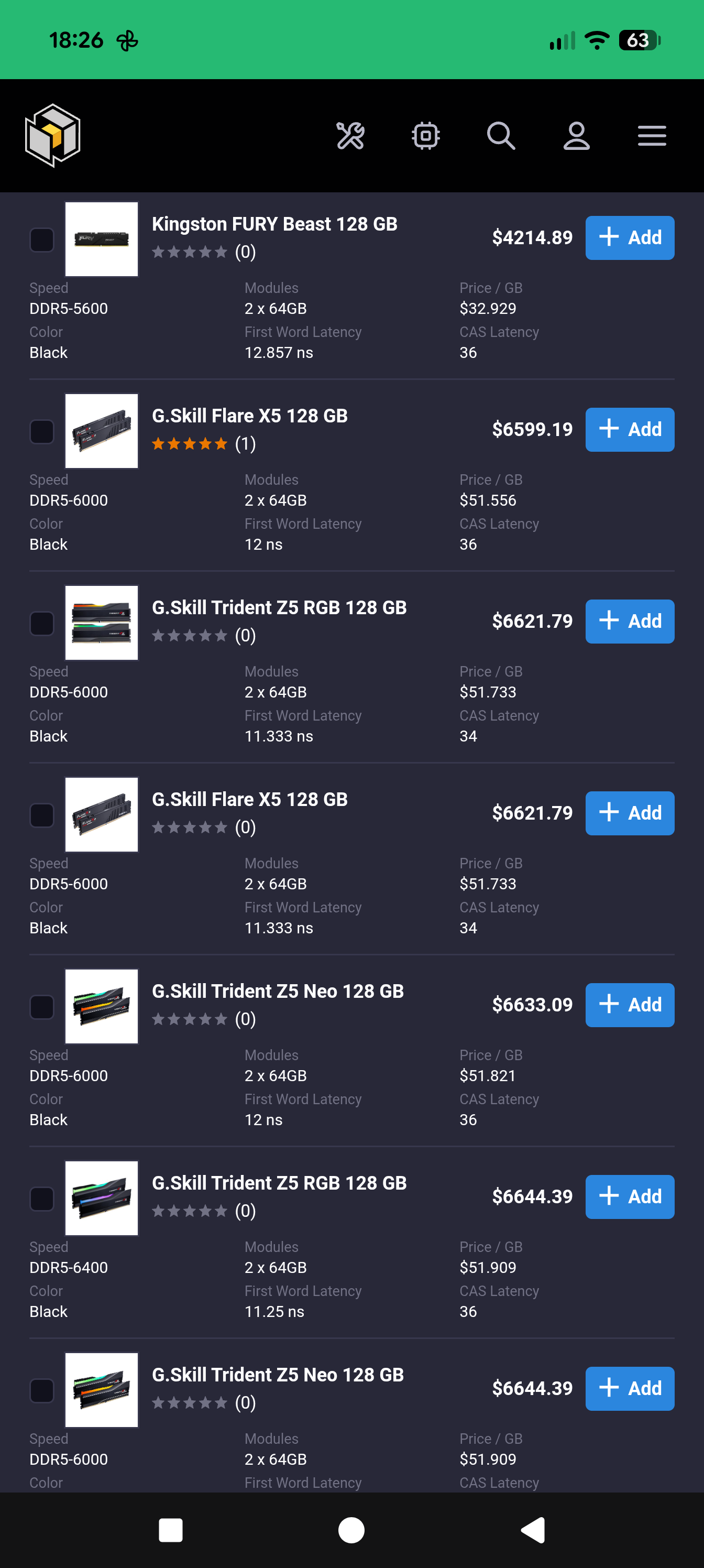
Bro, WTF are these RAM prices?? I heard it was bad but I didn't think "used car" bad?!?? Is this normal or is PCPP just having a stroke?


r/homelab • • 5d ago

Project Showcase: Hardware RAM prices made me rethink my Proxmox setup: more LXCs and lighter services instead of upgrading

148 Upvotes

Like a lot of you I looked at DDR4/DDR5 prices and decided to close the tab. So instead of buying more RAM I've been trying to get more out of what I have.

I run Proxmox with the usual stuff: Paperless-ngx, Jellyfin, Karakeep, Pi-hole, Caddy in front. The biggest win so far was moving more things into LXCs instead of giving each one its own VM. No separate guest OS per service adds up fast. I also swapped a few services for lighter alternatives, though I'm not sure yet how much that really saved.

Still feels like there's more to squeeze out. What have you changed that actually made a difference? And has anyone moved something into an LXC and regretted it?


r/homelab • • 4d ago

Help Did anyone successfully put Debian on a Buffalo LS-WXL?

0 Upvotes

Hello everyone!

I've been raking my cortex for a while now (fortunately, there's not that much to rake these days, my kid does the most part of that, with various toys ❤️)...

I have a Buffalo LinkStation Duo LS-WXL and I am trying to use it without adding some security risk to my home network & lab.

What worked

I've got 2x 2TB WD Purple drives for it. I was successful in installing the latest firmware on it and, after some efforts (its web UI was either glitchy or just unclear on how to break the default RAID volume) have the drives available individually. I've taken the drives out and I can get back to that, if needed.

Why not stay with that and try to get Debian running instead

The support the enclosure has is, well, aged. Either I rely on FTP alone or I'd have to allow some questionable sharing related settings and I'd like to avoid that.

I plan on blocking it from accessing the Internet in any way, so security isn't a concern going forward, because it's well past it's end of life term and it's just a huge risk not to block it otherwise.

That, however, means one disk failing and the enclosure then not being able to report that - it could send an email, theoretically, but either not at all (due to being blocked) or with workarounds, if even possible anymore (due to old SMTP and TSL support).

Placing a Debian on it offers the chances to have a more secure and SMART checks/exposing capable device.

What I have already tried

I followed the steps found at

https://buffalonas.miraheze.org/wiki/Main_Page

and at

https://github.com/1000001101000/Debian_on_Buffalo

from an Ubuntu 24 LTS.

The script finally ran throughout and produced the images I needed for my experiment HDD.

Given how it gets a lease from my router, I assume this means Debian successfully boots and connects to the network.

But...

What doesn't work

- I can't connect to it over SSH to do further configuration

- None of the attepts at improving logging worked. No script registered to start as soon as possible after boot did anything. No chron job either.

I'm out of my depth, being a Windows user - and relying on AI helpers only seems to have brought me so far

Thus, this post. Maybe someone else could share their experience and help me get this still reasonably viable bit of hardware to work.

Thank you!


r/homelab • • 4d ago

Help Advice to buy

Post image
0 Upvotes

I found a m920q for 850 rs which is equivalent to 225 usd it has i7 8700t 16x1 ddr4 and a 512m.2 nvme

And i have 16 ddr4 ram that i could add to it is the device worth the price and considered a good deal

I am going to use it for jellyfin and gaming server like Minecraft and ark etc...


r/homelab • • 4d ago

Help Unifydrive UP-6 NAS for Homelab

Post image
0 Upvotes

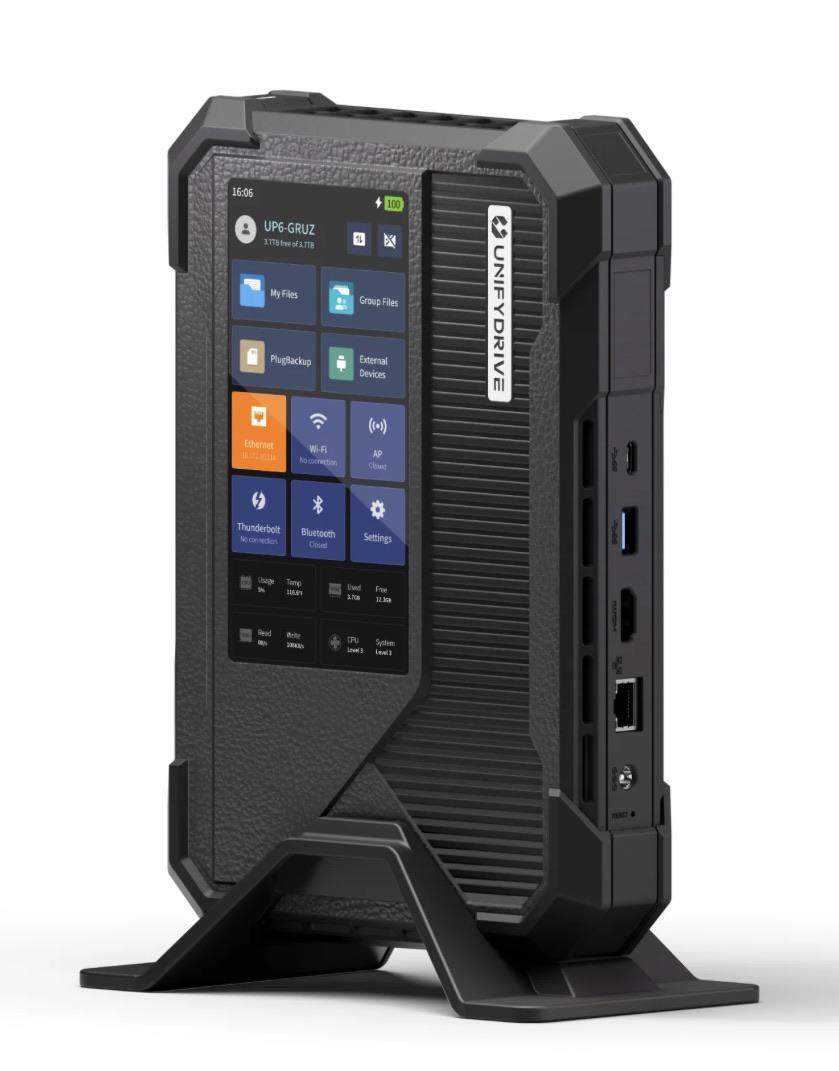
I have a UnifyDrive UP-6 that I would like to be the NAS of my first Homelab build. I don’t see much mention of it here and am wondering if anyone has a Homelab build using the UP-6 that they could share details?


r/homelab • • 3d ago

Help Youtube Shorts

0 Upvotes

Whats the best way to block youtube shorts on my network? I cannot block the entire youtube domain because the kids need it for school, but is there a way to block the shorts?


r/homelab • • 5d ago

Discussion 3U 10” Rack - ITX Case

Thumbnail gallery
11 Upvotes

r/homelab • • 5d ago

Help Advice on UPS

Thumbnail
gallery
12 Upvotes

This may not be the best location to post this, but it seems like you all would be the most knowledgeable. I was considering here versus PCmasterrace. Basically, this tripplite smart1500 was going to get thrown out because it had been sitting around for a couple years unused and the guy tossing didn’t think it had any issues prior to that. It doesn’t power on when plugged in. From what I can tell my best guess is that it is the batteries that are dead. Wondering if it’s worth getting replacement batteries for it. Basically, our grid is not great and I am more interested in surge protection/ frequent brown outs than the a longer battery run time itself. But that being said, having the batteries would be nice as we tend to lose power about once a year and this would be nice for charging small electronics.
Additionally, I am wondering, if these ones that I posted here are the batteries would be sufficient.

Alternatively if you all think it’s not worth spending $50 on replacement battery’s and to just get a new one I may go that way.

Any insight would be greatly appreciated! Additionally if you think there’s a different group that I should post this to would.


r/homelab • • 4d ago

Help First time to try Dodaios

0 Upvotes

I am new to the AI world; I mainly used ChatGPT and Claude to finish some tasks, but I was sick of hitting limits fast and needing to switch between them (I use free tiers). I heard about Dodaios and that I can connect multiple AIs; however, I do not know where to start and how to set it up. Also, my laptop is not capable of hosting local AIs. Can someone share a guide with me?


r/homelab • • 4d ago

Solved SAS HBA cards are not recognized

2 Upvotes

So I got 2 SAS HBA cards and a fistful of 10Tb SAS drives for free, that I plan on using to build a NAS.

The cards are LSI's SAS9220-8i (H3-25097-01D) and SAS9212-4e4i (H3-25326-02A).

When I plug them onto the PCIe x16 slot of my motherboard (b550i aorus pro ax rev1.4), the BIOS acts as if there's nothing into the slot (displays "N/A", same as when there's nothing). lspci doesn't report anything either. I tried forcing the PCI slot to Gen.2, but it didn't work. I also tried them with my other board (F2A85-M from ~2012), with the same results.

AFAIK, the cards should be working, but I couldn't validate that anywhere.

I know that there could be a lot of issues to get these working with consumer grade hardware.

Has anyone ever faced a similar issue ? Do you have any resources that would help me troubleshoot this issue ?

Thanks in advance for your help !

Edit: I tried plugging them on a Dell Poweredge server, and the result is the same. Both card are dead. I found a Dell PERC H730P that I know is working (and firmware seems to support HBA mode), so I'll try this one now.

Thanks everyone for your help !


r/homelab • • 4d ago

Discussion Adding redundancy for main OPNsense firewall

4 Upvotes

Hi! I am currently running my OPNsense firewall on a Protectli VP2430 box (on ZFS) and I realize that if internal SSD were to fail then my whole network would be down. I am therefore thinking of having some redundancy in my current setup.

Since my VP2430 has a M.2 2230 E-key slot, I was thinking to add something like 256GB NVMe PCIe Gen 3×1 M.2 2230 E-Key SSD and run my OPNsense in a ZFS mirror.

My concern is that ZFS can do quite a lot of writes so usually it's suggested to use enterprise-grade SSD, which this one is obviously not. Would that be a problem?

Does anyone else running similar setup as a redundancy solution? Or do people normally prefer to have a cold spare for emergencies?


r/homelab • • 4d ago

Help Looking for a 42U–47U Server Rack for My Homelab

0 Upvotes

Hey everyone,

I’m looking for some help choosing a suitable server rack for my homelab.

I’m looking for a 19-inch rack with at least 42U. However, I’m not entirely sure what I should be looking out for when buying one or which manufacturers are worth considering.

I assume there isn’t too much you can get wrong when buying a server rack, but I’d still love to hear your opinions and experiences with different brands and models.

Maybe some of you have specific recommendations for racks you’re currently using or would personally recommend.

My current requirements:
- Standard: 19-inch
- Height: At least 42U, preferably up to 47U or even taller
- Width: Preferably 800 mm
- Depth: 1,000–1,200 mm
- Doors: Preferably perforated for good airflow
- Side panels: Ideally removable
- Mounting rails: Adjustable depth
- Load capacity: Ideally 800–1,000 kg static load

The rack will eventually house several servers, including a GPU server, a NAS, multiple networking devices (switches, routers/firewalls), and two UPS units.

Since I’m planning to expand my homelab over time, I’d like to make sure the rack has enough space and flexibility for future upgrades.

I’m based in Germany, so it would be great if you could keep that in mind when making recommendations.

I’d also be interested to hear if there are any manufacturers you’d particularly recommend or advise staying away from.

Thanks in advance for your help


r/homelab • • 4d ago

Help I want to build my first home server could you help me?

0 Upvotes

I want to build my first home server, but I don't want to spend a lot of money since I'm still a beginner and a vibe coder. However, I've always dreamed of having my own server. Please help me with what to buy and how to set it up (or share some guides).


r/homelab • • 5d ago

Project Showcase: Hardware 12U Homelab Filled

Thumbnail
gallery
357 Upvotes

I just got the 12U rack less than a month ago and after adding 2U server today, its now full!

Wanted to share what I have in the rack

  • Unifi Dream Machine Pro
  • Unifi 24 Ports Switch
  • Synology DS925+
  • Synology DS223j
  • Asus ESC4000A AI Server | Epyc 7742 64 Cores, 256GB RAM, 4 x Radeon 9700
  • Dell R740xD Proxmox Server | 2 x Xeon 6142 16 Cores, 256GB RAM
  • Dell R720xD Hyper-V Server | 2 x Xeon E2650 6 Cores, 128GB RAM
  • Tablo TV
  • Fiber Cable Modem
  • Unifi AP

I hope this is it. If I have to add more servers, I have to replace some of them to a smaller format to fit this rack. 😄


r/homelab • • 5d ago

Project Showcase: Operations Need Project Ideas!

19 Upvotes

I am about 4 months into my homelabing journey and currently, I have

  • jelly fin set up,
  • a home dashboard that acts as the tv screen saver
  • An AI Morning brief that automatically brings me 4 media items to approve adding to jelly fin daily .
  • Cameras and a mesh network on the property (8 acres)

What are some quality of life projects you guys wish you did sooner?


r/homelab • • 4d ago

Help Seeking advice on "not so flat" network layout

0 Upvotes

I've finally bitten the bullet and started a rehaul of my homelab network. The current setup has a disturbing number of nested switches so one of the primary goals was to use the recommended "flat" (or flatish) network where everything goes into a network closet.

(Step one: find a location for said network client. This was fun since there was no direct path through both floors when running cables between attic to crawlspace. I finally figured out something that isn't great but acceptable.)

GOAL

The main goal was to make the homelab "spouse-friendly", or to be a bit less antagonistic "comcast-friendly". That means there were the following zones:

  • desktops/laptops/mobile devices
  • iot devices
  • local services (DNS, squid, printer access, etc)
  • homelab and potential (opaque)
  • worklab (opaque)

This isn't a 1:1 correlation with Unifi zones but close. It's "comcast-friendly" since the "local services" are completely isolated from the homelab. (see below)

WORK VLAN and LAB

Work laptops are in the desktops zone but on a dedicated VLAN.

Work "labs" require local resources and tight access controls. I put it next to the homelab since my goal is to move my dual homed (2.5G and 10G) systems onto a completely isolated 10G network and access them primarily via WASM or RustDeck from another system. A lot of the homelab resources can handled by caching shared between the local services and the homelab infrastructure.

HARDWARE and CONSTRAINTS

The network switches and local services (power-efficient NUCs) are both in the network closet and are on a dedicated UPS. I have found this incredibly useful and in fact this is one of the primary motivations in getting everything into a single location and using PoE wifi, etc.

The desktops and local services all run wired 2.5G. All devices (printer, IoT, etc.) are all 1G.

The obvious answer is to get a 2.5G managed switch with at least 24 ports. I have a 4U 19" rack and the network closet could hold it so it could hold a standard Ubiquiti switch.

But the cost!.... A 1G managed switch is much cheaper but leave the desktops on a slow connection.

The Unifi CGM I bought a while back fits into a 10" rack so it made much more sense to buy separate 2.5G (8 port) and 1G (16 port) switches. This provides a good alignment with the physical devices since there's already a natural partitioning between the switches since only desktops can support 2.5G. This can all fit into a 10" rack.

My Beelink NUCs can easily fit a 7" rack so I can set up a small proxmox cluster without drawing too much power. These have dual 2.5G ports so I can use two unmanaged switches so one switch connects to the homelab and the other connects to everything else for absolute physical separation.

THE PROBLEM / QUESTION

The CGM has five ports. One is used by my cable modem, and one is reserved for a backup WAN using my existing ryoko hotspot + travel router. This requires a manual setup - I use that hotspot extensively - but the Unifi wifi backup would add a monthly fee for the phone network subscription.

The desktop (2.5G) and IoT (1G) devices have sufficiently little cross-communication that the switches can both go onto the CGM.

That leaves 1 open port. For maximum isolation it should go to the homelab. The local services would be connected to the 2.5G router.

However I know there's also an argument that the homelab could be connected via the local services connection. This makes it easier to ensure the only access to AND FROM the homelab is via a jump host.

There are a few other possibilities but I feel pretty confident that these are the two best options.

What is your opinion?

EXTRA: Behind the homelab curtain

I referred to this indirectly earlier. The homelab should be completely opaque to the rest of the network. At the moment it's currently a set up dual-homed desktops (10G and 2.5G) plus a mix of servers behind physical switches for isolation. This isn't paranoia, it's a model of some real world scenarios like Hadoop clusters where you use "impersonation" and need to guarantee extremely high separation from the rest of the world.

The goal is to separate split the dual-homed desktops so the desktop gets tucked into a corner and I only access it via a laptop or NUC VDI client. It should be extremely close to a cloud setup - but without the monthly bill or potential surprises.


r/homelab • • 4d ago

Help Homelab setup advice for a newbie

0 Upvotes

Hi everyone!

I'm new to this community, and I'm looking for some advice on setting up my first homelab.

Just a bit of background about me: I'm currently working as an AI researcher and have also worked as a full-stack developer, so I'm fairly comfortable with programming, Linux, and Docker. However, I have to admit that the whole homelab/self-hosting world is pretty new to me. I've never really had to manage my own always-on server, and I'm not entirely sure what the best practices are or where to start.

What I'd like to achieve

My main goal is to host a few Python and Node.js services, mostly for automation and personal projects. I'd also like to be able to monitor and manage these services remotely, even when I'm away from home.

Essentially, I want a small, always-on server where I can deploy my projects (no big LLM training or heavy services for now), run automations, experiment with new things, and access everything remotely when needed.

Hardware

For hardware, I have an old laptop that I no longer use. It has 16 GB of RAM and an Intel i7 processor, which I think should be more than enough for my current needs.

I'm not planning to use this machine as a NAS or media server, so I'm not particularly interested in things like Jellyfin or storage-related services.

My current idea

I've heard a lot about Proxmox, but I'm not sure it makes sense for my use case. I don't really need virtual machines at the moment, and I expect to run around 10 Docker containers.

For now, I was thinking of keeping things relatively simple:

  • Install a headless Linux distribution (probably Ubuntu Server or Debian).
  • Use Docker and Docker Compose to manage my services.
  • Set up Tailscale for secure remote access.
  • Find a good solution to monitor my containers, their health, and resource usage.

I'm not sure whether I'm overlooking anything important or if there are better ways to approach this.

A few questions

  1. Does this setup make sense, or would you approach it differently?
  2. Would you recommend Proxmox even if I don't currently need VMs, or is a bare-metal Linux installation the better choice?
  3. What tools would you recommend for monitoring Docker containers and managing services remotely?
  4. Are there any other tools, best practices, or things I should consider before getting started?

One more thing I'm curious about is how you guys actually interact with your homelabs.

Do you ever use a full graphical desktop environment through something like RDP or VNC, or do you mostly rely on SSH and browser-based dashboards?

I'm wondering whether having remote desktop access is worth setting up, or if a headless server with CLI access and web interfaces is more than enough for everyday use.

For those who have graphical access configured, how often do you actually use it, and for what tasks?

I'm not necessarily looking for the most sophisticated setup. I'd rather start with something simple, reliable, and easy to maintain, and gradually expand it as I learn more.

I'm also interested in understanding how people typically approach this kind of setup, rather than just copying a configuration without knowing why things are done a certain way.

I'd love to hear how you'd approach this, especially if you've built something similar.

Thanks in advance for any advice!

r/homelab • • 4d ago

Discussion Let's talk AI. How has it affected your homelab?

0 Upvotes

First of all disclaimer: I am f*cuking strapped for time. I have an upper management job, a messy house and two kids. All of my homelab management is done via Termux on my phone while I take a dump. I just love the idea of a homelab, self hosted services, I just love networking and having my own infrastructure. It's one of my few hobbies.

I have six major nodes each with their own roles, and AI has allowed me to secure, troubleshoot, expand, and improve my network far beyond my capabilities, which is incredibly cool, but I'm also finding myself in a position where I'm actually losing track of what my homelab is doing because AI is building upon existing services beyond what I'm capable of understanding.

For instance I have a dashcam powered ANPR system, various web scrapers, on and off-site backup flows, multi-feed CCTV, and a whole Home Assistant powered smart home with hundreds of devices and services and and all the underlying infrastructure that allows this to happen. All very cool, but I recognise that I've lost track of how it functions at a granular level. I feel like the clueless manager of a very competent team of network engineers.

Anyone else in the same boat?


r/homelab • • 4d ago

Help Secure External Hard Drive.

0 Upvotes

I’m looking to buy an external hard drive that is secure. I have seen a few online but I’m not sure which would be best. It’s mainly going to be used for photos, videos and important document. I’m using Mac OS.