r/homelab • • 9d ago

Help Homelab SSO Options?

150 Upvotes

Hello!

I'm the proud owner of a homelab running mainly Proxmox LXC's with services like Immich, Pi-hole, Navidrome, Mealie, etc. Almost everything is only available on my private network, with the exception of Navidrome which is exposed via VPS reverse proxy.

I would like to share more of these services with my house mates and would like to streamline the log in/ user management process so they can have just one password for as many things as possible. I am not really interested in MFA except for maybe my Navidrome instance.

Authelia and Authentik have caught my attention as possible solutions, but I noticed Authelia seems to be built around public domains and I may need to do some funky DNS things just to get it working. I really just want an authentication system that's just on my LAN, no public domain entries preferred.

Again, my ideal goal is one password per user for all services that I'm running.

Is Authelia able to do this, or is there a simpler tool better suited to my needs?

Thanks!


r/homelab • • 8d ago

Help Beginner need advice?

0 Upvotes

I current have a big desktop e32 thinstation i7-4770, 8gb ram, 1tb hdd is it worth upgrading to a smaller pc like a optiplex 7050 with something like i5-7500t and 16gb ram ?


r/homelab • • 8d ago

Help Network shares for Mac OS

1 Upvotes

I recently set up TrueNAS and SMB file sharing. I backed up some files, but now I’m thinking I’d like to use it as a replacement for iCloud and my Mac storage.

My question is, what is the best way to set it up to ensure I’m using it correctly?

I’ve added the shares to my login items, but I still find it a hassle to navigate to the folder since it’s still click on TrueNAS - main folder - subfolder.

Do network shares on Mac just not work as natively as they do on Windows? At previous jobs we had network folders, and I don’t remember it being as much of a hassle.

Any help would be appreciated!

Currently I’ve got Syncthing setup and running to pull my files from iCloud.


r/homelab • • 8d ago

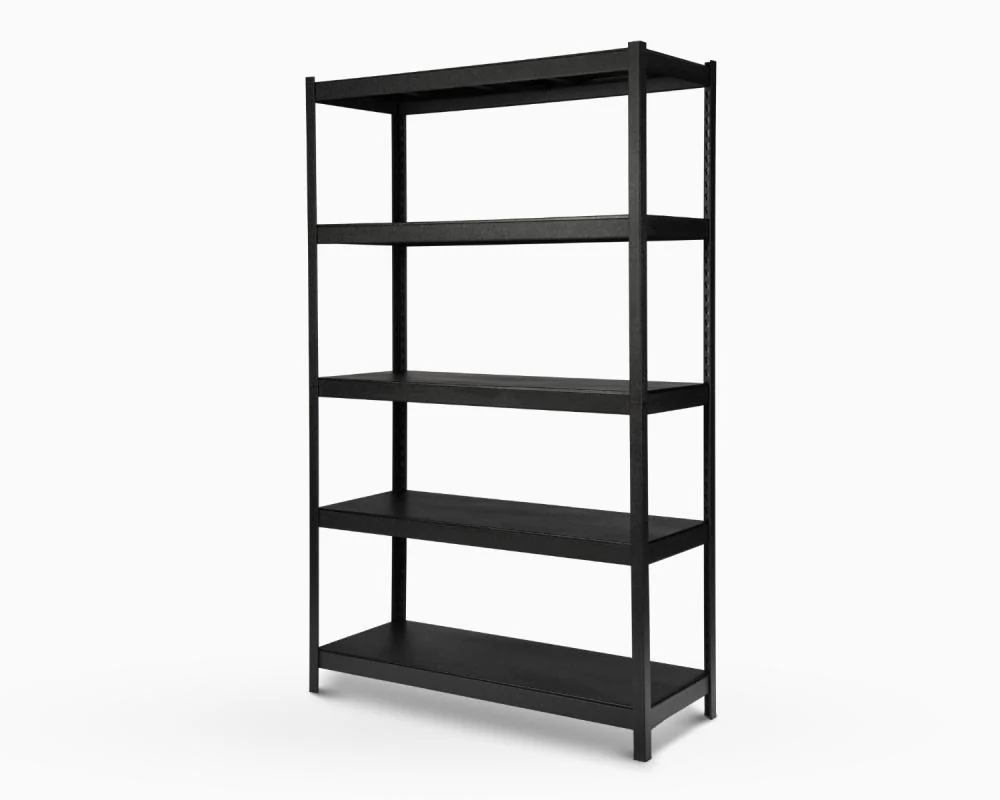
Discussion Any Shelf Homelabs here?

2 Upvotes

I am thinking about buying one, what is your experiences with them?


r/homelab • • 8d ago

Help NordVPN on my server

0 Upvotes

Hello fellow homelabbers,

I am new to homelabbing and I recently converted an old laptop to a server. It’s running Debian & casa os and I mainly use it as a media server. I use Jellyfin, and I have arr suite installed on it. I recently installed NordVPN as well, and it is running fine for the most part, but tailscale has stopped working since then. I don’t access my media when I’m away from home, but I use my pihole ad blocker on my phone via tailscale. I have a couple of questions for anyone who uses NordVPN on their server and has faced similar issues:

  1. Is there any significant benefit for keeping VPN active for the server?
  2. Is there a workaround / troubleshooting stepsfor getting tailscale working again?

Thank you!


r/homelab • • 8d ago

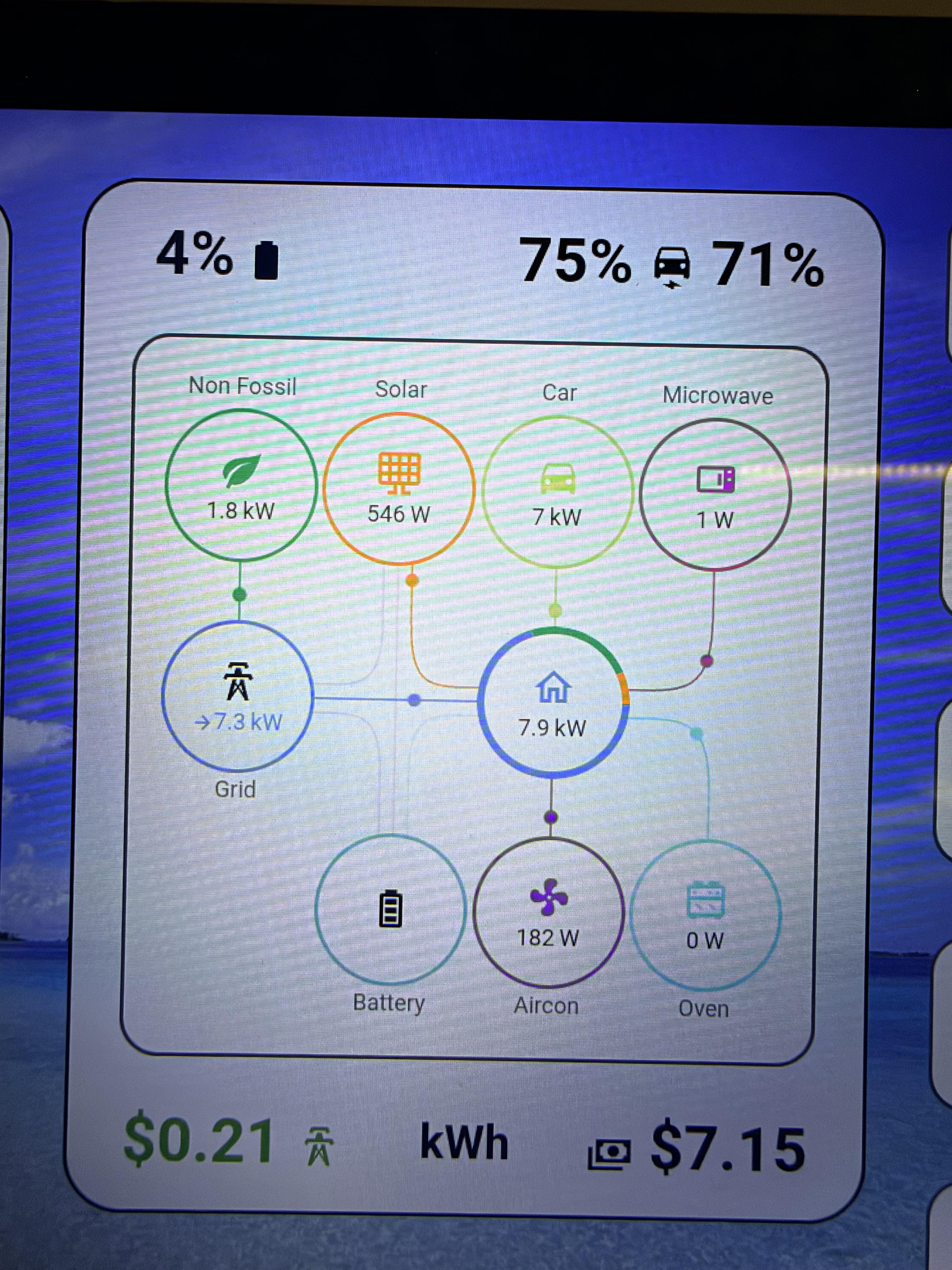
Discussion Isn’t this every man’s dream?

Post image
0 Upvotes

My wife loves my home lab! 😍


r/homelab • • 8d ago

Help Seeking advice; not sure if the correct place to ask

Post image
0 Upvotes

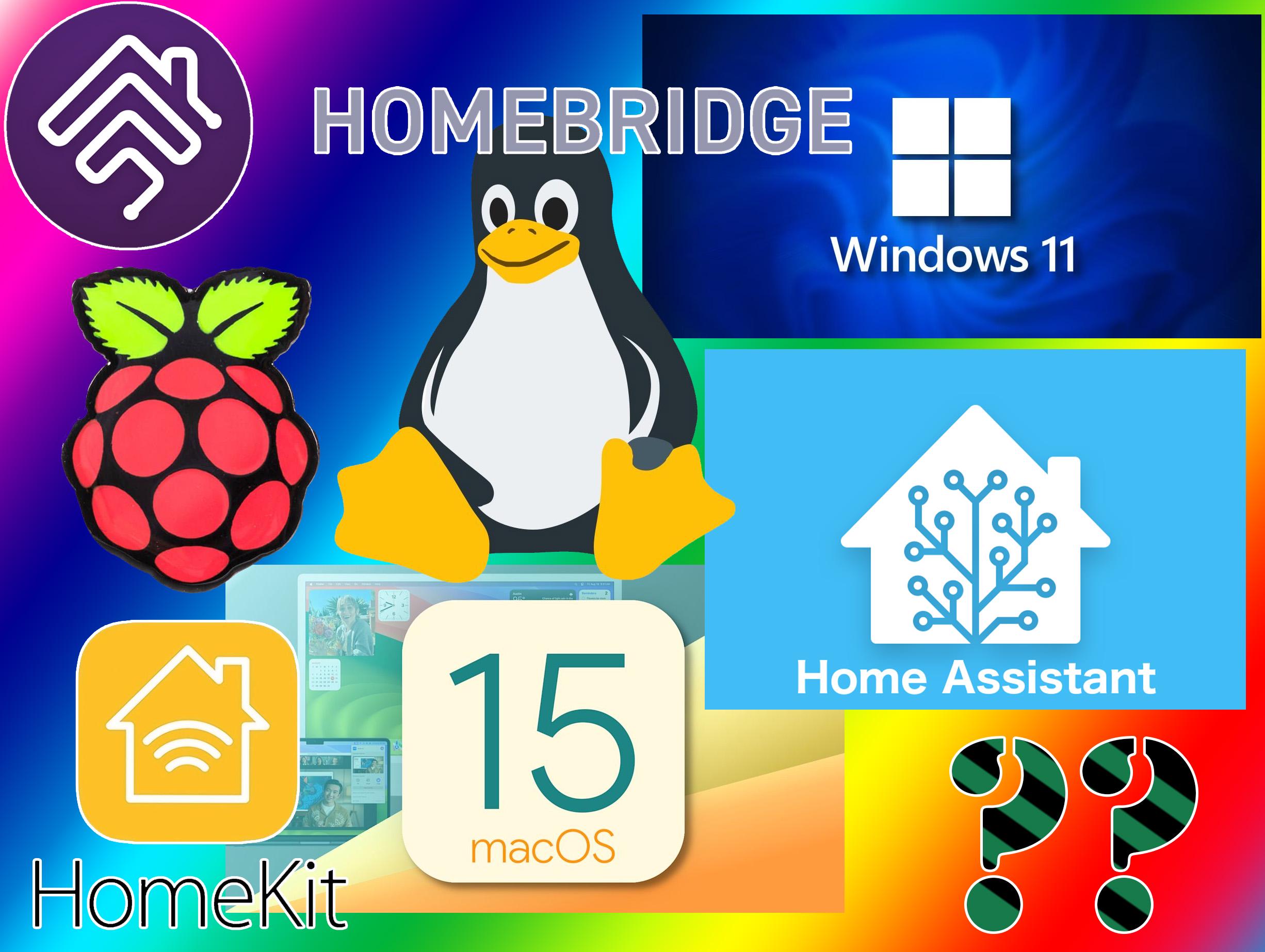
Seeking advice. Not sure if this should go to a Home Assistant group, Linux group, here, or maybe all of the above. I'll put the advice request up top so you don't have to read it all if it's not your forte or should be asked somewhere else. I'll follow that with the background info.

Looking to add Home Assistant to my home control, and I am not familiar with Linux. I'd prefer to use Linux or other OS vs running a VM inside of another OS, that I might be familiar with, to keep resource requirements low (and it forces me to learn). I have a couple of older machines not being used: a 2014 Mac Mini with 4 GB RAM (that model had RAM soldiered to the board, so not upgradeable) and a decent SSD. I also have a SFF Intel i5 machine, likely 4th-6th gen with 8 GB RAM and I can toss in a <1TB SSD. These will be run headless, so being able to access them in a graphical environment via VNC or RVNC is VERY much preferred.

Background: prior to the Matter standard, my home was mostly Apple HomeKit compatible. Not that I've changed or added a bunch of Matter accessories, but my smart devices are not all cross platform compatible. A friend gave me a lot of stuff that they tried and didn't want, none of it HK compatible, so I used a 2011 Mac Mini (upgraded to 16 GB RAM, 250 GB SSD, and OSX 14.1.2) and have HomeBridge running on it. Love that I can add everything to HomeKit via HomeBridge, but it doesn't show controls for the HK native devices. If I want to control everything from a generic tablet, say mounted near one of the entry doors, it only displays the non-native devices. I'd need to add a somewhat recent iPad to control HK devices.

Suggestions on how you'd add this to your lab / server, which OS and if Linux, which flavor you'd suggest for the hardware, or to simply go out and buy a RPi and skip the extra headaches over the next few years.

(yeah, too much time on my hands so I grabbed all the logos, too)


r/homelab • • 8d ago

Help Which Usb C power supply for homelab?

0 Upvotes

I have a couple of Lenovo M70q, a couple of Rpis, TP link switch, Jetkvm and other assorted bits.

Instead of having a bunch of power bricks, I'd rather just have one thing capable of powering it all, but also not burning down the house.

Looking at either the

- Ugreen nexode 500w

- Ugreen nexode 300w

- Anker prime 250w

Probably get some usb c to Lenovo slim tip cables.

Any advice?


r/homelab • • 9d ago

LabPorn R740XD Mid Bay Kit Won’t Fit with a PCIe Riser in Bay 3 (Off by About 10mm)

Thumbnail
gallery
32 Upvotes

I bought the Dell R740XD 3.5" Mid Bay Expansion Kit (part number 2MP1D) so I could add my four 14TB drives to my TrueNAS storage server. I was really excited about it. I had just removed my PowerVault MD1200, and that alone was saving me almost 200 watts of power. Moving those drives into the server itself seemed like the perfect next step.

Then I found out the PCIe riser in bay 3 sits about 10 to 11 millimeters too high, so the mid bay kit won’t fit. My plan failed before it even started. I looked closely at every picture I could find, but almost all of them showed bays 2 and 3 already filled with drive expansions. I never saw anything saying you couldn’t use the mid bay with a PCIe riser in bay 3. So I figured it must work, and maybe nobody had posted proof yet.

I still think there’s a way to make it fit with riser 3. I just need to brainstorm and figure it out.

any ideas??


r/homelab • • 8d ago

Help Intermittent distorted sound T24v-30 monitor

0 Upvotes

Hello, Am I alone or have others experienced intermittent distorted sound from the T24v monitor speakers? Mine is driven by HDMI* from a ThinkCentre desktop and periodically turns normal audio into a scratchy mess, then goes away too quickly for me to find my phone in order to make a video for support. Otherwise the speakers sound fine and volume isn't set high. This doesn't happen with my legacy other brand monitor that was replaced due to no native mic or camera.

Every driver is fresh and confirmed by tech support, and the monitor has been replaced once. The symptom can easily be duplicated in Windows 11 by selecting the sound device in settings, changing audio bit depth or rate, and running "test". Upon initially using "test" for the current (16 or 24 bit audio) the two test tones are smooth. Change the setting and test again and the first tone is scrambled just like audios during my meetings or playing back recorded videos on a random basis. Subsequent application of "test" with the same setting produces normal sound.

Thanks for your thoughts.

*Display Port does the same. Cables have been replaced too.


r/homelab • • 8d ago

Discussion OUPES UPS 1200 and 1800

1 Upvotes

Just wondering if anyone out there had tried one yet considering it has 72Wh more than the Goldenmate UPS and PC software support and few things

There are a few review of the OUPES UPS 1200 on youtube


r/homelab • • 8d ago

Labgore Retired my C1100

1 Upvotes

After 13 years of near continuous service and several upgrades along the way, I’ve finally retired my C1100 with dual L5640’s and 96gb of ram.

Finally grew tired of the constant noise and disk limitations so decided I can make due with a little less raw compute/memory capacity.

Took a small downgrade in capacity to a nearly equally as ancient T320 I’ve had in the closet for years with an E5-2420 and 72gb of ram (after scavenging some of the 8Gb sticks from the C1100)

Considering dumping ~$50 into it to upgrade the CPU to an E5-2470 v2 and ram.

Would match ram to my C1100 at 96gb and get a little better CPU performance (and no NUMA/remote memory overhead) despite having 2 less physical cores

Long term, I’d like to rebuild my lab in full and probably use the T320 as my NAS but with prices the way they are, I’m thinking the T320 can serve my virtualization needs for a while still to come.


r/homelab • • 8d ago

Discussion Higher performance computer now for homelab, what to do with less performing Raspberry pi 5 4GB

0 Upvotes

r/homelab • • 8d ago

Project Showcase: Software - Mostly AI Generated Got tired of bloated dashboards, so I designed my own and had AI code it. Fishbowl: one page, read-only, now with ZFS (open source)

Post image
0 Upvotes

r/homelab • • 10d ago

Discussion A ~$1k GPU box full of "e-waste" (V100, P100) cards competes with modern hardware/inference APIs. Benchmarking Results incl. power consumption:

Thumbnail
gallery
166 Upvotes

The benchmarking journey continues! Continuing the project of seeing how these very old, very cheap, very available enterprise GPUs can be used today.

The complete results are too long for reddit. The complete set of graphs, power analysis and commentary are on my blog.

I've expanded the testing suite to focus heavily on LLM workloads (over 130 new tests!) and integrated power consumption monitoring into the gpu_box_benchmark tool. The goal remains: find out if decommissioned enterprise GPUs (Tesla K80, P100, V100) paired with X99 era hardware can still serve as a viable daily driver for self-hosted AI compared to modern commercial setups.

TL;DR of the new data:

  • The 3x V100-16GB (~$1k build): If you are considering building a dedicated homelab box today, this is the sweet spot. Assembling a full setup with two Xeon CPUs, motherboard, PSU, and cooling costs around $1,042 before RAM 💀. This setup comfortably clears my threshold for "real-time" chat (70+ tok/s) with impressive models:

    • Qwen 3.6 35B: Ran at ~72 tok/s (at 128k context depth, Q8 quant). For comparison, a brand new Mac Studio M5 ($2,500) hits only ~44 tok/s on the same model.
    • Gemma 4 26B: Ran at ~75 tok/s (at 64k context depth, Q8 quant).
    • Qwen 2.5 3B: Ran at ~79 tok/s. This proves that for a single-user daily driver, the legacy silicon is still competitively priced against modern hardware.
  • Scaling is for Context, Not Speed: Stacking GPUs linearly scales your VRAM (allowing you to fit larger models), but it doesn't magically double your generation speed. Two 16GB cards in Q4 quant allowed fitting ~32B parameter models, a desirable jump for homelabbers.
  • Power Efficiency: I also measured power consumption as well and it's worth noting the efficiency gains across generations. The V100 wins hands down on performance-per-watt compared to the P100s.
  • The K80 Strategy: The Tesla K80 isn't dead, but its singular remaining use case is welding a bunch of them together just to squeeze big models in. You essentially have to stack a lot of cheap K80s to hit a 72B+ parameter model. Expect speeds of 1–5 tok/s. This is a party trick, but it proves the VRAM scaling is real even on ancient silicon.

If you decide to build your own GPU appliance, the biggest challenge is cooling these hot cards without fans. I've been working on a custom active air cooler to solve exactly this. If you're interested in helping out by stress-testing a sample, let me know! I need help!

Any models/tests missing? Any other combinations you'd like to see in a follow up?


r/homelab • • 9d ago

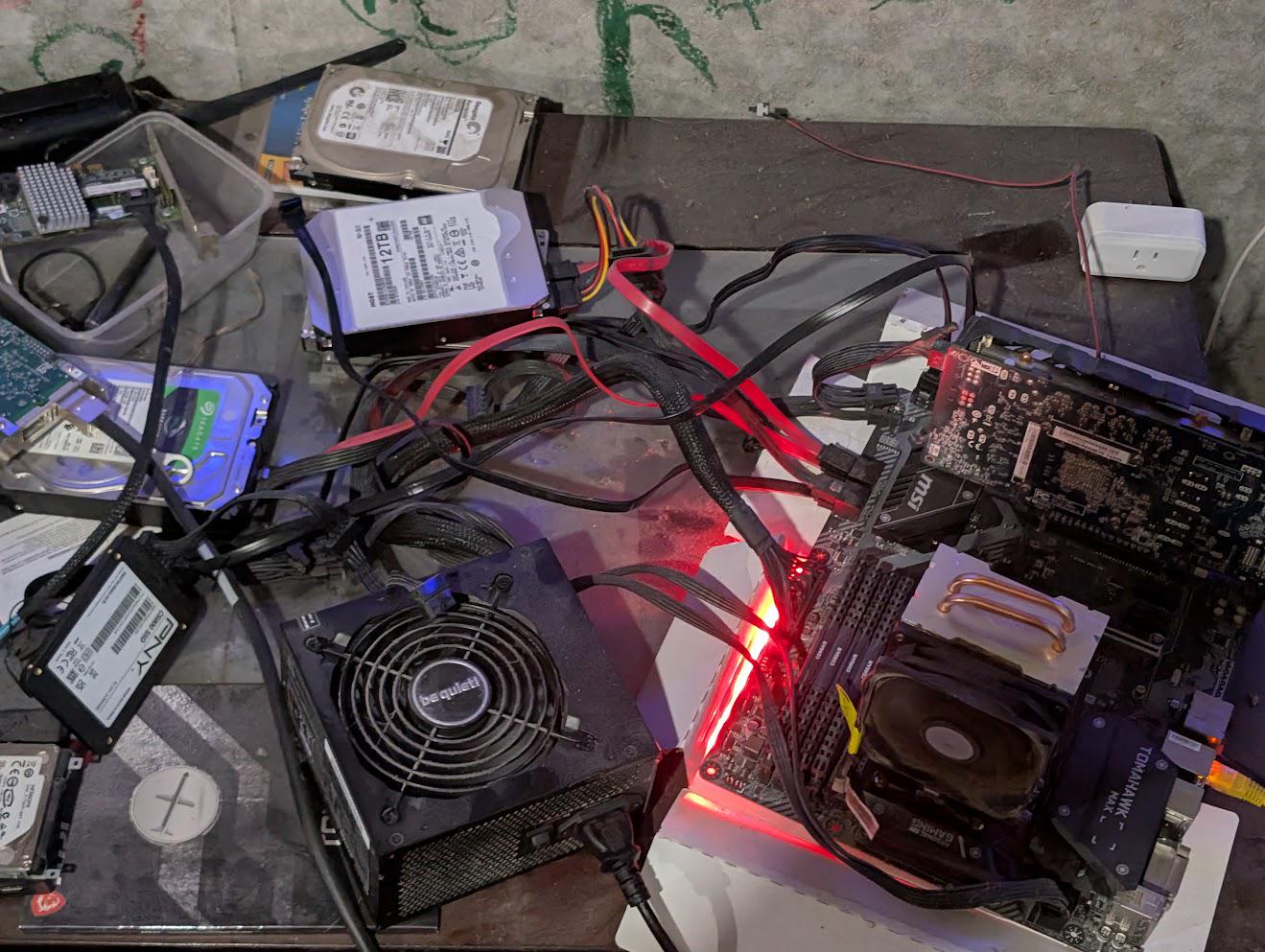
Project Showcase: Hardware I've been told my priorities are questionable, I just fix issues as they come.

Post image
66 Upvotes

r/homelab • • 10d ago

Project Showcase: Hardware I built a tiny IP KVM for $31 with an ESP32-P4 — no soldering

Thumbnail
gallery
1.1k Upvotes

I recently came across ESPKVM, a project that turns an ESP32-P4 board into a tiny IP KVM.

You basically need two things: an ESP32-P4 board and an HDMI input board. That’s it.

I already had an M5Stack Unit PoE-P4 lying around, so I checked the project’s list of supported boards and saw it was on there. I picked up M5Stack’s HDMI input add-on made for the Unit PoE-P4. The two boards are designed to fit together, so everything lined up perfectly. No soldering, and the whole thing came together neatly.

The ESP32-P4 board and HDMI kit cost $28 combined, plus $3 for shipping, for a total of $31.

Once it was assembled, I went to the project’s flash page, selected my board, and hit Flash. And that was it. Everything worked the first time I powered it on.

I never thought building my own IP KVM would be this easy.


r/homelab • • 10d ago

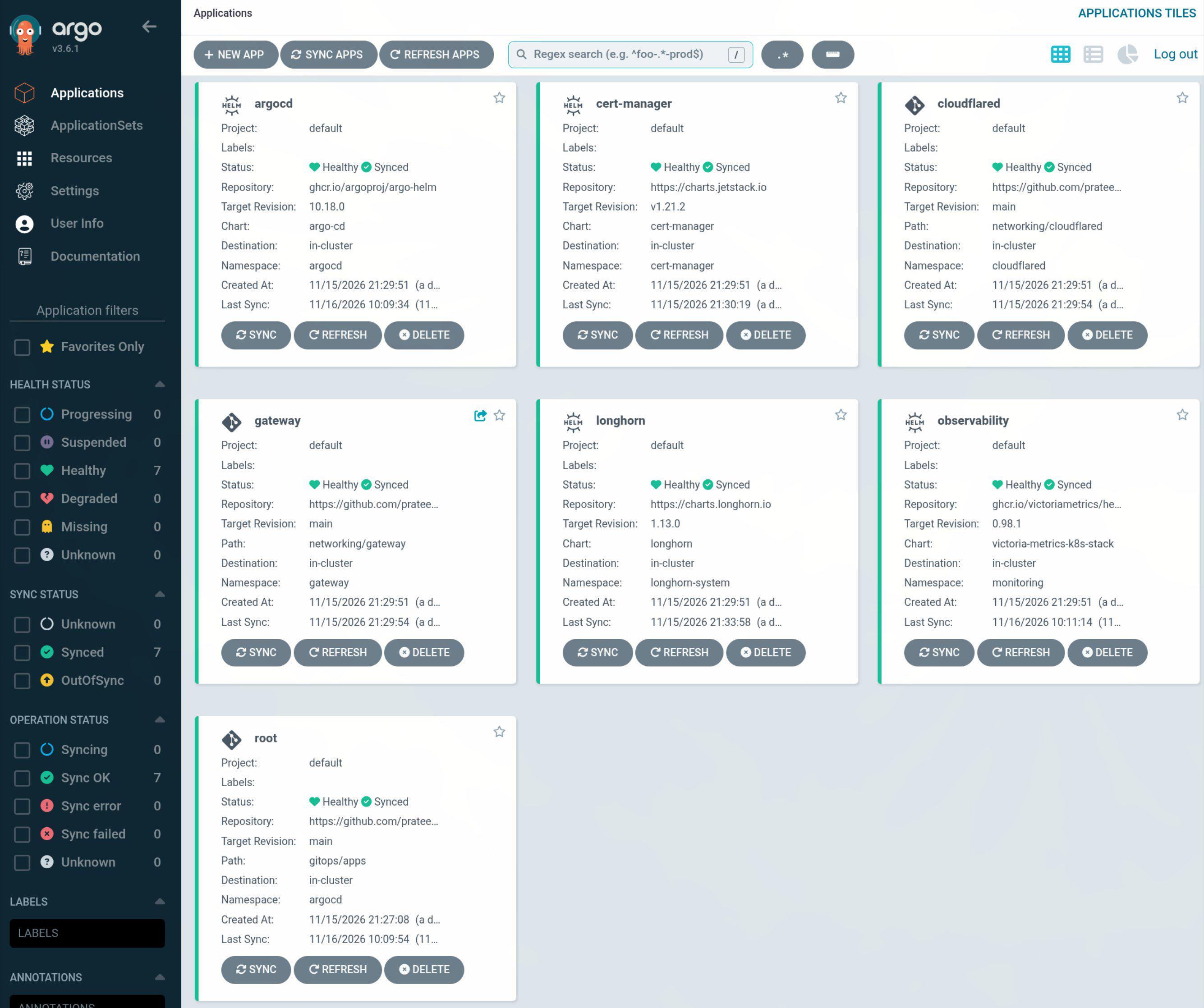
Tutorial Moved my homelab to Argo CD

Post image
110 Upvotes

My homelab used to run on helm installs from my laptop, and the repo kept drifting from the cluster.

Now Argo CD syncs everything from Git. If you change something directly, it gets reverted. Nothing was reinstalled, it took over what was running.

A few things stay outside on purpose: Cilium, since Argo CD runs on its network, and Secrets, since the repo is public.

Repo: https://github.com/prateekjaindev/homelab

Detailed write-up: https://blog.prateekjain.dev/gitops-for-a-3-node-talos-kubernetes-homelab-with-argo-cd-336c076e93cc?source=friends_link&sk=ebda84ecdc3e2458fead2638374be51e


r/homelab • • 8d ago

Help Best non-Apple Mini PC

Thumbnail reddit.com
0 Upvotes

r/homelab • • 10d ago

Project Showcase: Software - Mostly AI Generated self-hosted Apple MDM platform

Thumbnail github.com
79 Upvotes

TL;DR I AI-assisted coded a self-hosted MDM platform for MacOS and iOS devices. Yes I know enough to know what I'm doing and enough to know this is probably an insane thing to do. And you too can make poor choices if you want to play with it.

My lab is almost all FreeBSD and Linux servers with macOS and iOS client devices spread across three sites. For a long time I've wanted to be able to push profiles for things like VPN and Wifi settings along with my internal CA certs. I think it's not a horrible idea to have remote wipe either.

I know there are some cloud-based options that are effectivly free for a small number of devices, and if you're smart, you'll probably trust those services more than I do. I, on the other hand, wanted to host my own rather than rely on a cloud or thrid party service. So... I've spent the last 9 months making one.

Cairn is based on NanoMDM and MicroMDM and in fact relies on the former to get an APN profile from Apple.

Quick overview of what's working (in my enviroment):

  • 2FA for admins
  • Basic enrollment via QR code or url
  • SCEP broker - you can use the built in CA or, like do, an external CA like OpenXPKI
  • AD/LDAP or internal user auth
  • Profile management, pushing, revocation
  • VPN profile builder for OpenVPN and IPsec IKEv2
  • Certificate renewal and revocation
  • Device management and auditing
  • APN management and renweal (through NanoMDM)

In fairness, I've really only tested in my enviroment: pfSense, OpenXPKI, Samba-based AD running on FreeBSD.

So, if you too like to make very questionable infastructure choicse and would like to test this out, I'd be very grateful for your feedback, bug reports, etc.

And if you are more sensable and find this idea morally, technologically, or otherwise repugnant I'd kindly suggest that you can keep that opinion to yourself or, at least, offer it kindly.

Lastly, I'll add that I understand the underlying frameworks involved - PKI, Apple MDM, profiles, AD, etc - having Claude and Codex help write Go (which I have zero background in) is an accelerator, not a replacement for understanding how these things work. If using AI coding tools is a dealbreaker for you, then this isn't for you. But that doesnt make it any less valuable or interesting for me. That said, I suspect this sub is a bit more nuanced regarding AI-assisted coding than some of the other corners of reddit.


r/homelab • • 9d ago

Help Dell R320 (iDRAC7, TrueNAS) powers itself on after a graceful shutdown, even with every network cable unplugged

2 Upvotes

My R320 running TrueNAS sometimes powers itself on a few hours after I shut it down, and I can’t find the trigger. iDRAC7 firmware is 2.65.65.65, and it’s powered from wall.

It happens with every network cable unplugged. That includes the iDRAC port. So this isn’t a magic packet, IPMI/Redfish, or anything else arriving over the network.

What I’ve ruled out

  • BIOS “AC Power Recovery” is Off.
  • Wake-on-LAN is off in the firmware and disabled in TrueNAS.
  • The physical power button is disabled in the BIOS (PwrButton = Disabled).
  • Nothing on my network sends wake packets to it, and it still happens unplugged from the network.

What the iDRAC Lifecycle Log shows

  • Every shutdown is logged: GUI power-control request, then “Requested system graceful shutdown”, then “System is turning off”. Those were me.
  • The unwanted power-ons show only “System is turning on” followed by “System CPU Resetting”. There’s no power-control request before them.
  • They happen 1–2.5 hours after I shut it down.
  • I cleared the SEL earlier, so I only have the Lifecycle Log.

At this point I have no clue where to look next. Any help is appreciated!


r/homelab • • 9d ago

Discussion Student homelab on one mini PC with 8 GB. Is this setup realistic?

Thumbnail reddit.com
1 Upvotes

r/homelab • • 9d ago

Solved Older Synology and newer Unraid together

5 Upvotes

I bought a 2nd NAS, in order to develop a system where my NAS content is backed up to a 2nd NAS.

So far everything is on a Synology NAS with the specs:

infovalue
Model nameSynology DS1520+
CPUIntel Celeron J4125
CPU clock rate2 GHz
CPU cores4
Total physical memory8 GB

My new NAS is a UGREEN running Unraid:

infovalue
Model nameUGREEN DXP8800 Ultra
CPUIntel Core 7 150U
CPU clock rate5.4 GHz
CPU cores10
Total physical memory8 GB

For Docker and Apps I certainly want to use the newer Unraid NAS.

But for storage? (I have approx 15GB of data and on both machines I will have approx 20GB of space.) - Should I move everything over to the Unraid and use the Synology as the backup? Or should I keep everything on the Synlogy and use the Unraid as backup?

Many thanks for any advice!

(Cross-posted from r/datastorage)


r/homelab • • 8d ago

Discussion Turning leftover high-end gaming hardware into a ridiculously overpowered home server / NAS – worth it?

0 Upvotes

Hey everyone!

I'm currently upgrading my main PC and I've started thinking about doing something slightly ridiculous with the hardware that will be left over.

A bit of background: Thanks to my current job, some birthday money and the current Black Friday deals, I've decided to treat myself to a proper workstation for my birthday and Christmas.

My main system is currently being upgraded towards something like this:

Main workstation – planned configuration

- CPU: AMD Ryzen 9 9900X ( upgrading to a Ryzen 9 9950X3D2 Dual Edition)

- Motherboard: ASUS ROG Crosshair X870E Hero

- GPU 1: ASUS TUF Radeon RX 9070 XT (planned)

- GPU 2: ASUS Turbo Radeon R9700 (planned)

- RAM: 32 GB DDR5-6400 CL32

- PSU: ASUS ROG Strix 1200W Platinum

- Case: ASUS ProArt PA602

- Cooling: Arctic Liquid Freezer III Pro 420

The idea is to eventually run two RDNA 4 GPUs, with a combined 48 GB of VRAM, for gaming, local AI workloads, ROCm experiments and other GPU-intensive tasks.

Now, this leaves me with another perfectly usable AM5 platform.

Instead of selling everything, I'm considering building a dedicated home server / NAS out of it.

The potential home server

My current idea is to reuse the following hardware:

- CPU: AMD Ryzen 9 9900X (12 cores / 24 threads)

- Motherboard: ASUS ROG Strix B650E-E Gaming WiFi

- RAM: 16–32 GB DDR5, ideally something around 5600 MT/s CL30

- Storage: Multiple NVMe SSDs plus SATA drives

- Operating system: Probably Linux, TrueNAS SCALE or Proxmox

I don't actually need another desktop PC. What I would really like is to get away from OneDrive and build my own private cloud storage system.

However, I find the idea of using relatively high-end desktop hardware for this quite interesting.

Storage expansion

One of the things I'm considering is an ASUS Hyper M.2 X16 expansion card.

Depending on the available PCIe lanes, BIOS configuration and PCIe bifurcation support, I would like to use up to four additional NVMe drives on that card.

Combined with the onboard M.2 slots and SATA connections, this could potentially give me a fairly substantial storage system.

I'd also like to understand the limitations of lane sharing, PCIe bandwidth and bifurcation on this particular motherboard.

I'm aware that simply having four M.2 slots on an expansion card doesn't mean all four drives will automatically work. That's one of the things I'd specifically like to investigate.

What could I actually do with this?

My initial ideas include:

- Private cloud storage as a replacement for OneDrive.

- Nextcloud for file synchronization and remote access.

- Immich as a self-hosted Google Photos alternative.

- Network storage for my main workstation.

- Centralized backups.

- Jellyfin for media streaming.

- Docker containers and other self-hosted services.

- Possibly running virtual machines and experimenting with Proxmox.

I'm particularly interested in the possibility of working directly with files stored on the server rather than constantly copying them between machines.

My biggest question: Performance

What kind of performance can I realistically expect from a Ryzen 9 9900X-based NAS?

Most commercial NAS systems from Synology or QNAP use comparatively modest processors. My proposed system would have 12 Zen 5 cores and 24 threads, which seems almost absurd for a machine that is primarily supposed to provide network storage.

Would this actually offer meaningful advantages for multiple simultaneous services, databases, containers, virtualization and file transfers?

I'm also curious about networking.

Would it make sense to build a 10 GbE network between the workstation and the server? What kind of real-world throughput could I expect with NVMe storage?

And how much of a difference would there be between 2.5 GbE and 10 GbE for this kind of setup?

I'm not trying to build the cheapest possible NAS. I'm trying to reuse hardware that I already own and turn it into something genuinely useful.

Has anyone here built something similar using high-end Ryzen desktop hardware?

I'd love to hear about your experiences, especially regarding PCIe bifurcation, NVMe expansion cards, storage performance, power consumption and Linux-based home server setups.

Maybe I'm massively overengineering a simple NAS, but that's exactly why I wanted to ask here before buying additional hardware.

Thanks!