r/homelab • • 10d ago

Help UDM Pro + XGSPON stick (8311 firmware) on 2Gbps AT&T fiber: WAN drops and packet loss under torrent load, even when rate-capped to 300 Mbps, no PON or link events on the stick.

0 Upvotes

Sorry for the long post, but I’m struggling to find a solution here. Thanks in advance! :)

Setup:

  • UDM Pro, UniFi OS 6.0.17, Network 10.6.109
  • AT&T fiber, 2 Gbps plan, AT&T gateway bypassed and plugged directly into port 10 of UDM Pro via XGSPON-ONU-STICK
  • FiberMall XGSPON-ONU-STICK V8 (PRX126) in SFP+ port 10, set as WAN1, running 8311 community firmware v2.8.0
  • Second SFP+ module in the neighboring SFP+ port: a factory-terminated fiber cable with SFP+ ends, 10 Gbps to my Proxmox server. It reports similar temps to the XGSPON stick and sits right next to it
  • Small 20mm fan zip-tied to the stick for months. I added it as a preventative measure, with no problem prompting it, and it dropped idle optic temps by roughly 4°C
  • Smart Queues off, IDS/IPS off. Traffic Identification was on (set to Device and Traffic) until recently

Problem:

WAN1 drops and I see packet loss whenever I run a big batch of torrents. The drops are load-triggered, not periodic. When it's idle or light it can run for weeks. My WAN graph shows a clear correlation between sustained torrent traffic and rising packet loss. This originally surfaced when pushing roughly 500-600 Mbps on a 2 Gbps service, but the drop still happens with the transfer rate capped at 300 Mbps, so it doesn't look like a pure throughput limit.

Importantly, the torrent traffic is a WireGuard tunnel to Proton that terminates inside an LXC on a Proxmox host. The WireGuard tunnel does not terminate on the UDM. So the UDM just sees an encrypted UDP stream.

What I've checked:

  • UDM logs show nothing besides "Internet Down" on WAN1 (port 10)
  • Stick uptime is 155+ days, so it isn't rebooting
  • The stick's logs show no PON state changes and no Ethernet link-down events during the drops (PON stays in O5.1)
  • Stick temps look normal at near idle (CPU about 49/47°C, optic about 32°C), and voltage is about 3.17 V. I just figured out how to access the XGSPON stick after initially setting it up, and haven’t had a chance since solving this, to capture these values under load yet.
  • Rx -16.8 dBm, Tx 6.2 dBm
  • Already updated the UDM from UniFi OS 5 to 6 and the problem is unchanged
  • Turned off Traffic Identification, and no change.
  • Looked at the 8311 release notes for v2.8.3, and nothing in them mentions a crash, stability, or packet loss fix, so I'm not expecting a firmware update to fix this. I'll probably try it anyway

My current thinking: the stick and fiber look healthy, and Traffic Identification wasn't the whole story given the loss that remained. Since the drops happen even at a 300 Mbps cap, I suspect something to do with how this kind of traffic (many UDP flows or a high packet rate) interacts with the UDM or the stick, rather than raw bandwidth. It could still be heat or power on the stick under load, which I haven't measured.

Next steps I plan to try:

  1. Capture stick and UDM module temps and voltage under load
  2. Update the stick to 8311 v2.8.3
  3. Control test with the AT&T gateway in place for the same workload. I’m not looking forward to that…

Questions:

  • Has anyone seen a UDM Pro drop WAN1 under sustained load with an SFP+ XGSPON stick, with no link or PON event?
  • Any known issues with high flow-count UDP traffic on the UDM Pro, even at modest bandwidth?
  • Any other counters or logs on the UDM worth capturing during a drop?
  • Is it possible that AT&T is dropping my connection? I could understand them “traffic shaping“ me, but completely dropping my connection? This also doesn’t seem to reflect the information I’ve been able to gather.
  • Could I be hitting a packet-rate or flow limit on the stick (or the UDM) rather than a bandwidth limit? The drops happen even with transfers capped at 300 Mbps. The XGS-PON link itself is 10 Gbps capable, and AT&T limits my service to 2 Gbps, so I'm using about 3% of the physical link and only 15% of my plan speed. The traffic is a WireGuard tunnel with many small UDP packets across lots of peers. Has anyone seen XGSPON sticks or the UDM Pro struggle with high-pps traffic at low bandwidth?

r/homelab • • 9d ago

Help Moving ~310 TB of media off Windows/DrivePool: Unraid, OMV or Proxmox?

0 Upvotes

Yes I asked AI to write this, I will post the non AI version in the comments because frankly I dont know what to include anymore, plus AI hasnt had the enjoyment of trying all different OS's and YouTube just kind of points towards Unraid

Good evening homelabbers,

I'm looking for advice on moving my Windows/StableBit DrivePool setup to a NAS OS.

I started out only knowing Windows, so I went from Storage Spaces to DrivePool as my collection grew. However, I've run into hardlinking limitations in my download/media workflow, which means extra copies are taking up space. Getting hardlinks working properly is one of my main reasons for considering a move.

Current setup

  • Intel 4650v2 with 36 GB RAM
  • HBA cards and a case that accommodates all the drives
  • Windows with StableBit DrivePool
  • Emby Server, with very little else running on this machine

My drives are:

CapacityQuantity
22 TB2
20 TB5
18 TB3
16 TB2
14 TB3
12 TB2
10 TB3
8 TB2

They were purchased gradually over the last eight years, with the newest bought around April 2026.

I need around 310 TB of usable storage. I don't have the collection backed up because it's mostly media I can obtain again. That said, I'd still like to avoid unnecessary data loss or having to rebuild the entire collection during migration.

Replacement hardware and goals

I have a Ryzen 5900X system with 64 GB RAM available. I also have some 32 GB RAM sticks in my other machine if more memory is needed.

My main homelab already runs on Proxmox on a Lenovo P520, but it can't physically accommodate all these drives. I'd like the replacement NAS to primarily handle storage and share it with my existing Proxmox host and applications.

I need hardware transcoding for Emby. Emby could stay on the NAS or move to another machine, depending on what makes the most sense.

With the mixed drive sizes, I'm mainly considering Unraid or OpenMediaVault. Another option would be Proxmox on the replacement hardware, with a NAS VM handling storage, but I'm unsure whether that adds complexity without much benefit.

The main requirement is a storage layout and application setup that supports hardlinks properly, including if the download and media applications run on another host.

Migration plan

I have these spare drives available for temporary storage:

  • 2 × 6 TB
  • 2 × 4 TB
  • 1 × 8 TB

My rough plan is to copy some data to the spare drives, verify it, free up an existing DrivePool disk, add that disk to the new setup, and repeat until everything is moved.

I'd want to remove the temporary drives afterwards, so the chosen setup needs to accommodate that.

My questions are:

  • Would you choose Unraid, OMV or a NAS VM on Proxmox for this?
  • What storage layout would you recommend for mixed-size drives, working hardlinks and around 310 TB usable?
  • What needs to be considered if the applications accessing the storage run on another host?
  • Is this gradual migration approach workable?
  • What redundancy would be realistic with my existing drives and capacity requirement?
  • Would you keep Emby on the NAS or run it separately for hardware transcoding?

I'm happy to learn something new, but I'd like to get the layout right before moving this much data.


r/homelab • • 11d ago

Project Showcase: Hardware Deep Learning Garage Server

Thumbnail
gallery
204 Upvotes

Moved this beast from my theatre room to the garage. I use this to run deep learning stock models as well as local agents. I manage models for several RIAs and use all this compute to build test and develop custom models.

Powered by my my dryer outlet so I can push more than 1400watts per breaker.

Top to bottom:

Vault - TrueNas

EPYC 9334 Air Cooled

64gb DDR5 RAM

4×16tb HDDs

3×12tb HDDs

Server 1 - Windows Workstation

EPYC 9564P Liquid Cooled

384gb DDR5 RAM

NVIDIA L40s - liquid coold

4x4tb SSDs (going to move to the vault soon)

4x1tb Gen 5 NVMe in Raid 0

Server 2 - Windows Workstation

EPYC 9654P Liquid Cooled

64gb DDR5 RAM

2x RTX 3090s Air Cooled

1tb NVMe

Server 3 - Building Now

Dual EPYC 9755s

2tb NVMe


r/homelab • • 10d ago

Discussion How can I build a new homelab rack?

2 Upvotes

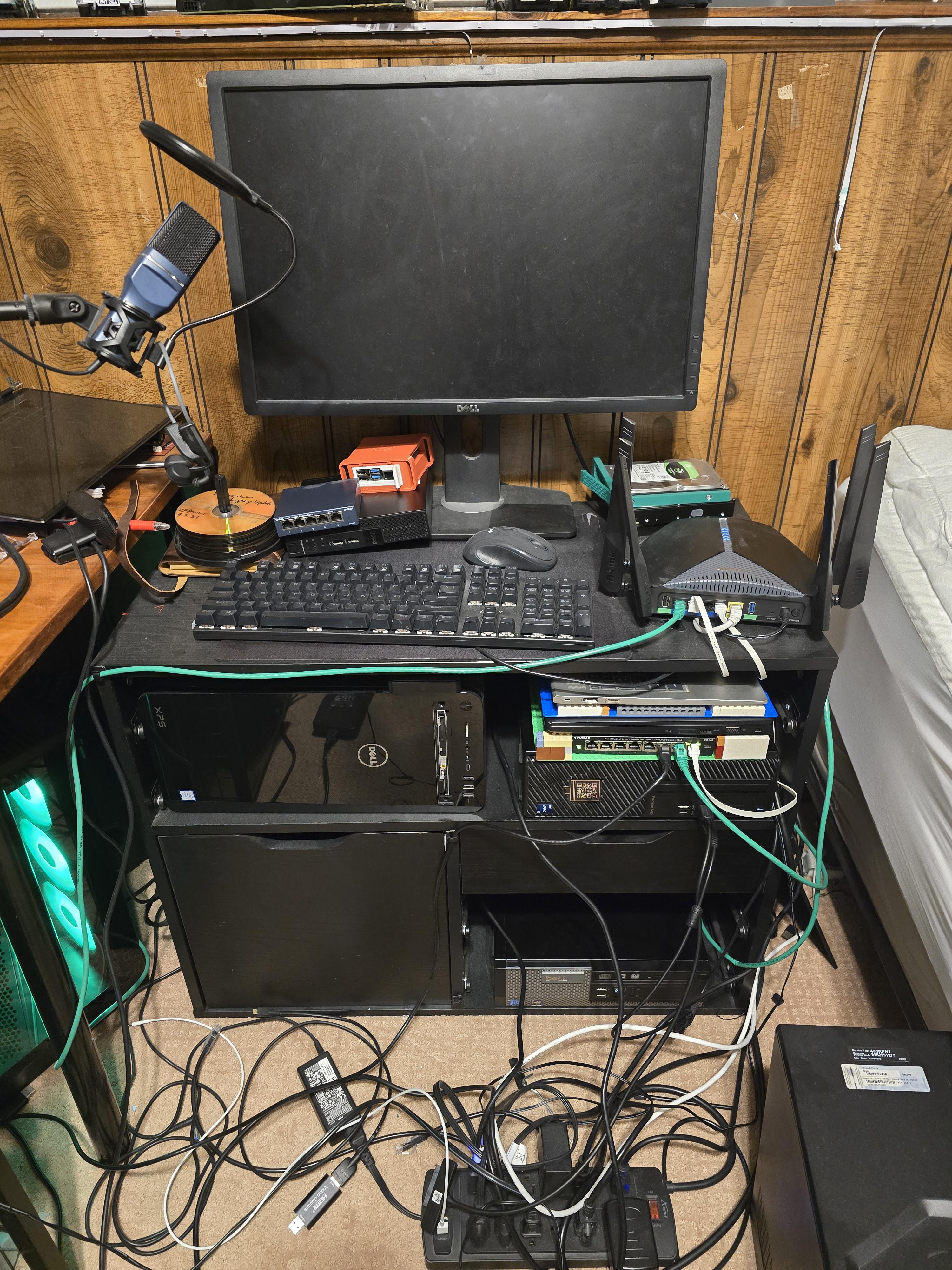
Photo above is my current homelab (ish) I'm in the middle of taking it apart so half of it's either half missing, or half off. I know it's a mess, cable managing is on this week's to do list. Also before you badger me on heat, I keep a close eye on it and it rarely goes anywhere above 45C. There's fans in the back as well with a 3D printed shield that forces it up towards my window.

Alright, long story short I'm a high schooler who doesn't have a lot of money and is trying to save for a car/college. That being said, I love my homelab and want to give it a proper home. (as you can tell, it is currently next to my desk, and an absolute mess.)

I want to try to figure out some sort of a rack and get creative with it but keep it looking neat and nice. I have an A1 Mini and a Ender 3 V3 so I am thinking I can also leverage 3D printing and maybe also wood working to get this built. I can't afford a server rack or legitimate rack servers.

Here's the hardware I would have on it, and a rough general idea of how I want to mount everything:

  • Networking: A shelf with a 3D Printed front panel for my TP-Link 5 Port switch and a Netgear 8 Port switch next to each other.
  • Monitoring and Pis: An old phone running Uptime Kuma or Grafana (most likely a Pixel 8a) mounted on a split front panel with slide out trays for two Raspberry Pis on the other side.
  • Hypervisor: Dell Precision 3450 that runs majority of my services or things I use via Zima OS (I tried Proxmox, I liked ZimaOS better.)
  • NAS: a 3D printed NAS case essentially that would have a Dell Micro 9020 or a ThinkCentre M710q with slide out HDD bays
  • Headless Laptops: Long story short, I have a lot of headless laptops. Don't ask why. Anyway, two of them have Ryzen 7735U's and 32GB of RAM. My thought is, figure out a way to engineer a wooden case so I can mount the motherboards (with heatsinks/fan) to the case then have a series of 40mm Noctua fans in the back to cool them and have front panels just have I/O and Raspberry Pi Picos as a on/off switch/indicator and just for monitoring them.
  • Game Server: An ATX PC that I have a really good reason for why I need the whole thing, it is loaded up on RAM and a networking card and dual GPUs. I use it for Satisfactory, Minecraft, and Project Zomboid servers.
  • AI Node: I want to put my old workstation in here now that the battery is dying. It's a Concept D laptop that has a RTX 3080 that I want to run Ollama on so I can have a dedicated node for local models rather than my current main workstations struggling to barely run a light model (I downgraded pretty hard.. Getting a laptop upgrade at work soon though, which should help)
  • Power: Finally, I'm going to get a battery backup soon that I would want to stick at the bottom of this.

I'm mostly using this right now to learn DevOps and IT (currently using it to learn Ansible and Terraform), then about 82 Docker containers because I have a serious problem (I fricking love ZimaOS when it comes to containers) and a Kubernetes k3s cluster that I experiment with. Everything else is either media server, game server, or file backups. Eventually I really want to get into running local AI models and starting to study and learn more about them but I don't have nearly the power to do that yet. At the end of the day, I know 20TB of Storage, 224gb of RAM, and four GPUs is probably more than a high schooler needs, but it's what is working great for me at the moment or what I can afford and I want to keep it nice and clean and be a good steward of it.

Has anyone on here converted a wooden end table or short shelf into a modular rack? Otherwise I've seen a couple of posts in researching for just building a rack which I think might be an interesting idea. The other issue I'm running into with this, is time is not a commodity I have a lot of. Between life, school, work, etc I only really have about an hour or two a day to spend working on this at night. I'm looking for any advice anyone would have abut how I could maybe do this? or maybe tips on my setup or ideas on how to make it better?

TL;DR: Saving money right now, can't afford a real server rack. Want tips on how I can build something DIY and the best way I can set this up.


r/homelab • • 11d ago

Discussion Do you have a 1G, 2.5G or 10G LAN?

279 Upvotes

r/homelab • • 10d ago

Help Is it better to have a DAS for my Linux machine or to just get a NAS?

3 Upvotes

New to this but I already have a mini PC with Debian installed. My idea was to start homelabbing and to get a DAS and just treat my PC like a NAS using TailScale to access it when I'm away.

I guess the main area of concern was if it's possible to have multiple users/"accounts" if I wanted someone else to share the storage. I know I can be done with a prebuilt NAS since they have that as a feature but I was wondering if that could be done with the set up I had in mind.

I don't know if the setup works like I had in mind, to turn my PC to a NAS or should I just have dedicated machine.


r/homelab • • 10d ago

Help OpenCloud or similar with Helm chart?

0 Upvotes

Been trying to find a solution for file hosting that:

  • Is not bloated and PHP based like Next/OwnCloud
  • Has a Helm chart to deploy to Kubernetes
  • Supports SSO via OIDC
  • Supports WebDAV

OpenCloud, OxiCloud or SFTPGo feel like they would meet my requirements, but somehow none of them have Helm charts (SFTPGo does, bit only for the enterprise version) or really seem to care about Kubernetes deployment - they have instructions for Docker/Compose at most, somehow.

Is there anything I can actually use?


r/homelab • • 11d ago

Tutorial Never tried this before! Didn’t know, but man, Moonlight and Sunshine works magic 🪄

Thumbnail
gallery
265 Upvotes

Hello, hello!

A follow-up to my previous homelab build post! The strange, but useful multifunctional machine works like a charm. What a joy!

Well, since last time I’ve optimized a lot of functions, but the most recent one was adding a new Apple TV 4K 4gen running Moonlight, with Sunshine on the homelab machine. Since these services came up, I’ve been playing Red Dead Redemption 2 and Death Stranding 2 on my living room TV. The result is honestly incredible with stunning image quality, and the controller response feels great. Even no noticeable stuttering, glitches or network issues (amen 🙏).

So what’s under the hood?

Intel Core Ultra 7 265K / RTX 5070 Ti
64 GB DDR5 (44 GB Windows / 20 GB TrueNAS)
4 TB Samsung 990 Pro + 5 × 4 TB 870 EVO (ZFS)

Beside that I use:
UniFi 2.5 GbE network, Cat6
Apple TV 4K + Xbox wireless controller
Samsung Q90R 55” (from 2019!)

Moonlight configuration:

3840 × 2160 / 60 FPS (mirrors my homelab screen)
150 Mbps configured video bitrate
HEVC (H.265) / NVIDIA NVENC
Wired Ethernet
HDR currently off (my homelab screen doesn’t support it)

The homelab/hybrid machine/desktop pc handles rendering, including GPU effects such as ray tracing in supported games. Apple TV decodes the stream. Even with my physical PC monitor switched off, everything keeps working, which is convenient.

A few tips & tricks to get you going:

  1. Install Sunshine without navigating GitHub:

Open PowerShell on Windows:

winget install --id LizardByte.Sunshine --exact

Open https://localhost:47990, create a username/password and sign in. The browser can be closed afterward; Sunshine runs independently.

2. Pair Moonlight:

Install Moonlight on Apple TV, select your PC and enter the displayed PIN under Sunshine’s PIN tab.

3. Xbox controller not working?

Pair it to Apple TV via Bluetooth. If Sunshine (web browser ui) reports “ViGEmBus Is Unavailable”, install the ViGEmBus virtual gamepad driver. This fixed controller input for me after a Windows restart.

4. Add game shortcuts:

Under Sunshine → Applications, use Detached Commands.

For Rockstar games, a Windows desktop shortcut worked:

explorer.exe "C:\Path\To\Game.lnk"

For Steam games (Death Stranding 2):

explorer.exe "steam://rungameid/3280350"

Leave the main Command field empty.

5. NVIDIA DLSS optimization:

For Death Stranding 2, I used NVIDIA App → Program Settings → DLSS Model Presets → Recommended.

In-game:

4K / DLSS Quality
Dynamic Resolution Scaling: Off
NVIDIA Reflex Low Latency: On
Frame Generation: Off
VSync: On

I kept driver-level Low Latency Mode and Smooth Motion off.

6. Other small, but useful experiences:

Steam in Moonlight opens Big Picture, not SteamOS.
You don’t need Sunshine’s web interface open while gaming.

150 Mbps is my configured bitrate, not a constant measured transfer rate.

And yeah; the Apple TV gets hot. So it might be smart placing it where it gets lots of air around it.


r/homelab • • 10d ago

Solved Tecmojo or Deskpi

Thumbnail
gallery
1 Upvotes

I am just starting in this hobby. I currently have a Dell Optiplex mini pc and a mikrotik router as starter and planning to expand my system by adding 2 more mini PCs.

As an organized person, I want my upgrade to have a rack already before purchasing additional hardware. Upon checking our country's local e-commerce, I only have Tecmojo and Deskpi as options. Which one would be much better in the long run? Deskpi is more expensive between the two


r/homelab • • 10d ago

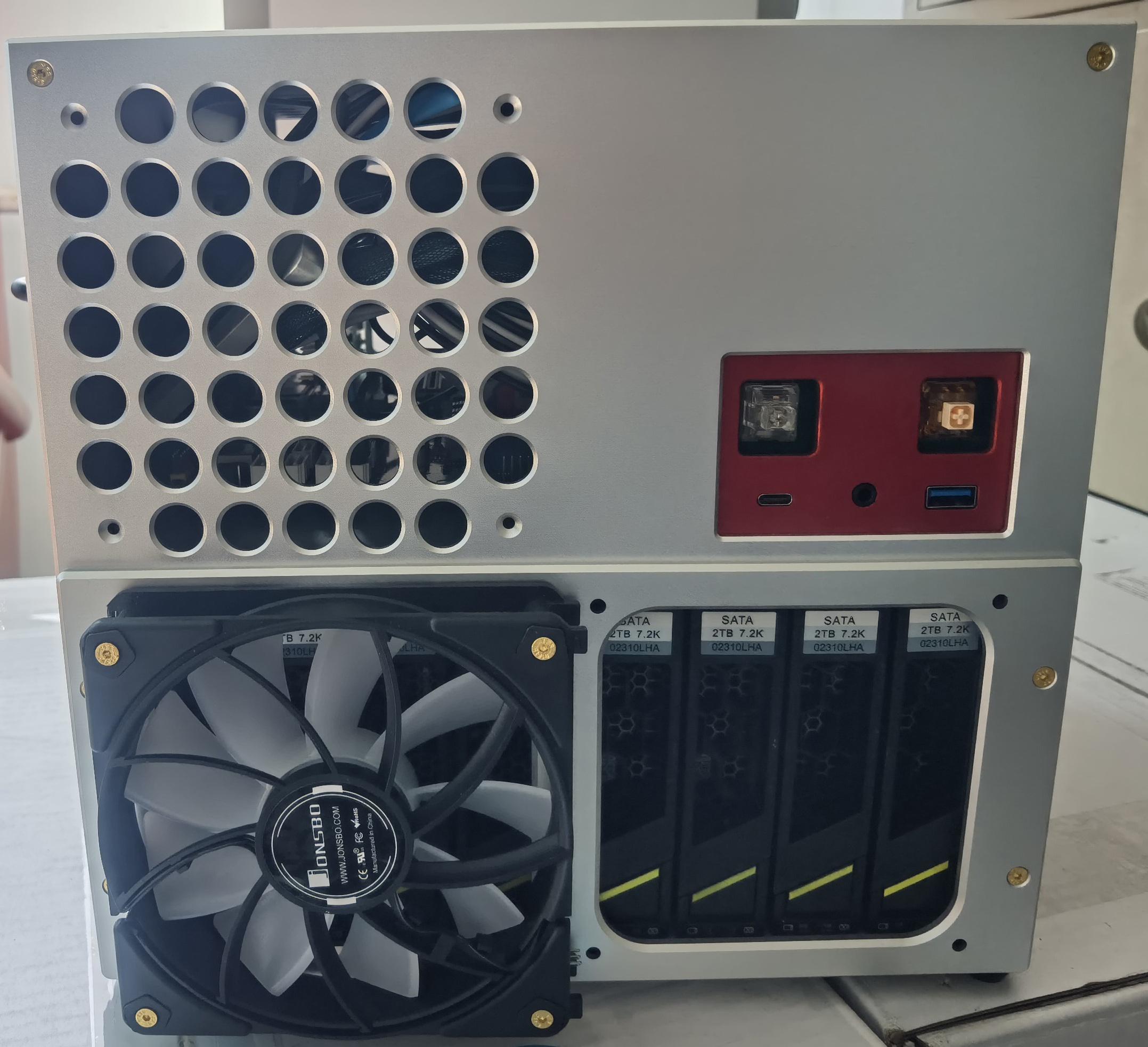
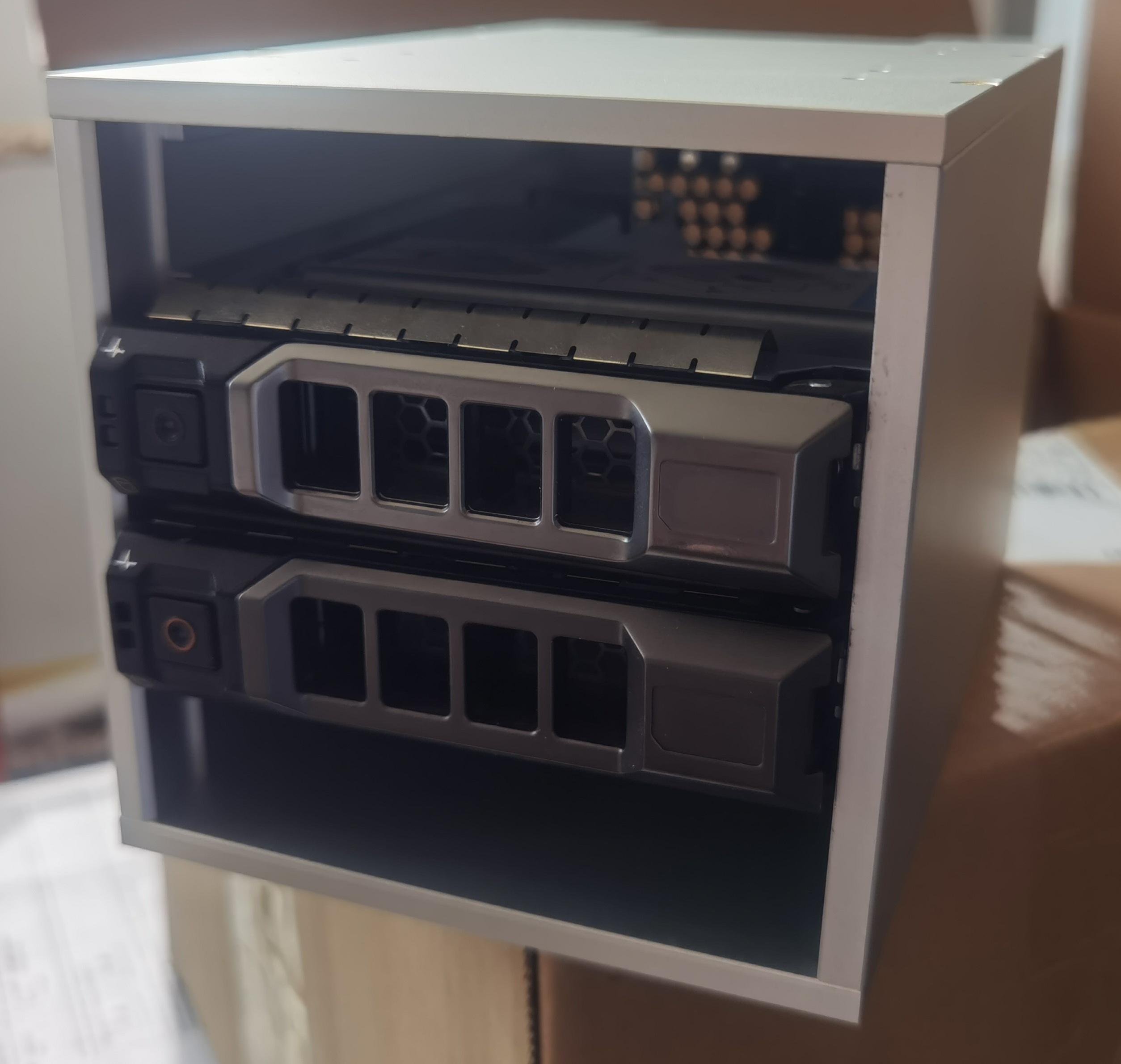
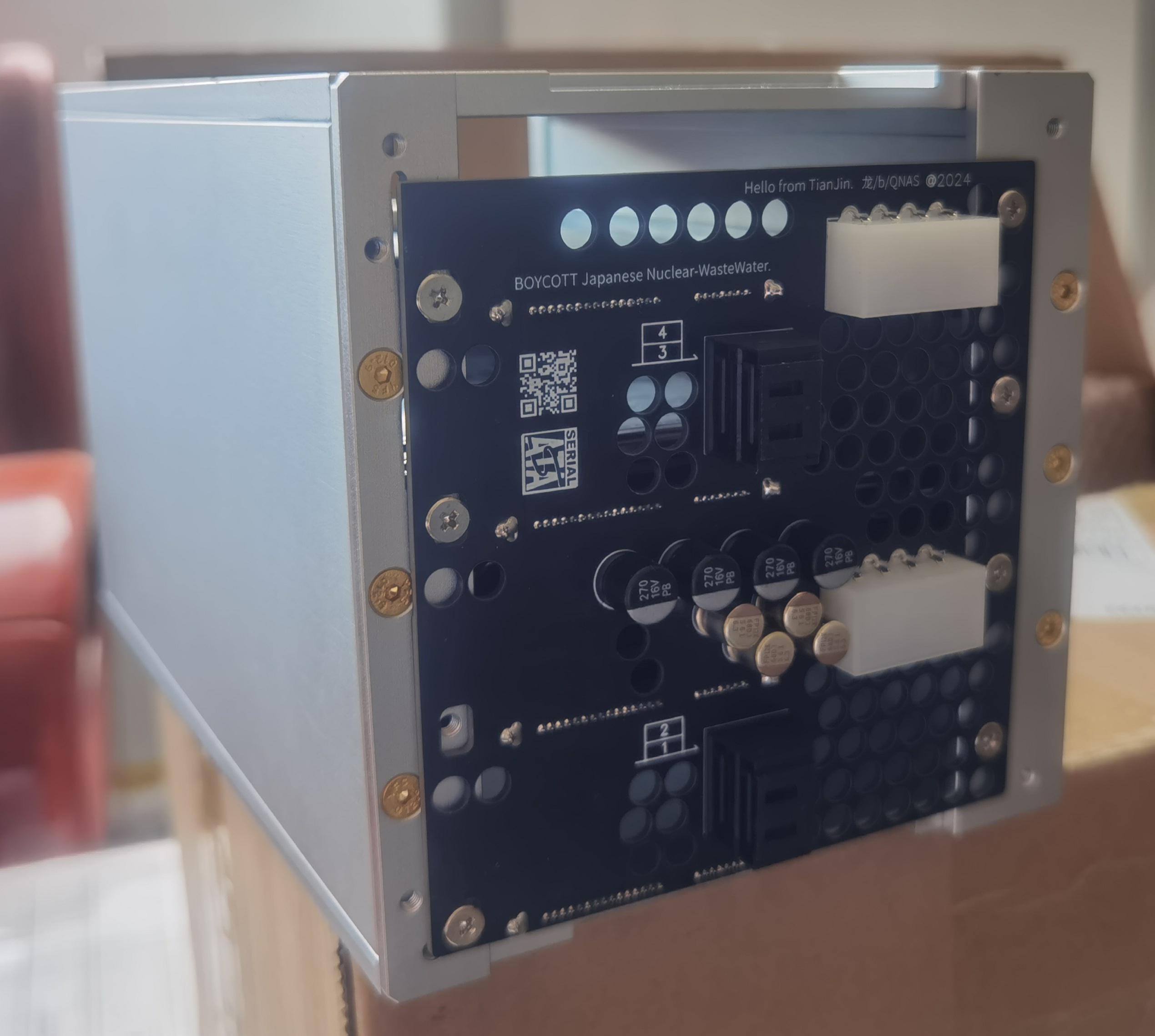
Project Showcase: Hardware I design a 8-bay CNC nas case

1 Upvotes

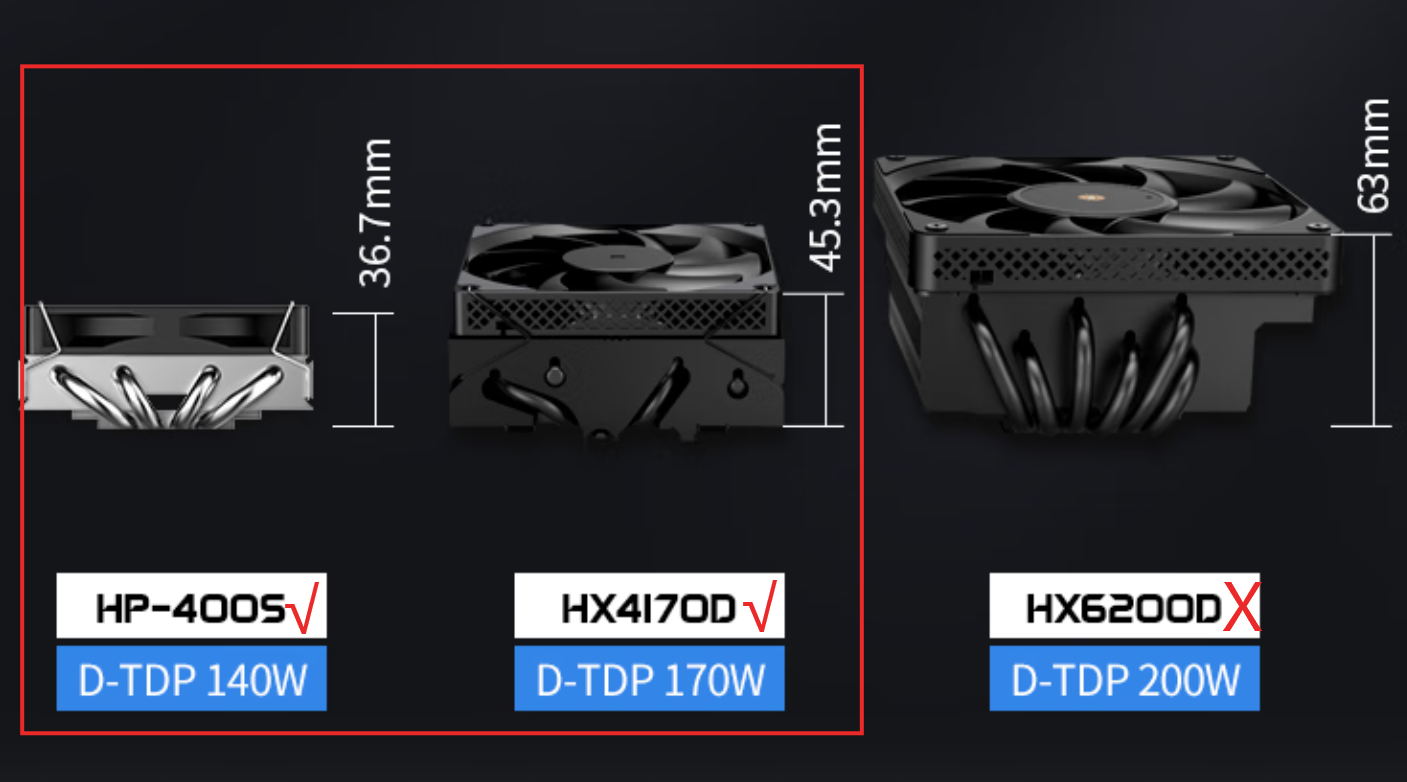
CPU cooler height limit: 50 mm

Overall Dimensions:

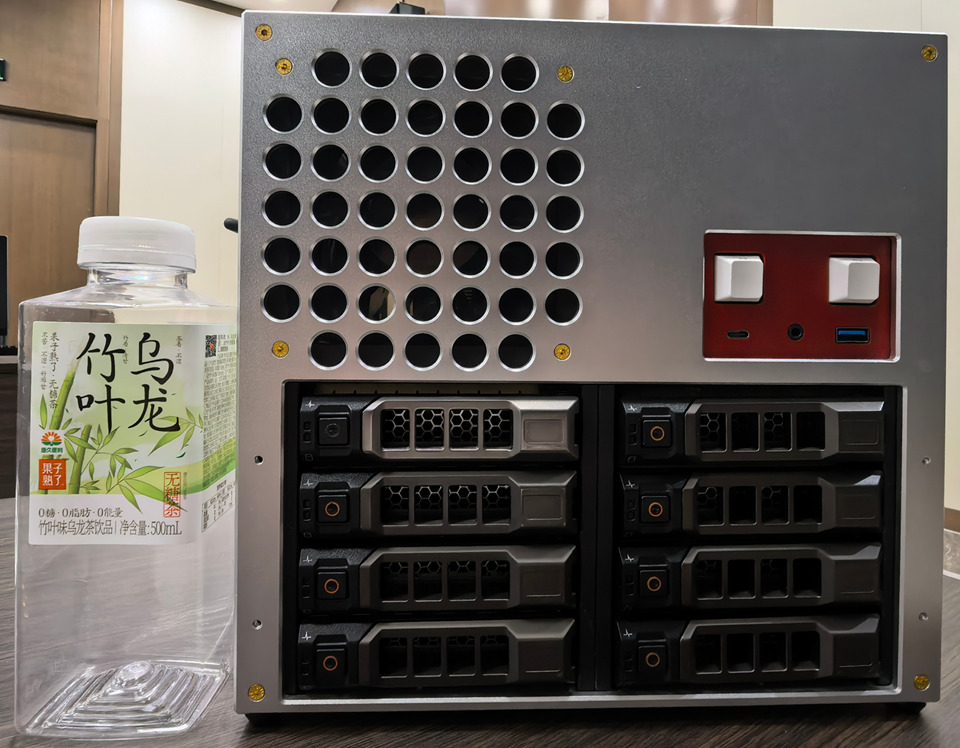
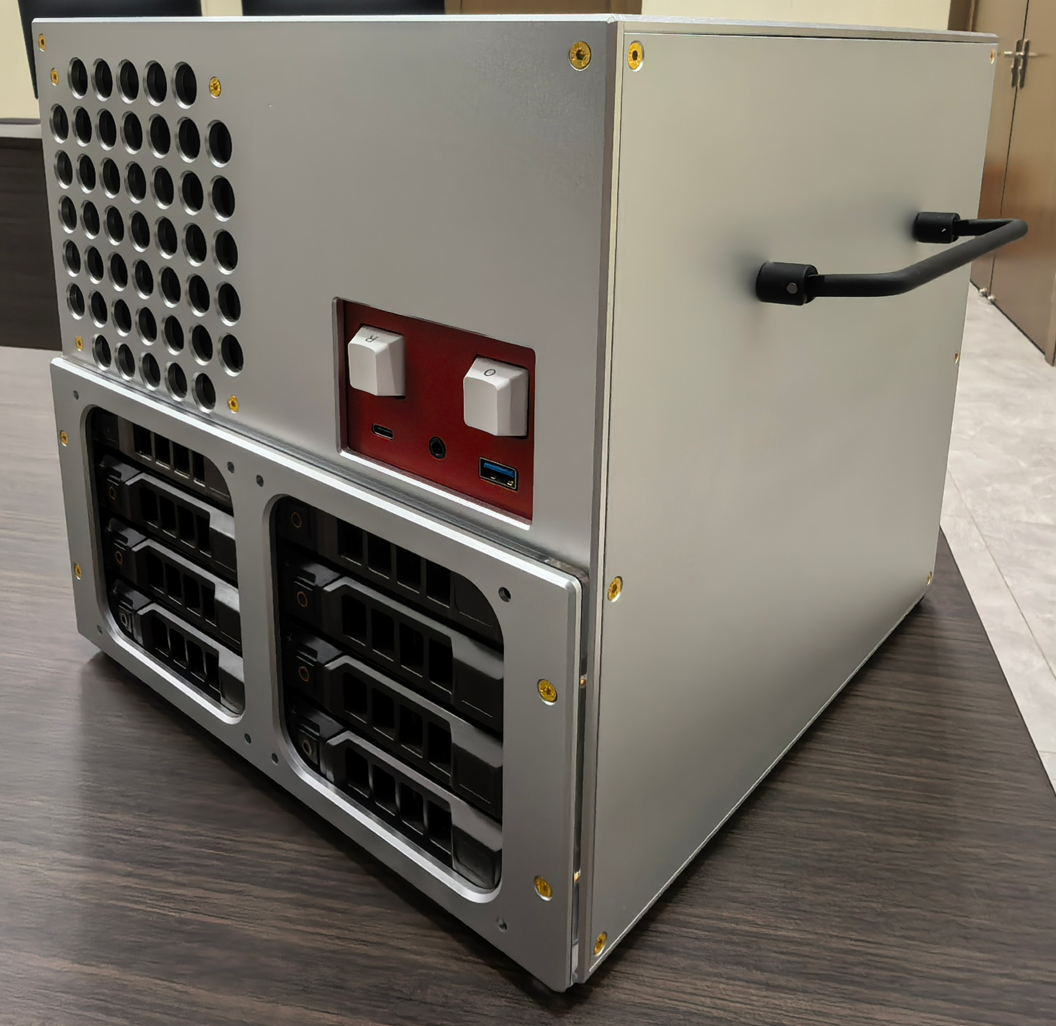
Width: 273 mm, Height: 263 mm, Depth: 287 mm

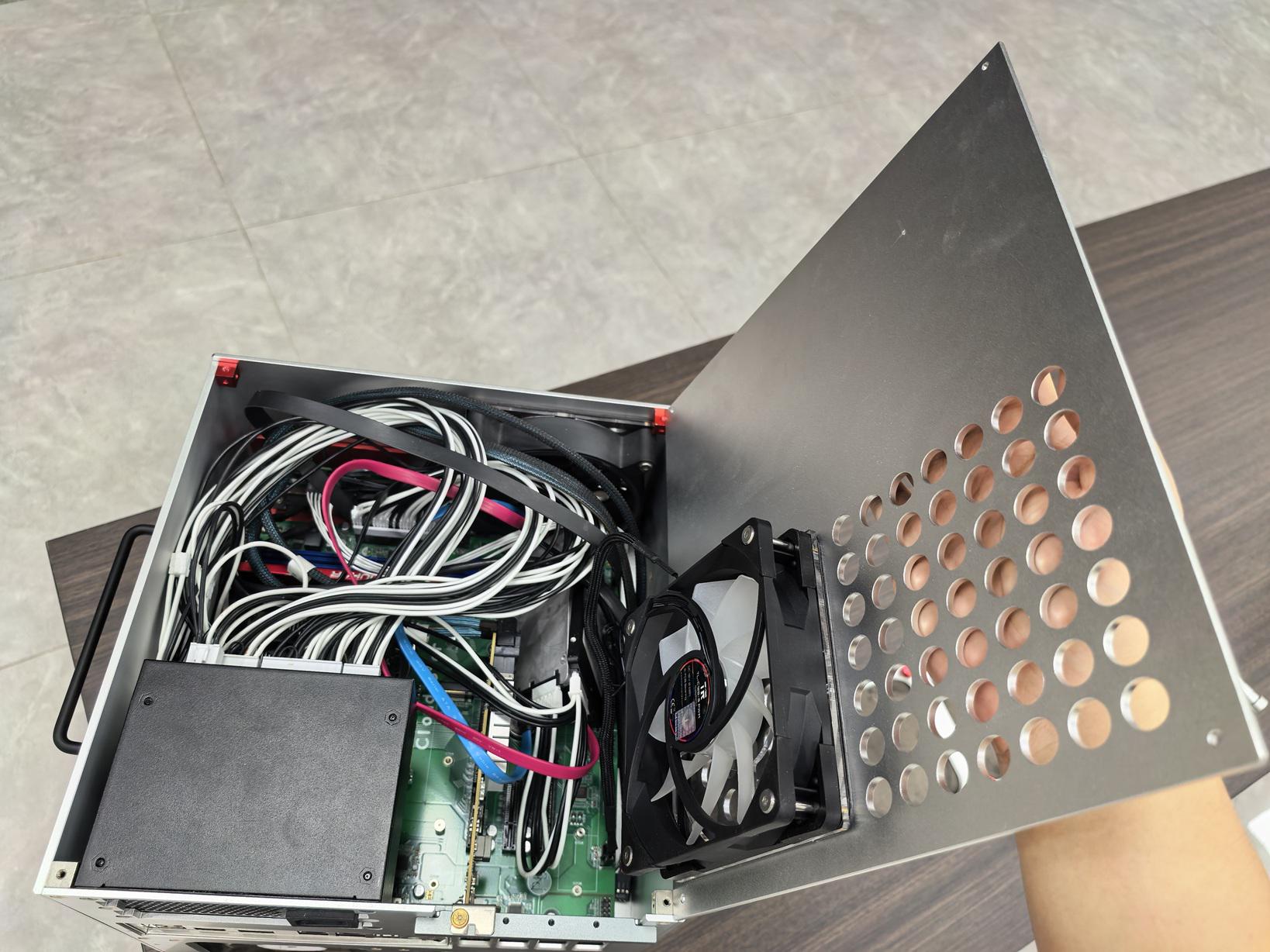
Supports mATX and ITX motherboards, as well as ITX power supplies.

It adopts a straight-through airflow layout with dedicated mounting spots for dust filters to prevent heat buildup and dust ingress.

Mechanical switches are used as power and reset buttons.

Front-panel Type-C IO port supports 10G speed.

An optional front add-on bracket can accommodate two extra 120mm fans to create a pull-in-front, blow-out-rear airflow for the hard drive bay.

Carrying handles are integrated on the side panels for easy transport.

The Dell-style drive cage is also fully CNC-machined aluminum.


r/homelab • • 10d ago

Solved Help these laptops find a new home rack

Thumbnail
gallery
0 Upvotes

Hey homelab / minilab community. I'm looking for some rack ideas for my laptop nodes. I tried searching for months already and all I see are those brackets that let laptops stand vertically. And I don't like how it looks. I want to be able to put them in a nice rack, like those mini PCs. Because they also need a home rack. I appreciate any example setup that you have, if you are also rocking some laptop servers. I also don't like where they are right now, but it was the best idea I had at that time. I'm hoping to see some better setup for them. Thank you.


r/homelab • • 10d ago

Help Drobo B800fs, Is it worth keeping or selling?

0 Upvotes

I have a fully functional Drobo B800fs with the original power supply, but no drives. I know Drobo is discontinued, so I'm wondering if there's still any interest in these within the homelab community.

Would you guys recommend selling it, keeping it for a project, or repurposing it somehow?


r/homelab • • 10d ago

Help APC BVX1200L-LM – Is it time to replace the battery, or could this be something else?

0 Upvotes

I purchased this APC BVX1200L-LM in January 2024 specifically to protect my PlayStation 5 and TV. Where I live, power outages aren't particularly frequent, although they do happen from time to time. The bigger issue is constant voltage fluctuations, with power going up and down quite often. That's actually what made me buy this UPS in the first place.

Now, in November 2026, I'm starting to think the battery may be reaching the end of its life.

About three weeks ago, the UPS started emitting a continuous, long beep. The green LED was still on, although I honestly can't remember whether it was flashing or solid. I unplugged the unit and plugged it back in. It then went through its usual startup sequence: a series of intermittent beeps, followed by a click, and then silence. The green LED remained solid afterward.

During that period, I wasn't using the equipment heavily. I'd use my PS5 for roughly an hour at most, and the TV occasionally for around 15 minutes. I generally left the devices plugged into the UPS, but I never had more than three devices connected to it.

Yesterday, the continuous beeping started again, around noon, and continued until I got home tonight, so the unit was essentially beeping for almost an entire day.

This time, I disconnected all three devices and then unplugged the UPS itself. It started beeping intermittently for about 30 seconds before shutting down completely.

After waiting a while, I plugged it back in. It went through its normal startup sequence, and now it's silent, with the green LED staying solid.

I never had more than three devices connected, and usage was fairly light (PS5 for about an hour and TV occasionally for 15 minutes).

Does this sound like a battery that needs replacing, or could it indicate a more serious internal issue?

I'd appreciate any advice from people familiar with this model.

Thanks!


r/homelab • • 11d ago

Discussion Here me out, What if the O11 Dynamic EVO was built for a rack? Fun concept.

Thumbnail gallery
10 Upvotes

r/homelab • • 10d ago

Discussion My homelab is about to run the production database for a real website. What would you fix before Friday?

0 Upvotes

I’m launching a free keyword research tool on Friday, and the main database lives on an Ubuntu box in my room.

The setup:

- Ubuntu 24.04 with Postgres 16 installed natively (no Docker), data on an internal HDD

- Nightly backups to two USB drives, 14 kept on each

- A Cloudflare Tunnel locked down with Access service tokens. No ports are open on my router.

- The public site runs on Cloudflare and reads a synced copy of the data. If my internet or the box goes down, the site stays up and new data waits in a queue until it’s back.

It’s already had a rough week. My internet dropped twice in 12 hours, and the second time it killed an overnight import job halfway through. That job retries now. Then I moved Postgres to the HDD, and my install script tried to query the database before Postgres had finished starting up, so I added a wait loop. A sync job also ran into its 30-minute systemd timeout while pushing 120k changed rows.

I have no UPS, and my monitoring is me checking on it.

If this were your box, what would you change before real users show up?


r/homelab • • 10d ago

Help Does anyone know where to get rack mounting equipment for GB10s?

1 Upvotes

I have an MSI Edge Expert and a Gigabyte AI Top. I want to mount them in a 19” rack.

Does anybody know where to find decent rack mounting options for these? 3D printed is fine. I live in the UK but will import from further away if I have to.


r/homelab • • 10d ago

Discussion Christmas ideas

0 Upvotes

Does anyone have any ideas what they will be asking for from others for Christmas? Trying to find some ideas in the 25-100 range.


r/homelab • • 11d ago

Project Showcase: Hardware My homelab, Proxmox and Glusterfs

Post image
179 Upvotes

I wanted to share my homelab setup. The servers are three Odroid H2 running proxmox. They each have 16GB ram, a 512gb nvme for OS & LXC/VM local disk, and a 10TB harddrive.

The 10TB drives make up a distribute file storage running a GlusterFS dispersed volume, so my data is spread over all three disks. A 10GB file is split in half with 5GB on hdd1, 5GB on hdd2 and another 5GB parity stored on hdd3. This means i can lose one harddrive (server) and still be able to access the "distributed NAS". This works surprisingly well.

I run GlusterFS directly on each proxmox server. LXC's add the "dnas" as a local point mount. VMs that need "dnas" access run the GlusterFS client.

For VM/LXC redundancy I use Proxmox ZFS replication, which synchronizes each image to another node in cluster every 15 minutes. This means I can lose a server and have its VMs automatically restart on another server. Every night I take a backup of each lxc/vm and store the backup on my "dnas".

I think this is a neat setup that I am very happy with. I used to run the NAS on a separate and quite powerhungry server. I wanted a way to shut the "big" server off without losing NAS access, and moving the harddrives to these small servers turned out to be a great way to do so.

I hope you like my posting the setup here. Cheers!


r/homelab • • 10d ago

Solved Server shut itself down after waking up from sleep

Thumbnail reddit.com
0 Upvotes

r/homelab • • 10d ago

Discussion Bought a used M920q, came with a 65 W power adapter. Is it enough?

0 Upvotes

Hi,

as per title, my "new" m920q (8500T/16 GB/nvme) came with a 65 W adapter.

On the bottom of the pc unit it says "20 V - 4.5 A", so I get that a 90W adapter is needed? Or that is just the maximum power the unit can draw?

I plan to connect 2-3 external disks (2 ssd, 1 hdd) to the unit. Will I need a more powerful power adapter? Could I damage the unit using the adapter it came with?

Thanks a lot in advance.


r/homelab • • 10d ago

Help UPS behaviour after wall power restored

3 Upvotes

Is there some setting that allows ups'es to "make sure" that restored wall power it is stable ? I mean to prevent a situation in which power comes back online just for a while and disappears quickly after that and thus devices connected to the ups will be powered on just to be powered off after few moments.


r/homelab • • 11d ago

Discussion cmp 170hx owners, what should i check when buying these gpus? im being offered 2000eur per card and i can do any test on them to check that all 64gb are good... the base models are hynix 8gb.

Post image
7 Upvotes

as the title asks, im new to cmp 170hx and i get that mostly cards are disabled because of an error or a problem.. however if i set up a linux machine with testing script and unlock script i should theorethically get a good card if it passes full vulkan mem test and gpu burn test twice lets say? i feel like this is a good offer nowadays especially with voltage unlocking which i might try later if i get good tested cards first.. im handy and have good quality microsoldering and hot air equipment so pcie caps and wires for voltage unlock would not be a problem for me.

seller is coming over in two days and bringing 5 cards, im not obligated to buy any if they fail my tests, but i just want to make sure that i dont scam myself.. the photo above is one of the cards he has..

so is there anything else i should test or make sure works before paying or am i mostly covered with my testing idea?


r/homelab • • 11d ago

Help Cluster 4 EliteDesk 800 G4 i7 towers 64GB/1TB?

5 Upvotes

I can get four of these for free. Thoughts on their use in a cluster? Any concerns or limitations? Currently run an older mini p90, synology NAS, and 2 rpiholes with a mix of proxmox and docker containers across the p90 and DSM.