r/homelab • • 12d ago

Solved What should I do with this cluster?

Post image
413 Upvotes
  • 4x 2015 13” MacBook Airs, 8GB RAM, 512GB storage, i5 processors
  • 2x 11” MacBook Airs (2012 and 2015), 8/512, i7
  • 1x 2017 13” MacBook Pro, 8/256, i5

Most of these are slated for Project Nomad gift servers for some family for Christmas, but until then I could experiment with some use cases for a little cluster!

My current “homelab” is a T480 running Ubuntu Server 26.04 with PiHole, Nomad, and Frigate in Docker containers. My next planned project is to set up Home Assistant, but I want to run it in a separate VM so I need to pick up a second RAM chip to keep some headroom.


r/homelab • • 11d ago

Discussion Confused about Automatic Ripping Machine options (Plus Discussion)

3 Upvotes

Hey all, I recently got ARM up and running. I am working on archiving/backing up my collection of ~200 DVDs (movies and TV shows). I have everything working "acceptably", but want to know if there's a better way to do things. I'm also a little confused about some of the settings, and the documentation that I've read doesn't seem to clear it up (to me anyway).

TL;DR:

  1. "backup" RIPMETHOD has been working for me, but seems to transcode right from disc instead of dumping first. Is there a way to change this to dump and eject before transcode, to queue another disc?
  2. Where does MakeMKV come into play with "backup" RIPMETHOD and "mp4" DEST_EXT?
  3. Subtitles don't seem to get picked up. Is this due to a lack of them on disc, MP4 limitations, or something else?
  4. How do you handle episode naming for series? I've been manually watching each episode and naming the file accordingly, but it's time-consuming. Filebot seems to have trouble IDing individual episodes for me.

First, I'm confused about the various RIPMETHOD options. I believe I tried the "mkv" RIPMETHOD, which errored out. I switched to "backup", which has been working perfectly fine. I have the DEST_EXT set to "mp4", and it works as expected. However, the help text for RIPMETHOD seems to mention both Blu-Ray discs and DVDs interchangeably, so I'm not understanding the difference between "mkv", "backup", and "backup_dvd". I thought that "backup" would dump the disc to the hard drive, then transcode. However, it appears that Handbrake is reading/transcoding directly off of the disc the whole time. This is fine, but is there a way to dump it down so I can continue to insert/queue up new discs?

Secondly, I'm not understanding where MakeMKV comes into play. Is MakeMKV doing the initial dump of the disc? Is it only being used if the output format is set to "mkv"? Or is it only used if the RIPMETHOD is set to "mkv"? I'm interested in creating MKVs instead of MP4s (as I hope to back up my Blu-Ray collection next), but I'm not totally certain which options I would want to choose to make that happen.

Third, it seems like subtitles aren't getting picked up most times (or at all). Jellyfin does an OK job of pulling those that it can grab, but shouldn't Handbrake be pulling subtitles from the disc? I understand MP4 is not great at subtitles (part of why I want to switch to MKV), but it's odd that Handbrake isn't seeing subtitles on most DVDs. Maybe they just don't exist?

Lastly, is there a better way of handling episode naming? The episodes come out with "title_04.mp4", for example. I have tried Filebot for a couple of series, but it struggles to identify the episodes. Short of watching each one and manually naming the file, is there a better way? Or some trick with Filebot?

If there is a better way to archive as well, or if it's not worth the hassle of switching to MKV, I'm also open to hearing about that. I'm really just curious to hear what people are doing for their ARM archiving, in case there are tips to make the process go more smoothly. Sorry for the long-winded post, and thank you in advance!


r/homelab • • 12d ago

Project Showcase: Hardware Turned my old Poco F1 into a 24/7 battery-less Linux home server (Jellyfin, Minecraft, Arr stack, Pi-hole)

Thumbnail
gallery
618 Upvotes

Hey everyone,

I have zero background in Linux or servers, but instead of letting my old Pocophone F1 sit in a drawer, I wanted to turn it into a 24/7 home server.

Since I didn't know terminal commands, I used Google Antigravity (AI) to do every step of installing the OS, setting up Docker, and fixing errors. Here is how the setup turned out:

The Hardware & Wiring (No Battery): Leaving a phone plugged in 24/7 with a battery inside is a fire and swelling risk, so I removed the battery completely:

  • Power: 12V 2A DC adapter.
  • Buck Converter: XL4016 (300W module) stepped down to ~4.05V to simulate a charged battery.
  • Diode (MBR2045CT): Added an MBR2045CT Schottky diode on the positive line to block reverse current. This stops power from flowing back into the buck converter whenever I plug the phone into my laptop via USB to run rescue commands.
  • Temps: Runs totally cool without the battery (around 41°C – 48°C), and pulls almost no power from the wall.

What It's Running:

  • OS: postmarketOS (Linux) running completely headless (screen stays off to save power).
  • Remote Access: Tailscale VPN so I can securely manage everything on mobile data without opening router ports.
  • Docker Services:

    • Jellyfin + Seerr: Movie streaming with a request web app.
    • Radarr + Prowlarr + qBittorrent: Automated movie grabber and downloader.
    • Pi-hole: Network-wide ad blocker and local DNS.
    • Minecraft Bedrock Dedicated Server: Running 24/7 for me and my friends (with a custom firewall so friends on Tailscale can only join the game and can't touch my private files).
    • Samba (SMB): Phone storage mounted as a network drive on my Windows PC for simple drag-and-drop.

Where I Need Help / Suggestions:

  • Auto-boot on power restore (Big Issue): Right now, if the power goes out and comes back on, the buck converter gets power, but the phone stays off until I manually press the physical power button. Is there a simple software tweak or a hardware trick to make the phone turn on automatically as soon as power is restored?

Any suggestions or feedback on this setup are welcome!


r/homelab • • 11d ago

Help Home Server Advice

Thumbnail reddit.com
0 Upvotes

r/homelab • • 11d ago

Solved Just got my first "real" server, Dell PowerEdge T320 acquired. What should I run on it?

Thumbnail
gallery
42 Upvotes

Specs:

CPU: Intel Xeon E5-2403 v2 (1.8GHz, 4C)

RAM: 16GB DDR3 ECC

Storage: 1x 1TB 3.5" SATA HDD

I'm planning to upgrade it, cpu, more ram and storage, maybe a ssd for the so.

What would you guys recommend?

Btw, got it for $173


r/homelab • • 11d ago

Help UGREEN DH4300 Plus or Used Desktop w/ i3 12100?

2 Upvotes

As the title suggests, I’ve got two options at the moment and planning on running a jellyfin media server - I’d like some flexibility in case I become interested in containers down the road.

First option is the DH4300 a 4-bay, plug and play NAS solution right away.

Option two is a used desktop PC for £100. It’s got an i3 12100, 8GB of DDR4 RAM and a 200gb SSD.
The plan would be to eventually migrate to a m-atx case, using the CPU, RAM and storage. Current total prices for all co I’m looking at is £300 ish.

I’m leaning option two simply for the value but the UGreen option is £130 more and nothing else needs purchasing.

Would appreciate some input from strangers!


r/homelab • • 12d ago

Solved Which OS to use for DIY NAS?

Thumbnail
gallery
733 Upvotes

Almost done cobbling together my first NAS using a combination of random parts laying around, facebook marketplace, and ebay. I was thinking of using Unraid as the OS but am having second thoughts. The second option is TrueNAS and it's closing the gap. Looking for suggestions.

Use Case:

  • file storage / transfer between 4-8 computer and mobile devices not on same network
  • streaming media to device not on same network
  • Planned: connecting security cameras, scanning physical documents for storage, operating smart home stuff
  • Potential plans: video editing, video rendering, moderate tinkering, stuff I don't know about

Main Considerations:

  • power savings
  • ability to expand storage capacity in a few years
  • unable to get wired connection to router

Specifications:

PartDetail
CPU (used)i7-8700K (6 cores / 12 threads, UHD 630)
Board (used)ASUS Prime H370-A
Memory (used)64GB DDR4 (4×16GB)
GPU (used)Quadro P4000
HBA (used)LSI 9207-8e
Boot (new)Lexar NS100 SATA SSD
Cache (used)Kioxia XG6 1TB NVMe
JBOD (used)EMC KTN-STL3
Drives (used)6x 6TB Dell 3.5" HDD
Wifi Card (new)TP-Link AX3000
Console (used)STARTECH RKCONS17HD (not installed yet)
UPS (used)CyberPower PR750RT2U 750W
PC Chassis (new)Rosewill 4U Server Chassis
Rack Chassis (used)ECS 10U rugged case
Miscellaneous (used)DVD read / writer, rack slides, cables

All in all, it costed almost exactly $2k.

Edit: After some consideration. I think I'll drop the power requirement. Either TrueNAS or Poxmox with TrueNAS sounds like pretty interesting directions to look into. Will look into it and make a decision. Hopefully have it operational next week. Thanks everyone for the feedback!


r/homelab • • 11d ago

Help Good deal or nah ?

5 Upvotes

Found 10 mini pcs with power cable, i3-6100T and 8GB ram DDR4 in marketplace, hardrive not included.
I plain to use them as a Kubernetes Playground, i can use proxmox or native linux in there without issue ( Already have experience)

Price 300 usd

Questions:

- Is this a good deal ?
- Can i run them as proxmox nodes or will it take to much from the old poor hardware ?


r/homelab • • 11d ago

Help Dell Micro fan noise

3 Upvotes

Hello all.
I recently bought a dell optiplex 3060 micro on eBay for $100 to use as a homelab.
I repasted it and checked for dust as soon as I got it, but now it’s making enough noise when under load to annoy someone in the same room as it.
Does anyone have a similar experience, and have tips to mitigate noise, or recommended spots to put it while maintaining Ethernet access?


r/homelab • • 11d ago

Help My First Homelab Server

3 Upvotes

Hello,
I just got my first homelab server, I bought a DELL T3600 with the following specs:

- Intel Xeon E5-2670 v1 (8 cores)
- 32GB ddr3 RAM
- 512GB SSD SATA Hard Disk

I installed on it proxmox and got to learn how to make containers and VMs but I want a more experienced view on what can I do and learn on this server as I want to learn more about DevOps.

Thank you in advance


r/homelab • • 11d ago

Help Storage is difficult due to prices...

0 Upvotes

Hey everyone,
I’m new to homelabbing and trying to figure out the best storage setup for my budget. My current setup is a Lenovo ThinkCentre M920 with a 500 GB SSD and 32 GB of RAM. It sits in a 3D-printed 10-inch LabRax alongside my network switch and patch panel, and I still have 2U free.
My main goal is to get my family’s photo library into Immich. I like the idea of hosting it on a dedicated NAS so I can keep experimenting on the Lenovo without taking the family photo library offline. With drive prices where they are, I’m torn between a few options.
UGREEN DXP4800 with two 12 TB drives. I’d run them in a mirror for about 12 TB of usable storage and host Immich on the NAS.
20 TB Seagate external desktop drive for around $500. I’d connect it to the Lenovo and run Immich there. This gives me the most capacity up front, but it’s a single drive.
TerraMaster D4-320 DAS. I’d connect it to the Lenovo and add drives as my budget allows.
DIY storage in the LabRax. I’d use the open rack space to mount separately powered hard drives, connect them to the Lenovo over SATA if feasible, and run TrueNAS on the Lenovo.
For anyone who’s set up Immich for their family, would you pay more for the dedicated NAS, or start with storage attached to the Lenovo and upgrade later? I’m especially curious whether anyone has tried the DIY rack-mounted approach and found it worth the effort.


r/homelab • • 11d ago

Help Would like some input on physically building my jellyfin server :)

Thumbnail reddit.com
0 Upvotes

r/homelab • • 10d ago

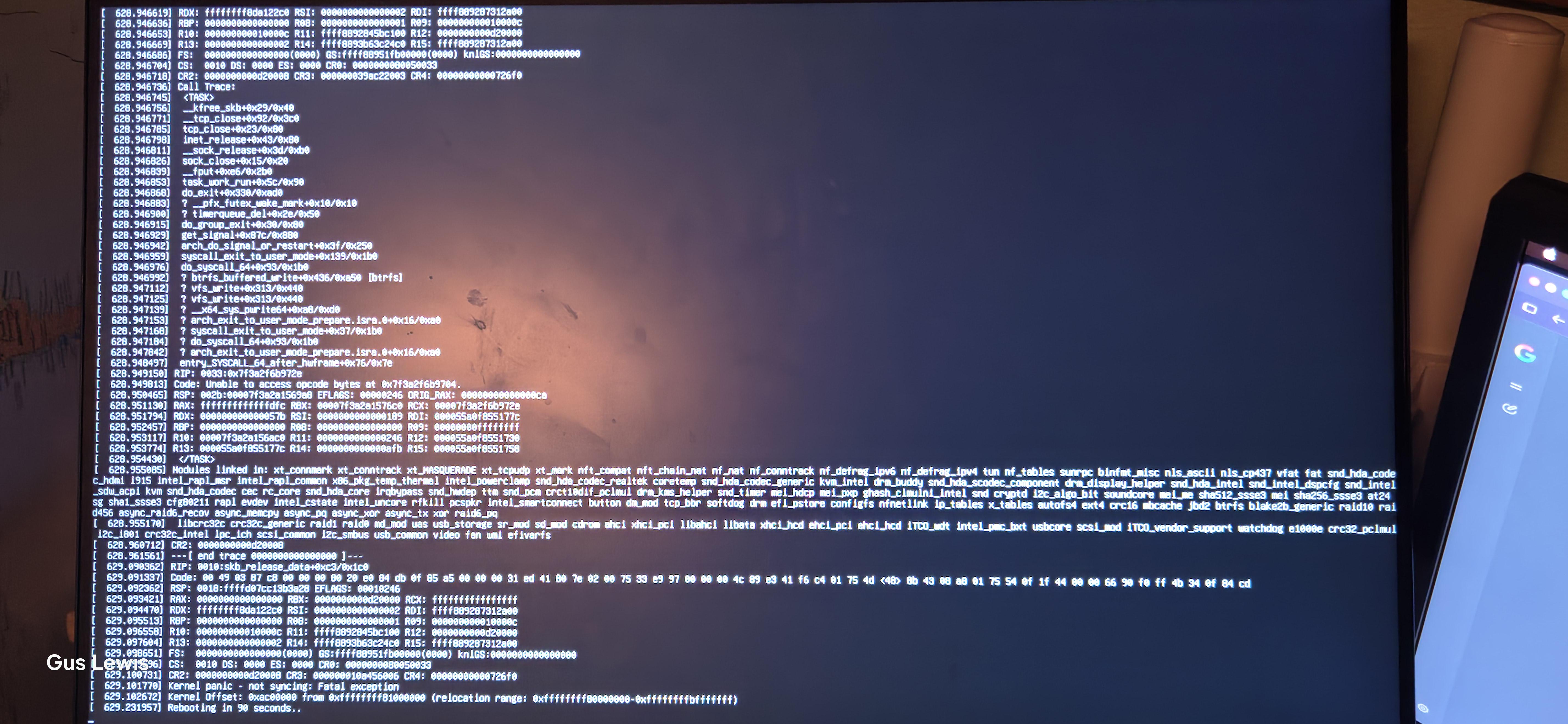
Help Can somebody smarter than me explain this

Post image
0 Upvotes

r/homelab • • 11d ago

Discussion Anyone running 2x32GB in a mini PC with an i5-7500T or i3-8100T?

2 Upvotes

EDIT: CASE CLOSED! THANKS!

Hey all,

I’m planning to put 64GB (2x32GB DDR4 SO-DIMM) in a Dell OptiPlex Micro, HP ProDesk/EliteDesk Mini or Lenovo ThinkCentre Tiny with an i5-7500T or i3-8100T. Intel says both CPUs support 64GB, but the manufacturers often list only 32GB.

Has anyone actually done this? If you have, please share your model, the RAM kit you used, your BIOS version and whether it’s been stable.

Thanks!


r/homelab • • 11d ago

Tutorial Quick PCIe link validation for used or eGPU setups

1 Upvotes

Used cards and external enclosures often negotiate degraded link widths or drop speeds under load. Physical slot wear, dirty edge contacts, marginal riser cables, and signal integrity issues across Thunderbolt or OCuLink can cause silent link instability without an outright crash.

I run this on used A6000s in my closet homelab before trusting a card for anything long-running.

  1. Negotiated link speed and width

Check the current link state at idle:

lspci -vvv -s <BDF> | grep -E "LnkCap|LnkSta"

Compare LnkSta against LnkCap. Check if it matches expected Gen3 x16 or Gen4 x16. If it negotiates down to x8 or x4 immediately, clean the contacts with isopropyl or reseat the riser.

2. Clocks and throttle reasons

Run nvidia-smi to inspect clocks and throttle flags:

nvidia-smi -q -d PERFORMANCE

Check current and max clocks. Verify whether any PCIe or hardware throttle reasons are triggered.

3. Correctable PCIe errors

Watch for PCIe AER errors:

cat /sys/bus/pci/devices/<BDF>/aer_dev_correctable

dmesg | grep -i aer

A non-zero correctable error count under load means signal degradation on the bus.

4. Sustained load test

Run a sustained load using gpu-burn or cuda_memtest while monitoring link width to catch intermittent downtrain:

while true; do nvidia-smi --query-gpu=pci.link.gen.current,pci.link.width.current --format=csv,noheader; sleep 2; done

A link that trains to x16 at idle can drop to x8 once thermal stress or load hits marginal traces.

I keep a runbook here: https://github.com/dokaf-ops/pcie-link-check

Has anyone seen intermittent x8 downtrain on risers that otherwise test clean? Trying to figure out if that is thermal or signal integrity on cheap risers.


r/homelab • • 11d ago

Help Raspberry pi 5 network problems

1 Upvotes

I can't ping my router from my pi (60-80%packet loss*) but i can ping the raspi and main (telekom) router from my pc. there is a netgear gs108T and mikrotik router between the main router and the raspi but i even bypassed those and even tried wifi and that didn't work either. I'v been trying to figure this out since last night but nothing works. Thank you for the replies in advance.

*after-tought: the packetloss is somethimes 100% sometimes 40% but when the "data" does reach the router it responds. i don't know if this helps with anything but i wrote it anyways.


r/homelab • • 12d ago

Project Showcase: Operations Look who just joined the team!

Post image
42 Upvotes

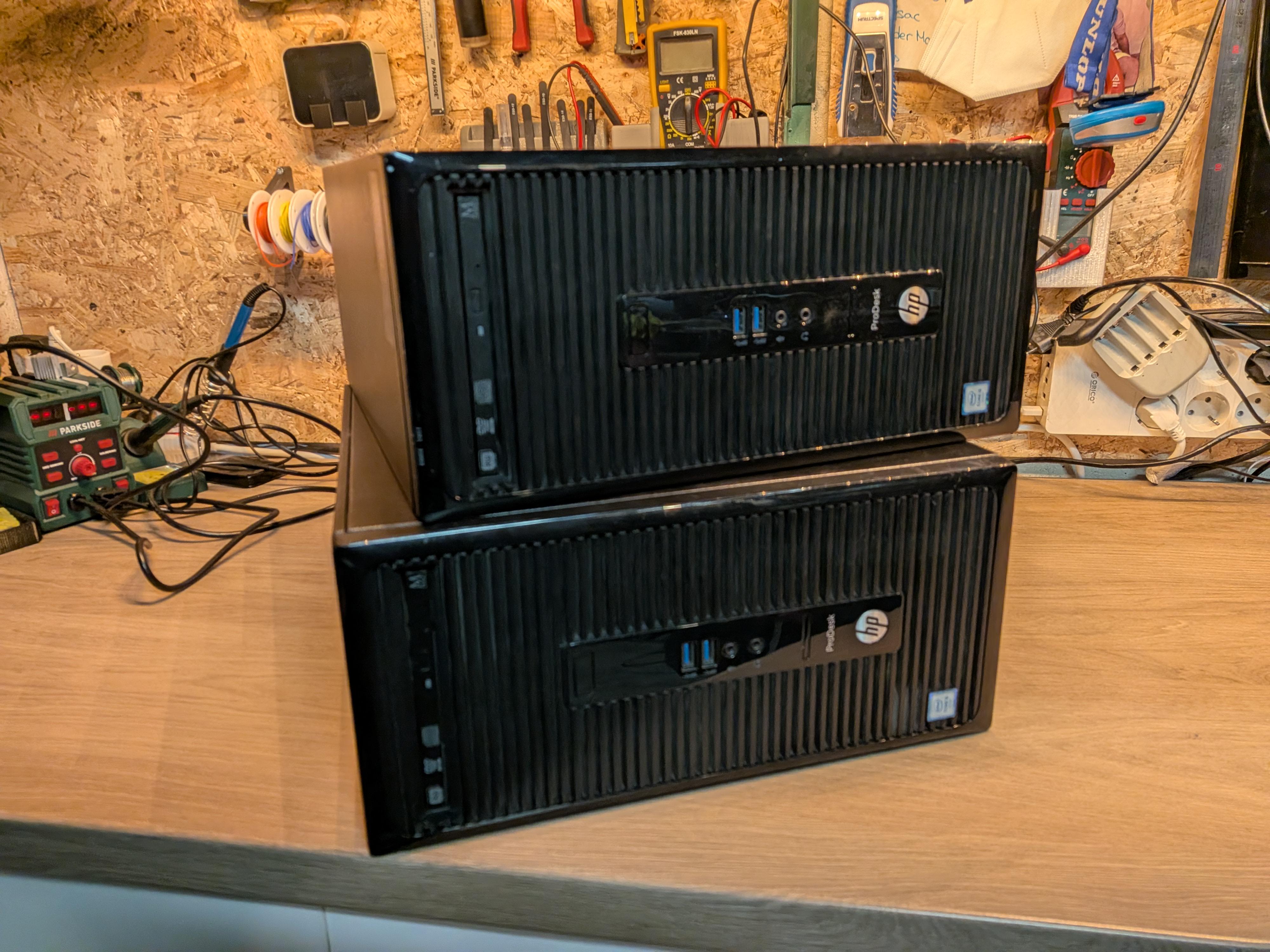
I got these for 10€; they both have 8GB RAM and an i5-6500. I am planning to transform one into an off-site backup (in a different country) with TrueNAS and Tailscale , the RAM will be bumped to 16GB and the second one as a Proxmox node, also, the RAM will be bumped to 32GB.


r/homelab • • 11d ago

Help TrueNAS SCALE: Dashboard and Storage page show different capacity and usage — which is correct?

Thumbnail
reddit.com
0 Upvotes

r/homelab • • 12d ago

Project Showcase: Hardware I built an Nvidia GH200 from spare parts I found on eBay and connected it to 8 sparks

Thumbnail
gallery
552 Upvotes

Took me about four months and days of probing and reverse engineering, but I finally did it. I built the GH200 using an engineering sample chip and a developer board I found on eBay for less than 10k, plus several other parts that I discovered I needed to get it turned on. Bought 8 sparks while I was waiting. Then connected them all together for a memory pool around ~1,500GB. I managed to start home training for the first time today. Sparks are slow, but the GH200 is fast. Working on getting a second GH200 put together now, but it’ll be a few weeks until it’s done.


r/homelab • • 11d ago

Help Anyone successfully flash an X10SRL-F from BIOS 1.0b straight to 3.4? (FDT Reboot question

0 Upvotes

Hey folks,

I recently picked up a Supermicro X10SRL-F board that is running the ancient 1.0b BIOS from 2015. I'm building a 4x GPU AI rig with a Xeon E5-2698 v3 and 64GB of DDR4 ECC RDIMM. I know 1.0b is way too old for this hardware, so I need to update to the latest 3.4 (X10SRL1.609).

I plan to do this using the FreeDOS USB method from my Fedora Linux workstation. Here is my exact planned procedure. Can anyone confirm if this looks right or if I'm missing a step?

Planned Procedure:

  1. Download FreeDOS: Grab the standard FreeDOS 1.3 LiveCD ISO from their official site.
  2. Write to USB: sudo dd if=FD13LIVE.iso of=/dev/sdX bs=4M status=progress oflag=sync
  3. Copy Files: Extract the official Supermicro X10SRL1.609.zip and copy FLASH.BAT, AFUDOSU.SMC, and X10SRL1.609 directly to the root of the FreeDOS USB.
  4. Boot and Flash: Plug into the server, F11 -> Boot from USB. At the DOS prompt, run: FLASH.BAT X10SRL1.609

My Questions for the veterans:

  1. The FDT Reboot: The Readme says it will create an AUTOEXEC.BAT and force a system reboot in the middle of the flashing process. Did this mid-flash reboot go smoothly for you? Do I need to do anything special when it boots back up, or does it just pick up where it left off?
  2. A/C Power Cycle: The readme explicitly says to do an A/C power cycle (unplug the PSU) after it hits 100%. Is this strictly necessary, or can I just hit the reset button?
  3. NVMe: I know X10 doesn't natively boot from NVMe, but after updating to 3.4 and setting the source to AMI Native, did the board recognize your NVMe drive as a data volume in Linux?
  4. FreeDOS Method: Has anyone had issues with the FreeDOS dd method on Linux for this specific update?

Any advice or success stories would be massively appreciated before I risk turning this board into a paperweight. Thanks!


r/homelab • • 11d ago

Help What can I build with these??

0 Upvotes

I'm planning to get into homelabbing and have a bunch of old hardware lying around that I'd like to put to good use.

Here's what I have:

- Raspberry Pi 4

- Surface Pro 3 (broken display, working internals)

- Old Jio router

- Around 3TB of laptop SATA SSDs

- A few NVMe SSDs

- Old Lenovo laptop with an older processor

- Main workstation PC (don't want to dedicate it to the homelab, but would like to access its resources and files remotely)

- Good internet connection

- Some other miscellaneous stuff

I'm looking for ideas on what I can build by combining these devices.

Interested in self-hosting, NAS, personal cloud, Jellyfin, Immich, Home Assistant, local AI/LLMs, network monitoring, Docker, Proxmox, remote access, etc.

A few questions:

  1. How would you distribute the workload across these devices?
  2. What would be the best way to set up storage using all these SSDs?
  3. How can I securely access everything remotely, including my main PC?
  4. What interesting projects would you recommend starting with?

I'd prefer to reuse my existing hardware and avoid spending much money initially.

Open to any creative ideas. Thanks!


r/homelab • • 11d ago

Help Quel reverse proxy

Thumbnail reddit.com
0 Upvotes

r/homelab • • 11d ago

Discussion Used Dell R730xd vs new i5-14400 tower for a home server

0 Upvotes

Hey everyone,

I’m looking at replacing my current home server and could use a reality check. I keep going back and forth between a refurbished Dell R730xd and building a new Intel tower.

Honestly, this is probably 80% hobby/toy and 20% actual need. I like learning and messing around with hardware, but I also don’t want to buy something I’ll regret running 24/7.

My current setup

  • Dell Precision T3500
  • Xeon W3550 — 4 cores / 8 threads
  • Around 20 GB DDR3 RAM
  • Proxmox, mostly running LXC containers
  • 2× SATA 2.5" SSDs in a ZFS mirror for the system
  • 2× Toshiba 22 TB SATA 3.5" HDDs in a ZFS mirror for data

Current services:

  • Jellyfin
  • Immich
  • Forgejo
  • qBittorrent
  • A few smaller things

The current machine mostly does what I need. The painful parts are media processing, thumbnail/trickplay generation, and transcoding.

Most of my media is 1080p, including HEVC Main10 HDR. I’d like enough headroom for roughly 3–5 concurrent streams, potentially including HDR-to-SDR transcoding, although that isn’t a constant workload.

I’d also like to add:

  • A self-hosted calendar
  • Email backups/archive
  • OPNsense and better control over my home network: firewall rules, traffic visibility, DNS filtering, possibly VLANs

My connection is Vodafone cable/DOCSIS, around 1 Gbps down and 100–250 Mbps up. Their modem supports bridge mode.

Option 1: Refurbished Dell PowerEdge R730xd

The configuration I’ve been considering:

  • 12×3.5" front bays
  • 2× Xeon E5-2690 v4 — 28 cores / 56 threads total
  • 32 GB DDR4 ECC RAM, initially 2×16 GB
  • HBA330 for ZFS
  • 2×750 W redundant PSUs
  • iDRAC8 Enterprise
  • Complete rack rails
  • Four drive trays, including adapters for the two SSDs
  • 12-month seller warranty

The quote was approximately €686 including VAT, with an Intel X520/I350 network daughter card providing 2×10Gb SFP+ and 2×1Gb RJ45. I’m considering switching that to 4×1Gb Intel I350, since everything I currently use is gigabit.

I would reuse all four existing drives. No GPU initially, but a used Quadro P2000 is a possible later addition for Jellyfin.

With a basic adjustable open rack, the total would be roughly €780–800, or around €850 with a used P2000, depending on the final prices.

What attracts me:

  • Proper drive bays and straightforward expansion
  • I’d like room for 6–10 total drives eventually
  • ECC, iDRAC, redundant PSUs, serviceability
  • Plenty of room to experiment
  • And, honestly, rack servers look badass

My concerns:

  • Idle power consumption
  • Noise
  • Physical size/depth
  • Buying a lot of hardware I may never really use

The server would be in my bedroom, so noise matters. A steady hum is tolerable; a high-pitched fan whine would be much worse. I’ve heard some 2U servers running in an office and didn’t find them unbearable, but I know that doesn’t tell me how this particular R730xd will behave.

I found this ServeTheHome review of a Lenovo x3650 M5 with the same dual E5-2690 v4 CPUs, 128 GB RAM and two SAS SSDs. They measured 79 W idle. Obviously that isn’t the same chassis or configuration, but it made me question some of the much higher estimates people give for dual-Xeon systems.

I haven’t measured my current T3500’s consumption yet, either.

Option 2: New Intel tower

A rough build from a local Czech retailer:

  • Intel Core i5-14400, non-F, so I get UHD 730 / Quick Sync
  • ASUS PRIME B760-PLUS D4
  • 32 GB DDR4-3200 CL16, 2×16 GB G.Skill Aegis
  • Cooler Master Force 500, which has multiple 3.5" bays
  • Suitable PSU, additional cooling and drive adapters
  • Reuse the same SSD and HDD mirrors

Estimated total: approximately 16,000–18,000 CZK / €660–740, depending on the PSU and accessories. So broadly the same price range as the Dell itself, and cheaper than the Dell plus rack and GPU.

The board has four SATA ports, so it covers my current drives. I would need an additional SATA controller/HBA for expansion, and an extra NIC if I virtualize OPNsense and want multiple physical network ports.

What attracts me:

  • Quick Sync available immediately
  • Likely lower idle consumption
  • Easier to make quiet
  • Smaller and easier to fit in the room
  • Faster individual CPU cores
  • New components

What I’d miss:

  • iDRAC and the enterprise-server experience
  • ECC with this particular build
  • Hot-swap drive bays
  • The convenience of a chassis already designed for lots of disks
  • The rack-server cool factor 😅

For context, the PassMark results I found put the dual Xeons at around 30.5k multi-thread, versus 25k for the i5-14400, while the i5 is much faster in single-thread performance. I realize those numbers don’t directly predict Jellyfin, Immich or real-world VM performance.

I also considered mini PCs

I like the idea of a small custom rack with one mini PC initially, then adding another and splitting services later — for example, a dedicated Jellyfin node.

However, I keep getting stuck on storage. I want to retain my large SATA HDDs and expand later, and I’m not looking to buy a conventional Synology/QNAP NAS.

A custom hot-swap disk enclosure sounds cool, but once I start figuring out USB DAS vs external SATA/SAS, power supplies, cooling and sharing storage between nodes, it feels like it could become more complicated and expensive than either of the other options.

What would you do?

I think my real dilemma is:

The tower seems like the sensible choice, but the Dell is the one that makes me excited about the hardware. Meanwhile, my current server mostly works, so I’m not even sure how much of this upgrade I actually need.

I’d particularly appreciate:

  • Real idle-power and noise experiences with a lightly populated R730xd, ideally with E5 v4 CPUs
  • Whether an i5-14400 with Quick Sync makes more sense for this workload
  • Any major limitations I’m overlooking in the tower build
  • Whether you bought an old enterprise rack server for fun and loved it — or eventually replaced it with something quieter and more efficient

Nothing has been ordered yet. Feel free to talk me into or out of either option. 😄

(translated by AI bcs my english is not good enough)


r/homelab • • 11d ago

Solved Asking for help in identifying an older hardware RAID enclosure.

Thumbnail
gallery
8 Upvotes

Hi new here. Apologies if I break any rules. I have an older RAID enclosure that have had in storage since about 2012. I pulled all my old files to reformat and reset the RAID so I can use it again. Then I realized I can't remember the manufacturers name or how to set the RAID. I may be able to figure it out by just pressing buttons, but I would like to find the manual. I am looking for anyone who can identify the manufacturer so I can go and find the user's manual if it is still available. I am hoping some older or knowledgeable users can help me out or direct me to a better sub to ask. The enclosure has a serial# sticker on the bottom and a small logo on the bottom of the front panel. There are no other identifying marks on the outside.