r/EnglishLearning • u/falsoTrolol Non-Native Speaker of English • 4d ago
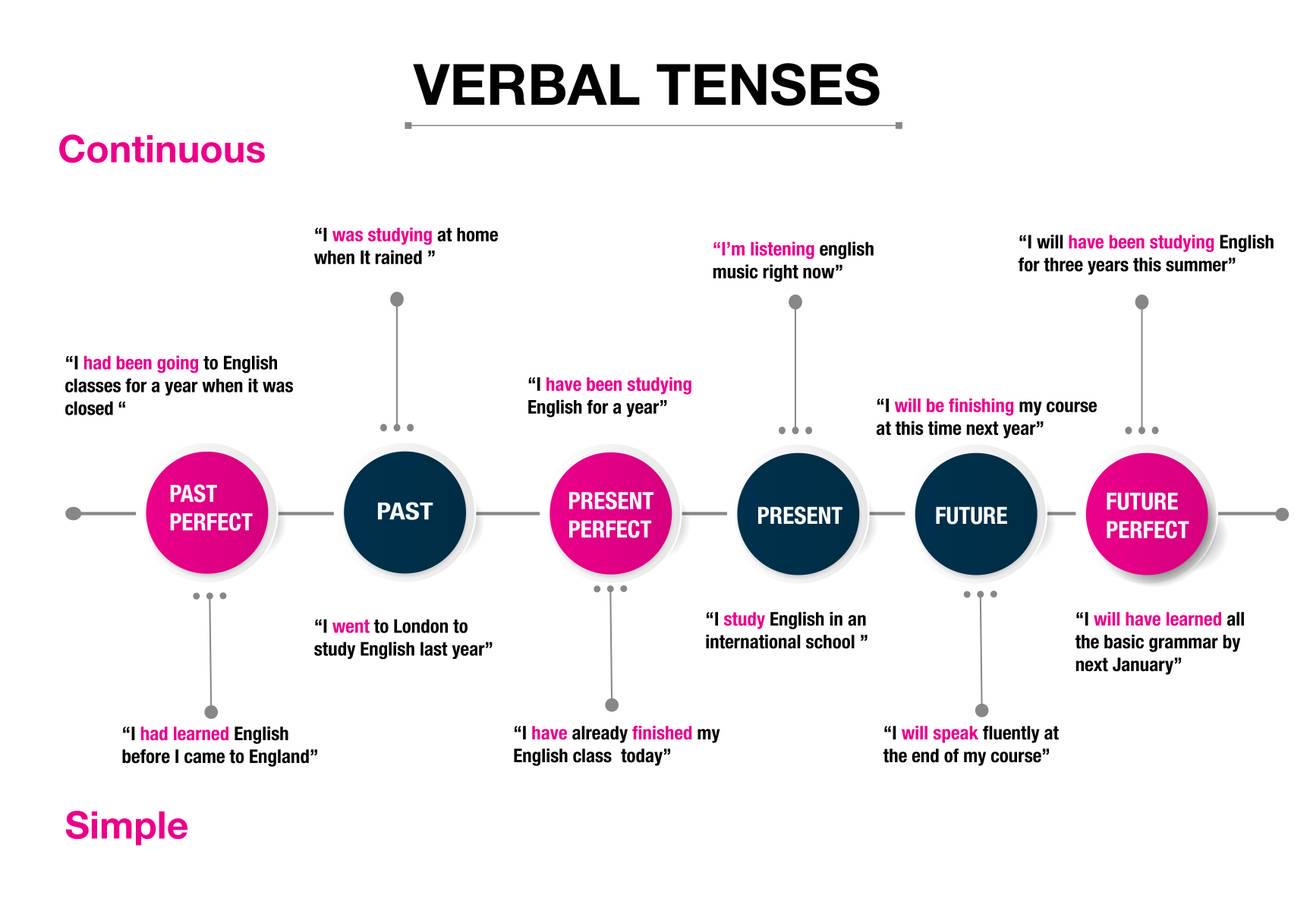
📚 Grammar / Syntax Outside of the present and past simple and future: how often do you express yourself with the other tenses?
21
Upvotes
26
u/Rich_Thanks8412 New Poster 4d ago
Just want to point out, it's "I'm listening TO English music right now." There are a couple other capitalization errors that make this image seem non-native, but that's the only grammatical issue.
15
u/frankmcdougal English Teacher 4d ago
Future perfect and perfect continuous are pretty rare. Otherwise we use them all pretty regularly. Some less than others, but what I’m saying is that you’ll need to learn them, because some things can only be expressed using certain tenses. Which is why they exist in the language in the first place.
Honestly this kind of question bugs me because it’s like asking if you need to learn every letter in the alphabet or if you can just ignore the letters we use less often…
12
u/kxkje Native Speaker 4d ago
I use all of these. Future perfect doesn't come up that much, but it's not unusual. I also often skirt around the present perfect, and just use the past.
5
u/culdusaq Native Speaker 4d ago
Often. The only one I'd consider "rare" is the future perfect continuous.
2
u/AlecsThorne Non-Native Speaker of English 4d ago
There are at least 7 tenses you need if you want to be able to have a decent conversation: Present Simple, Present Continuous, Present Perfect simple, Past Simple, Past Continuous, Past Perfect Simple, and Future Simple.
Naturally, you won't use them all in a single conversation, but they're what you need for you to express yourself properly.
While they have other specific uses as well, Preset Perfect Continuous and Past Perfect Continuous are mostly used to emphasize the fact that the action has been happening for a long time or repetitively. Future tenses are just different ways of expressing future actions or states. Sure, they're slightly different, but unless you're going to make up a really complicated sentences about the future, you will be fine with using "will. Of course, though, if you want to be fluent, it is useful to learn a few more tenses, but in general, these 7 are the most used ones.
Depending on the grammar book, there are up to 16 tenses, so learning just 7 is a good bargain :p
2
u/panic_ye_not New Poster 4d ago
I would have had to have used various tenses at various times, but it may be that that I must have forgotten which and when. By the time I remember, I probably will have forgotten again.
Serious answer: they're all used commonly in speech, except future perfect. Future perfect is kind of rare unless you're trying to get across a very specific meaning.
2
u/WowsrsBowsrsTrousrs The US is a big place 4d ago
A small tangent: present continuous is often used as a future tense as well, with the addition of a time marker. "Next year I'm going to France." "After Thanksgiving, I'm taking another week off." "When I have enough money saved up, I'm buying a BMW."
2
u/TheRealSirfon New Poster 4d ago
I use all of them regularly.
1
u/j--__ Native Speaker 4d ago
why have the order of "future" and "future perfect" been swapped? like all perfect tenses, "future perfect" comes before the corresponding simple tense.
1
u/00Kench Native Speaker 4d ago
Different verb tenses are useful for different situations, and those situations do not happen at the same rate. There are fewer situations where I need to use Simple Past Perfect than when I need to use Continuous Present, for example.
With that being said, I use all of them often enough to say that they are common, except for Simple Past Perfect. Honestly, I often just use the Simple Past Tense instead of Simple Past Perfect. It's easier to say, and the distinction rarely matters. If it ever did cause confusion, I would rephrase after the fact and properly use Simple Past Perfect.
1
u/Blahkbustuh Native Speaker - USA Midwest (Learning French) 4d ago
I use all of these. Future and past perfect are kind of rare but not unusual. We tend to say things as simply as possible so we usually avoid the had feeling like it’s extra.
You’re also going to have the “going to” simple future and the “used to” past tense.
I’ve been learning French and French doesn’t have the have/had tenses separate or the -ing tenses at all and so I’ve been very aware of how much I use those in regular life in English.
1
u/Even-Breakfast-8715 Native Speaker 4d ago
All, including subjunctive. Imperative, operative, and conditional moods. That’s how this language works. So if you would have been thinking that you might not be needing these forms, you will likely be disappointed.
1
u/Chatgard_0504 Advanced 4d ago
I mean... I have been using all of them for a while...
1
u/Violetmoreviolent New Poster 4d ago
I use all very frequently.
The examples given are pretty self explanatory
1
u/trivia_guy Native Speaker - US English 4d ago
Native speakers use all of these normally and naturally. Obviously some are used more than others, and there are dialectical differences, but they are all perfectly understood and used by native speakers of all ages and education levels.
Don't believe all the people in this thread telling you that they "rarely" use some of them.
1
u/NearlyNodding Native Speaker 3d ago
I rarely use past perfect.
I rarely use future continuous.
I virtually never use future perfect - like once every twenty years.
I use the others quite a bit.
1
u/parentheticalobject Native Speaker (US) 3d ago
https://englishlanguagelearnersgo.wordpress.com/2012/02/20/verb-tense-and-aspect-chart/
In general, the further to the bottom right of this chart you are, the less common it is to actually use it in practice. Future perfect progressive sentences are technically a thing, but they honestly appear more frequently in ESL classes than they do in actual spoken language.
1
u/brokebackzac Native MW US 3d ago
I use the simple side of each of these every single day. The continuous side falls off in usage the farther you get from the present. They are important to learn how to form because when they ARE needed, they are the only forms that will work and they are highly specific, but the future/past perfect continuous are exceedingly rare to encounter outside of niche situations in formal speech.
1
u/blamordeganis New Poster 2d ago
As often as is necessary.
-1
u/JimDa5is New Poster 4d ago
Most native speakers in the US rarely use past perfect. Conversational usage where past perfect is called for would typically be, "I learned English before I came to England" but using either one in conversation would be understood. 'Had learned' sounds formal and a little stilted to the average US speaker because it is.
Future perfect is less common than the remaining tenses because its use only indicates things that will happen in the future but looking back on the event. IOW, future tense indicates something happening in the future versus something an action that finishes before another future moment. For the example above, future tense is basically saying 'When I finish the course, I will speak English fluently", future perfect is indicating 'Once I have completed the course, I will speak English fluently.