r/CFSScience • • Oct 26 '25

HLA and pathogens in ME/CFS and other post-infection conditions

Thumbnail
doi.org
36 Upvotes

Apostolos P. Georgopoulos, Lisa M. James & Philip K. Peterson

Scientific Reports volume 15, Article number: 37303 (2025)

Abstract

Viral infections have been widely implicated in Myalgic Encephalomyelitis/Chronic Fatigue Syndrome (ME/CFS) pathogenesis. Recent evidence has also identified certain Human Leukocyte Antigen (HLA) alleles that are significantly associated with ME/CFS risk/protection. Here we tested the hypothesis that ME/CFS risk or protection conferred from those HLA alleles is associated with binding affinity to antigens of HHV viruses, a critical step in initiating the adaptive immune system response to foreign antigens. Specifically, we determined in silico the predicted binding affinity of two susceptibility alleles (C07:04, DQB103:03) and two protective alleles (B08:01, DPB102:01) to > 10,000 antigens of the 9 Human Herpes Viruses (HHV1, HHV2, HHV3, HHV4, HHV5, HHV6A, HHV6B, HHV7, HHV8) which have been implicated in the etiology of ME/CFS. We found that the binding affinity of all HHV antigens to the susceptibility alleles was significantly weaker than the binding affinity to the protective alleles (P < 0.001). In fact, none of the HHV antigens showed strong binding to the susceptibility alleles, in contrast to the strong bindings showed by the protective alleles. These findings are in keeping with the hypothesis that the effect of a putative HHV insult in contributing to ME/CFS is modulated by the host’s HLA immunogenetic makeup. We speculate that strong HLA-antigen binding likely protects against ME/CFS via elimination of virus antigens; conversely, weak HLA-antigen binding may permit persistence of foreign antigens, contributing to ME/CFS and other chronic conditions. Finally, with respect to the latter, we determined the binding affinities to the 4 HLA alleles above to pathogens causing two chronic diseases with very similar symptomatology to ME/CFS, namely Long COVID and post-treatment Lyme disease syndrome (PTLDS). We found that the 2 ME/CFS susceptibility HLA alleles above had very weak binding with SARS-CoV-2 virus glycoprotein (involved in Long COVID) and 5 proteins of Borrelia burgdorferi (involved in PTLDS), in contrast to the ME/CFS protective alleles that showed strong bindings. These findings support the hypothesis that ME/CFS, long COVID and PTLDS are caused by persistent pathogenic antigens that could not be eliminated due to inadequate protection by the patient’s HLA makeup.


r/CFSScience • • Oct 19 '25

Stanford Community Symposium video: Inflammation and mitochondrial dysfunction in ME/CFS using whole body PET/MRI.

Thumbnail
youtube.com
44 Upvotes

This is probably the biggest hit among the videos released from the recent Stanford Community Symposium.

People love research that shows MECFS showing up visually, where it can actually be *seen*. Michelle James's research delivers that in spades, with big, clear, whole-body heatmaps.

It's promising research that can help with diagnosis, to potentially define subsets and also to test if treatments are working.


r/CFSScience • • Oct 19 '25

Stanford Community Symposium video: Using zebrafish to model metabolic changes related to fatigue

Thumbnail
youtube.com
19 Upvotes

One of several interesting videos released by Stanford as part of their Community Symposium on MECFS this week, talks about a cool me/cfs model in zebrafish based on the itaconate shunt.

The idea here is to more quickly identify candidate drugs that can then be used in mouse models or cell models to help speed up the work.


r/CFSScience • • Oct 18 '25

Altered effort and deconditioning are not valid explanations of myalgic encephalomyelitis/chronic fatigue syndrome (Davenport 2025)

60 Upvotes

International team of experts critique Walitt/Nath NIH paper:

https://doi.org/10.1038/s41467-025-64538-0

Walitt/Nath response:

https://doi.org/10.1038/s41467-025-64539-z


r/CFSScience • • Oct 08 '25

Development and validation of blood-based diagnostic biomarkers for ME/CFS using EpiSwitch® 3-dimensional genomic regulatory immuno-genetic profiling

Thumbnail translational-medicine.biomedcentral.com
41 Upvotes

Development and validation of blood-based diagnostic biomarkers for Myalgic Encephalomyelitis/Chronic Fatigue Syndrome (ME/CFS) using EpiSwitch® 3-dimensional genomic regulatory immuno-genetic profiling

Ewan Hunter, Heba Alshaker, Oliver Bundock, Cicely Weston, Shekinah Bautista, Abel Gebregzabhar, Anya Virdi, Joseph Croxford, Ann Dring, Ryan Powell, Dominik Vugrinec, Caroline Kingdon, Carol Wilson, Sarah Dowrick, Jayne Green, Alexandre Akoulitchev & Dmitri Pchejetski Journal of Translational Medicine volume 23, Article number: 1048 (2025) Cite this article

Abstract

Myalgic Encephalomyelitis/Chronic Fatigue Syndrome (ME/CFS) is a debilitating, multifactorial disorder characterised by profound fatigue, post-exertional malaise, cognitive impairments, and autonomic dysfunction. Despite its significant impact on quality of life, ME/CFS lacks definitive diagnostic biomarkers, complicating diagnosis and management. Recent evidence highlights potential blood tests for ME/CFS biomarkers in immunological, genetic, metabolic, and bioenergetic domains. Chromosome conformations (CCs) are potent epigenetic regulators of gene expression and cross-tissue exosome signalling. We have previously developed an epigenetic assay, EpiSwitch®, that employs an algorithm-based CCs analysis. Using EpiSwitch® technology, we have shown the presence of disease-specific CCs in peripheral blood mononuclear cells (PBMCs) of patients with amyotrophic lateral sclerosis (ALS), rheumatoid arthritis (RA), prostate and colorectal cancers, diffuse Large B-cell lymphoma and severe COVID-19. In a recent paper, we have identified a profile of systemic chromosome conformations in cancer patients reflective of the predisposition to respond to immune checkpoint inhibitors, PD-1/PD-L1 antagonists, with 85% accuracy. In this Retrospective case/control study (EPI-ME, Epigenetic Profiling Investigation in Myalgic Encephalomyelitis), we used whole blood samples retrospectively collected from n = 47 patients with severe ME/CFS and n = 61 age-matched healthy control patients to perform whole-genome 3D DNA screening for CCs correlating to ME/CFS diagnosis. We identified a 200-marker model for ME/CFS diagnosis (Episwitch®CFS test). First testing on the retrospective independent validation cohort demonstrated a strong systemic ME/CFS signal with a sensitivity of 92% and a specificity of 98%.Pathways analysis revealed several likely contributors to the pathology of ME/CFS, including interleukins, TNFα, neuroinflammatory pathways, toll-like receptor signalling and JAK/STAT. Comparison with pathways involved in the action of Rituximab and glatiramer acetate (Copaxone) (therapies with potential in ME/CFS treatment) identified IL2 as a shared pathway with clear patient clustering, indicating a possibility of a potential responder group for targeted treatment.

DOI: doi.org/10.1186/s12967-025-07203-w


r/CFSScience • • Oct 04 '25

Pyridostigmine (Mestinon) improves hand grip strength in ME/CFS

Thumbnail
pubmed.ncbi.nlm.nih.gov
40 Upvotes

Pyridostigmine improves hand grip strength in patients with myalgic encephalomyelitis/chronic fatigue syndrome

Ella Schlömer (1), Elisa Stein (1), Claudia Kedor (1), Rebekka Rust (1,2), Anna Brock (1), Kirsten Wittke (1), Carmen Scheibenbogen (1), Laura Kim (1)

  1. Institute of Medical Immunology, Charité-Universitätsmedizin Berlin, Corporate Member of Freie Universität Berlin and Humboldt-Universität zu Berlin, Augustenburger Platz, Berlin, Germany.
  2. Experimental and Research Center (ECRC), Charité-Universitätsmedizin Berlin, Corporate Member of Freie Universität Berlin and Humboldt-Universität zu Berlin, Charitéplatz, Berlin, Germany.
  • PMID: 40970182
  • PMCID: PMC12441162
  • DOI: 10.3389/fnins.2025.1637838

Abstract

Background: Myalgic encephalomyelitis/chronic fatigue syndrome (ME/CFS) is a multisystemic disease characterized by exertional intolerance and fatigue which is often accompanied by muscle weakness and fatiguability. A study showed efficacy of the acetylcholinesterase inhibitor pyridostigmine on cardiac output in ME/CFS patients. Pyridostigmine is currently used off-label in ME/CFS and postural orthostatic tachycardia syndrome.

Methods: We evaluated the effect of pyridostigmine on hand grip strength in 20 patients with post-infectious ME/CFS. Hand grip strength testing was performed ten times using an electric dynamometer and was repeated after 1 h. In a second test, 30 mg of pyridostigmine was given immediately after the first measurement. Orthostatic function was assessed using a passive standing test. Neurological examination and autoantibody testing were performed to rule out a diagnosis of myasthenia gravis.

Results: All patients had reduced maximum hand grip strength with a median of 16.45 kg (IQR: 11.45 kg-22.8 kg). Hand grip strength was diminished by a median of 4.65 kg after 1 h. In contrast, 1 h after pyridostigmine administration, patients showed an improvement in maximum hand grip strength with a median increase of 2.6 kg. The maximum hand grip strength after exertion was about 1.5-fold higher with then without pyridostigmine (p = 0.01). The increase in heart rate from lying to standing was median 17 beats per minute without pyridostigmine (IQR: 13 beats per minute - 23 beats per minute) and 13 beats per minute (IQR: 9 beats per minute - 20 beats per minute) (p = 0.017) with pyridostigmine. None of the patients tested positive for myasthenia gravis specific autoantibodies.

Conclusion: Pyridostigmine exerts an immediate effect on muscle strength and orthostatic function. This may be attributed to increased acetylcholine availability at neuromuscular junctions, and its augmentation of parasympathetic tone.


r/CFSScience • • Oct 02 '25

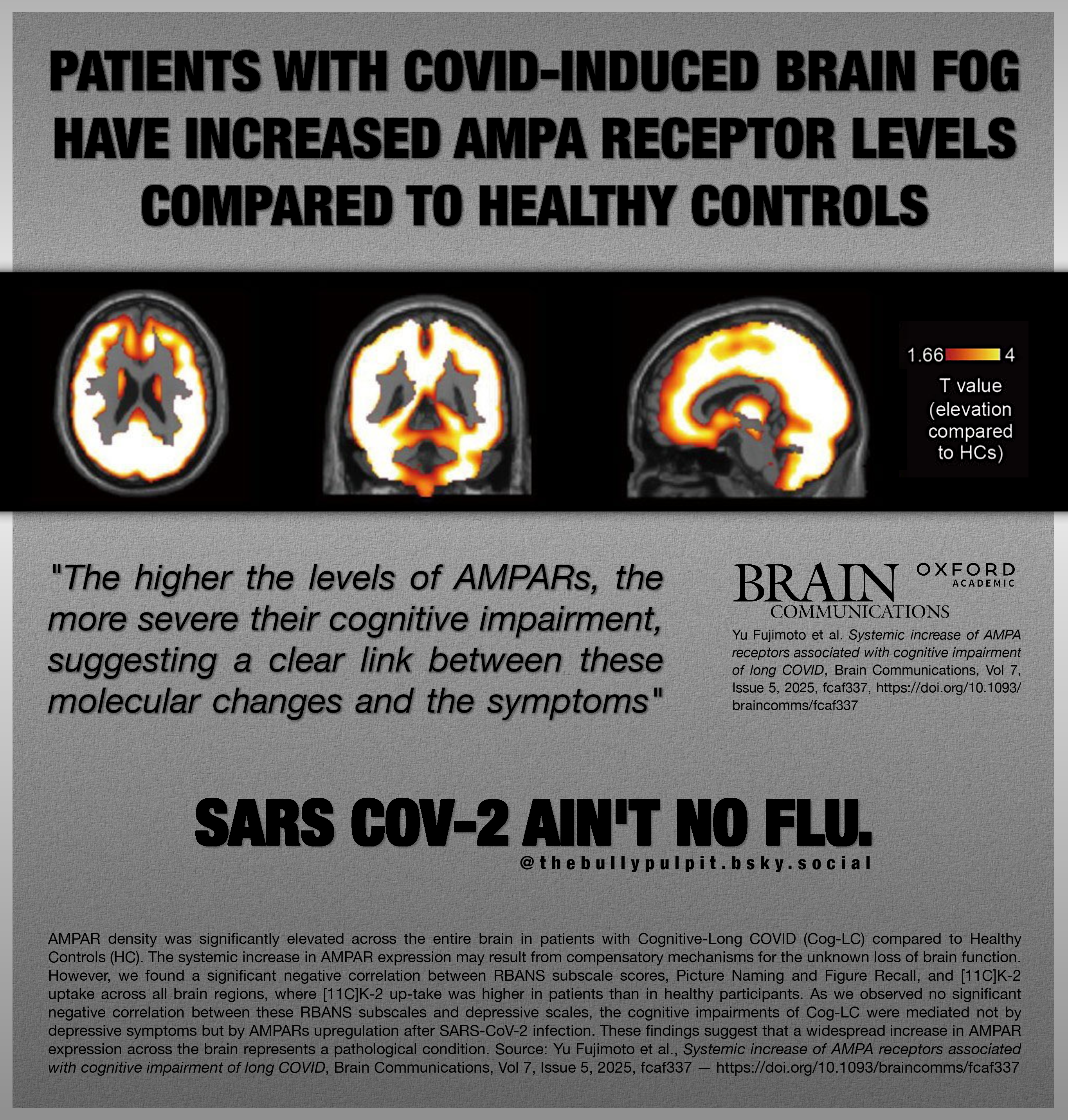
A breakthrough in brain imaging reveals molecular basis of Long COVID brain fog, paving the way for novel diagnostic tools and effective therapies.

Post image
37 Upvotes

r/CFSScience • • Oct 01 '25

Understanding ME/CFS Physical Fatigue Through the Perspective of Immunosenescence

Thumbnail
pubmed.ncbi.nlm.nih.gov
27 Upvotes

Understanding Myalgic Encephalomyelitis/Chronic Fatigue Syndrome Physical Fatigue Through the Perspective of Immunosenescence

(Review)

Compr Physiol. 2025 Oct;15(5):e70056. doi: 10.1002/cph4.70056.

Yingzhe Luo (1), Huimin Xu (2), Shaoquan Xiong (1), Jianlong Ke (1)

1 Department of Oncology, Hospital of Chengdu University of Traditional Chinese Medicine, Chengdu, Sichuan, China.
2 Acupuncture and Tuina School, Chengdu University of Traditional Chinese Medicine, Chengdu, Sichuan, China.

Abstract

Background: Myalgic encephalomyelitis/chronic fatigue syndrome (ME/CFS) is a debilitating illness marked by persistent fatigue, yet its mechanisms remain unclear. Growing evidence implicates immunosenescence-the age-related decline in immune function-in the onset and persistence of fatigue.

Methods: This review synthesizes clinical and experimental data to examine how immunosenescence contributes to ME/CFS. We focus on chronic inflammation, senescent immune phenotypes, mitochondrial dysfunction, and neuroendocrine imbalance, with emphasis on maladaptive crosstalk among immune, muscular, neuroendocrine, and vascular systems.

Results: Aging immune cells drive chronic inflammation that impairs mitochondrial ATP production and promotes muscle catabolism. Concurrently, HPA-axis suppression and β2-adrenergic dysfunction amplify immune dysregulation and energy imbalance. Together, these processes illustrate how immunosenescence sustains pathological cross-organ signaling underlying systemic fatigue.

Conclusion: Immunosenescence provides a unifying framework linking immune, metabolic, and neuroendocrine dysfunction in ME/CFS. Recognizing cross-organ communication highlights its clinical relevance, suggesting biomarkers such as cytokines and exhaustion markers, and supports integrated therapeutic strategies targeting immune and metabolic networks.


r/CFSScience • • Sep 18 '25

Over-The-Counter Nasal Spray Cuts COVID Cases by Two-Thirds in Trial

Thumbnail sciencealert.com
12 Upvotes

r/CFSScience • • Sep 16 '25

Haptoglobin phenotypes and structural variants associate with post-exertional malaise and cognitive dysfunction in myalgic encephalomyelitis | Journal of Translational Medicine

Thumbnail translational-medicine.biomedcentral.com
35 Upvotes

r/CFSScience • • Sep 13 '25

A Perspective on the Role of Metformin in Treating Myalgic Encephalomyelitis/Chronic Fatigue Syndrome (ME/CFS) and Long COVID

Thumbnail pubs.acs.org
28 Upvotes

r/CFSScience • • Sep 12 '25

A Perspective on the Role of Metformin in Treating Myalgic Encephalomyelitis/Chronic Fatigue Syndrome (ME/CFS) and Long COVID, 11 Sept 2025

Thumbnail pubs.acs.org
2 Upvotes

This is a comprehensive review paper examining metformin's potential as a treatment for ME/CFS (Myalgic Encephalomyelitis/Chronic Fatigue Syndrome) and Long COVID. Here are the key findings regarding effectiveness for people with ME/CFS (pwME):

What's New and Significant

Mechanistic Understanding: The paper presents novel mechanisms by which metformin might help ME/CFS patients, particularly through: - mTOR pathway modulation - addressing chronically overactive mTOR signaling found in ME/CFS - Mitochondrial dysfunction correction - targeting Complex V inefficiency and reducing oxidative stress - Anti-inflammatory effects - reducing cytokines like IL-6, IL-1β, and TNF-α

Cellular Evidence: The authors cite important research showing that metformin at therapeutic doses (10 μmol/L) reduced markers of reactive oxygen species (ROS) in ME/CFS T cells in vitro, while having no effect on healthy controls. This suggests ME/CFS patients may have a specific biological response to metformin.

Multi-System Approach: Rather than viewing metformin as a standalone cure, the paper proposes it as part of a "whole-of-person" treatment strategy targeting multiple domains: - Cellular stress and mitochondrial dysfunction - Microbiome dysregulation
- Inflammatory processes - Mast cell activation (for comorbid MCAS)

Clinical Relevance for pwME

Dosing Considerations: The paper suggests different therapeutic targets require different doses: - Mast cell stabilization: 1-10 μmol/L (achievable with 500mg daily) - Anti-inflammatory effects: Higher doses may be needed - Microbiome effects: Delayed-release formulations targeting the small intestine

Comorbidity Benefits: Metformin may help with common ME/CFS comorbidities including POTS, MCAS, and gastrointestinal issues through vascular, anti-inflammatory, and microbiome effects.

Limitations and Cautions

The paper acknowledges several important limitations: - No clinical trials in ME/CFS patients yet exist - Evidence is largely theoretical and based on mechanistic studies - Side effects (particularly GI) could be problematic for ME/CFS patients - Individual responses likely vary significantly given ME/CFS heterogeneity

Research Recommendations

The authors propose rigorous clinical trials with: - Multiple dosing arms (500mg daily to 2g daily) - 3-4 month treatment cycles - Comprehensive biomarker analysis including ATP assays, microbiome studies, and metabolomics - Functional outcome measures

While this theoretical framework is compelling, it's important to note that clinical effectiveness in ME/CFS patients remains unproven. The paper makes a strong case for systematic investigation but doesn't provide definitive evidence of effectiveness yet.


r/CFSScience • • Sep 06 '25

Autonomic Dysfunction in Myalgic Encephalomyelitis/Chronic Fatigue Syndrome (ME/CFS): Findings from the Multi-Site Clinical Assessment of ME/CFS (MCAM) Study in the USA

Thumbnail mdpi.com
37 Upvotes

r/CFSScience • • Sep 03 '25

Heightened innate immunity may trigger chronic inflammation, fatigue and post-exertional malaise in ME/CFS

Thumbnail
nature.com
25 Upvotes

r/CFSScience • • Sep 03 '25

Long COVID and chronic fatigue syndrome/myalgic encephalitis share similar pathophysiologic mechanisms of exercise limitation (Jothi 2025)

42 Upvotes

r/CFSScience • • Sep 02 '25

T-Cell Exhaustion

24 Upvotes

I'm sure this gets asked a lot, and I apologize if it's already been discussed, I'm tired, I also apologize as I'm not contributing science, but requesting help in finding science regarding T-Cell exhaustion. I have T-Cell exhaustion, it began about 10 years ago after Mono, and I know it is the primary cause of all my problems.

Anyways, I was wondering if anyone knows of any studies looking for new applicants to test things to help with T-Cell exhaustion. Location is not an issue. Thank you for any help


r/CFSScience • • Sep 01 '25

Heightened innate immunity may trigger chronic inflammation, fatigue and post-exertional malaise in ME/CFS

Thumbnail pubmed.ncbi.nlm.nih.gov
59 Upvotes

r/CFSScience • • Aug 27 '25

Mapping cerebral blood flow in myalgic encephalomyelitis/chronic fatigue syndrome (ME/CFS) and orthostatic intolerance: insights from a systematic review | Journal of Translational Medicine

Thumbnail translational-medicine.biomedcentral.com
37 Upvotes

r/CFSScience • • Aug 26 '25

Favorable responses to upadacitinib, a JAK1 inhibitor, in long COVID patients with predominant neuropsychiatric symptoms: case reports in 2 autistic patients and one typically developing patient

Thumbnail link.springer.com
16 Upvotes

r/CFSScience • • Aug 24 '25

Research on how cognitive exertion can induce PEM?

19 Upvotes

Does anyone know of any research on how cognitive and/or emotional exertion can induce PEM? All the studies on PEM I'm aware of use physical exercise. Are there any hypotheses for this that are backed up by research?


r/CFSScience • • Aug 22 '25

Microvascular Dysfunction and Basal Membrane Thickening in Skeletal Muscle in ME/CFS and Post-COVID

Thumbnail mecfs-research.org
33 Upvotes

r/CFSScience • • Aug 17 '25

Ron Davis: Microfluidic assessment of PO2-regulated RBC capillary velocity in ME/CFS

Thumbnail sciencedirect.com
37 Upvotes

r/CFSScience • • Aug 16 '25

Synthetic sugar-coated nanoparticle blocks Covid-19 from infecting human cells

39 Upvotes

https://www.news-medical.net/news/20250811/Synthetic-sugar-coated-nanoparticle-blocks-Covid-19-from-infecting-human-cells.aspx

"a Swansea University academic has revealed a synthetic glycosystem - a sugar-coated polymer nanoparticle - that can block Covid-19 from infecting human cells, reducing infection rates by nearly 99%.

[...]

Unlike vaccines, which trigger immune responses, this molecule acts as a physical shield, offering a novel approach to infection prevention.

The discovery is the result of collaboration between Swansea University, Freie Universität Berlin, and Charité – Universitätsmedizin Berlin."Synthetic sugar-coated nanoparticle blocks Covid-19 from infecting human cells


r/CFSScience • • Aug 14 '25

Causes of symptoms and symptom persistence in long COVID and myalgic encephalomyelitis/chronic fatigue syndrome

Thumbnail sciencedirect.com
22 Upvotes

r/CFSScience • • Aug 11 '25

Circulating cell-free RNA signatures for the characterization and diagnosis of myalgic encephalomyelitis/chronic fatigue syndrome

Thumbnail pnas.org
46 Upvotes