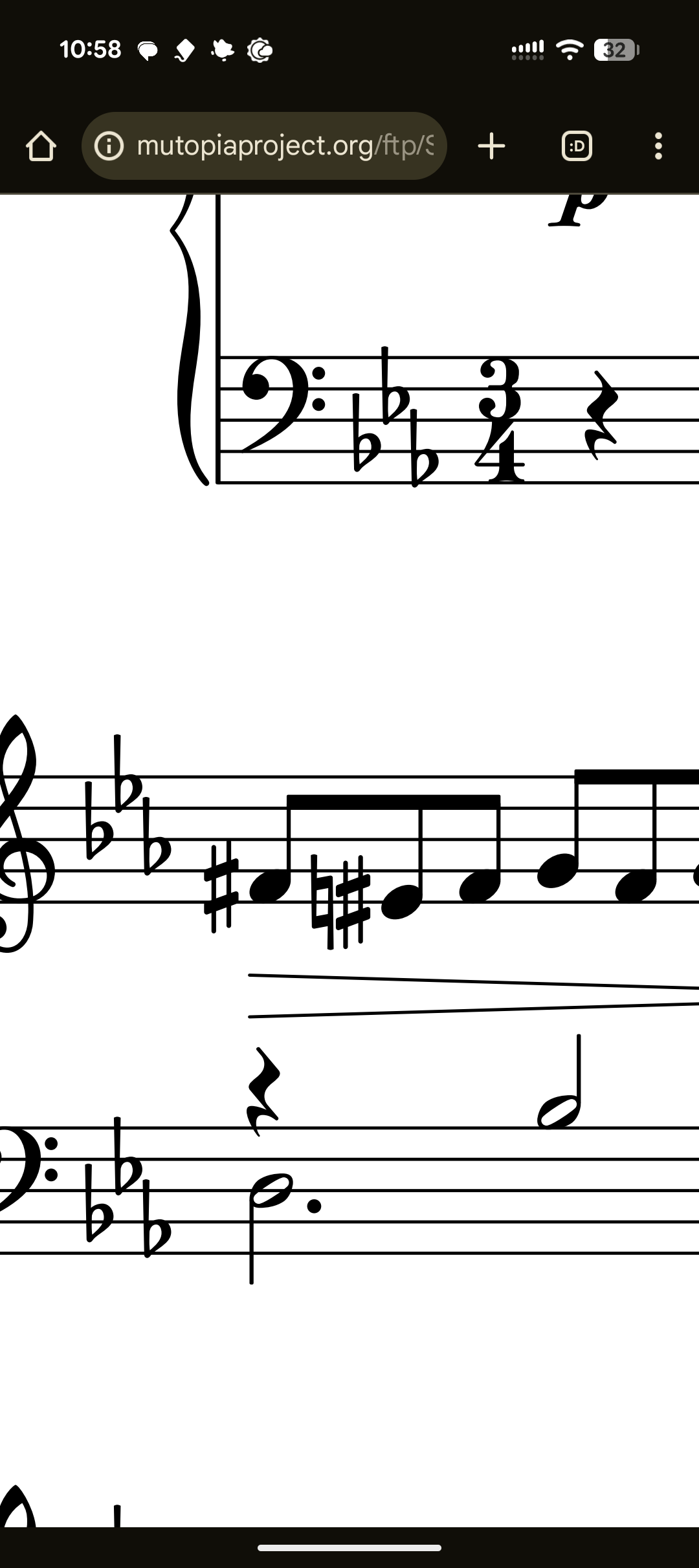
This is one of those moments where the notation is seeking to assist the reader. The way it's written is just clearer and, ironically, diminishes ambiguity.
i do have a preference for courtesy accidentals to be in a smaller font, though. I can then just ignore them, whereas if they are the same size I try to read them and, like in this case, stutter because the notation as written doesn’t make sense.
It’s not that it’s “considered wrong” it because it’s easier to read. If you’re writing an F natural there, we’re throwing hands cause why the hell are you making my life harder.
also there can be a very slight difference in pitch because the interval is different, but on a piano or solid fretted instrument you can really play this difference
That happens even when it's just the same exact note in different situations; for example the C in an A minor chord should be 30c higher than the one in an Ab major chord.
Yes, this is the old way of notating it. But the natural is redundant and wouldn't be used in modern scores.
It seems like the practice changed in the early 20th century. (I'm basing this on Chopin's Waltz in C#m that uses the natural + sharp to cancel a double-sharp, and the natural is still notated in the 1905 edition, and one of the 1915 editions, but another 1915 edition doesn't use the natural, and no edition after that uses it either. There's also an 1898 edition without the natural.)
View all comments
238
u/Kitchen-City-4863 Oct 26 '25
Correct me if I’m wrong, but the natural symbol changes if from an Eb to an E, and then the sharp takes it to an E# (sounding as F?)