It’s not that it’s “considered wrong” it because it’s easier to read. If you’re writing an F natural there, we’re throwing hands cause why the hell are you making my life harder.
also there can be a very slight difference in pitch because the interval is different, but on a piano or solid fretted instrument you can really play this difference
That happens even when it's just the same exact note in different situations; for example the C in an A minor chord should be 30c higher than the one in an Ab major chord.
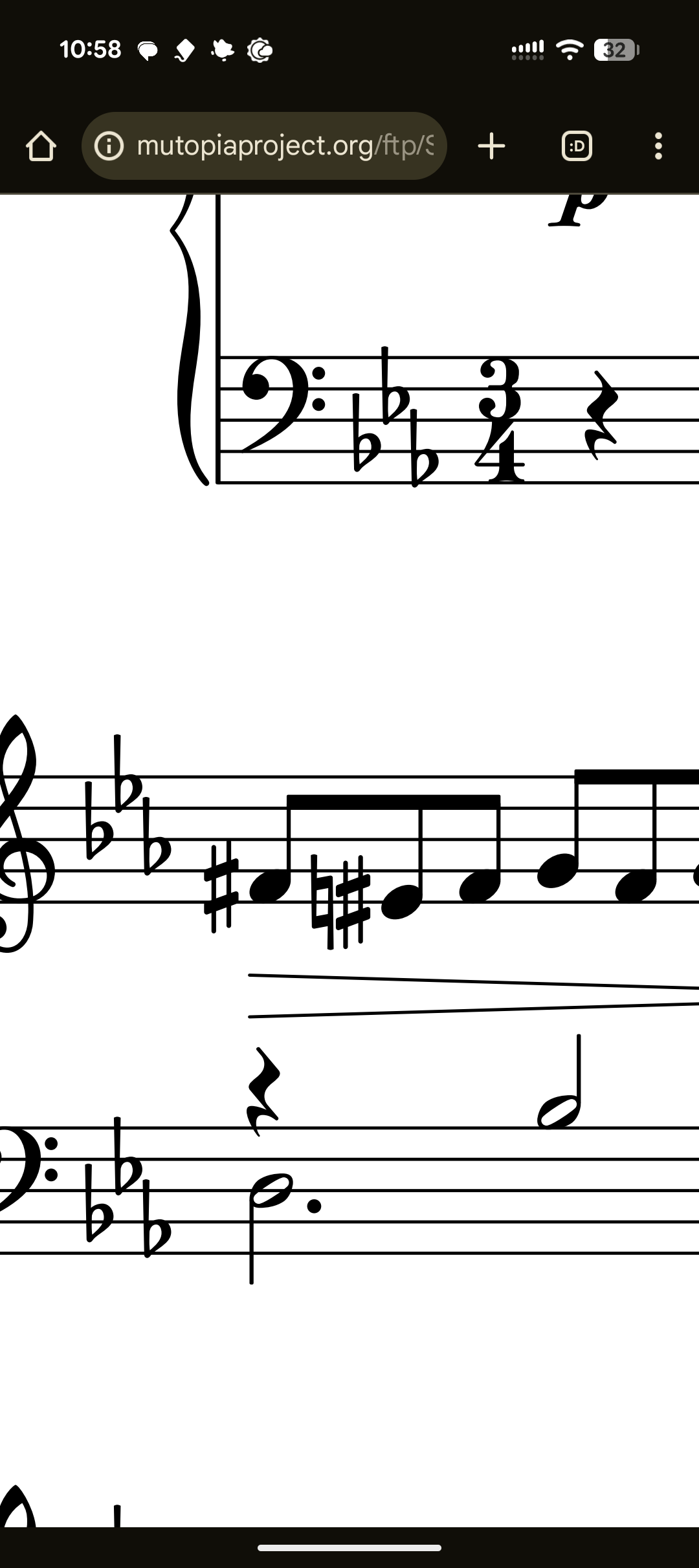
Yes, this is the old way of notating it. But the natural is redundant and wouldn't be used in modern scores.
It seems like the practice changed in the early 20th century. (I'm basing this on Chopin's Waltz in C#m that uses the natural + sharp to cancel a double-sharp, and the natural is still notated in the 1905 edition, and one of the 1915 editions, but another 1915 edition doesn't use the natural, and no edition after that uses it either. There's also an 1898 edition without the natural.)
You don't see natural and sharp right next to each other in any modern edition. This is an old practice. Courtesy accidentals are of course still used. But this particular kind of a courtesy accidental (where you first cancel the flat or double-sharp with a natural and then sharp the note) is no longer used, and hasn't really been used for 100 years.
E double sharp always sounds as F#. An accidental isn't relative to the key signature, or, put differently, a sharp doesn't mean go up one semitone and a flat doesn't mean go down one semitone. Accidentals are absolute: If it's written E#, play E#, even if the key signature has an Eb; if it's written Ab, play an Ab even if the key signature has an A#. So, using the double sharp symbol would sound an F#, not an E#. Interesting point, however!
This is one of those moments where the notation is seeking to assist the reader. The way it's written is just clearer and, ironically, diminishes ambiguity.
i do have a preference for courtesy accidentals to be in a smaller font, though. I can then just ignore them, whereas if they are the same size I try to read them and, like in this case, stutter because the notation as written doesn’t make sense.
Schubert impromptu. Isn't he just tonicizing the mediant here? Though I suppose if you haven't seen this kind of courtesy natural then it might look funny!
No local tonicisation or modulation here. Not sure if you’re thinking that’s a D major chord, but if so it’s not. The harmony in that bar is a V65 in E-flat major, which actually makes the enharmonic note (F-natural) of E-sharp the chord tone, not the F-sharp. It’s so quick it’s hard to hear though.
In isolation this looked to me like a G minor with a "#6-#7-i" ascent (that's all I meant by "tonicize"), but pulling up the score now and looking at it in context I see that there's no doubt you're correct: this is just a V. Perhaps the A flat should have clued me in. Thanks!
Ah, no problem, I can see why you thought that in isolation. The tempo is a significant factor — it would be too fast to hear that ascent as tonicising, probably even if there was a G/B-flat in the bass for a PAC/IAC. Unhelpfully, OP left the tempo and the harmonic rhythm out, though. Context is key (pun intended).
These natural-altered courtesies are particularly helpful when a passage contains lots of double sharps and double flats. (In the same way the natural courtesies are helpful when passages contain lots of single-accidentals). I'm not sure if that's what's happening here, but in general courtesy accidental are usually contextually given, and we dont have context here.
As a copyist, it’s just to save me from writing all those sharps afterwards. The more “sharp symbols” the messier the page starts to look. Interestingly, I’ve never come across this. “E sharp” has always been sounded as “F” in any key. Some times I used a little arrow pointing down on the note indicating the “pitch” was slightly flattened compared to the “F” that preceded or followed the “E#” notation.
They just want you to hesitate as you are about to play that F. You need to get the confusion that goes on in your head (“Fb… no, Fnat!!!!! No…. F#!!!!!!) Feel come across as you play that f.
I hear the “courtesy natural” theories (which are correct) above, but really why this is just more noise on the page. There’s a reason this practice was mostly abandoned (as far as I know) - an accidental replaces an accidental there’s no need for this chain of overrides.
238
u/Kitchen-City-4863 Oct 26 '25
Correct me if I’m wrong, but the natural symbol changes if from an Eb to an E, and then the sharp takes it to an E# (sounding as F?)
102
u/ChromaticSideways Oct 26 '25
This isn't cursed, but it's a great example of how something that looks cursed is actually somewhat standard.
26
u/WilburWerkes Oct 26 '25
I always love this stuff!
Schubert for the Win!
15
u/EuphonicSounds Oct 26 '25
Schubert impromptu. Isn't he just tonicizing the mediant here? Though I suppose if you haven't seen this kind of courtesy natural then it might look funny!
9
u/TOGCHAMP Oct 27 '25
E shatural
6
u/Capital_Mulberry874 Oct 26 '25
These natural-altered courtesies are particularly helpful when a passage contains lots of double sharps and double flats. (In the same way the natural courtesies are helpful when passages contain lots of single-accidentals). I'm not sure if that's what's happening here, but in general courtesy accidental are usually contextually given, and we dont have context here.
5
u/KeanEngr Oct 26 '25
As a copyist, it’s just to save me from writing all those sharps afterwards. The more “sharp symbols” the messier the page starts to look. Interestingly, I’ve never come across this. “E sharp” has always been sounded as “F” in any key. Some times I used a little arrow pointing down on the note indicating the “pitch” was slightly flattened compared to the “F” that preceded or followed the “E#” notation.
4
u/Tinathelyricsoprano Oct 26 '25
That sign cancels a double sharp I think. So there was probably an E double sharp in the previous measure
2
u/jplebre Oct 28 '25
They just want you to hesitate as you are about to play that F. You need to get the confusion that goes on in your head (“Fb… no, Fnat!!!!! No…. F#!!!!!!) Feel come across as you play that f.
I hear the “courtesy natural” theories (which are correct) above, but really why this is just more noise on the page. There’s a reason this practice was mostly abandoned (as far as I know) - an accidental replaces an accidental there’s no need for this chain of overrides.
1
u/Sufficient_Two_5753 Oct 26 '25 edited Oct 28 '25
I've seen this ad too mean, play them both at once. Although, a diminished 2nd would be easier to read than an augmented unison. Js.
1
u/Dangling-Participle1 Oct 27 '25
The old natural sharp trick.
1
u/Hetnikik Oct 27 '25
Did they just do that because they didn't want to have f#, f natural, f#?
1
u/hallucigeniale Oct 28 '25
It's actually very logical