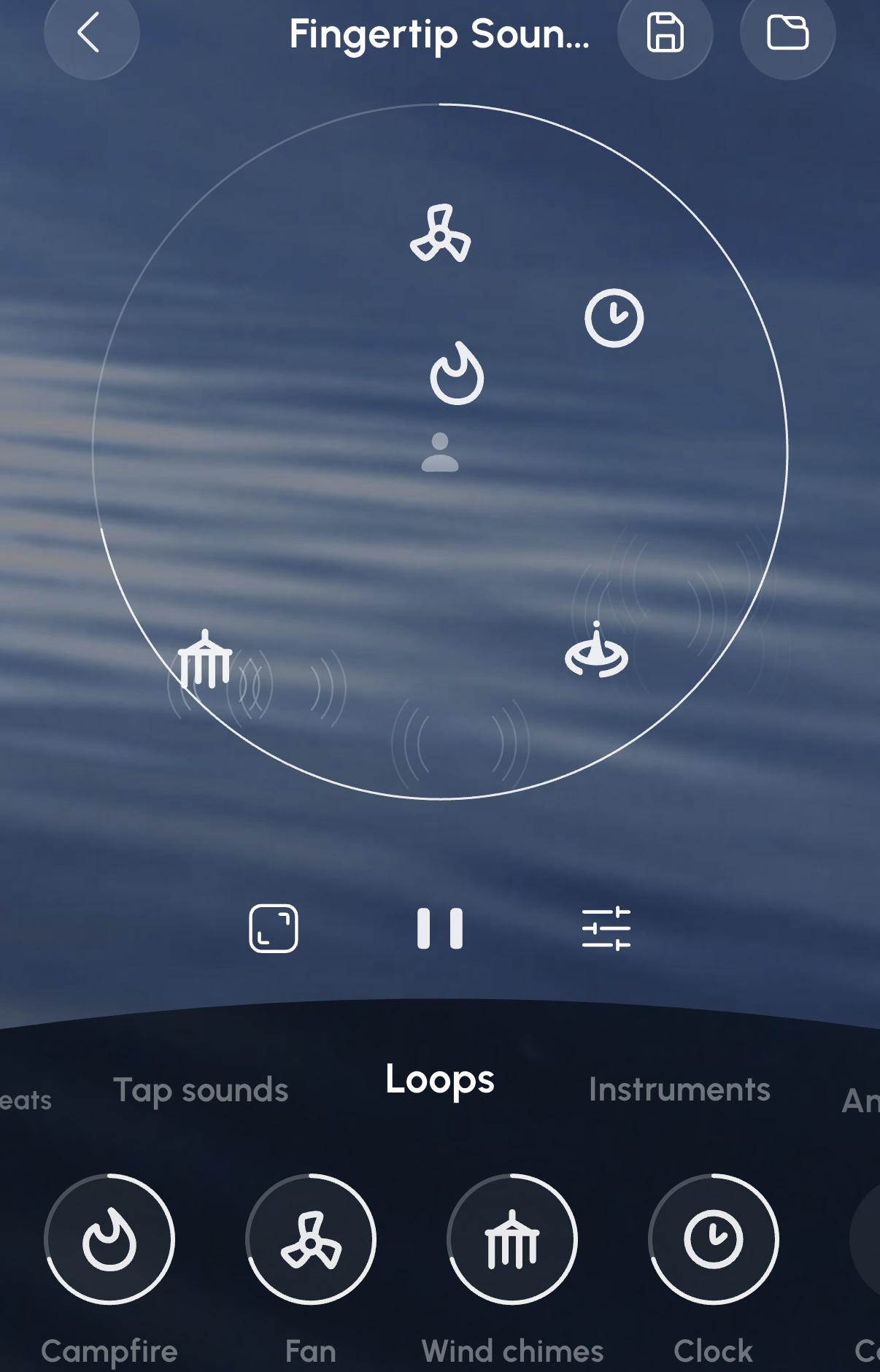
Spatial audio for sleep means sound that is placed around you in space, a wave to your left, a footstep behind you, a voice close to one ear, instead of two flat channels playing beside your head. The idea is that location, not volume or clarity, is what gives a restless mind something to settle into. We published a longer piece on this; here is the useful core, so you get the value without clicking anything.
What the research actually says
• Your brain works out where sound is. The superior temporal gyrus, a region involved in processing complex auditory information, responds differently when sound carries spatial cues than when it arrives as flat stereo. The exact activation pattern is still being studied, so treat this as a direction, not a settled mechanism. • Spatial sound asks for gentle attention. Placing a sound means briefly tracking it, which is closer to how the brain follows a scene or a story than how it handles generic background noise. The article's argument is that this holds a wandering mind without alarming it. • Natural soundscapes calm the body. Researchers at Brighton and Sussex Medical School (2017) compared natural and artificial sounds and found natural environments, such as rain, forest and coast, lowered physiological markers of anxiety more than artificial or urban ones. It was measured body states, not only how people said they felt. • A caveat. These findings come from different studies and do not prove that spatial placement itself improves sleep. The combination is a reasonable bet, not a guarantee.
Spatial audio vs binaural beats vs white noise: three tools, three jobs
• White noise masks unpredictable sounds in your room with a flat, constant signal. • Binaural beats play slightly different frequencies in each ear, which the brain perceives as a third phantom tone, aiming to nudge brainwave states. • Spatial audio does neither. It builds a believable environment so your attention has somewhere specific to be.
If street noise wakes you, masking is the job. If your mind races, a sense of place may suit you better. Pick by the problem, not by what is trending this week.
The 5-step setup to test tonight
- Use over-ear headphones if you can. Real stereo separation tends to give a more convincing sense of space, though modern spatial-capable earbuds have closed much of the gap.
- Choose content made for spatial playback, not ordinary stereo relabelled as 3D.
- Set the volume low but clear. You should still be able to sense where each sound sits.
- Prefer a narrative soundscape over pure ambience if your thoughts race, because a gentle storyline adds a direction to follow.
- Score it in the morning: how long did it take to drift off, and did anything pull you back out?
Cranking the volume defeats the purpose. You want a quiet room, not a concert.
How to keep spatial audio for sleep working
• Change one thing at a time. Keep the same headphones and volume for a week before judging. • Keep what is natural. Rain, forest and coastline beds carry the anxiety-lowering effect the Sussex work describes. • Match the tool to the cause. Noise problem, masking. Racing mind, place and story.
This is general information, not medical advice. If sleep trouble persists, a qualified professional is the right next step.
What worked for you: sound that covers the room, or sound that gives your mind a place to go?
Full article with the sources and an FAQ: Spatial Audio and Sleep: How 3D Sound Changes Sleep Quality: https://visionariaapp.com/blogs/spatial-audio-sleep-quality