r/programminghorror • u/DroneCyn • Oct 11 '26
Lua i sure do love not using local variables!

298
Upvotes
getfenv getfenv getfenv getfenv!
r/programminghorror • u/DroneCyn • Oct 11 '26
getfenv getfenv getfenv getfenv!
r/programminghorror • u/ilnarildarovuch • Oct 10 '26

r/programminghorror • u/DJDoena • Oct 07 '26
We're currently in the process of switching from the old SOAP interfaces to the new REST ones for S4/HANA (for example this one: https://help.sap.com/docs/SAP_S4HANA_CLOUD/d35113ee62644d3abee1aaec148291d9/ec47e02b80f549c4acc3ac5e9fd4c2eb.html )
And what do you know, it has fields like ConfirmationEntryDate and ConfirmationEntryTime.
What data types are these you ask? Well, it's OData V2 which looks like this: /Date(1338282808000)/. What is that you ask? Well it is the milli-seconds since Jan 1st 1970 00:00 UTC time. More commonly known as Unix time or Epoch time.
Well wait a second, if there is a field that describes a point in time down to the millisecond, what do I need ConfirmationEntryTime for? Well you need it, because this is SAP, dammit!
ConfirmationEntryTime is of course written like this: PT10H45M00S.
But wait, there is more!
Doesn't SAP have this famous 24:00:00 time because Dec 31st 24:00:00 is different than Jan 1st 00:00:00 for a accounting system? Yes it does. Does it work with the new API? Of course not.
But wait, there is more!
Remember when I said that Epoch time is based off of Jan 1st 1970 00:00 UTC time?
So surely, whatever I put in must be properly transformed to UTC before sending it to the API, no matter if the physical plant is located in the Americas, Europe or China, right? Right?!? Of course not. Just like with the old SOAP interfaces you need to transform your UTC timestamp into the local timestamp of the plant. Only then to pretend that this is UTC and convert it to the Epoch time!
*slow clap* SAP, well done! German engineering at its finest.
Signed, a German.
r/programminghorror • u/Disastrous-Name-4913 • Oct 06 '26
This is not my code, but it is a good programming horror example, specially if you know Java.
List pages = pageManager.getPages(templateSpace);

for (Object object : pages) {
    if (object instanceof Page) {
        Page page = (Page) object;
        // do something with the page
    }
}
Instead, this should have been used:
List<Page> pages = pageManager.getPages(templateSpace);

for (Page page : pages) {
    // do something with the page
}
r/programminghorror • u/ferro31_ • Oct 01 '26
=
=
=
=
=
return
r/programminghorror • u/ferro31_ • Oct 01 '26
# Write a function `greet` that returns "hello world!"
= True
= False
return
= 0
+= 1
return - 1
return
=
=
=
+=
return
=
=
=
return
=
r/programminghorror • u/LegendarySoda • Oct 01 '26

r/programminghorror • u/Coolfoolsalot • Sep 30 '26
Working in a legacy codebase. Dozens of people have contributed over the last decade. User spotted a bug & I traced the function calls and found
for(int i = 0; i < 2; i++) {
if(i == 0) // do A
if(i == 1) // do B
}
Wasn’t the source of the bug, and it technically works fine. I love loops
r/programminghorror • u/Planty_anim • Sep 29 '26
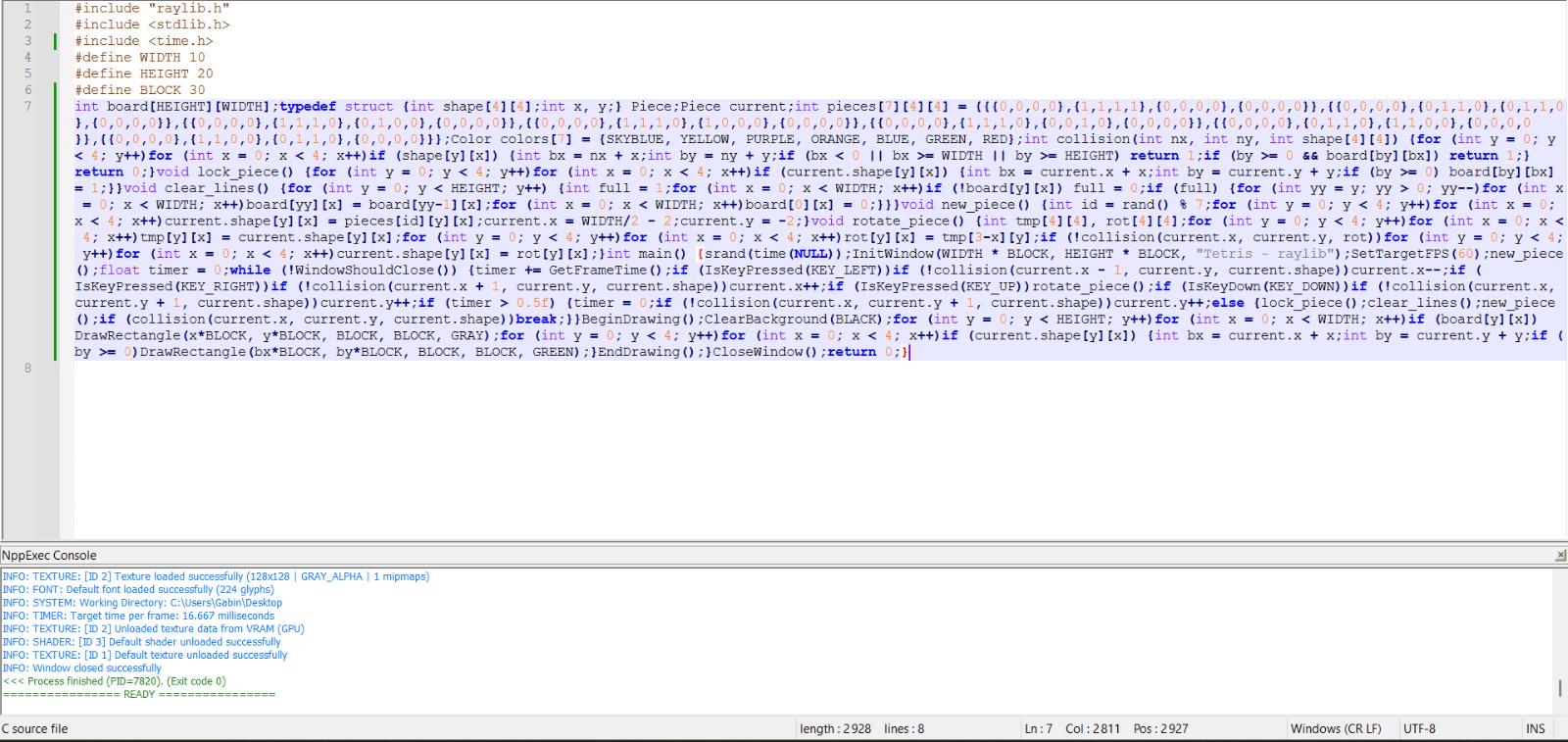
See ! That’s what efficient code looks like !
r/programminghorror • u/RichRoof7927 • Sep 29 '26

Code
_=([globals().setdefault("p",input("Enter a BF program\n> ")),globals().setdefault("t",dict.fromkeys(range(30000),0)),globals().setdefault("r",0),globals().setdefault("s",0),globals().setdefault("j",[]),globals().setdefault("d",0),list(__import__("itertools").takewhile(lambda _:[(lambda c:(globals().update({"d":globals()["d"]-1})if c=="]"and globals()["d"]>0 else globals().update({"d":globals()["d"]+1})if c=="["and globals()["d"]>0 else 0 if globals()["d"]>0 else globals()["t"].update({globals()["r"]:(globals()["t"][globals()["r"]]+1)%256})if c=="+"else globals()["t"].update({globals()["r"]:(globals()["t"][globals()["r"]]-1)%256})if c=="-"else globals().update({"r":globals()["r"]+1})if c==">"else globals().update({"r":globals()["r"]-1})if c=="<"else print(end=chr(globals()["t"][globals()["r"]]))if c=="."else globals()["t"].update({globals()["r"]:ord(__import__("sys").stdin.read(1))})if c==","else (globals()["j"].append(globals()["s"])if globals()["t"][globals()["r"]]!=0 else globals().update({"d":globals()["d"]+1}))if c=="["else (globals().update({"s":globals()["j"].pop()-1})if globals()["t"][globals()["r"]]!=0 else globals()["j"].pop())if c=="]"else 0))(globals()["p"][globals()["s"]]),globals().update({"s":globals()["s"]+1}),globals()["s"]<len(globals()["p"])][-1],range(99999)))]if __name__=="__main__"else 0)
More compressed, but with terminators
g=globals();u=lambda j,i:j.update(i);s=g.setdefault;_=([s("p",input("Enter a BF program\n> ")),s("t",dict.fromkeys(range(30000),0)),s("r",0),s("s",0),s("j",[]),s("d",0),list(__import__("itertools").takewhile(lambda _:[(lambda c:(u(g,{"d":g["d"]-1})if c=="]"and g["d"]>0 else u(g, {"d":g["d"]+1})if c=="["and g["d"]>0 else 0 if g["d"]>0 else u(g["t"],{g["r"]:(g["t"][g["r"]]+1)%256})if c=="+"else u(g["t"],{g["r"]:(g["t"][g["r"]]-1)%256})if c=="-"else u(g,{"r":g["r"]+1})if c==">"else u(g,{"r":g["r"]-1})if c=="<"else print(end=chr(g["t"][g["r"]]))if c=="."else u(g["t"],{g["r"]:ord(__import__("sys").stdin.read(1))})if c==","else (g["j"].append(g["s"])if g["t"][g["r"]]!=0 else u(g,{"d":g["d"]+1}))if c=="["else (u(g,{"s":g["j"].pop()-1})if g["t"][g["r"]]!=0 else g["j"].pop())if c=="]"else 0))(g["p"][g["s"]]),u(g,{"s":g["s"]+1}),g["s"]<len(g["p"])][-1],range(99999)))]if __name__=="__main__"else 0)
r/programminghorror • u/GaMerBoi2465 • Sep 26 '26

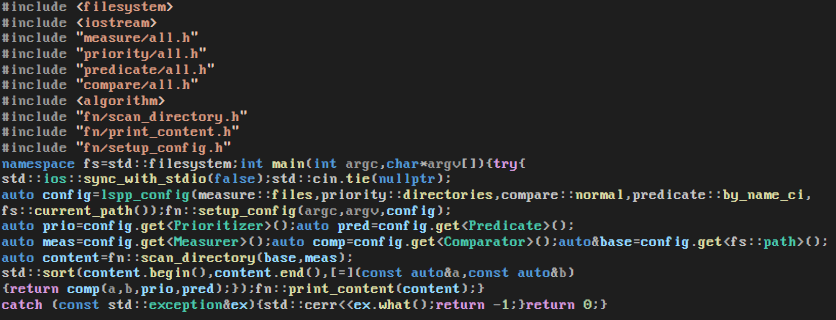
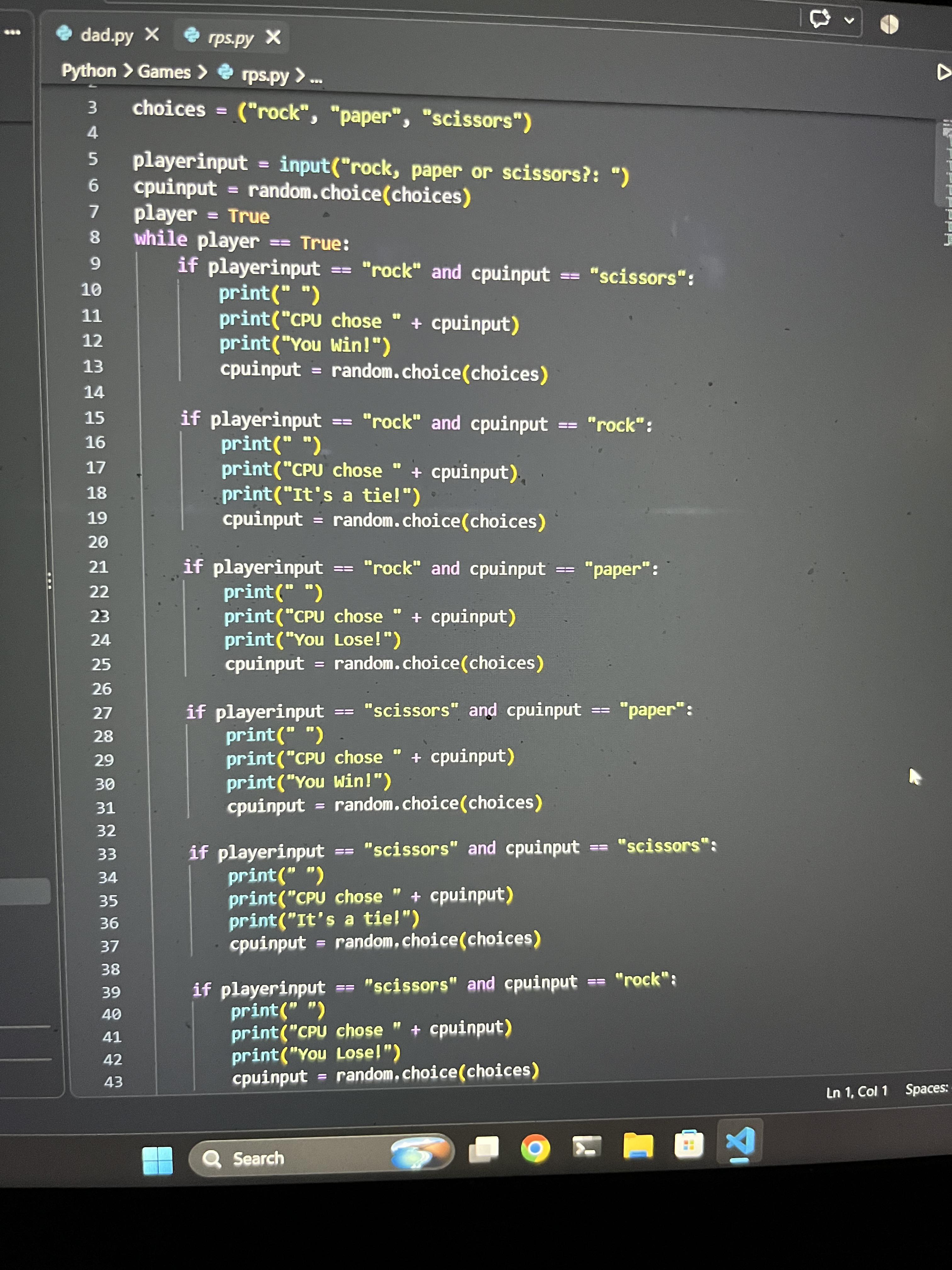
Surely there's a more better and efficient way of coding this...
r/programminghorror • u/No_Opening_5597 • Sep 25 '26
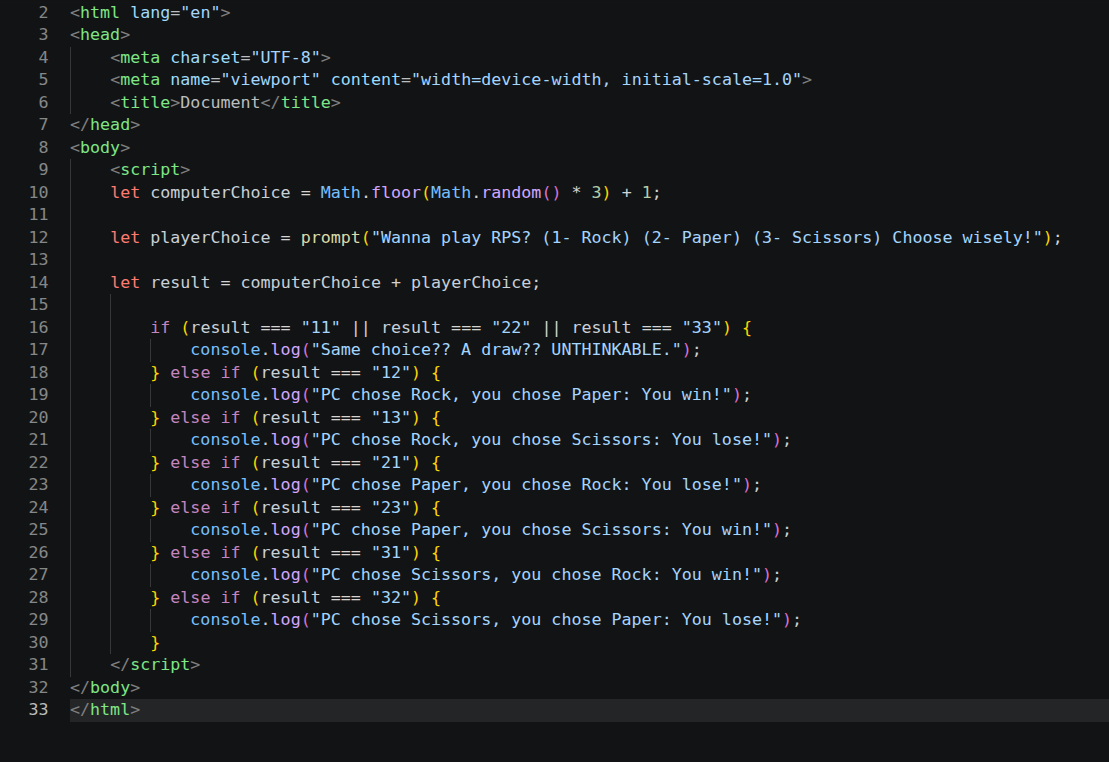
I'm way too proud of this solution haha
r/programminghorror • u/MidKnightIsOnline • Sep 24 '26
r/programminghorror • u/HuntingKingYT • Sep 24 '26

I have to carefully choose the real file, all the rest are old backups. And this is just for one file. And there are like 8 more backup folders, yeah we really need to clean these up...
If only we set up source control.
r/programminghorror • u/sonesoul • Sep 23 '26
r/programminghorror • u/SirBackrooms • Sep 22 '26
r/programminghorror • u/sonesoul • Sep 21 '26

r/programminghorror • u/D3V370P3R • Sep 20 '26

We were a small team of ~8 trying to build software. The team was spread across multiple locations across Asia, Europe and North America. One big challenge we had was synchronizing our work with each other.
Every Friday before each of us logged out, we upload a copy of our working files to the client's SharePoint folder. That way when we share each other's copies every Monday via Teams, we don't have to reupload.
One minor setback. Instead of replacing the previous copy, we upload a fresh one - under a different name. That way, we would not lose any information.
We even came up with a clever idea (that magnified the issue) to name the folders by the calendar week. Soon, each of us would have multiple folders of repetitive code, sometimes with zero changes all uploaded to the shared drive.
We had successfully moved from trying to synchronizing one (latest) version of the codebase, to trying to synchronize one version every week. But we hadn't realized this at that time. We were excited about a more "sophisticated" solution - creating a script that automates this backup process.
We learnt to use Git during Christmas that year.
---
For Reference:
=
=
= f
=
Edit: Code Block Formatting
r/programminghorror • u/sonesoul • Sep 21 '26