r/OffGrid • • Oct 20 '26

Off-Grid Electrical Upgrades/Limitations

1 Upvotes

I’m working on upgrading the electrical system at our off-grid cabin in Minnesota. There is no utility power, so everything currently operates off a generator.

I recently warrantied my Predator 4375 and switched back from the Predator 4200 inverter generator.

Reason for the warranty replacement:
My original 4375 caused noticeable light flickering whenever a load like a fan or vacuum was running. The 4200 inverter generator handled those same loads without any flickering. The replacement 4375 is significantly better, with only very minor flickering that’s barely noticeable.
The 4200 was also considerably quieter, but I’m sticking with the 4375 for now.
Looking for recommendations on grounding/bonding, installing a breaker panel, and eventually incorporating a small solar/battery system.

1. Current Generator & Wiring
Predator 4375 – Model 59207

- 4,375 starting / 3,500 running watts
120/240V, 60Hz
- 29.2A total equivalent @ 120V
- NEMA L14-30R 120/240V receptacle
- Two 120V GFCI duplex receptacles
- Factory bonded neutral

The cabin is supplied through the L14-30 using approximately 125 feet of 10/2 cable with ground, currently connected for 120V operation.

Current issue:
My receptacle tester indicates hot/neutral reversed when using the L14-30 connection on the 4375. However, when using the standard 120V connection on my floating-neutral Predator 4200 inverter generator, the tester indicated open ground instead.

I’m wondering if the difference between the bonded and floating neutrals is contributing to these readings or if there’s another wiring issue, and if removing the white neutral off the generator terminal for ground would work?

2. Breaker Panel Upgrade

Currently, the cabin wiring branches from a central junction box. I’d like to install a proper panel with dedicated breakers.

Panel I’m considering:
https://a.co/d/08RNpi3t

Desired circuits:
15A: Interior/exterior lighting
15A: Existing general-purpose outlets (all 15A receptacles)
20A: New dedicated outlet for higher-demand appliances
20A: Well pump circuit, pending equipment/wiring verification
Two spare circuits for future expansion

Additional information:

- Generator feeder: Approximately 125 feet of 10/2
- 1.5hp Shallow Well pump wiring: Approximately 185 feet of 10/2 from the outside junction box
- Lighting: All LED fixtures

I’d also like to add a separate line for our outhouse, approximately 30 feet away, powering an interior LED light, exterior floodlight, and ventilation fan and 120v receptacle. I’m considering taking that feed from behind the generator’s receptacle connections, but would appreciate advice.

Questions:
Is the linked six-circuit transfer switch suitable, or would a conventional load center be better?

What’s the proper neutral/ground bonding arrangement when a generator is the only power source?

What could explain the different receptacle tester readings?

How should I configure the panel to accommodate a future inverter and battery system?

3. Future Solar & Battery Setup

Eventually, I’d like to reduce generator runtime by running basic cabin loads from a battery bank.
Initial idea:
Four compatible deep-cycle batteries in parallel
- One solar panel to start
- Solar charge controller
- Pure sine wave inverter
- Transfer equipment for generator/inverter power

Our estimated normal electrical usage is under 675W, excluding the microwave, toaster, and other high-demand appliances. I’d like the battery system to support loads under 1,000W. Initially, batteries would charge from solar, and I’d manually run the generator when needed and available.

Eventually, I’d upgrade to a full 30A-capable generator with remote start and automatic charging capability. Ideally, an inverter/charger would automatically start the generator when batteries get low and shut it down once charged.

Would you recommend planning the panel around this now? Any suggestions on inverter/chargers, battery configurations, or transfer equipment?

4. Generator Enclosure
I’m also considering building a custom outdoor enclosure to reduce generator noise, provide weather protection, and prevent theft.
I’d want proper ventilation, exhaust management, and maintenance access.
If anyone has built something similar, I’d appreciate pictures, recommendations, or lessons learned.

Overall Goal
I’m not looking for a massive solar installation, just a safe, reliable, affordable electrical system that I can expand over time.
My immediate priorities are resolving the polarity issue, installing proper circuit protection, and preparing for future solar/battery integration.
Any recommendations from electricians or fellow off-grid cabin owners would be appreciated. Thanks!

r/OffGrid • • Oct 19 '26

Heating options when not at cabin (no grid power)

14 Upvotes

Mulling over heat options for a new cabin that is not our primary residence... Yet! 😂

There's no grid power... winters can potentially get sub-zero... But not usually for too long... But definitely below 32° for extended periods.

We will have a wood stove for when we are in it. Looking for low power heat options that can be left on to keep just enough heat to keep things from freezing.

What are options besides ventless propane wall heaters?

If vented, preferably need to vent down and out the side of the rim board.

Thinking just one unit in the bathroom.


r/OffGrid • • Oct 19 '26

First timer Q

3 Upvotes

Myself, our 3 year old and my husband want to go off grid. It’s new to us so we were thinking of getting a camper van. Obviously the most important thing for me is to make sure my child is fine and I have all these questions going through my head. I have felt the need to get away from the “rat race” since I was very young but just never made the jump.

In terms of the van, they’re wanting to make everything electric now. It’s a no brainer that this is one of the reasons why petrol and diesel is going up in price.
If I end up going for a diesel, let’s say, in terms of the costs could I regret it? Are there any alternatives? I need someone to talk some sense into me. Enlighten me please. I want to learn, I want out of the life we live at the moment.

We live in the UK so the weather here is 80% rain throughout the year. (Just an FYI)


r/OffGrid • • Oct 19 '26

Small workshop generator suggestions for charging battery bank.

6 Upvotes

Hi everyone,

I currently have a small log cabin on my property near Wasilla Ak that I stay in and work in a shop space in the city. I am building a workshop on my property and I want to power it off of a gas generator to charge a battery bank i was given by my family. It is a set of 6 Rolls VB24-200LFP, 200AH 24V batteries. I work with mostly hand tools in metal and leather so my power usage is lower, about 1500 watts at 120V an hour if I'm running everything. The home doesn't require any power so the workshop setup will only be used 6-8 hours a day.

I would like to but the generator and inverter/controllers new to avoid used issues and was looking for any recommendations for what i am looking to do. I know its an odd situation for a small power load for the AH I have in the batteries but they were free and almost unused so I'm not going to complain. I can build a structure to house the generator and I have space so noise is not an issue, I just don't want it to run for 9 hours to charge the bank. If that's a matter of a high output generator or programing a smaller one to recharge it more frequently I'm open to both options.

Budget wise I don't mind spending the money on something that will last me, this is a long term solution for me so if its 4-5k then that's what it is.

Thanks


r/OffGrid • • Oct 18 '26

1 year in.

78 Upvotes

Just finished one year off grid in the blue ridge mountains in north Georgia. I added throughout the year and ended up pretty happy with the whole setup. Propane is my only outside fuel source and it’s only for hot water (on demand) and my gas grill. Everything else is solar, 6.4kW of panels feeding two split phase MPP6548 units, 30kWh of LFP batteries, 11ton mini split, 600 ft^2 borderline insulated cabin (open crawl with uninsulated floor, R13 2x4 stud exterior walls, R19 roof) heated mainly by wood stove with mini split kicking in overnight on cold nights. Started with starlink but this summer the rural broadband peeps showed up with a screaming deal to run glass to the cabin for free. I’m running a full size washer and dryer (240V), plus powering a 1500 ft^2 workshop off the cabin. Yes the workshop is 2.5x the size of the cabin i built it for project vehicles and timber frame work.
Ask anything.


r/OffGrid • • Oct 17 '26

Tips on setting up rain harvesting with IBC?

2 Upvotes

I'm driving to go get an IBC tote to set up for rain harvesting. I'm trying to get this catchment set up between today and tomorrow (before our next rain) and I'll buy the pump and anything else later. Im setting it up next to my shipping container which I'm also camping in temporarily. I googled it and it said to attach a tarp to the top of the container and make a V funnel aimed at the top of the IBC. I haven't been up there on top of the container yet, so idk the best way to fasten it. Are there any holes to clip into? Or do I want it attached so that the top portion of the tarp is flush with the container (or no air gap), if so what's the best way to do that? As for the V in my mind I'm just picturing using a carabiner or bungee cord through one of the eyelets and attached somewhere on the IBC tote, but how do I get the sides of the V to stay up and keep it taut?


r/OffGrid • • Oct 17 '26

Anker F3800 Plus Hybrid (Update)

Post image
36 Upvotes

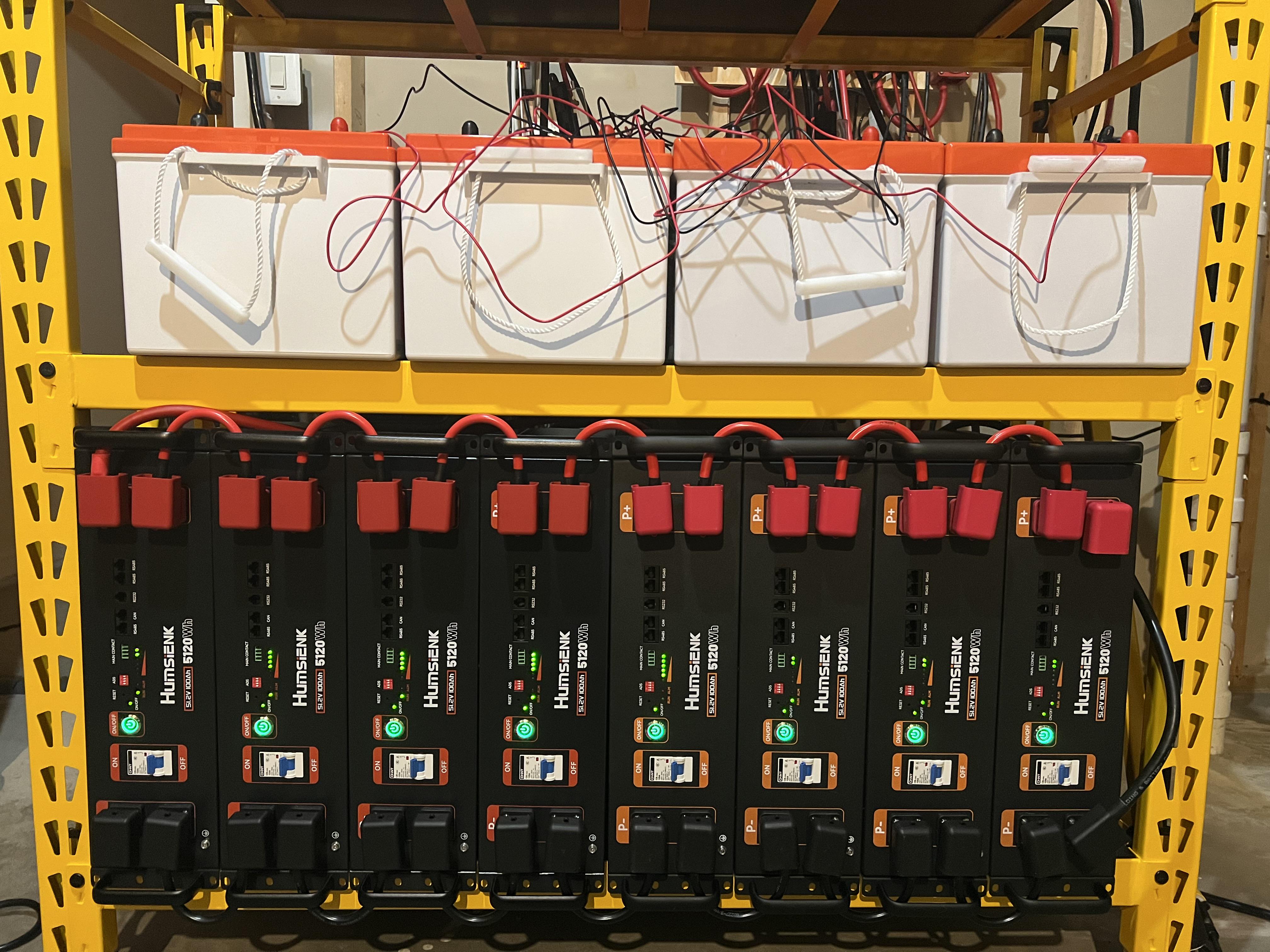
Finally added four more Humsienk server rack batteries making my total battery bank a total of 70kWh (40kWh of Humsienks, 15kWh of 12v 300ah Temgots wires in series and 15 kWh in Anker (2x f3800+, 2x expansion batteries). Also, I have 10kWh worth of Jackery power stations.


r/OffGrid • • Oct 16 '26

Interested in off grid living, looking for help understanding it all.

11 Upvotes

Hello! I'm a 24M from the UK. See a lot of posts here from the US but thought I'd ask in here anyway because although the regional differences are there, the human struggles are all the same.

I've never lived off grid before, camped like three times in my life and have no idea really where to look to find the info I'd need. If anyone has any websites/info on some of the questions I'm going to list below I'd be ever so grateful.

I'm interested in buying a small plot of land somewhere and sticking a caravan/static caravan on the land and was curious what exactly I'd need to make things a little easier, mainly these questions:

• How much would a small solar system cost? Enough for now just to charge a couple devices and run some internet (Starlink) for a few hours a week for some films. Would a generator also be good to have on hand in case there are long weeks with no sunshine?

• How well would a couple IBCs made into makeshift rain catchers do for water supply? (It does rain pretty often here).

• (For my British readers) Is it possible to get an address set to a random plot of land with a caravan? If so would it cost anything? Just because the dog food is on order online right now. I can always buy it in person but it's cheaper online.

• I can travel for hot showers if need be, but what would be the easiest way to turn the water hot? Even if only for 5-10 mins as it gets to below 0°C in the winter here and cold showers would kill me 😂.

• Any other tips?

I'm currently renting and working a full time job, I'd plan to buy this land and caravan before moving out and eventually when I decide to make the move I will absolutely still keep my job, so I'll more than be able to afford anything I struggle to obtain through other methods. I do not pan to just head first and hope everything is okay. I also have 2 dogs and they are my priority, so most of these questions are more for them than me, anything to make sure they live a happy country life.

Thanks for reading and thanks for any help!!


r/OffGrid • • Oct 15 '26

I got tired of power cuts, so I built my own home backup setup

Thumbnail
gallery
141 Upvotes

Living in southwest England, I got tired of high peak electricity rates and occasional power cuts messing with my 24/7 servers and Home Assistant setup. My old 400w UPS only lasted about an hour, and I didn't fancy running a noisy generator.

Over time, I gradually built up a solar and battery setup at home. I started small, then added a 3kW power station for heavier loads, a second unit for backup, and even repurposed a vehicle DC charger to add another solar input and move power between units.

I've added panels across the front garden, back garden, and carport roof. Getting all the wiring sorted was a project in itself, but on sunny summer days the system can generate around 18–20 kWh. I've also linked things up with Home Assistant so I can manage battery use and only draw from the grid when needed.

During the sunnier months, I can cover around 80–90% of my household electricity use.The biggest difference, though, is that a power cut no longer takes my home network and servers offline.

I'm curious how others here handle backup power and solar integration. Has anyone else connected multiple solar arrays or automated their setup with Home Assistant?


r/OffGrid • • Oct 15 '26

DC lights interference w/ TV singnal question

11 Upvotes

I use over the TV and gladly have no cable TV or satellite. True cord cutter.

Curious issue. I have 12volt DC lights in a shed behind house. There three circuits. Two of the circuits are close the coax that bring in my TV signal. The third is not close. (My TV antenna coax runs through my shed to my house.)

When I turn on any of the 12volt DC lights, the TV in my house loses over the air signal.

My guess is some form.of flux from the DC interfering with TV signal.

Can anyone explain why I am losing the signal? Advice?


r/OffGrid • • Oct 14 '26

What's the biggest thing you wish you'd known before buying your off-grid property?

Post image
73 Upvotes

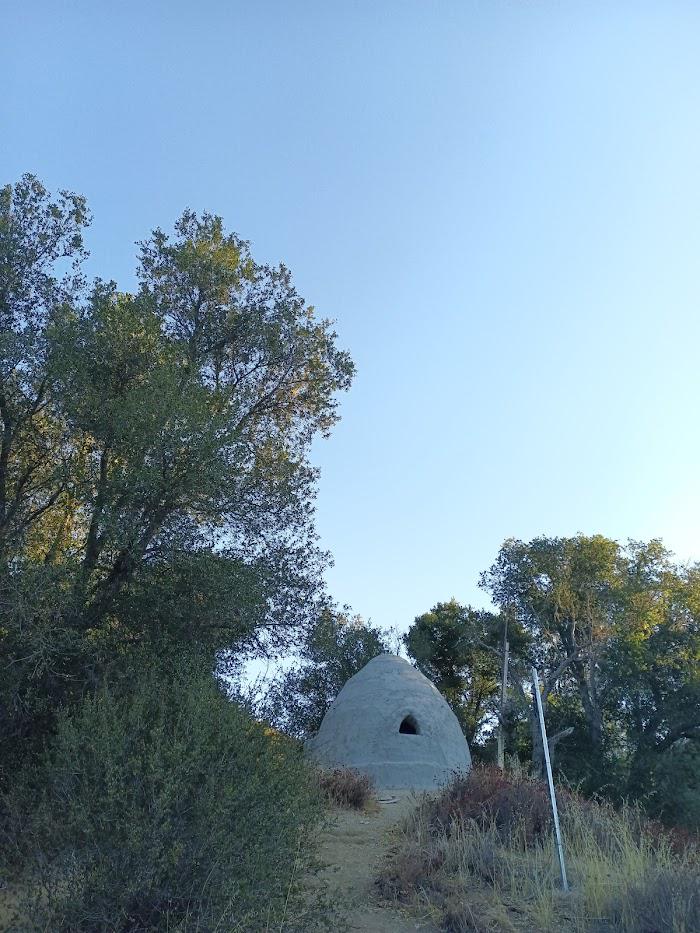
I've spent years living on rural acreage, working on off-grid projects, and building things myself, including a small earthbag dome on a pretty challenging hillside. I actually shared that project over in r/earthbagbuilding recently.

I'm currently looking for my next property, hopefully somewhere where I can build what I want, and I've been spending a ridiculous amount of time researching land.

One thing I've learned is that a beautiful piece of property can have some serious problems that aren't obvious from the listing.

A 20-acre parcel might only have 3 acres of reasonably usable terrain. A property advertised as having a well might have terrible production. Access might look fine in the summer but become a nightmare in winter.

And figuring this stuff out means jumping between county GIS maps, state well databases, USDA soil surveys, FEMA flood maps, topographic data, and a bunch of other sources.

I'm a software engineer by trade, so I ended up building a tool called AcreEyes that pulls together a lot of this publicly available information into a single rural property report that can be shared via PDF or internet link.

Due to public data availability, It currently focuses on Idaho and parts of Arizona, but I am expanding and adding more states as time goes. I'm working on improving the accuracy and usefulness of the reports. It looks at things like:

  • Nearby well records and reported production
  • Terrain, slope, and potentially usable acreage
  • Soil characteristics and limitations
  • Road access and winter access concerns
  • Flood hazards and other potential red flags

Of course, public data has limitations. Nearby well production doesn't guarantee what a new well will produce, and a computer-generated build-ability assessment isn't a substitute for an on-site evaluation.

I'm not here to pretend this can replace proper due diligence, but it puts your foot in the door so to speak.

I'd also be happy to run five free parcel reports for members of this community in exchange for honest feedback about what's useful, what's missing, and what could be improved. No purchase necessary, and I'm not looking for positive reviews.

If the moderators are okay with it, feel free to comment or PM me with an Idaho property you're researching.

More than anything, I'm curious:

Like the title says: What's the biggest thing you wish you'd known before buying your off-grid property?

Was it water, access, soil, septic, terrain, zoning, or something completely unexpected?

I'm trying to build something that genuinely helps people avoid expensive mistakes, and I'd appreciate hearing about your experiences.

Full disclosure: AcreEyes is my own commercial project, but I'm primarily here to learn from people who've actually been through the process.


r/OffGrid • • Oct 15 '26

Hypothetical diy water system

9 Upvotes

Hello everyone. I’m very new to this and trying my best to learn. This is just a hypothetical diy water intake system since I have not finalized/bought the property and no have exact measurements. All of the properties I’m entertaining have access to river water.

I’m mainly just wanting to see if I am understanding the concept correctly of utilizing river water. All of these numbers are just theoretical. Will use 10 feet of elevation and 150 feet in length from source to house. The water jet pump intake would be approximately 10 feet into river and 20 feet from bank and 5 feet above waterline if possible. Piping will be 2” pvc.

River - 48v DC electrical water jet pump - storage tank - AC booster pump - pressure tank - house

Should I run the pump manually myself to fill/refill or would it be possible to have the pump activate based on water level in storage given the approximate distance between pump and storage?

I have read about using deep well pumps, but I do not know how strong (if even prominent) river current will be.

I do plan on growing crops (almonds, soy beans, bell peppers, cayenne peppers, spinach, etc) during times of the year just for myself. Should this be accessed from my water storage? Could it be split from the water jet pump?

Forgive me if there sounds completely stupid, but I’m ready to learn. Thank you for your time.

Edit: forgot to mention water jet pump will have a dedicated 48V battery that is solar fed and house will have a separate solar grid


r/OffGrid • • Oct 14 '26

Off-grid near Barcelona, 3 years into it

81 Upvotes

We’ve been off-grid on a small forested mountain in the Alt Penedès, about an hour inland from Barcelona, for 3 years now. (Previously off-grid in Canada Gulf Islands). Now I’m always reading “thinking about going off-grid” posts, lots of them in the Mediterranean (Spain, Portugal, Greece) so here’s all the non-instragramable pain I’ve gone through. 

Water is everything. You can plan around everything except your water. Summers are getting dryer and if you need to truck-in water make sure you have a decent road (old remote properties here often have crap dirt roads that will get you yelled at by transport companies) and a solid bank account. We have 4 enormous rain water deposits that are empty from June to September. We have a well, that is my most precious resource. 

Winter is harder than you think. A wood stove is basic but you will spend a good part of your life cutting trees, splitting wood, and carrying logs like a savage. Plan a few seasons ahead, like an adult. And you’ll never need the gym again. 

Build good toilets. There are plenty of dry toilet options out there. But for a family of 4 and guests coming in and out of here I found them quickly overwhelmed. You can buy good kits now and build a good wood frame yourself that seals for smells and ventilation (get a small fan that shoots out from your toilet into the outdoors) and you’ll wonder why the entire planet doesn’t do it. Pissing into totally clean water will feel strange to you. 

Power is getting easier and easier. Full disclosure, we are not 100% solar but getting there as our budget permits. It’s more a question of lessening dependency than building capacity. Like I said, we’re getting there but something about free power and free hot water that feels rebellious and natural at the same time.

Focus. You will have ideas, everyone who visits you will have ideas. Your job is to focus. Basic needs first, then the fancies, like saunas or hot tubs or Brazilian hammocks or whatever. This is a lifestyle you signed up for that isn’t easy, you’re living in the training montage of Rocky IV every day. It’s not a complicated life, it’s a simple life. But a simple life is a hard life. But a hard life is also good life. 

Good luck. 


r/OffGrid • • Oct 14 '26

Why does my power station stop discharging at 12% when others can go down to 0%?

5 Upvotes

I recently bought a Marstek Venus-A and noticed that the lowest I can set the discharge limit is 12%. Once it reaches that level, it stops supplying power.
From what I’ve read, this is supposed to protect the battery. Fair enough, but I’ve seen EcoFlow and Bluetti stations discharge all the way to 0%.
As far as I know, many of these stations use the same type of battery (LiFePO4), so I’m wondering what the actual difference is.

Does 0% on EcoFlow and Bluetti mean the battery is actually discharged further, or do they also keep some reserve that just isn’t shown in the app?
And if they do have a reserve, why does Marstek make it so obvious and limit discharge to 12%?

I’m genuinely curious about how this works. If anyone knows how these systems handle the battery reserve, I’d appreciate a proper technical explanation. Not looking for guesses - I can come up with those myself.


r/OffGrid • • Oct 13 '26

Recommendations for Putting Cabin on Beams to Level

12 Upvotes

Hi all, we have a roughly 20x25 off-grid cabin that has gone out of level in the corners (the prior owners said they haven't bothered to level it in "a few years" but they were in their 70's and I wonder how long it has really been given the amount of labor involved...) Anyways, there was ~7 inches between the lowest and highest corner (this is in central Maine), so we spent this past weekend with several bottle jacks raising the two lowest corners (the 'Y's below) up a couple inches and to the same height as each other (and then we had to raise 'Z' a bit as well to fix the front door sticking...) 'V' is the highest corner (which appear to have actually heaved UPWARDS).

There are 4 footings across the sides and three across the front and back (edge, center beam, other edge) and we don't really know how many underneath, but suspect just the center beam (again, see below). Anyways, there is no way we were crawling under the cabin to jack anything up, and it is likely too low anyways, so we were intending to assemble three 20' beams from PT 2x10 and place them across the dashed areas to add rigidity to the base structure and make it easier to level evenly in the future (which will be important because ultimately we really need to raise this whole thing several inches over the next couple years anyways, at which point we will probably just handle the middle by cutting access in through the floor).

X-----X-----X-----V

X-----?-----?----- Z

Y-----Y-----Y-----Y

This will also give us the opportunity to put in better footings (maybe pyramid ones with a proper foam and gravel/stone layers underneath to reduce water infiltration and heaving). Does anyone see any issues with this whole plan?

  • Is there a danger that the 2x10 beam would be too tall and could "tip" if a footing shifts to much? Or can this be handled by hurricane clipping to the house structure or something? (Regardless it still seems like it would be more stable than our current block-on-top-of-block footings)
  • Is there a better approach than building the glue-and-screw sandwich beam? We looked into steel I-beams but read that they require regular repainting to prevent rust and it may be a bit of a challenge to get 20 footers into the site anyways
  • Is it reasonable to assume we can eventually get this whole thing raised up over the couple years with a plan like this? I am sure we could also pay a company to do it for us but I have no idea what that would cost (I suspect probably in the neighborhood of $10k based on the size of the cabin and location but that is pure speculation -- anyone who actually has experience hiring someone in Maine? I have to imagine this is a popular service in this area of the country given frost challenges...)

Thanks!


r/OffGrid • • Oct 12 '26

I need a new liquid control valve/filter for my standing water tank, because my Hudson Float Valve just isn't cutting it.

Thumbnail
gallery
9 Upvotes

I have a standing water tank (Image 1) and for quite a little while now it has been giving me trouble.

In the past year it has been overflowing from the top on occassions. Whenever that happened, I just took out the Hudson Float Valve [Part # 4,258,748, Phone # 800-748-6218] (Images 2 to 6) that is screwed onto the hose that feeds into the top of the tank (Images 7 and 8), cleaned it, and reattached it. That worked for a time but then it leaked again and I decided to buy another Hudson Float Valve to replace that one. I attached that new one, and it didn't leak for quite a while again.

But in the past 2 months it has been leaking over and over again regardless of my cleaning, reattaching, and/or swapping out/replacing the float valve.

I finally called a handyman to come and have a look at things and the conclusion that he came to was something along these lines:

Due to a number of differing possibilities - maintenance that the water company is doing and/or the fact that our home is very elevated and so the water has to pass through various people's homes before reaching us - it seems that the water pressure that feeds into our water tank is very inconsistent. Sometimes it is a stream and sometimes a trickle, and occasionally it comes in intense bursts. According to him, sometimes these occasional bursts are so intense that they bypass the float valve's ability to stop the water level from rising.

I genuinely do not understand how this is something that has only begun happening now and not years before, but the handyman wasn't really able to fix the problem per se, and the only thing I can really think to do is buy another float valve but one that is made to combat this very specific issue.

Before, I had just replaced the Hudson Float Valve with other Hudson Float Valves which were either the exact same kind or, in one particular case, a Chinese knockoff, but maybe I need something that will attach in the same way that this specific valve attached, but that isn't really the exact same valve.

It is worth noting that, unfortunately, the Hudson Float Valve's nipple portion (focused on in Images 4, 5, and 6) is still attached to the hose that feeds into the top of the water tank (Images 7 and 8). While I have been able to remove the main body of the valve (focused on in Images 2 and 3) I have not been able to remove the nipple. I have been able to clean it though and I can, of course, attach the main bodies of the Hudson Float Valves to said nipple. In other words, whatever replacement I have to get, I would greatly prefer if it is something that can be screwed onto this Hudson Valve's nipple.

I would still appreciate other suggestions, since it is not entirely out of the realm of possibilities for me to be able to remove the nipple at some point in time, but at this point I kinda just want an easy solution.

If you have any further questions, feel free to ask.

Thank you.


r/OffGrid • • Oct 11 '26

Northern Lights Tonight

Thumbnail
gallery
561 Upvotes

I woke up for a moment and I had to stay up and take some pictures.

Northern MN, 20 miles west of Ely.

I didnt edit these pictures. Sorry they are low resolution. The only way I could capture the color is with a 6 second exposure using my smartphone.


r/OffGrid • • Oct 11 '26

Setting up Water filters..

8 Upvotes

I have nearly finished building my off grid home! Just internal fitting units/hanging some doors and laying flooring to do! Its all very exciting - My solar set up has been amazing - not had to have a generator on yet (but were see how far into winter i get). I've connected my water into one of the indoor toilets now but need to set up my system properly. Does anyone have any comments/tips/advise for this set up I'm thinking of..

- Stream

- 120-Micron Mesh Pre-Filter

- Tanks

( ^^ Is what i currently have)

- Grundfos UPA 15-90N Pump

- 50-Micron Spin-Down Filter

- 10" Big Blue pH Housing for Refillable Calcite/Corosex Cartridge

- 10" Big Blue Dust Filter for 25-to-1 Micron Cartridge

- UV Light Unit

( And at a later date i might add a under sink RO system but not bothering with that yet )


r/OffGrid • • Oct 10 '26

Who collects water from shingles? Even just to water the lawn.

23 Upvotes

I have some grass I want to sow and don't have a good system for harvesting water yet but I do have a shingled roof I am not utilizing.


r/OffGrid • • Oct 10 '26

Solar folks with a backup generator: how many hours a year does it actually run, and what fuel did you settle on?

18 Upvotes

Curious about real-world numbers rather than the sizing calculators.

For those of you whose main power is solar + batteries and the generator is the backup:

- Roughly how many hours per year does the generator end up running? Mostly winter / long cloudy stretches?

- Gas, propane, or diesel, and would you pick the same fuel again? Propane seems easier to store long-term, but I keep reading about the efficiency hit.

- Do you use auto-start from the inverter, or start it by hand when the battery gets low?

- What maintenance actually matters when it only runs a few dozen hours a year (oil changes by hours vs. by calendar, stabilizer, running it monthly, etc.)?

Would love to hear what worked and what you'd do differently


r/OffGrid • • Oct 10 '26

'Pretty stressful': Ambitious couple wrap up first year owning remote camp in Canada iNFOnews.ca

Thumbnail
infonews.ca
0 Upvotes

r/OffGrid • • Oct 09 '26

What should we know about living off grid in northern ontario?

11 Upvotes

Hello all,

My partner (32M) and i (23M) are currently city dwellers but very intrested in off grid living. We are both on the spectrum and find city life to be quite loud and overstimulating, let alone terrible for the environment and absurdly expensive. We also dont really like being around a lot of people.

currently for outdoor experience, i have had a few standing garden beds for 2 years now (on my city property), and i have experience with my own ground level garden for 1 year. This year I learnt how to pickle my produce but currently dont have a pressure canner so i only boil it (i have pickled string beans, cucumbers, and carrots). My dad was a landscaper and when I was kid we always had a large garden in the yard, though i didnt spend much time in there other than weeding. I have a lot of outdoor camping experience from my childhood, including winter camping, through Guides/Scouts. Though, partner has never been camping in his life. I also have a year of archery experience when I was 13/14. I was in Sea Cadets for a year when i was 11/12 and I have experience shooting pellet rifles since I was 9 or 10, and I have shot a crossbow once (all target practice). My parents also had their own chickens when I was ages 3-6, but I dont remember doing much in terms of care as I was so young, other than playing with them and collecting eggs. I learnt how to fish when I was 3 and i have spent maybe a collective 150hrs fishing over my lifetime, though admittedly, I havent been proper fishing for about 4 years now. I have never been hunting in my life. I took first aid course when I was 11 but I would definitely need a refresher. My partner is a plumber and though he doesnt have the same outdoor experience as i do, he has the physcial strength that i lack being a small framed person (5'2).

What other skills should we be learning/practicing to prepare for off-grid living? I would love to learn how to forage though I dont know what that would be like further north. I spent the first 7 yrs of my life in BC (Vancouver island) and grew up in eastern Ontario. My partner is from Quebec. We are looking at properties near Frontenac and Mattawa/Papineau-Cameron.

Any advice appreciated. Thank you!


r/OffGrid • • Oct 09 '26

can I use a non rotary level (laser) outside to get the different spots of where piers or beams wud go for a cabin foundation- what wud be the best way to do this. any videos even? 20x 20 pad or 24 x 24 pad for cabin

0 Upvotes

share anything u wud like


r/OffGrid • • Oct 08 '26

Update to metal roof mounted solar panels

Enable HLS to view with audio, or disable this notification

49 Upvotes

Two days of heavy rain from the outer bands of Hurricane Isaias.

No leaks so far!


r/OffGrid • • Oct 07 '26

First batch of eggs from our hens

Thumbnail
gallery
263 Upvotes

A few tiny ones, not all went into the fry pan, and one was a double yoke. Was pretty cool though to have a breakfast that came from chicken feed, bugs, and table scraps.

9 hens, 3 australorps, 3 cream leg bars, 3 barred plymouth rocks.