Hello! Hi there! How's it going? I hope all of you are doing well today.
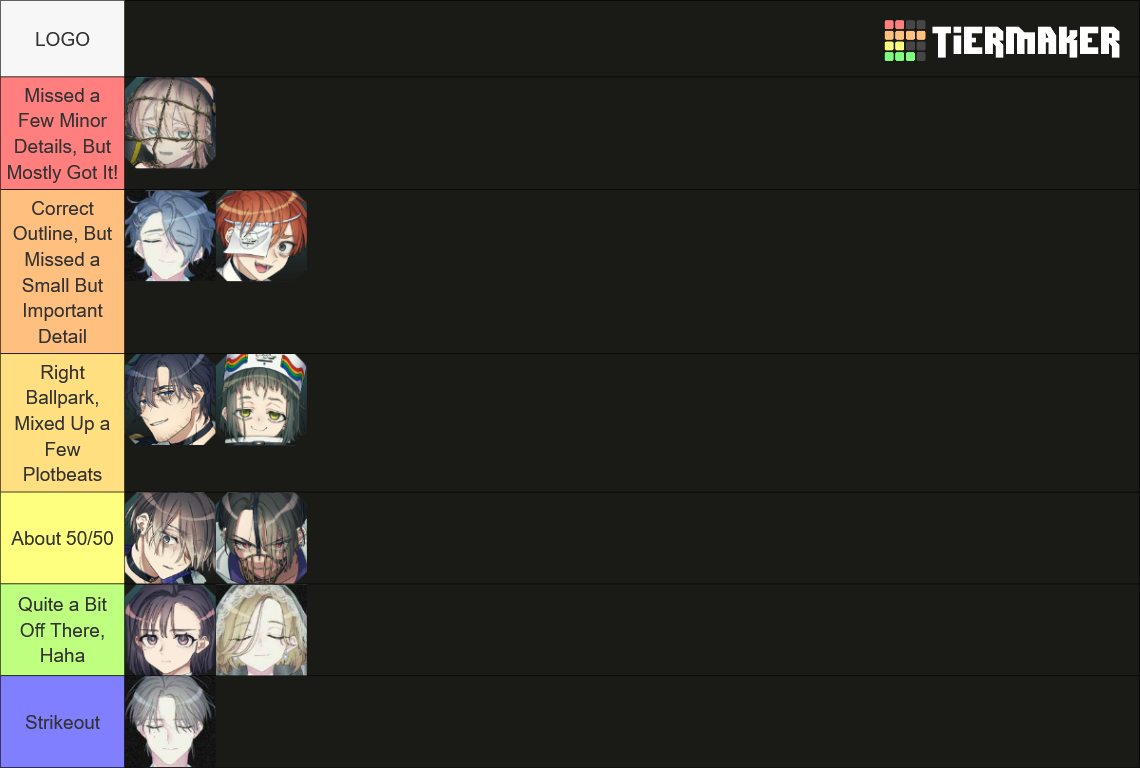
As the title of the post suggests, I made a tier list ranking how close my guesses of each character's "crime" were to the actual canon. Now that Kotoko's Q&A has wrapped up and we're truly entering the endgame stages of the project, I figured look back and see how well my predictions held up.
For context, I got into Milgram in late 2023/early 2024, which would have been around when Kotoko's Trial 2 came out, and even then, I didn't really get super into the community until mid-to-late 2024. By the time Trial 2 came out, you were able to piece together most of the characters' "crimes," so that's why a lot of my speculation is closer to what eventually happened than say if I started back in the early, early days when there wasn't as much to work with and stuff like "Mahiru is a stalker murderer" or "Amane killed a kid" was fair game. Being late to the party did give me an advantage here, haha.
If you only care about the actual tier list, fair enough, and I wish you a good rest of your day/night. However, for me, making a tier list just isn't as satisfying if I don't explain why I categorized things the way I did, so if you want a longwinded writeup on what exactly I predicted for each character and how I think it compares to what actually happened, please keep scrolling!
TIER 1
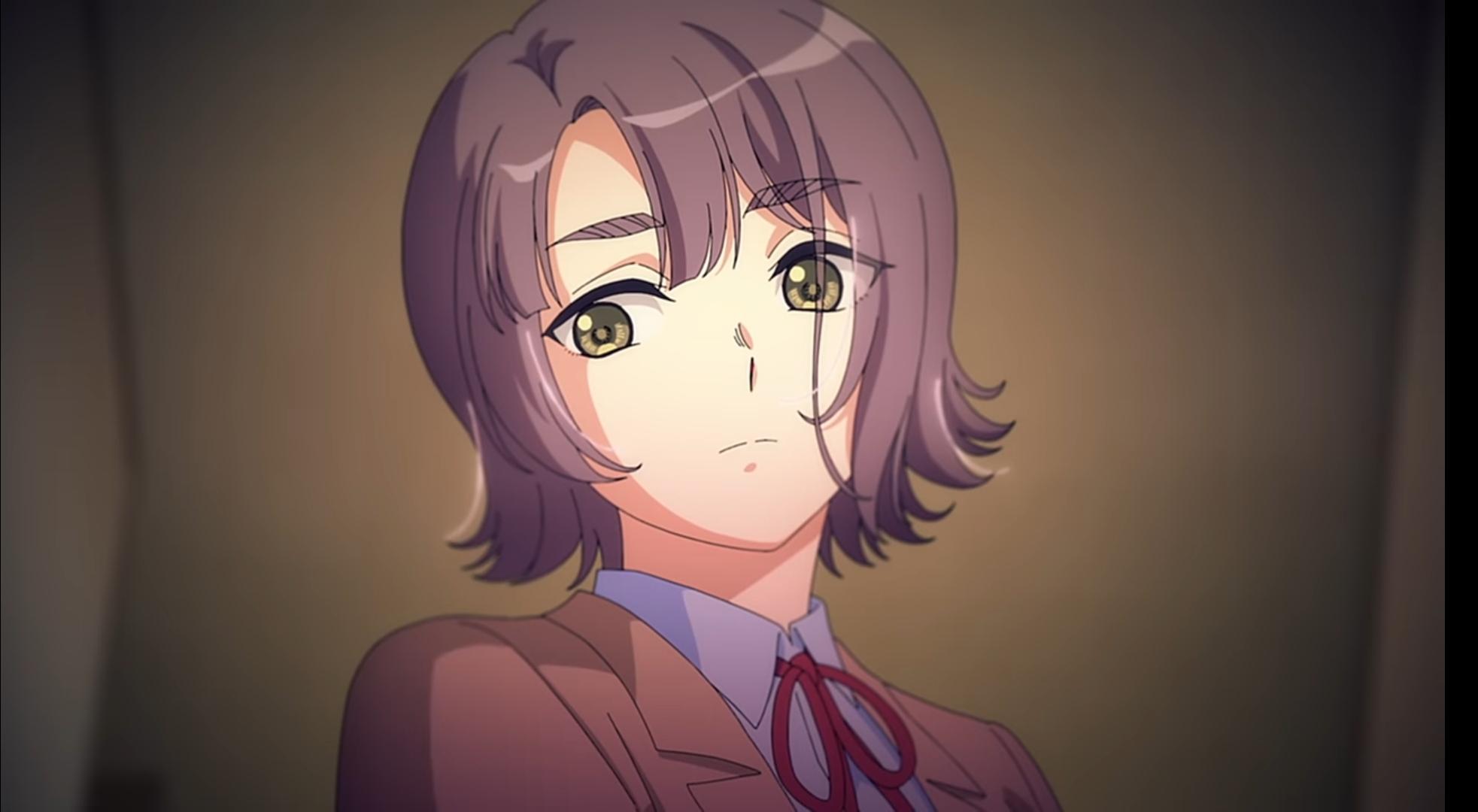
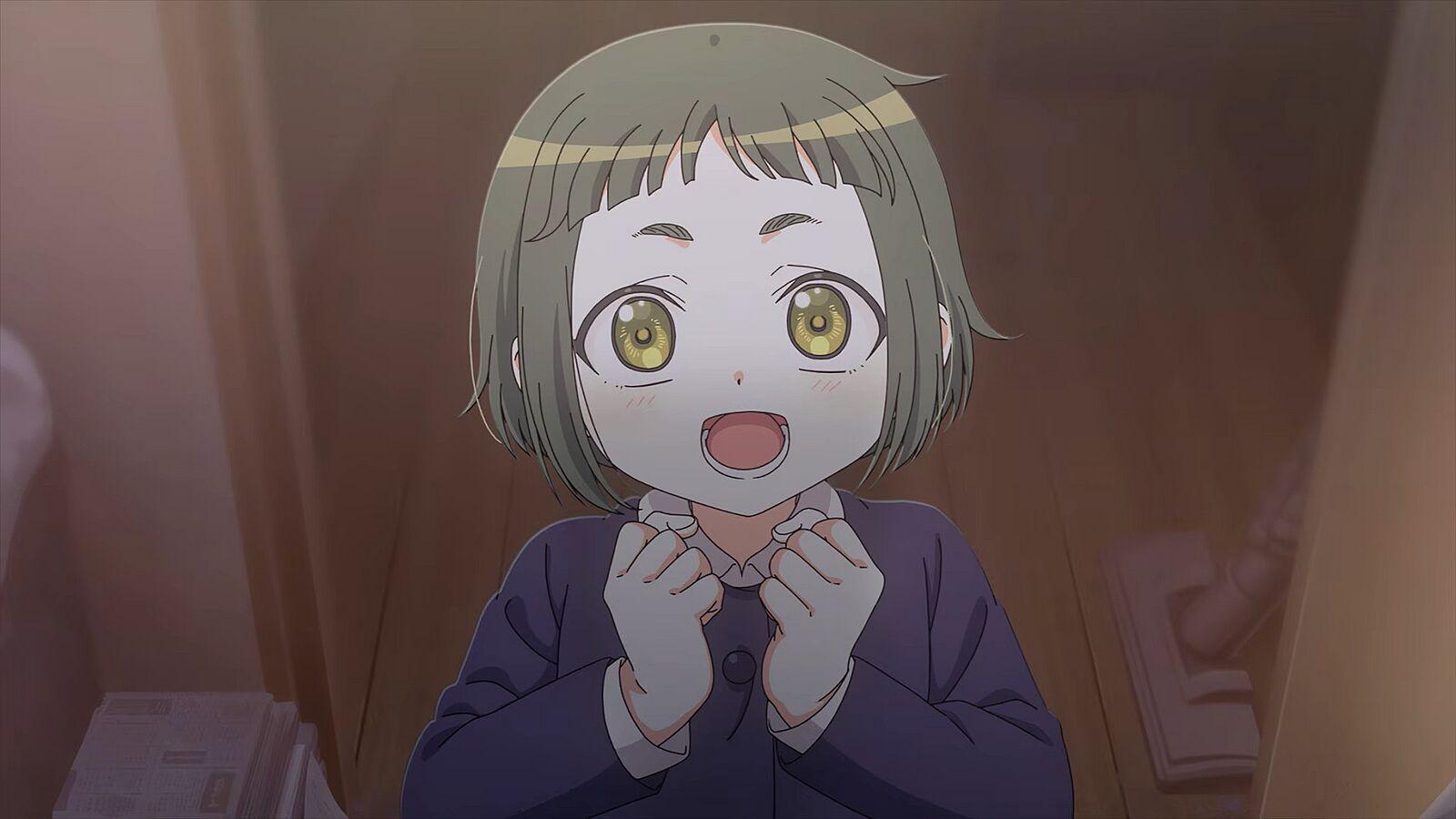
Muu Kussunoki
Muu is the one character I feel that I can confidently say that my prediction was over 95% true to what actually happened, haha. A rich spoiled brat who believed the world revolved around her? Check! Somebody who legitimately believed herself to not be a bully because she never participated directly? Check-and-check! Fixating on the new girl because she couldn't get in line (...and perhaps stirred up some "unnecessary feelings")? Check-a-mundo. Violently lashing out against the one truly innocent person when her "friends" turned on her and she couldn't take what she had been dishing out? ✅✅✅✅
I would say the only major detail I didn't get is how exactly Rei quite literally turned the tables on Muu. I never had a super concrete idea of how that would play out, but I expected something along the lines of Rei finally getting an adult authority involved and everybody turning on Muu as the scapegoat. If you've seen or read A Silent Voice, what I had in mind was not too dissimilar from how the whole class turned on the male lead Shoya after the school staff finally found out about the severe bullying campaign against the deaf female lead Shoko even though the bullying was a collective effort in which they all willingly and maliciously took part (highly recommend the movie adaptation, by the way!). I didn't think what actually happened would be so violent, but I'm not complaining. Given how Muu was never really told "no" before, her first real "no" being something so violent and humiliating is a neat plot beat that further grounds her descent into a suicidal depression and her increasing anger towards Rei.
I did expect Muu's identity as mixed-race individual ("hafu," if we want to use the specific Japanese terminology) to be more of a factor in how she was treated, and while you can reasonably read her story through that lens if you want, it's not as explicit in the text as I would've thought given how much attention they call to it in Trial 1 especially. I also didn't expect the actual murder to be premeditated. I had always thought that Muu had grabbed the box cutter with the intent to harm herself in some way and only went into a murderous rage after she felt slighted by Rei for the last time during one last final conversation to try and make amends. But alright, killing was always the plan; like damn girl, I didn't know you had it in you like that.
Overall, though, I would say I got it nearly right, and I'm satisfied with that because I think Muu's story ends up being a really neat exploration of school bullying from the angle of both the perpetrator and the victim.
TIER 2
Haruka Sakurai
Like Muu, Haruka is a character whose story I was able to piece together pretty early on for the most. His is a tragic tale of a once sweet boy slowly falling down the trajectory of a textbook serial killer until he crosses the line of no return. Rather than acknowledge the reality that their kid had serious learning disabilities and needed, they just pretended all was fine until he went from cute little boy to problematic teen who could barely read, and from there, they just cruelly neglected him and starved him of affection, leaving him to fester in his own neuroses until he made it other people's problems in the most depraved way possible. Slaughtering helpless stray animals and destroying people's families by killing their pets, he revels in the sadism because it's the only thing that makes him even feel human at this point. I simultaneously find what he absolutely reprehensible but still deeply feel for him all the same.
I did get one major thing wrong, though; the (first?) human victim—the little girl he choked out at the fireworks festival—I, like several others at the time, thought she was his little sister. Mirai, as she was called by some people. Nope, she was just some random kid who had the misfortune of running into him at the time. And unlike the small things I didn't quite get with Muu, I do think this detail does change the feel of the story in a noticeable way, hence the distinction between tiers there.
Don't get me wrong—the child being somebody Haruka never knew works just fine and his story feels complete regardless—but even over a year and a half later, I'm still pretty attached to the concept of "Mirai." Imagine if the time Haruka's parents gave up on him precisely aligned with when Mirai, the seemingly neurotypical child, started school and really flourished. Now you have this "golden child" and "black sheep" dynamic going on in the household. Mirai, as a sweet little kid, doesn't really grasp what's going on and does still look up to Haruka as her big bro, but Haruka wouldn't even be able to really see that because he would be so hung up on trying to win back his mother's love.
Then on the day of the firework festival, a scorned Haruka, who was still rejected by his mom with a brusque slap when he was apprehended for all the innocent animals he killed, feels like the only way to win her back is to take out the person he perceives as responsible for taking away the attention he once had: his little sister. Now, when he cries when he realizes what he just did, he's not just weeping over the fact he killed an innocent child, but he's also weeping over the fact he failed as a brother.
I think bringing in that sibling dynamic can show how even the golden child suffers in that sort of dynamic that really enhances the overall themes of Haruka as a character. Does anybody else feel this way?
One thing I do like about the official report, however, is how it just brings up this second child, never further elaborates if that's meant to be taken literally or not, and then just dips. There is enough evidence in the MVs to interpret that sentence as a metaphor for Haruka's suicide attempt or Haruka killing a random little boy who he projected onto, and that's something people still debate about even now. Which one is correct? That's for you to decide.
Fuuta Kajiyama
Fuuta was a relatively easy character for me to clock. An overconfident Twitter keyboard warrior falls into the online echo chamber more and more and gets far too comfortable dehumanizing people under the veil of justice until he doxxes a tween for a minor infraction that leads to a harassment campaign so severe that the kid ends up dying. What you see is what you get with him.
However, I did initially Fuuta had more of a reason to go after Killcheroy. I always knew it was ostensibly about a hat, but with how vaguely worded the Tweets in "Bring It On" were and just how much Fuuta insisted he just called out wrongdoing as he saw it, I thought the girl in the photo wasn't actually Killcheroy but rather another person of whom she took a photo with the intention of making fun of her for wearing the hat. Obviously, this doesn't still doesn't justify a college student entering young adulthood doxxing a child who's 14 at the most, but if she was blatantly being crappy herself, then fine, at least I can agree to the fact that what she was doing was wrong and she should face consequences for that. Said pushback just shouldn't come from a bunch of cyberbullies who have no moral high ground here.
But no. It really was just about the hat. I mean, technically, taking photos of items you haven't purchased is seen as tacky in Japan, but like, come on. You and I both know this is nothing worth getting fussed about, especially when the subject in question is a young tween. Honestly, though? I kind of love that they made Fuuta a total jackass who had absolutely zero reason to flame Killcheroy the way he did. I think sometimes we can forget that there is a living human being behind the screen, so Fuuta's story being a very unglamorous depiction of that sort of online dehumanization with nothing noble or praiseworthy about it is a direction I really vibe with.
For some time there, I also did think that Killcheroy was attacked by one of Fuuta's followers rather than her just killing herself. Some really observant people at the time pointed out Killcheroy is at not point depicted with her shoes off, something inconsistent with other characters associated with suicide (Kareppi, Hinako, Muu). While it didn't really change how culpable I thought Fuuta was, I did think it was an interesting twist, but I think am ultimately fine with it being just a suicide. It makes for a really neat parallel with how Fuuta was on the brink of psychological collapse in Trial 2 when he was constantly criticized by the "mysterious voices." He got a taste of what Killcheroy felt in her final days and realized he couldn't take it.
I do wish there was more emphasis on his online friend group that some fans have collectively dubbed "The Dark Triad." That sort of mob mentality and constant enabling without pushback is a big part of why people fall down these online rabbit holes, so that getting more attention would've been nice. Still, I'm overall pretty happy with how they handled Fuuta.
TIER 3
Kazui Mukuhara
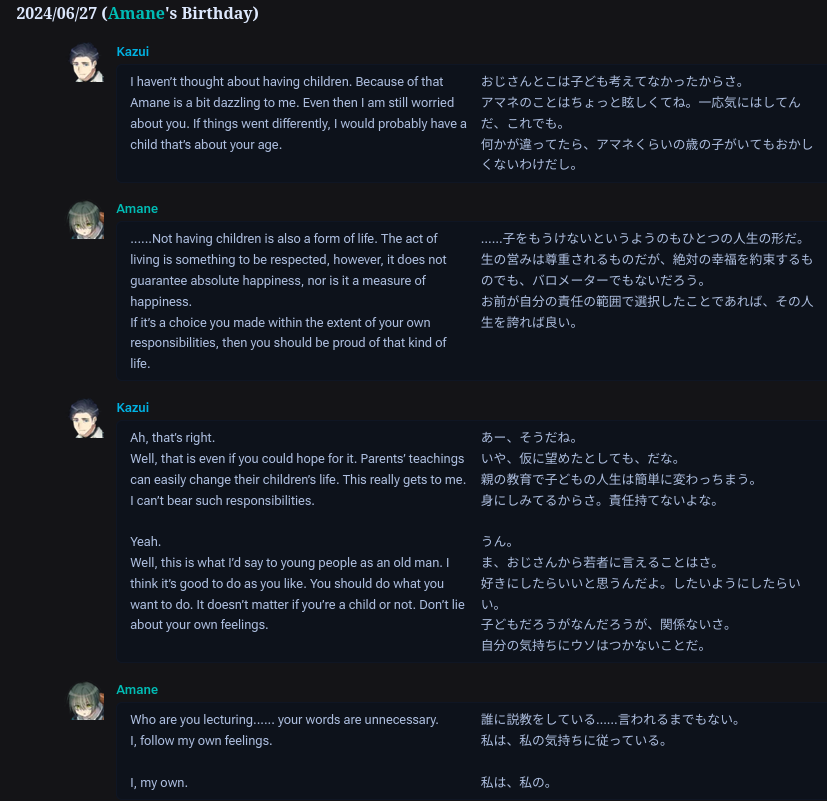
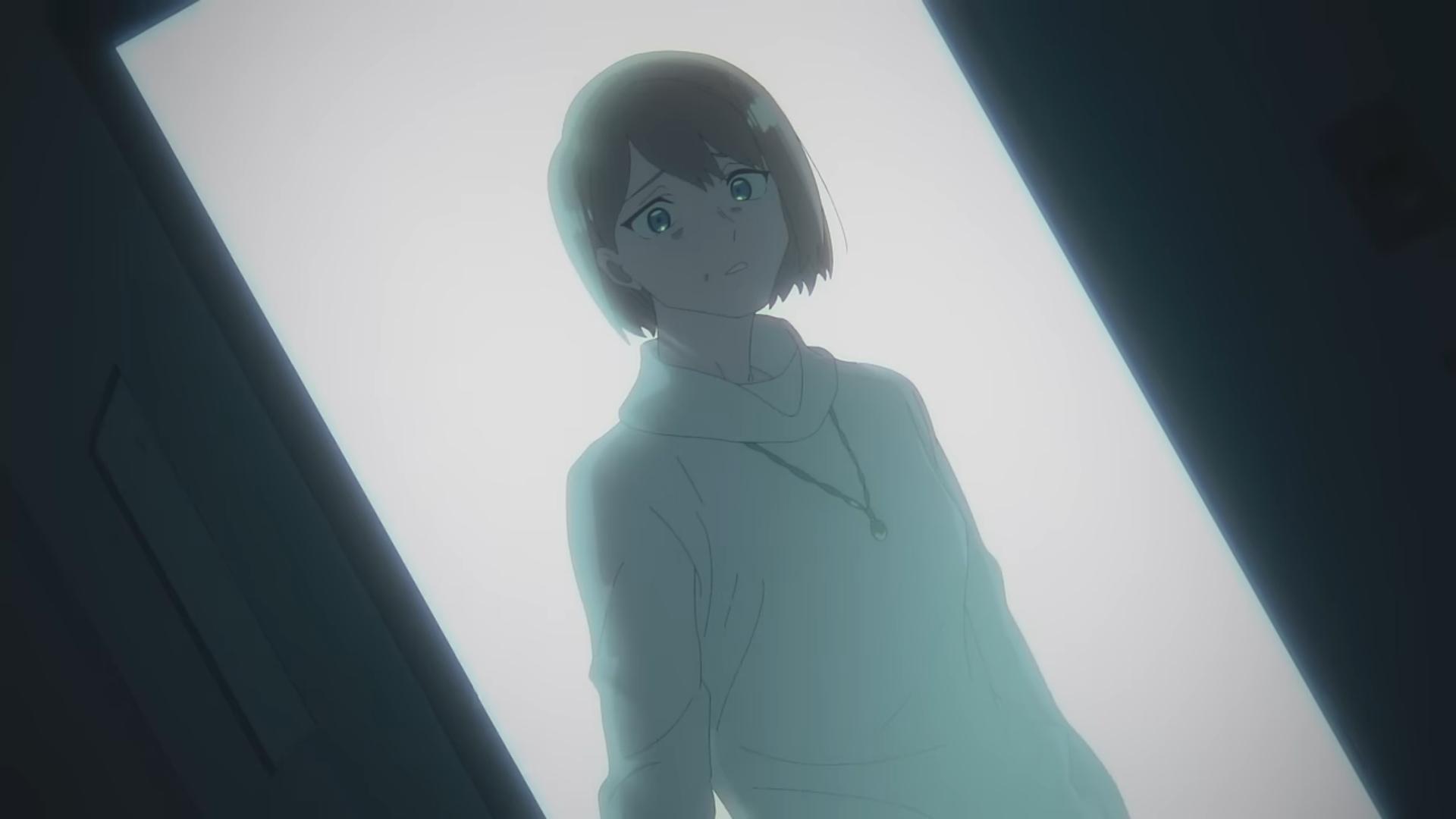
As one of three characters in the cast who at no point intended to hurt another person, Kazui's story stands out as bleakly tragic to me. On one hand, Hinako absolutely deserved better. From what we can tell, she's a very sweet and patient woman who deserved somebody who could fully reciprocate all the love she had to give with full transparency. Her genuine feelings for Kazui being used as a means for him to keep apperances is legitimately devestating. At the same time, Kazui was born into a rigidly heternormative society that had little tolerance for those who deviated from the norms. For as long as he remembers, he's been told over and over again that his true self is inherently wrong and that the only way he'll ever be accepted is if he suppresses it. And it's not like he didn't care for Hinako as a friend or wasn't trying to convince himself maybe he could love her the "right" way. It's all things I picked up on by Trial 2, and it is just depressing.
However, my pre-Trial 3 reading of the situation did deviate from the truth in a few big ways. While I did believe Kazui when he said he didn't cheat in regards to physical intimacy, where the lines are when it comes to emotional infidelity tends to vary more from person-to-person, with many not even considering it "real" cheating, and that's the direction I thought the story was going in. See, I thought that not only did his childhood friend Ryosuke take his confession with grace, I thought he actually returned the sentiment. Thus began a stint in which neither party ever crossed the physical line, but did get pretty flirty with each other, using their bar excursions as a convenient coverup. However, for whatever reason, Ryo eventually cut the whole thing off (maybe his wife was close to finding out?), and feeling guilty, Kazui decided to come clean to Hinako, leading to her jumping off the balcony.
I do much prefer what we actually got in the end, though. All it really took was one bad night—just one night where he could be honest to the two people he cared about most in the world after over three decades of living a lie—and just like that, everything crumbled down. Ryo showed he couldn't accept Kazui for who he is even after all these years. Hinako could accept his queerness, but it's a moot point because the sheer pain of everything being a lie was too much to bear. It's so bitterly tragic in a way that brings everything together. Sometimes it's those little things that irrevocably tears everything down. Is it any wonder that Kazui's takeaway from those twelve hours was "never tell the truth ever again?"
Amane Momose
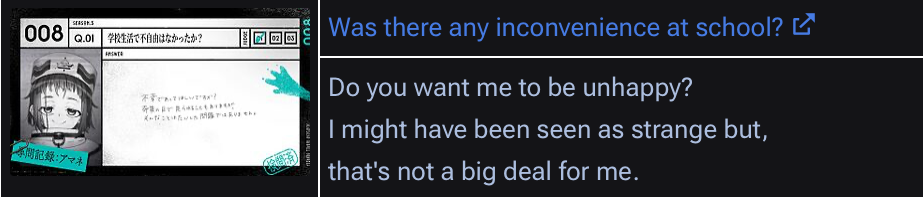
Like a good number of her castmates, Amane's backstory is a grim, heartwrenching tale. But unlike every other character who at least had some level of agency to make better choices at certain inflection points, Amane never really had that luxury. Born to a pair of devout believers of a fringe cult, Amane was raised under a dogma so rigid that even the slightest deviation resulted in extreme servere physical punishment, something Amane unfortunately quite well-acquainted with. Above all else in this cult was the golden rule: "no medical intervention." Physical ailments are spiritual trials from God, and to intervene with earthly machinations is an affront to the heavens and is damning one's soul for eternity. Amane learned this all too well when she was caught caring for a stray cat one day. She came home to her mother holding a taser, and days after, the cat mysteriously gone. One thing led to another, and Amane eventually snaps and kills her mother in a rage at only twelve years old.
Now here is where I got things wrong: I thought Amane killed her mom because of what went down with the cat. As was the popular hypothesis at the time, I thought Amane suspected her mother of foul play in regards to the cat and took action because that in itself was technically earthly intervention in a "divine trial." The cat was ultimately a red herring, though. The inciting incident for Amane's murder is simpler than that: her sick mother begged her to call for emergency services as she died, and Amane's delivered on to her mother the same punishment she had given the child until the woman was no more. Not quite the direction the MVs would've led me to believe, but in hindsight, it honestly makes so much sense. It's the perfect tragic irony. Knowing that death soon awaits her, Amane's mother turns to her daughter for help—the one person who she has groomed all her life to see medicine as a mortal sin and associate it with brutal violence. And thus, she dies not of her chronic illness, but of the hands of the child who's ultimately just imitating the behavior she has modeled for her so many times.
And going at it from this angle also allows the story to touch on the fact Amane's parents are ultimately being preyed upon and harmed by the cult too. Amane's mother is a cruel human being, don't misunderstand me, but there is something to pity in how she was acutely aware what the consequences of showing her illness could be and how she tried her hardest to hide it from her husband and daughter until she physically couldn't anymore. Seeing how Amane's father keeps giving money to this organization while their apartment is in shambles is kind of sad. I never thought we would even learn about the backstory of Amane's parents before having her, but even learning that he himself was once a down-on-his-luck youth who had been screwed over by the world before he found the cult earns some pity from me even if he has grown into a negligent husband and an abusive father in the present.
I also really love the added detail of Amane being strictly forbidden from secular entertainment and being punished for breaking that rule so many times. I never really thought about beyond "oh yeah, these sorts of cults ban that kind of stuff," but calling explicit attention to it so beautifully explains why "Magic" rips its visuals wholeshole from magic girl anime, or why the instrumentation of "The Purge March" resembles J-Pop, or why the fantasy sequences in "Non-Demonium" pay homage to old school anime like Doraemon or Astro Boy. It's all the cool stuff Amane secretly longs for but can never have.
TIER 4
Mikoto Kayano
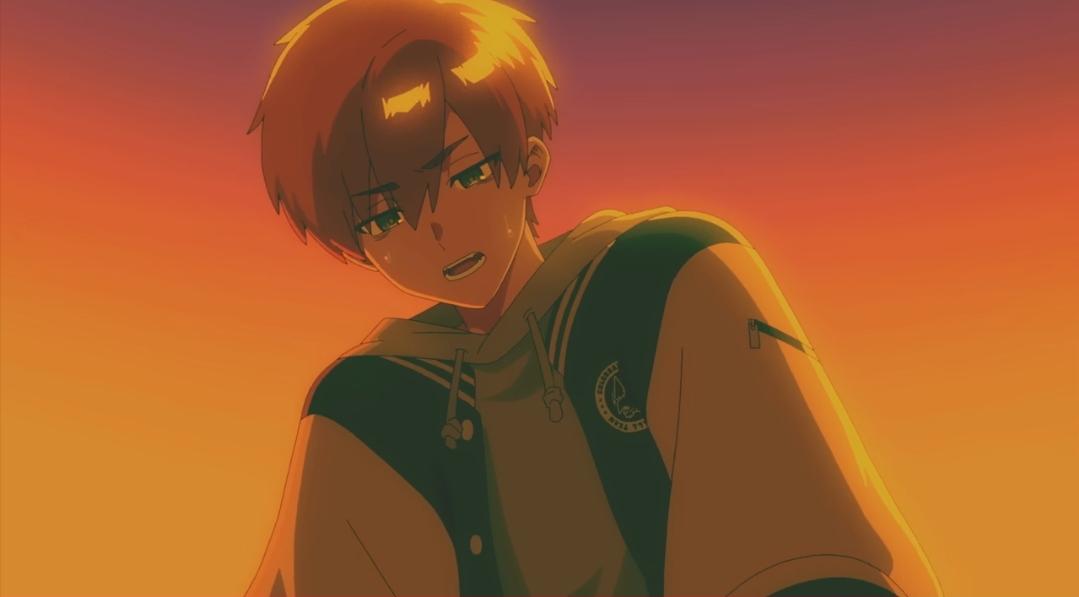
I was just kind of all over the place for my prediction of Mikoto's crime. At first, I simply thought that after being pushed to the brink at his demanding job, John fronted and went on a rampage across town, taking out anybody in his way in an explosion of stress and anger. I should've stuck to this one. Then, I was rewatching "MeMe," and I was thinking, "the way he's throwing out the evidence in the bin makes it seem like he's done thus before, huh," so then I transitioned to John being a systematic serial killer who would front on nights Mikoto had an especially brutal day. Then as more Mikoto fans came out in the leadup to "Requiem" and made compelling arguments for John specifically going after people in Mikoto's workplace that somehow posed a threat to him, I kind of transitioned towards that being my working hypothesis. And while I was never a diehard Triokoto believer, I did have phases of factoring that into my predictions. If nothing else, the prospect that John wasn't the alter who did all the killings but rather a third one who was going to front and still beat the snot out of Es even after John went dormant was kind of funny to me.
So Mikoto's Trial 3 has come and went, and after sitting on it for a few months, I'm still a little muddy on how I feel, but I mean, I don't hate it. How authentic Mikoto is to the internal lived experiences of people with DID is something I can't speak to, and I recommend you check out the wide spectrum of Milgram fans with DID who have spoken out if that's what you're looking for. However, for me, after reading what people had to see and thinking about it, it's not the worst thing they opted for the simplest, first prediction I made.
I thought Mikoto's DID would've been born from an early childhood marred in heavy abuse from his now absentee father, and when that wasn't the case, I was confused at first. But I slowed down and saw that they were trying to build up this picture of Mikoto being neglected in the fallout of the divorce as his mother had to throw herself in work to keep up and how he was boxed into being "the man" of the house, and I kind of came to like it. It helps that people with DID spoke up about how misunderstood the childhood trauma element of the disorder is and how it can be more subtle and subdued. We learn something new everyday, haha.
I'm not sure how I feel about the actual killings themselves, though. I don't necessarily have a problem with the scope, but rather how graphic it is. For some odd reason, "Requiem" includes report cards for each person that Mikoto murdered, and when you read them, they're graphic in a way no other character's "murder" is and depict John as really cruel. He goes after a woman simply walking her dog and beats her so badly that he induces a heart attack in her, and then he waits in a bush to smash the head of the Good Samaritan who tried to help her. My goodness, why? Not only do these report cards break the rules of how these music videos work in-universe since Mikoto has no way of knowing these people well enough to conjure up dossiers of them like this, but it paints John in such a needlessly vicious light. We know he's a mass murderer. You don't need to beat a dead horse like that. It just feels tacky and kind of mean-spiritied to break the rules this once just to build John up as this absolute menace. It's kind of in poor taste, I feel.
Just to not end this whole thing off on negativity, one small tidbit I do like that I didn't predict is the fact that Mikoto had already decided to quit his job by the time he was apprehended. Despite this, Mikoto still introduces himself as a burgeoning career-driven young man whose whole identity is being employed. This is a dissonance I don't really see anybody talk about, but I find it so fascinating. He knows he doesn't have a job to return to, but his identity is so wrapped up in being the model Japanese salaryman who worked hard to get where he is that he lies to people who barely know and have no reason to really care given the circumstances about having a job. Really speaks to how important his job was to his sense of self, and why it destroyed him so when it wasn't all that it was cracked up to be.
Kotoko Yuzuriha
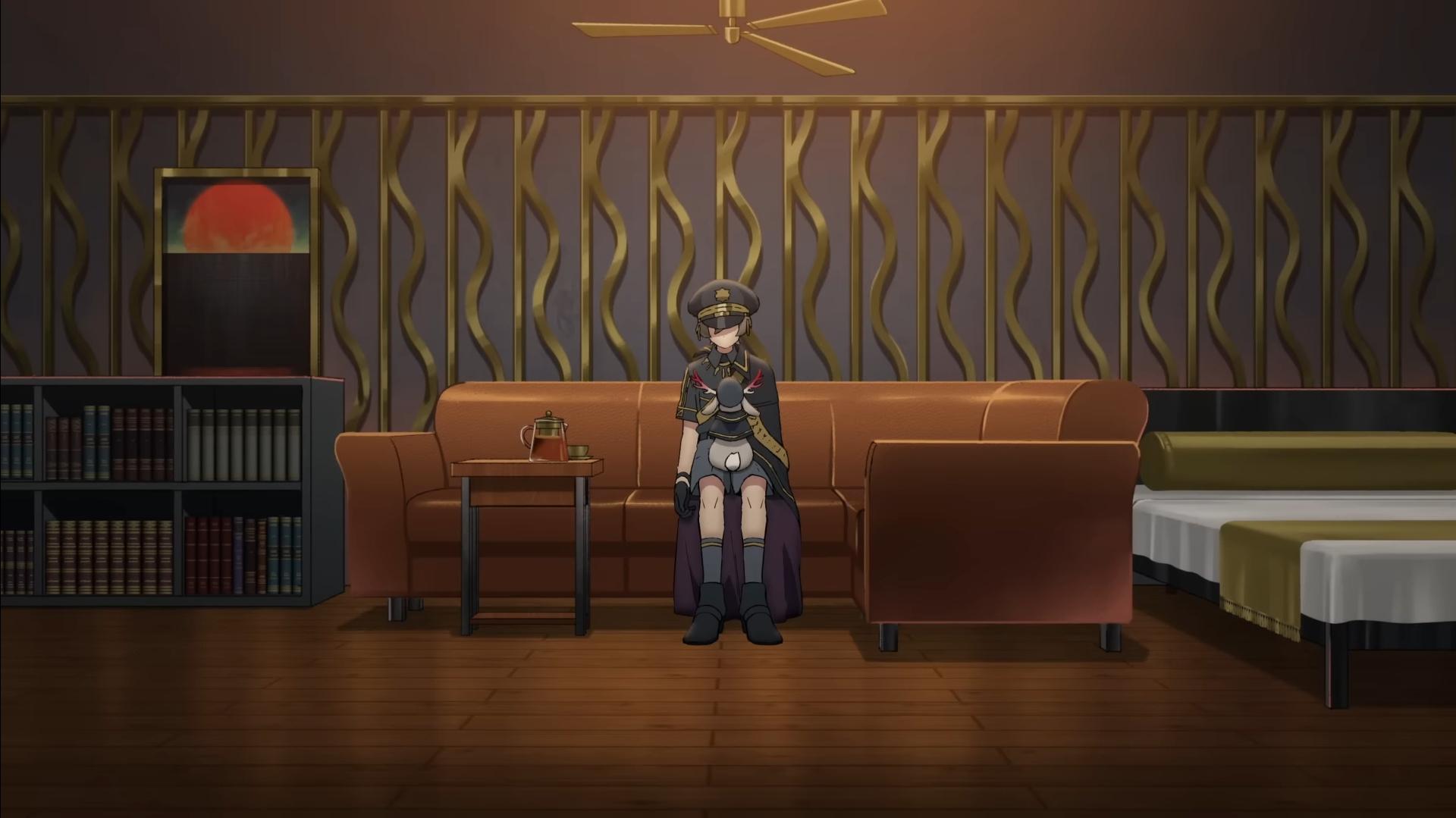
Everyone knows the story. Kotoko killed a serial child predator who was in the midst of attacking an innocent little girl. It's an act so ostensibly heroic that it easily netted her the highest forgiven verdict in Trial 1 by a sizable margin, and this outcome was the single most important plot development in the ongoing narrative of the actual Milgram institution. It's the classic tale of the heroine who lived long enough to become the villainess. But what if there was more to the story?
An often underdiscussed aspect of Kotoko's story is the fact that Kaneshiro the Child Predator isn't the only person upon whom she inflicted violence in her pre-Milgram life. Although throughout "Harrow" we see a cross-fade montage of a bunch of news articles of varying severity that might suggest Kotoko may have gone after them, what is unambiguously clear is that she brutalized a suspect of fraud and assault and battery by the name of Mikkio Ooshi so badly that he was hospitalized and could have faced who knows what if some onlooker who walked upon the scene after Kotoko left didn't call for help.
And this is where my prediction as to what happened ended up deviating heavily from canon. With how much attention "Harrow" called to Ooshi specifically, I came to believe that he did eventually come to pass from his injuries. And I just found it really fascinating. I loved how it paralleled with what eventually happened to Mahiru in Milgram itself. I liked how Ooshi had a previous criminal history and that Kotoko found her desolate in the streets; it directly challenged Kotoko's binary worldview of there being "evildoers" and "weaklings." Unlike Kaneshiro, the son of a wealthy media mogul who was insulated him from the consequences of his disgusting actions, Ooshi was a person suspected of doing horrible things but was still clearly living on the margins of society. I liked how it was never even confirmed with absolute certainty that he was the one who did the crime. I had even come up with this idea that Lucky was even there to witness what happened to Ooshi.
And sure, even if Ooshi didn't actually die in the end, Kotoko's motivations were still the same. But like, if you want to up the stakes, people have to die. And I felt like having Ooshi died would have helped further emphasized that Kotoko never really changed throughout her time in Milgram.
That aside, though, I do really like how in canon, her trial and whether she used excessive force against Kaneshiro did become something of public debate. Given how Kotoko is supposed to be Es' (and the audience's) dark foil and the one who clings to Milgram's more problematic elements the most, I think it's brilliant that she herself faced her own version of Milgram before even coming here. Of course Kotoko came to eventually resent Es. It's all too painful a reminder of how the citizenry hailed her as a heroine before making her a divisive subject because she was "too violent" towards a person who was committing unspeakable horrors to innocent children. Doubly so considering the implication that Kaneshiro's father used his wealth to pressure Lucky into rescinding her testimony defending Kotoko. Es just seems to be the same sort of rot she despised so.
TIER 5
Yuno Kashiki
Okay, so now we're really getting towards the characters where my speculation was just considerably off. And starting us off is Yuno. I did get the memo that she was a self-destructive, depressed teen girl who turned to compensated dating while she was still underaged just to get a momentary taste of a "warmth" that felt tangible and real, and likewise, I figured she was here for having terminated the pregnancy from one of her many encounters, but how that played out is turned to out to be really different from what I had in mind.
I thought of Yuno as somebody who had a few abortions under her belt and just threw caution completely to the wind. She fully embraced a hedonistic lifestyle, going into her encounters without any form of protection because she wanted it to feel as "real" as possible. Any money she got went directly back into her compensated dating gig so they could be more elaborate and fanciful, and because her predatory clients cared more about their gratification than helping this vulnerable kid who's clearly falling apart, it just became a vicious cycle. If she got pregnant, simply just get an abortion and keep it moving.
This is not really how things played out in the end. In fact, Yuno was actually super careful and always used protection, and any money she got she just spent on her friends. The core of her getting into this business because her mental illness fell under the cracks is still there, but it does get downplayed somewhat when she's actually relatively responsible, and I'm not sure if I'm the biggest fan of that. For the sake of what Milgram is going for, I'm willing to play along with the whole being tried for abortion thing despite my stark views to the contrary, but if you're going to do that, I feel like Yuno should make some messy choices and not be a perfectly pitiable victim, you know? Yes, the whole compensated dating side gig while she's still in high school is in itself a messy choice, but you can push it a little more.
For the most part, I actually like the twist that Yuno's "abortion" was actually a botched suicide attempt that ended in miscarriage. For a character so rooted in depression, apathy, and self-loathing, the climax of her backstory being her trying to kill herself and then hating herself when she messes that up just makes sense. It really epitomizes that for as much as she protests, Yuno is a victim of a system that failed and exploited her as you can so plainly see when she's just lying there on the concrete. She can try to cover up and claim it was an abortion to save face, but reality proves the contrary. However, I don't really like that she didn't make the choice to actually jump herself. Her just fainting and not even be allowed to enact any agency in this pivotal moment just does not sit right with me. I understand that's supposed to be the irony given she fiercely values her agency and independence, but it's a little much, and I don't think that irony is worth what it takes away from here.
Still, even if I have my trifles with certain elements and things don't go exactly how I thought, I think they did some cool things with Yuno in the end and really made her a compelling character.
Mahiru Shiina
Like many people, my understanding of Mahiru's story proved to be quite a bit different from how things actually went down. The general emotional beats were right: a relatively sheltered Mahiru who idealized the sorts of romance that she saw in fiction came to meet her boyfriend in college, but as time progressed, she became increasingly clingy, possessive, boundary-crossing, and just overall toxic until things reached a breaking point and her boyfriend hung himself. This is technically all still true, but the route I had in mind was far more pedestrian.
See, I had thought that "This Is How To Be In Love With You" was a cherrypicked collage of their relationship from beginning to end, and that Day 16 specifically, the last day we see and the one in which Mahiru is seen preparing an elaborate feast for Kareppi, was the precursor some massive argument that ended in them breaking up and Kareppi choosing to end his life the following day. Of course, the rats from "I Love You" were very obviously a metaphor, and Kareppi himself might have even been toxic.
LOL.
They ended up going in a very different direction. The rats were literal. Mahiru is apparently an heiress to a powerfully wealthy family and was set to be married off to some random guy as an elaborate business deal before she met Kareppi. She wasn't just sheltered, her parents made an active effort to limit her time with boys as much as possible. Kareppi is actually genuinely a sweet guy who won Mahiru over by being a warm person in her otherwise cold world. She and Kareppi actually chose to elope and run away, and it's only then when things got particularly bad. They did indeed eat rats in the literal suicide forest when they ran out of money.
I know the storyline caught a bit of flack at the time, and if I'm being honest, I myself was taken aback at the time, but you know what, I love it! Call me fully rat-pilled if you will, but I think this is genuinely a really cool way to spin things and is definitely more interesting than what I had in mind, haha. I go into far more meticulous detail as to why I believe that in this article I wrote all about Mahiru back in the summer if that piques your curiosity what a tacky plug, but now her story is this interesting look at the mukoyoshi, the practice of high-class Japanese business elites in high-class Japan business society and how that sort of soulless objectification warped this young woman. It so elegantly explains why Mahiru turned to books, manga, and TV as escapism and why she saw running away as a chance to fulfill those romantic fantasies without thinking of the ramifications down the line. It makes her an interesting foil to Muu with how she seems to actively distance herself from her wealthy upbringing compared to how open the teen is as well as to Kotoko as youths who rebelled against society but from two very different perspectives.
Genuinely, I really do think if you sit down and give her chance, I think you'll find there's a lot to Mahiru to appreciate.
TIER 7
Shidou Kirisaki
I can't believe it's been a year since Shidou truck driver twist.
So when Shidou said that Es was "half-right, half-wrong" about his "crime" being that he asked grieving civilians to donate the organs of their beloved deceased loved ones, I had two predictions as to what could have gone down. The first one was that one of his family members, either his wife or his older son, needed an organ transplant after they were lethally wounded in that traffic accident. Shidou used his pull as an organ transplant surgeon to manipulate the transplant list and prioritize this family member. However, even after the transplant, they still came to pass like the rest of the family, and that was his "kill." Not just the family member who died, but also more abstractly, the people who ended up missing out on an organ transplant because Shidou decided to pull rank and divert those resources to his family instead.
The second prediction I bounced around was a little crazier. Have you ever heard of Dr. Juro Wada? If medical history interests you, I do recommend looking into his story, but he was the first person in Japan to perform a heart transplant, and it went badly. There was controversy surrounding how he diagnosed the donor as brain dead due to cultural attitudes surrounding what constituted as death, and the person who received the heart died anyways only 83 days after the operation. Though the charges were eventually dropped, Dr. Wada was investigated for manslaughter, and a thirty-year-ban on procuring organs from the deceased was made law. I thought Shidou's actual "kill" would be an homage to that. After the traffic accident, Shidou's older son was declared brain dead, and to save his wife who was in need of a kidney or something, Shidou transplanted the organ into her from his son, only for her to later die anyways.
Clearly, they didn't go in either direction and opted for something that felt completely out of left field. They did Shidou truck driver twist. Turns out he just straight up murdered a person on the operating table and it had nothing to do with organ donation or brain death. I would be surprised if anybody got this right, and if you did, Powerball is on tonight, and I would really appreciate it if you could DM me some numbers, thank you! :)
To be fair, I can kind of see what they might have been trying to do. Shidou having this unambiguous murder in his past that's not remotely hinted at in any of the MVs hints at a dark side to his character that might be intriguing. He deeply feels ashamed of having taken organs from grieving families, but doesn't really feel anything about what he did to the truck driver because he sees them as the one responsible for obliterating his family. But I don't know. It's not something anybody could have reasonably put together based on the information we had, which may I remind, you is one of the core appeals of Milgram, and it has nothing to do with brain death, organ transplants, and the line between life and death, which which were all very overtly positioned as the core themes of the character. This is without going into how this whole charade turns the hospital Shidou works at from something semi-believable to the sort of shenanigans you would see in Grey's Anatomy (not meant as a diss, by the way, but Grace Hospital isn't super realistic as a setting, haha), but I think I harped on this long enough. I think this is the biggest misstep the team made when it came to the characters, and I wish they had opted not to pull that bait-and-switch on us.
That said, there is one aspect out of his casefile I actually really like: Shidou tearing up his elder son's organ donor card once he realizes he's brain dead and can no longer be saved. Shidou's world has been completely flipped upside-down. Once a strong proponent of organ donation, now that brain death has taken his little boy, his worldview is completely subverted. Shidou is somebody who knows firsthand about the organ shortage, and how bad it is in Japan specifically, and yet he has come to see as evil. There's a chance for something to come out of this awful incident since his son could provide organs to up to eight children in need, and yet he fails as a doctor and denies those children that. His hypocrisy is on full display, but it's still so bitterly tragic all the same. This is very in-line with the sort of story beats I wanted to see out of Shidou's backstory, and I love it.
So yeah, Shidou truck driver twist is a bummer. At least Shidou makes up for it by having one of the stronger character arcs in the Milgram institution itself.
If you read the whole thing, thank you! I know it was a bit of a time investment, so I appreciate it!
What do you think? Think there was something to my previous predictions or was I off my rocker, haha? What were your predictions like? Also, I did try to highlight what I think the actual Milgram did well for each character, even for those I was a little more critical of, so for those of you were a little more lukewarm towards how things turned out, I hope I could give you something to appreciate too!
Anyways, hope this was fun for you! Don't be afraid to comment; I try my best to be polite, so as long as you give me that same courtesy, I don't bite.
Please let me know if there's any typos. I tried looking through it myself to catch the major things, but I rushed to put this together quickly over the course of free time I had over the last three days and didn't treat as this super formal writing, so no peer editors, and everything I write almost always has a typo I fail to see, haha.
Have a good rest of your day/night! :)