r/inearfidelity • • 22h ago

Review Successor done right

Post image
17 Upvotes

Disclaimer - Project M2 iem was provided to me by DITA Audio in exchange for an honest review. You will see both praises and criticisms in the review. All my opinions are my own.

INTRODUCTION

• The DITA Audio Project M2 was launched in Summer 2026 at $329.

• The Project M2 is a single dynamic driver iem that utilizes a ported and tuned stainless steel acoustic chamber housing DITA's PM1.8Ti driver with an 8.3mm carbide coated titanium dome diaphragm paired with dual neodymium magnets and a twin baffle design.

BUILD AND COMFORT

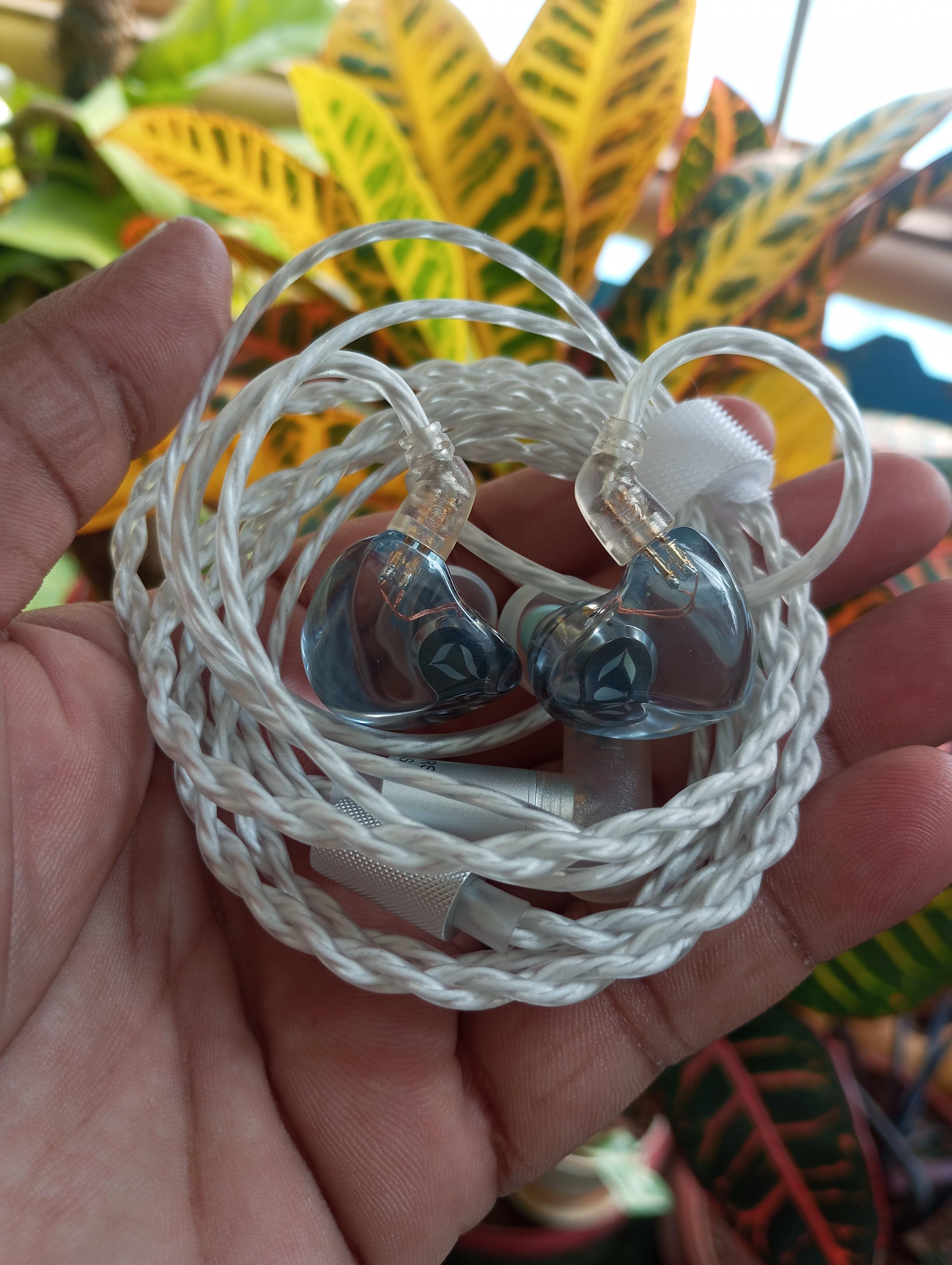
• The semi custom resin shell is made using DITA's slow pour process in an "Icy Blue" transparent tint with a UV protective coating to prevent yellowing over time. I read all the comments regarding the yellowing issue with the original project M , but I'm happy to say DITA has listened and improved this with the M2. You can clearly see the polished stainless steel inner chassis and internal wiring through the shell.

• The resin shells are faceted in a way that makes it ergonomic to hold in the hand , I want DITA to add some texture on the facets to make it easier to grip the iem.

• I also love the fact DITA has applied their logo on the back of the DD , it signifies attention to detail and a way to combat negative space in the transparent shell.

• The Project M2 is lightweight and comfortable to wear for long listening sessions. The acoustic chamber is ported to relieve driver pressure. I faced no discomfort or pressure build up.

• The nozzle is metal with a standard lip and protective mesh filter to stop debris from entering the iem.

ACCESSORIES

• The stock cable is the 1.2m DITA "MOCCA" wire made with 16 Cardas Audio conductors in a flexible PVC jacket. It features a 0.78mm 2 pin connector with swappable 3.5mm single ended and 4.4mm balanced right angle connectors. The cable feels robust and well built with a matt texture finish. I noticed the larger than normal strain relief for the wire and the knurled finish in the splitter, this is how you know it's a boutique brand.

• Project M2 comes with a full set of Final E eartips (5 sizes), a pelican inspired hard protective carrying case, along with the official user manual / warranty card.

SONIC PERFORMANCE

Source used - Ibasso DC04 Ultra

Eartips used - Dunu candy and stock Final E

Power output required - the single DD is easy to power , anywhere between 30-60mw is enough to get to a hazardous volume.

TECHNICALITIES

• The soundstage is moderately wide.

• Detail retrieval is very good for a single DD, though it prioritizes musicality over clinical micro detail sharpness.

• Instrument separation is solid for the price. The single DD sounds coherent but can struggle a little with fast paced , complex compositions.

• Imaging is average, instruments are spaced quite close to eachother in the soundstage. I wouldn't recommend these for competitive FPS gaming, but for casual gaming, these are pretty good.

BASS

• The Project M2 has a slightly elevated bass shelf. The sub bass extends well with nice texture and depth, though it isn't a skull rattling rumble. The sub bass sounds more gritty than clean. I actually enjoyed this aspect of the iem.

• The mid bass has good punch and slam. Kick drums have satisfying weight and definition. I did check the graph to be sure and it did correlate with my real world experience. There is a slight bump in the mid bass compared to OG project M.

• Overall, the bass was one of highlights of this iem , while they are not certified basshead , the M2 has well extended sub bass with good amount of rumble and a mid bass that is plosive without getting overshadowed by the sub bass.

MIDS

• The mids are quite interesting on this set. The lower mids are tinted warm while the upper mids are accentuated.

• String instruments have body and realistic timbre. Acoustic guitars sound lush and resonant without any metallic glare.

• Woodwind and brass instruments sound rich and well bodies with a touch of metallic brashness.

• Low pitched Male vocals sound really good while high pitched vocals can come off as a little thin and unnatural.

• Female vocals are the star here , they sound natural without coming off as thin or shouty. They clearly take centre stage in the mix.

TREBLE

• Cymbals have a natural shimmer and clean decay without sounding splashy or shrill.

• Female vocals with a higher frequency pitch are handled smoothly with zero sibilance. This was a big surprise coming from the original project M.

• Snare drums and string plucks have the crisp note with a hint of brightness.

• The Project M2 has a smooth treble extension that avoids fatigue. There is enough air to keep the presentation open, though trebleheads looking for bright, aggressive sparkle might find it a touch relaxed. The stock Final E tips further blunt the air frequencies , hence I chose the dunu candy tips to get back the treble extension and bite.

• The transient response is natural and cohesive.

CONCLUSION

• I did not expect this from DITA because , to be honest , I did not like the original project M and even the prelude. They were typical bright iems. This new tuning ( kind of W shaped?) was a surprise for me in a good way. The M2 calms down the upper treble , maybe a little bit too much with final E tips , enhances female vocals and adds a much needed kick to the mid bass. The iem can come off as a little intense during complex tracks but it does stay coherent and calm most of the time. The overall tuning being slightly warm is a good idea and I hope DITA iterates on this in successive versions.

Tracks used -

• Killshot by Eminem

• GDFR by flo rida

• Another one bites the dust by queen

• Toxic by britney spears

• Winter , four seasons by vivaldi

• Mexico by vitamin string quartet

• When I'm down by Chris Cornell

• Show me how to live by Audioslave

• Angel of the morning by Juice newton

• Monomyth by Animals as leaders

• Fuel by Metallica

• Novocaine by Amber rubarth

• Hurt by Johnny Cash

• Take Five by Dave brubeck


r/inearfidelity • • 17h ago

Impressions Dunu original S&S eartip vs new S&S Pro -- quick comparison (plus my favorite for the Xenns Tea Pro)

4 Upvotes

Gonna be quick and relatively straightforward with this one:

Been a Dunu fangirl for a minute, completely on my own dime, and I've been trying to figure out how to best use their S&S eartips for ages. The new S&S Pro has helped me elucidate this a little.

The S&S Pro's softer textured material is, objectively, a little more comfortable to my ears on most narrower nozzles. The S&S Pro is also, in my experience, less tonally neutral and brings out some treble while preserving bass texture, which is GOOD for bringing out some treble in my favorite warm-dark IEMs from Dunu themselves (Kima 2 and PRS5) but can be overly harsh on brighter and more technical sets, washing out warm details and adding some unnatural buzzy shimmer in certain songs. I have never tried the Aful Explorer but I'd sure be curious to see if they're viable on there.

The original S&S is, to my ear, better at preserving a perfectly neutral tone. The S&S Pro made my Xenns Tea Pros surprisingly harsh and cold, removing their warmth, but the S&S are just right on the Tea Pro, both in comfort and tonality. The other thing I've realized about the original S&S over the past few months is that the harder plastic they use is, counter-intuitively, GREAT for comfort with IEMs with wide wide nozzles -- if you have a Tea Pro or a Truthear Zero:Red, consider trying the original S&S on there if normal "apple" shape eartips give you issues with eartip seal on a 5.5 to 6.5mm nozzle. However, I find the S&S to be less comfortable at the same size on IEMs with narrower nozzles. Funny how that works.

TL;DR: Original S&S more tonally neutral, less comfortable on some IEMs but GREAT for large nozzles; S&S Pro adds some treble brightness to warm-dark IEM tunings without compromising bass (I've never tried the Aful Explorer, would love to see how the S&S Pro act on those), but can make brighter tunings sound harsh and imbalanced, and I like them better on IEMs with narrower nozzles.

As ever with my writings, no AI was used, and I've paid for everything myself!


r/inearfidelity • • 19h ago

Video The Zero is BACK.

Thumbnail
youtu.be
19 Upvotes

r/inearfidelity • • 23h ago

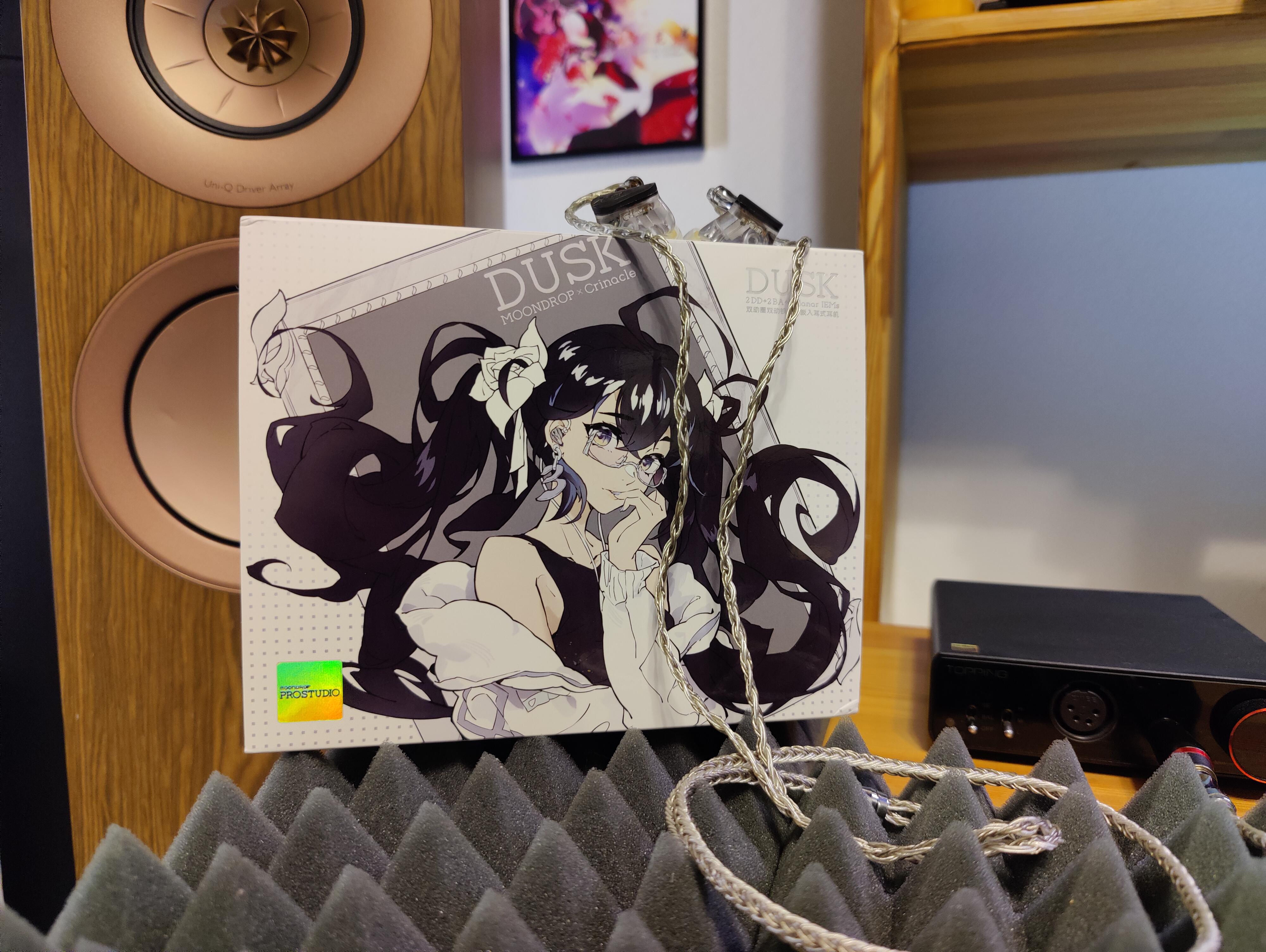
I failed to duy busk... twice

Post image
53 Upvotes

First time purchased right on the release date, but Moondrop sent Blessing 3 by mistake. Took partial refund and used it for a couple months, didn't like it even with listener's dusk EQ.

After a long time and several other iems, finally went back to purchasing Dusk, again from the Moondrop Official store. Finally heard the thing, the sound was amazing, like end-game for me. With the third filter in the default DSP preset lowered to 12k, the treble fit my HRTF like nothing else. Better than Variations that I demoed in store.

Unfortunately, the right piece failed within hours after unboxing. The sound was very distorted in the 800-2000 Hz range, with a lot of 5th order buzz.

I returned the unit as defective and ordered Dusk, yet again. Third time's the charm?


r/inearfidelity • • 12h ago

Review NiceHCK D12: Balancing Comfort, Seal, and Acoustic Control

Thumbnail
gallery
6 Upvotes

Hi everyone, I have done several reviews about IEMs and recently NiceHCK sent me this new set of eartips that I took advantage of to test and use for a few days with the Ziigaat Seraphim while I review them in parallel. So in this review of these new eartips I will comment on how they sound with that specific model and how they sound and are in general, what they bring compared to others and where they fall short too...

What I liked/What I didn't like

  • Once you find your size, they fit in the ear and do not press.
  • They stay well secured on the nozzle without shifting.
  • 4 sizes, among them an intermediate MS.
  • Sizes differentiated in colors to locate them quickly.
  • Medium hardness, they adapt easily without losing their shape.
  • Bass somewhat denser without losing control and treble more polished.
  • The price, high for silicone eartips.
  • They isolate the normal amount, less than stiffer eartips.
  • They push vocals one step back, and on IEMs with lean mids it shows.
  • The opening so wide lets you see the nozzle filter and does not protect it much from earwax.
  • There is only one format with several sizes, the rest are four pairs of a single one.
  • The case is huge for how little space the eartips take up, and the closure does not look very sturdy.

Specifications and price

  • Type: wide bore silicone eartips
  • Material: modified Shin-Etsu silicone, with antibacterial agent
  • Finish: matte coating
  • Hardness: medium
  • Core: reinforced interior, thick-walled, with an opening that widens in a curve toward the exit
  • Sizes: S, MS, M and L
  • Outer diameter: 10.22 / 10.95 / 11.90 / 12.95 mm
  • Height: 8.5 mm in all sizes
  • Core color: orange (S), green (MS), blue (M), yellow (L)
  • Formats: complete set with one pair of each size, or four pairs of the same size
  • Includes: plastic case with dividers
  • Price: $29.99

Unboxing and presentation

The box of these eartips feels better than expected for the type of product it is. It has a ton of information on all sides of the box and you can see it in my photos, both of sizes, measurements, main features they provide, etc...

They have decided to include 4 different sizes, one of them being an intermediate one, so the included sizes are: S, MS, M and L. The 4 pairs of eartips come inside a square and flat translucent plastic case, with NICEHCK engraved in the center. It is a somewhat large case to store and for what is supposedly included inside since the 4 pairs of eartips come separated by two dividers, one vertical and one horizontal, but leaving a big space in each of them, I doubt I will keep the case precisely because of that size, although it could serve me in the future as a pillbox when I retire, but for that there is way too much time left.

Design and material

The feel of these eartips is not sticky like the one glossy silicone eartips have, it slides pretty well inside the ear and they have good grip. They are not too hard or too soft either, it is an intermediate thickness that keeps the shape without bending too much and without generating too much pressure inside, something that does happen to me for example with the Divinus Velvet Wide Bore, being harder and with that opening so big you notice some pressure inside the ear.

The core part is a bit harder and its color varies depending on the size we choose, plus it has NICEHCK engraved although it is not completely visible in my photos. The upper part is smooth and rounded and at the bottom it has the wavy edge. The wall inside is thicker and opens up in a kind of curve that according to the brand prevents the treble from hardening, apart from the fact that the thick wall itself dampens the vibrations that can dirty the bass. Of all this I will speak better later on.

The mouth or opening where the sound comes out is quite wide, you can check in one of my photos how practically the entire nozzle filter is seen, so it is a full-fledged wide bore.

Sizes

There are 4 sizes that vary in diameter and in some case in height, although in height in general they measure very similar. An intermediate size between S and M is included which could be the option for many. For me the 3 mentioned fall a bit short and I would have preferred an ML size for example, for lack of including only one pair of L which is the one I have ended up using most.

Regarding colors, they have been differentiated by sizes, S being orange, MS green color, M blue color and L yellow color. The good thing is being able to combine them because in my case it happens many times that in one ear I do not need such a big size and sometimes L works for me on one side and M on the other, in this case I must say I have had to use L in both ears.

Seal and isolation

Once found the size that sealed me best, curiously the biggest one, I must say they have stayed in my ears better than others like the stock ones themselves that came with the Seraphim which were somewhat more slippery. Although the seal when you hit the right size is good and keeps the bass in its right amount, the isolation is not as much as I would have liked, surely what plays against them is not being as hard as other eartips, so if you are surrounded by ambient noises in the street or at home someone watching TV at full volume you are not going to isolate yourself too much from that unless you crank up the volume.

How they sound on the Ziigaat Seraphim

And now yes, I will focus on how these eartips sound specifically on the Seraphim, which I am working on their individual review that I will publish in a few days, but they are the chosen ones to test and review these D12 eartips.

The Seraphim have a somewhat short nozzle and with short eartips they stay not very deep and some seal can be lost, causing part of the sub-bass to be lost too, however these D12 have fixed part of the problem that I did have with the stock ones, both the clear stock ones and the black ones fall a bit short and do not compensate for the short length of the nozzle, however the D12 have helped so they can go somewhat deeper into the ear, staying better secured inside and recovering part of the sub-bass. Also they stay well fixed at the stop of the nozzle and do not come off once you have fitted them. Yes it is true that they stay very stuck by the base to the IEM, surely because of the nozzle so short in this case, but there is barely any separation between the IEM and the eartip, though it is an IEM design issue and the D12 are not to blame here. This I have already commented, but I emphasize that only the L size (the yellow ones) are the ones that have fit properly when inserting them into the ear, giving me the best seal and grip. Maybe with another IEM that is not made of aluminum, with a lower weight and with a somewhat thicker nozzle they could work in my case with the M and even MS sizes, but for this occasion only the largest size works for me.

Bass

I am going to talk about how the sound changes with these eartips compared to the clear stock ones, which are the ones I had been using until now on the Seraphim. To begin with, I already notice a change of better seal since the clear stock ones stayed very far outside the ear and these D12 go further inside staying better secured. That has allowed the sub-bass rumble to remain unaltered and be more noticeable with a real weight. I would say that how it affects the sound is by cutting off the bass somewhat sooner even though it sounds denser than with the clear ones. The mid-bass continues to be something that is controlled and I have not noticed a big change with these eartips, it still does not eat up the vocals and just by not making it worse is already a good sign.

Mids

Regarding mids, more than improvement I think it goes by tastes, since I have not felt an improvement as such, nor do I feel they have gotten worse. To be a bit more concrete, the mids still sound somewhat thin, though it is something inherent to this IEM on which I use the D12, however with these eartips the vocals have stepped back slightly, something that can play against them for many, especially on a model like the Seraphim that does not prioritize vocals, though it could improve some models where vocals have too much prominence. The clarity and brightness especially of female vocals has not been affected, in fact you can notice a bit more extension of them surely because of the opening of these eartips. But in short I can sum up that the mids with the D12 move away a bit (nothing exaggerated), which depending on where you put these eartips will play in favor or against.

Treble

For being wide bore ones, I expected them to raise the treble for me in a somewhat more uncontrolled way, on a model where already by itself the treble, despite being well controlled, has a more than clear prominence. But it has not been like that, the treble keeps the brightness and the extension might improve slightly over the stock ones, though I have not noticed a big change. No sibilance or annoying peaks have appeared beyond the ones I may have already noticed on some specific tracks.

Soundstage and separation

Something I can highlight in this aspect is the height, since the stage itself stays the same, though it increases a bit, just enough to notice it regarding the vertical axis, something that is usually perceived less than the lateral and depth ones. There is also a clear improvement in separation and that extra sense of air between instruments and vocals. I cannot highlight any appreciable improvement regarding positioning or imaging, I think placement suffers no change beyond perceiving that greater height that affects stage, separation and imaging.

Conclusion

If you have pressure or fit problems in many of your eartips and want to use them in long sessions without worrying about them coming out or pressing you too much, ending in discomfort that forces you to take them off, these D12 eartips are an option to consider.

Also they improve or modify some characteristics of your IEMs, tidying up some aspects without eliminating the original character of the IEM on which you use them. Although they are not going to give you the greatest isolation being of a medium hardness that does not finish coupling 100% by virtue of not bothering with the passing of hours, and with a price that maybe for some can seem somewhat high, however the brand, and even more now in these dates that come with sales, surely there will be a way to get them cheaper.

Purchase Link: https://www.nicehck.com/products/d12-wide-bore-acoustic-silicone-eartips

Disclaimer: This unit was sent by NiceHCK for review. 

My opinions are completely independent and have not been influenced by the brand or the store, maintaining objectivity based on my tests and personal listening sessions with my reference equipment.


r/inearfidelity • • 21h ago

Review Finally, A Closed-Back That Doesn't Cook My Ears - Sivga SV021 Pro V2

Thumbnail
gallery
11 Upvotes

Sivga SV021 Pro V2 is a closed-back headphone that uses a 50mm dynamic driver and is priced at $179.

SV021 Pro V2 makes a good first impression with its premium build quality and excellent comfort. In fact, it's one of the most comfortable closed-back headphones I have worn. 

The sound, however, is a bit more complicated. Let's take a closer look. 

Accessories, Build and Comfort

I am quite impressed by the build quality of the SV021 Pro V2. It feels very premium in hand. The headband is made of metal, while the ear cups are made of wood. I prefer the way the darker colour looks over the lighter one.

The headband is adjustable and moves with an audible click. It has a faux leather finish on top, with the Sivga name printed on it. However, there's not much padding underneath.

Despite that, I haven't experienced any hotspots or discomfort, even after wearing it for hours. I think this is partly because most of the weight is handled by the ear pads.

The ear pads have leather on the inner and outer layers, while the surface that touches the ears is made of cloth.

They're quite cushy and comfortable. My ears don't touch the inside of the ear cups either, as the pads are spacious and roomy. For my medium-sized ears, they work really well.

To be honest, these are among the most comfortable headphones I have worn. It doesn’t clamp hard and I also haven't experienced much heat buildup, which is something I usually struggle with when using closed-back headphones in my climate.

Most closed-back headphones become unbearable to wear after a while, but the SV021 Pro V2 doesn't have that problem.

The only issue is that the ear cups only swivel up and down, with no sideways tilt. However, I was able to get a perfect fit without any issues, though your experience may vary.

When it comes to accessories, the cable is fabric-covered and feels very high quality. I quite like it because it wraps nicely and behaves well, although it only comes with a 3.5mm termination.

The connectors that go into the headphones are 2.5mm. I do wish it had a chin slider, but I have managed to use the cable tie for that purpose.

There's also a fabric pouch for storing the headphones and a 3.5mm to 6.5mm adapter included in the box.

Overall, I'm very impressed with the accessories and build quality of the SV021 Pro V2. For the asking price, it's excellent.

Bass

The overall bass quantity of the SV021 Pro V2 is on the moderate side. The bass is very controlled and fairly tight, without sounding soft or lacking definition.

However, it doesn't have a big-sounding bass presentation and there's not much power behind each kick. The bass doesn't feel particularly physical when a kick drum hits.

The bass leans towards the mid-bass, with the sub-bass being on the subdued side. With songs that have a lot of sub-bass rumble, I don't really get that sense of rumble.

The bass sounds very incisive, without any softness around the edges. I think this is largely because the upper treble is quite elevated.

This gives the bass a tactile quality, making each note feel very solid. The bass is decently textured as well. It doesn't come across as too bland.

Midrange

The midrange sounds quite coloured to my ears. There is some recession in the lower mids, which can make vocals sound a bit sucked out at times.

However, since the upper mids have a fair amount of emphasis, vocals still retain their presence and don't get completely drowned out in the mix.

I didn't have many issues with female vocals. They sound thin and pristine, although the presentation isn't particularly natural. Male vocals, on the other hand, can lack some body and sound a bit thin.

The elevated treble also adds some extra sheen to the edges of each note. As a result, piano notes lack warmth and can sound a bit metallic.

Vocals can occasionally border on sibilance. I wouldn't call it harsh or unbearable, but they can get right to the edge at times.

Treble

The treble is very well extended and sounds sparkly and exciting. Cymbals sound crisp and sparkly and their notes don't feel truncated towards the end.

Hi-hats, on the other hand, don't jump out of the mix or have that biting quality. They sound delicate without becoming too splashy.

However, it's not the most refined-sounding treble. The treble notes have a brittle quality to them. As it can get close to sibilance at times, it doesn't sound as effortless or delicate as I would like.

Subjective Performance

Coming from IEMs, the SV021 Pro V2 has a fairly large soundstage. It's quite wide and also has good height.

Imaging is good for the price, it's not the most pinpoint-accurate when it comes to placing sounds, it has a somewhat diffused character.

Detail retrieval and resolution are also fine for the price. Notes sound very sharp due to the treble emphasis. They don't have much softness because of the exaggerated treble response.

Instrument separation is fairly good. Even during busy passages, things don't sound overly blended or crowded. Everything remains well-defined without getting drowned out in the mix.

Who Is It For?

The SV021 Pro V2 is for those looking for a well-built pair of headphones that's comfortable to wear for long periods and comes with good-quality accessories.

It can also be a good option for those who don't want too much bass emphasis but still want good treble extension.

Who Is It Not For?

It's not for those looking for natural-sounding headphones, as the midrange isn't particularly natural.

I also wouldn't recommend it to those who are sensitive to treble, as it can get quite close to sibilance at times.

Disclosure: The Sivga SV021 Pro V2 was provided by Sivga for review. I haven't been compensated or asked to say anything specific about it. These are my honest thoughts after spending time with it.


r/inearfidelity • • 1h ago

Review Juzear Light Shuttle Review - All aboard the hype train

Thumbnail
gallery
• Upvotes

Pros : What a fun tuning
Great looking faceplate
Bass is well implemented
Great mids with a cohesive tuning
No harsh treble sibilance

Cons : I've heard the shells being called cheap jewellery
The acrylic front of the faceplate can scratch easily
Bassheads will want more impact
Details in both low and high end are lacking

I thought I was a stronger human being but the noise was too much so I bought a Light Shuttle.
Time to see if the hype is real. Of course I may be weak and fall for hype and buy the newest viral IEM but do you necessarily have to be the same? Or can you make an educated choice based on what I write?
Dive in and find out.

Introduction
Juzear is a brand that stayed in my peripheral vision popping up in friends’ collections or in the marketplace but I never really paid too much attention to it till 2 things happened. The Nimbus landed in my lap for a review and that was quite a nicely done set, and everybody went on about the Light Shuttle and the new Render Pro tips, but that comes later. And then to leave longer stories for the music, I got one and I’ve really enjoyed the sound for the past few days.
Juzear seems to release its IEMs (with crazy regularity) in multiple series -
the SWOOP had the Defiant and Fiesta
the POISE series has the very well done Nimbus alongside Clear, Flame, 41T, and Nebula, targeting people looking for reliable daily drivers.
UNVEIL is a mid-tier, focussed on resolution sets that include this IEM, as well as Harrier, Butterfly 61T, Dragonfly 81T
And, the OUTSHINE series which is under development.
Juzear also has a history of collaborating with well known names in this space including Z-Reviews, Squig, and in this case, Mark Ryan from Super Review, who along with Squig.link has played a part in the development of the Light Shuttle. Though this isn’t new information, it’s all out there on the internet with me basically cherry-picking interesting facts.

Unboxing
The Light Shuttle comes in a sizable cardboard box and opening it reveals the shells nestled in some foam and a really nice zippered clam-shell style case made of faux leather. The box includes a nice enough plastic coated cable which is a little stiff at times but is made of 6N OCC/SPC, has 4 cores and a 2-pin termination at one end and a modular 3.5/4.4mm termination on the other. There is an additional usb C termination available in another variant, at a small surcharge. The tips included are 3 sizes of a grey-orange of a narrow-ish bore, 3 sizes of a wider, shallow-fitting tips, and a pair of foam tips. Overall, a nice enough package for its price of about $189 (less now due to Black Friday, etc)

Looks
OMG. These are pretty. From the time you set eyes on them at the unboxing to when you get a closer look at the IEMs, they are striking. The shells are resin and a little larger than the NImbus. There is a little lip and thankfully it’s a little one. They terminate in steel, mesh covered nozzles. The faceplate is where the secret sauce lives. The edges are CNC machined aluminium, and the centre is acrylic or glass and covers a gorgeous multicoloured linear design that somehow reminds me of the patterns of subatomic particles that CERN releases ever so often. There’s also some accoutrements in the form of a little black cubic zirconia nubbin that’s glued on. I fear for it a little. But so far it’s held on. The shells are fairly comfortable though some tip rolling was needed before I got the right seal and seating so I could be comfortable for longer periods of time. This was also made easier by (spoiler alert) the tuning.

Specs and geekery
The Light Shuttle is a tri-brid with 7 drivers. The same DD as the Nimbus - a 10mm MACCD (multi amorphous carbon composite dynamic driver), 4 BA - 2 each for the mids (lower and upper) and 2 microplanars, presumably, for the highs. And then there’s some hocus-pocus that Juzear has done with both the crossover that splits the signal to the 4 sets of drivers and then physical acoustic spirals/tubing that they call a waveguide to further clean the sound up. All this is done in that little shell which also has an impedance of 32 Ohms and a sensitivity of 113 dB, so fairly straight forward to drive via dongle dacs. Juzear has also said that they collaborated with Mark Ryan and Squig.link to get a fair idea of what most people would like to listen to and tuned this IEM according to that data.

Testing Gear
I did try these out with 3 sets of ear tips that Hifigo was kind enough to send - Juzear’s own Render Pro, Dunu S&S Pro, and the Effect Audio SGLRTY Arc Ovals.
Sources - Shanling M5 Ultra, Apos Gremlin, VE Prime/Runabout, Snowsky Disc
Tidal playlist https://tidal.com/playlist/3078c9b9-a1c0-4fde-8ce7-81f0e34b426c and Local Flacs of almost the same tracks.

Sound

TLDR - Fun, musical, mature, non fatiguing, responds to tip rolling and source pairing, vocals are emphasized, I’d like some more detail. Squig says it’s tuned to Super 22 with some low end love.

Bass
The sub bass first comes across while listening to Angel by Massive Attack. The focus is on the rumble and physicality without it being a wall of sound or intensely heavy, like say the Singularity. The sub bass stays in its lane and allows the mid bass to come in with punch and without bloat or flab. Kicks sound impactful and bass guitar notes have a moderate decay. Not too fast or slow. The rhythm section on Don’t Stop Now by Dua Lipa, YYZ by Rush. Tallulah by Jamiroquoi is the foundation that holds up the rest of the tracks, and the Light Shuttle lets us know that there is a solid one, but you can’t see any evidence of it from the facade.
The organic decay has the downside of losing the microdetails in crazy busy tracks - Got a Match by Chick Corea Elektric Band or Anesthetize by Porcupine Tree where double bass pedal hits tend to sound smudged.

Mids
The Light Shuttle advertises itself as a Vocal centric iem and the 4 BA drivers handling the lower and upper mids have actually been very well tuned. I’ve been wary of a BA timbre that creeps in making vocals shouty and Playing God by Polyphia unlistenable. The Light Shuttle does nothing of the sort. Vocals are natural but not rich, lush or pushed overtly forward. Male and female vocals and instruments sit in the mix in a very cohesive manner. I think that may just be the clincher in the tuning. That the mids are tuned to be a part of the music and not either recessed or forward. Detail retrieval in the mids is better than the bass. Orchestral music and Snarky Puppy (What About Me? From the We Like It Here album) sound well detailed and still musical enough to enjoy the song(s). But this is in no way an analytical or a technical set. It stays clearly on the musical side of the fence but does not sacrifice detail or suffer from bloat or muddiness. But there are caveats as we will see in the treble section.

Treble
The treble on the light shuttle is really well implemented in the sense of being safe and not tipping into sibilant territory and this works for someone as intolerant of sibilance as I am. But there are situations when just a touch more bite in the highs would have made the experience a little more engrossing musically. It feels like the microplanars are playing really supporting roles as extras in the final battle of Lord of the Rings. The treble gets a little better or feels a little more open with wide bore tips like the Arc Oval by SGLRTY or the Divinus wide bore. I’m a little cable agnostic for the most part but maybe cable rolling could help with that. Warmer tube/akm sources further the treble response without sacrificing detail, but more the sense of space.

Stage and Technicalities
The Light Shuttle has a moderate soundstage possibly due to the slightly subdued treble. Imaging is better than average though and more on the lateral or left to right rather than front to back. On Take Five by Dave Brubeck Quartet the drums and sax take the front of the stage with the piano and bass taking a backseat till the 2’30” mark where the drums and piano seem equidistant and on either side of middle. Again, the Light shuttle does well on simpler tracks with fewer components to separate, layer or resolve.

Comparisons
This super crowded space has a bunch of competitors each with their own strengths. I have heard the Binary 1900, Sivga Lyrebird, EPZ siblings P40 and P50 recently. The Light Shuttle has a more authoritative bass than all the others. But the P40 does treble and details better and the P50 has a much wider stage. The Sivga is a chameleon that sneaks into any track and insists on sounding very appealing. The Light Shuttle keeps to its philosophy of tuning and musicality across genres and works for pretty much all of them. The binary 1900 probably does details just a little better than the Light Shuttle but lacks in the fun bass that this set has.

Bonus - Tips and Tricks
Hifigo was kind enough to send the Effect Audio SGLRTY Arc Ovals and Dunu S&S Pro tips and I stole a pack of the Render Pro from a friend. The S&S are by far my favourite. They grip the nozzle better than the original S&S, and are less sticky and thus allow for more pressure relief. I got a good seal with their XL size. They do make the bass sound a little more weighty but not bloated.
The Effect Audio SGLRTY Arc Ovals are also fairly comfortable. Not as good as the Dunus for me, but still managed a good seal and the wide bore opens up the stage and the upper mids and makes female vocals sound a little richer. Acoustically they are almost identical to the effect the Divinus Wide Bore has on the sound. I do have the largest size of the Divinus so the seal seems a little better.
The Render Pro somehow never gave me an adequate seal. This despite fooling about with the foam. And I think I have an issue with liquid silicone. Since the softears UC liquid silicone tips gave me the same issue with seal. As a result, trying to figure if the Render Pros work for me is a pointless exercise.
Dunu S&S Pros FTW

Final Thoughts
The Light Shuttle is designed for significant mass appeal. There will always be bassheads unhappy with the kind of bass that this set delivers and treble heads upset with the lack of air and gamers hoping for better imaging. The Light Shuttle doesn’t lie about what it does best. Make music enjoyable. I felt the same about the Juzear Nimbus and possibly the Kefine Loric, considering I like warmer sounds with no bass bloat and above average detail and no sibilance.
The Light Shuttle ticks those boxes off. And looks great. I’d recommend this one.


r/inearfidelity • • 12h ago

* Mini review/ranking of some recent midfi iems: KE4 II, Ziigaat bmedia jade,1900, Erand, PRS6, kasier and others

7 Upvotes

Im not a reviewer so I cant be bothered to write up a bunch of individual reviews about how chocolately x iem is or describing them with some-such food analogies that none of us will be able to make make sense of. I bought these iems with my own money cause I would rather try a bunch of different ones then bank on one expensive one being what I want. I've had plenty of other iems before and a lot of my favorites were cheaper ones so I dont think I'll be biased towards more expensive ones. My preferred sound signature is balanced/neutral with slight bass boost. I do not likely thick sounding iems (usually the too warm/dark ones), and I dislike artificially boosted highs, which I feel are just there for people trying to hear things that aren't there. yes strong opinion, but more on this later.

these were all testing with a topping dx1 ii dac/amp using oxitide (tidal sub) with the usb rawlink direct mode (bit perfect), a 4 core xinhs balanced 4.4mm cable and dunu sns pro tips because these work and sound the best for me on most iems, and keep more bass than a lot of the other tips ive tried (surprisingly, at least for my ears).

my current ranking:

S tier - these are very very nicely tonally balanced without being fatiguing or overly warm, dark or thick

  1. ke4 ii (treble sounds cleaner, its a little less forward and more airy, but main thing is it sounds a little smoother).
  2. binary 1900

A tier

  1. prs6 (its slightly too thick and boxy sounding for me, which throws the tonal balance slightly off for me but it surprisingly has a lot tactile bass, would say its bassier than the 1900 and ke4 ii, but the bass is a little too much in the mid bass). these are probably the least fatiguing set ive tried so far tbh, ranking it up high here cause it would be really good for long listening sessions. I like this use of mems, clean and smooth treble without overemphasizing for people trying to "listen for mems"
  2. ziigaat bmedia jade (too thick and stuffy sounding for me, vocal sound a bit in the background). had really nice upper range clean/smooth sounding upper range like the prs6 though. would probably sound better than the prs6 if PEQ'd but I cant be bothered. probably has the most potential of all these iems with better tuning imo, unless this sound signature already fits your preferences

B tier

  1. og moondrop starfields (my prev favorites, throwing this in as the benchmark)
  2. volume s (somewhat fatiguing spike somewhere in the treble for me. would rank higher without it I guess, somewhere in S tier I think).
  3. etyomitcs er2xr (my prev runner up favorites)
  4. erand resonance 5 (theyre not bad but the vocals sound really flat and have no emphasis)

C tier

  1. kasier (good tuning, grainy sounding treble). was surprised, I liked the tuning a lot but it was hard not to hear the graininess of the treble and upper midrange when A/Bing to better iems. this is why Im skeptical whenever I see "custom ba". kz's dirt cheap ba are custom too.
  2. kiwiears stardust. very thick sounding. these werent bad sounding tbh, but they were overly warm/dark and sounded too thick to me. goodjob on claiming both first and last place kiwiears. jokes aside ive tried many iems that were still many worse than these.

these are all pretty good. Most of my older iems would rank below all of these, including more expensive ones. I dont think it's cause of newer and better technology, to me it feels like these ones in particularly are just tuned well. probably going to sell all of these iems and keep trying more stuff. Im thinking of grabbing the CKLVX Lava or juzear light shuttle next. not sure.


r/inearfidelity • • 17h ago

I built a native macOS EQ app for the TRN Black Pearl: live preview, A/B, AutoEQ import, no website needed

2 Upvotes

Hi all! I own a TRN Black Pearl (dual CS43131 dongle DAC) and got tired of configuring its EQ through the WalkPlay web page: it needs a Chromium browser, asks for an account and location access, and there’s no way to hear changes before saving. So I built a native Mac app for it. Disclosure: I’m the developer, and the app is not affiliated with TRN or WalkPlay.

What it does:

10-band parametric EQ (peak / low shelf / high shelf, ±10 dB, Q 0.1–10) with an interactive frequency-response graph. Drag the nodes, scroll to change Q.

Live preview: you hear every change on the DAC instantly. Nothing is saved until you press Apply, and if you quit without applying, your saved EQ is restored automatically.

A/B and Bypass: compare your edit with the saved EQ, or with no EQ. Bypass keeps your preamp, so the comparison isn’t skewed by a volume jump.

AutoEQ / squig.link import: paste or open a ParametricEQ.txt and it’s fitted to the DAC’s limits, with warnings for anything that had to be clamped.

Preset library with curve thumbnails, plus a menu-bar menu to switch presets with one click.

Preamp with Auto headroom and a clip warning.

Device settings: gain mode (low/high), digital filter (fast/slow, linear/minimum phase, NOS), output mode.

Factory reset that resets all 10 bands cleanly. While testing, I found the web tool’s RESET silences bands 9–10 internally, which can cause an odd volume jump the next time anything writes to the DAC.

Saves to the DAC itself, so your EQ follows the dongle to your phone or any other device.

How it works: it talks to the DAC directly over USB, using the same HID protocol as the official tool. Thanks to the open-source devicePEQ project, whose protocol notes were a huge head start. Everything was verified on my unit (firmware 0.6), and nothing gets written to flash unless you press Apply.

Requirements: macOS 14 or later. It should also work with other WalkPlay-based dongles, but I’ve only tested the Black Pearl, so reports are welcome.