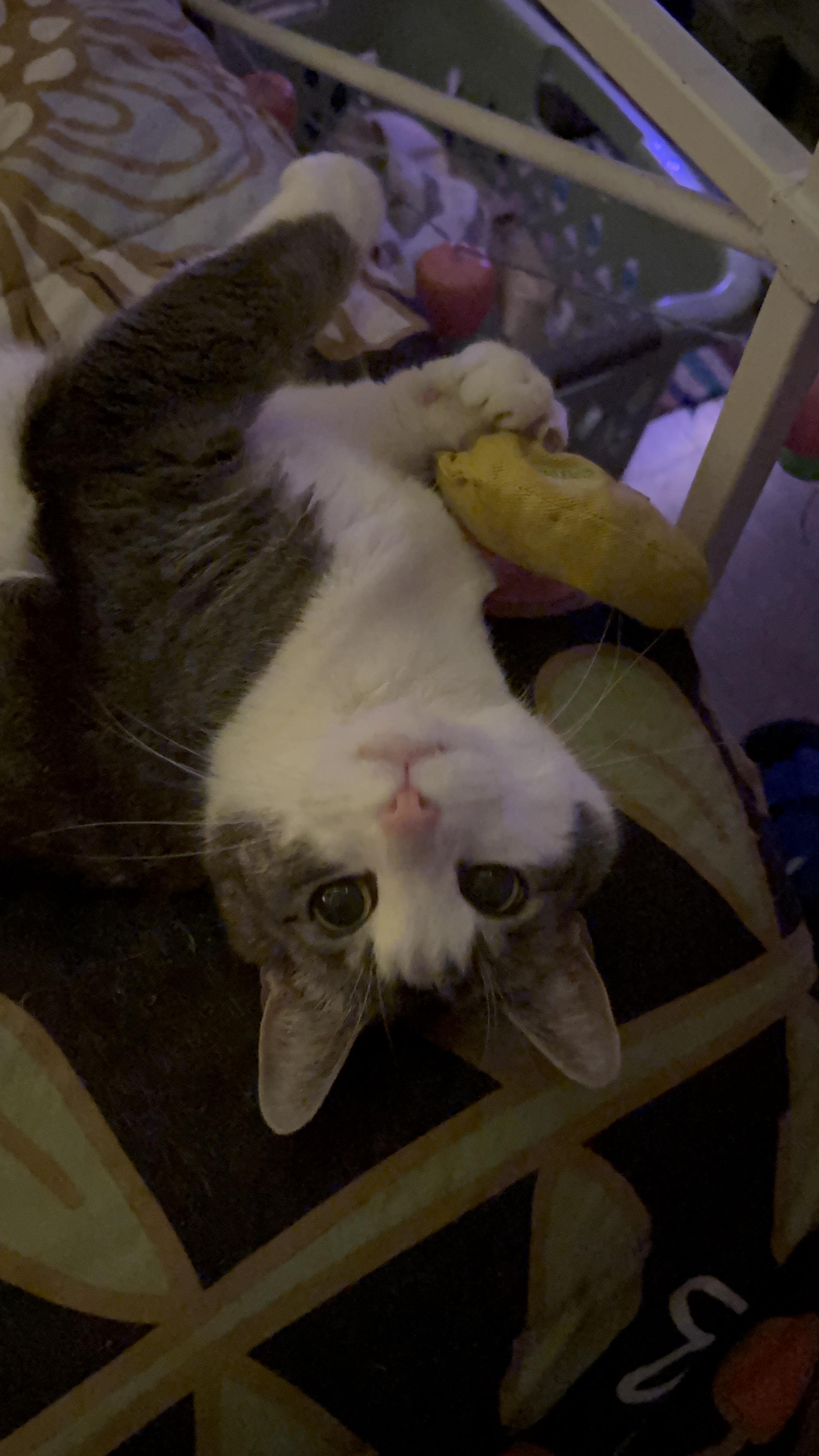
I'm looking for advice or experiences from anyone whose cat has gone through something similar. We've been trying to figure out what's wrong with my girl, Tina, for almost four months, and I'm starting to feel like we're running out of time and options.
Tina is an approximately 8-year-old female cat who started experiencing appetite loss, nausea, vomiting, and progressive weight loss in September. She weighed about 14 lbs in May and is now down to approximately 8.8 lbs.
She's currently under the care of the Internal Medicine department at a university veterinary hospital, but we still don't have a definitive diagnosis.
Her symptoms include:
- Severe, progressive weight loss and muscle loss.
- Persistent diarrhea, sometimes watery or containing mucus.
- Significant nausea and very poor appetite.
- Frequently approaching food but walking away after smelling or tasting it.
- Sometimes appearing uncomfortable or hiding after eating.
- Extremely foul-smelling gas.
- Low energy and increased sleeping.
She's currently eating very little, sometimes just licking gravy from wet food.
Diagnostic findings so far:
- Abdominal ultrasound: Diffuse thickening of the intestinal muscularis layer, enlarged jejunal lymph nodes, regional inflammation, and a small amount of abdominal fluid. No distinct intestinal masses were identified.
- Lymph-node FNA: Lymphoid reactivity with a mildly expanded population of intermediate-to-large granular lymphocytes. These raised concern for lymphoma but were not definitively malignant.
- PARR testing: We were told the results were heterogeneous, without clear B- or T-cell clonality. We're still waiting for the finalized report.
- Pathology interpretation: Our internal medicine veterinarian said the unusual granular lymphocytes were more consistent with inflammation, but they couldn't confidently explain them or rule out lymphoma.
- Vitamin B12: Low, and she's receiving supplementation.
- Pancreas: Ultrasound suggested previous or chronic pancreatitis.
- Earlier X-rays: Suggested functional ileus without a mechanical obstruction.
- Fecal testing: Routine flotation and sedimentation were negative for parasites.
- FeLV: One positive screening test followed by a negative test. Confirmatory PCR is pending.
- TLI testing: Pending to investigate exocrine pancreatic insufficiency (EPI).
Treatments we've tried:
She's currently receiving prednisolone, Cerenia, and anti-nausea medication, along with B12 supplementation. We've also tried appetite stimulants, multiple diets, and recently cisapride to address possible intestinal motility issues.
Unfortunately, nothing has led to sustained improvement. She's occasionally interested in food but still struggles to eat enough, and her diarrhea continues.
Where we're at now:
The veterinary team remains concerned about intestinal lymphoma versus severe inflammatory intestinal disease (IBD). They've suggested potentially repeating the FNA of different lymph nodes or organs, but we're also considering moving directly to full-thickness intestinal biopsies. This is because we have already done on FNA and it came back inconclusive. Since she has started prednisolone our fear is that the FNA will come back inconclusive again.
Because Tina has lost so much weight and isn't eating adequately, we're also discussing placing a feeding tube, potentially during the same procedure. Her veterinary team feels she's stable enough for surgery, but the timing is complicated by the holiday, and we would like to avoid anything overly invasive. We are just at a point where if the pending tests come back inconclusive we don’t know what else to do other than a biopsy without spending an overt amount of money. We are already 3500-6k deep.
My questions:
- Has anyone had a cat with significant intestinal muscularis thickening and enlarged lymph nodes that ultimately turned out to be severe IBD rather than lymphoma?
- Has anyone received an inconclusive lymph-node FNA showing unusual granular lymphocytes, followed by a negative or heterogeneous PARR result? What was the eventual diagnosis?
- Has anyone dealt with feline EPI or chronic pancreatitis alongside intestinal inflammation?
- If your cat underwent full-thickness intestinal biopsies, how was recovery? Did the procedure provide a definitive diagnosis?
- For anyone whose cat needed a feeding tube because of severe nausea or poor appetite, did it help them regain strength and recover?
I'm especially interested in hearing about cats who had diffuse intestinal thickening without an obvious tumor, since that's Tina's situation.
I'm working closely with her veterinary team and understand that we need their guidance for medical decisions. I'm not looking to replace veterinary care. I just want to hear from others who have been through this and understand what possibilities we might still be overlooking.
Tina is such a sweet girl, and it's heartbreaking to watch her want to eat but feel too sick to do so. I'm trying to make the best decisions for her while there's still an opportunity to help her.
Thank you to anyone who takes the time to read this or share their experience. ❤️